
A 3.89-point short-term improvement in erectile function scores may sound impressive, but it doesn't automatically mean a man will experience a dramatic change in daily life. In a 2024 meta-analysis, low-intensity shockwave therapy performed better than sham treatment in both the short and long term, yet the researchers rated the certainty of evidence as low because studies varied and had important limitations. That tension defines the honest conversation about acoustic wave therapy results: the treatment can help, but statistical improvement and personally meaningful improvement aren't the same thing.
Table of Contents
- What the Clinical Evidence Actually Shows
- How Acoustic Wave Therapy Produces Results
- Realistic Timelines for Seeing Improvement
- Statistical Significance Versus Meaningful Results
- Who Gets the Best Results and Who Should Look Elsewhere
- How Acoustic Wave Therapy Compares to Alternatives
- Evaluating Clinic Claims and Planning Long-Term Care
What the Clinical Evidence Actually Shows
The strongest evidence for acoustic wave therapy in erectile dysfunction comes from randomized controlled trials comparing low-intensity shockwave treatment with sham procedures. A 2024 meta-analysis pooled 21 randomized controlled trials involving 1,357 men aged 39 to 65. Treatment improved erectile function scores more than sham in both follow-up periods, with an average short-term improvement of 3.89 points and a long-term improvement of 5.25 points on erectile function outcomes. Short-term penile rigidity improved by 1.06 points as well. (2024 PubMed meta-analysis)
Those figures describe movement on standardized clinical scales. They don't tell us whether every participant could consistently obtain an erection, maintain it through intercourse, or stop using other treatments. A man starting with mild vascular impairment may notice more reliable firmness and greater spontaneity. Someone with severe nerve damage or advanced vascular disease may register a smaller score change that doesn't alter sexual activity very much.
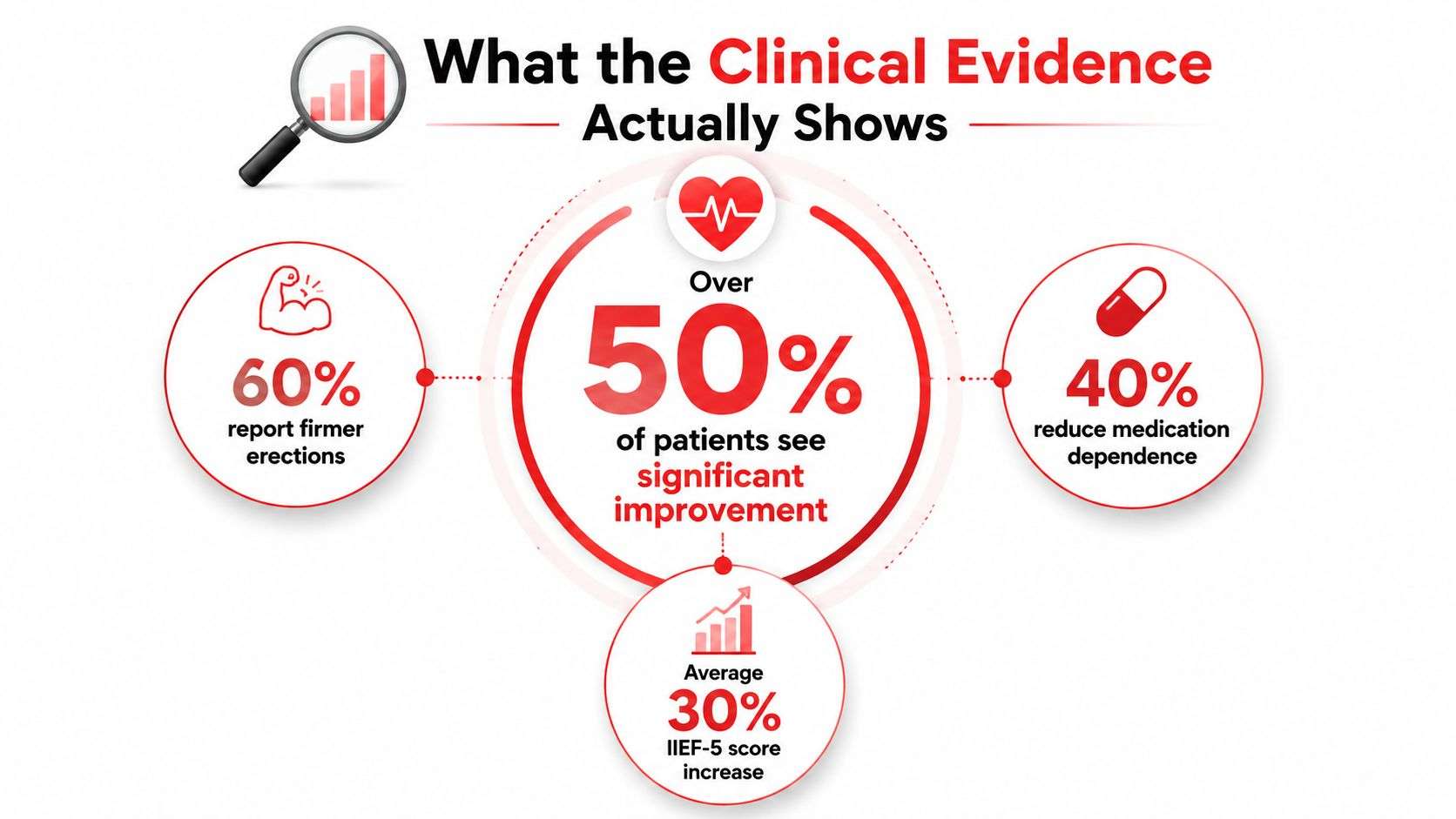
What the scores can and can't tell you
A separate 2019 meta-analysis reviewed seven randomized controlled trials involving 607 patients. At one month, low-intensity shockwave therapy produced a statistically significant 4.23-point increase in IIEF-EF score compared with sham treatment. In men who began with an erectile hardness score below 2, the share improving to a score above 3 ranged from 3.5% to 90% in treated groups, compared with 0% to 9% in sham groups. The pooled relative risk was 6.63. (2019 PubMed meta-analysis of seven trials)
These results support a real treatment effect, especially for men whose ED has a vascular component. They don't justify promises that acoustic waves will restore normal function for every patient. The wide ranges also show why a clinic's patient selection, treatment protocol, and outcome definitions matter.
Safety is favorable, but evidence quality matters
The 2024 review found little difference in discontinuation rates, with a risk ratio of 0.77, and no meaningful difference in adverse events, with a risk difference of 0.00. That suggests a generally favorable safety profile, but the review still rated the certainty of evidence low because of heterogeneity and study limitations. (2024 PubMed meta-analysis)
Practical rule: Ask a clinic to show the actual outcome measure it tracks, not just a percentage described as “success.”
For a patient-friendly discussion of how studies evaluate ED treatment outcomes, you can also review this clinical evidence overview of shockwave therapy for ED. The most useful consultation connects the score to your baseline function, vascular health, erection hardness, medication use, and sexual goals.
How Acoustic Wave Therapy Produces Results
Low-intensity acoustic waves are intended to create a biological signal, not force blood into the penis for one encounter. The proposed mechanism involves mechanotransduction, where mechanical energy is converted into cellular signals that support tissue repair and blood-vessel development.
A useful analogy is a damaged plumbing network. Medication can temporarily open the existing pipes and improve flow while the medication is active. Acoustic therapy aims to encourage repair around the network itself, including healthier tissue responses and the formation of new small blood vessels. That doesn't mean it can rebuild every damaged vessel or reverse every cause of ED. It means the treatment targets a mechanism that makes sense for blood-flow-related erectile dysfunction.
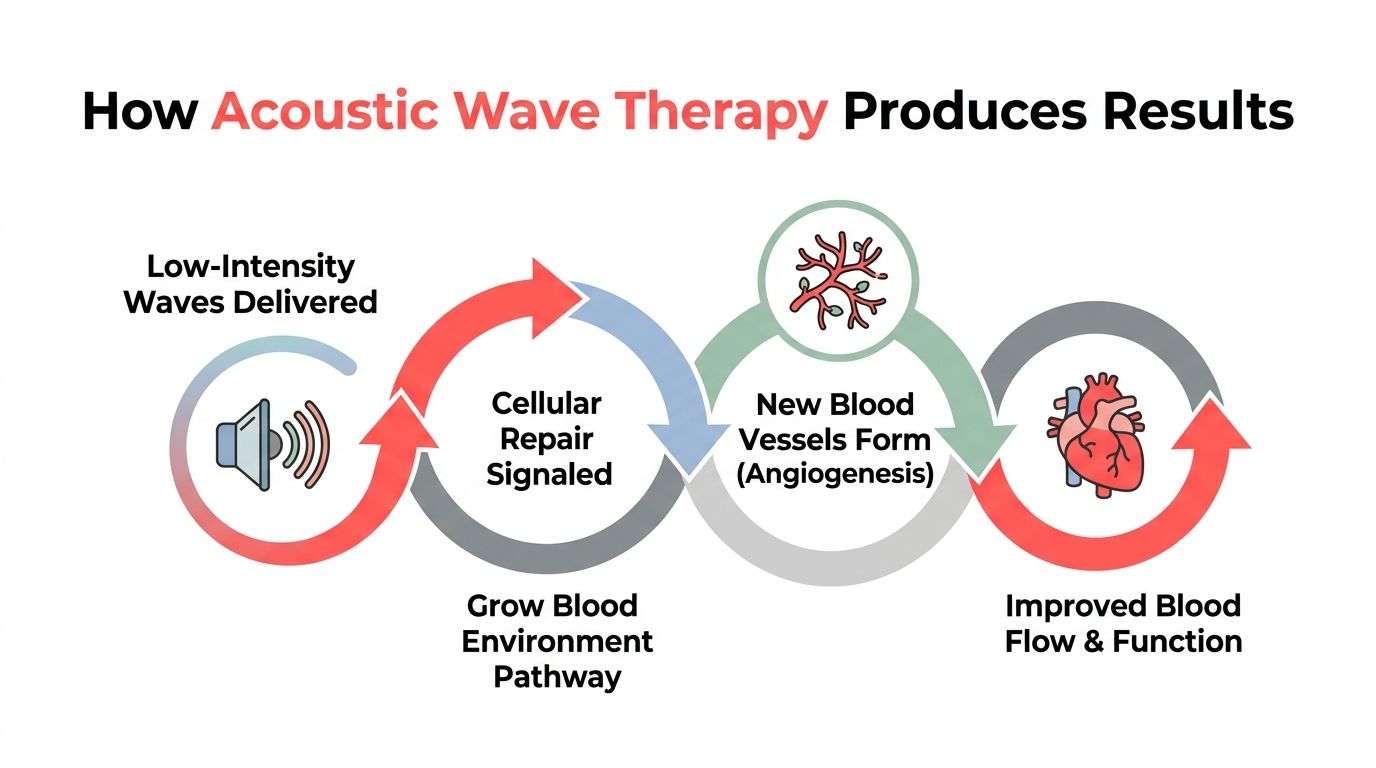
From cellular signaling to erection quality
The clinical evidence supports a vascular connection. A 2019 meta-analysis of 10 sham-controlled randomized trials involving 873 men with vasculogenic ED found a pooled 3.97-point gain in IIEF-EF score compared with sham treatment. It also found a higher chance of reaching an erectile hardness score of at least 3, with an odds ratio of 4.35, and an increase in peak systolic velocity of 4.12. (2019 PubMed meta-analysis of vasculogenic ED)
Peak systolic velocity is a blood-flow measurement used during penile vascular assessment. An improvement supports the idea that treatment may influence circulation rather than only mask symptoms. In practical terms, better arterial inflow can make erections easier to initiate and more stable during arousal, provided the nerves, hormones, smooth muscle, and psychological factors involved in erection are also functioning adequately.
Why mechanism affects candidacy
A vascular mechanism makes acoustic therapy more plausible for men with reduced arterial inflow or mild to moderate vascular disease. It's less likely to solve ED caused primarily by severe nerve injury, profound hormonal deficiency, medication effects, relationship distress, or an untreated medical condition.
That's why a responsible evaluation includes medical history, medication review, cardiovascular risk assessment, sexual history, and sometimes laboratory or vascular testing. The device matters, but diagnosis matters more. Applying a blood-flow treatment to a problem that isn't mainly vascular creates a mismatch between the intervention and the cause.
Realistic Timelines for Seeing Improvement
Acoustic wave therapy doesn't behave like a medication taken shortly before sex. A pill can produce a temporary effect within a predictable window, while acoustic treatment depends on a cumulative tissue response that develops after sessions are completed. The exact schedule varies by protocol and patient, so a clinic shouldn't present a rigid calendar as a guarantee.
During the early treatment phase, many men notice little or nothing. Some report changes in erection response or sensitivity before they can identify a consistent functional improvement, while others don't notice a meaningful difference until later follow-up. A lack of immediate change doesn't prove the treatment has failed, but it also shouldn't be used to excuse indefinite treatment without objective reassessment.
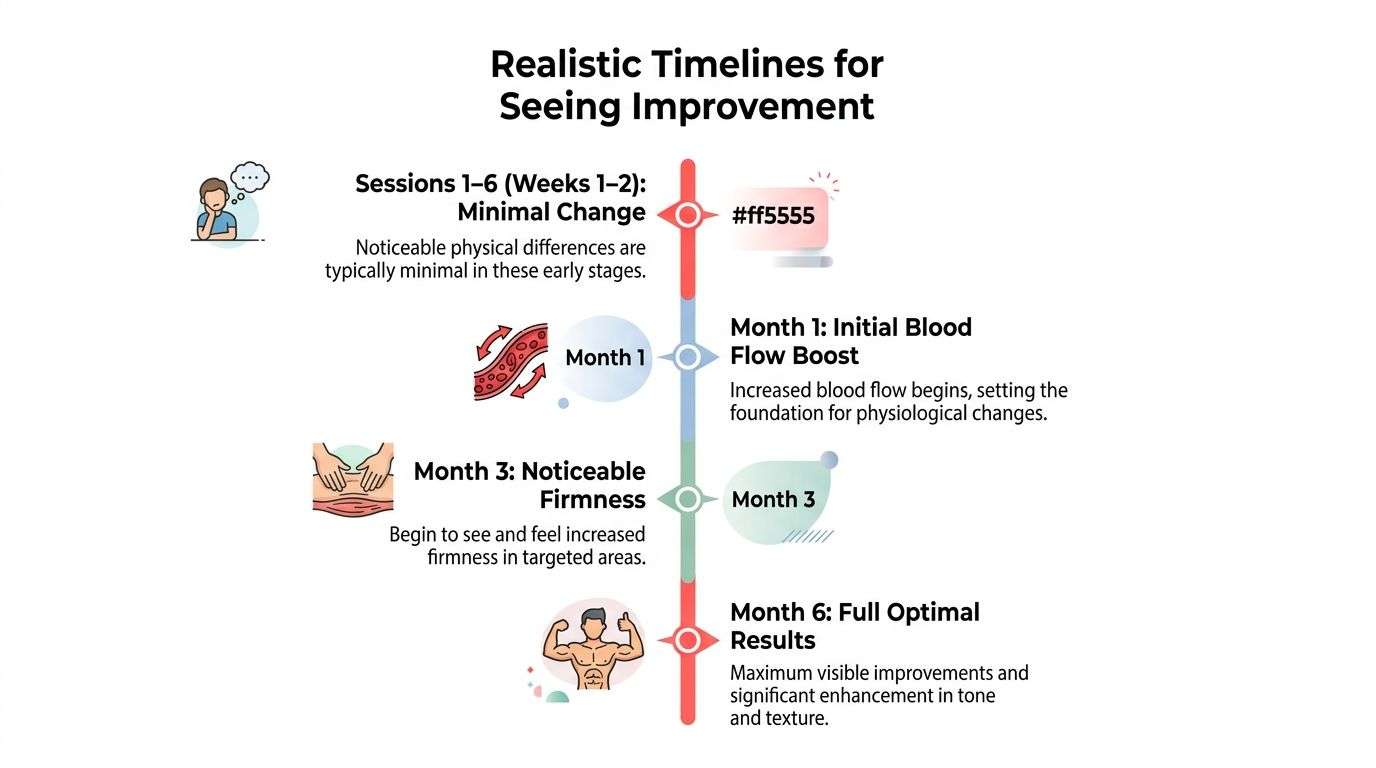
A practical way to interpret progress
Think in phases rather than promised milestones:
- Initial sessions: The treatment is delivered, but a noticeable change may be minimal. Track erection hardness, time needed to become erect, ability to maintain firmness, and whether sexual activity feels less planned.
- Early follow-up: Some men begin to notice more dependable blood-flow response. A single successful encounter isn't enough to establish durable improvement, so look for a pattern across several attempts.
- Later follow-up: Clinical scales and patient reports become more useful when compared with a documented baseline. The important question is whether the improvement changes function, confidence, and intimacy.
- Longer-term review: A clinician should determine whether benefits remain stable and whether other contributors, such as diabetes, smoking, medication use, sleep problems, or low testosterone, need attention.
A detailed explanation of how clinicians may think about the timing of ED treatment results can help you prepare better questions for consultation.
Don't confuse treatment completion with treatment success
Finishing a protocol proves that sessions were delivered. It doesn't prove that your erections improved enough to matter. Before treatment, ask how the clinic defines response, when it measures outcomes, and what happens if your score improves but your sexual function doesn't.
The most credible plan includes a baseline assessment and a follow-up assessment. It also recognizes that durable care may involve treating vascular risk factors, reviewing medications, addressing hormone issues, and managing performance anxiety rather than relying on acoustic therapy alone.
Statistical Significance Versus Meaningful Results
A statistically significant result means the difference between treatment and sham is unlikely to be explained by random variation under the analysis used. It doesn't mean the average patient felt restored, stopped medication, or returned to a previous level of sexual function.
That distinction is central because standardized erectile function scores compress a complicated experience into a number. A small score change may matter greatly to a man who moves from unreliable erections to dependable intercourse. The same change may feel disappointing to someone hoping to regain spontaneous erections without any additional support.
What the newer evidence cautions
A 2025 Cochrane review concluded that low-intensity shockwave therapy may produce a small short-term effect on erectile function, but the improvement may not be perceived as clinically important. The review rated the certainty of evidence low because of methodological limitations and heterogeneity. (2025 Cochrane review indexed on PubMed)
A 2026 systematic review similarly described the benefits as significant but modest compared with sham treatment. That reinforces a point I make during consultations: “works better than sham” is not the same as “works well enough for you.” The relevant outcome is the absolute change in your sexual function, not the most favorable relative comparison in an advertisement.
Questions that reveal meaningful benefit
Ask yourself what improvement would change your life. You might care about maintaining firmness, reducing failed attempts, improving spontaneity, or decreasing reliance on another treatment. Those goals are more useful than a vague promise of enhanced performance.
Track the same measures before and after treatment:
- How often you can achieve an erection with sexual stimulation.
- Whether firmness lasts long enough for the activity you want.
- Whether you need additional support.
- Whether your partner notices a consistent change.
- Whether the improvement remains present after the treatment period.
A meaningful result is the point at which your sexual function changes in a way you can recognize and use, not merely a number that reaches statistical significance.
Who Gets the Best Results and Who Should Look Elsewhere
The strongest candidate profile is a man whose ED appears substantially vasculogenic, meaning reduced arterial blood flow contributes to the problem. The 2019 evidence in men with vasculogenic ED showed improvements in erectile function, erection hardness, and peak systolic velocity, which makes this group the clearest match for the proposed mechanism. (2019 PubMed meta-analysis of vasculogenic ED)
That doesn't mean every man with vascular risk factors will respond. Diabetes, smoking, obesity, cardiovascular disease, medication effects, and aging can affect several erection pathways at once. A clinician should identify which factors are modifiable and whether acoustic therapy is likely to address enough of the underlying problem to justify treatment.
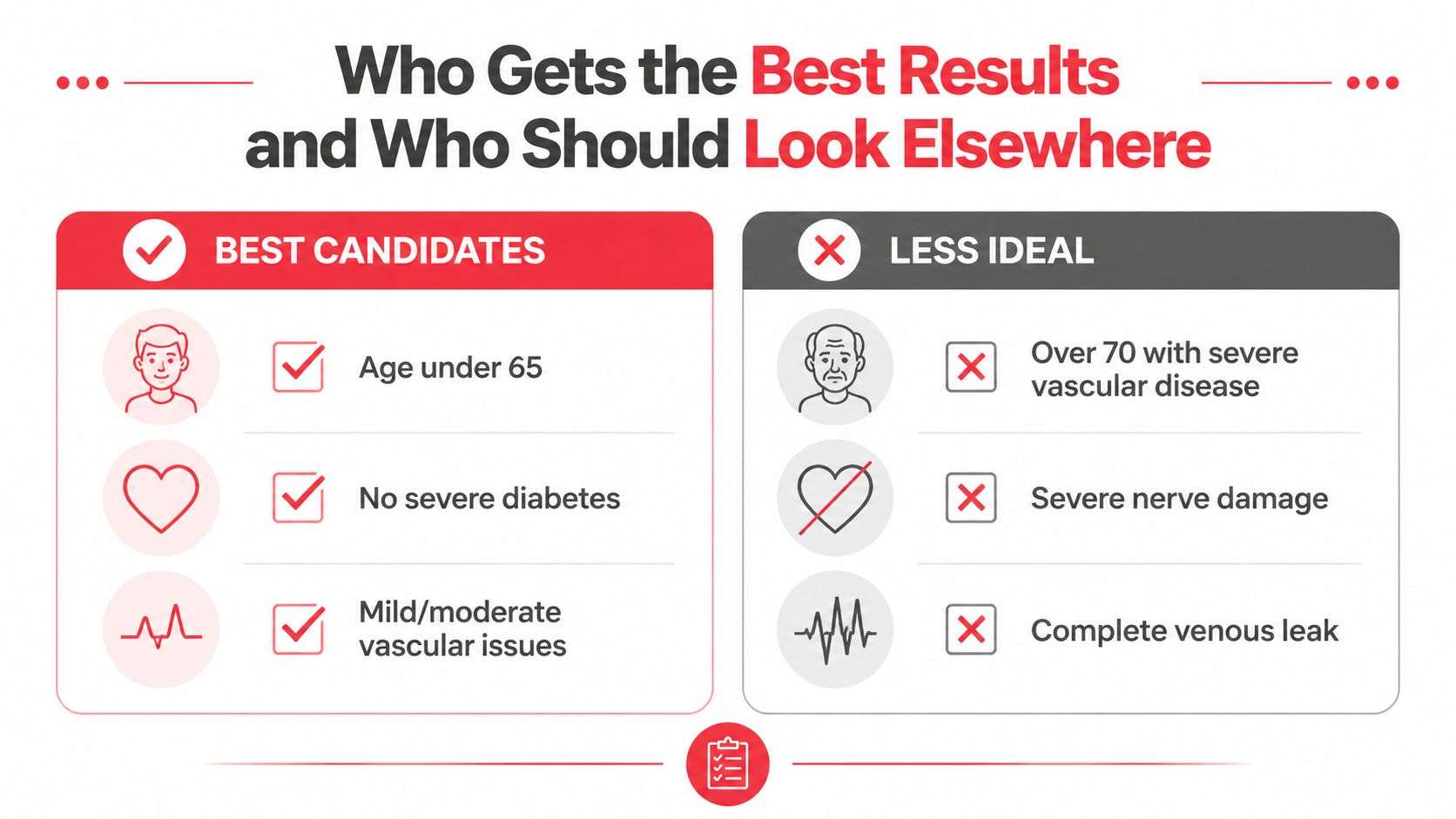
When another approach deserves priority
Acoustic therapy may be a poor first choice when ED is driven mainly by:
- Severe nerve damage: Blood-flow improvement can't fully replace impaired nerve signaling.
- Untreated hormonal problems: Low testosterone or other endocrine issues may need evaluation and treatment.
- Medication or substance effects: A medication review may reveal a more direct solution.
- Major psychological or relationship factors: Counseling, sex therapy, or couples work may be essential.
- Advanced vascular disease: Severe arterial impairment may require a different treatment pathway.
A good consultation should include alternatives rather than treating acoustic therapy as an automatic next step. The right plan may combine approaches, or it may direct you elsewhere.
Peyronie's disease requires separate expectations
Peyronie's disease illustrates why outcome categories must stay separate. Recent meta-analytic evidence suggests low-intensity extracorporeal shockwave therapy may reduce plaque size, curvature, and pain in some studies. It may also support complete remission in chronic-phase disease when combined with platelet-rich plasma, but other reviews found no significant improvement in sexual function and no clear long-term correction of curvature. (Recent meta-analytic evidence on Peyronie's disease)
Pain relief, plaque softening, and true straightening are different endpoints. Acoustic therapy may be more dependable for symptom relief than for reversing established deformity, particularly when the goal is long-term sexual function.
How Acoustic Wave Therapy Compares to Alternatives
Every ED treatment solves a different problem. Acoustic therapy aims to influence tissue and blood-flow biology over time. Oral medication manages the blood-flow response temporarily. Injection therapy can produce a strong erection through a direct pharmacologic effect, while a vacuum device uses mechanical assistance. A surgical implant offers a dependable mechanical solution but requires an operation and permanent device placement.
| Treatment | Mechanism | Duration of Results | Addresses Root Cause | Downtime |
|---|---|---|---|---|
| Acoustic wave therapy | Uses low-intensity acoustic energy to stimulate tissue signaling and vascular repair | Gradual response, with durability varying by patient | May address a vascular contributor | Usually non-surgical, with treatment planning determined clinically |
| Oral medication | Temporarily supports blood flow during sexual stimulation | Limited to the medication's active period | Usually manages symptoms rather than correcting cause | No procedural downtime |
| Injection therapy | Directly produces penile blood-flow and smooth-muscle effects | Typically limited to the treated encounter | Manages the erectile response | Requires training and careful medical supervision |
| Vacuum device | Creates mechanical blood engorgement | Used when needed | Does not repair vascular or nerve damage | Non-surgical, but requires preparation |
| Surgical implant | Provides a mechanical erection pathway | Long-term device-based function | Bypasses rather than repairs the original cause | Requires surgery and recovery |
The trade-off is straightforward. If you need a predictable erection soon, a symptom-management option may be more practical. If you're seeking a drug-free strategy aimed at vascular tissue and can accept gradual, uncertain improvement, acoustic therapy may deserve consideration.
Cost, insurance, medication interactions, procedural risk, and personal preference also matter. Clinics should explain these factors without implying that one category is universally superior. For practices developing responsible patient education and communication, this medical services marketing guide from Smarcomms offers useful context on presenting healthcare information clearly rather than relying on exaggerated promises.
Decision point: Choose the treatment that matches your urgency, diagnosis, risk profile, and definition of success.
Evaluating Clinic Claims and Planning Long-Term Care
Start by asking what a clinic means by “success.” Does success mean any improvement on a questionnaire, a higher erection hardness score, reduced medication use, successful intercourse, or patient-reported satisfaction? Those definitions produce very different impressions, so a credible provider should state the endpoint plainly.
Next, ask whether the claim comes from a peer-reviewed randomized trial, a meta-analysis, an internal patient database, or testimonials. The randomized evidence discussed above supports a modest average benefit, particularly in vascular ED, but the certainty remains limited. A clinic's proprietary protocol may be clinically useful, yet its marketing claims shouldn't be treated as equivalent to independent evidence unless the methods and results are publicly available for review.
Questions to take into a consultation
- What is my likely cause of ED? Ask whether the clinician believes the problem is mainly vascular, neurological, hormonal, medication-related, or mixed.
- What will you measure? Request a baseline and follow-up assessment using the same questionnaire or functional criteria.
- What counts as a meaningful response? Clarify what happens if your score improves but your sexual experience doesn't.
- What alternatives fit my case? A responsible provider should discuss medication, devices, injections, counseling, or surgery when appropriate.
- What follow-up is included? Find out how the clinic monitors progress and handles incomplete response.
Long-term care also matters. Improvements may be influenced by blood-pressure control, diabetes management, exercise, smoking status, sleep, hormone balance, and relationship or psychological health. Maintenance visits can help identify changing risk factors, but a clinic shouldn't promise that maintenance guarantees permanent results.
If you're researching providers in your area, this guide to shockwave therapy for ED near you can help frame the practical questions around evaluation, treatment planning, and follow-up. The best decision is an informed one, based on your baseline function and the kind of improvement you want to feel.
Sexual Wellness Centers of America evaluates erectile dysfunction and offers individualized, non-surgical sexual wellness protocols that may include REGENwave acoustic therapy alongside other regenerative and health-focused services. Visit Sexual Wellness Centers of America to discuss your symptoms, review realistic acoustic wave therapy results, and determine whether this approach fits your goals.