
Why Collagen Supplement and Hair Growth Are Making Headlines
Collagen supplement and hair growth research is capturing attention as millions of people search for solutions to thinning hair and age-related hair changes. Here’s what the current evidence shows:
- Limited direct human studies on collagen specifically for hair growth
- Strong evidence for skin health benefits that may indirectly support hair
- Promising animal research showing fish collagen peptides improved hair regrowth in mice
- Theoretical mechanisms suggest collagen provides amino acids needed for hair protein (keratin)
- Not a cure for pattern baldness or permanent hair loss conditions
You’ve probably seen countless ads promising thicker, fuller hair from collagen supplements. The global collagen market is worth over $1 billion, with celebrities and influencers touting miraculous benefits for skin, hair, and nails.
But here’s the reality: most of the hype isn’t backed by solid human research.
The evidence for collagen’s hair benefits is mostly theoretical and based on small studies. What we do know is that collagen makes up about 30% of your body’s protein and plays a crucial role in skin structure – which could indirectly support the scalp environment where hair grows.
The bottom line? Collagen supplements might help with hair health, but they’re not a magic solution for hair loss.
I’m Jeff Nuziard, CEO of Sexual Wellness Centers of America, where we help clients steer the complex world of wellness supplements and treatments, including collagen supplement and hair growth connections. Through years of working with patients seeking comprehensive wellness solutions, I’ve seen how proper nutrition and targeted therapies can support healthy aging – including hair health.
Understanding Collagen’s Role in Your Body and Hair

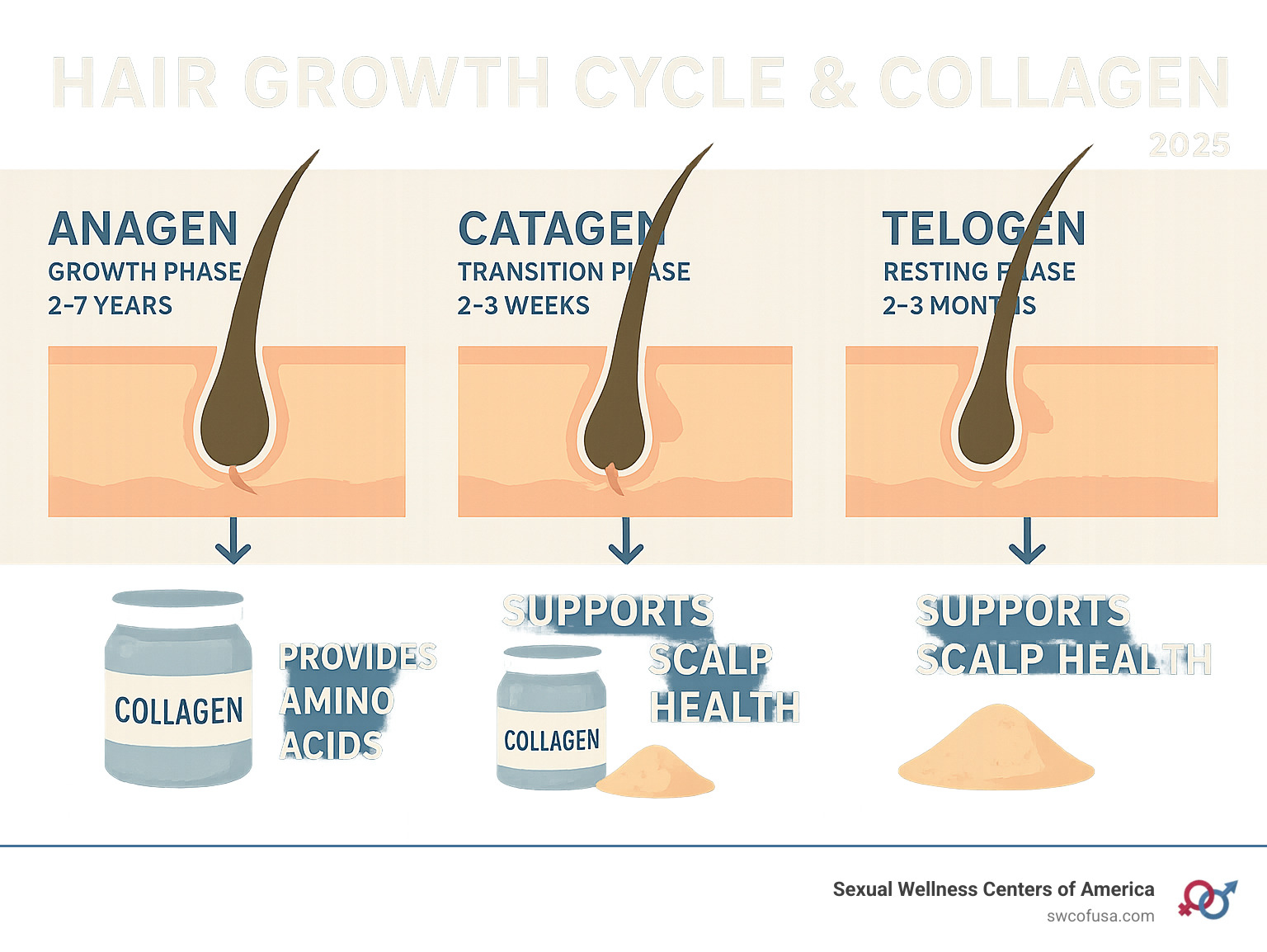
Think of collagen as your body’s internal scaffolding system. This remarkable protein makes up about 25-35% of all the protein in your body, holding everything together like a biological glue. It’s the most abundant protein you have, providing structural support for your skin, bones, muscles, tendons, and even the tiny follicles where your hair grows.
But here’s what might surprise you: collagen doesn’t magically transform into hair. Instead, it works behind the scenes as a master supplier, providing the essential building blocks your body needs to create keratin – the actual protein that makes up your hair strands.
Your hair follicles live in the dermis layer of your scalp, which is roughly 70% collagen. This creates the perfect supportive environment where your hair can grow strong and healthy. When collagen levels start to decline with age, this foundation becomes less stable, potentially affecting both hair thickness and strength.
The fascinating connection between collagen supplement and hair growth becomes clearer when you understand that hair is essentially a protein structure. Your hair contains specific amino acids like glycine, proline, and hydroxyproline – the exact same amino acids found in collagen. When you consume collagen, your body breaks it down into these building blocks, which can then be reassembled into keratin.
More about collagen’s function in the body
How Collagen Contributes to Hair Health
Collagen supports your hair through several fascinating mechanisms that work together like a well-orchestrated team.
First, collagen provides amino acids that serve as the building blocks of keratin. These aren’t just random amino acids – they’re specifically the ones your hair follicles crave most. Glycine, proline, and hydroxyproline are like premium fuel for your hair-making machinery.
Research has revealed that collagen also has impressive antioxidant properties. Marine collagen, in particular, can neutralize harmful free radicals that damage hair follicles. Think of these free radicals as tiny troublemakers that attack the delicate cells in your hair follicles. Collagen steps in like a protective shield, helping to prevent this damage.
Your scalp itself benefits tremendously from adequate collagen levels. Since collagen makes up most of your dermis, maintaining healthy levels helps preserve the structural integrity of your scalp. A healthy scalp environment is absolutely crucial for optimal hair growth – it’s like having fertile soil for a garden.
Perhaps most intriguingly, studies show that collagen peptides can improve the function of dermal papilla cells – the specialized cells at the base of your hair follicles that control hair growth. Research demonstrates that these cells can increase their proliferation by up to 30% when exposed to collagen peptides, potentially supporting a more robust hair growth cycle.
The Natural Decline of Collagen
Here’s the reality that none of us want to face: your body’s collagen production peaks in your twenties and then begins a steady decline of about 1% per year. By the time you reach 40, you’ve lost a significant portion of your collagen stores. It’s like watching your body’s repair crew slowly shrink over time.
Several factors can accelerate this natural decline, turning what should be a gradual process into a faster slide. Sun exposure breaks down collagen through UV damage, while smoking reduces collagen synthesis and actually increases breakdown. A poor diet lacking in vitamin C and protein limits your body’s ability to produce new collagen.
Chronic stress raises cortisol levels, which can interfere with collagen formation. Even environmental pollutants create free radicals that damage existing collagen stores. It’s like your collagen is under attack from multiple directions.
This decline affects your entire body, including your hair. As the dermal layer loses collagen, hair follicles may become less securely anchored, potentially leading to increased hair shedding and reduced hair diameter. The impact on hair thickness and strength becomes more noticeable as this process continues over time.
The Science Behind Collagen Supplement and Hair Growth

Marketing sometimes makes collagen sound like a “GPS‐guided” protein that heads straight to your scalp. Reality check: once you swallow collagen, your digestive system reduces it to individual amino acids and tiny peptides that circulate through your bloodstream. Your body then distributes those building blocks wherever they’re most needed—sometimes to hair follicles, sometimes elsewhere.
What Human Studies Say
- Direct hair-growth trials in people are scarce.
- Skin research is stronger: a meta-analysis of 19 studies showed better skin firmness, hydration and fewer wrinkles after 8–12 weeks of collagen peptides. A healthier scalp (which is still skin) could indirectly support hair.
- In a small brittle-nail study, 2.5 g daily improved keratin quality—again suggesting potential parallels for hair.
Insights From Lab & Animal Work
| Model | Collagen Source | Key Finding |
|---|---|---|
| Mouse (C57BL/6) | Fish peptides 1 g/kg | Full fur regrowth by day 14; VEGF ↑ 1.3× |
| Human dermal papilla cells | Fish peptides 62.5 ppm | Cell proliferation ↑ ~14 % |
| Human follicle organ culture | Marine peptides | Longer anagen phase; more matrix cell division |
See the 2022 mouse study for details: https://pubmed.ncbi.nlm.nih.gov/36233206/.
Why Hydrolyzed (Peptide) Form Matters
Regular collagen is a huge molecule, a bit like trying to push a beach ball through a garden hose. Hydrolyzed collagen breaks that ball into marble-sized peptides that cross the gut wall far more easily. Once in circulation, these peptides may:
- Supply glycine, proline and hydroxyproline for keratin synthesis.
- Nudge fibroblasts in the scalp to produce more native collagen.
- Stimulate dermal papilla cells that oversee hair‐growth cycles.
Bottom line: the biology is plausible and animal data are exciting, but large, well-controlled human trials are still missing. Treat collagen as a potential helper—not a stand-alone cure.
Navigating the Supplement Aisle: Choosing the Right Collagen
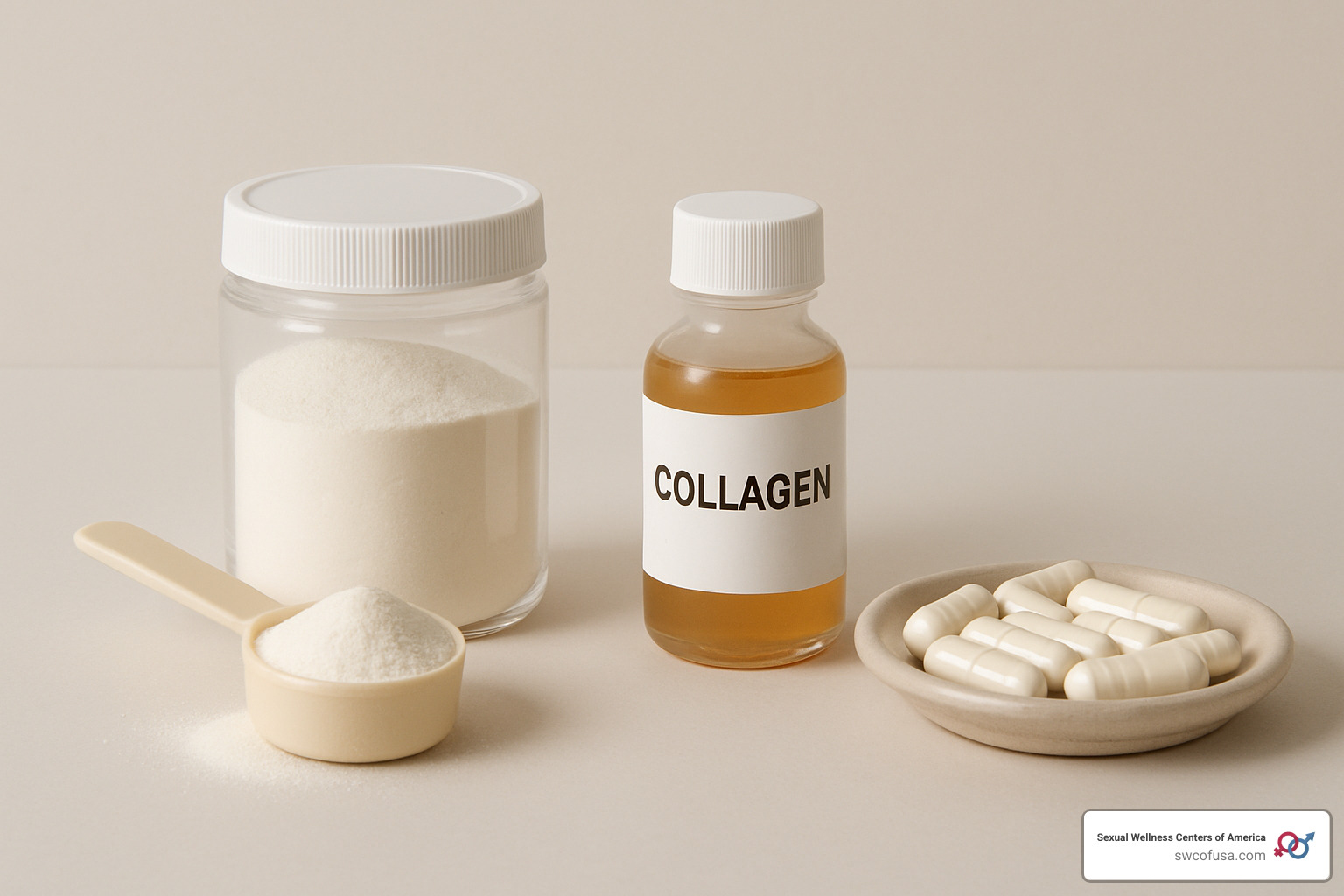
Walking down the supplement aisle can feel like navigating a maze of promises and marketing claims. With dozens of collagen products claiming to be the secret to better hair, how do you separate the real deal from the expensive placebos?
The truth is, not all collagen supplements are created equal. The key difference lies in bioavailability – how well your body can actually absorb and use the collagen you’re consuming.
Hydrolyzed collagen (also called collagen peptides) is your best bet. This form has been broken down into smaller molecules that your digestive system can actually absorb. Regular collagen or gelatin supplements might be cheaper, but they’re largely wasted since your body can’t break them down effectively.
When it comes to choosing the right source for collagen supplement and hair growth benefits, you have three main options. Marine collagen from fish is primarily Type I collagen, which makes up most of your skin and hair structure. Research suggests it may have superior absorption due to its smaller particle size. Bovine collagen from cows provides both Type I and III collagen, giving you a broader range of amino acids. Chicken collagen is mainly Type II, which is better for joint health than hair support.
The form you choose matters too. Powder forms typically offer higher concentrations and better value than capsules, though they require mixing into drinks or food. Capsules are convenient but often contain lower doses, meaning you might need to take several per day to reach effective levels.
Here’s what to look for on any supplement label:
- Third-party testing for purity and potency verification
- Clear source information about where the collagen comes from
- Hydrolyzed collagen or collagen peptides in the ingredient list
- Minimal additives and fillers
- Proper dosage information (typically 2.5-15 grams daily)
- Recent expiration dates and storage requirements
At Sexual Wellness Centers of America, we’ve learned that our clients in Colleyville, TX get better results when they invest in quality supplements rather than bargain-hunting. A higher-quality product taken consistently will likely serve you better than a cheap alternative that your body can’t properly absorb.
Red flags to avoid include vague ingredient lists, unrealistic promises about hair regrowth, extremely low prices (quality collagen processing isn’t cheap), and manufacturers with no contact information. If a product seems too good to be true, it probably is.
The goal isn’t just to buy collagen – it’s to choose a form that your body can actually use to support your hair health goals.
Beyond Supplements: Holistic and Expert-Recommended Hair Health Strategies

Collagen works best when the rest of your “hair ecosystem” is in good shape. Think of supplements as back-up singers; the lead performers are everyday habits.
Nutrient priorities
- Ample protein (fish, eggs, poultry) so follicles have raw keratin material.
- Iron and zinc—common deficiencies that amplify shedding.
- Vitamin C to help your body make its own collagen and absorb iron.
- Omega-3 fats to calm scalp inflammation.
Lifestyle basics
- Manage chronic stress (yoga, meditation, exercise) to avoid cortisol-induced shedding.
- Aim for 7-9 hours of sleep; most tissue repair, including hair synthesis, happens overnight.
- Treat hair gently—limit hot tools, tight styles and harsh chemical treatments.
- Massage the scalp for 2–3 minutes daily to boost blood flow.
Personalized, Data-Driven Care
Hair thinning often traces back to hormone shifts, micronutrient gaps or underlying illness. At Sexual Wellness Centers of America, we use comprehensive blood panels to uncover those root causes, then craft individualized plans that may include:
- Targeted nutrition and pharmaceutical-grade supplements (collagen, if appropriate).
- Advanced regenerative therapies like REGENmax® technology, SHEshot® and HEshot®.
- Hormonal optimization when imbalances are detected.
This integrated approach—not a single pill—explains our 97.2 % success rate in complex wellness cases.
Potential Risks, Side Effects, and Regulation
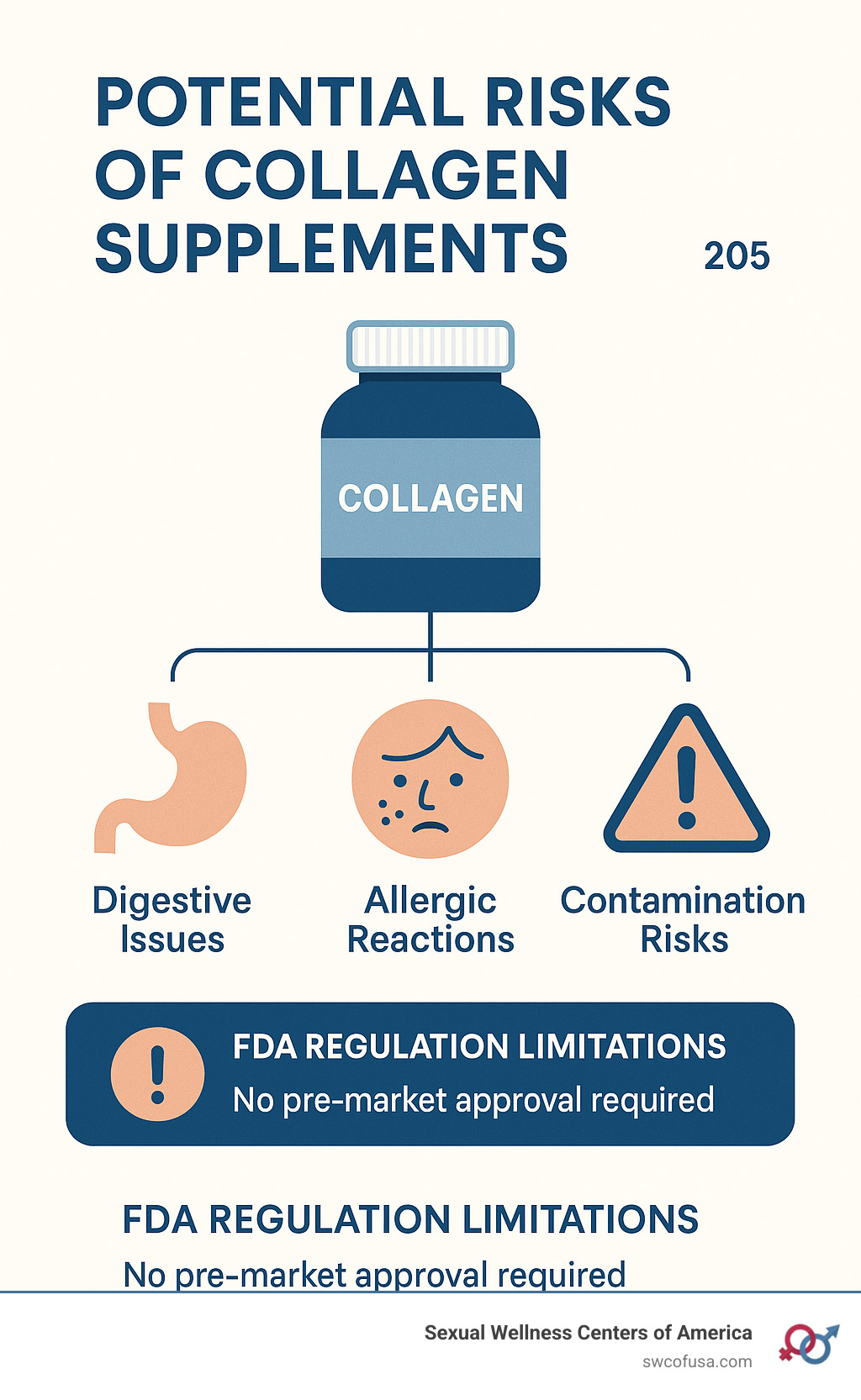
While the promise of collagen supplement and hair growth benefits sounds appealing, it’s crucial to understand the potential risks before you start taking these supplements. The reality is that the supplement industry operates quite differently from prescription medications, and that difference can affect your safety.
The FDA Regulation Gap:
Here’s something that might surprise you: collagen supplements don’t need FDA approval before hitting store shelves. They’re classified as dietary supplements, not drugs, which means manufacturers can sell them without proving they’re safe or effective first.
This creates a “buyer beware” situation. Companies are supposed to ensure their products are safe, but there’s no independent verification before they reach consumers. The FDA only steps in after problems are reported.
Quality Control Concerns:
Without strict oversight, quality can vary dramatically between brands. Research has found concerning levels of heavy metals and other contaminants in some collagen supplements, including lead, mercury, and cadmium.
Some products don’t even contain the amount of collagen listed on the label. Others include unlisted ingredients or fillers that could cause allergic reactions. This is why third-party testing is so important when choosing a supplement.
Common Side Effects You Should Know About:
Most people tolerate collagen supplements well, but gastrointestinal issues are the most frequently reported problems. These typically include bloating, heartburn, and feelings of fullness after taking the supplement.
Some people also experience an unpleasant aftertaste, especially with marine collagen products that can have a fishy flavor. This usually improves with time or can be masked by mixing the supplement into smoothies or other foods.
Allergic Reactions Are Possible:
If you have food allergies, collagen supplements could trigger reactions. Marine collagen can cause problems for people allergic to fish or shellfish, while bovine collagen might affect those with beef allergies.
Symptoms of allergic reactions can range from mild (skin rash, digestive upset) to severe (difficulty breathing, swelling). If you have known food allergies, read labels carefully and consider consulting with a healthcare provider before starting collagen supplements.
Who Should Be Extra Cautious:
Certain groups should approach collagen supplements with particular care. People with kidney or liver disease should be cautious because their bodies may have difficulty processing the additional protein load.
Those taking blood thinners should also consult their doctor, as some collagen supplements might affect blood clotting. Pregnant or breastfeeding women should avoid collagen supplements unless specifically recommended by their healthcare provider, as safety data for these groups is limited.
The Bottom Line on Safety:
While serious side effects from collagen supplements are rare, the lack of regulation means you need to be an informed consumer. Choose products from reputable companies that conduct third-party testing, start with smaller doses to assess tolerance, and consult with a healthcare provider if you have underlying health conditions.
At Sexual Wellness Centers of America, we always recommend discussing any new supplement regimen with a qualified healthcare provider. Our comprehensive approach to wellness includes evaluating how supplements might interact with your overall health profile and any existing treatments.
Frequently Asked Questions about Collagen and Hair
How long until I notice a difference?
Most skin studies see results after 8–12 weeks of daily collagen. Because hair grows slower, give it at least three months of consistent use before judging—longer if you have very slow growth cycles.
Can collagen reverse baldness?
No. Collagen can nourish existing follicles and maybe slow miniaturization, but it cannot resurrect follicles destroyed by male or female pattern baldness. Proven medical or surgical treatments are still required for significant balding.
Marine vs. bovine collagen—does it matter?
Marine collagen (fish) is mostly Type I and has smaller peptides, which may absorb better; bovine provides Types I & III and is usually less expensive. Unless you have dietary restrictions or allergies, the most important factor is a high-quality, hydrolyzed product you’ll take every day.
Conclusion: Is Collagen the Missing Piece?
Collagen supplements show promise for overall hair quality—stronger strands, less breakage, possibly slower thinning—but they are not a magic bullet against hereditary baldness. The smartest plan couples a well-sourced collagen peptide with balanced nutrition, stress control and, when needed, professional evaluation.
At Sexual Wellness Centers of America in Colleyville, our team uses detailed hormone and vitamin panels plus regenerative therapies such as REGENmax® to build comprehensive hair-health strategies. Curious how that might look for you? Explore our regenerative wellness services and schedule a personalized consult.
Healthy hair starts with healthy you—collagen can help, but the spotlight still belongs to holistic care.