
You wake up the next morning replaying the night before. Nothing felt dramatically wrong. You were attracted to your partner, the mood was there, and you wanted sex. But your erection wasn't as strong as usual, or it faded faster than expected.
Then you run through the day. Long meetings. Coffee instead of water. Maybe a workout. Maybe a couple of drinks. Dinner late. Very little real hydration. That's when the question shows up: can dehydration really affect erections?
Yes, it can. But the more useful question is whether this was a temporary hydration problem or an early sign of a more persistent erectile issue. That distinction matters. A one-off episode after a draining day usually calls for simple self-correction. A repeated pattern, especially when you're otherwise rested and hydrated, deserves a closer look.
Most men don't need more internet noise on this topic. They need a practical way to sort through what happened, what to try first, and when to stop guessing. That's what this guide is for.
Table of Contents
- Introduction A Frustrating Night and a Simple Question
- The Physiological Link Between Water and Erections
- Is It Just Dehydration or Something More
- Practical Steps for Hydration and Performance
- Red Flags When Hydration Is Not the Answer
- The Path to Lasting Improvement With Integrated Care
Introduction A Frustrating Night and a Simple Question
You get to the end of a long day, finally have a chance to be close with your partner, and your body does not respond the way you expected. Nothing seems obviously wrong. You were just busy, a little overheated, short on sleep, running on coffee, maybe had a couple of drinks, and never really replaced the fluids you burned through.
In clinic, this is a common starting point. One difficult night after a dehydrating day often points to a short-term performance problem, not established erectile dysfunction. The practical question is whether the issue tracks with the day you had, or whether it is showing up often enough to suggest one of the medical and lifestyle factors that can contribute to erectile dysfunction.
Hydration is one part of that picture. So are sleep, stress, alcohol, medications, and overall vascular health. If you are low on fluids and also depleted in essential trace minerals, the body may be less prepared for normal sexual function, especially after heat, exercise, or alcohol.
The reassuring point is simple. A single off night after a draining day usually has a clear explanation and often improves with basic self-care.
What matters is the pattern. If erection quality dips after travel, intense workouts, heat exposure, drinking, or a day when you barely touched water, dehydration belongs high on the list of likely contributors. If the same problem shows up across calm, well-rested, well-hydrated days, it deserves a closer look.
That distinction matters because the next step is different. Some men need fluids, rest, and a reset. Others need an evaluation for blood pressure issues, metabolic disease, hormone changes, medication effects, or early vascular ED. This article helps you sort out which situation you are in so you can act early and avoid guessing.
The Physiological Link Between Water and Erections
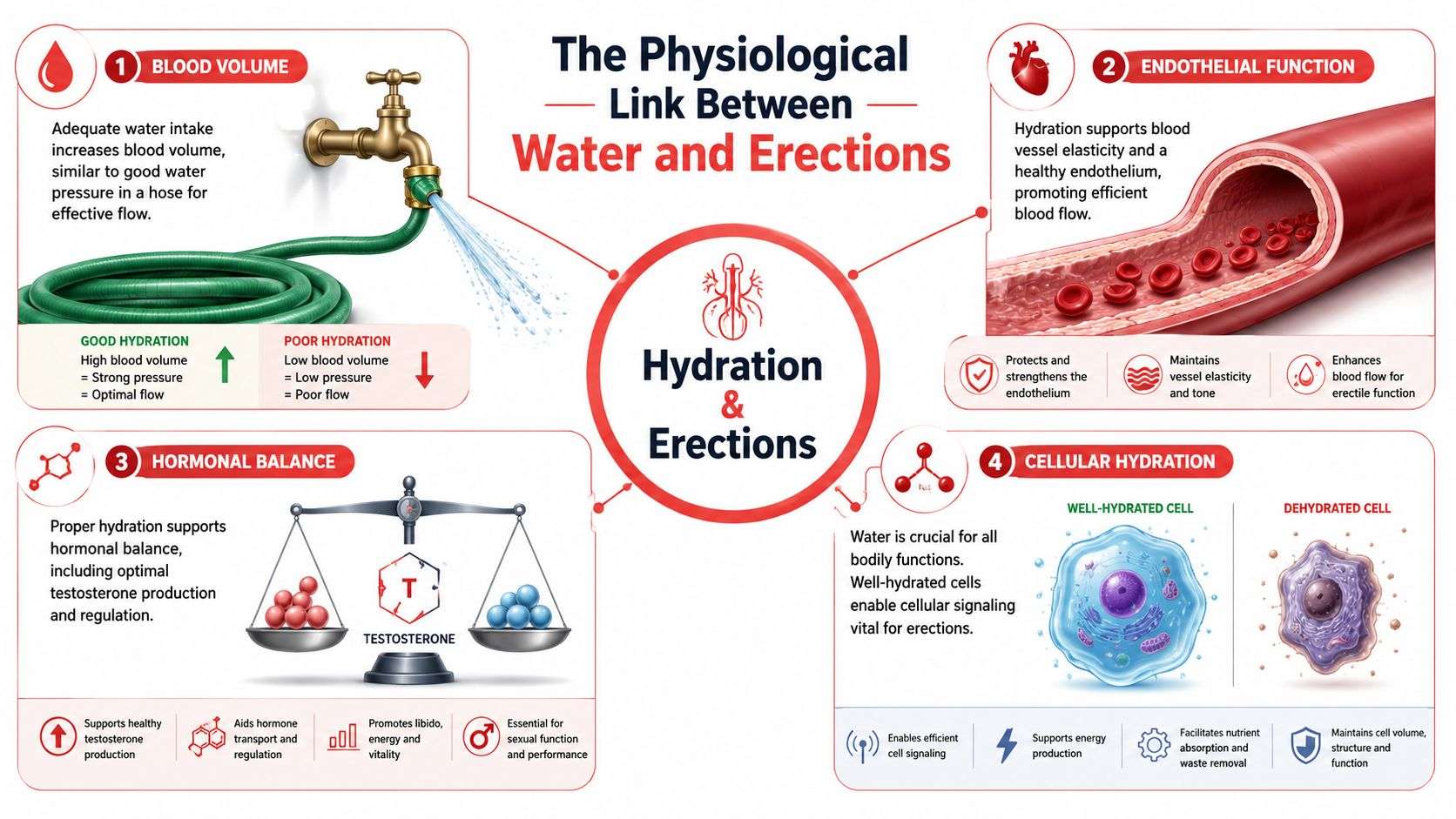
An erection depends on circulation, nerve signaling, smooth muscle relaxation, and hormone support working at the same time. Water affects several parts of that process. It is not the whole story, but it can be enough to tip performance off course on the wrong day.
Blood flow needs enough fluid volume
At the most basic level, erections are a vascular event. Blood has to move into erectile tissue efficiently, and that blood has to stay there long enough to maintain firmness.
If you are dehydrated, circulating volume can fall. Blood flow may become less efficient, especially if dehydration is layered on top of heat, fatigue, alcohol, poor sleep, or heavy exercise. In practice, that can look like slower onset, less rigidity, or losing firmness before you want to.
This is one reason a single rough night after a draining day often has a straightforward explanation.
Dehydration shifts the body toward preservation, not sexual performance
When fluid is low, the body focuses on maintaining blood pressure and protecting core organs. That response is useful, but it does not create ideal conditions for erections. Blood vessels need to relax for strong penile inflow. Dehydration can work against that goal by increasing physiologic stress and narrowing your margin for error.
Some men also lose minerals through sweat, especially after hard workouts, outdoor work, long travel days, or repeated heat exposure. Replacing water alone may help, but in some cases restoring essential trace minerals can support hydration balance more effectively. That is not a treatment for erectile dysfunction. It is one practical reason some men still feel depleted after drinking plain water.
Hormones, stress, and signaling can also be affected
Sexual function is not just about blood vessels. Libido, arousal, erection quality, and staying power also depend on the nervous system and a stable hormonal environment.
Repeated dehydration can increase stress signaling and leave men feeling flat, fatigued, or less responsive. Water balance is also tied to normal hormone regulation. The clinical point is simple. If your body is under repeated strain, sexual performance often becomes less predictable.
That pattern matters because dehydration can be a trigger, while deeper conditions that may cause erectile dysfunction may still be driving the bigger picture underneath.
What the evidence supports, and what it does not
The physiologic link between hydration and erections makes sense clinically, but the strongest published evidence does not come from healthy men with one isolated off night. One useful example comes from research in men on hemodialysis. A peer-reviewed hemodialysis review on fluid status and sexual function found that overhydration was associated with higher rates of sexual dysfunction and depression, along with less favorable testosterone and related hormone patterns.
Healthy men should not compare themselves to patients with advanced kidney disease. The takeaway is narrower and still useful. Fluid imbalance, whether too little or too much in a medically complex setting, can track with meaningful changes in sexual function.
In clinic, that is how I frame it. If erection quality drops after a clearly dehydrating day and improves when you recover, hydration belongs high on the list of likely contributors. If the same problem shows up across ordinary days with decent sleep, normal fluid intake, and no obvious trigger, hydration is probably not the full answer.
Is It Just Dehydration or Something More
The biggest mistake men make is overreacting to one episode, or underreacting to a pattern. Neither is helpful. The right question isn't “Did this ever happen?” It's “What pattern do I see when I look at the last several weeks or months?”
Patterns matter more than a single bad night
Temporary dehydration-related difficulty usually has a story behind it. You can point to the day and say, “That probably did it.” Maybe it was a long run in the heat, back-to-back coffees, a flight, poor sleep, alcohol, or skipping meals and water all day.
Chronic ED feels different. It becomes less tied to a specific dehydrating event and more tied to your baseline. The problem shows up even on days that seem otherwise normal. It may arrive gradually. Men often notice they're not waking with the same firmness, not responding the same way during intimacy, or needing more stimulation for less reliable results.
If the explanation keeps changing but the erection problem keeps repeating, stop assuming hydration is the whole answer.
A side-by-side view makes this easier.
Transient Difficulty vs Chronic ED
| Symptom | Dehydration-Related Difficulty | Chronic Erectile Dysfunction (ED) |
|---|---|---|
| Timing | Often follows a clear trigger such as heat, sweating, alcohol, travel, or a day with poor fluid intake | Appears across many situations, including ordinary days |
| Pattern | Occasional and inconsistent | Recurrent or persistent |
| Recovery | Tends to improve once hydration, rest, and routine normalize | Doesn't reliably improve even when you correct obvious lifestyle factors |
| Libido | Sexual interest may still be present, but performance is less dependable | May be accompanied by lower libido, reduced confidence, or broader changes |
| Energy and recovery | Often clustered with fatigue, headache, dry mouth, or feeling run down after a specific day | Often paired with ongoing low energy, poor stamina, or other health concerns |
| Progression | Doesn't usually show a steady downward trend | May gradually worsen over time |
| Best first step | Rehydrate, rest, reduce alcohol, and reassess after your body normalizes | Get a medical evaluation instead of repeatedly self-explaining it away |
There's another clue worth noticing. Men with metabolic issues often assume their erection problem is random when it is part of a larger vascular picture. If blood sugar regulation is part of your health story, movement matters. This guide on how to optimize blood sugar with exercise offers a practical overview because glucose control, circulation, and erectile health are closely connected.
You don't need to diagnose yourself perfectly. You just need to triage yourself. If your symptoms behave like a temporary hydration issue, start there. If they behave like a chronic pattern, move out of self-experiment mode and into evaluation.
Practical Steps for Hydration and Performance
A common pattern in clinic is straightforward. A man has a long day outside, a hard workout, several drinks, or a travel day with very little water. By the time intimacy is on the table, his body is already trying to catch up. In that setting, the right question is practical: does this improve once you rehydrate and recover, or does it keep happening even on ordinary days?
What to do after a dehydrating day
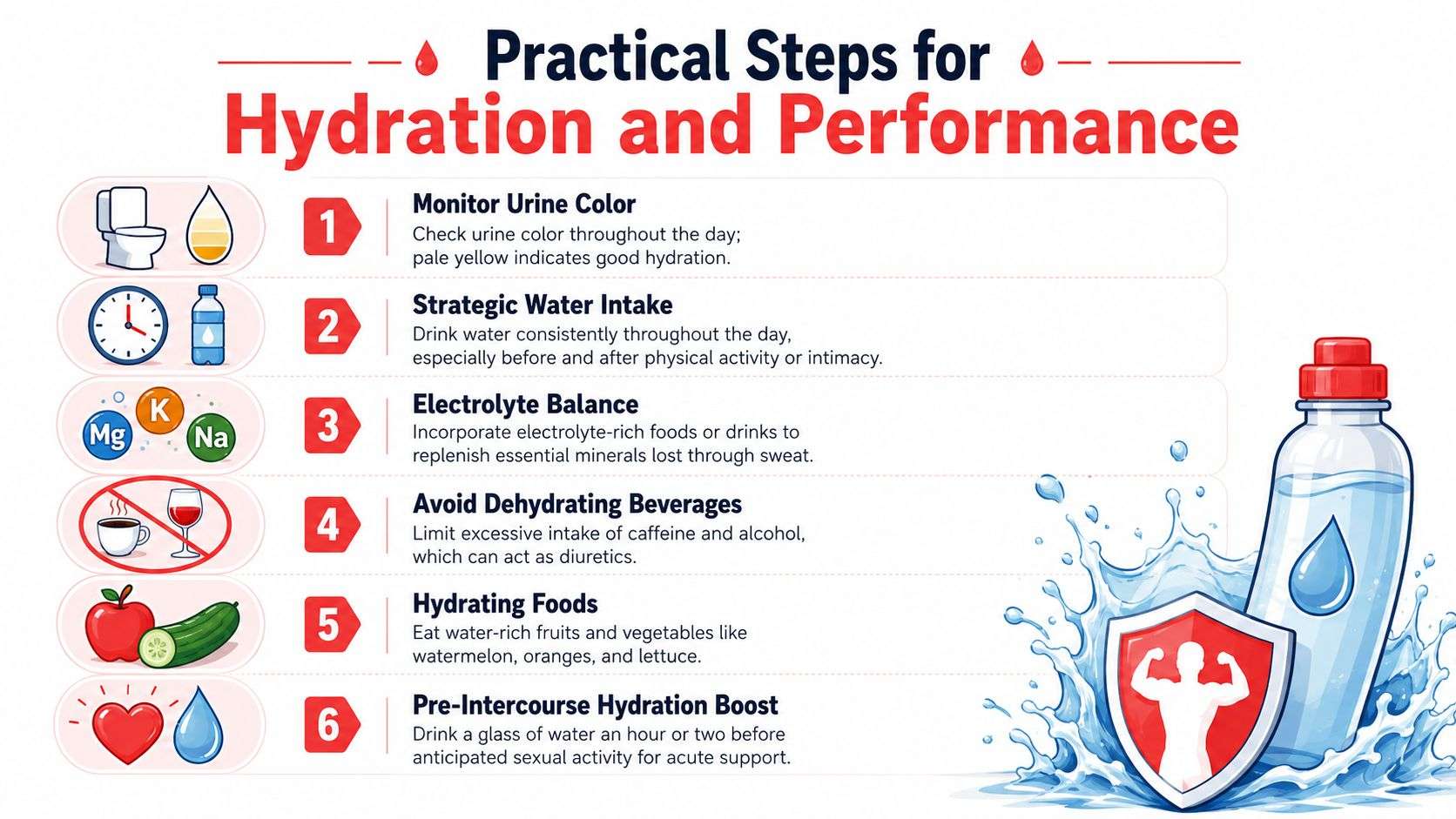
Timing matters. If you know you have been depleted, start correcting it in the afternoon or early evening. Last-minute water rarely fixes a body that has been behind all day.
- Sip fluids steadily over several hours: A consistent intake is easier to absorb and less likely to leave you feeling bloated right before sex.
- Replace electrolytes if you sweated heavily: Heavy exercise, heat exposure, and long outdoor days deplete more than water.
- Have a real meal: Food helps your body retain fluid more effectively than water alone, especially after sweating or alcohol.
- Stop adding to the problem: More alcohol that night often worsens erection reliability, sleep quality, and next-day recovery.
Practical rule: If sex may happen tonight, your hydration plan starts earlier in the day.
How to build a steady hydration routine
Daily hydration works best when it is built into your schedule. Men are often given a general benchmark of around 3.7 liters of total daily fluids, and women around 2.7 liters, as outlined earlier in patient guidance on the topic. Use that as a starting point, not a target you force every day regardless of heat, exercise, body size, or medical conditions.
A routine that holds up in real life usually includes a few simple habits:
- Drink earlier, not all at once at night. Catch-up hydration late in the day is uncomfortable and usually less effective.
- Tie fluids to fixed parts of your day. Morning, meals, workouts, and afternoon breaks are more reliable than vague intentions.
- Plan for known dehydrators. Travel, alcohol, hot weather, caffeine, and strenuous training all raise the chance of an off night.
- Use water-rich foods. Fruit, vegetables, yogurt, and soups can make hydration easier to maintain.
- Reassess the next day. If performance improves once hydration, sleep, and recovery normalize, a short-term trigger is more likely.
That last point is the decision point. If the problem clearly tracks with dehydration and settles when your routine settles, self-care is a reasonable first step. If you want to broaden that home approach, these natural remedies for erectile dysfunction can help you look at sleep, stress, exercise, and circulation alongside hydration.
Red Flags When Hydration Is Not the Answer
A missed erection after a long workout, a night of drinking, or a day of travel can fit a simple hydration explanation. A pattern that keeps showing up on normal days usually does not. That is the fork in the road.
Signs the problem is bigger than fluid intake
In clinic, I tell men to look for consistency, not one bad night. If hydration were the main issue, erectile quality should improve once fluids, sleep, and recovery return to baseline. If that reset never happens, it is time to look wider.
Pay attention if any of these fit your situation:
- You're hydrated and still having trouble: The issue shows up on routine days, not only after obvious dehydration.
- Your erections have weakened over time: A gradual decline points more toward vascular, hormonal, metabolic, neurologic, or medication-related causes.
- Other symptoms are showing up too: Low libido, fatigue, reduced exercise tolerance, weight changes, poor sleep, or mood shifts often travel with a deeper problem.
- The problem is affecting confidence: Anxiety can become part of the cycle, but recurring performance issues often start with a physical driver.
- You need more effort to get the same result: More stimulation, more planning, and less spontaneity usually signal a change worth evaluating.
As noted earlier, poor hydration can add stress to a system that already depends on healthy blood flow, hormone signaling, and nervous system input. It can be one contributor. Persistent erectile dysfunction rarely stays explained by water alone.
Why waiting too long can cost you time
Men often wait because the problem feels intermittent, private, or easier to dismiss than address. In practice, delay makes triage harder. Once frustration builds, relationship strain, avoidance, and performance anxiety can blur the original cause.
A practical rule helps here. If the problem is occasional and clearly tied to dehydration, self-correction is reasonable. If it is recurring, progressive, or happening despite normal hydration, that moves it out of the self-care category and into evaluation.
If you are already considering medication, this guide on how erectile dysfunction treatment pills work can help you understand where pills fit. They can improve function for some men, but they do not identify whether the root issue is vascular disease, low testosterone, sleep apnea, blood sugar problems, medication effects, or another chronic driver.
A hydration problem should improve when hydration improves. If it does not, the next step is a proper workup, not more guessing.
The Path to Lasting Improvement With Integrated Care
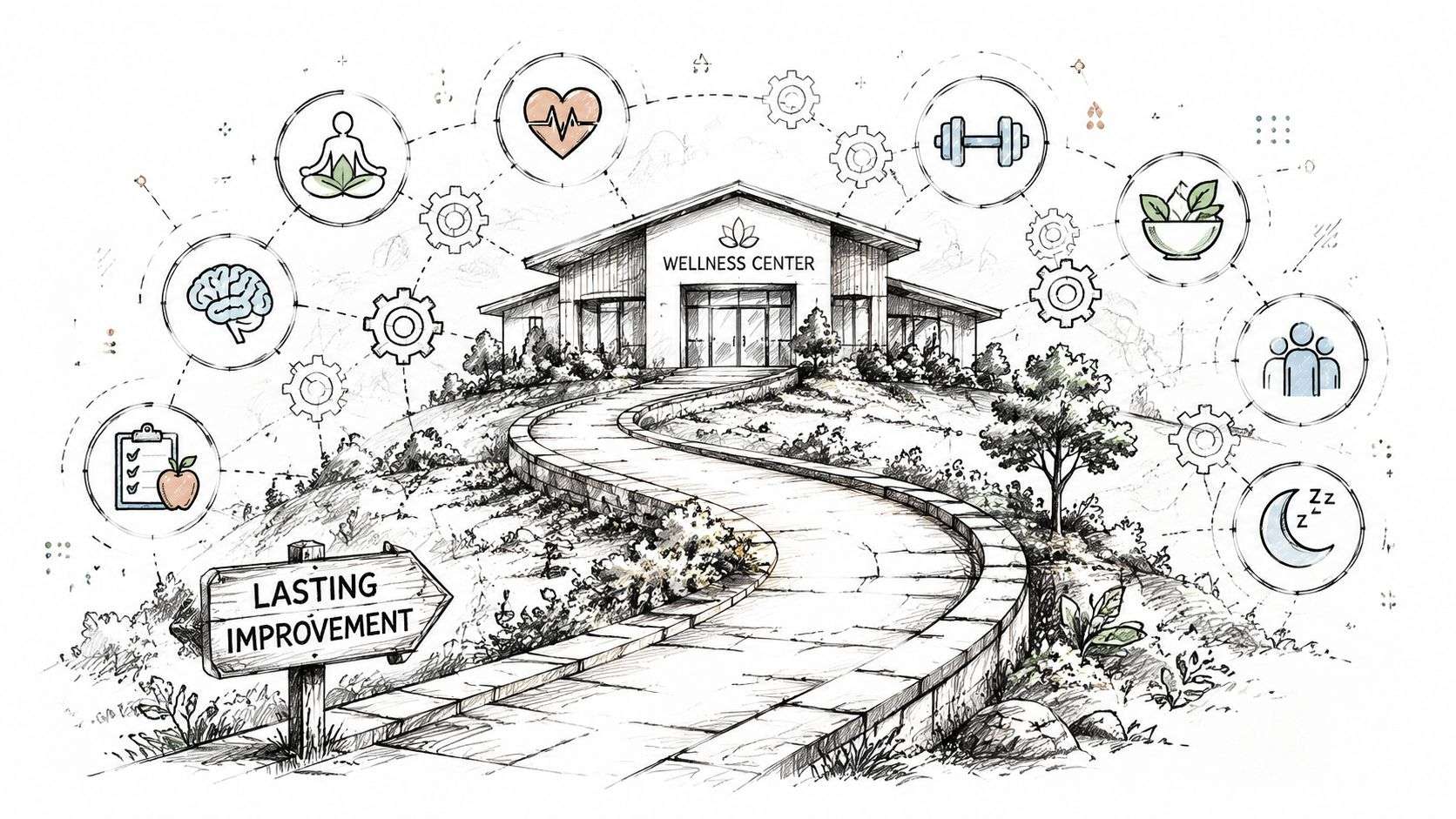
When erection problems become chronic, the best next step isn't more guessing. It's a structured evaluation that separates temporary contributors from root causes. In practice, that means looking at the whole sexual health system, not just whether you can get an erection on command.
What a real evaluation should look for
A useful assessment asks practical questions first. Is the issue sudden or gradual? Situational or consistent? Is libido intact? Are morning erections changing? Is there a history of diabetes, vascular concerns, sleep problems, weight gain, chronic stress, pelvic issues, or medication changes?
Then the workup should move into objective data. That often includes hormone review, broader lab analysis, and a look at vascular and metabolic contributors. The point isn't to medicalize every bad night. The point is to stop treating a recurring symptom like a mystery when a pattern is already present.
Men are often surprised by what turns up. Sometimes it's primarily vascular. Sometimes hormones are underperforming. Sometimes blood sugar, sleep quality, chronic inflammation, or stress physiology are degrading sexual function. Often it's a combination.
When treatment should focus on restoration
A mindset shift is often necessary for many men. If the problem is chronic, the answer usually isn't a trick, a supplement guess, or a one-note solution. It's a plan built around the specific tissue systems involved in erection quality.
For some men, symptom relief is enough. For others, the better goal is restoration. That means supporting healthier blood vessel response, improving tissue function, correcting hormonal issues when present, and reducing the load from related problems such as poor sleep or metabolic strain.
At a specialized sexual wellness practice, that may include thorough medical evaluation and non-surgical regenerative options designed to support circulation and tissue health rather than only timing a pill around intimacy. Programs such as REGENmax® may combine modalities like REGENwave™, REGENlase™, and concentrated HEshot® protocols as part of a broader plan. When used appropriately, that kind of integrated approach aims to address the biology behind erectile performance, not just temporarily override it.
Lasting improvement usually comes from matching treatment to the driver of the problem, not from repeating the same self-fix after every disappointing night.
This is a key insight from dehydration erectile dysfunction. Hydration matters. It can absolutely affect performance. But it's also a useful screening question. If better hydration solves the issue, great. If it doesn't, that failure gives you important information. It means the body likely needs more than water.
If you're dealing with recurring erection problems and want answers that go beyond trial and error, Sexual Wellness Centers of America offers evaluation and treatment pathways focused on sexual health, hormone balance, and non-surgical regenerative care. The right next step is to find out whether your issue is temporary, reversible, and lifestyle-driven, or part of a deeper pattern that deserves expert attention.