
Understanding the Impact of Diabetes on Your Sexual Health
Diabetic medications and ED are closely linked for many men managing blood sugar issues. If you’re wondering how your diabetes treatment might affect your love life, here’s what you need to know:
| Diabetes Medication | Effect on Erectile Function | Why This Happens |
|---|---|---|
| Metformin | May worsen ED in some men | Can lower testosterone levels |
| Sulfonylureas (like gliclazide) | May improve erectile function | Can increase testosterone levels |
| Insulin | Generally neutral effect | No significant direct impact |
| GLP-1 Agonists | May improve erectile function | Helps with weight loss and vascular health |
Erectile dysfunction (ED) affects about 35-75% of men with diabetes during their lifetime. That’s three times higher than in men without diabetes. Even more concerning, men with diabetes typically develop ED 10-15 years earlier than their non-diabetic peers.
Why does this happen? High blood sugar damages the blood vessels and nerves responsible for erections. It’s like trying to inflate a balloon through a pinched straw – the physical systems just can’t function properly.
Many men don’t realize their diabetes medications might be part of the problem – or potentially part of the solution.
I’m Jeff Nuziard, CEO of Sexual Wellness Centers of America, where I’ve helped thousands of men steer the complex relationship between diabetic medications and ED through our specialized treatment programs that address both conditions simultaneously.
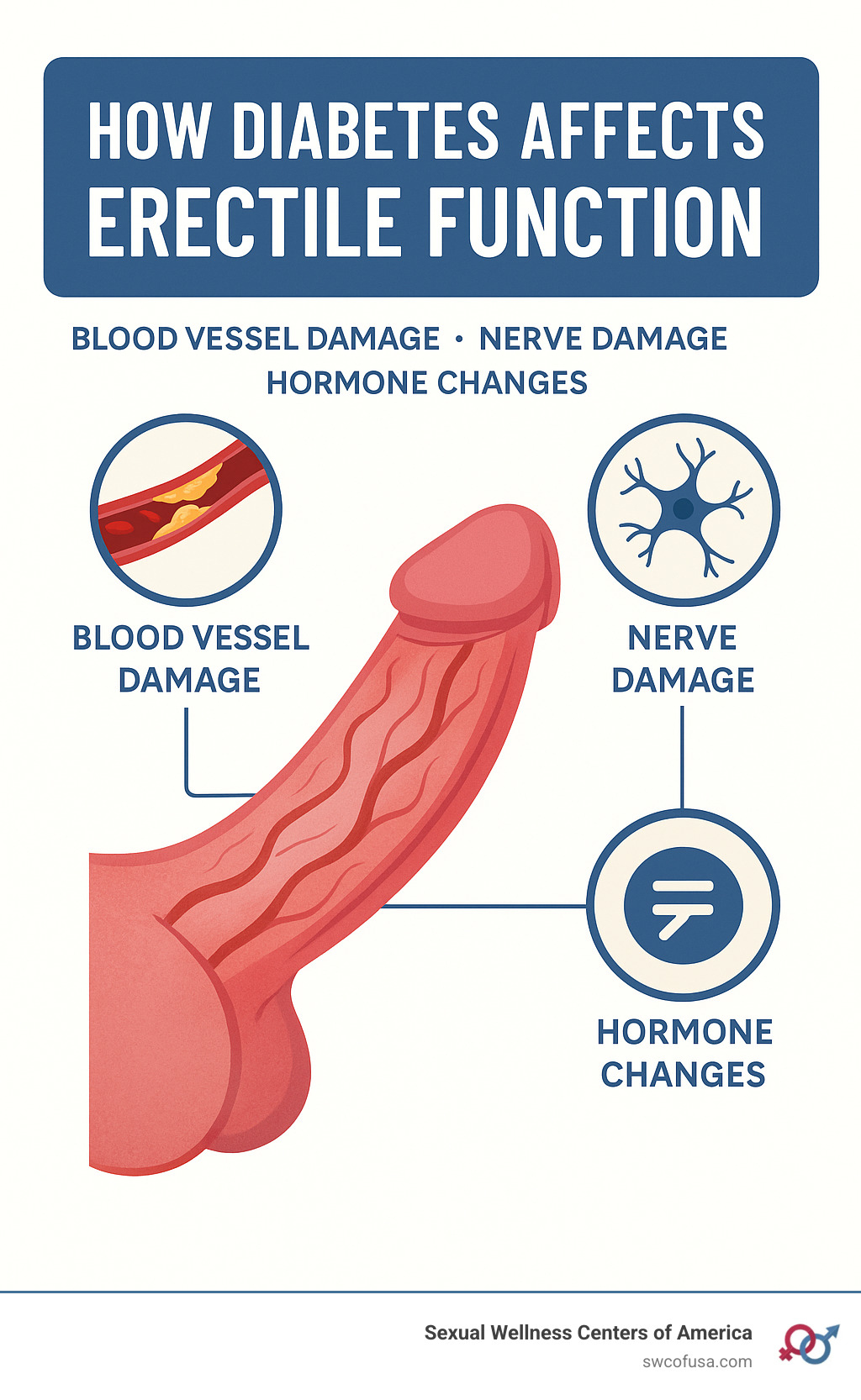
The Diabetes–ED Connection: Fast Facts
Let’s talk honestly about what happens below the belt when diabetes enters the picture. The relationship between blood sugar and bedroom performance isn’t just coincidence – it’s biology.
Diabetes affects your erections in several important ways. Think of your body as an intricate system where high blood sugar acts like sand in the gears. First, it damages the tiny blood vessels in your penis that need to fill with blood during arousal. Second, it harms the nerves that carry those “time to get excited” signals. Third, it makes the lining of your blood vessels less responsive to sexual stimulation. And finally, many men with diabetes experience lower testosterone levels, which impacts both your desire and ability to perform.
These changes don’t happen overnight. They’re gradual, sneaking up on you as diabetes progresses – especially if your blood sugar numbers have been running high.
Why Diabetics Develop ED Earlier
Here’s something many doctors don’t discuss enough: men with diabetes typically face erectile problems 10-15 years earlier than men without the condition.
Why the fast-forward button on sexual aging? When your blood sugar stays liftd, it creates something called oxidative stress – essentially an overflow of harmful molecules that damage the delicate tissues involved in erections. Your body also produces less nitric oxide, which is the crucial chemical that tells penile blood vessels to open wide during arousal. Think of nitric oxide as the green light for blood flow – without enough of it, you’re stuck at a perpetual red light.
Poor circulation also starves nerve tissues of oxygen and nutrients, reducing sensitivity and signal transmission. The combined effect essentially ages your sexual function prematurely, with many men noticing changes in their 40s rather than their 60s.
How Common Is It, Really?
The numbers don’t lie, and they’re worth knowing:
Between 35-75% of men with diabetes will experience some degree of erectile dysfunction during their lifetime. That’s three times higher than men without diabetes. About half of diabetic men develop ED within 10 years of diagnosis. The prevalence increases with age – approximately 50-60% of diabetic men over 50 have erectile difficulties, and by age 70, that number climbs to about 95%.
I’m sharing these statistics not to discourage you, but to help you understand that you’re not alone if you’re experiencing these issues. Diabetic medications and ED are common companions, but they don’t have to define your intimate life.
At Sexual Wellness Centers of America, we see men every day who thought their sexual health was a lost cause because of diabetes. The good news? With the right approach, most men can reclaim their confidence and performance – even with diabetes in the picture.
Diabetic Medications and ED: What the Science Says
Different classes of diabetes medications can have varying effects on erectile function. Let’s break down what research tells us about the most common diabetes drugs and their impact on sexual health.
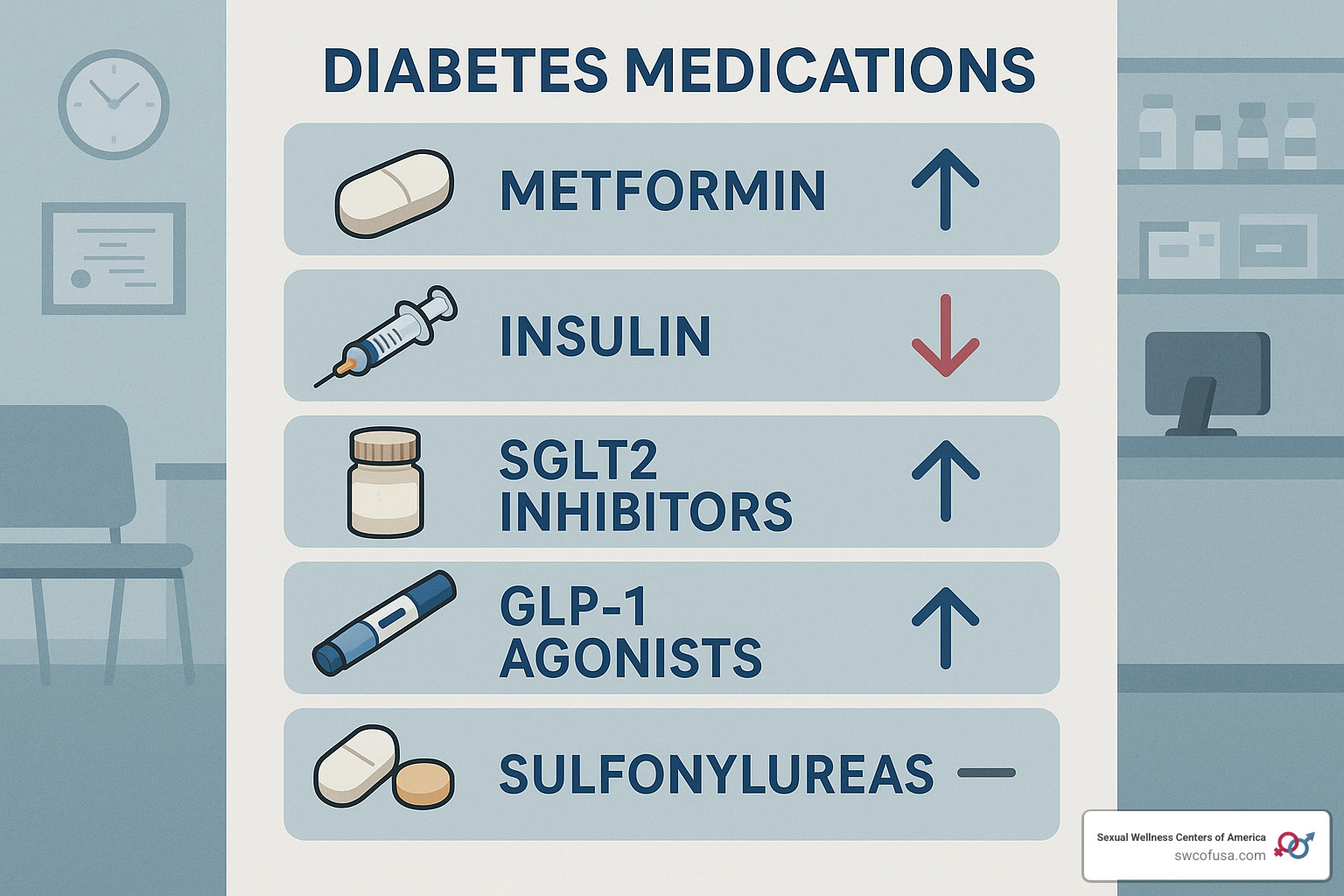
Metformin & ED—Friend or Foe?
Metformin, the first medication doctors usually prescribe for Type 2 diabetes, presents quite the puzzle when it comes to your bedroom performance.
On one hand, it might be working against you. Research published in the Journal of Clinical and Diagnostic Research found that metformin significantly reduces testosterone levels in men with Type 2 diabetes—including total, free, and bioavailable forms. This hormone drop isn’t minor either. Men taking metformin scored much lower on sexual health questionnaires (10.61±3.22) compared to men taking other diabetes medications like sulfonylureas (17.73±1.91) and men without diabetes (24.62±2.55).
The science suggests metformin may inhibit an enzyme called CYP17a that helps your body produce testosterone. Simply put, less testosterone often means more trouble with erections.
But there’s another side to the story. Metformin can actually improve the health of your blood vessels by activating nitric oxide pathways—the same mechanism that ED medications like Viagra target. It also reduces insulin resistance throughout your body, which can benefit the tiny blood vessels in your penis. Many men also lose a few pounds on metformin, which never hurts when it comes to sexual function.
Despite these potential benefits, a recent scientific study using Mendelian randomization (a sophisticated way to determine cause and effect) published in Frontiers in Pharmacology found that metformin use significantly increased ED risk. The numbers were striking—an odds ratio of 139.6 with a p-value of 0.0004, which is researcher-speak for “this is almost certainly not a coincidence.”
Sulfonylureas, Insulin & Other Drugs
When it comes to other diabetic medications and ED, the story changes considerably.
Sulfonylureas (medications like gliclazide and glibenclamide) might actually be your allies in the bedroom. They tend to boost testosterone levels and show much better sexual function scores compared to metformin. These medications work through something called the DAX-1 pathway and inhibit an enzyme with the tongue-twisting name 11β-HSD1, which ultimately helps your body maintain healthier androgen levels. In plain English: they might help keep your sexual function in better shape.
Insulin generally plays it neutral when it comes to erections. Most research shows it neither significantly helps nor hurts sexual function directly. Interestingly, men using insulin pumps (continuous subcutaneous insulin infusion) tend to report better erectile function than those taking multiple daily injections. The same Mendelian randomization study mentioned earlier found no significant causal effect of insulin on ED (p=0.1806).
The newer kids on the block, GLP-1 Receptor Agonists like semaglutide (Ozempic) and dulaglutide (Trulicity), may actually improve erectile function compared to metformin. This benefit seems especially pronounced if you’re carrying extra weight (BMI >30). These medications help through multiple pathways—weight loss, improved vascular health, and possibly direct effects on the cells lining your blood vessels.
SGLT2 Inhibitors don’t have as much clinical data regarding erectile function yet, but animal studies suggest potential benefits through improved blood vessel health. They may indirectly help through weight loss and blood pressure reduction as well.
At Sexual Wellness Centers of America, we’ve worked with thousands of men navigating the complex relationship between diabetes medications and sexual function. What we’ve consistently found is that while medications matter, they’re just one piece of a much larger puzzle that requires personalized attention.
Does Metformin Hurt or Help Your Love Life?
Let’s be honest – when it comes to metformin and your bedroom performance, it’s complicated. This popular diabetes medication seems to have a Jekyll and Hyde relationship with erectile function.
I’ve seen many men at our clinic confused about whether their metformin is helping or hurting their love life. The truth is, it can do either depending on your unique situation.
When Metformin May Worsen ED
For some men, diabetic medications and ED problems go hand-in-hand, and metformin might be the culprit. You’re more likely to experience negative effects if:
You already have testosterone levels on the lower end of normal. Metformin can push those levels down just enough to cross that critical threshold where your sexual function starts to suffer.
Higher doses of metformin tend to have stronger hormonal impacts. I’ve had patients who noticed improvements when we adjusted their dosage downward (always with their doctor’s approval, of course).
Taking metformin alongside other medications can sometimes create the perfect storm for ED. Blood pressure medications are common culprits here – the combination can pack a double punch to your erectile function.
The longer you’ve been on metformin, the more likely you might notice effects. Some of my patients report gradual changes that snuck up on them over months or years of treatment.
If you’re experiencing ED while taking metformin, don’t suffer in silence. This is absolutely something worth discussing with your healthcare provider.
When Metformin May Improve ED
On the flip side, metformin might actually boost your bedroom performance if:
Your blood sugar has been a roller coaster. Getting those glucose levels under control with metformin can significantly improve your vascular health, which is essential for strong erections.
You have significant insulin resistance. Metformin shines at improving insulin sensitivity, which can improve endothelial function throughout your body – including those critical blood vessels in your penis.
You’re one of the lucky ones who loses weight on metformin. Even modest weight loss can boost testosterone levels and reduce inflammation, potentially offsetting other negative effects of the medication.
Interestingly, some smaller studies suggest that taking metformin alongside ED medications like sildenafil might work better than ED meds alone, particularly if you’re insulin resistant.
What’s most important to understand is that metformin’s effects on your love life aren’t one-size-fits-all. Your individual physiology, overall health, and specific response to the medication all play important roles in determining whether metformin helps or hinders your erectile function.
At Sexual Wellness Centers of America, we look at the complete picture – your medications, hormone levels, vascular health, and more – to determine the best approach for your unique situation.
Comparing Diabetes Drug Classes & Sexual Side Effects
Let’s talk about how different diabetes medications might affect your bedroom performance – because let’s face it, that’s important information your doctor might not always discuss upfront.
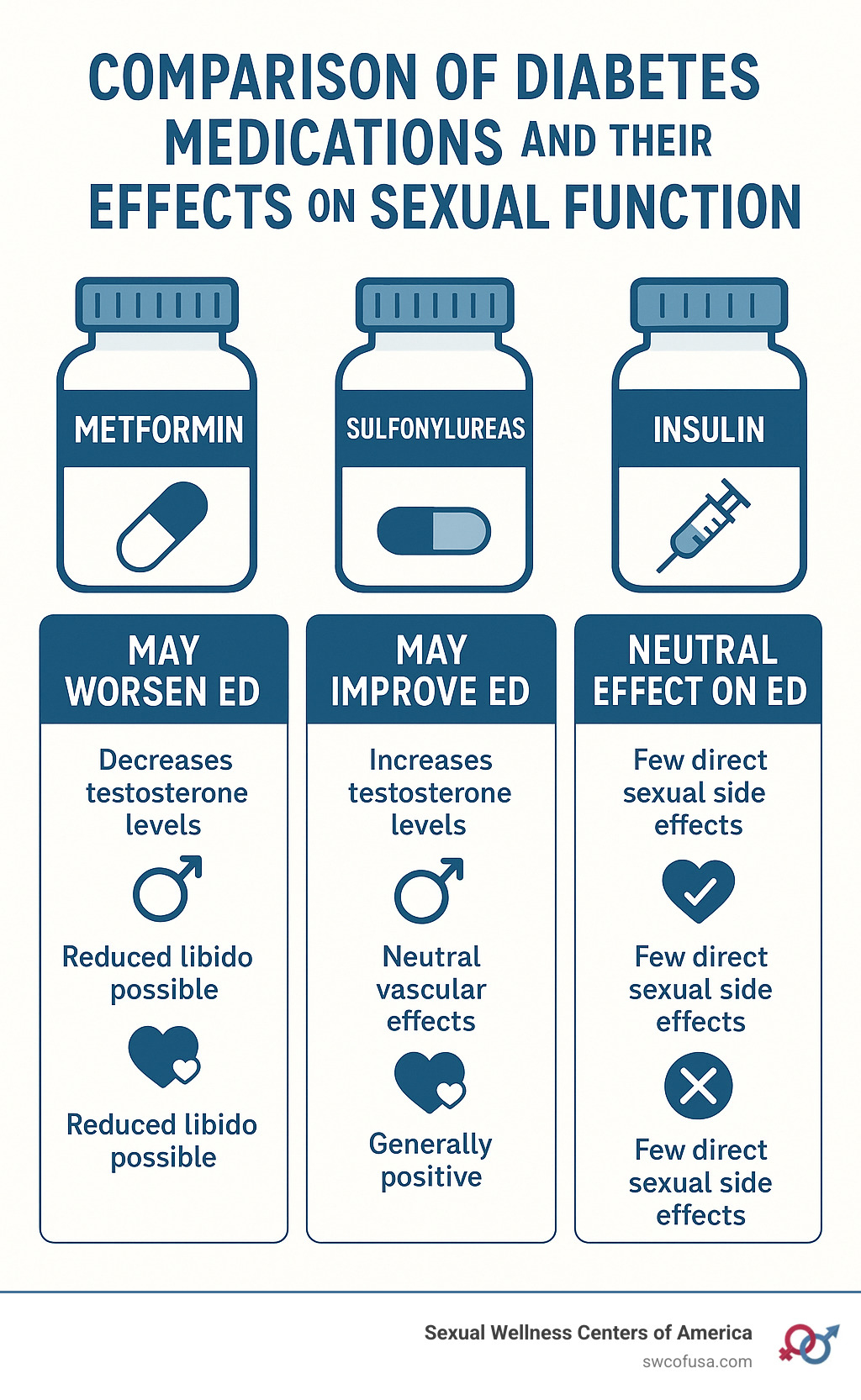
When it comes to diabetic medications and ED, not all drugs are created equal. Some might actually help your sexual function while others could be secretly working against you.
Metformin, the most commonly prescribed diabetes medication, presents a complicated picture. While it’s excellent for controlling blood sugar, it tends to lower testosterone levels in many men. This hormone reduction can dampen both desire and performance. You might notice reduced libido alongside erectile difficulties, even though metformin may somewhat improve your blood vessel health.
Sulfonylureas (medications like gliclazide) tell a different story. These drugs typically increase testosterone levels and may actually improve erectile function for many men. If you’re struggling with ED on metformin, this class might be worth discussing with your doctor.
Insulin therapy is generally neutral territory for your sex life. It neither significantly helps nor hurts erectile function for most men. Think of insulin as the Switzerland of diabetes medications when it comes to your bedroom activities.
The newer GLP-1 Agonists (like semaglutide/Ozempic) might be good news for your love life. Not only do they help control blood sugar, but the associated weight loss can improve vascular health and potentially improve erectile function. Many men report feeling better overall on these medications, which can translate to improved sexual confidence.
SGLT2 Inhibitors show promise too, though we have less data on their sexual effects. Their ability to improve heart and blood vessel health may indirectly benefit erectile function.
The mechanisms behind these differences matter. Metformin works by reducing glucose production and improving insulin sensitivity, but appears to inhibit testosterone production pathways. Sulfonylureas stimulate insulin secretion while potentially boosting testosterone through enzyme inhibition. GLP-1 agonists and SGLT2 inhibitors improve vascular health through different pathways, which can benefit the small blood vessels essential for erections.
Beyond sexual effects, each medication brings its own baggage. Metformin often causes stomach upset and diarrhea (not exactly mood improvers for romance). Sulfonylureas might cause dangerous low blood sugar episodes. GLP-1 agonists commonly trigger nausea, and SGLT2 inhibitors can increase your risk of urinary tract infections.
This information isn’t meant to send you rushing to change your medications. Rather, it’s knowledge you can bring to your next doctor’s appointment if you’re experiencing ED while managing diabetes. Sometimes a medication adjustment, made with professional guidance, can make a significant difference in your quality of life.
At Sexual Wellness Centers of America, we often see men who’ve struggled silently with these issues for years, not realizing that their diabetic medications and ED might be connected. A personalized approach that considers both your diabetes control and sexual health is essential for finding the right balance.
Fixing ED With Diabetes: Treatment Roadmap
Managing erectile dysfunction when you have diabetes doesn’t have to be a lonely journey. Think of it as navigating a path where each step brings you closer to reclaiming your intimate life. Here’s how to find your way:
First-Line Lifestyle Moves
Before reaching for prescription solutions, several everyday changes can make a remarkable difference in your bedroom performance.
That extra weight around your middle? Even modest weight loss—just 5-10% of your body weight—can improve both blood sugar control and what happens below the belt. Your blood vessels will thank you, and so might your partner.
If you’re a smoker, here’s yet another reason to quit: smoking compounds the vascular damage diabetes already causes. Many men notice improved erections within weeks of putting down the cigarettes for good.
Regular movement matters tremendously. Aim for about 150 minutes of moderate exercise weekly—think brisk walking or swimming. This improves blood flow everywhere in your body (yes, everywhere) and helps your insulin work better too.
Your dinner plate can be powerful medicine. The Mediterranean diet—rich in colorful vegetables, olive oil, nuts, and fish—supports the health of your blood vessels, including those critical to erections.
Don’t underestimate good sleep either. Those 7-8 hours of quality rest each night help regulate both blood sugar and testosterone. And speaking of hormones, chronic stress raises cortisol levels, which can sabotage both your glucose readings and your bedroom performance. Finding ways to unwind—whether through meditation, deep breathing, or simply laughing more—pays dividends in the bedroom.
As for that nightcap? Moderation is key. While a drink might help you relax, too much alcohol acts as a depressant on your entire system, including sexual function.
Are ED Meds (Sildenafil, Tadalafil) Safe for Diabetics?
Good news: those popular ED medications are generally both safe and effective if you have diabetic medications and ED concerns. The class of medications known as PDE5 inhibitors—including familiar names like sildenafil (Viagra), tadalafil (Cialis), vardenafil (Levitra), and avanafil (Stendra)—work well for most men with diabetes.
The research shows encouraging results. Sildenafil helps about 58% of diabetic men achieve better erections. Vardenafil performs even better with a 72% improvement rate, while daily tadalafil helps about 53% of men with diabetes.
Before starting these medications, your doctor will likely check your heart health, as they should not be taken alongside nitrate medications like nitroglycerin. Your blood pressure should also be reasonably stable.
Men with diabetes sometimes need higher doses to see results, especially if blood sugar control has been challenging. Daily low-dose options, particularly with tadalafil, offer the advantage of being “always ready” rather than having to time a pill before intimacy.
Each medication has its own personality: sildenafil and vardenafil typically work within 30-60 minutes and last 4-6 hours. Tadalafil is the marathon runner of the group, working for up to 36 hours, while avanafil (Stendra) is the sprinter, sometimes taking effect in just 15-30 minutes.
At Sexual Wellness Centers of America, we’ve found that combining these medications with comprehensive diabetes management often yields the best results for our patients.
When to Call in the Pros
Sometimes, the standard approaches just aren’t cutting it. That’s when specialist expertise becomes invaluable.
It’s time to see a urologist when ED medications aren’t working like they used to, if you experience side effects, or if you want to explore alternative treatments like penile injections or implants. A urologist can offer a comprehensive evaluation of your erectile function and suggest specialized approaches.
An endocrinologist consultation makes sense when your diabetes remains difficult to control despite your best efforts, or if you suspect hormonal imbalances beyond diabetes are affecting your performance. They can fine-tune your diabetic medications and ED treatments to work in harmony.
While many clinics offer standard ED treatments, at Sexual Wellness Centers of America in Colleyville, TX, we provide several advanced treatment options that go beyond the basics:
Our proprietary HEshot®™ treatment uses growth factors to promote tissue regeneration and improved blood flow where it matters most. Our regenMAX technology takes a comprehensive approach addressing both vascular and nerve function—essential since diabetes can damage both systems.
We also offer personalized hormone optimization based on detailed hormone and vitamin panels, because sometimes the problem extends beyond blood vessels to the hormones that drive desire and performance.
This integrated approach is why we’ve achieved a 97.2% efficacy rate in erectile dysfunction reversal, even in complicated cases where diabetes plays a significant role. Because when it comes to intimate health, you deserve comprehensive care that addresses all aspects of the problem—not just a prescription and a pat on the back.
Frequently Asked Questions about Diabetes Drugs & Bedroom Performance
If you’re navigating diabetes and erectile concerns, you probably have questions. Let’s tackle the most common ones I hear from men at our clinic:
Can changing my diabetes pill reverse ED?
Yes, in some cases. I’ve seen how switching medications can make a difference for some men. Research shows that moving from metformin to a sulfonylurea might improve erectile function because of how sulfonylureas positively affect testosterone levels.
But here’s the thing – this isn’t a decision to make on your own. Your overall diabetes management comes first, and any medication change needs careful consideration with your doctor. And patience is key – hormonal changes take time, often several weeks before you might notice improvement.
Sometimes, just getting your blood sugar under better control (with any medication) can help your erectile function by reducing ongoing damage to blood vessels. At Sexual Wellness Centers of America, we collaborate with your primary doctor to ensure any medication adjustments support both your blood sugar goals and your bedroom satisfaction.
Do newer drugs like GLP-1 agonists affect erections?
The evidence is promising. Those newer injectable medications you’ve been hearing about – like semaglutide (Ozempic), dulaglutide (Trulicity), and liraglutide (Victoza) – actually show some encouraging benefits for erectile function compared to metformin.
Men carrying extra weight seem to benefit the most. If your BMI is over 30, the improvements might be even more noticeable. These medications help in several ways:
They promote weight loss (which can boost testosterone naturally), reduce inflammation (good for blood vessels), improve endothelial function (crucial for erections), and provide better overall blood sugar control.
The science backs this up too. A large clinical trial found that dulaglutide actually reduced new cases of ED compared to placebo, suggesting these medications might even have a protective effect on erectile function.
Will testosterone therapy interfere with my glucose control?
Generally not, and it might actually help. If you have diabetes and clinically low testosterone levels, testosterone replacement therapy (TRT) typically doesn’t worsen your glucose control. In fact, many of my patients find it improves their insulin sensitivity.
TRT can transform your body composition by building muscle mass and decreasing fat – both beneficial for diabetes management. Some studies even show improved insulin sensitivity with testosterone therapy, and many men find their ED medications work better when their testosterone levels are optimized.
The key is comprehensive monitoring. At our clinic, we don’t just prescribe testosterone and send you on your way. We conduct thorough hormone panels before making any recommendations and then carefully track both your sexual function and diabetes markers throughout treatment.

When it comes to diabetic medications and ED, there’s no one-size-fits-all solution. Your body’s response is unique, which is why personalized treatment makes all the difference. The good news? With the right approach, most men can reclaim satisfying intimate relationships while keeping their diabetes well-managed.
Conclusion: Taking Control of Your Sexual Health with Diabetes
Living with diabetes doesn’t mean you have to accept erectile dysfunction as part of your future. The relationship between diabetic medications and ED is certainly complex, but I’ve seen how men can reclaim their sexual confidence with the right approach.
Think of managing your sexual health with diabetes as similar to tending a garden – it requires attention to multiple elements working together. Your medication choices matter significantly. Some medications like metformin may negatively impact erectile function for certain men, while others like sulfonylureas might actually help improve your situation.
What really makes the difference is taking a whole-person approach. When we address your blood sugar control, weight management, heart health, and hormone balance together, we create the perfect environment for better erectile function. It’s like giving your body all the tools it needs to perform at its best.
The good news? Those ED medications you’ve heard about really do work for men with diabetes. PDE5 inhibitors like Viagra and Cialis are generally safe and effective, though sometimes you might need higher doses or combination approaches for the best results.
For men with more challenging cases—perhaps you’ve tried standard treatments without success—don’t lose hope. While many clinics offer basic ED therapies, advanced options like our HEshot®™ and regenMAX technology at Sexual Wellness Centers of America are specifically designed for complex situations like yours.
Perhaps most importantly, please don’t suffer in silence. ED is a medical condition, not a personal failing or something you should be embarrassed about. Effective treatments are available, and there’s no reason to let this condition diminish your quality of life or intimate relationships.
At Sexual Wellness Centers of America in Colleyville, TX, we specialize in helping men with diabetes overcome erectile dysfunction. Our approach starts with truly understanding your unique situation through comprehensive testing, including detailed hormone and vitamin panels. This allows us to identify all the factors contributing to your ED, not just the obvious ones.
The results speak for themselves – 97.2% of our patients experience significant improvement in erectile function, even those who’ve been living with diabetes for years and have tried other treatments without success.
Ready to take control of your love life? If diabetes is affecting your intimacy, you don’t have to settle. Reach out to our team today to explore proven, personalized solutions for ED. Most men with diabetes see real improvement with the right care—let’s help you refind confidence and connection. Your best years are still ahead.