
Spanish fly does not work as a safe or effective aphrodisiac. The effect people mistake for arousal is usually toxic irritation from cantharidin, not true sexual enhancement.
If you're asking whether Spanish fly can reliably improve desire or performance, the answer is no, and that matters because the product's reputation has outlasted its biology. People reach for it hoping for a quick fix, but the better question is what the body is doing after exposure, because that tells you whether this is a wellness product or a poisoning risk.
Table of Contents
- The Dangerous Myth Behind Spanish Fly
- How Cantharidin Actually Affects the Body
- Recognizing the Signs of Toxicity
- Evidence-Based Alternatives for Sexual Wellness
- When to Seek Professional Care
- Prioritizing Safety and Lasting Results
The Dangerous Myth Behind Spanish Fly
Spanish fly has been sold for generations as a shortcut to desire, but modern medical sources say there's no solid scientific evidence that it increases sexual desire or reliably improves sexual performance, according to Healthline's review of Spanish fly. That's the core answer to does Spanish fly work, and the honest clinical answer is no, not in the way people hope.
What people think they're buying
The myth survives because the name sounds old, exotic, and potent. In reality, the term has covered a wide range of tonics, pills, and liquids, many of which are marketed more aggressively than they're studied. Products sold under this label may contain little or no cantharidin, which helps explain why they're usually ineffective even before you get to the safety problem.
Practical rule: if a product promises desire but can't show a clear mechanism, a verified ingredient list, or physician supervision, treat it as an unproven gamble.
The historical story also gets misunderstood. Spanish fly's reputation grew from folklore, not from reliable medical evidence, and the modern version often leans on that reputation to suggest legitimacy. That's misleading. If the product contains real cantharidin, the risk rises sharply. If it doesn't, then the product is mostly marketing wrapped around disappointment.
Why the myth is dangerous
The issue isn't just that Spanish fly is weak. It's that people can mistake irritation, flushing, or a painful erection for proof that it's working. That's not enhancement, it's the body reacting to a toxin. A product that relies on poisoning to create a sensation is not a sexual aid, it's a safety hazard.
The reputation of Spanish fly also obscures a simple truth. Real sexual wellness doesn't come from forcing the urinary and genital tissues into distress. It comes from identifying why desire, erection quality, or arousal changed in the first place, then treating that cause directly. That difference matters because one path can hurt someone, and the other can help them.
How Cantharidin Actually Affects the Body
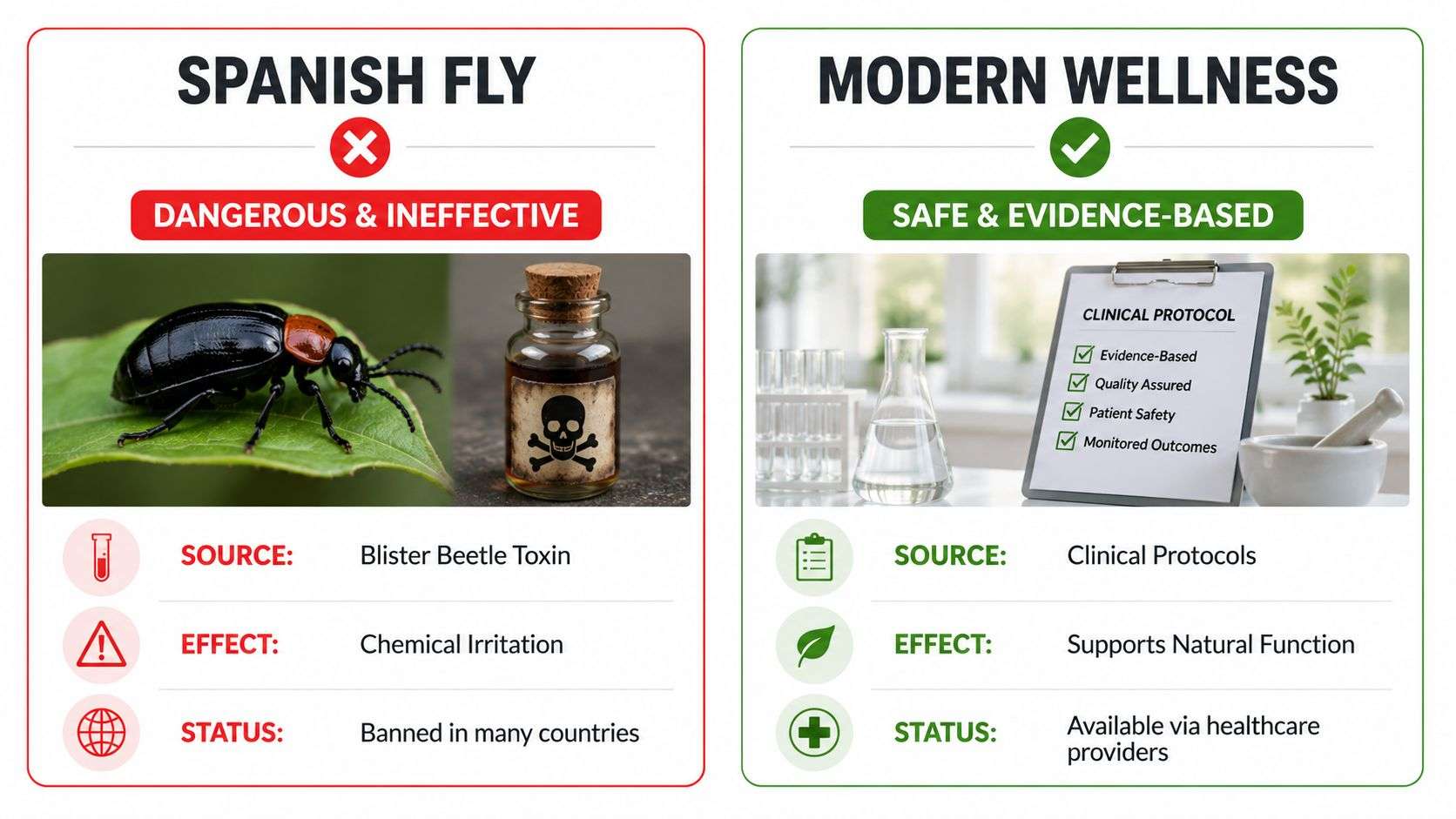
Cantharidin is the compound linked to true Spanish fly, and it's a toxic blistering agent, not a libido booster. Medical discussion of the compound is consistent on one point, its known action is irritation and blistering, not aphrodisiac activity. In fact, McGill notes that a 0.7% cantharidin solution is used topically by physicians for warts, which is a completely different medical context from sexual enhancement.
The body's response is irritation, not arousal
When cantharidin is ingested, it can irritate the urinary tract and genital mucosa, which may cause pain, swelling, and priapism, the prolonged painful erection that people sometimes misread as a desired effect. That response is not a sign of improved sexual function. It's a sign that tissues are being injured.
This is the part people miss when they ask does Spanish fly work. A reaction can feel dramatic and still be clinically useless. Pain, inflammation, and abnormal stimulation do not equal healthy arousal. They usually mean the body is under stress, not that it's responding normally to sexual stimulation.
The body doesn't become more sexual because it's irritated. It becomes injured.
The FDA's position reinforces that distinction. Cantharidin-containing products are not approved for sexual enhancement, and legitimate U.S. medical use is limited to conditions such as molluscum contagiosum rather than sexual function, as summarized in the provided medical review. That matters because regulated medicine uses the compound in tightly controlled, physician-supervised ways, while Spanish fly products rely on folklore and hope.
Why the modern product is usually a dead end
Many products sold as Spanish fly are marketed as if they're powerful, but they often contain little or no cantharidin, so even the toxic effect may be inconsistent. That leaves buyers with the worst of both worlds, questionable ingredients and no reliable benefit. If the formula is diluted or mislabeled, it can still be unsafe in unpredictable ways, without offering any real improvement in libido or erection quality.
The bottom line is straightforward. Cantharidin's biology points toward irritation, not enhancement, and every legitimate medical use reflects that fact. The compound's effects are real, but they're not the effects people are chasing.
Recognizing the Signs of Toxicity
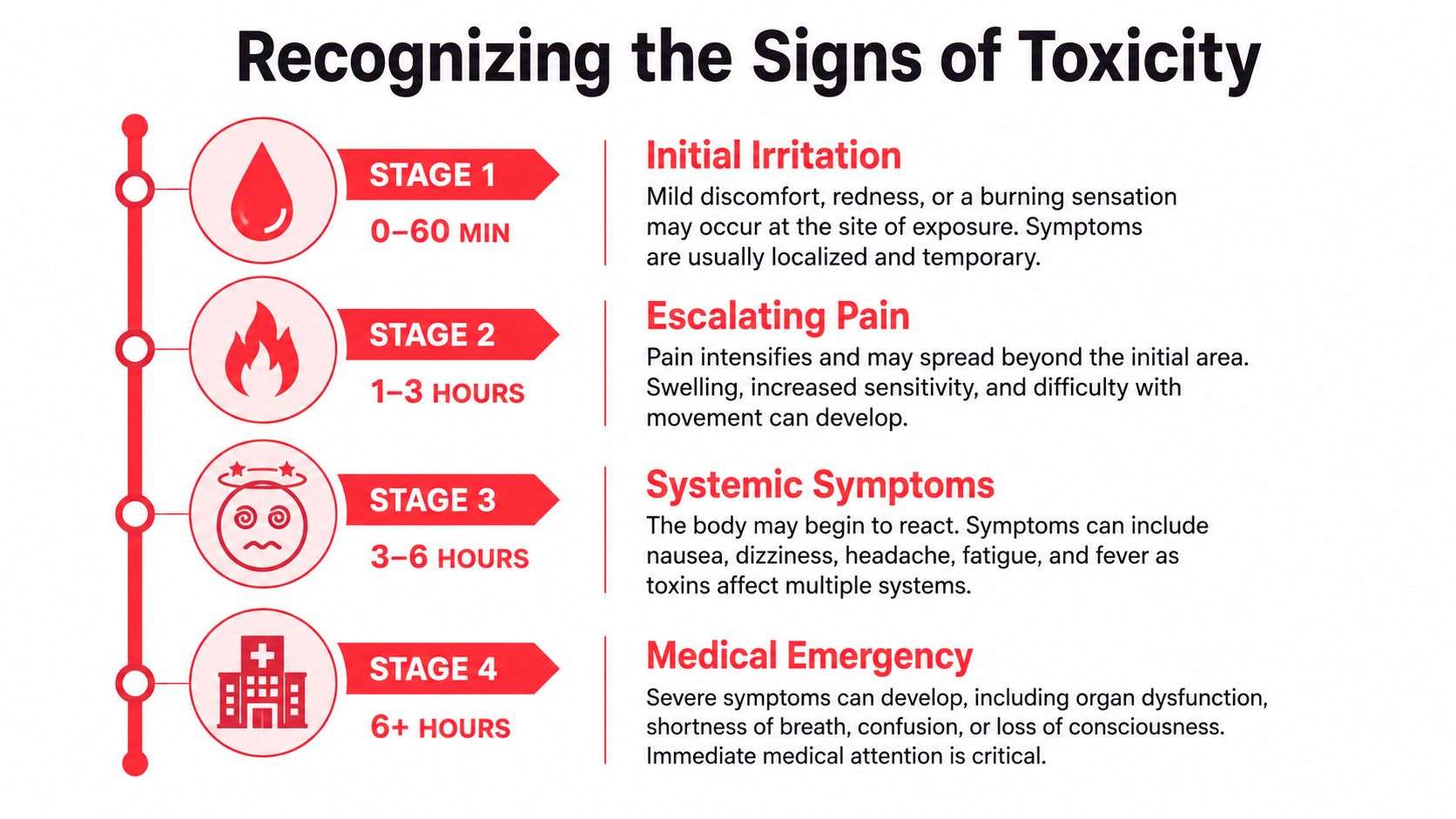
A patient who swallows Spanish fly may not recognize trouble immediately. The early sensations can look deceptive, a flush, discomfort, or a prolonged erection may be interpreted as proof that the product “kicked in.” In practice, those can be early warning signs of poisoning.
Early symptoms can look deceptively active
The most common mistake is assuming that visible or felt activity means the product is doing its job. With cantharidin exposure, the first stage is often local irritation, followed by worsening pain and broader systemic illness. The body is not signaling improved sexual response. It's signaling tissue injury and toxic absorption.
Reported adverse effects of cantharidin ingestion include miscarriage, priapism, convulsions, bleeding, vomiting blood, kidney damage, seizures, heart problems, blood in the urine, and disseminated intravascular coagulation (DIC), according to the medical review at Ro's Spanish fly overview. Those outcomes are severe because this isn't a supplement side effect, it's poison exposure.
What makes the risk especially easy to miss
People often wait for a more obvious emergency before seeking help. That delay is dangerous. In real life, early symptoms can begin with discomfort and progress into far more serious complications. The longer the body is exposed, the more damage can accumulate, especially to the kidneys and blood system.
If someone develops a painful erection after taking Spanish fly, that is not reassurance. Priapism is a urologic emergency because tissue damage can become permanent if it isn't addressed promptly. If blood appears in the urine or vomiting starts, the situation has already moved well beyond a simple adverse reaction.
Clinical advice: never treat a painful erection after an unregulated product as a sign of success. Treat it as a warning until a clinician rules out toxicity.
When emergency care is non-negotiable
Seek urgent medical help if there's severe vomiting, blood in vomit, confusion, seizure activity, chest pain, bleeding, or a persistent painful erection. The same applies if symptoms keep escalating instead of settling down. Spanish fly is one of those exposures where waiting to “see how it goes” can cost valuable time.
That practical gap is why this topic deserves more than a myth-busting answer. People need to know what toxicity looks like before it becomes life-threatening. They also need to know that the first sign may be a body response they misread as arousal.
Evidence-Based Alternatives for Sexual Wellness
The safer path starts with matching treatment to the actual problem. If the concern is erection quality, reduced libido, pain, or performance anxiety, the answer is rarely a stimulant or a toxic irritant. It is usually a combination of medical evaluation, targeted therapy, and behavior changes that support healthy sexual function.
What actually belongs in the conversation
Regenerative, non-surgical protocols are meant to support tissue function rather than shock the body into a response. One clinic-based option is the REGENmax® protocol, which uses acoustic wave therapy, laser therapy, and regenerative injections as part of an individualized plan. Sexual Wellness Centers of America describes this approach as part of its broader sexual health care, and the distinction matters because the goal is restoration, not irritation.
That difference matters in practice. A toxic folk remedy tries to provoke a harsh body reaction and gets mistaken for arousal. A structured clinical approach aims to identify why sexual function has changed and address that cause directly.
For readers who want a broader wellness frame, the truth about laxatives for weight is a useful parallel. Both topics expose the same mistake, confusing a harsh body reaction with a useful health outcome. A sensation is not the same thing as improvement.
Practical options that support real function
A useful treatment plan usually considers a few categories together:
- Blood flow support: therapies that address the vascular contribution to erections.
- Tissue-focused care: regenerative protocols that target function rather than short-lived stimulation.
- Hormone evaluation: lab-guided treatment when low libido or energy loss suggests an imbalance.
- Lifestyle support: sleep, exercise, nutrition, and stress load, which can all affect sexual function.
The exact mix matters more than any single product. A man with diabetes-related erectile dysfunction needs a different plan than someone whose symptoms are driven mainly by stress or low testosterone. That is why one-size-fits-all aphrodisiacs disappoint. They ignore the root cause and leave the problem untouched.
If you are comparing options, start with a clinic that offers individualized care and does not rely on hype. Sexual Wellness Centers of America also describes its intimacy enhancer options within a broader sexual wellness setting, which can be relevant for patients looking for non-surgical support. The point is not to chase stimulation, it is to rebuild reliable function.
When to Seek Professional Care
If sexual function has changed, don't assume the answer is an over-the-counter booster. Erectile dysfunction and low libido can reflect vascular disease, hormone imbalance, diabetes, medication effects, sleep problems, or stress-related factors. Those causes need to be identified before a treatment plan can make sense.
Start with a real evaluation
A good evaluation usually begins with a detailed history and focused labs. That matters because symptoms alone don't tell the whole story. Two people can report the same problem and need completely different care. One may need hormone optimization. Another may need blood-sugar management, cardiovascular attention, or a different medication strategy.
A clinic-based workup is also useful because it can separate a short-term issue from a pattern that needs deeper treatment. If you've been trying supplements without real progress, that's a sign to stop guessing. The body is giving you information, and it deserves a proper medical response.
Know when self-treatment has gone too far
It's time to move from experimentation to professional care if:
- Symptoms persist: erection problems or low libido don't improve on their own.
- Pain appears: painful erections, genital pain, or urinary symptoms need assessment.
- Health conditions are present: diabetes, high blood pressure, or hormonal symptoms can complicate sexual function.
- Supplements keep failing: repeated use of unregulated products only adds risk.
A walk-in style sexual health visit can make that first step easier, especially if someone feels awkward bringing up the issue. The linked guide on what to expect at a local sexual health clinic is a useful starting point for that process.
Rule of thumb: if the product is unregulated, unproven, and causing symptoms, it's not a solution. It's a detour.
Professional care also gives you something Spanish fly never can, a plan that fits your body instead of punishing it. That's the shift worth making.
Prioritizing Safety and Lasting Results
Spanish fly survives as a myth because people want quick fixes, but fast isn't the same as safe. The evidence points in one direction, it does not reliably improve sexual function, and the effects people sometimes notice fit toxic irritation far better than real arousal. That is a dangerous trade, especially when the possible outcome is poisoning severe enough to require emergency care.
The better path starts with the actual cause of the symptom. Low desire, erection problems, and poor sexual response can reflect vascular issues, hormone imbalance, medication effects, stress, or a mix of factors that need proper evaluation. A clinician can sort out which of those are present and choose a treatment plan that targets function instead of provoking the body into an unsafe reaction.
Long-term sexual wellness depends on care that fits the person in front of you. That may involve blood-flow support, hormone optimization, regenerative therapy, or a combination of non-surgical approaches chosen after examination. These are aimed at restoring function in a durable way, not at chasing a brief, misleading sensation that can come from irritation, inflammation, or early toxicity.
If you are ready to stop guessing, Sexual Wellness Centers of America offers clinic-based evaluation and non-surgical sexual wellness care built around the root cause of symptoms. Visit Sexual Wellness Centers of America to review safe, evidence-based options and take the next step toward lasting function and confidence.