
You may be noticing it in small ways first. Erections aren't as firm as they used to be. They take longer to develop. They fade sooner, especially when you're tired, stressed, or after a few cigarettes. Many men wonder at that point: is smoking causing this?
Often, yes. And just as important, that doesn't automatically mean the situation is permanent.
Erectile dysfunction and smoking are strongly connected in medical research, and the reason is straightforward: erections depend on healthy blood vessels, responsive nerve signaling, and reliable tissue function. Smoking interferes with all three. The good news is that once you understand the mechanism, the path forward gets clearer. Stop the damage. Assess what's been affected. Then choose treatments that support recovery rather than just covering symptoms for a few hours.
Table of Contents
- The Unspoken Link Between Smoking and Your Sexual Health
- How Smoking Directly Causes Erectile Dysfunction
- The Evidence The Dose-Response Risk of Smoking
- Reversing the Damage The Timeline for Improvement After Quitting
- Accelerating Recovery Combining Cessation with Modern Treatments
- Your Practical Action Plan
- Frequently Asked Questions About Smoking and ED
The Unspoken Link Between Smoking and Your Sexual Health
A common clinic scenario often unfolds with little initial notice. A man notices his erections are less reliable, assumes stress or age is catching up with him, and keeps smoking because it does not seem connected. By the time he brings it up, the problem has usually been present for months, and the worry has grown larger than the symptom itself.
I want to say this plainly. Smoking and erectile dysfunction are often connected, and ED can be one of the first visible signs that blood vessels are under strain. Many men think of smoking as a lung issue and sexual performance as a separate problem. The body does not divide them that way.
The same circulation changes that affect the heart can show up in the penis earlier because those blood vessels are smaller and less forgiving. That is why sexual symptoms sometimes appear before other vascular warning signs. Smoking may not be the only factor, but it is often one of the most fixable ones. If you want a broader view of medical conditions that can contribute to erectile dysfunction, that context helps, especially if low testosterone, diabetes, high blood pressure, or medication side effects may also be in the picture.
There is real reason for hope. In practice, men do best when they treat this as an early warning and act on it quickly. Quitting smoking stops ongoing injury. Then we can look at what still needs support, whether that means checking circulation, reviewing hormones with affordable men's hormone panels, improving sleep and metabolic health, or discussing restorative options such as REGENmax® for men who want to rebuild function, not just cover symptoms.
This is not a dead end. It is a chance to catch a problem early, protect long-term vascular health, and start a recovery plan with a realistic timeline.
How Smoking Directly Causes Erectile Dysfunction
An erection is basically a blood flow event coordinated by nerves, blood vessels, and penile tissue. If you think of the system as plumbing, smoking harms the pipes, weakens the lining inside the pipes, and interferes with the signal that tells the system to open fully.
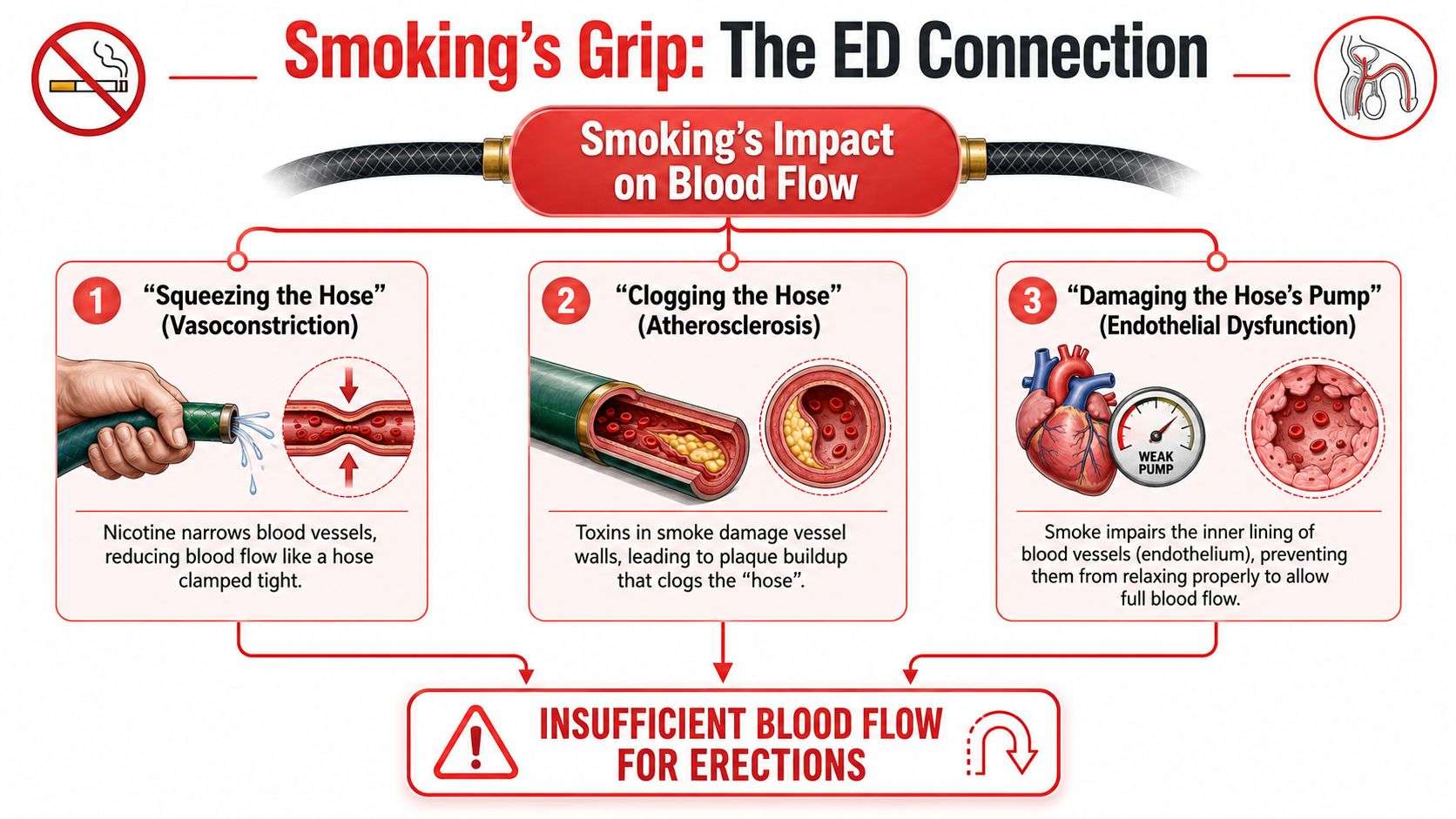
The plumbing problem most men don't see
First, nicotine causes vasoconstriction, which means blood vessels narrow. Narrow vessels deliver less blood at the moment you need more. That alone can make erections weaker or less dependable.
Second, smoke toxins injure the vessel wall. Over time, that damage contributes to a more clogged, less flexible circulation system. Erections depend on rapid inflow and good trapping of blood in erectile tissue. Stiff, damaged vessels don't perform that job well.
Third, smoking disrupts the nitric oxide pathway. In a review of smoking-related erectile dysfunction mechanisms, researchers explained that cigarette smoking depletes endothelial nitric oxide and increases superoxide free radical generation, which impairs cavernosal smooth muscle relaxation and reduces erectile rigidity. In plain language, the "open the floodgates" signal gets blunted.
Practical rule: If erections are less reliable during arousal, less firm, or harder to maintain, think blood vessel health first.
Hormones can also be part of the picture. Smoking doesn't create the same hormonal pattern in every man, but when libido, energy, recovery, and erection quality all drift downward together, I often want a fuller workup instead of guessing. That's where affordable men's hormone panels can be a useful starting point for understanding whether low testosterone or other imbalances are adding to the problem.
Smoking rarely acts alone, either. Sleep problems, diabetes, blood pressure issues, excess weight, medications, and pelvic vascular disease can all contribute. If you want a broader overview of other drivers, this guide to contributory conditions that may cause erectile dysfunction is a helpful companion.
Why vaping isn't a free pass
A lot of men switch from cigarettes to vaping and assume they've removed the sexual risk. That's too simple. Nicotine still affects blood vessels, and e-cigarette aerosols may still stress the endothelial lining that erections depend on.
So if you've quit cigarettes but your erectile function hasn't bounced back the way you expected, don't overlook nicotine exposure from newer products. From a vascular standpoint, "smoke-free" doesn't always mean erection-friendly.
The Evidence The Dose-Response Risk of Smoking
One of the clearest patterns in research is simple. The more a man smokes over time, the more likely he is to develop erectile dysfunction.
That dose-response pattern matters in practice because it helps explain why ED can show up in different ways. A man who smokes occasionally may notice softer erections or less consistency. A man with years of heavier use is more likely to deal with persistent problems, slower recovery, and signs of broader vascular strain.
Risk rises with exposure
Research reviewed earlier found a stepwise increase in risk, with heavier smokers facing more trouble than lighter smokers. The body does not treat smoking as a yes-or-no exposure. More nicotine, more oxidative stress, and more vessel injury usually mean a greater effect on erection quality.
Here's the pattern in a simple format:
| Smoking Level | Relative Risk Pattern |
|---|---|
| Lower intake smokers | Higher risk than non-smokers |
| Heavy smokers, more than 20 cigarettes per day | Higher risk than lower intake smokers |
Past exposure counts too. Men who have smoked heavily for years may still have erectile symptoms after they quit, especially if smoking has already affected the lining of the blood vessels or reduced penile blood flow. That does not mean recovery is hopeless. It means recovery may take longer, and some men benefit from treatment while the body heals.
What the table means
This pattern is one reason I encourage men not to dismiss mild ED as stress or age without looking at smoking history carefully. Smoking can raise risk on its own, even in men who are otherwise young or who have not yet been diagnosed with heart disease.
The penis often reveals vascular trouble early because its blood vessels are small and sensitive. A small drop in blood flow may not cause chest pain or leg symptoms, but it can make erections less firm, less reliable, or harder to maintain.
That is the trade-off many smokers are never warned about. The same habit that slowly injures blood vessels elsewhere can affect sexual performance sooner, sometimes while a man still feels healthy in every other part of life.
The hopeful part is just as important. Dose-response cuts both ways. If greater exposure raises risk, reducing exposure and then quitting gives the body a chance to repair some of that damage. For many men, the best strategy is not only stopping smoking, but pairing cessation with a structured recovery plan so erectile function improves sooner and more completely. That is where regenerative options such as REGENmax® can fit, especially for men who want to work on recovery instead of waiting passively.
Reversing the Damage The Timeline for Improvement After Quitting
Most men don't just want to know whether smoking caused the problem. They want to know how long recovery takes after they stop. That's the right question.
The body starts repairing itself quickly once ongoing exposure ends, but erection recovery doesn't happen like flipping a switch. Think of it more like reopening a damaged roadway. Traffic improves in stages as inflammation settles, vessel function improves, and tissue responds.
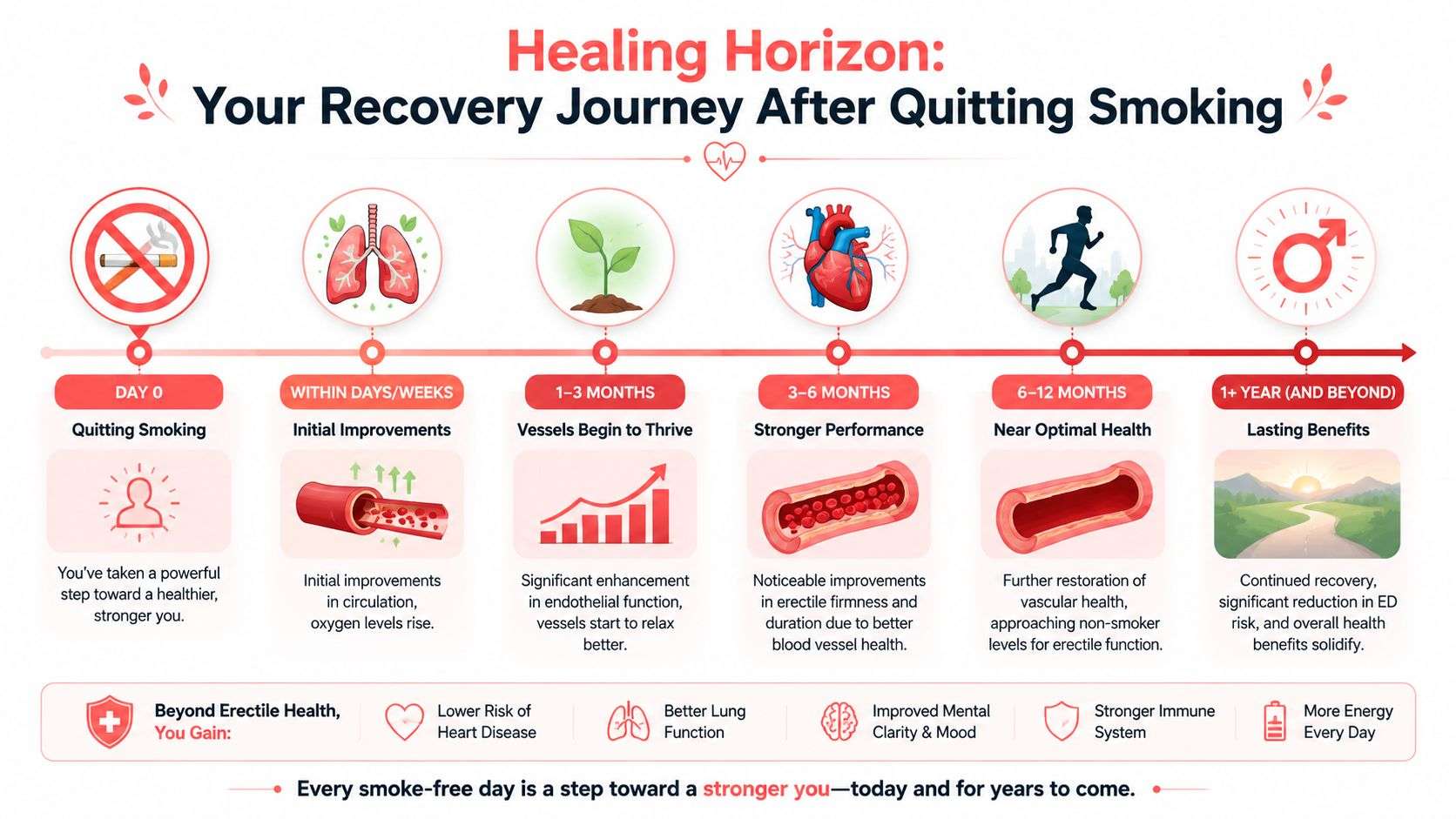
What recovery often feels like
In the first stretch after quitting, many men notice general circulation and stamina changes before they notice major sexual changes. Morning erections may start returning more consistently. Erections may feel easier to initiate, even if firmness is still uneven.
Over the next few months, that improvement can become more obvious. The best quantitative recovery data provided here comes from a 2023 pilot study of 65 men, which reported complete reversal of ED symptoms within 6 months for men who quit smoking, with full firm erections restored in 97% of participants.
That doesn't mean every man should expect the exact same timeline or result. It does mean meaningful recovery can happen faster than many patients fear.
Men often wait too long because they assume improvement, if it comes at all, will take years. In many cases, the body responds much sooner than that.
Why timelines vary
Recovery depends on what kind of damage smoking has caused. A man with milder endothelial dysfunction may rebound relatively quickly after nicotine exposure stops. A man with years of heavy smoking, diabetes, low testosterone, pelvic vascular disease, or significant performance anxiety may improve more gradually.
These factors usually shape the timeline:
- How long you've smoked: Longer cumulative exposure usually means more healing is required.
- How heavily you've smoked: Heavier daily use raises risk and often signals more severe vascular strain.
- Whether you've fully stopped nicotine: Ongoing vaping or nicotine replacement may complicate the picture for some men.
- Your overall health: Blood sugar control, blood pressure, sleep quality, physical conditioning, and hormone balance all affect recovery.
What doesn't work well is quitting for a short burst, relapsing, and hoping erectile function stabilizes anyway. The vascular system needs consistency. If you're serious about improving erections, complete nicotine cessation gives your body the best chance to recover.
Accelerating Recovery Combining Cessation with Modern Treatments
Quitting smoking is the foundation. It removes the ongoing insult. But many men need more than "wait and see," especially if ED has been present for a while or if erections remain inconsistent after smoking stops.
That's where a combined strategy makes sense. One part stops further injury. The second part supports function while tissue health improves and, in selected cases, aims to stimulate repair.
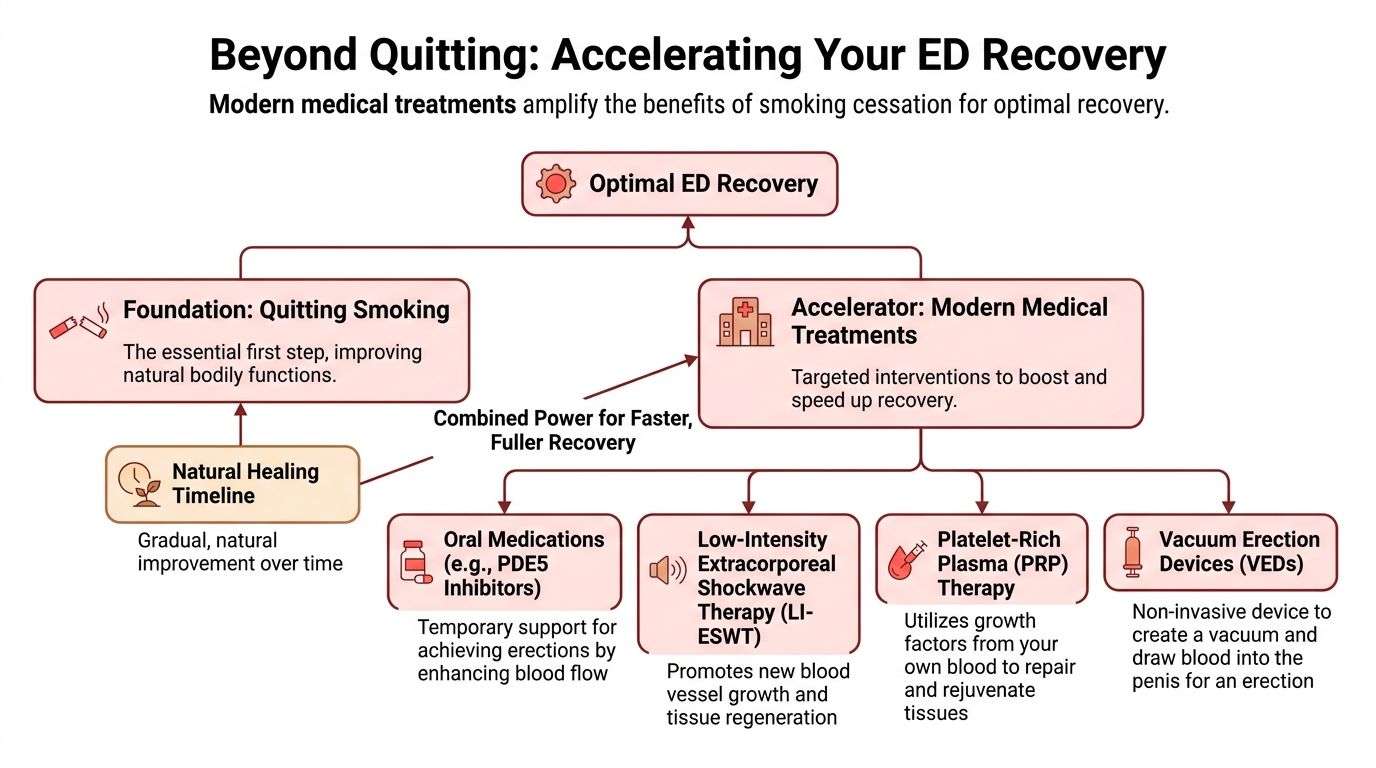
Quitting stops injury but doesn't rebuild everything
Cessation alone can be powerful. As noted earlier, men who successfully quit often report measurable improvement. But some still struggle with firmness, duration, or confidence because smoking may have already altered blood vessel responsiveness and erectile tissue quality.
This is the trade-off patients need explained:
- Stopping smoking helps the biology. It gives blood vessels a chance to function better.
- Pills can help the moment. They may improve blood flow support for a given sexual encounter.
- They don't necessarily repair the underlying tissue. That's why some men get partial benefit, inconsistent benefit, or no benefit at all.
If you're using nicotine replacement while quitting, it's reasonable to discuss the cardiovascular side with a clinician, especially if you already have heart or blood pressure concerns. For patients comparing cessation aids, this article on understanding nicotine patch heart effects can help frame that conversation.
Where regenerative care fits
For men whose ED appears strongly vascular, clinicians often think in layers rather than in a single treatment. Oral medication may provide symptom support. Vacuum devices can mechanically draw blood into the penis. Low-intensity extracorporeal shockwave therapy is used in some settings to support blood vessel response and tissue regeneration. Platelet-rich plasma based approaches aim to harness growth factors from the patient's own blood.
The best plan often isn't "Which one treatment is best?" It's "Which combination matches the damage that's actually present?"
That same logic is why some clinics use bundled regenerative protocols such as REGENmax®, which combines modalities like acoustic therapy, laser-based treatment, and concentrated injectable regenerative support. The appeal of a combined approach is straightforward. Smoking can injure erections at more than one level, so treatment may work better when it addresses circulation, tissue responsiveness, and recovery together rather than hoping a single intervention does everything.
For men who want to understand why shockwave-based options get so much attention in vascular ED, this overview of why shockwave therapy for erectile dysfunction is making waves explains the rationale in plain language.
I generally tell patients to think of recovery in two tracks:
- Remove the cause. Quit smoking completely.
- Support the rebuild. Use the right medical tools based on whether the problem is mainly vascular, hormonal, tissue-related, or mixed.
That approach is more realistic than hoping one decision fixes everything overnight. It also respects what smoking-related ED really is. Not a character flaw. Not just anxiety. Often a physical injury pattern that deserves proper treatment.
Your Practical Action Plan
When men feel overwhelmed, they often do nothing. A simpler approach works better. Start with the next right move, then the next one after that.
The next steps that make sense
Book a proper evaluation.
You want to know whether the pattern looks primarily vascular, hormonal, medication-related, psychogenic, or mixed. That changes treatment. If you're also wondering how conventional medications fit into care, this guide on how erectile dysfunction treatment pills actually work is a useful primer before your appointment.Quit nicotine completely, not halfway.
Cutting down is better than ignoring the issue, but full cessation gives the clearest chance for vascular recovery. If you switch from cigarettes to vaping and keep using nicotine daily, don't assume you've solved the erection problem.Track what changes.
Keep it simple. Notice morning erections, firmness, staying power, libido, and whether performance varies with stress or fatigue. These observations help a clinician distinguish between blood flow problems and other contributors.Address the rest of your physiology.
Erections improve when sleep, blood pressure, exercise, glucose control, and hormone balance improve. Men often underestimate how much these factors amplify or blunt recovery after quitting smoking.Consider treatment that matches the mechanism.
Some men need short-term support. Others need a broader plan aimed at vascular restoration and tissue recovery. The right answer depends on what's impaired.
A good plan should feel manageable. If it feels vague, generic, or disconnected from your smoking history, it's probably not detailed enough.
The main thing is to act while the problem is still changeable. Erectile dysfunction and smoking often travel together for a long time before a man asks for help. You don't need to wait until the issue becomes severe to start turning it around.
Frequently Asked Questions About Smoking and ED
Common concerns I hear in clinic conversations
Is the damage from smoking permanent?
Not always. Many men improve after quitting, sometimes substantially. But recovery depends on how much vascular and tissue damage has accumulated, plus whether other conditions are also affecting erections.
What if I only smoke socially?
Less exposure is better than more, but smoking-related risk isn't just a problem for extreme cases. The research shows a dose-response pattern. More smoking raises risk further, but lower exposure doesn't mean zero risk.
Is vaping safer for erections than cigarettes?
Not enough to treat it as harmless. A 2024 population-based study from NYU and Johns Hopkins found that men aged 20 to 65 who used e-cigarettes daily had 2.4 times higher odds of ED compared with never-users, even without prior cardiovascular disease.
Will pills fix smoking-related ED?
They can help some men achieve stronger erections temporarily, but they don't remove the vascular injury smoking may have caused. If the root problem is ongoing nicotine exposure or more established blood vessel damage, symptom relief alone may feel incomplete.
How do regenerative treatments compare with pills?
They aim at a different goal. Pills generally support an erection in the short term. Regenerative strategies are used with the intent of improving tissue health and blood flow response over time. For many smokers and former smokers, those approaches may complement each other rather than compete.
When should I seek help?
Sooner than most men do. If erections are becoming less reliable and you smoke or vape, that's enough reason to get evaluated.
If you're ready to stop guessing and get a real plan, Sexual Wellness Centers of America offers evaluation and non-surgical treatment options for men dealing with erectile dysfunction, including smoking-related vascular concerns. The clinic in Colleyville, Texas focuses on adult sexual health and regenerative wellness, with care designed to identify the cause of ED and match treatment to the biology behind it.