
You're probably asking a very practical question. You drink coffee most mornings, maybe rely on it to get through work, and now you're wondering whether that same habit is helping your erections, hurting them, or doing nothing at all.
That's a reasonable concern. Men hear mixed messages about caffeine all the time. One person says coffee improves blood flow. Another says stimulants raise stress and kill performance. Both ideas contain part of the truth, which is why the answer isn't a simple yes or no.
I approach this the way I do with patients in clinic. I don't reduce erectile dysfunction to a single food, supplement, or habit. Erections depend on blood flow, nerve signaling, hormone balance, sleep, stress load, medication effects, and overall vascular health. Caffeine sits inside that bigger system. It can influence the system, but it rarely explains the whole picture.
I'm Jeff Nuziard, a medical wellness CEO who's spent years helping men sort through questions exactly like this. If erectile dysfunction caffeine is on your mind, the right move is to look at the science clearly, then put that science in the context of your body, your habits, and your underlying health.
Table of Contents
- Your Morning Coffee and Your Nightly Performance
- The Biological Link Between Caffeine and Erections
- Decoding the Clinical Evidence on Caffeine and ED
- The Two Sides of the Caffeine Coin Benefits vs Risks
- Caffeine with ED Medications Diabetes and Heart Health
- When Lifestyle Tweaks Arent Enough for ED
- Take Control of Your Sexual Health Today
Your Morning Coffee and Your Nightly Performance
A lot of men notice the timing first. They feel more alert, more focused, more switched on after coffee, then later that night their sexual performance is inconsistent. It's easy to draw a straight line between those two moments and assume the coffee must be the reason.
Sometimes it plays a role. Often it doesn't tell the whole story.
One man may drink coffee in the morning, sleep well, exercise regularly, and have no sexual side effects at all. Another may use caffeine to push through exhaustion, skip sleep, stay stressed all day, and then struggle with erections. In that second situation, coffee isn't the villain by itself. It's part of a broader pattern of overload.
The question behind the question
When patients ask me whether caffeine affects erections, what they usually mean is something deeper:
- Are my habits working against me
- Can I improve this on my own
- Is this a circulation problem
- Do I need to worry about something more serious
Those are the right questions.
Clinical reality: If erectile issues are persistent, the bigger concern usually isn't the coffee. It's the vascular, metabolic, hormonal, or neurologic issue that the symptom may be pointing to.
What works and what doesn't
What works is evaluating caffeine consumption. Notice how much you use, when you use it, and why. If it supports your day without driving anxiety, poor sleep, or a racing system, it may fit into a healthy routine. If you're using it to outrun fatigue, mask burnout, or force performance, it can subtly work against erectile function.
What doesn't work is treating coffee like a cure or blaming it for every bad night. That approach keeps men stuck in trial-and-error mode when they need a clearer medical answer.
The useful way to think about erectile dysfunction caffeine is this. Coffee may influence one pathway involved in erections, but erections depend on an entire network. If you want reliable improvement, you need to understand the network.
The Biological Link Between Caffeine and Erections
An erection is a blood flow event first. Desire matters. Hormones matter. Nerves matter. But without the right vascular response, an erection doesn't happen or doesn't hold.
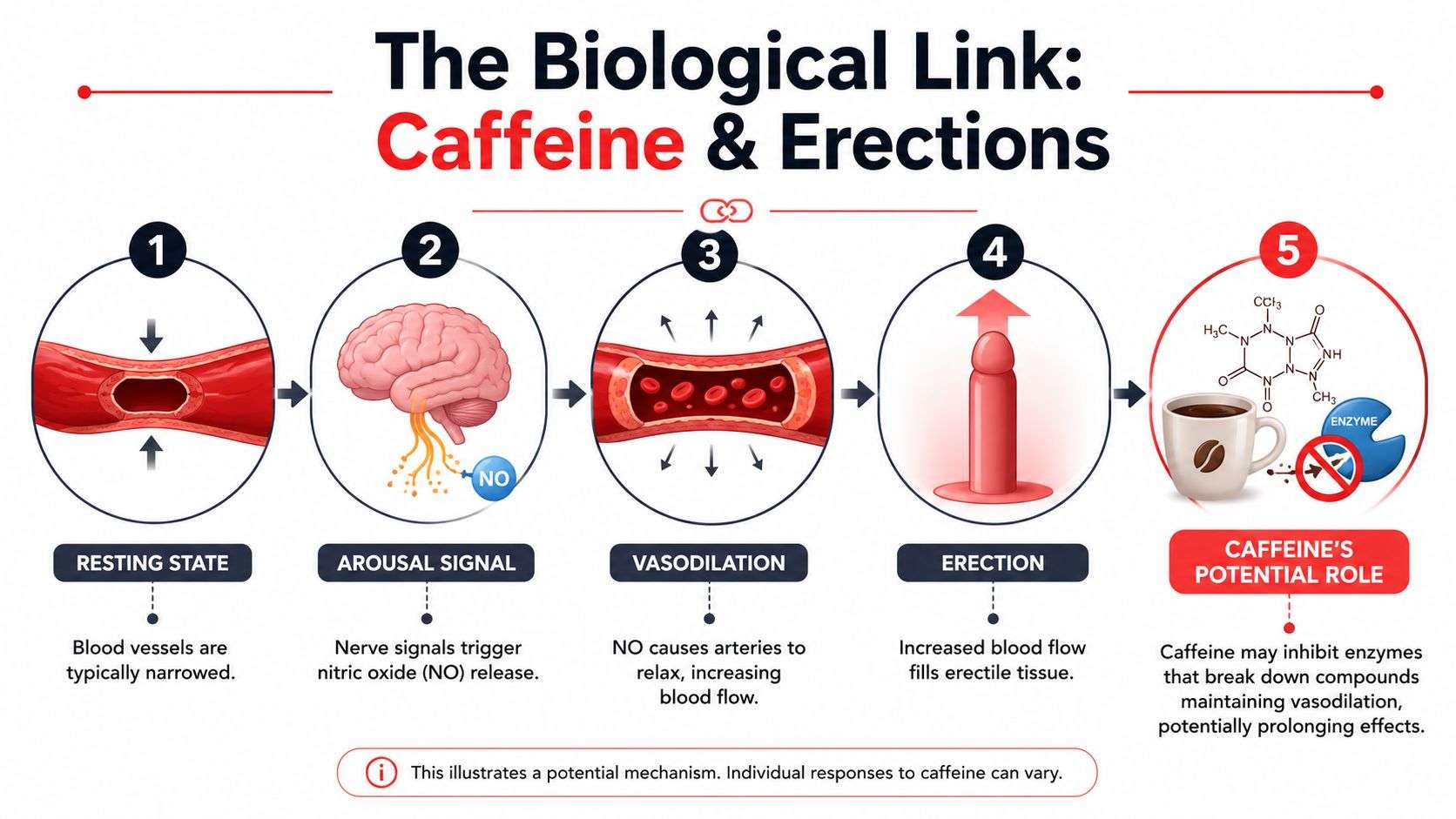
How an erection actually happens
Think of the penile arteries like flexible hoses. In their resting state, they don't allow a large surge of blood through. During arousal, nerve signals trigger chemical messengers that tell smooth muscle in and around those vessels to relax. When that relaxation happens, the arteries widen and erectile tissue fills with blood.
If those “hoses” stay tight, blood flow stays limited. If they relax properly, firmness improves.
That's why erectile dysfunction often overlaps with vascular problems. The body has to deliver blood efficiently, and the tissue has to respond correctly to the signal.
For many men, it helps to read more broadly about the physical contributors involved in erection problems, especially the common conditions reviewed in this overview of contributory conditions that may cause erectile dysfunction.
Where caffeine may influence the process
Caffeine is interesting because it affects blood vessels, the nervous system, and perceived energy all at once. In the right context, that may support the relaxation process involved in blood flow. In the wrong context, stimulation can tip a man toward tension, distraction, and poor physiologic recovery.
Here's the practical split:
- Potential vascular effect: Caffeine may support processes related to vessel relaxation in some men.
- Potential nervous system effect: It can also increase alertness and arousal of the stress response.
- Timing matters: Morning intake behaves differently than late-day intake that disrupts sleep.
- Sensitivity matters: One man feels focused. Another feels jittery and less sexually responsive.
If you've ever felt wired instead of calm after coffee, that matters. Sexual function usually performs better in a body that feels safe, relaxed, and present. If caffeine pushes you into a stress-dominant state, that can interfere with erections even if it has some potentially helpful vascular properties on paper.
A useful explanation of that stress pattern appears in this article on caffeine and fight or flight response. It's worth reading if your caffeine use tends to make you feel “amped” rather than steady.
Erections require blood flow, but they also require a nervous system that can shift into receptivity. A man who is overstimulated often struggles even when desire is present.
That's why the biological link matters, but it never stands alone. The same cup of coffee can produce different outcomes depending on sleep quality, baseline anxiety, vascular health, and how well the rest of the system is functioning.
Decoding the Clinical Evidence on Caffeine and ED
There is one finding in this area that gets repeated often, and it deserves careful interpretation rather than hype.
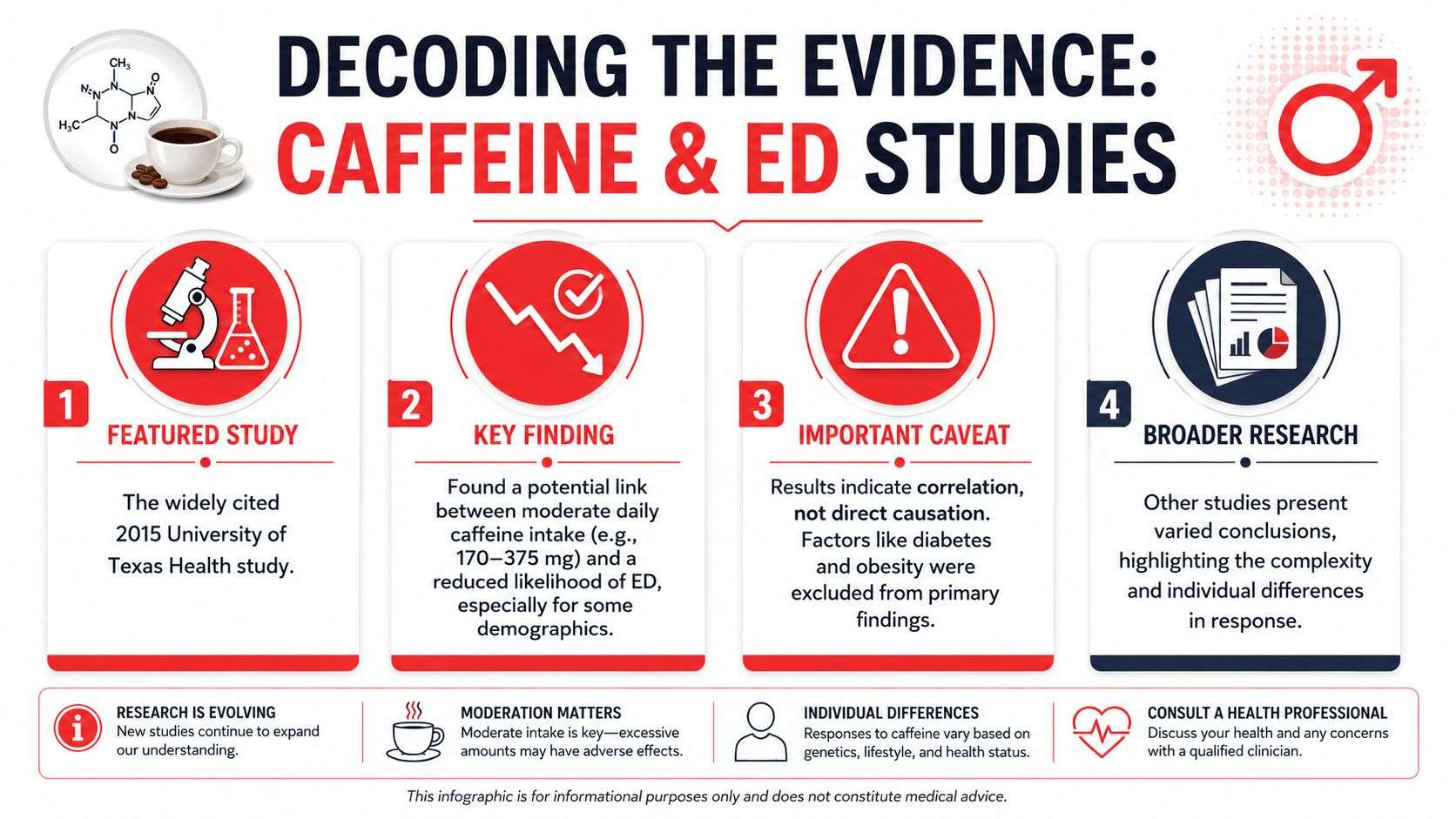
What the research found
A key study published in PLOS ONE found that men who consumed between 170 and 375 milligrams of caffeine per day, which is about 2 to 3 cups of coffee, were 39 to 42% less likely to report erectile dysfunction compared to men who consumed little to no caffeine, according to the PLOS ONE study on caffeine intake and erectile dysfunction.
That finding gets attention for good reason. It suggests that moderate caffeine intake may be associated with a lower likelihood of reported ED in some men.
But at this point, many readers get misled online. They turn an association into a treatment plan.
What that finding does and does not mean
The study does not prove that coffee cures erectile dysfunction. It does not mean every man with ED should start drinking more caffeine. It also does not tell us that caffeine will overcome deeper causes such as vascular damage, diabetes-related changes, low testosterone, medication effects, or nerve dysfunction.
A correlation can still be useful. It tells us the relationship is worth understanding. It does not settle the question of cause.
Here's the cleaner way to read the evidence:
| Clinical question | Practical answer |
|---|---|
| Does moderate caffeine appear linked with better erectile outcomes in some men | Yes, the study suggests that association |
| Does that mean coffee is an ED treatment | No |
| Should men use caffeine as a substitute for medical evaluation | No |
| Can caffeine be part of a broader healthy routine | In some cases, yes |
Important caveat: A favorable association in a study is not the same thing as a reliable clinical solution for an individual patient.
There's another point worth emphasizing. Men don't experience erectile dysfunction for one reason. Even when caffeine has a potentially positive vascular relationship, the effect may be too small to matter if the larger drivers are poor endothelial function, chronic stress, hormone imbalance, or structural tissue changes.
How to apply the evidence in real life
If you already tolerate moderate coffee intake well, this evidence doesn't give you a reason to panic. If you're reaching for caffeine as a home remedy for persistent ED, it should also temper expectations.
The right takeaway is balanced:
- Reasonable optimism: Moderate intake may fit into a vascular-friendly routine for some men.
- Clinical restraint: It isn't a stand-alone solution.
- Individual judgment: Your body's response matters more than internet claims.
- Next step thinking: Persistent ED still calls for a full evaluation.
That's how I'd want a patient to interpret it. Encouraged, but not fooled.
The Two Sides of the Caffeine Coin Benefits vs Risks
Caffeine can be useful. It can also be disruptive. Both are true, and erectile function sits right at the intersection of those effects.
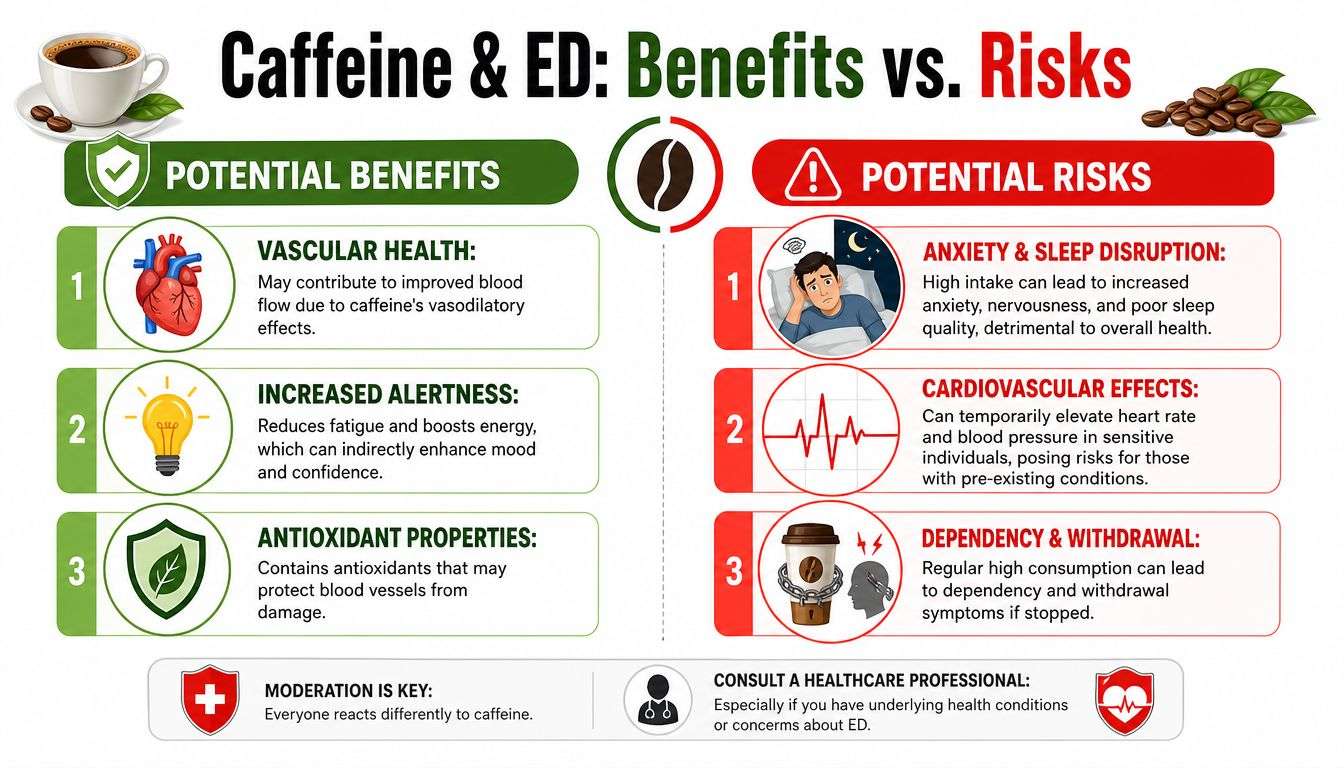
Where caffeine may help
For some men, caffeine supports the body in ways that indirectly favor sexual performance. More alertness can improve confidence and engagement. Better daytime energy may support exercise, activity, and mood. If the person tolerates it well, it may fit into a pattern that supports vascular function rather than fighting it.
A simple way to think about the upside:
- Blood flow support: If caffeine contributes to vessel relaxation in your case, that may be favorable for erectile response.
- Less fatigue: Sexual function often drops when a man feels mentally flat and physically drained.
- Routine and consistency: Men who use caffeine steadily and moderately often have fewer extremes than men who swing between exhaustion and overstimulation.
Where caffeine can backfire
This is the side many men underestimate. The body doesn't separate sexual health from sleep, stress, and recovery. If caffeine raises tension, interrupts sleep, or leaves you irritable and activated, erections often suffer.
Here's where I see the most trouble:
| Potential issue | Why it matters for erections |
|---|---|
| Anxiety | Anxiety redirects attention, raises muscle tension, and undermines arousal |
| Sleep disruption | Poor sleep affects recovery, sexual readiness, and hormonal stability |
| Palpitations or overstimulation | A racing system doesn't always translate into sexual responsiveness |
| Reliance on stimulants | Men may miss the real issue because caffeine masks fatigue rather than fixing it |
A common pattern in practice is this. The man thinks he needs more stimulation, but what he actually needs is better recovery and a calmer nervous system.
What works better than guessing
If you're trying to decide whether erectile dysfunction caffeine is helping or hurting you, run a practical check for a few weeks:
- Track timing: Notice whether late caffeine use lines up with worse sleep and worse sexual performance.
- Watch the body signal: Jitters, irritability, and feeling “on edge” are red flags.
- Notice the context: Coffee on top of good sleep is different from coffee on top of chronic exhaustion.
- Be honest about dependency: If you can't function without repeated stimulation, the deeper problem may be fatigue, stress load, or metabolic dysfunction.
What doesn't work is thinking “natural” means harmless, or “more energy” means better erections. Sexual performance depends on balance. Caffeine can support balance in one man and disrupt it in another.
Caffeine with ED Medications Diabetes and Heart Health
Once you add medications or chronic health conditions to the picture, the conversation becomes less about theory and more about safety, side effects, and judgment.
If you take ED medication
Men often ask whether they can drink coffee with erection medications. In many cases, moderate intake may not be a major problem. The bigger question is how your body responds.
If caffeine already makes you feel flushed, headachy, tense, or aware of your heartbeat, adding it to a medication that changes vascular dynamics may make those sensations more noticeable. That doesn't automatically make the combination dangerous, but it does mean you should pay attention instead of assuming all stimulant use is neutral.
If you're not clear on how prescription erection pills work in the first place, this explanation of how erectile dysfunction treatment pills actually work gives helpful context for understanding why body response can vary.
If you have diabetes or cardiovascular concerns
I urge men to stop self-experimenting and get medical guidance. Diabetes and cardiovascular disease don't just coexist with ED. They often drive it by affecting blood vessels, nerves, tissue response, and overall circulation.
In those cases, caffeine becomes a secondary variable. The central issue is whether the vascular system is healthy enough to support strong erections and whether the broader metabolic picture is being managed properly.
That includes blood pressure. If weight, blood pressure, and metabolic strain are all in the mix, you need coordinated care. For men already exploring weight-related treatment decisions in that setting, this piece on medically supervised Mounjaro for high blood pressure is a useful example of why supervision matters when multiple systems are involved.
Practical rules for higher-risk patients
- Don't stack variables blindly: Starting a new medication, increasing caffeine, and changing supplements at the same time makes it hard to know what's causing what.
- Watch for body feedback: Chest discomfort, marked palpitations, unusual dizziness, or feeling unwell should never be brushed off.
- Treat the root disease: Better glucose control, better vascular care, and better sleep usually matter more than tinkering with coffee alone.
- Bring the full picture to your doctor: List caffeine use, medications, symptoms, and timing patterns.
Men with diabetes or heart concerns usually don't need another trick. They need a treatment plan that respects the whole cardiovascular system.
When Lifestyle Tweaks Arent Enough for ED
There's a point where adjusting caffeine, sleep, hydration, and stress management stops being enough. That point comes sooner than many men want to admit.
If erectile problems are occasional and clearly tied to exhaustion, alcohol, stress, or a bad stretch of sleep, lifestyle cleanup may help. If the issue is persistent, inconsistent across circumstances, or getting worse, you need to think beyond habits.
Signs the issue is bigger than caffeine
Persistent ED often points to one or more deeper problems:
- Vascular dysfunction: Blood isn't moving or being retained the way it should.
- Hormonal imbalance: Libido, energy, and erectile quality all suffer when hormone levels are off.
- Nerve involvement: Signal transmission can be impaired even when desire is intact.
- Tissue-level change: Over time, the erectile tissue itself may lose responsiveness.
Coffee can't fix any of those problems.
If you've already tried the obvious lifestyle changes and the problem remains, the body is asking for a workup, not another workaround.
What a real evaluation should look for
A proper ED evaluation shouldn't stop at a prescription pad. It should ask why the problem exists at all.
That usually means looking at vascular function, hormone status, metabolic health, medication history, sleep quality, and symptom pattern. In the right clinical setting, men may also benefit from more advanced assessment of penile blood flow and tissue response. That's especially relevant if standard pills haven't solved the issue or if the improvement has been partial.
For men exploring restorative options beyond symptom management, it helps to understand the rationale behind shockwave therapy for ED success what the studies show. The bigger idea is important. You don't just want stronger temporary performance. You want to know whether the underlying tissue and circulation can be improved.
That's the pivot many men need. Erectile dysfunction caffeine is a useful question, but it's still a surface question. The more important question is whether your vascular and sexual health systems are functioning the way they should.
Take Control of Your Sexual Health Today
Moderate caffeine may fit into a healthy routine. It may even have a favorable relationship with erectile function in some men. But it isn't a treatment for erectile dysfunction, and it shouldn't be used as a substitute for finding the root cause.
If you're frustrated, stop making this harder than it needs to be. You don't have to keep guessing whether the answer is coffee, stress, age, hormones, circulation, medication side effects, or something else entirely. A thorough sexual health evaluation can sort that out.
What to do next
A strong next step usually includes a focused medical history, lab review, assessment of vascular and metabolic risk, medication review, and a direct conversation about what your erections are doing. Are they weaker than before? Hard to maintain? Inconsistent? Gone despite desire? Those details matter because they point in different clinical directions.
This is also the point where broader health goals should come into the conversation. Men who care about performance usually also care about vitality, energy, recovery, and long-term function. That's why the larger discussion around sexual wellness for longevity resonates with so many patients. Sexual function often reflects how well the rest of the body is aging.
Why comprehensive treatment changes the conversation
The best care doesn't fixate on one habit. It identifies the weak points in the system.
That may mean clarifying whether the main driver is vascular decline, hormone deficiency, poor tissue responsiveness, nerve-related change, or a combination of factors. It may also mean discussing regenerative approaches when the goal is to improve function at the tissue and circulation level rather than relying only on short-term symptom support.
Here's the bottom line I want every patient to hear. If you've been searching erectile dysfunction caffeine because you want a simple fix, you're asking a smart question, but probably not the final question. The final question is what your body has been trying to tell you through this symptom.
Answer that question properly, and the path forward becomes much clearer.
If you're ready for real answers, schedule a consultation with Sexual Wellness Centers of America. Their team focuses on thorough sexual health evaluations and non-surgical regenerative care designed to address the full system behind erectile dysfunction, not just one lifestyle variable.