
Some women arrive in clinic saying, “I'm not sick, but I don't feel like myself.” That sentence often comes with a pattern: more fatigue than usual, a shorter fuse, trouble focusing, poor sleep, less interest in sex, new vaginal dryness, or recurrent urinary discomfort that keeps getting treated as if it appeared out of nowhere. Each symptom can seem minor on its own. Together, they can gradually change how you work, relate, exercise, sleep, and feel in your own body.
That cluster of changes is often dismissed as stress, aging, or “being busy.” Sometimes those factors do play a role. But in many women, the deeper driver is estrogen deficiency, a physiologic shift that affects far more than menstrual cycles or hot flashes.
If you've been searching for answers about estrogen deficiency symptoms in women, the important thing to know is this: these symptoms are real, medically recognized, and treatable. Low estrogen can affect the brain, bones, vaginal tissue, mood, sleep, skin, and urinary health. When you understand that connection, the symptoms start making more sense, and the path forward becomes much clearer.
Table of Contents
- More Than Just an 'Off' Day
- Understanding Estrogen's Role in Your Body
- Common and Hidden Symptoms of Estrogen Deficiency
- Why Estrogen Levels Decline Causes and Risk Factors
- How Estrogen Deficiency Is Diagnosed Accurately
- Reclaiming Your Health Treatment and Management Options
- Frequently Asked Questions About Estrogen Deficiency
More Than Just an 'Off' Day
You can feel estrogen shifts before you have language for them. A woman may notice that her patience is thinner, her sleep is lighter, and her brain feels slower by late afternoon. She may start avoiding intimacy because it's uncomfortable, or she may blame herself for feeling less motivated, less sharp, or less resilient.
That doesn't mean something is “wrong” with you in a vague sense. It means your body may be responding to a measurable hormonal change that has wide effects across multiple systems. Estrogen isn't just about fertility. It helps support tissue health, nervous system signaling, vaginal lubrication, temperature regulation, and bone maintenance.
Practical rule: When several low-grade symptoms appear together, especially changes in sleep, mood, focus, heat intolerance, urinary comfort, and vaginal comfort, it's worth looking for one unifying cause instead of treating each symptom as a separate problem.
This is why the phrase estrogen deficiency symptoms women often search for includes complaints that don't seem hormonal at first glance. Brain fog, recurrent UTIs, painful sex, anxiety, and joint discomfort may look unrelated. Clinically, they often travel together.
Women are often told to push through this phase. That advice usually fails. What works better is understanding the biology, identifying the pattern, and matching treatment to the symptoms that are affecting your life most.
Understanding Estrogen's Role in Your Body
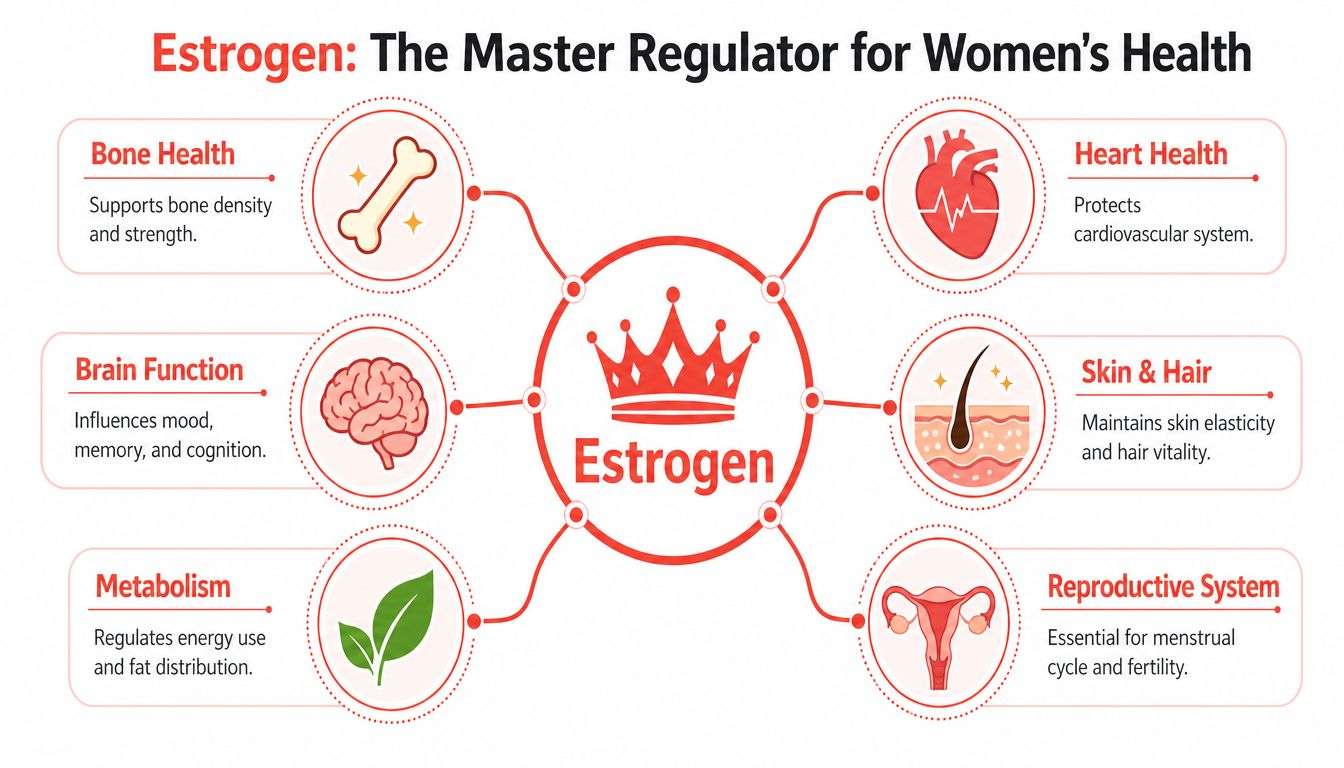
Estrogen is a whole-body hormone. It affects how the brain communicates, how tissues stay hydrated and resilient, how bones remodel, and how the urinary and vaginal tract protect themselves. That is why low estrogen can create a cluster of symptoms that seem unrelated at first.
Brain function
Estrogen affects neurotransmitters involved in mood, attention, and memory. In clinic, this often shows up as brain fog, irritability, anxiety, or the frustrating sense that mental stamina has dropped. These symptoms are real physiological changes, not a character flaw or lack of effort.
Brain effects may also be visible on imaging during the menopause transition. Research on women in midlife has linked hormonal shifts with changes in brain structure, metabolism, and connectivity, including gray matter changes in areas involved in memory and executive function, as described in this National Institute on Aging review of menopause and the brain.
Bone and tissue support
Bone is constantly being broken down and rebuilt. Estrogen helps keep that process balanced. When estrogen drops, bone breakdown can outpace bone formation, which raises the risk of osteopenia and osteoporosis over time.
Soft tissues change too. Vaginal and vulvar tissue depend on estrogen to stay thicker, more elastic, and better lubricated. When levels fall, dryness, burning, and pain with intimacy become more likely. Many women also develop bladder irritation or recurrent infections because the tissue barrier is less resilient. If those symptoms sound familiar, it helps to understand how vaginal atrophy is treated.
Skin, hair, and whole-body regulation
Low estrogen often shows up in subtler ways before a woman connects the dots. Skin may feel drier. Hair may seem thinner or less full. Recovery after exercise can feel slower, and joint stiffness may become more noticeable.
These changes happen because estrogen influences collagen, hydration, circulation, and inflammatory signaling across the body. It also affects where fat is stored and how stable energy feels from day to day.
Low estrogen often shows up as several smaller changes happening at the same time, not one obvious symptom.
Reproductive and urinary health
During the reproductive years, estrogen supports ovulation and helps maintain the vaginal and urinary environment. It helps keep the vaginal pH in a healthy range and supports the tissues that reduce irritation and infection risk. When estrogen declines, urinary urgency, recurrent UTIs, vaginal discomfort, and painful sex become easier to explain through one root cause instead of treating each issue in isolation.
For health systems and data standards work, some organizations also identify EHDS symptoms with OMOP, but in patient care the practical point is simpler. Estrogen deficiency can affect the brain, bones, skin, bladder, and vaginal tissue at the same time. Once that pattern is recognized, treatment becomes much more targeted.
Common and Hidden Symptoms of Estrogen Deficiency
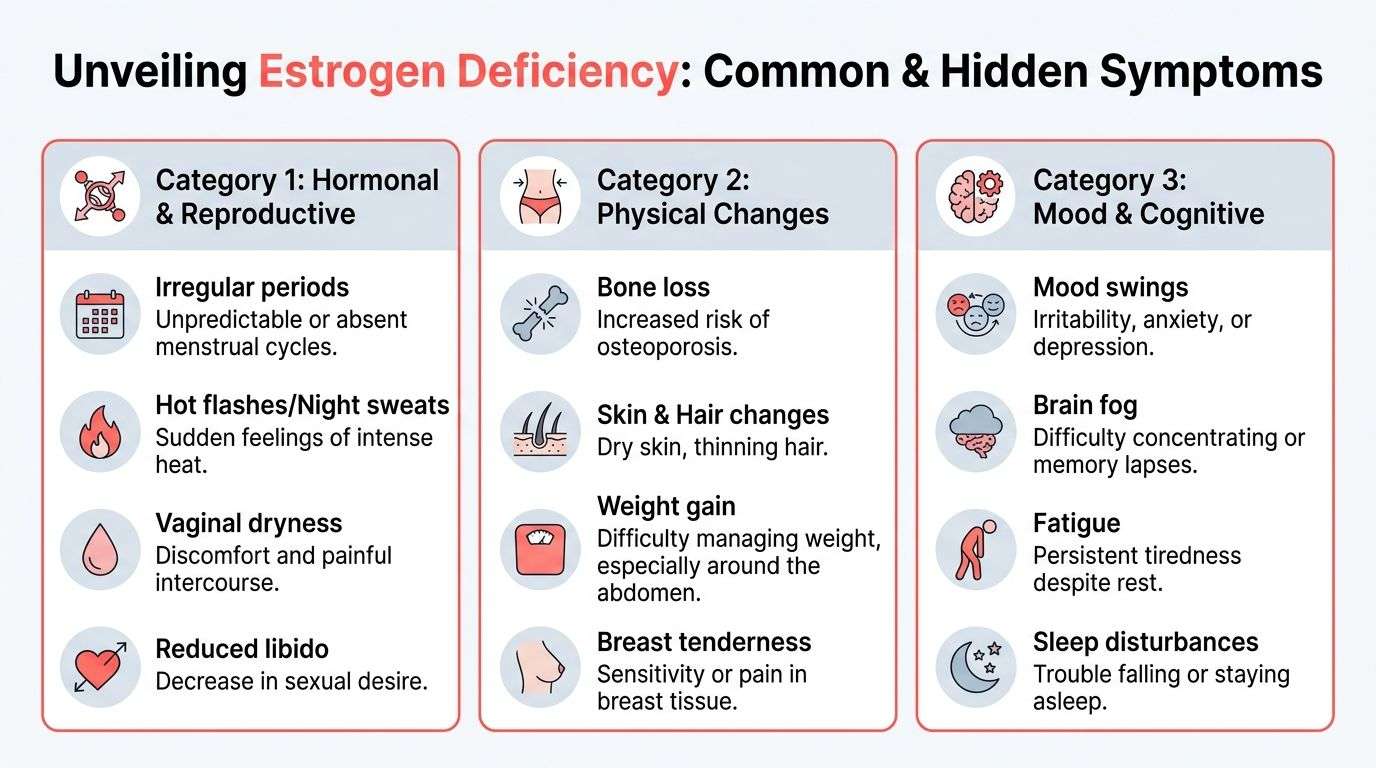
The most common estrogen deficiency symptoms in women include hot flashes and night sweats, but stopping there misses a large part of the clinical picture. Many women seek help only after months or years of seemingly disconnected issues.
Vasomotor symptoms
Hot flashes and night sweats are widely recognized symptoms. They are not trivial. They can disrupt sleep, worsen irritability, and leave women exhausted by morning. Between 60% and 80% of women globally experience vasomotor symptoms during the perimenopausal and menopausal transition, and about 25% report symptoms that are severe and debilitating, according to estrogen deficiency prevalence data.
When these symptoms happen at night, women often think the problem is insomnia. In practice, the sleep disruption is frequently secondary to temperature instability. If you wake drenched, restless, and unable to settle again, low estrogen belongs on the list of likely causes.
Urogenital and sexual symptoms
This area is still under-discussed in routine care. Estrogen deficiency can lead to vaginal dryness, burning, irritation, itching, and pain during sex. It can also reduce natural lubrication and make tissue more fragile.
For many women, the emotional impact is as significant as the physical one. They begin avoiding intimacy because they expect discomfort. They may feel embarrassed, disconnected, or worried that something more serious is wrong. In reality, these are common low-estrogen changes.
If you want a plain-language explanation of what tissue changes look like clinically, this guide on vaginal atrophy and treatment options is useful. In health data work, symptom patterns like these are also being organized more systematically, which is part of why efforts to identify EHDS symptoms with OMOP matter for improving how patterns are recognized across records and care settings.
A symptom women often miss is urinary change. Recurrent UTIs, urinary burning, urgency, or a sense that the urinary tract is “more sensitive than it used to be” can all track with estrogen loss because the tissue and microbiome environment change when estrogen falls.
Cognitive and mood symptoms
Brain fog is one of the most frustrating complaints because it's easy for others to minimize. Women describe forgetting familiar words, losing their train of thought, struggling to multitask, or feeling mentally slower under stress. These changes are real.
Mood changes can include anxiety, irritability, low motivation, tearfulness, or a shorter emotional fuse. Not every mood symptom is hormonal, but low estrogen can lower the brain's margin for resilience. Women who previously handled stress well may suddenly feel less buffered.
If your brain feels different during the same period that sleep, cycles, heat tolerance, or vaginal comfort have changed, that pattern deserves a hormone-aware evaluation.
Systemic physical changes
Some symptoms are easy to overlook because they don't fit the stereotype of menopause. Women may report dry skin, thinning hair, lower exercise recovery, joint aches, reduced stamina, or a shift in body composition. These aren't always caused by estrogen alone, but low estrogen can be part of the picture.
A helpful way to think about it is that estrogen supports tissue quality. When support drops, tissues often feel drier, stiffer, or more easily irritated. That's one reason women may describe “aging overnight,” even though the process is gradual and biologic.
Here's a simple symptom pattern clinicians often see:
| Symptom cluster | How women often describe it |
|---|---|
| Heat and sleep | “I wake up overheated and can't get back to sleep.” |
| Mood and thinking | “I'm more anxious, and my focus is not what it used to be.” |
| Vaginal and sexual comfort | “Sex feels dry or painful, even though that never used to happen.” |
| Urinary changes | “I keep feeling irritation or getting UTI-like symptoms.” |
| Whole-body shifts | “My skin, joints, and energy all feel different.” |
When these complaints appear together, estrogen deficiency becomes a strong clinical consideration.
Why Estrogen Levels Decline Causes and Risk Factors
Estrogen rarely drops without a reason. In some women the shift is gradual and expected. In others, it happens early, suddenly, or for reasons that are easy to miss unless someone looks at the full clinical picture.
Natural hormone transition
The most common cause is the menopausal transition. During perimenopause, the ovaries do not stop working all at once. Output becomes inconsistent first. That is why symptoms can feel confusing for a while. One month may bring sleep disruption and breast tenderness, while the next brings skipped periods, vaginal dryness, or a clear drop in resilience.
Menopause is the point when ovarian estrogen production stays low long term. The path to that point differs from woman to woman. Genetics, smoking, underlying health conditions, and prior gynecologic history can all influence how early symptoms start and how strongly they are felt.
Medical and surgical causes
Some estrogen declines are abrupt. Surgical removal of the ovaries causes a sudden loss of ovarian estrogen, and many women feel that change quickly. Chemotherapy, pelvic radiation, and some medications that suppress ovarian function can also trigger low-estrogen states before the expected age.
In younger women, that matters well beyond hot flashes. Estrogen helps maintain bone turnover, ovulation, and the health of reproductive tissues. When levels stay low during the reproductive years, clinicians think about consequences such as reduced bone density and difficulty conceiving, not just day-to-day discomfort. The American College of Obstetricians and Gynecologists addresses these risks in its guidance on primary ovarian insufficiency in adolescents and young women.
Genital and urinary symptoms often show up here too. For a practical explanation of tissue changes, see whether menopause leads to vaginal dryness.
Functional and lifestyle contributors
Low estrogen can also develop when the brain and ovaries are not getting the signals or resources they need. Common contributors include under-fueling, rapid weight loss, very low body fat, high training load without enough recovery, chronic illness, pituitary or hypothalamic disorders, and significant emotional or physical stress.
This is an area where trade-offs matter. Intense exercise may support cardiovascular health and mood, but if training outpaces nutrition and recovery, menstrual function can shut down and estrogen can fall. The same is true for aggressive dieting. A woman may be praised for discipline while her hormones are telling a different story.
Why the cause changes the treatment plan
Cause determines treatment. A woman in late perimenopause may benefit from symptom-focused hormone therapy and tissue support. A younger woman with hypothalamic suppression may need more calories, less physiologic stress, and a workup for missed periods before anyone reaches for a prescription.
That distinction is one reason women with brain fog, joint pain, recurrent urinary symptoms, cycle changes, or sudden vaginal discomfort deserve a careful evaluation instead of reassurance alone. Low estrogen is not one story. It is a pattern with several possible drivers, and the right plan starts by identifying which one is present.
How Estrogen Deficiency Is Diagnosed Accurately
A good diagnosis is rarely made from a single lab value. That surprises many women because they expect one estrogen test to settle the question. In reality, diagnosis is usually more nuanced.
Symptoms matter as much as labs
Estrogen can fluctuate considerably, especially during perimenopause. A woman may have a “normal” lab on one day and still have a very convincing symptom pattern over months. That's why I tell patients to treat the lab as supporting information, not the whole story.
The most useful diagnostic clues often come from chronology. When did the symptoms start? Which appeared first? Are they cyclical, progressive, or abrupt? Did sleep change before mood did? Did vaginal dryness appear after cycle changes? Those details are clinically valuable.
A symptom journal can help. It doesn't need to be fancy. Track changes in:
- Sleep quality: Note night waking, overheating, and whether rest feels restorative.
- Cycle pattern: Record skipped periods, shorter cycles, heavier bleeding, or unpredictability.
- Cognitive symptoms: Write down concentration lapses, memory slips, or afternoon mental crashes.
- Genitourinary symptoms: Include dryness, irritation, pain with sex, urinary urgency, or recurrent UTI-like symptoms.
What a thorough evaluation looks like
A careful clinician usually combines symptom review, medical history, menstrual history, medication review, and targeted lab work when needed. The exam may also include discussion of sexual symptoms, bladder symptoms, fertility goals, and bone health concerns.
Here's what often leads to misdiagnosis:
| Less helpful approach | Better approach |
|---|---|
| One-time lab in isolation | Labs interpreted alongside symptom pattern and cycle history |
| Treating each symptom separately | Looking for one hormone-related pattern across systems |
| Ignoring sexual and urinary symptoms | Asking directly about dryness, pain, and recurrent irritation |
Bring the full list, even if it feels unrelated. The “small” symptoms often reveal the pattern.
Women sometimes leave appointments feeling unheard because they mentioned fatigue and brain fog, but no one asked about night sweats, vaginal dryness, or urinary changes. That missing context can delay proper treatment. A strong evaluation connects the dots.
Reclaiming Your Health Treatment and Management Options
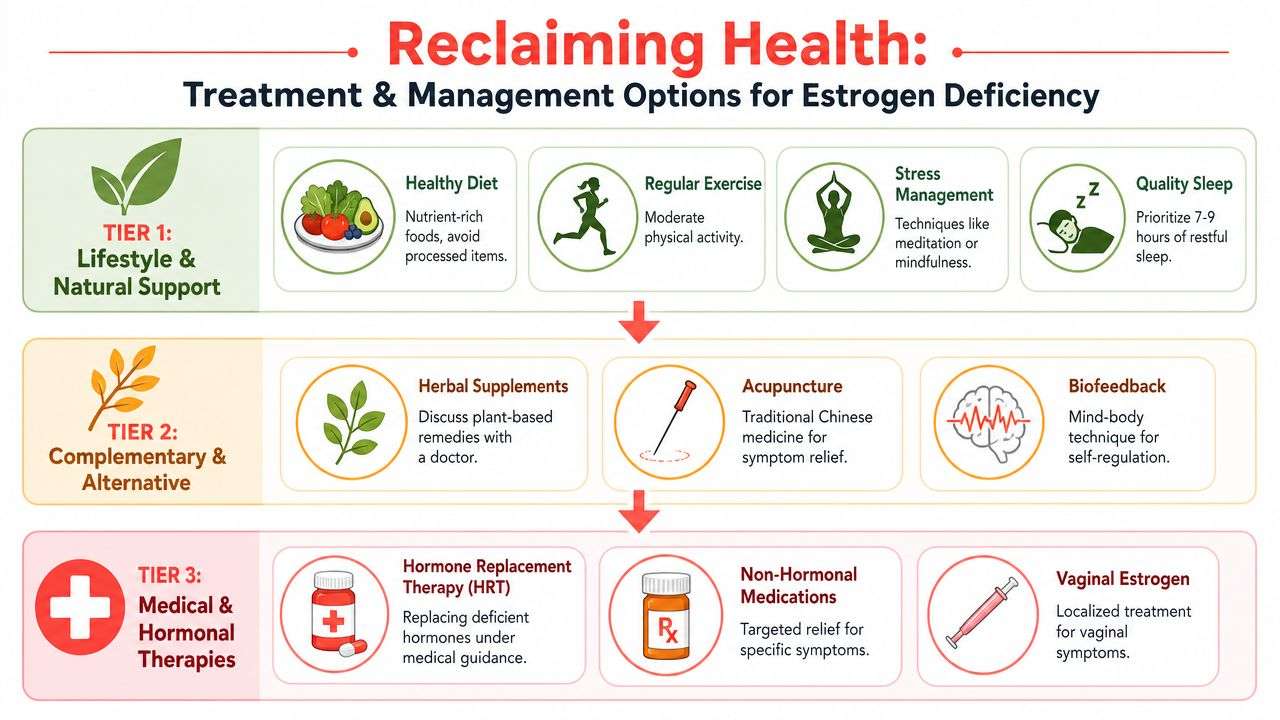
Treatment should match the pattern of symptoms, the stage of hormone change, and your personal risk profile. A woman with vaginal dryness and recurrent urinary irritation needs a different plan than a woman dealing with hot flashes, insomnia, brain fog, and joint pain all at once. Good care connects the symptom to the tissue and system being affected, then builds treatment from there.
Start with the foundation
Lifestyle support matters, but it has limits. I often tell patients that better habits can reduce strain on a low-estrogen body. They do not replace treatment when symptoms are affecting sleep, intimacy, bladder health, mood, or daily function.
The basics usually include:
- Strength training and regular movement: These support bone health, muscle mass, insulin sensitivity, mood, and joint function.
- Sleep protection: A cooler bedroom, consistent schedule, and fewer late-evening triggers can make night sweats and fragmented sleep easier to handle.
- Adequate nutrition: Regular meals, enough protein, fiber, and total calorie intake matter, especially if under-fueling has contributed to cycle disruption or low hormone production.
- Stress management: Stress does not cause menopause, but it can worsen fatigue, poor sleep, anxiety, and the sense that your body is no longer recovering well.
These steps help. They are rarely enough on their own when estrogen deficiency is driving clear tissue and whole-body symptoms.
When local symptoms need local treatment
If the main problems are vaginal dryness, burning, pain with sex, urinary urgency, or repeated UTI-like episodes, local treatment is often the most effective place to start. The goal is to restore comfort and tissue resilience where estrogen loss is having the most direct effect.
Low estrogen can thin vaginal and vulvar tissue, reduce natural lubrication, and make the urinary tract more vulnerable to irritation. That is why some women notice painful intimacy, stinging after intercourse, or recurrent urinary symptoms long before anyone mentions estrogen as a possible cause.
Local vaginal estrogen is one of the most practical options for this symptom pattern. It is commonly used when symptoms are mainly genital or urinary rather than whole-body. Non-hormonal moisturizers and lubricants can also help, especially for women who want symptom relief right away or cannot use hormonal therapy. The trade-off is simple. Non-hormonal products may improve comfort, but they do not restore estrogen-dependent tissue as effectively as prescription local therapy.
Systemic therapy and hormone replacement
Systemic hormone therapy is considered when symptoms extend beyond the vaginal and urinary tissues. Common reasons include hot flashes, night sweats, sleep disruption, mood shifts, low energy, reduced sexual comfort, and the washed-out feeling many women describe as “not feeling like myself.”
Treatment can come in different forms, including patches, gels, oral medications, and in some settings pellet-based therapy. The best option depends on symptom goals, age, whether you still have a uterus, personal and family history, clotting risk, migraine history, and how sensitive you are to dose changes. A good plan is individualized and monitored, not copied from someone else's experience.
If you want a clearer overview of choices, this guide to HRT for women and how it works explains the main treatment paths.
The aim is better function. Better sleep, clearer thinking, more comfortable intimacy, fewer bladder symptoms, and a steadier sense of well-being.
Advanced non-hormonal and regenerative options
Some women cannot use estrogen. Others use hormone therapy and still want additional treatment for persistent dryness, painful intercourse, laxity, or changes in sexual response. In those cases, office-based regenerative options may be part of the discussion.
Energy-based vaginal therapies are one example. These treatments are used in selected patients to support tissue remodeling and improve local comfort. They are not first-line care for every woman, and they are not a substitute for a proper evaluation of infection, dermatologic conditions, pelvic floor dysfunction, or hormone deficiency. In practice, they are best viewed as one tool among several for women who want a non-hormonal approach or who need added support after foundational treatment.
The right plan should help you reclaim vitality, rather than tolerate decline. If common but dismissed symptoms like brain fog, joint discomfort, painful sex, or recurrent urinary irritation have started to cluster together, treatment can address the root cause instead of chasing each symptom separately.
Frequently Asked Questions About Estrogen Deficiency
Can low estrogen really cause recurrent UTIs
Yes. Lower estrogen can change the tissues of the vagina and urethra, reduce protective lactobacilli, and make irritation and infection more likely. This pattern is well described in postmenopausal genitourinary syndrome, including urinary symptoms and recurrent infections, in research published in StatPearls on Genitourinary Syndrome of Menopause.
If someone keeps getting treated for UTIs without anyone asking about dryness, burning, painful sex, or urinary urgency, the root cause can be missed.
Is HRT safe
For many women, hormone therapy is a reasonable and effective option. Safety depends on the person in front of you, including age, how long it has been since menopause began, whether the uterus is present, the type of symptoms, and personal or family risk factors such as blood clots, stroke, breast cancer, migraine with aura, or liver disease.
The trade-off is straightforward. Avoiding treatment can leave sleep, mood, sexual comfort, bladder health, and daily function impaired. Starting treatment without a proper review of risks is not good care either. The right plan comes from an individualized assessment and regular follow-up.
How long do women need treatment
There is no single timeline. Some women use treatment for a shorter period while symptoms are most disruptive. Others stay on longer because brain fog, hot flashes, vaginal symptoms, or urinary problems return when therapy stops.
I usually frame this around function, risk, and goals. The best duration is the one that controls symptoms with the lowest effective intensity, then gets reassessed over time.
Sexual Wellness Centers of America provides care for adults dealing with hormone-related sexual health and wellness concerns, including women experiencing low-estrogen symptoms such as vaginal dryness, painful intimacy, reduced libido, and broader quality-of-life changes. If you're ready for a personalized evaluation and a treatment plan that may include hormone optimization, vaginal rejuvenation, or regenerative wellness options, you can learn more or schedule through Sexual Wellness Centers of America.