
You notice the sting first, then the redness, and your mind jumps to the worst-case scenario. A genital friction burn is usually much less dramatic than it feels in the moment. It's a mechanical abrasion injury, not a heat burn, which means repeated rubbing has irritated the thin genital skin until the surface layer is raw.
That distinction matters because the right response is usually simple, calm, and immediate. The goal is to reduce friction, protect the skin barrier, and watch for signs that something else is going on. If symptoms persist, worsen, or come with discharge, sores, or fever, it stops being a self-care problem and becomes a clinical one.
Table of Contents
- What Is a Genital Friction Burn
- Common Causes and Key Risk Factors
- Identifying Symptoms and Ruling Out Infections
- Immediate At-Home Care and Wound Healing
- When to Seek Medical Attention
- Prevention Strategies and Safer Sex Guidance
What Is a Genital Friction Burn
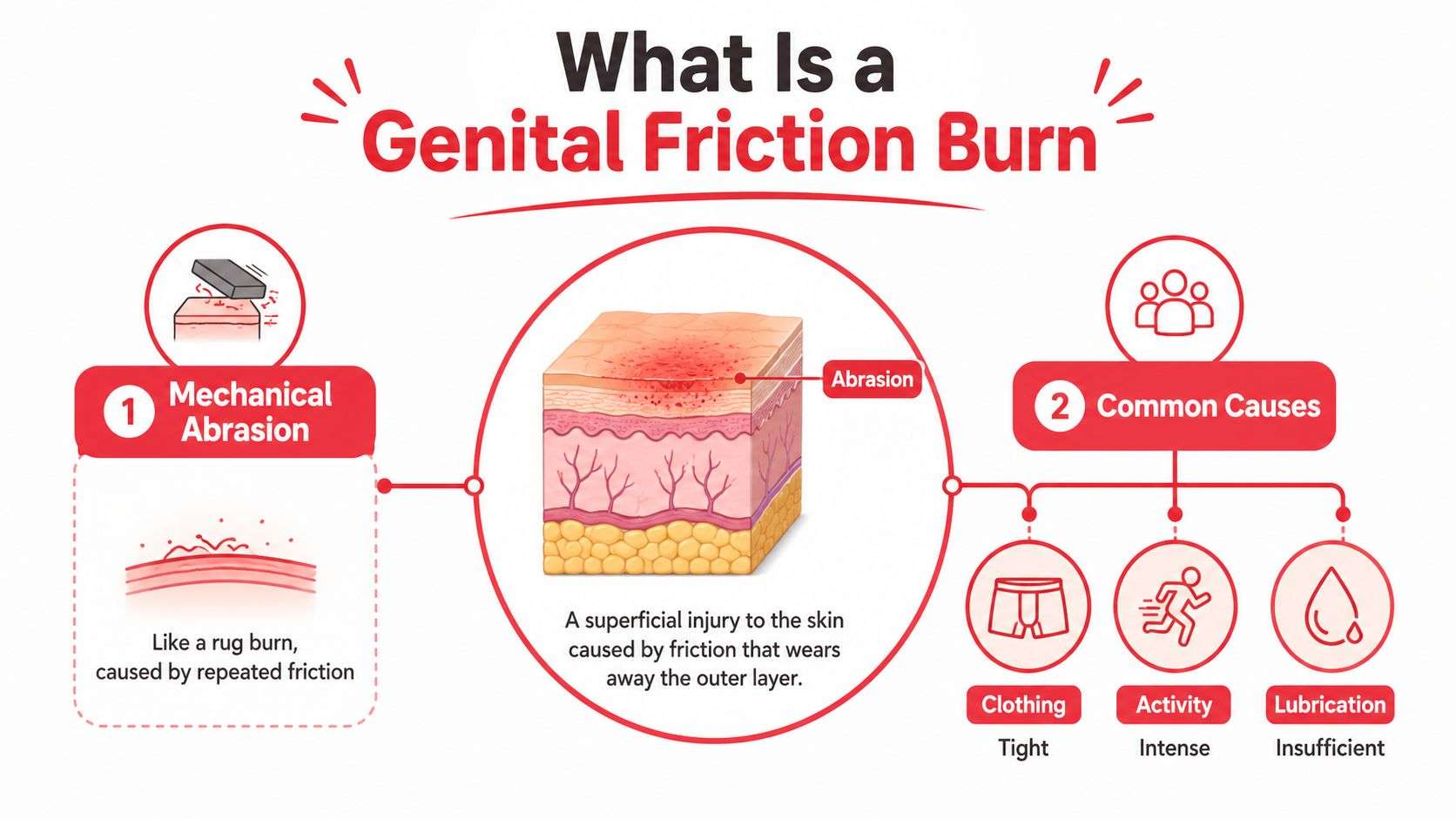
A genital friction burn is easiest to understand as a skin rug burn in a sensitive area. It happens when repeated contact overwhelms the skin barrier, causing superficial abrasion, redness, and rawness rather than a thermal injury. The most useful clinical phrase is mechanical abrasion, because that tells you the cause is rubbing, not heat.
Why genital skin is so reactive
Genital skin has a thinner, more delicate barrier than many other areas, so it shows irritation quickly when friction is repetitive or intense. When lubrication is low, shear stress rises and the skin is more likely to develop erythema, tenderness, and superficial stripping. That's why a problem can appear after sexual activity, masturbation, or even friction from clothing that would barely bother another part of the body.
Practical rule: if the symptoms started soon after rubbing and feel worse with more contact, friction is the first explanation to consider.
This condition is often temporary if the trigger stops. The important point is not to minimize it, but to name it correctly so you don't confuse a chafe injury with an infection or a chronic skin disorder. The source material also notes that repeated high-contact rubbing, including vigorous or prolonged intercourse, vigorous masturbation, and tight or abrasive clothing, is a consistent mechanism for this injury, especially when lubrication is insufficient (mechanical abrasion and lubrication guidance).
Common Causes and Key Risk Factors
The biggest driver is simple, repeated friction. In sexual contexts, that usually means vigorous or prolonged intercourse or masturbation without enough lubrication. In daily life, it can be tight underwear, rough seams, denim, athletic wear, or fabrics that hold moisture against the skin and keep it rubbing.
Activity and clothing triggers
Some causes are obvious once you look for them, and some are easy to miss. A long session with little lubrication creates more surface stress than a brief one with good glide, and the same logic applies to clothing that presses and rubs while you walk, sit, or exercise. For people who cycle or run, the issue is not heat, it's repetitive contact plus sweat and pressure.
A second layer is skin sensitivity. Naturally dry skin, eczema, or other irritation can make the genital area more vulnerable to abrasion, which is why recurring symptoms deserve more than a quick fix. If dryness is part of the pattern, the issue may overlap with other causes of genital discomfort, including vaginal dryness, which can increase friction during activity, and that needs a separate strategy as well, as outlined in this guide to vaginal dryness symptoms.
When anatomy and moisture matter
Some anatomies create more glide resistance, especially when tissue does not move smoothly during friction. Moisture can cut both ways, too much sweat can trap rubbing, while too little natural lubrication can make contact sharper and more irritating. That's why prevention is rarely just about “going easier,” it's about reducing mechanical load at the source.
If you're looking for broader skin-care strategies that keep the area calmer and less reactive, a practical resource on safe intimate skin treatments can help you think about skin tolerance without over-treating the area. The useful takeaway is straightforward, less friction, less pressure, and less abrasive contact usually means less chance of another flare.
Identifying Symptoms and Ruling Out Infections
The usual pattern is pain, redness, irritation, and discoloration soon after the friction event. The skin may feel raw, sting with touch, or burn when it rubs against underwear or gets washed. That timing is one of the strongest clues that you're dealing with abrasion rather than an infection.
What friction burn usually looks and feels like
A friction injury tends to stay local to the area that got rubbed. It often feels worse with movement, sex, masturbation, or tight clothing, then settles when the skin is left alone. The presentation can be alarming, but it's commonly surface-level and short-lived once the irritation stops.
The history matters as much as the skin exam. Recent repetitive friction with minimal lubrication points toward abrasion, while symptoms that persist or broaden need a different explanation.
Signs that point away from friction
Self-triage matters. Persistent lesions, discharge, vesicles, ulcers, or systemic symptoms should prompt evaluation for herpes, balanitis, candidiasis, gonorrhea, chlamydia, or syphilis (differential diagnosis guidance). Those findings are not typical of a simple chafe injury. The same is true when symptoms keep worsening instead of easing after the trigger has stopped.
A few practical comparisons help:
- Red, raw skin after recent friction usually fits abrasion.
- Fluid-filled blisters are more concerning for herpes or another infectious process.
- Discharge from the urethra or unusual odor deserves clinic evaluation.
- Painless sores or ulcers are not something to assume is just a burn.
- Fever or feeling unwell shifts the concern beyond a local skin injury.
If you're unsure, don't keep guessing. A sexual health clinic can distinguish a friction injury from an STI, yeast, balanitis, or another inflammatory condition, and that saves time when the skin doesn't behave like a straightforward burn. You can also review what a visit looks like through this walk-in sexual health clinic overview.
Immediate At-Home Care and Wound Healing
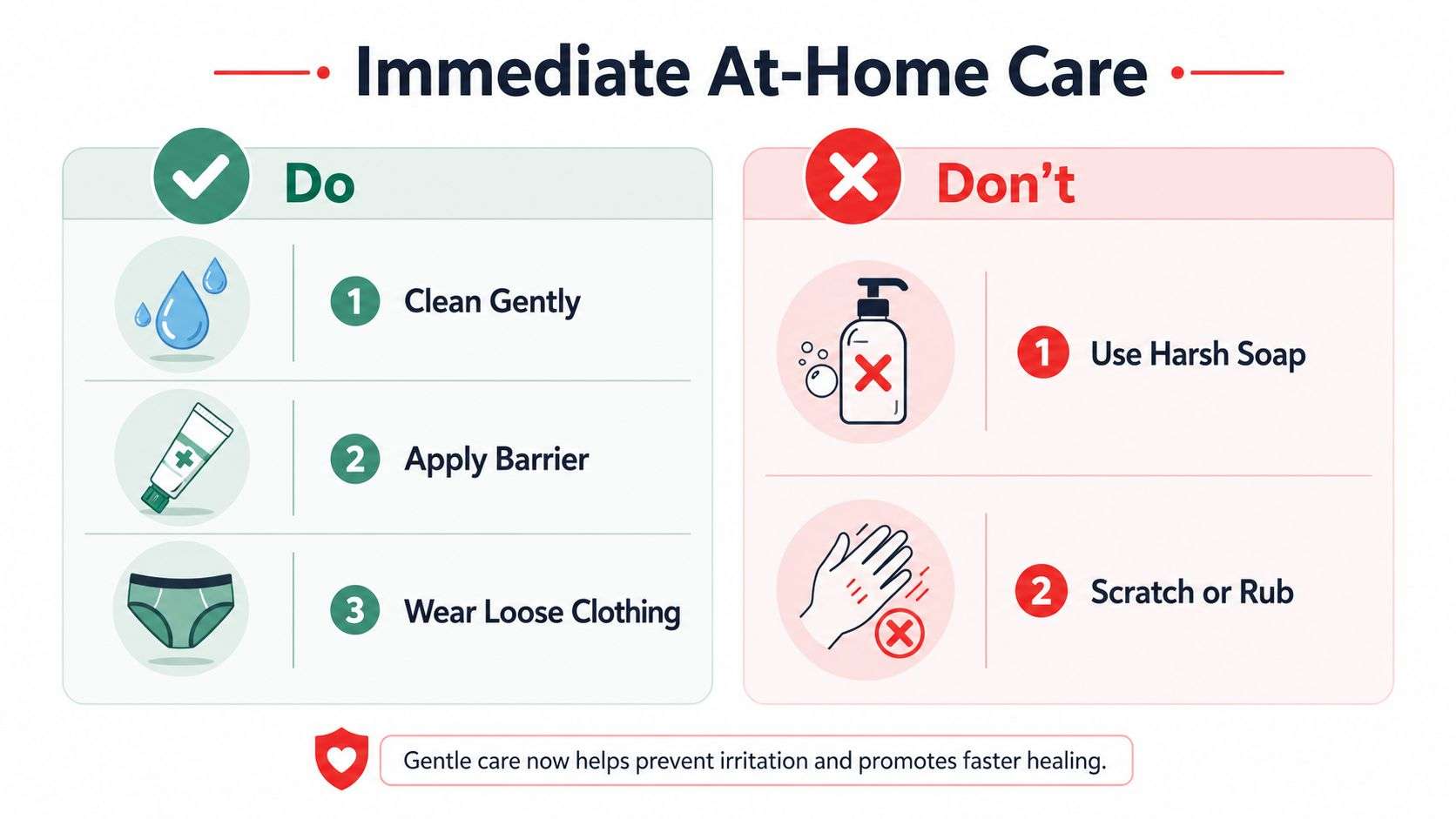
Stop the rubbing first. That means pausing sex, masturbation, or any activity that keeps the skin irritated, because continued friction almost always turns a minor injury into a longer one. After that, the job is to clean gently, reduce moisture and friction, and let the surface layer recover.
What to do right now
Use lukewarm water and a mild, unscented cleanser if needed, then pat the skin dry instead of rubbing it. Loose, breathable underwear lowers contact and helps the area stay calmer. A plain barrier ointment can protect raw skin from repeated rubbing, especially if clothing is still irritating the area.
The reason this works is simple, the skin needs a low-friction environment to rebuild its surface. A cool compress can help if the area feels hot or stingy, but keep it brief and gentle. If you want a soothing, skin-friendly option to compare with other barrier approaches, you can read more about discover aloe's cool hydration and decide whether a cooling product fits your skin tolerance.
What not to do
- Don't scrub the area. Scrubbing reopens the abrasion and delays healing.
- Don't use harsh soaps or scented products. They can sting and further strip the barrier.
- Don't apply alcohol or hydrogen peroxide. Those products are too irritating for delicate genital skin.
- Don't keep testing the injury. Every check with friction is another insult to healing tissue.
If the skin is just superficial, it often starts looking and feeling better once friction stops and the barrier is protected. The point is to treat it like a fragile abrasion, not something that needs aggressive cleaning or repeated handling. Gentle care wins here.
When to Seek Medical Attention
Most friction burns settle with simple care, but some symptoms shouldn't be watched at home. Pus, foul odor, severe swelling, fever, blisters, open sores, and worsening pain are red flags that need professional assessment. So is a lesion that doesn't improve after a reasonable period of home care, because a friction injury should trend better, not drift sideways.
Why persistence changes the equation
A major U.S. burn-center analysis found that genital burns accounted for 1.7% of 71,895 burn cases and were independently associated with higher odds of healthcare-associated infection, aOR 3.0, urinary tract infection, aOR 3.4, and mortality, aOR 1.54 (burn-center analysis). That dataset is broader than friction injuries alone, but it shows why genital skin trauma deserves careful monitoring when it doesn't behave like a simple surface injury. Even though most friction injuries are minor, the clinical stakes rise when healing stalls or complications appear.
What a clinic can actually do
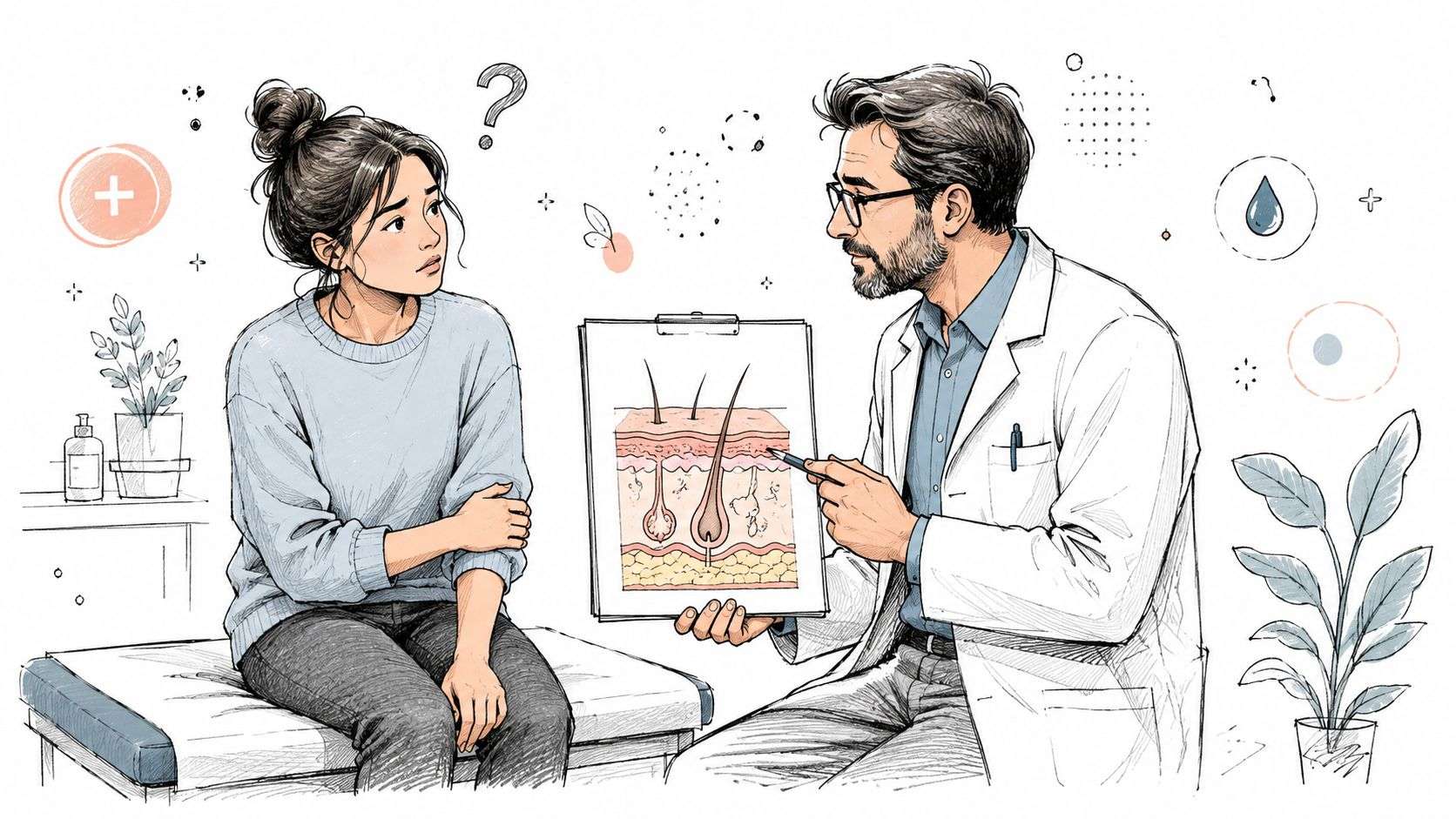
A sexual health or dermatology visit isn't about overreacting. It's about sorting out whether you need prescription treatment for infection, whether an inflammatory skin condition is present, or whether the lesion is taking longer than expected to heal. That kind of evaluation matters when symptoms are atypical, because guessing wrong can delay the right treatment.
Seek help sooner if:
- The area is getting more painful instead of less painful.
- Blisters, ulcers, or discharge appear after the initial injury.
- Fever, urinary symptoms, or swelling develop.
- The skin looks infected or smells abnormal.
A friction burn that improves is usually manageable at home. A genital lesion that does not improve, or that changes character, is no longer something to treat casually. That's the point where professional evaluation becomes essential.
Prevention Strategies and Safer Sex Guidance
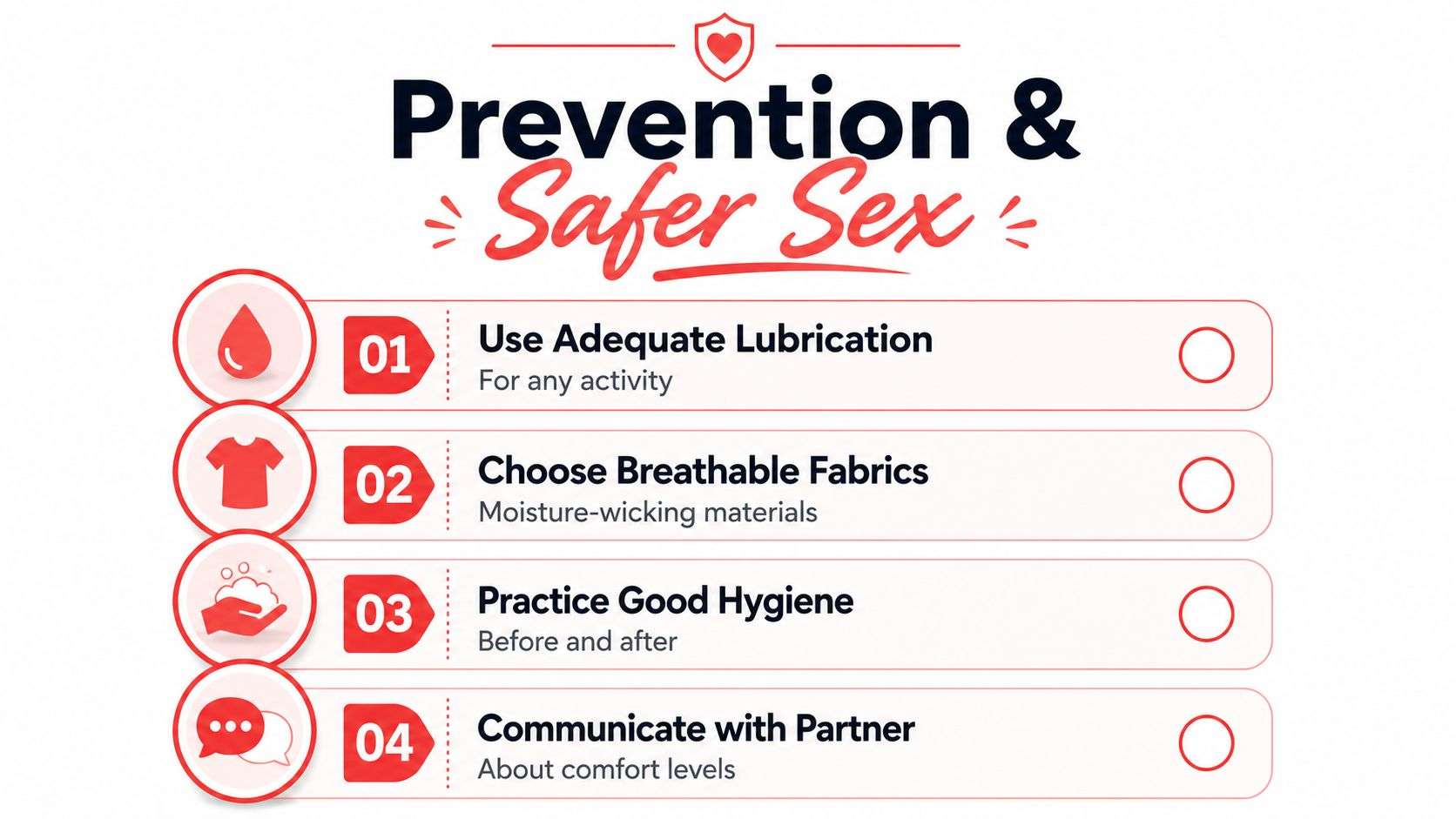
Prevention starts with reducing friction before it begins. The three most reliable levers are lubrication, communication, and clothing choices. If you use them together, you lower the mechanical stress that causes the skin to break down in the first place.
The simplest prevention habits
Use enough compatible lubricant for any activity that creates repetitive contact. If the skin starts to feel hot, tight, or raw, stop and reset before the irritation becomes an injury. Breathable fabrics and well-fitting underwear also matter because they reduce chafe during normal movement and sweat.
Good communication helps more than people expect. If something feels sharp, dry, or too intense, saying so early prevents the kind of prolonged friction that leads to a burn. That's true for partnered sex and for solo activity, because the skin only cares about the mechanical load it receives.
Keep recurrence from becoming a pattern
If friction burns keep happening, look for the underlying driver instead of just treating each episode. A dry skin tendency, a poor lubrication match, or clothing that constantly rubs can turn a one-off problem into a recurring one. If vaginal dryness is part of the picture, this lubrication-focused guide can help you think through safer, lower-friction options.
People with diabetes or a weaker immune response should be especially careful, because slower healing makes small abrasions more annoying and potentially more complicated. That doesn't mean panic, it means being quicker to protect the skin and quicker to get checked if healing stalls. The best prevention is not heroic endurance, it's noticing the warning signs early and adjusting before the tissue gets overwhelmed.
If you're not sure whether your symptoms are a simple friction burn or something that needs treatment, Sexual Wellness Centers of America can help you sort it out with a focused sexual health evaluation. Their team can assess persistent genital irritation, rule out infection or another skin condition, and guide you toward the next step with clear, clinically grounded care.