
Understanding Intramuscular Injections in the Gluteal Muscle
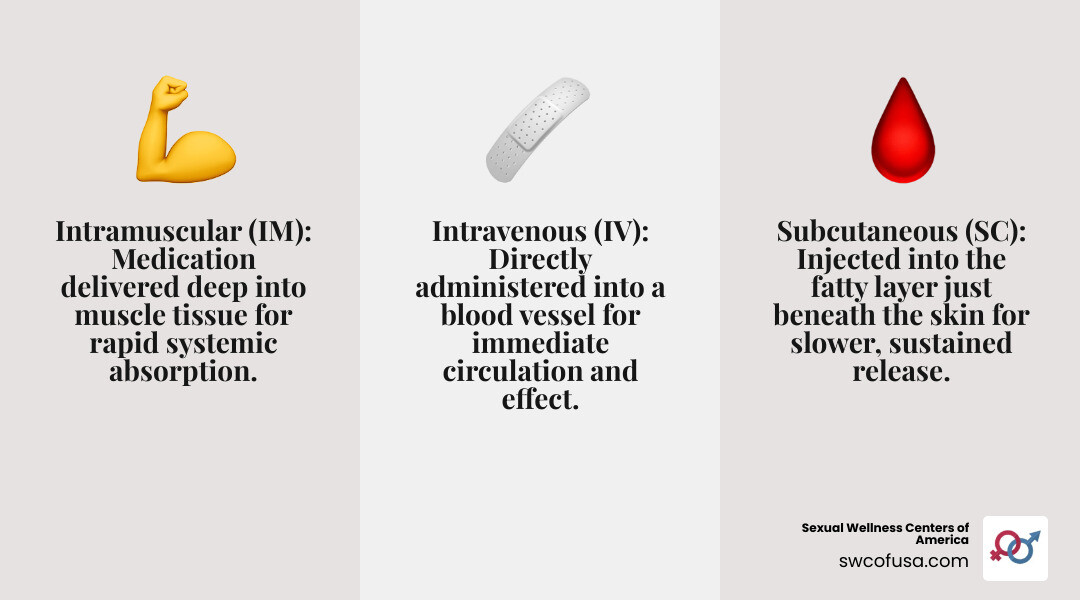
Giving a gluteal im injection is a safe and effective way to deliver medications directly into muscle tissue for rapid absorption into the bloodstream. This method bypasses the digestive system, making it ideal for hormone replacement therapy, antibiotics, and other treatments that need quick action.
Quick Answer for Giving a Gluteal IM Injection:
- Choose the ventrogluteal site – safest location with fewer nerves
- Use proper hand placement – create a “V” with fingers to locate injection spot
- Insert needle at 90-degree angle – quick, dart-like motion
- Inject slowly – 1 mL per 10 seconds to reduce discomfort
- Apply Z-track technique – prevents medication leakage
Intramuscular injections work because muscle tissue has excellent blood flow. The medication absorbs quickly – much faster than pills that must go through your stomach first. The gluteal muscles are particularly good for this because they’re large and can handle bigger volumes of medication.
The ventrogluteal site is now considered the gold standard for gluteal injections. Research shows it’s the safest spot because it has thick muscle tissue and stays away from major nerves and blood vessels. This dramatically reduces your risk of complications compared to other gluteal sites.
As someone who has guided countless patients through their wellness journeys at Sexual Wellness Centers of America, I understand the importance of proper injection technique for treatments like hormone therapy. My experience in sexual wellness has shown me that giving a gluteal im injection correctly can make the difference between effective treatment and unnecessary complications.
Preparation is Key: Supplies and Site Selection
Think of preparing for giving a gluteal im injection like setting up for cooking your favorite recipe – having everything ready and organized makes the whole process smoother and safer. When you’re prepared, you can focus on technique rather than scrambling for supplies.
Before you begin, gather these essential supplies:
- Sterile needle and syringe – sized appropriately for your medication and patient
- Medication vial – always double-check the name, dose, and expiration date
- Alcohol wipes – for cleaning both the injection site and vial stopper
- Gauze or cotton ball – to apply gentle pressure afterward
- Band-aid – for covering the site if needed
- Puncture-proof sharps container – absolutely crucial for safe disposal
The sterile needle and syringe deserve special attention since they’re your main tools. The needle gauge (thickness) and length depend on what you’re injecting and who you’re injecting. Thicker medications like some hormone therapies need wider needles, while thinner solutions can use narrower ones.
Your medication vial should be at room temperature before drawing up the dose. Cold medication can cause more discomfort during injection. Always verify you have the right medication – it’s worth checking twice.
Alcohol wipes are your infection-prevention heroes. You’ll use them to clean the rubber stopper on your medication vial and the injection site itself. Don’t skimp on this step.
Locating the Safest Site for Giving a Gluteal IM Injection
Here’s where things get really important – choosing the right spot can make the difference between a safe, effective injection and potential complications. The ventrogluteal site has become the gold standard because it offers the best combination of safety and effectiveness.
Why is the ventrogluteal site so much better? It has thick muscle tissue that’s positioned away from major nerves and blood vessels. This dramatically reduces your risk of hitting the sciatic nerve or puncturing a blood vessel. Plus, there’s less fatty tissue here, which means your medication actually reaches the muscle where it belongs.
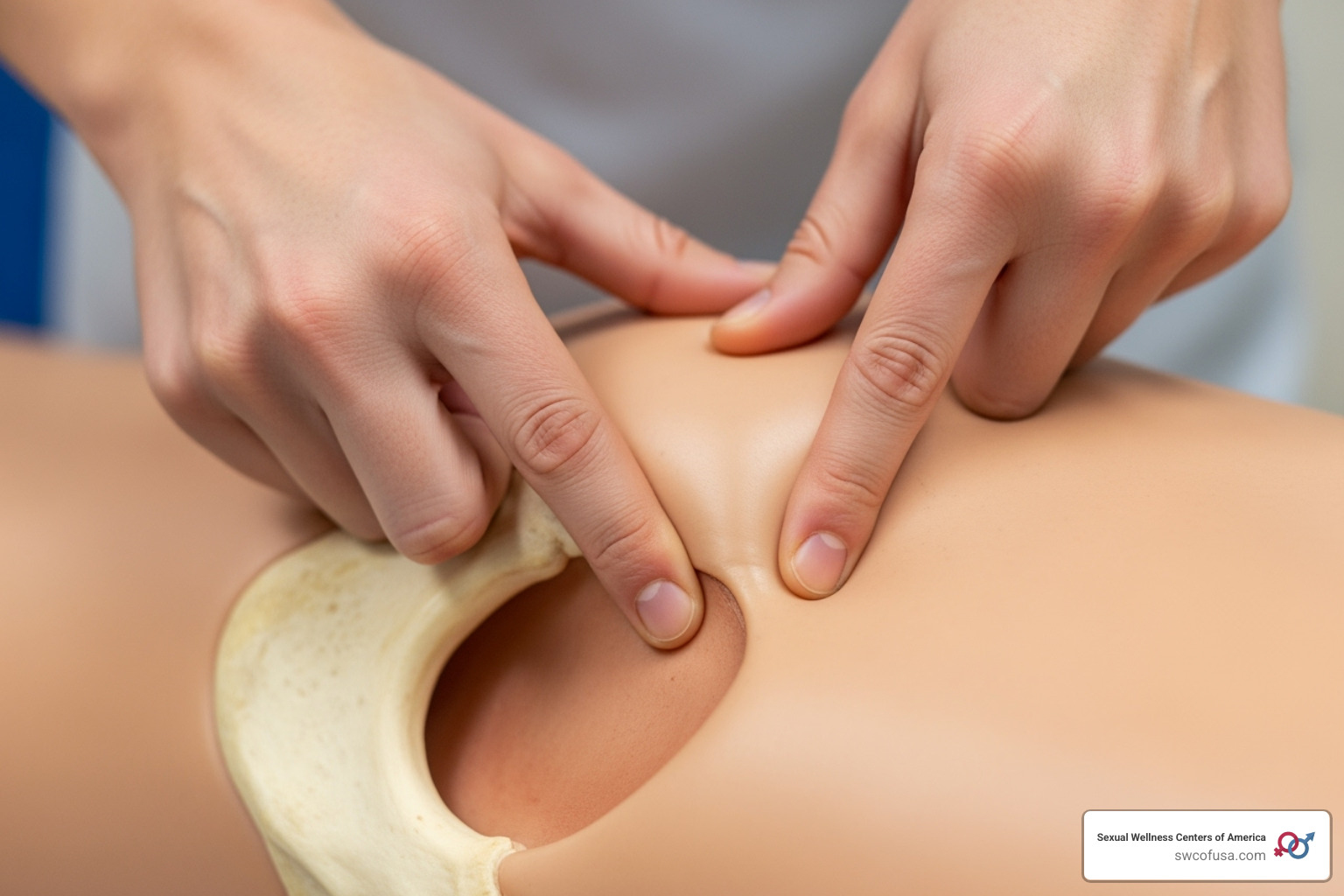
Finding this sweet spot is easier than you might think. Use the hand placement V-method to locate it precisely. Place your palm on the greater trochanter (that bony bump at the top of the thigh bone near the hip). Point your index finger toward the anterior superior iliac spine (the bony point at the front of the hip, just below the waist).
Now spread your middle finger away from your index finger to create a “V” shape pointing toward the iliac crest. The injection site sits right in the middle of this V. This landmark method works every time and keeps you in the safest zone.
The dorsogluteal site might seem tempting since it’s the classic “upper-outer quadrant” many people think of for shots. But here’s the problem – it’s dangerously close to the sciatic nerve and major blood vessels. Studies show that only 32% to 52% of injections actually reach the muscle in this area, dropping to just 8% in women due to increased fatty tissue.
Evidence-based practice guidelines from StatPearls consistently recommend avoiding the dorsogluteal site because of these risks. Trust me, it’s not worth the potential for nerve injury or incomplete medication absorption.
Site rotation becomes important if you’re giving regular injections over time. This prevents tissue damage, reduces scarring, and keeps each injection as comfortable as possible.
Choosing the Right Needle
Getting the needle selection right ensures your medication reaches its target effectively while minimizing discomfort. Think of it as choosing the right tool for the job.
Needle gauge refers to thickness – and here’s where it gets a bit backward. Higher numbers mean thinner needles. For gluteal IM injections, you’ll typically use 21 to 25 gauge needles. Thicker medications like some formulations used in IM Injections need lower gauge (thicker) needles around 21G, while thinner solutions work fine with 23G or 25G needles.
Needle length determines how deep you can reach. For giving a gluteal im injection, you’ll usually need 1 to 1.5 inches of length. The right choice depends on your patient’s muscle mass and how much fatty tissue covers the muscle. Someone with more adipose tissue needs a longer needle to reach the muscle, while a leaner person might only need a 1-inch needle.
Patient size consideration plays a huge role here. What works for a 250-pound man won’t work for a 120-pound woman. You need to assess each person individually to ensure the medication reaches the muscle tissue.
Medication viscosity also matters. Thicker, oil-based medications flow better through wider needles, while water-based solutions can use thinner needles without clogging.
For age-specific considerations, infants and young children typically receive injections in the vastus lateralis (thigh muscle) rather than the gluteal area. The deltoid muscle can work as an alternative for adults, but it can only handle smaller volumes – typically 1 mL maximum, never exceeding 2 mL.
The Step-by-Step Guide to Giving a Gluteal IM Injection
Now comes the moment of truth! We’ve gathered our supplies and identified the perfect spot. Time to walk through the actual process of giving a gluteal im injection. Think of this as your step-by-step roadmap to success – and remember, steady hands and good hygiene are your best allies here.
Hand hygiene is your first and most important step. Wash your hands thoroughly with soap and warm water for at least 20 seconds. I know it seems obvious, but this simple step is your strongest defense against infection.
Now let’s prepare the medication properly. Start by checking the medication – and I mean really checking it. Confirm you have the correct medication, the right dose, and that it hasn’t expired. Look closely at the liquid for any unusual discoloration or floating particles. Trust me, taking an extra moment here can save you from serious complications later.
Drawing up the dose requires a bit of finesse. Clean the rubber stopper of your medication vial with an alcohol wipe and let it air dry completely. Draw air into your syringe equal to the amount of medication you need – this little trick helps equalize pressure and makes everything easier. Insert the needle into the vial’s stopper, inject that air, then flip the whole thing upside down and carefully draw up your prescribed dose.
Those pesky air bubbles need to go! Gently tap the syringe and push the plunger slightly to expel them. While tiny bubbles are generally harmless, larger ones can displace your medication volume and affect dosing accuracy.
Here’s where things get interesting – the Z-track method. This technique is absolutely brilliant for giving a gluteal im injection, especially with medications that might irritate tissue or cause staining (like some of our hormone treatments). Before you even think about inserting that needle, use your non-dominant hand to pull the skin and tissue about an inch to the side. Hold it there throughout the entire injection process. When you release the skin after withdrawing the needle, it creates a zigzag pathway that seals the medication inside the muscle where it belongs.
Mastering the Technique for Giving a Gluteal IM Injection
Ready for the main event? This is where your preparation pays off and your confidence really shines through.
Positioning the person correctly makes everything smoother. Have them lie comfortably on their side with the injection hip facing up. Ask them to relax the muscle as much as possible – a tense muscle makes the injection more painful and difficult. Sometimes a little friendly conversation or distraction works wonders for helping people relax.
Cleaning the injection site requires precision. Using a fresh alcohol wipe, clean your chosen spot thoroughly, starting from the center and wiping outward in a circular motion. Let that alcohol air dry completely – about 30 seconds. Resist the urge to fan or blow on it, as this can recontaminate the area.
Hold the syringe like a dart in your dominant hand, keeping your fingers away from the plunger. This grip gives you the most control and confidence for what comes next.
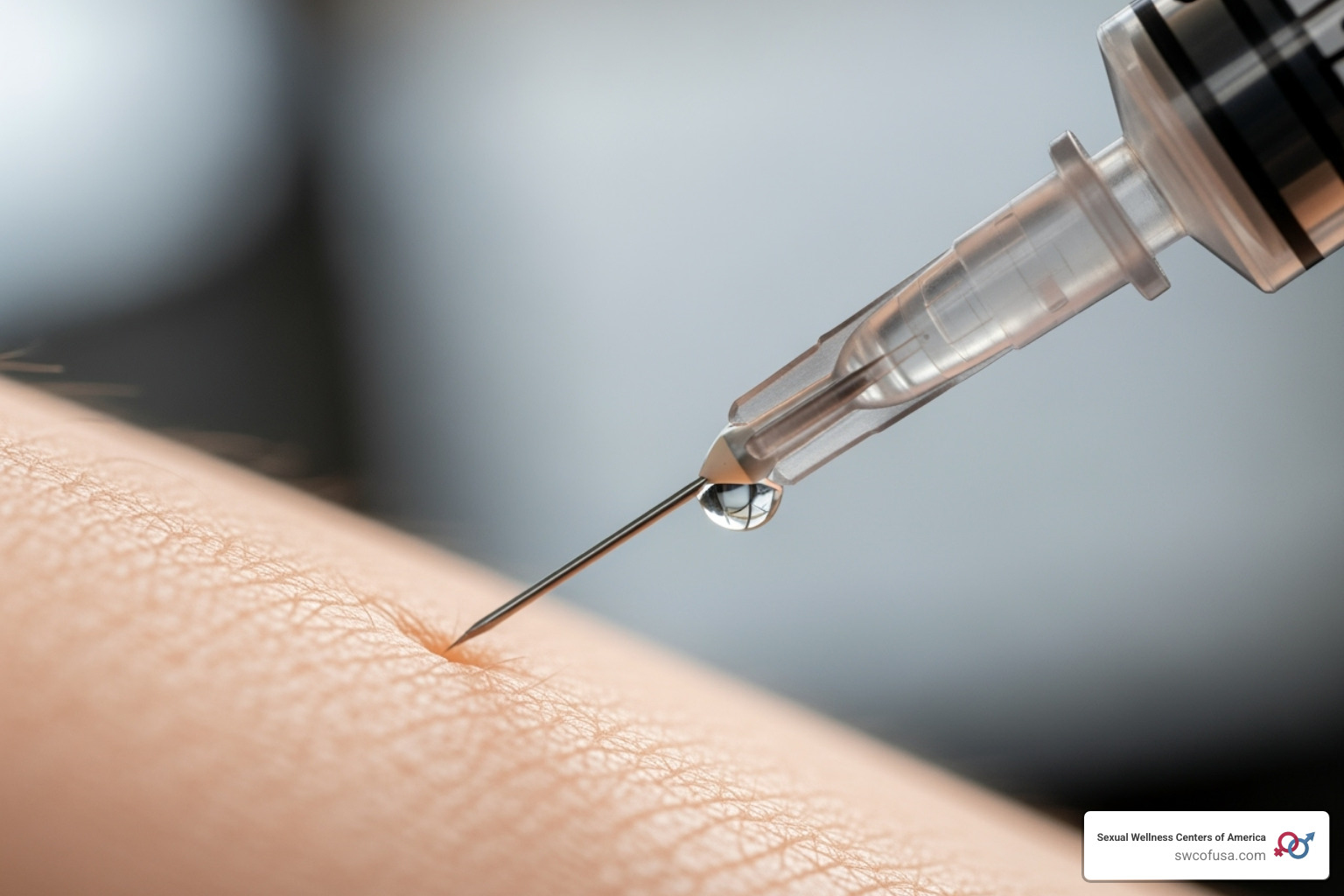
The dart-like motion is crucial for giving a gluteal im injection successfully. With your non-dominant hand still maintaining that Z-track skin tension, use a quick, firm motion to insert the needle straight into the muscle at a 90-degree angle. The goal is to get through the skin and subcutaneous tissue quickly to minimize discomfort.
Now here’s an important distinction about aspirating for blood. If you’re working with the dorsogluteal site, you’ll want to gently pull back on the plunger for 5-10 seconds to check for blood return. Blood in the syringe means you’ve hit a vessel – time to withdraw, discard everything, and start fresh at a different site.
However, for ventrogluteal injections, current guidelines from major health organizations often don’t require aspiration due to the extremely low risk of hitting blood vessels in this safer site. The choice to aspirate may depend on your specific medication and healthcare provider’s preferences.
Inject the medication slowly – this is where patience really matters. Push that plunger at a rate of about 1 mL per 10 seconds. This steady pace allows the muscle tissue to accommodate the fluid comfortably, reducing discomfort and ensuring better absorption. Think of it as giving the muscle time to welcome its new guest.
Withdrawing the needle should be as smooth as the insertion. After all medication is delivered, wait about 10 seconds to let everything disperse, then withdraw the needle smoothly and straight out at the same 90-degree angle.
Immediately apply gentle pressure with clean gauze or a cotton ball. Don’t rub the area – especially after using the Z-track method – as this can cause medication leakage or unwanted bruising. A small band-aid works perfectly if there’s any slight bleeding.
For more comprehensive information about giving a gluteal im injection, our detailed guide at IM Injection Gluteal Muscle covers additional techniques and considerations.
Safety First: Aftercare, Complications, and Disposal
Great work – you’ve successfully completed giving a gluteal im injection! But our job isn’t quite done yet. What happens in the next few hours and days is just as important as the injection technique itself.
Some soreness is completely normal after an injection. Think of it like the mild ache you might feel after a good workout – your muscle tissue has just received medication and needs a little time to adjust. You might notice tenderness, slight swelling, or even a small bruise at the injection site. This is your body’s natural response and nothing to worry about.
A cold compress can work wonders for post-injection discomfort. Apply it to the area for 15-20 minutes at a time. Just remember – don’t rub or massage the injection site, especially if you used the Z-track method. Rubbing can actually push the medication back up toward the skin, which defeats the whole purpose of getting it deep into the muscle.
While complications from properly administered IM injections are rare, it’s smart to know what warning signs to watch for. Severe pain that goes beyond normal soreness could indicate a problem. Excessive bleeding that doesn’t stop with gentle pressure needs attention. Persistent redness or swelling that gets worse instead of better might signal inflammation or infection.
More serious complications can include abscess formation – basically a pocket of pus that develops if bacteria get into the injection site. Nerve injury is another concern, though it’s much less likely when you stick to the ventrogluteal site we’ve been emphasizing. Studies show that injection-related nerve problems occur in about 7 out of every million injections, with most cases happening when people use riskier sites like the dorsogluteal area.
Muscle fibrosis can develop if you repeatedly inject in the same spot over time. This is why rotating injection sites matters so much. Vascular injury from hitting a blood vessel is why we sometimes check for blood return in the syringe, particularly with higher-risk injection sites.
For more detailed information about gluteal injection sites, check out our Gluteus Maximus IM Injection Site page.
When to Contact a Healthcare Provider
Most people sail through their injection experience without any problems. But knowing when to pick up the phone and call for help could save you from unnecessary complications.
A fever of 100.4°F or higher is your body’s way of saying something isn’t right. This could mean an infection is brewing and needs professional attention. Don’t try to tough it out.
Allergic reactions are medical emergencies that require immediate action. Watch for a widespread rash or hives, swelling of the face, lips, or throat, or difficulty breathing. These symptoms can develop quickly and need emergency medical care right away.
Worsening pain or swelling after 48 hours isn’t normal. While some discomfort is expected initially, things should start improving after the first day or two. Pus or drainage from the injection site is a clear sign of infection that needs antibiotic treatment.
Numbness, tingling, or weakness in your leg or foot could indicate nerve involvement. This is especially important to watch for because nerve damage can have lasting effects if not addressed quickly.
For comprehensive safety guidelines, the Australian Immunisation Handbook offers excellent resources on injection safety practices.
Safe Disposal of Needles and Syringes
Here’s where we get serious about protecting everyone’s safety. Used needles are like tiny weapons – they can cause serious harm if not handled properly.
Never, ever reuse a needle or syringe. Each injection gets fresh, sterile equipment. Period. Reusing these items is like playing Russian roulette with infections, including serious ones like hepatitis or HIV.
Never try to recap a used needle. Most accidental needle sticks happen when people attempt this seemingly simple task. The moment that injection is complete, the needle goes straight into your disposal container. If you absolutely must recap in an emergency situation, use the “scoop method” – lay the cap on a flat surface and scoop the needle into it without using your hands.
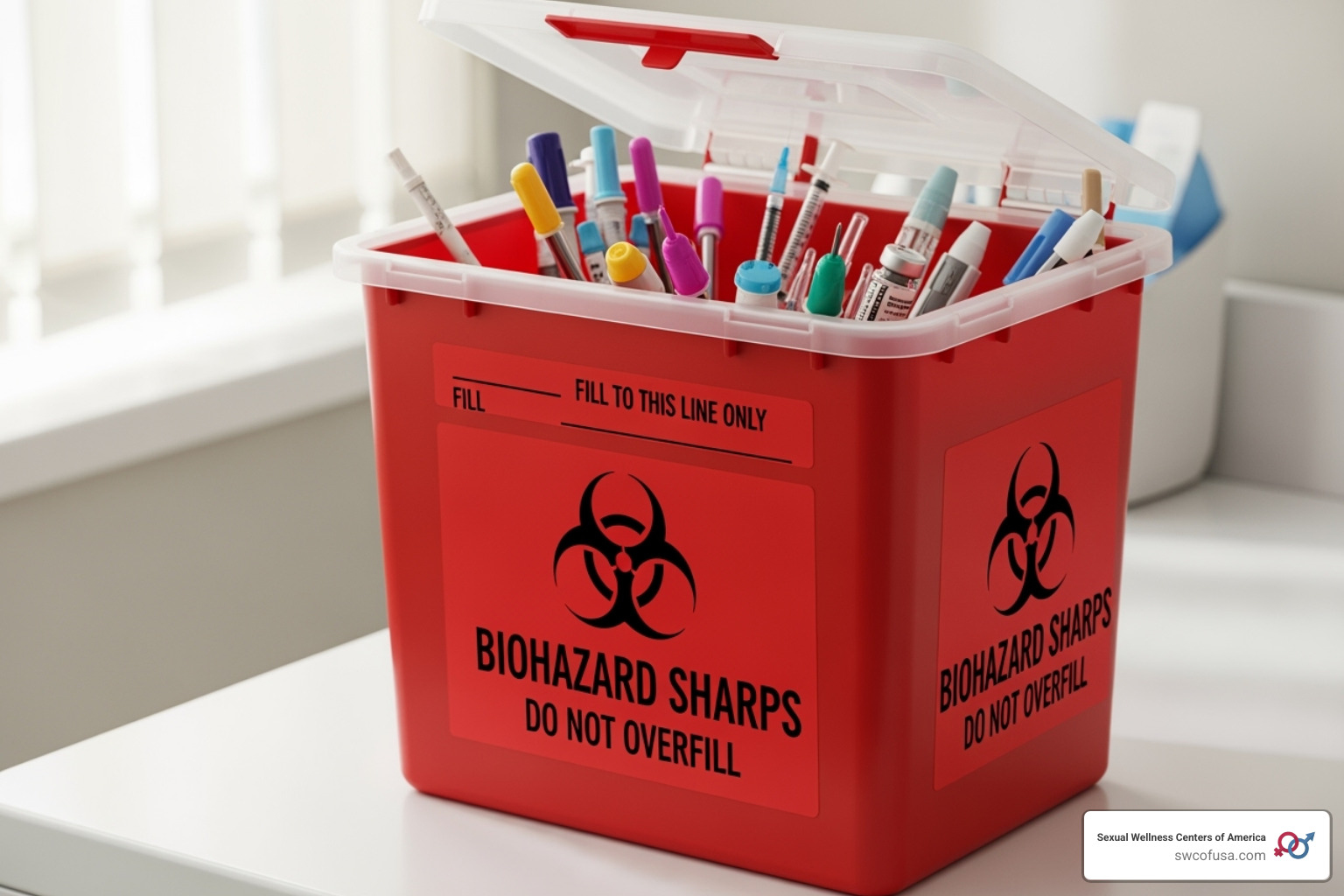
An FDA-cleared sharps container is your best friend for disposal. These puncture-proof containers are specifically designed to keep everyone safe. They’re available at most pharmacies and medical supply stores.
If you don’t have a proper sharps container handy, you can create a temporary solution with a heavy-duty plastic container. Think along the lines of a thick laundry detergent bottle or a sturdy coffee can with a screw-on lid. Make sure it’s puncture-resistant and has a tight-fitting top. Label it clearly with “SHARPS” or “BIOHAZARD” and keep it well away from children and pets.
Community disposal programs are available in most areas. Check with your local health department, pharmacy, or waste management service. Some pharmacies even offer take-back programs for used sharps containers. Whatever you do, never throw used needles into regular household trash or recycling bins – that’s a recipe for disaster.
Conclusion: Injecting with Confidence
You’ve just mastered one of the most valuable healthcare skills – giving a gluteal im injection safely and effectively. What might have seemed overwhelming at first is now within your grasp, and that’s something to feel proud of.
Think of it this way: you now understand how to choose the ventrogluteal site because it keeps you away from dangerous nerves and blood vessels. You know the importance of proper hand hygiene and aseptic technique to prevent infections. You’ve learned why injecting slowly at 1 mL per 10 seconds makes all the difference in comfort, and you understand that safe disposal in a sharps container protects everyone around you.
The Z-track method you’ve learned will prevent medication leakage and reduce skin irritation. Your knowledge of the correct 90-degree angle and dart-like insertion technique ensures the medication reaches the muscle where it belongs. Most importantly, you know when to seek help if something doesn’t feel right.
At Sexual Wellness Centers of America, we’ve seen how empowering it is when people understand their treatments. Whether it’s hormone replacement therapy, our HEshot®, SHEshot®, or treatments using REGENmax® technology, knowledge builds confidence. Our 97.2% efficacy rate in erectile dysfunction reversal comes not just from advanced treatments, but from patients who understand and actively participate in their care.
Giving a gluteal im injection correctly is about more than just technique – it’s about taking control of your health journey. You now have the tools to ensure effective medication delivery while keeping safety as your top priority.
For those who prefer professional administration or want to explore our comprehensive wellness treatments, our experienced team in Colleyville is here to support you every step of the way. We believe in combining cutting-edge treatments with the education you need to make informed decisions about your health.
Learn more about our IM Injection services in Colleyville, TX.