
You're probably here because the change has become hard to ignore. More hair in the shower. More scalp showing under bright bathroom lights. Maybe you've already tried a serum, a supplement, or a device and you're wondering why the results feel inconsistent.
That frustration usually comes from a simple problem. People are sold single treatments for a process that is biological, layered, and different from one person to the next. Hair loss rarely responds well to a one-note solution. The patients who do best usually treat the scalp, the follicle, and the drivers behind thinning at the same time.
Table of Contents
- What Is Modern Hair Regrowth Therapy
- Foundational Medical Hair Loss Treatments
- The Rise of Regenerative Hair Therapies
- Comparing Your Hair Regrowth Therapy Options
- REGENhair An Integrated Approach at SWCA
- Your Hair Restoration Journey What to Expect
- Frequently Asked Questions About Hair Regrowth
What Is Modern Hair Regrowth Therapy
Hair regrowth therapy is no longer just about trying to slow shedding. In practice, it's a strategy to improve the environment around the follicle, stimulate weaker follicles to behave more like healthy ones, and protect the hair you still have before more of it miniaturizes.
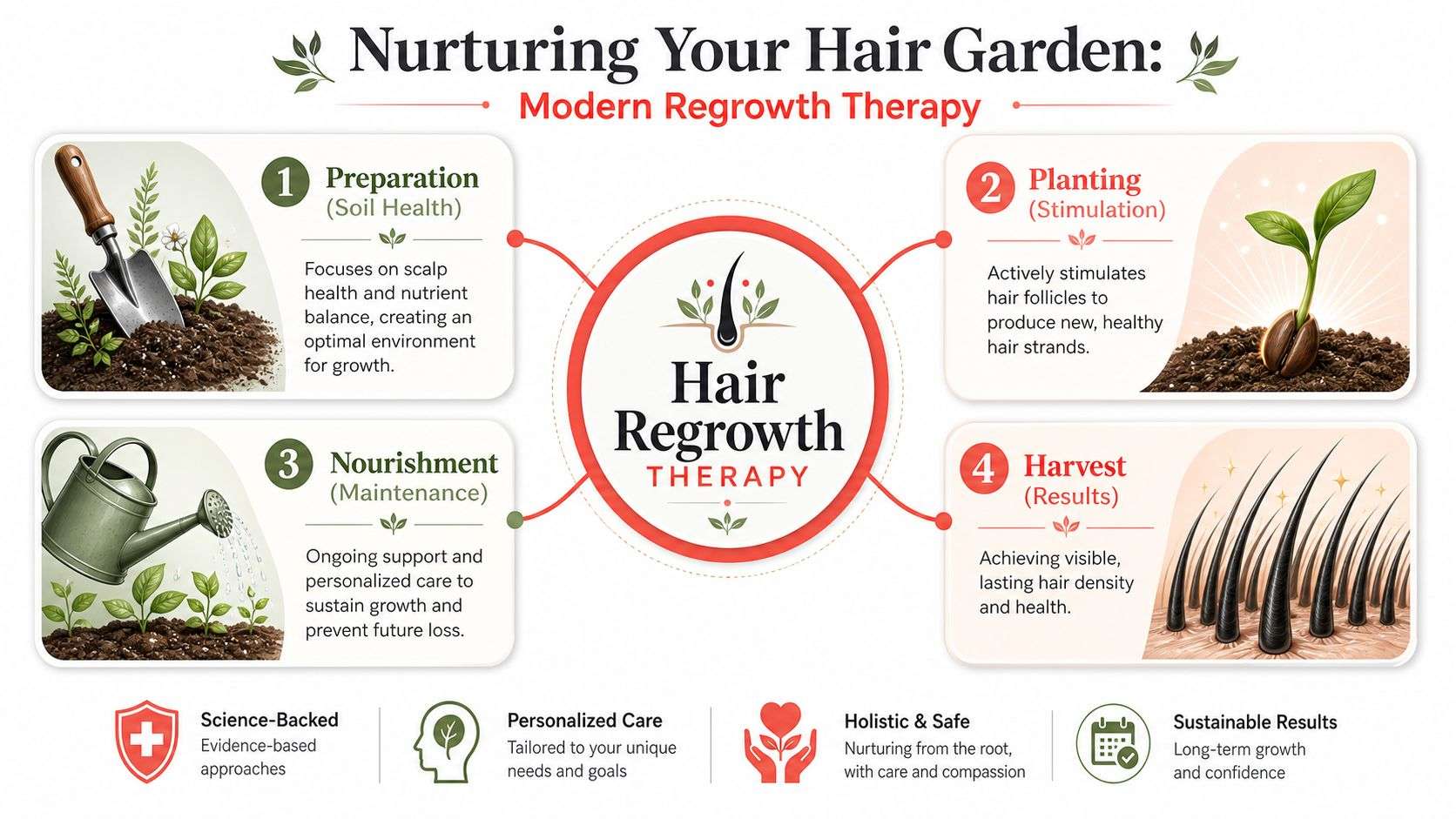
The garden analogy works because the scalp is an ecosystem
A useful way to understand this is to think of your scalp like a garden. If the soil is dry, compacted, and undernourished, seeds don't perform well. Hair follicles behave in a similar way. Blood flow, inflammation, hormones, nutrient status, and follicle signaling all affect whether hair grows thick, thin, or not at all.
That's why modern care usually involves more than one tool. One treatment may help extend the growth phase. Another may support cellular activity. Another may improve the local growth environment. Clinics that only sell one modality often force every patient into the same lane.
If you're evaluating device-based scalp support, a practical industry resource on implementing LED light therapy in your practice can help clarify how light-based approaches are being integrated clinically.
What regrowth usually means in real practice
This is the part many patients aren't told clearly enough. Most current hair regrowth therapies maintain existing hair density more than they create brand-new follicles, and clinical outcomes usually reflect slowing loss or regrowing a relatively small amount of thinning hair rather than true follicle neogenesis, as discussed in this review of current regenerative limits in hair restoration.
That distinction matters. If a scalp area still contains miniaturized follicles, there's often something to work with. If a shiny bald area has been inactive for a long time, non-surgical treatment is less likely to restore dense coverage there.
Practical rule: The earlier you intervene, the more likely you are to strengthen follicles that are still alive but underperforming.
A realistic treatment plan usually aims for several outcomes at once:
- Slow the ongoing loss: Reduce the rate at which vulnerable follicles keep shrinking.
- Thicken existing hairs: Improve shaft caliber so the scalp shows less.
- Increase visible coverage: Not by magic, but by improving the performance of follicles that haven't fully disappeared.
- Preserve future options: Good non-surgical care can support maintenance, whether or not surgery is ever considered later.
Patients usually feel better when this is explained clearly. The goal isn't fantasy. The goal is measurable, visible improvement with an approach that matches your stage of loss.
Foundational Medical Hair Loss Treatments
The medical backbone of non-surgical treatment still starts with the basics. These are the therapies with the longest track record and the clearest place in a treatment plan.
Why minoxidil remains a core treatment
Topical minoxidil is foundational because it helps keep follicles in a growth-supportive state for longer. Clinically, that matters because miniaturized follicles need time and support to produce thicker strands again. It's not a shortcut, and it isn't a rescue therapy for every pattern of loss, but it remains one of the most practical starting points for androgenetic alopecia.
The strongest benchmark we have is clear. In landmark Phase III trials, 5% minoxidil showed a 45% greater increase in hair regrowth than 2% minoxidil after 48 weeks, which is why the 5% strength became standard care for men with androgenetic alopecia, according to this Phase III minoxidil trial summary.
That result helps explain a common clinical decision. When a patient says, “I tried minoxidil and it didn't do much,” the next question is usually how it was used, for how long, and at what concentration.
For patients also exploring broader grooming and scalp-support routines, this guide to Japanese hair care for thinning hair can be a useful consumer-oriented reference for daily care context.
Where finasteride fits
Finasteride addresses a different part of the problem. Instead of acting locally on the scalp surface, it works systemically by reducing the hormonal pressure that drives androgenetic miniaturization in many men. In plain terms, it helps protect follicles from the signal telling them to get smaller over time.
Treatment failure often isn't a failure of biology. It's a mismatch between the treatment and the driver of the hair loss.
That's why these two therapies are often discussed together. One supports follicle performance. The other helps reduce the hormonal attack on susceptible follicles. Neither changes the fact that consistency matters, and neither should be presented as a perfect stand-alone answer for every patient.
A sensible medical plan starts with diagnosis first. Thinning from androgenetic alopecia, stress shedding, hormonal shifts, and nutritional problems can look similar in the mirror but behave very differently in treatment.
The Rise of Regenerative Hair Therapies
Regenerative hair care changed the conversation because it focuses less on maintenance alone and more on signaling the follicle to function better. The two most practical non-surgical options in this category are platelet-rich plasma (PRP) and low-level laser therapy (LLLT).
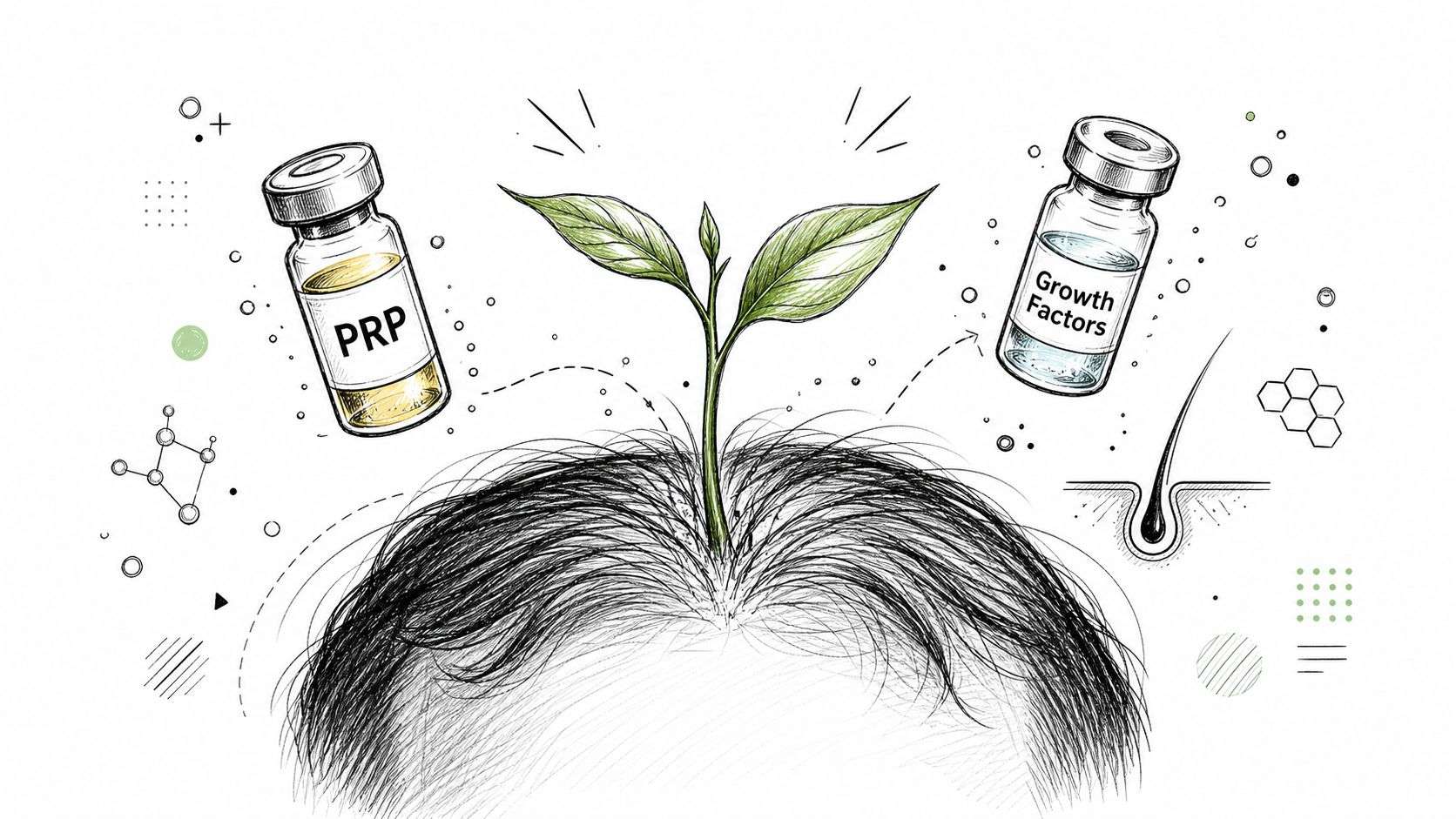
PRP works like concentrated biologic support
PRP uses a concentrated portion of your own blood, prepared to deliver growth factors back into the scalp. I often explain it as adding concentrated fertilizer to a struggling garden bed. The point isn't to replace the plant. The point is to improve the conditions that help it grow.
What makes PRP especially interesting is how it performs as part of combination care. In pooled randomized controlled trial analysis, PRP combined with topical minoxidil produced a weighted mean difference of 9.14 hairs/cm² in total hair density and 4.72 µm in hair diameter compared with baseline, as reported in this meta-analysis on PRP plus minoxidil.
That's one reason peptide-based and regenerative adjuncts are getting more attention in practice. If you want a patient-friendly example of how clinics are thinking beyond simple serums, this overview of peptide injections for hair loss solutions is worth reading.
LLLT helps follicles shift into a growth state
LLLT works differently. Instead of injecting biologic material, it uses light at specific wavelengths to influence follicle behavior. The simplest explanation is that it helps charge underperforming follicular cells so they can operate more efficiently.
A key mechanistic finding is that 650 nm red light inhibits spontaneous catagen transition in ex vivo human hair follicles and accelerates the shift from telogen to anagen, producing measurable increases in hair count and density, based on this review of LLLT in hair restoration.
Patients usually like LLLT because it's noninvasive. The trade-off is that convenience can create unrealistic expectations. It works best as part of a broader plan, especially when there is still active miniaturized hair to support.
Regenerative therapy is most useful when it's layered on top of a clear diagnosis, not used as a guess.
Comparing Your Hair Regrowth Therapy Options
Patients don't usually need more hype. They need a clean way to compare options based on effort, maintenance, comfort, and likely fit.
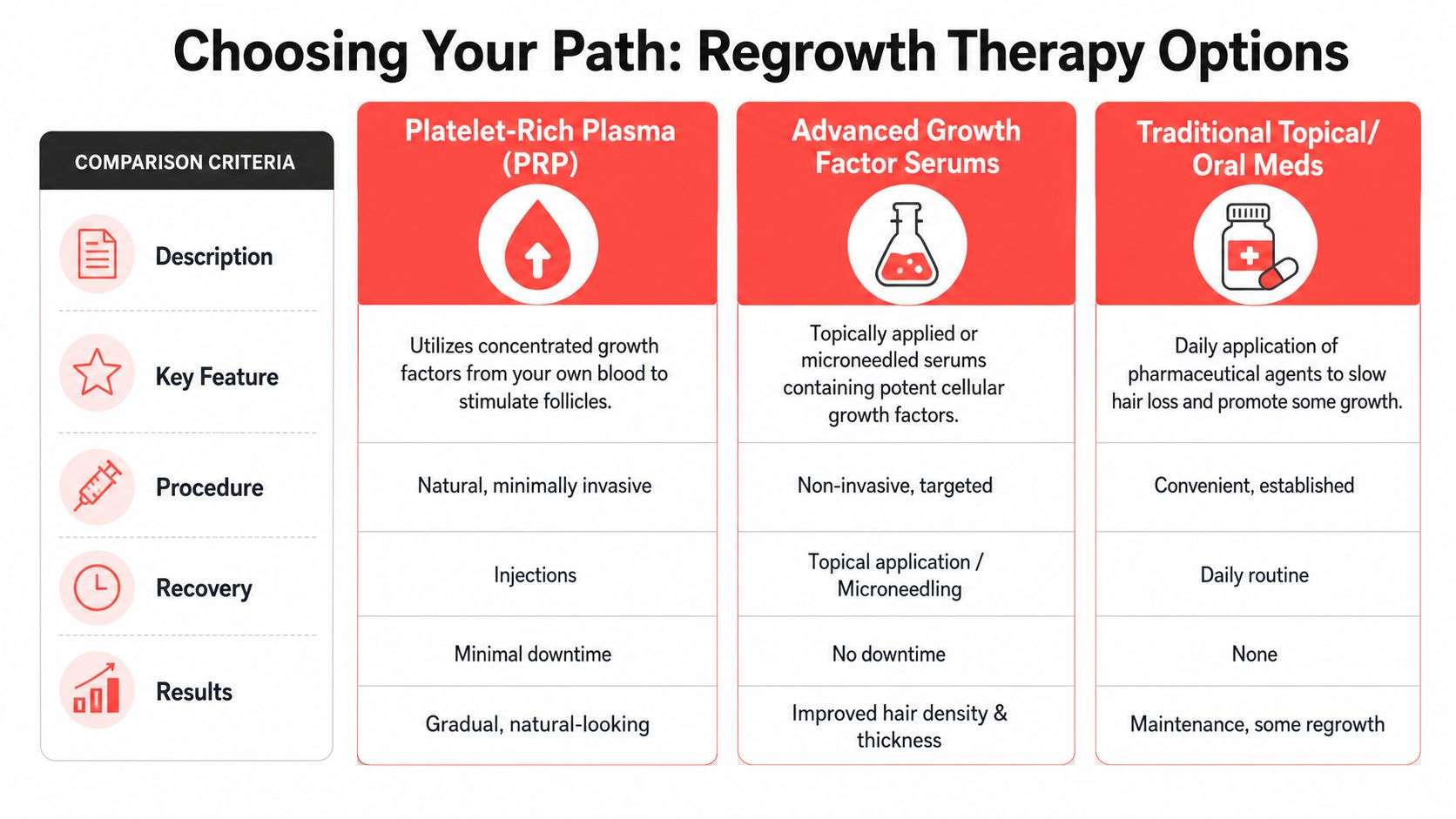
A side by side view of common options
| Option | Main role | Best fit | Commitment | Limitation |
|---|---|---|---|---|
| Minoxidil | Supports follicle performance and ongoing growth activity | Early to moderate thinning with active follicles | Daily use | Many patients stop too soon or use it inconsistently |
| Finasteride | Reduces hormonal pressure in androgenetic hair loss | Men with pattern-driven miniaturization | Ongoing prescription use | Not appropriate for every patient |
| PRP | Provides regenerative growth-factor support | Patients who want office-based biologic stimulation | Series of treatments and maintenance | Works better when follicles are still present |
| LLLT | Supports follicle activity with light-based stimulation | Patients wanting noninvasive home or office support | Repeated regular sessions | Usually not enough alone for advanced loss |
| Integrated protocol | Combines medical, regenerative, and maintenance tools | Patients who want a tailored strategy | Higher planning and follow-up involvement | Requires real commitment, not casual use |
A lot of confusion comes from treating these options as substitutes when they often function better as complements. Patients also need to separate convenience from effectiveness. The easiest treatment to buy isn't always the one that fits the biology of their loss.
For readers comparing topical support categories, this guide to boosting hair density with serums offers useful context on where serums can and can't help inside a broader plan.
How to choose based on your real life
The right plan depends on more than the scalp exam.
- If you want the simplest starting point: A medical topical approach may be the easiest way to begin.
- If your thinning is progressing despite basics: Regenerative add-ons usually make more sense than just switching brands.
- If you want low downtime: LLLT and topical care are easier to fit into a busy schedule.
- If you want a more active office-based approach: PRP fits patients who are comfortable with injections and follow-up visits.
- If you've had thinning for years: Set expectations carefully. Improvement may mean thicker existing hair, not full restoration of long-bald areas.
Choice gets easier when you stop asking, “What's the best treatment?” and start asking, “What combination fits my biology and my ability to stay consistent?”
REGENhair An Integrated Approach at SWCA
The biggest mistake in hair restoration is assuming one treatment should carry the entire case. In real practice, hair loss often reflects several inputs at once. Follicle sensitivity, inflammation, circulation, hormones, stress, and nutrient status can all matter. That's why an integrated protocol usually makes more sense than chasing one modality after another.
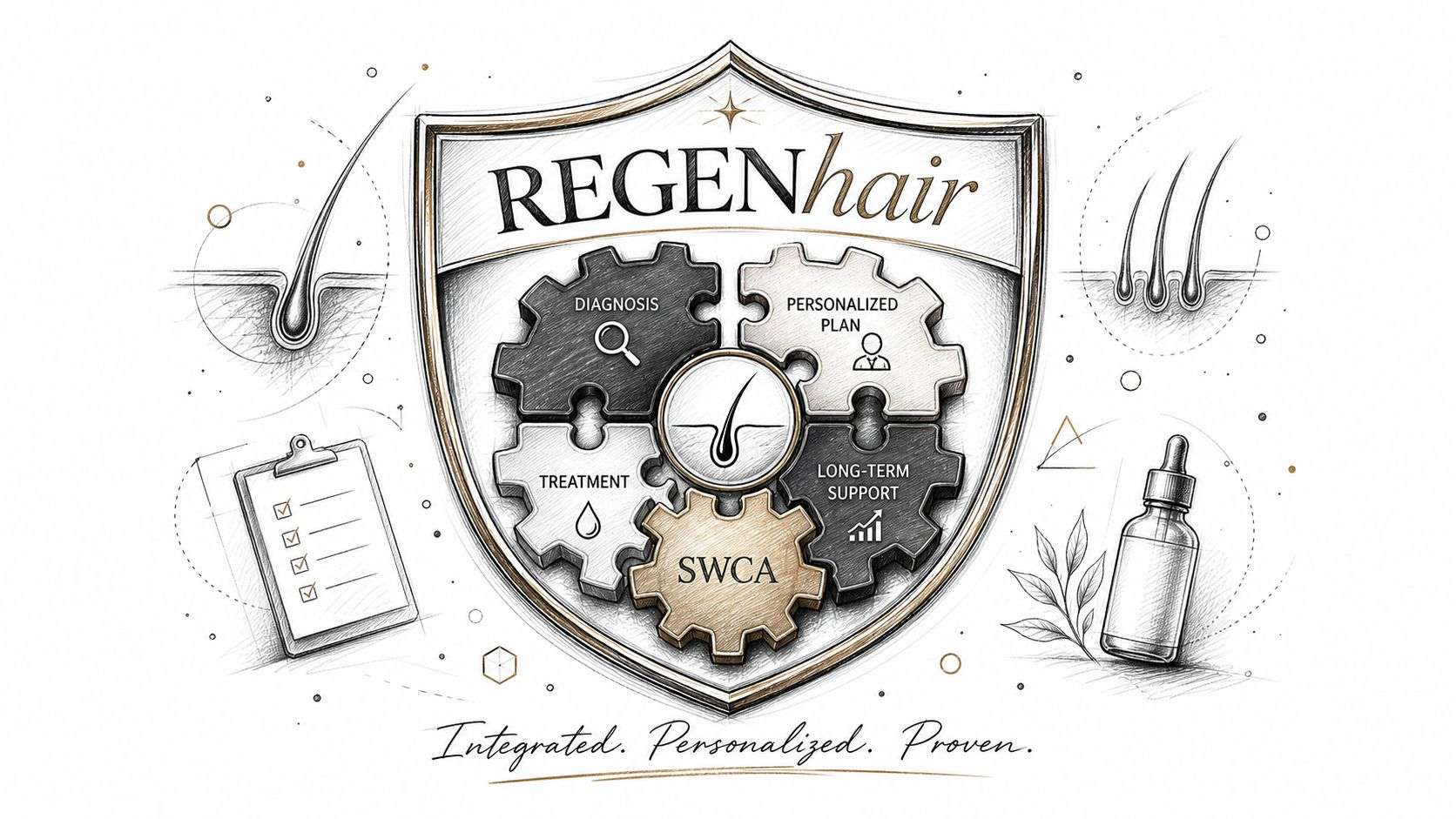
Why integrated care usually outperforms stand alone treatment
A patient with active miniaturization may need scalp stimulation, hormonal review, and maintenance planning. Another may need regenerative injection work plus topical support. Another may need the workup to show that hair loss isn't purely androgenetic at all.
That's the logic behind an integrated program like REGENhair™. It isn't one treatment. It's a structured protocol that can combine diagnostics, regenerative therapies, and supportive interventions into one care path.
The regenerative backbone for that kind of plan is strong enough to justify serious attention. PRP has shown efficacy in increasing hair density and thickness in over 65% to 70% of patients treated for alopecia, with clinical trials reporting a favorable safety profile and zero noted major side effects, based on this review of emerging regenerative hair therapies.
What a customized protocol can include
A customized strategy usually starts before the first procedure. It starts with identifying what is driving the thinning.
- Lab-informed planning: Hormonal shifts and nutritional problems can worsen shedding or blunt response to treatment.
- Regenerative stimulation: PRP may be used when the goal is to support follicle recovery in a non-surgical way.
- Adjunctive therapies: Light-based support, topical therapy, or peptides may be layered in depending on the pattern of loss.
- Maintenance scheduling: Hair responds best when follow-up is planned, not improvised after progress stalls.
A good protocol doesn't ask one treatment to do everything. It assigns each treatment a job.
This integrated model is especially useful for patients who are tired of cycling through isolated products. Instead of asking whether PRP, topicals, light therapy, or peptide support is “the answer,” the better question is how they can be sequenced and combined for your specific scalp and stage of loss.
Your Hair Restoration Journey What to Expect
Most patients feel more confident once they know how the process unfolds. Hair restoration is easier to commit to when it stops feeling mysterious.
The first visit and diagnostic phase
The first conversation usually focuses on pattern, timing, and triggers. When did the thinning start? Is it gradual or sudden? Is there family history? Has there been major stress, illness, medication change, or hormonal change? Those answers shape the workup more than often expected.
The next step is scalp assessment and, when appropriate, lab testing. That matters because a patient with diffuse shedding needs a different plan than someone with classic temple and crown miniaturization. An integrated clinic may also review hormone status, nutrient markers, and other contributors that affect follicle performance.
A customized plan is then built around practical realities:
- Your pattern of loss: Early thinning behaves differently from long-standing bare areas.
- Your tolerance for maintenance: Some people will apply a treatment daily. Some won't.
- Your comfort level: Office-based injections, home devices, and topical regimens all appeal to different patients.
- Your goals: Some want to preserve what they have. Others want maximum thickening.
Treatment sessions follow up and maintenance
If PRP or another injection-based treatment is used, patients usually describe the session as manageable and brief. The scalp can feel tender afterward, and mild temporary irritation is possible, but patients generally return to normal activities quickly. Light-based therapy is simpler and noninvasive, though it requires consistency.
Visible change usually happens gradually, not all at once. Early improvements often show up first as reduced shedding, then better texture, then more density in areas where miniaturized hair was still present. The pace varies, which is why serial photos matter more than mirror checks under different lighting.
Be patient with the biology. Hair follicles respond slowly, and progress is easier to see in comparison photos than day to day.
Maintenance is where many outcomes are won or lost. Hair loss is usually ongoing biology, not a one-time event. The patients who hold onto gains are the ones who follow the long-term plan instead of treating regrowth like a short burst project.
Frequently Asked Questions About Hair Regrowth
Are results permanent
Usually not in the way patients hope the word “permanent” means. Most non-surgical hair regrowth therapy helps preserve and improve active follicles, but it doesn't stop the biology of aging or androgen sensitivity forever. If treatment stops, many patients gradually lose ground.
That doesn't mean treatment isn't worthwhile. It means maintenance is part of the contract. A realistic plan includes both a correction phase and a maintenance phase.
Who is a good candidate
The best candidates usually still have follicles that are alive but weakened. That includes people with early to moderate thinning, widening parts, reduced density at the crown, or miniaturized hairs along the hairline. Patients with sudden shedding may also be candidates, but only after the cause is clarified.
People with long-standing smooth bald areas need a more guarded discussion. In those cases, non-surgical therapy may still help surrounding areas, but it may not recreate dense coverage where follicles are no longer functioning.
Can you combine treatments on your own
You can, but that doesn't mean you should. Layering therapies without a diagnosis often leads to wasted time, irritation, and false assumptions about what is or isn't working. It's easy to blame a treatment when the actual problem is that the pattern of loss was misidentified.
A coordinated plan helps because each element has a role. One may target hormone-driven miniaturization. Another may stimulate the scalp. Another may support maintenance.
How is this different from a hair transplant
Hair regrowth therapy tries to improve the performance of existing follicles. A hair transplant moves follicles from one area of the scalp to another. Those are very different strategies.
For many patients, non-surgical care is the right first move because it can preserve native hair, improve density where follicles remain, and clarify whether surgery is even necessary. For some patients with advanced loss, surgery may eventually become part of the discussion. Even then, strong scalp and follicle management still matters.
What if I've already tried one treatment and it failed
One treatment failing doesn't mean your scalp is untreatable. It may mean the diagnosis was incomplete, the treatment wasn't used long enough, the concentration or protocol was weak, or a stand-alone approach wasn't enough for your pattern of loss.
That's where integrated planning helps most. Instead of asking whether a single product “works,” you evaluate whether your overall strategy matches the biology of your hair loss.
If you're ready for a personalized, medically guided plan instead of trial-and-error, Sexual Wellness Centers of America offers consultations for patients who want a structured, non-surgical approach to hair restoration with diagnostic workup, regenerative options, and long-term maintenance planning.