
The right hairstyle can change how thinning hair looks almost immediately. For men with diffuse thinning across the scalp, a buzz cut at length #2 to #3 with a skin fade reached 86% satisfaction in one hairstyle guide, while a textured crop or Caesar cut reached 82% satisfaction for crown thinning and a buzz cut with fade or short crew cut reached 78% satisfaction for receding hairlines, according to Therapeutic Cuts' thinning-hair haircut guide. That's a strong reminder that the best hairstyle for thinning hair usually works with your hair pattern, not against it.
A smart cut can hide sparse areas, reduce scalp show-through, and make fine strands look denser. It can also help you stop fighting your hair every morning. Instead of stretching weak hair longer in hopes of covering more, most flattering styles use shorter lengths, texture, movement, and better proportion.
Face shape matters too. A round face often benefits from height on top. A longer face usually looks better with softer width at the sides. Square faces can carry sharper fades and crops, while heart-shaped faces often suit softer fringes or side movement near the forehead.
This list gives you eight practical options, plus styling advice, face-shape guidance, and a few long-term treatment ideas if you want more than cosmetic improvement.
Table of Contents
- 1. The Textured Crop
- 2. The Textured Pixie Cut
- 3. The Slicked-Back High Volume Style
- 4. The Choppy Layered Bob
- 5. The Taper Fade with Textured Top
- 6. The Soft Waves with Volume at Crown
- 7. The Undercut with Length on Top
- 8. The Styled, Voluminous Updo
- 8-Style Comparison for Thinning Hair
- Next Steps for Fuller-Looking Hair
1. The Textured Crop
If you want one of the safest choices for thinning hair, start here. The textured crop keeps the sides tight and the top short enough to hold shape, but not so short that the style feels severe. That balance makes the scalp less obvious and gives fine hair a thicker-looking surface.
Chris Hemsworth has worn versions of this idea with natural texture. Michael B. Jordan has shown how a fade variation sharpens the outline. Jason Statham proves that very short texture can still look intentional and strong.
Why it works
A crop succeeds because it breaks up flatness. Short, choppy texture creates small shadows and uneven movement, and that makes the top look fuller than a smooth, longer style would.
There's also a practical reason barbers recommend it. Shorter lengths don't separate as easily during the day, so you don't get that late-afternoon see-through effect around the crown or front hairline.
Practical rule: Ask for texture, not bulk. Bulk can collapse. Texture usually lifts.
If you're exploring treatment alongside styling, it's worth learning how regenerative support fits into the bigger picture. This overview of peptides and hair growth support can help you understand why some people pair a haircut strategy with medical care.
Best face shapes and styling notes
This is a strong option for oval, square, and round faces. On a round face, keep a bit more height on top and avoid making the fringe too heavy. On a longer face, ask for softer height and less extreme fade contrast.
For styling, keep it simple:
- Ask clearly: Tell your barber you want a textured crop for thinning hair, with shorter sides and movement on top.
- Use matte products: Matte clay, texturizing powder, or a dry finish paste works better than shiny pomade.
- Style with fingers: Apply a small amount to damp hair, then push and pinch the top into place instead of combing it flat.
- Trim often: A crop loses its shape quickly when the sides get bulky.
The best version of this cut never looks like it's trying too hard. It looks clean, modern, and deliberate.
2. The Textured Pixie Cut
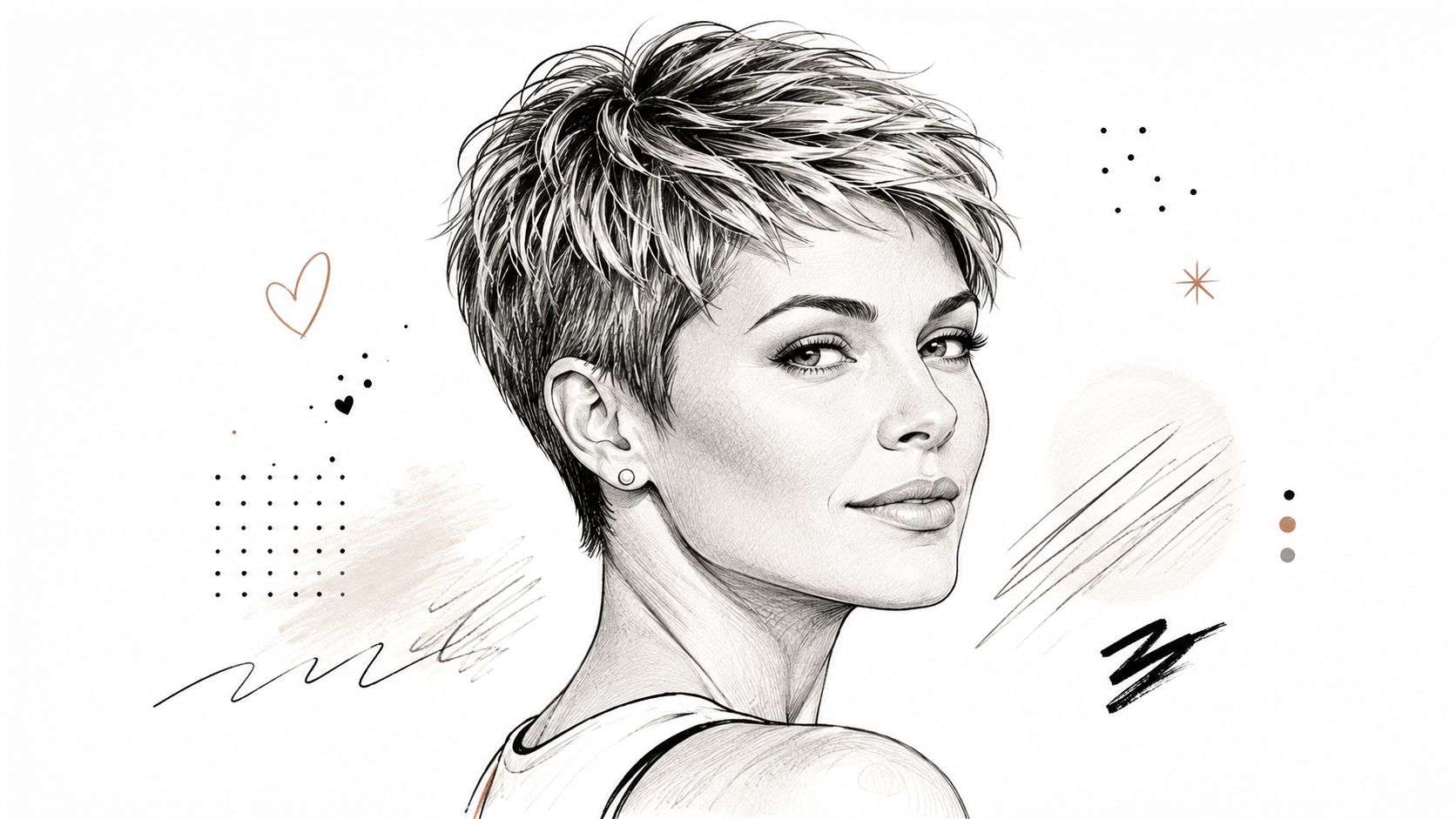
A pixie cut can be a relief when thinning hair starts to feel difficult to style. Instead of trying to force fullness through length, a pixie uses short layers to make each strand count more. The result often feels lighter, fresher, and more polished.
Audrey Hepburn made the classic pixie iconic. Michelle Williams has worn softer modern versions that look airy and elegant. Carey Mulligan's layered pixie is another good reference if you want texture without harshness.
Here's the style visually:
Why short layers help
For women, thinning commonly shows most at the crown, and styles such as side-swept bangs, face-framing fringes, deeper side partings, curtain bangs pushed forward, and soft waves near the cheeks are often recommended to disguise visible areas, according to KSL Clinic's guide to hairstyles for women with thinning hair. A textured pixie can incorporate several of those moves at once.
The key is softness at the front and movement through the top. Longer top layers can sweep forward or to the side, which helps break up scalp visibility near the hairline and crown.
Who it flatters most
This cut is especially flattering on oval, heart-shaped, and delicate square faces. If your face is rounder, keep more height at the crown and avoid too much width at the sides. If your forehead is broader, a soft side fringe can make the whole cut feel more balanced.
A few details matter:
- Choose the right stylist: Pixies are precision cuts. Experience matters more than trendiness.
- Keep the top longer: A little extra length on top gives you styling options and softness.
- Skip greasy finishers: Dry shampoo or a light texturizing spray usually works better than anything slick.
- Plan maintenance: This style looks best when it's intentional, not overgrown.
A good pixie doesn't just “make do” with thinning hair. It can become the reason your hair looks sharper than it has in years.
3. The Slicked-Back High Volume Style
This style works only when “slicked-back” doesn't mean plastered to the scalp. The better version lifts first, then directs the hair back. That creates height through the front and crown, which shifts attention upward instead of toward sparse spots.
Bruno Mars has worn polished volume-heavy versions well. Zayn Malik has shown looser, more modern takes. In office settings, a softer brushed-back shape can look professional without looking stiff.
How to get lift without shine
If hair is thinning, gloss is rarely your friend. Shine exposes spacing between strands. Texture hides it. That's why matte clay, fiber, or powder usually beats gel for this look.
Clinical styling guidance for thinning hair often emphasizes structural volume through shorter lengths and reducing weight at the crown. The same literature also notes strong user satisfaction with keratin-based hair building fibers because they can provide immediate lift and help mask exposed scalp areas, as discussed in this clinical review on cosmetic approaches to hair loss.
Don't comb this style straight back from soaking wet hair. Build lift at the roots first, then guide it back.
Use a blow-dryer on damp hair and lift from the front with your fingers or a vent brush. Then apply a small amount of matte product only where you need control.
When to pair styling with treatment
This hairstyle for thinning hair looks best when thinning is mild to moderate and there's enough front density to create some elevation. If the top is getting weaker, styling can still help, but you may also want to look into medical support rather than relying on product alone.
For people considering a more treatment-focused path, this overview of peptide injections for hair loss support explains one regenerative approach.
Face-shape wise, this style usually flatters round and square faces because the added height elongates the face. If your face is already long, ask for lower, softer volume so it doesn't exaggerate length.
4. The Choppy Layered Bob
The choppy layered bob is one of the most forgiving cuts for women with fine or thinning hair. It doesn't depend on density. It depends on movement. That distinction matters, because movement can create the impression of fullness even when overall volume has dropped.
Meg Ryan's shag-influenced bob remains a useful reference for piecey texture. Kristen Stewart has worn more undone editorial versions that show how irregular layering can make fine hair feel modern instead of fragile.
Why movement beats blunt weight
A heavy, one-length bob can make thin hair hang like a curtain. A choppy bob removes just enough weight to let the hair separate, bend, and lift. That motion creates dimension.
There's another often-missed detail. Color contrast changes how visible thinning looks. As noted in Stunning Style's discussion of disguising thin hair, greater contrast between hair color and skin can make thinning more obvious because the scalp shows through more easily. In practice, that means strategic color blending can matter almost as much as the cut itself.
Color and parting details that matter
This style tends to flatter oval, heart-shaped, and square faces. If your face is round, keep the bob slightly below the chin and add crown texture. If your face is longer, don't over-stack height at the top.
Try these refinements:
- Ask for choppy, not blocky, layers: Irregular texture gives the bob life.
- Keep some softness underneath: That helps the ends move instead of flipping awkwardly.
- Shift the part slightly off-center: A deep or soft side part can cover sparse areas better than a severe middle part.
- Blend color thoughtfully: Shades close to your natural tone usually make scalp show-through less noticeable than extreme light-dark contrast.
A bob like this feels stylish first, corrective second. That's part of its appeal.
5. The Taper Fade with Textured Top
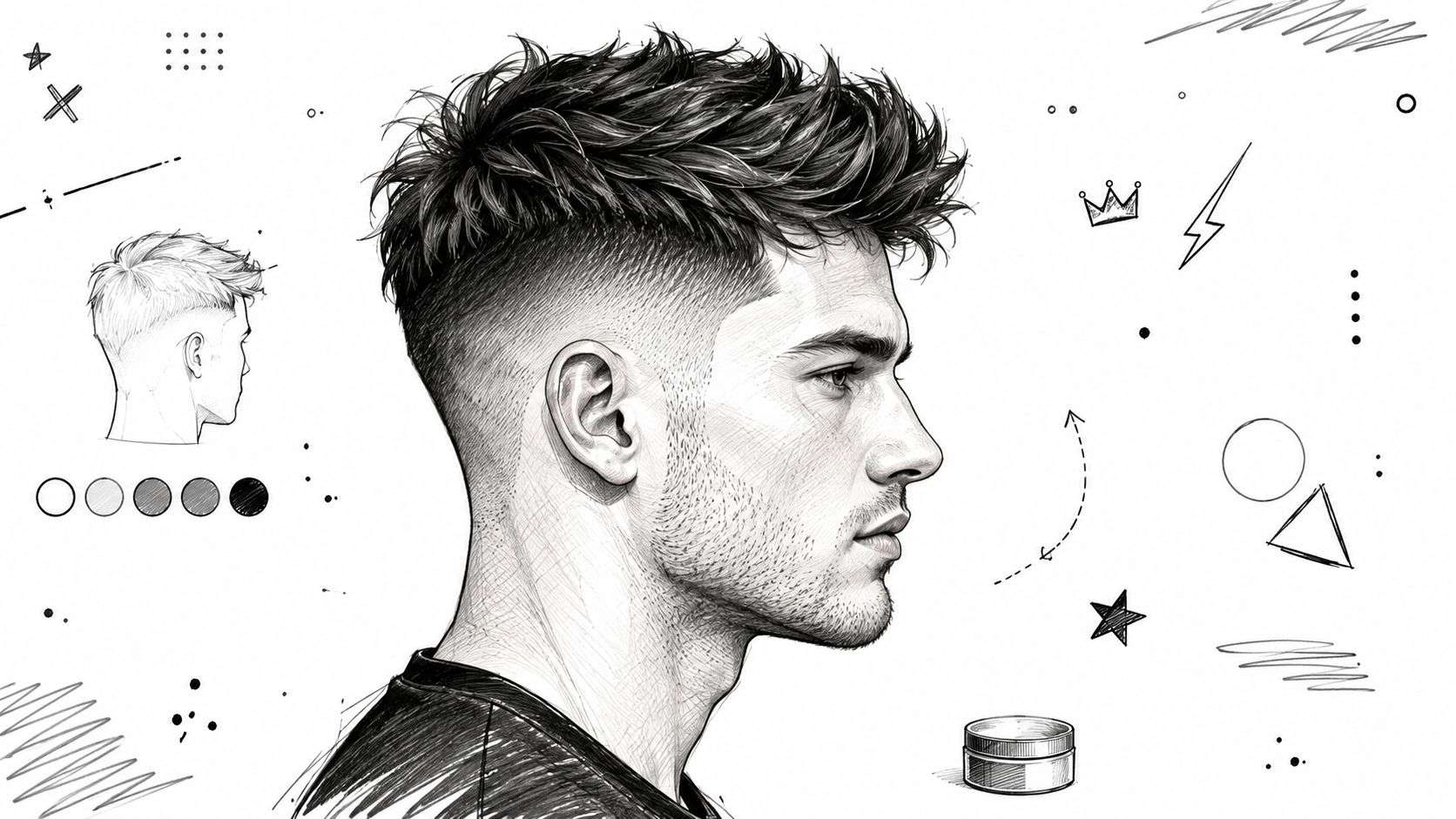
A taper fade with textured top is one of the cleanest modern cuts for men who want structure without going ultra-short everywhere. The gradual narrowing on the sides creates a tidy frame, and the textured top gives the eye somewhere better to land than the thinning area.
Idris Elba has worn refined short cuts that show how clean edges improve the whole face. Pharrell Williams has also worn neat textured variations that keep the silhouette light and modern.
Here's the general shape:
How the taper changes the balance
This cut works because it creates proportion. When the sides are trimmed tighter than the top, the top automatically appears stronger. That's one reason short crew cuts, textured tops, and close fades keep showing up in advice for thinning hair.
It's also a flexible choice for face shape. Round faces usually benefit from extra top height. Oval faces can wear almost any version. Square faces tend to suit a sharper taper well. If your face is long, keep the fade softer and the top less vertical.
A taper is usually more forgiving than a harsh disconnected fade when density is inconsistent.
Barber language that gets better results
Don't just say “short on the sides.” Be specific. Ask for a taper fade, not a hard line, and say you want texture on top because your hair is thinning.
A few practical notes help:
- Keep product off the sides: Put matte clay or fiber on the top only.
- Style dry or nearly dry: Texture products usually grip better that way.
- Stay on schedule: This cut looks best when the taper stays crisp.
- Use visual references: If needed, bring a cut guide such as SALUTE THE BARBER's guide to what a taper fade is so you and your barber are picturing the same shape.
This is one of those cuts that can look understated or fashion-forward depending on how you wear it.
6. The Soft Waves with Volume at Crown
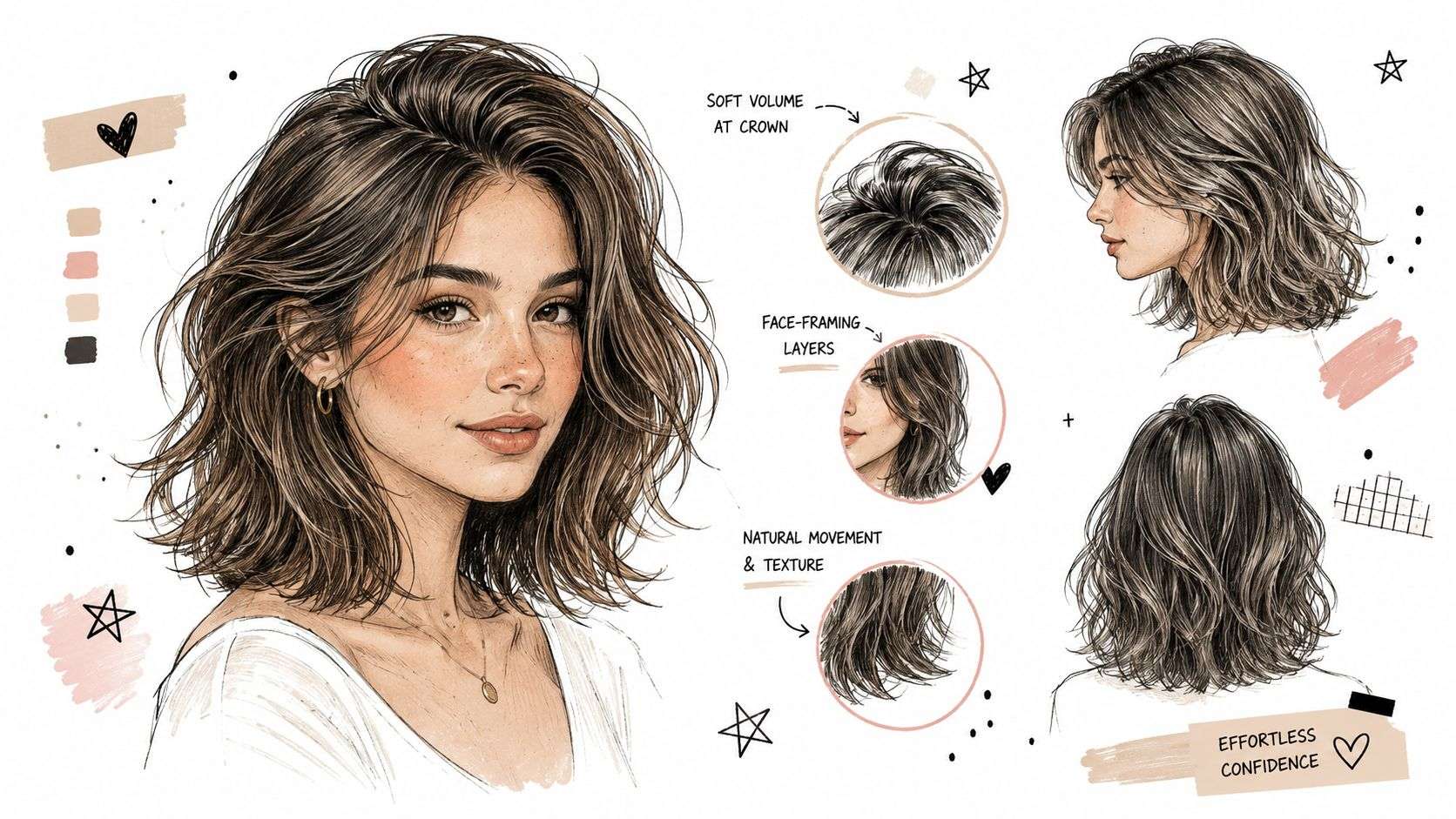
Soft waves can do something straight, flat hair often can't. They interrupt the eye. Instead of one clear part line or one smooth sheet of hair, you get bends, shadows, and texture that make thinning less obvious.
Blake Lively's loose wave styling shows how softness adds body. Beyoncé has worn fuller, more glamorous wave patterns that concentrate volume higher up. For everyday wear, the same principles work in a quieter way.
Why crown volume matters
For women with thinning hair, crown visibility is often the biggest concern. Soft waves help because they disrupt straight part lines and add width where the scalp might otherwise show.
This style is especially good on longer faces, heart-shaped faces, and oval faces. Round faces can wear it too, but it helps to keep some height at the crown so the shape doesn't become too wide at cheek level.
If you want to support the appearance of fullness between salon visits, this guide to boosting hair density with serums offers a useful introduction to at-home support.
Gentle styling habits for fragile strands
A beautiful wave pattern isn't worth much if styling breaks the hair you're trying to preserve. Thinning hair needs gentler handling than is commonly understood.
Use habits that reduce friction and tension:
- Prep lightly: Volumizing mousse at the roots can help before blow-drying or setting waves.
- Work with your texture: Ask for layers that encourage your natural bend instead of fighting it.
- Protect wet hair: A microfiber towel is gentler than rubbing with a standard bath towel.
- Choose kinder tools: Wide-tooth combs suit curly or wavy patterns better than forcing a brush through them.
- Sleep smart: Loose braids or a soft wrap can help preserve body overnight.
This cut-and-style combination feels romantic, but it's practical too. That's why it remains such a strong hairstyle for thinning hair.
7. The Undercut with Length on Top
The undercut is bolder than a taper fade, and that boldness is exactly why some people love it. By keeping the sides very short and leaving more visible length on top, the cut creates a dramatic contrast that can make the upper section seem fuller than it is.
Zayn Malik has worn several versions of this approach. You'll also see it often in fashion and grooming content because it photographs well and gives the top section a strong focal point.
Where this style works best
This is often best for men whose thinning is concentrated around the temples or who still have decent density through the top front. If the crown is very sparse, too much length can separate and expose more scalp, so the style has to be designed with precision.
A useful principle comes from advice that directly challenges the common habit of keeping extra length to hide thinning. In The Smart Haircut Rule video, the advice is to ignore the temptation to keep length to cover thinning and instead cut heavier areas shorter so the overall look appears more even. That idea is especially relevant with an undercut. The top can be longer, but not floppy or overgrown.
How to keep it from looking thin
This style suits oval and square faces especially well. On a round face, the extra height on top can be flattering. On a long face, be careful not to build too much vertical lift.
Keep it controlled:
- Blow-dry with purpose: Direct damp hair into place before adding product.
- Use matte hold: Clay, fiber, or matte pomade usually beats anything glossy.
- Avoid limp overhang: If the top falls flat over weak areas, shorten it.
- Trim regularly: The sides need to stay sharp for the contrast to work.
The undercut isn't the easiest style on this list, but when it's cut well, it can look confident and contemporary.
8. The Styled, Voluminous Updo
An updo can be one of the smartest event styles for thinning hair because it shifts the focus to placement, shape, and texture instead of raw density. That makes it useful for weddings, work events, dinners, and any day when you want your hair to look intentionally dressed.
Crown-focused bridal updos are a great example. Red carpet stylists use similar methods all the time, building lift where the eye naturally goes first and keeping the overall finish soft rather than stretched tight.
Placement changes everything
Many people make a common mistake. They pull the hair back hard, smooth every strand into place, and accidentally highlight the exact areas they hoped to hide. A better updo uses softness at the front, visible texture through the crown, and controlled fullness around the upper sides.
Keratin-based hair fibers can help here too if you need quick camouflage near the part or crown, especially for special occasions. Used sparingly, they can make the base of the style look more solid.
Keep the shape airy near the top and soft around the face. Tightness rarely flatters thinning hair.
How to avoid tension and breakage
This style can work on many face shapes because it's customizable. Round faces benefit from added height. Longer faces often look best with a softer crown and a little width near the temples or cheeks. Heart-shaped faces usually suit loose face-framing pieces.
A few habits protect fragile strands:
- Start with grip: Day-two hair often holds better than freshly washed, slippery hair.
- Tease gently: Backcomb lightly at the roots instead of aggressively roughing up the whole section.
- Avoid tight elastics: Gentle pins and soft placement reduce stress on delicate hair.
- Rotate styles: Repeating the same tension points can worsen breakage over time.
- Get help for formal events: A skilled stylist can build volume without forcing the hair.
An updo doesn't need a lot of hair to look elegant. It needs the right placement and restraint.
8-Style Comparison for Thinning Hair
| Style | Implementation complexity | Resource requirements | Expected outcomes | Ideal use cases | Key advantages |
|---|---|---|---|---|---|
| The Textured Crop | Low – standard barber texturing | Regular trims (3–4 wks); light matte product | Immediate fuller look; reduced scalp visibility | Men with mild–moderate thinning; professional settings | Low-maintenance; quick-drying; natural density illusion |
| The Textured Pixie Cut | Moderate – precision layering needed | Very frequent trims (2–3 wks); light texturizers | Noticeably fuller appearance; less breakage | Women seeking short, confidence-boosting style | Very low daily styling; strong volume illusion |
| The Slicked-Back High Volume Style | Moderate–High – daily styling skill required | Daily volumizing product; blow-dryer; maintenance | Heightened crown and perceived density | Men wanting polished, volumized professional look | Versatile; directs attention upward; professional |
| The Choppy Layered Bob | Moderate – layered cutting technique | Trims every 6–8 wks; texture spray/sea salt | Movement-based volume; disguises uneven density | Women preferring medium-length contemporary look | Adds movement and optical thickness |
| The Taper Fade with Textured Top | Low–Moderate – common barber skill | Trims every 3–4 wks; top styling product | Visual height and clean definition; modern appearance | Men across hair types seeking neat, modern cut | Clean sides with styling versatility on top |
| The Soft Waves with Volume at Crown | Moderate – styling tools and technique | Heat tools, conditioning, volumizers | Fuller look via waves; soft feminine volume | Women with shoulder-length hair; casual/formal | Natural-looking volume; versatile styling |
| The Undercut with Length on Top | Moderate – precise contrast cutting | Frequent side maintenance; daily products | Dramatic fullness on top; high contrast | Younger, fashion-forward men; statement styles | Maximizes top density illusion; highly versatile |
| The Styled, Voluminous Updo | High – advanced styling and pinning | Styling time, pins, products; pro help for events | Concentrated crown volume; conceals thinning areas | Formal events; women with medium–long hair | Effective concealment for special occasions |
Next Steps for Fuller-Looking Hair
The best hairstyle for thinning hair isn't always the trendiest one. It's the one that matches your thinning pattern, your face shape, and how much styling effort you're willing to do. A textured crop may be perfect if you want low-maintenance control. A pixie or choppy bob may be the reset you need if longer hair has started to look stringy. Waves, updos, tapers, and undercuts can all work well when the shape is adapted to your real hair density.
If you're booking a salon or barber visit soon, go in with a clear plan. Tell your stylist where the thinning bothers you most. Say whether it's the crown, temples, front hairline, or overall density. Ask for shorter, lighter structure if your current style feels flat or see-through. Those details help far more than saying you want “more volume.”
It also helps to stop chasing the wrong fix. Longer hair doesn't automatically cover more. In many cases it separates, exposes the scalp, and makes weak areas more obvious. Shorter, textured, better-balanced cuts often create the fuller look people were hoping to get from length in the first place.
If you want more than a cosmetic change, consider pairing your cut with treatment. Low-Level Laser Therapy devices work by delivering light in the 630 to 670 nm range to stimulate follicular metabolism and increase hair shaft thickness, and the hair loss and growth devices market is projected to expand through 2035 as demand for non-surgical regenerative options rises, according to Business Research Insights' hair loss and growth devices market report. That doesn't mean every device is right for every person, but it does show how much interest has grown in non-surgical support.
You can also explore everyday support options such as color blending, gentler brushing, lighter styling products, and scalp-friendly routines. For product ideas and cosmetic support, this guide to effective solutions for thinning hair is a useful starting point.
A strong haircut won't solve every cause of thinning hair, but it can change how you look and feel right away. Start with the style that fits your pattern best. Then decide whether you also want to pursue longer-term support for hair health and density.
If you're ready to go beyond styling alone, Sexual Wellness Centers of America offers REGENhair™ hair restoration services in Colleyville, Texas as part of its broader regenerative wellness practice. For adults who want a fuller-looking style now and a medical path for long-term support, scheduling a consultation can help you understand which cosmetic and regenerative options fit your goals.