
Understanding Your Hormonal Symphony
Hormone balancing for women is about restoring equilibrium to the body’s chemical messaging system that regulates everything from mood and energy to reproductive health and metabolism.
Quick Guide to Hormone Balance:
1. Eat balanced meals with protein, healthy fats, and fiber
2. Exercise regularly – both strength training and cardiovascular activity
3. Manage stress through meditation, yoga, or breathing exercises
4. Get 7-8 hours of quality sleep nightly
5. Reduce exposure to environmental toxins
6. Consider testing if experiencing persistent symptoms
Up to 80% of women experience symptoms of hormonal imbalance at some point in their lives. These chemical messengers act like an orchestra in your body – when one instrument plays off-key, the entire symphony can sound distorted.
Your endocrine system produces over 50 different hormones that affect virtually every function in your body. When these hormones fall out of their optimal ranges, you might experience symptoms ranging from fatigue and weight changes to mood swings and irregular periods.
Think of hormone balance not as a fixed state but as a dynamic equilibrium that shifts naturally throughout your life stages – from puberty and menstruation to pregnancy and menopause. Each transition brings new challenges that may require different support strategies.
“Feeling bloated, irritable, or just not your best? Shifts in your hormones could be to blame,” as many women find when investigating their symptoms.
I’m Jeff Nuziard, CEO of Sexual Wellness Centers of America, where I’ve dedicated my career to helping women address hormone balancing for women through personalized care plans that combine cutting-edge treatments with natural approaches for optimal results.
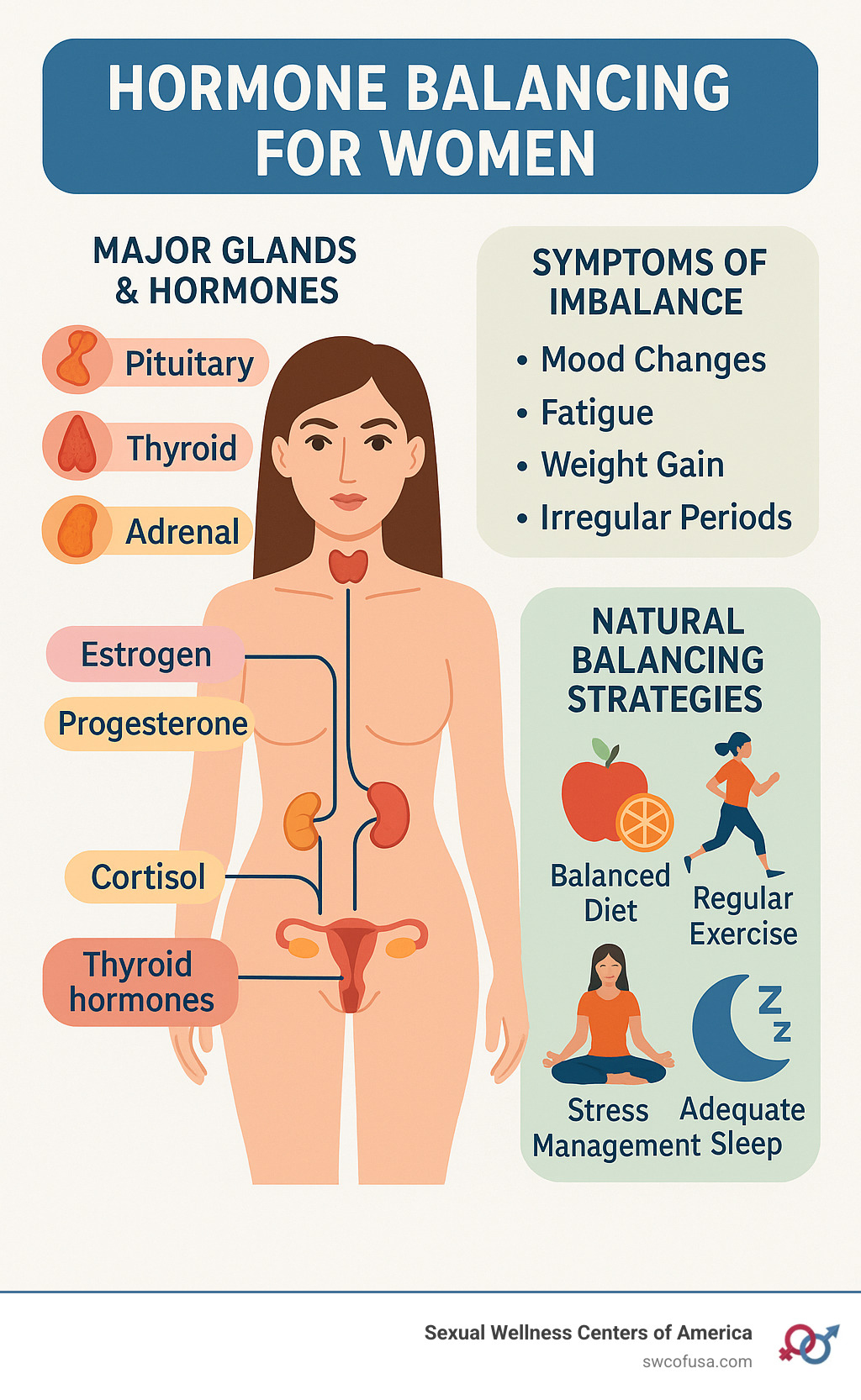
Hormone Balancing for Women: Foundations
Think of your body as a finely tuned symphony, with hormones as the conductors sending precise signals to keep everything playing in harmony. These powerful chemical messengers travel through your bloodstream, orchestrating everything from your monthly cycle to your daily energy levels.
The star performers in a woman’s hormonal ensemble include:
Estrogen – your feminine hormone that shapes curves, regulates periods, and keeps bones strong
Progesterone – estrogen’s partner that prepares your body for pregnancy and helps keep your mood steady
Cortisol – your body’s stress responder that can either protect or harm depending on its levels
Insulin – the metabolism maestro that manages your blood sugar and energy
Thyroid hormones – the conductors of your metabolic rate, body temperature, and energy
When these hormones work together in their natural rhythm, you feel energetic, emotionally balanced, and vibrant. But when one hormone starts playing out of tune? The entire performance suffers.
What Does “Hormone Balance” Really Mean?
Let’s be real – the term “hormone balancing for women” is everywhere in wellness circles, but there’s often confusion about what it actually means.
True hormone balance isn’t about maintaining perfectly flat levels of every hormone. That’s actually impossible! Your hormones naturally rise and fall throughout the day and month. This beautiful rhythm is exactly what’s supposed to happen.
As Dr. Magdalena Wszelaki, who has steerd multiple hormone disorders herself, explains: real hormone balance is about resilience – your body’s ability to produce appropriate hormonal responses and then return to baseline when needed.
Many wellness products promise “perfect balance,” but research in Critical Discourse Analysis of Self-Help Hormone Books reveals this is largely marketing speak. Your body naturally seeks homeostasis – though modern life often throws wrenches in this process.
| Balanced Hormonal State | Imbalanced Hormonal State |
|---|---|
| Regular menstrual cycles (21-35 days) | Irregular, heavy, or absent periods |
| Stable mood and energy | Mood swings, fatigue, anxiety |
| Healthy weight maintenance | Unexplained weight gain or loss |
| Clear skin | Acne or dry skin |
| Restful sleep | Insomnia or disrupted sleep |
| Normal libido | Low sex drive or painful intercourse |
| Good digestion | Bloating, constipation, or diarrhea |
| Stable body temperature | Hot flashes or night sweats |
Why Hormones Matter for Women’s Health
Your hormones touch virtually every aspect of how you feel and function each day:
When your metabolism feels sluggish, look to your thyroid hormones and insulin – they determine how efficiently you burn calories and store energy.
Those mood swings before your period? Estrogen and progesterone influence brain chemicals like serotonin that regulate how you feel emotionally. This explains why hormone shifts can trigger anything from irritability to full-blown anxiety.
Your fertility depends on the delicate dance between reproductive hormones. Even slight disruptions can affect your ability to conceive or maintain a pregnancy.
As women age, declining estrogen affects bone density, which is why post-menopausal women face higher fracture risks. Your hormones literally help keep your skeleton strong!
That mysterious drop in libido? Sex hormones directly influence desire and arousal. When they’re out of balance, your interest in intimacy often follows suit.
Ever experienced “brain fog” during your period or in perimenopause? You’re not imagining it. Estrogen influences memory and concentration in very real ways.
And that bloating before your period? Hormones affect your gut function too, which explains why many women experience digestive changes throughout their cycle.
Scientific research on stress and hormones confirms what many women intuitively know: chronic stress raises cortisol, which can disrupt other hormones and contribute to weight gain, mood changes, and sleep troubles. The good news? Studies show about 60% of women report improved mood and energy after making targeted diet and lifestyle changes for hormone balancing for women.
At Sexual Wellness Centers of America, we understand that hormone balance isn’t just about reproductive health – it’s about your quality of life, from energy and mood to sleep and beyond.
Life Stages, Symptoms & Common Causes
Women’s hormones naturally dance to different rhythms throughout life, creating a beautiful but sometimes challenging journey of change and adaptation:
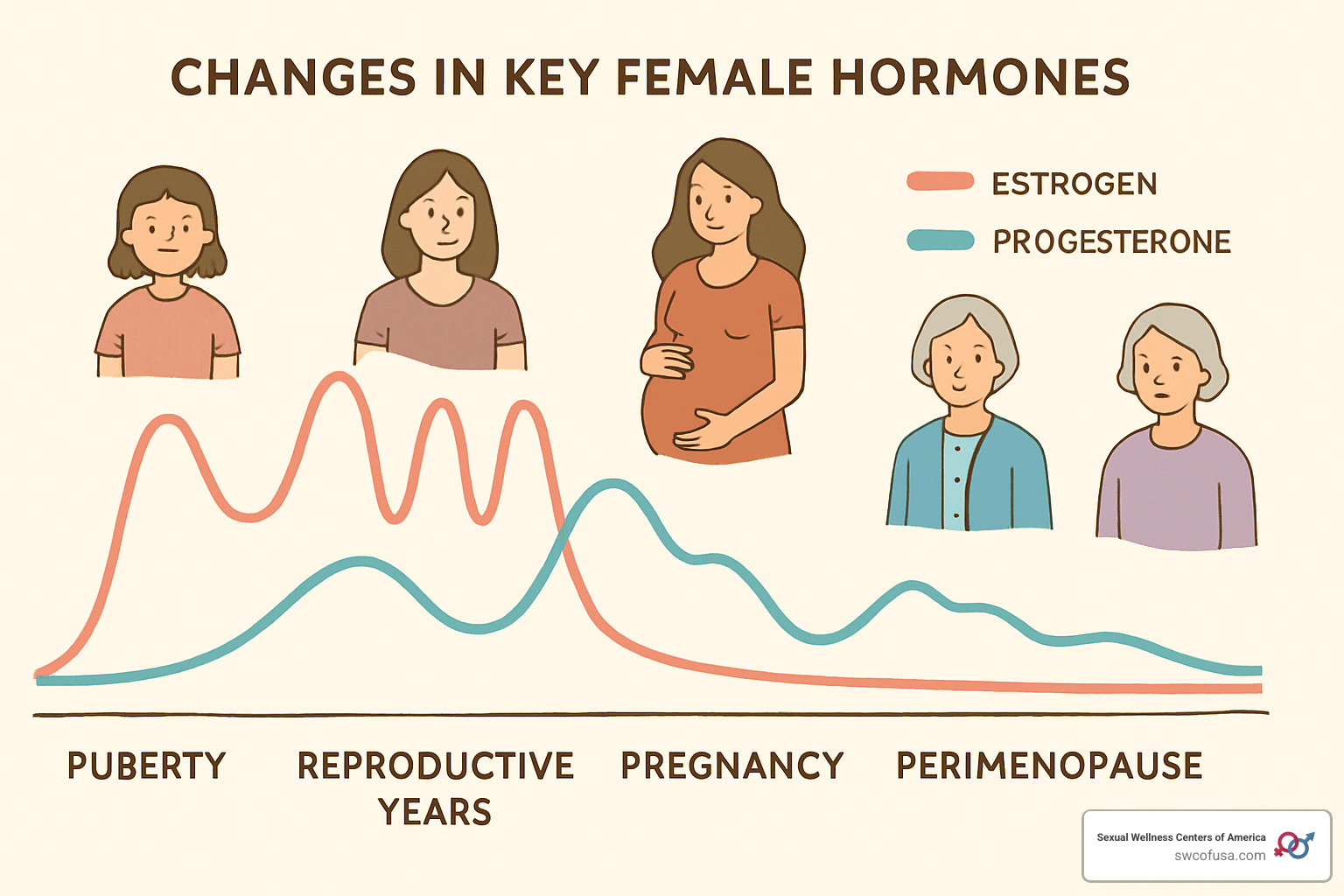
The hormonal story begins with the dramatic upheaval of puberty, when estrogen and progesterone surge to develop those first signs of womanhood and welcome the monthly visitor. Then comes the rhythmic ebb and flow of the menstrual cycle years, where hormones rise and fall like tides, affecting everything from your energy and mood to how your jeans fit.
Pregnancy brings its own magnificent hormonal crescendo, with progesterone and estrogen reaching their lifetime peak to nurture new life. Just when you’ve mastered one phase, along comes perimenopause in your late 30s or 40s, where hormones might behave like teenagers again – unpredictable and sometimes rebellious. Finally, menopause arrives, marking the end of menstruation as ovarian hormone production gracefully declines, though not without sometimes dramatic physical and emotional plot twists.
Beyond these natural chapters, many women face additional hormonal challenges. About 1 in 10 women struggle with Polycystic Ovary Syndrome (PCOS), causing irregular periods and potential fertility issues. Women are also 5 to 8 times more likely than men to develop thyroid disorders, creating widespread hormonal disruption. Diabetes and its insulin resistance can trigger a domino effect on other hormones, while adrenal dysfunction from chronic stress can exhaust your body’s cortisol production, throwing other hormones off balance too.
Red Flags: Signs of Imbalance
Your body has clever ways of waving red flags when hormones fall out of harmony. Pay attention if you notice:
Irregular periods affect about 20% of women at some point. When your cycle consistently falls outside the normal 21-35 day range, your hormones might be sending an SOS.
Weight changes that seem to happen without reason, especially new belly fat that appears almost overnight, often point to hormonal shifts. You might find yourself wondering, “Why am I gaining weight when nothing has changed?”
Skin and hair troubles like persistent adult acne, suddenly dry skin, thinning hair, or new facial hair growth can all be hormonal calling cards. That stubborn chin hair isn’t just annoying – it might be telling you something important.
Hot flashes and night sweats are the notorious hallmarks of menopause, affecting about 75% of women. One minute you’re fine, the next you’re fanning yourself frantically while your confused partner reaches for another blanket.
Vaginal dryness can make intimacy uncomfortable or even painful as estrogen levels decline. This common but rarely discussed symptom deserves attention – learn more about vaginal dryness on our website.
Mood disturbances that align with your cycle – the anxiety, tearfulness, or irritability that arrives like clockwork – often have hormonal roots. That feeling of wanting to both cry and scream over a minor inconvenience might be your hormones talking.
Sleep problems that leave you staring at the ceiling at 3 AM, perhaps accompanied by night sweats or racing thoughts, can be hormone-related. Nothing feels quite as frustrating as being exhausted but unable to sleep.
Digestive distress that worsens at certain points in your cycle suggests the gut-hormone connection at work. Your bloating might be more about your hormones than what you ate.
Fatigue that coffee can’t touch and rest doesn’t fix might be hormonal in nature, while low libido or painful intercourse can signal changing hormone levels too. And that memory fog making you forget why you walked into a room? It might not be aging – it could be hormonal.
Root Causes Across the Decades
Hormone imbalances typically have underlying triggers that affect women differently across their lifespan:
Chronic stress lifts cortisol, which can bully other hormones into submission. Even the most capable woman can’t outrun the biological effects of ongoing stress, though research shows simple practices like music listening can help reduce these hormonal responses.
Poor diet choices, particularly those high in sugar and processed foods, can wreak havoc on insulin and other hormones. As scientific research on added sugar confirms, limiting those sweet treats is crucial for maintaining hormone health – something to remember when facing the office donut box.
Sleep debt disrupts virtually all hormone systems. Even one night of poor sleep can affect glucose levels and metabolism – a reminder that sometimes the most productive thing you can do is get a good night’s rest.
While movement is medicine, over-exercise without adequate recovery can stress your adrenal system. That punishing workout routine might actually be working against your hormonal health.
Endocrine disruptors lurking in everyday items – from plastic food containers to certain cosmetics – can mimic or block hormone action. Chemicals like PFAS and glyphosate deserve special caution in your household.
Even modest alcohol consumption can disrupt hormone balance. That nightly glass of wine to “take the edge off” might be creating a different kind of edge for your hormones.
Certain medications, including hormonal birth control, can alter natural hormone production, while chronic illness can affect hormone-producing glands. Your gut health also plays a surprising role – those trillions of friendly bacteria influence hormone metabolism, meaning digestive issues can directly impact hormonal balance.
At Sexual Wellness Centers of America, we understand that hormone balancing for women requires looking at these root causes with compassion and scientific precision. Your hormonal journey is unique, and addressing these underlying factors is key to restoring balance and vitality at every stage of life.
Natural Lifestyle & Dietary Strategies
The beautiful thing about hormone balancing for women is that you have more control than you might think. Simple daily choices can make a profound difference in how your hormones function and how you feel as a result.

Eating for Hormone Harmony – Daily Basics
Your plate is a powerful tool for hormone balance. Start by embracing protein at every meal—aim for 25-30 grams to stabilize blood sugar and provide the building blocks your body needs to create hormones. Think eggs at breakfast, chicken on your lunch salad, or lentils in your evening soup.
Healthy fats deserve a special place in your hormone-balancing journey. Despite what diet culture might have told you, fats are essential for hormone production—after all, hormones are synthesized from cholesterol! Slice up an avocado on your toast, drizzle olive oil on your veggies, sprinkle walnuts on your oatmeal, or enjoy salmon for dinner twice a week.
Don’t forget about fiber—the unsung hero of hormone health. A fascinating study with 22 participants showed that increasing fiber intake improved hormone regulation and supported healthy weight. Your digestive system uses fiber to eliminate excess hormones, keeping everything in balance. Beans, berries, broccoli, and brown rice are all excellent sources.
Many women find the Mediterranean diet particularly supportive of hormone health. This way of eating—rich in vegetables, fruits, whole grains, fish, olive oil, and moderate amounts of wine—has been linked to improved energy-balance hormones in research studies.
Have you heard of seed cycling? It’s a gentle practice some women use to support their menstrual cycles. During days 1-14 (follicular phase), try adding a tablespoon each of ground flaxseeds and pumpkin seeds to your meals to support estrogen production. Then switch to sesame and sunflower seeds during days 15-28 (luteal phase) to nurture progesterone balance.
Your hormone-balancing grocery list should include cruciferous vegetables like broccoli and cauliflower, which contain compounds that help metabolize estrogen properly. Leafy greens provide minerals essential for hormone production, while berries offer antioxidants that support overall hormone health. A cup of spearmint tea can be particularly helpful if you’re dealing with PCOS, as studies show it may help lower testosterone levels.
What you don’t eat matters too. Added sugars disrupt insulin sensitivity, which can throw other hormones out of balance. Alcohol taxes your liver—the organ responsible for processing hormones. And those ultra-processed foods? They often contain artificial ingredients that can act as endocrine disruptors.
Move, Rest, De-Stress
Movement is medicine for your hormones, but the type matters. High-intensity interval training (HIIT) can work wonders for insulin sensitivity in just a few minutes a day. Strength training supports growth hormone and helps maintain muscle mass, which becomes increasingly important as we age. Don’t underestimate the power of a daily walk—this gentle movement improves hormone receptor sensitivity without stressing your system.
If stress has you in its grip, consider yoga. Beyond the physical benefits, yoga reduces cortisol—the stress hormone that, when chronically liftd, can disrupt your entire hormonal orchestra.
Sleep might be the most underrated hormone balancer of all. During those precious 7-9 hours, your body repairs tissues and rebalances hormones. Create a sanctuary for sleep by keeping your bedroom cool and dark, limiting blue light from screens in the evening, and maintaining consistent sleep-wake times—even on weekends.
Chronic stress is perhaps the biggest hormone disruptor in our modern lives. Even five minutes of meditation or deep breathing can lower cortisol levels and create a ripple effect of hormone harmony. Time in nature has been shown to reduce stress hormones within minutes. And sometimes, the most powerful stress management technique is simply setting boundaries and saying “no” to commitments that drain your energy.
Many women find adaptogenic herbs helpful for hormone balance. Herbs like ashwagandha, holy basil, and rhodiola have been used for centuries to help the body adapt to stress and support adrenal function.
Environmental & Supplement Smart-Choices
Your environment affects your hormones more than you might realize. Every day, we encounter chemicals that can mimic or block hormone action.
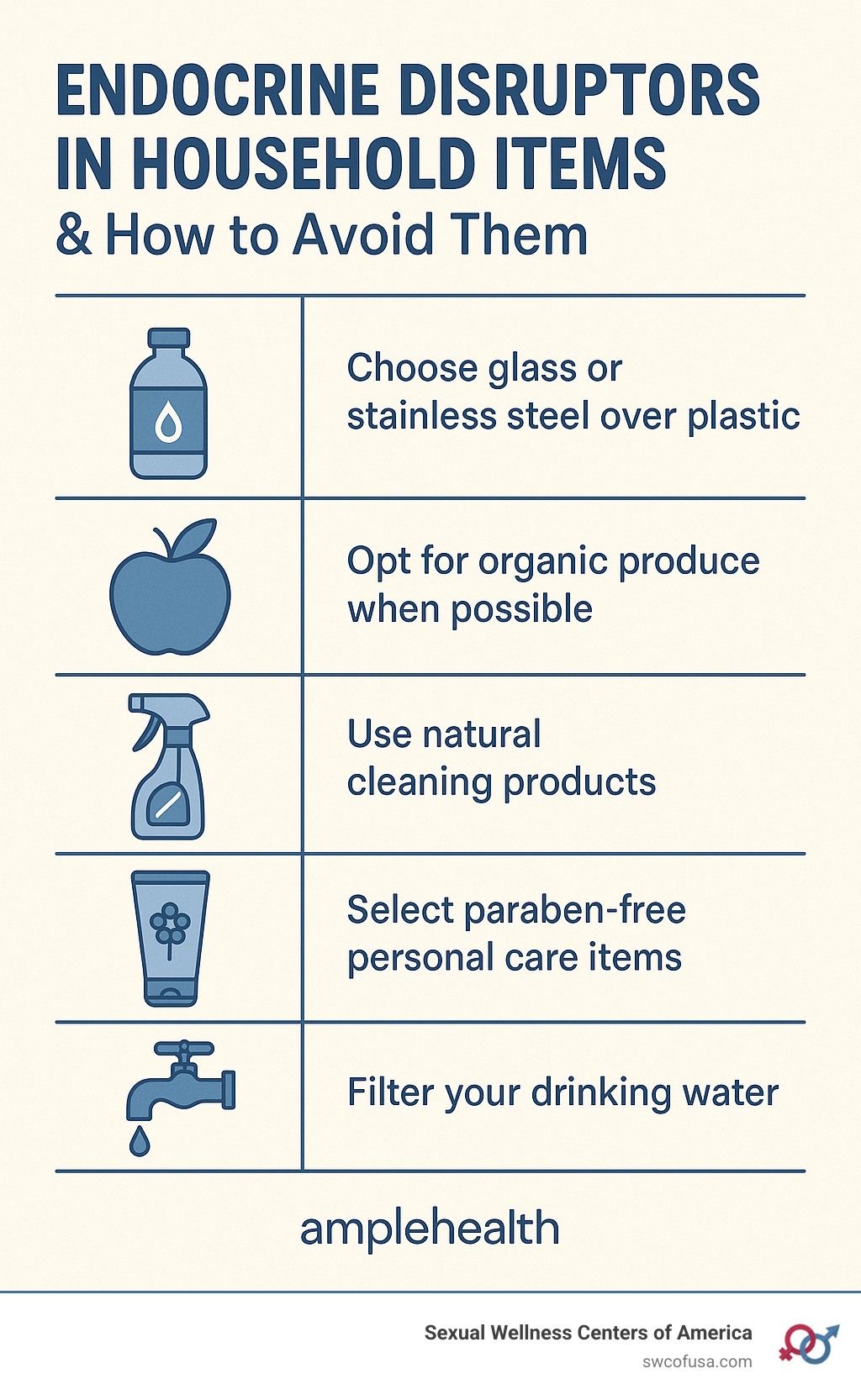
Simple swaps can reduce your exposure: store leftovers in glass containers instead of plastic, choose organic produce when possible (especially for the “dirty dozen” most contaminated fruits and vegetables), and select paraben-free personal care products. Your water quality matters too—consider a good filter to remove hormone-disrupting chemicals.
While whole foods should form the foundation of your hormone-balancing plan, certain supplements can provide targeted support. Vitamin D is crucial for hormone production, and many of us don’t get enough from sunlight alone. Magnesium supports over 300 enzymatic reactions in the body, many related to hormone function. Omega-3 fatty acids reduce inflammation and support hormone production, while B-complex vitamins are essential for energy and hormone metabolism.
A word of caution about fasting: while intermittent fasting shows promise for some hormonal conditions, it can backfire for women under stress. If you’re curious about time-restricted eating, start gently with a 12-hour eating window rather than more extreme approaches.
Hormone balancing for women isn’t about perfection—it’s about creating a lifestyle that supports your body’s natural wisdom. Small, consistent changes often yield the most sustainable results. At Sexual Wellness Centers of America, we’ve seen countless women transform their hormonal health through these foundational practices, often before they even need to consider medical interventions.
Medical Diagnosis & Treatment Options
When lifestyle changes aren’t quite enough to restore your hormonal harmony, medical intervention may be necessary. At Sexual Wellness Centers of America, we believe in a comprehensive approach to hormone balancing for women that combines testing, personalized treatment, and ongoing support.

Think of hormone testing as detective work—we’re looking for clues about what’s happening inside your unique body. Our diagnostic process typically includes a heart-to-heart conversation about your symptoms and medical history, a thorough physical examination, and appropriate laboratory testing.
These tests might include blood work to measure hormone levels, a comprehensive thyroid panel (often overlooked but incredibly important!), and sometimes a pelvic ultrasound to check for structural issues that might be contributing to your symptoms.
One thing many women don’t realize is that timing matters tremendously when it comes to hormone testing. Your levels naturally fluctuate throughout the day and month, so we carefully time your tests to capture the most accurate picture of what’s happening in your body.
When to See a Professional
While small hormonal hiccups can often be addressed through the lifestyle strategies we’ve discussed, certain situations call for professional guidance. You might consider booking an appointment if you’re experiencing:
Persistent symptoms that haven’t improved despite your best efforts with diet and lifestyle changes. Your body might be telling you it needs additional support.
Significant mood changes that are interfering with your relationships or daily functioning. Hormones profoundly impact your emotional well-being, and severe mood swings aren’t something you should have to “just live with.”
Fertility concerns such as difficulty conceiving or recurrent miscarriages, which can have hormonal roots that need expert investigation.
Sudden weight changes of 10 pounds or more without changes to your diet or activity level could signal a hormonal shift that needs attention.
Complete absence of periods (if you’re not in menopause), which might indicate conditions like PCOS or hypothalamic amenorrhea.
Severe menopausal symptoms that disrupt your sleep, work, or quality of life deserve proper treatment—you don’t have to suffer through this transition.
Painful intercourse or vaginal dryness that persists and affects your intimate relationships may respond well to hormone therapy.
At Sexual Wellness Centers of America, we start by truly listening to your concerns. We know that each woman’s experience is unique, and cookie-cutter approaches simply don’t work when it comes to hormone balancing for women. For more detailed information about considerations before starting hormone therapy, visit our hormone therapy considerations page.
Conventional vs. Bioidentical Approaches
If testing reveals that hormone replacement would benefit you, there are two main paths to consider:
Conventional HRT typically uses synthetic hormones that, while similar to your body’s natural hormones, have slight molecular differences. These come in various forms—oral pills you take daily, patches that deliver hormones through your skin, topical creams or gels, and vaginal rings for localized symptoms.
Bioidentical Hormone Replacement Therapy (BHRT), on the other hand, uses hormones that are chemically identical to those your body naturally produces. At Sexual Wellness Centers of America, we specialize in BHRT pellet therapy, which many women find offers a more natural experience.
These tiny pellets, about the size of a grain of rice, are placed just under the skin in a quick, simple office procedure. Once in place, they slowly release hormones directly into your bloodstream, mimicking the way your body would naturally produce them.
“The difference with pellet therapy is like night and day,” shares one of our patients. “I don’t have the emotional roller coaster I experienced with pills, and I only need to think about it a few times a year instead of every day.”
Most women notice improvements within 4-6 weeks after pellet insertion, with effects lasting 3-6 months. The pellets gradually dissolve completely, leaving nothing behind when their work is done.
What makes our approach at Sexual Wellness Centers of America special is our attention to detail. We don’t just offer standard doses—we carefully calibrate your treatment based on your test results, symptoms, and health goals. This personalized approach is why we’ve achieved a remarkable 97.2% efficacy rate in addressing hormone-related sexual wellness concerns.
Of course, any form of hormone therapy comes with potential benefits and risks that should be discussed thoroughly. We take the time to explain all your options, answer your questions, and help you make the choice that feels right for your body and your life.
For more details about our hormone replacement therapy services, visit our HRT services page. Hormone balancing for women isn’t just about fixing symptoms—it’s about restoring your quality of life and helping you feel like yourself again.
Frequently Asked Questions about Hormone Balancing for Women
What tests confirm a hormone imbalance?
When you’re feeling off but can’t quite put your finger on why, hormone testing can provide valuable insights.
Blood tests are the gold standard for measuring many hormones including thyroid, cortisol, and reproductive hormones. They give us a snapshot of what’s circulating in your system at that moment.
Some women find saliva testing helpful because it measures the “free” or bioavailable hormone levels—essentially what your body can actually use. These tests are particularly good for tracking how your cortisol levels change throughout the day, which can reveal patterns of stress response.
Urine tests take things a step further by showing not just hormone levels but how your body processes them. This can be especially revealing if you metabolize hormones differently than most.
Timing matters enormously for accurate results. If you’re still menstruating, we’ll help you schedule your test at the optimal point in your cycle—typically day 21 for progesterone or day 3 for FSH and estradiol. At Sexual Wellness Centers of America, we don’t guess—we create a personalized testing protocol based on your unique symptoms and cycle.
Can diet alone fix my hormones?
“Let food be thy medicine” holds some truth for hormone health, but the full picture is more nuanced.
For many women with mild imbalances primarily caused by lifestyle factors, dietary changes can work wonders. I’ve seen countless clients whose energy, mood, and even menstrual symptoms improved dramatically after cleaning up their eating habits. The research backs this up—about 60% of women report noticeable improvements in hormone-related symptoms through diet and lifestyle changes alone.
That said, diet isn’t always enough by itself. If you’re dealing with severe hormone deficiencies, structural issues like fibroids, autoimmune conditions affecting your thyroid or other glands, or significant age-related hormone decline, food can be a powerful ally but may need reinforcements.
Think of hormone balancing for women as a multi-faceted approach. Your body works best when you combine nutritious eating with consistent sleep patterns, effective stress management, appropriate exercise, and—when necessary—targeted medical support. This comprehensive strategy gives you the best chance of feeling like yourself again.
Are “hormone-balancing” supplements safe?
The supplement aisle can feel like the Wild West—exciting but potentially risky without a good map. Since the supplement industry isn’t regulated like prescription medications, quality and safety concerns are completely valid.
Quality makes all the difference. Choose products from manufacturers that voluntarily undergo third-party testing and maintain good manufacturing practices. A bargain isn’t really a bargain if it doesn’t contain what it claims or includes contaminants.
Even natural supplements can interact with medications or affect your hormones in unexpected ways. For example, some women take DIM to help metabolize estrogen, but in certain situations, it might not be appropriate. More isn’t always better—even beneficial supplements can have side effects at high doses.
At Sexual Wellness Centers of America, we don’t believe in one-size-fits-all approaches to supplements. Based on your specific hormone testing results, we can recommend targeted supplements that complement your overall treatment plan. Some that often support hormone balancing for women include:
DIM (helps with estrogen metabolism), magnesium (supports over 300 enzymatic reactions in your body), vitamin D (crucial for hormone production), and omega-3 fatty acids (reduce inflammation that can disrupt hormone balance).
Supplements should improve—not replace—a nutrient-dense diet and healthy lifestyle. Think of them as supporting actors in your hormone health story, not the lead role.
The right supplement strategy, custom to your unique needs and guided by testing, can be a valuable part of your journey toward hormone harmony. But it’s just one piece of a bigger picture that includes how you eat, move, sleep, and manage the stressors in your life.
Conclusion
Your body’s hormonal symphony is a lifelong performance that evolves through different life stages. Hormone balancing for women isn’t about finding a magic pill—it’s about creating harmony through personalized approaches that respect your body’s unique needs and rhythms.
After diving deep into hormones, here’s what matters most:
First and foremost, learn to listen to your body’s signals. Those symptoms you’re experiencing aren’t random—they’re valuable messages about what’s happening beneath the surface. That persistent fatigue or those mood swings might be your hormones trying to tell you something important.
The foundations of hormone health are surprisingly simple, yet powerful. The foods you eat, how well you sleep, how you manage stress, and how you move your body all create the environment where your hormones either thrive or struggle. Small, consistent changes in these areas often bring the most profound results.
In our modern world, we’re surrounded by substances that can disrupt our delicate hormonal balance. Being mindful about reducing environmental exposures—choosing glass over plastic, filtering your water, selecting cleaner personal care products—can make a significant difference over time.
Sometimes, despite our best efforts with lifestyle changes, we need additional support. There’s no shame in seeking professional guidance when symptoms persist. Comprehensive testing can reveal patterns that aren’t visible from symptoms alone, allowing for truly personalized treatment.
You have options. From dietary adjustments to herbal support to bioidentical hormone therapy, effective solutions exist for virtually every hormone-related concern. The key is finding the approach that works best for your unique situation.
At Sexual Wellness Centers of America in Colleyville, TX, we specialize in helping women find their hormonal harmony through individualized care plans. Our innovative treatments, including SHEshot®™ and regenMAX technology, combined with thorough hormone and vitamin panels, provide targeted solutions for women’s sexual and hormonal health concerns.
We believe in proactive monitoring rather than waiting for problems to become severe. Regular hormone testing throughout your life stages allows for early intervention and adjustment, helping you maintain optimal health as your body changes.
For women experiencing hormone-related intimate concerns, our vaginal rejuvenation services can provide significant relief and improved quality of life. Learn more on our vaginal rejuvenation services page.
Your hormonal health isn’t separate from your overall wellbeing—it’s woven into every aspect of how you feel and function day to day. By taking thoughtful steps to support your hormones naturally and seeking appropriate care when needed, you’re not just addressing symptoms—you’re investing in your vitality, comfort, and joy for years to come.
The journey to hormone balancing for women is deeply personal, but you don’t have to walk it alone. With the right information, support, and care, you can experience the energy, clarity, and wellness that come with hormonal harmony.