
Breaking the Silence: Understanding Hormone Therapy for ED
When it comes to erectile dysfunction, many men suffer in silence, unaware that solutions exist beyond the familiar “little blue pill.” I’m Jeff Nuziard, CEO of Sexual Wellness Centers of America, and I’ve helped thousands of men reclaim their intimate lives through personalized treatments that address the root causes of ED.
Hormone therapy for ED might be the missing piece of your sexual wellness puzzle. Unlike medications that temporarily increase blood flow, hormone therapy aims to restore your body’s natural balance by addressing the hormonal factors that contribute to erectile dysfunction.
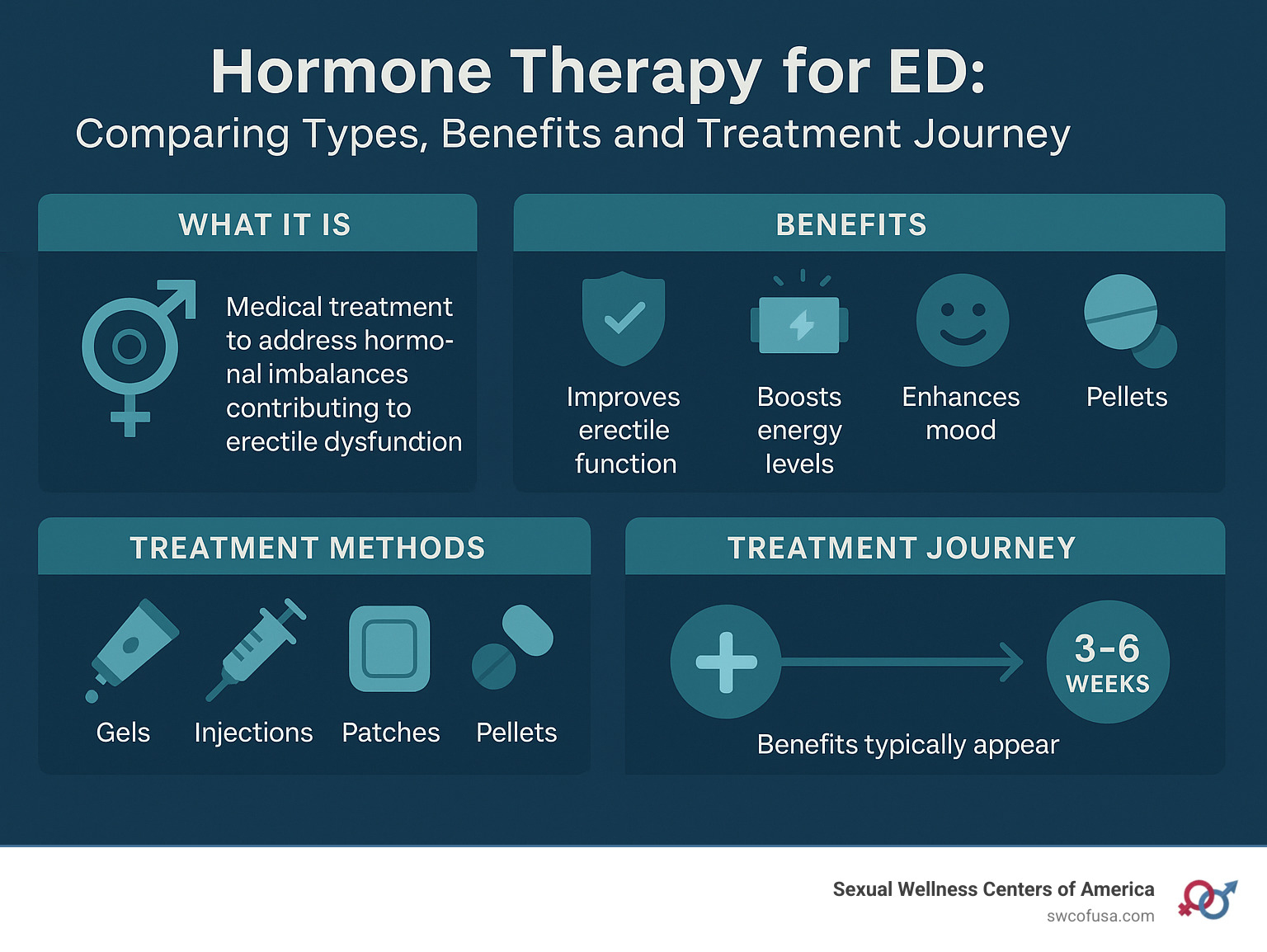
What exactly is hormone therapy? Simply put, it’s a medical approach that corrects hormonal imbalances—particularly low testosterone or thyroid issues—that may be undermining your sexual function. For many men, this represents a fundamentally different approach that treats potential causes rather than just managing symptoms.
Did you know erectile dysfunction affects approximately 30 million men in the United States? The prevalence increases significantly with age, but you don’t have to accept it as an inevitable part of getting older.
When hormone therapy for ED works, it doesn’t just improve erections—many men experience renewed energy, better mood, and increased overall vitality. Think of it as tuning up your entire engine, not just fixing one part.
The best candidates for hormone therapy are men with documented low hormone levels (hypogonadism) who are experiencing ED symptoms. Treatment comes in several forms, including gels, injections, patches, and pellets, with benefits typically appearing within 3-6 weeks.
At Sexual Wellness Centers of America, we create personalized treatment plans based on comprehensive hormone panels. Our approach has achieved a remarkable 97.2% success rate in erectile dysfunction reversal, helping men restore confidence and intimate connections that may have been lost for years.
ED 101: Prevalence, Causes, Hormonal Links
Let’s talk about what’s really happening with erectile dysfunction. ED isn’t just “not getting hard” – doctors define it as consistently struggling to achieve or maintain an erection that’s firm enough for satisfying sex.
What makes an erection happen in the first place? It’s actually a fascinating dance between your brain, nerves, blood vessels, and hormones. When you become aroused, your brain sends signals that increase blood flow to your penis. Special tissues fill with blood, creating firmness. At the same time, your body temporarily blocks blood from flowing back out, maintaining that erection.
But this delicate process can easily get disrupted. The most common culprits include:
Vascular issues like hardened arteries, high blood pressure, or diabetes damage the small blood vessels that supply your penis. Think of it like a garden hose with buildup inside – less water gets through.
Nerve damage from conditions like diabetes or injuries interrupts those crucial signals between your brain and penis.
Psychological factors – stress, anxiety, depression – can absolutely kill the mood, even when everything else is working fine.
Medications are notorious ED-causers, especially certain antidepressants, blood pressure drugs, and even some antihistamines.
Lifestyle choices matter enormously. Smoking, heavy drinking, carrying extra weight, and sitting all day all contribute to ED.
Hormonal imbalances – particularly low testosterone, thyroid issues, or liftd prolactin – can significantly impact your ability to get and maintain erections.
As Dr. Abraham Morgentaler from Harvard Medical School puts it: “It’s well established that testosterone by itself, for men with sexual dysfunction that includes erectile dysfunction, can improve erections in the majority of men who take it.”
This hormonal connection is precisely why hormone therapy for ED is worth understanding.
How Common Is ED?
If you’re dealing with ED, you’re definitely not alone. The Massachusetts Male Aging Study revealed some eye-opening numbers:
About 52% of men between 40-70 experience some degree of erectile dysfunction. The numbers climb steadily with age – from roughly 40% at age 40 to nearly 70% by age 70. Worldwide, ED affected approximately 152 million men in 1995, with projections reaching a staggering 322 million by 2025.
As Dr. Tobias Kohler of Mayo Clinic bluntly states: “Problems with erectile dysfunction are super common.”
What’s particularly concerning is that ED often serves as an early warning sign of cardiovascular disease. Dr. Kohler explains, “The penis’s small blood vessels make erection problems an early predictor of heart attacks and strokes.” This connection shows why addressing ED isn’t just about better sex – it’s about your overall health.
Why Hormones Matter for Erections
Hormones, especially testosterone, play several crucial roles in healthy erectile function:
First, testosterone helps regulate nitric oxide production – a molecule that’s absolutely essential for dilating blood vessels and increasing blood flow to your penis during arousal.
Second, testosterone drives sexual desire and arousal, which starts the whole erectile process. Without enough testosterone, your brain might not send proper signals even when physical stimulation occurs.
Third, this hormone maintains the structural integrity of erectile tissues, ensuring they can properly expand and fill with blood.
Finally, testosterone influences the sensitivity of nerves that transmit pleasurable sensations and arousal signals.
Beyond testosterone, other hormones impact erectile function too. Thyroid hormones, whether too high or too low, can contribute to ED through metabolic disruption. Prolactin, when liftd, can suppress testosterone production. And chronic stress increases cortisol, which interferes with testosterone and sexual response.
As men age, testosterone naturally declines by about 1-2% per year after age 30. By age 70, approximately 30% of men have low testosterone (below 300 ng/dL). This gradual decline – sometimes called “andropause” or “male menopause” – often contributes significantly to age-related ED.
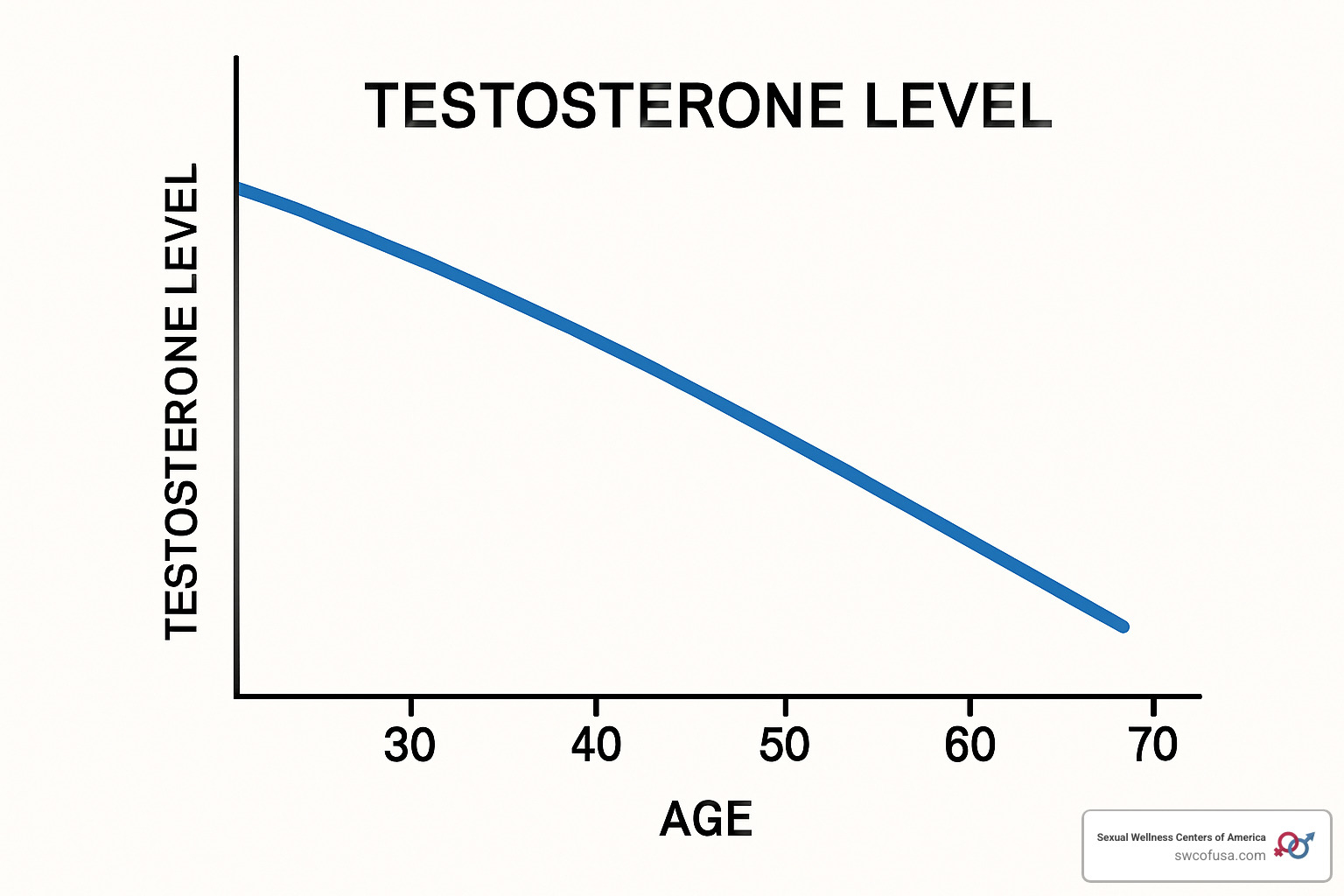
Understanding these connections helps explain why hormone therapy for ED can be so effective for many men – it addresses a potential root cause rather than just treating symptoms.
For more detailed information on erectile dysfunction statistics and facts, you can visit the National Institute of Diabetes and Digestive and Kidney Diseases.
Hormone Therapy for ED: Mechanisms, Benefits, Risks
When it comes to treating erectile dysfunction, hormone therapy for ED takes a different approach than those little blue pills you might be familiar with. Instead of just addressing symptoms, hormone therapy aims to fix what’s actually causing the problem.
Testosterone replacement therapy (TRT) works by bringing your hormone levels back to where they should be. When your testosterone returns to normal, several wonderful things start happening in your body:
Your nitric oxide production improves, helping those blood vessels in your penis relax and fill with blood when you’re aroused. Your sexual desire gets a healthy boost, which itself can make erections better. The tissues in your penis become healthier and more responsive. And many men tell us they just feel better overall—more energy, better mood, and yes, improved performance in bed.
As Dr. Douglas Lord, a specialist in hormone therapy, puts it: “All hormones are chemical messengers that deliver instructions to different organs and tissues in the body. When these messengers are imbalanced, the instructions get garbled, and bodily functions—including sexual response—can falter.”
At Sexual Wellness Centers of America, we prefer bioidentical hormones because they’re exactly like what your body naturally makes. This approach gives you the benefits while keeping side effects to a minimum. Depending on your specific situation, we might also recommend:
- Aromatase inhibitors to keep your testosterone from turning into estrogen
- Thyroid hormone supplements if needed
- Strategies to optimize other hormones that affect your sexual function
The science backing hormone therapy for ED is solid. One study in the Annals of Internal Medicine showed that testosterone gel significantly improved erectile function compared to placebo. Another analysis of 14 different studies found an average improvement in erectile function scores of 2.31 points with testosterone therapy.
Hormone Therapy for ED vs PDE5 Inhibitors
“How does hormone therapy compare to Viagra or Cialis?” This is one of the most common questions we hear at our Colleyville clinic. Here’s the simple breakdown:
| Aspect | Hormone Therapy for ED | PDE5 Inhibitors |
|---|---|---|
| Mechanism | Addresses underlying hormonal imbalances | Temporarily increases blood flow |
| Timing | Ongoing treatment with gradual improvement | Taken shortly before sexual activity |
| Benefits beyond ED | Improved energy, mood, body composition | Limited to erectile function |
| Ideal candidates | Men with documented low testosterone | Men with normal hormone levels |
| Side effects | Potential acne, fluid retention, prostate effects | Headache, flushing, nasal congestion |
| Duration of effect | Continuous while on therapy | 4-36 hours depending on medication |
Dr. Matthew Spitzer, who led a Boston University study on ED treatments, acknowledges: “One of the central findings of the study is that sildenafil works extremely well.” But for men with low testosterone, starting with hormone therapy often makes more sense.
At our center, we’ve found success with a logical approach:
First, we check for and treat any hormone imbalances. Then, if you’re still not satisfied with your erections, we might add a PDE5 inhibitor like Viagra or Cialis. For some men, combining both treatments gives the best results.
This “testosterone first” approach works particularly well for men who don’t respond to PDE5 inhibitors alone. In fact, research shows that in men with low testosterone who didn’t respond to PDE5 inhibitors, adding testosterone therapy more than doubled the improvement in erectile function compared to continuing with just the PDE5 inhibitors.
Potential Benefits Beyond the Bedroom
One of the nicest surprises for our patients is finding that hormone therapy for ED improves much more than just their sex life.
Many men tell us they feel more energetic and alive again. They notice their body composition changing—more muscle, less belly fat. Their mood improves, and they think more clearly. Their metabolism works better, which is especially important for men with diabetes. And their bones get stronger, reducing the risk of fractures as they age.
A 65-year-old patient at our Colleyville clinic recently told me: “I came in for help with ED, but what I got back was my whole life. I have energy again, I’m thinking clearer, and yes, my sex life is better than it’s been in 15 years.”
Safety & Side Effects You Should Know
While hormone therapy for ED can be life-changing, it’s important to understand the potential risks and side effects.
Some men develop erythrocytosis—basically, their body makes too many red blood cells. This is why we regularly check your blood counts and occasionally need to remove some blood if levels get too high.
You might notice some skin changes, particularly acne or oily skin when first starting treatment. Your prostate might enlarge slightly, though current research doesn’t show an increased risk of prostate cancer. If you already have sleep apnea, it could potentially get worse.
For younger men planning to have children, it’s important to know that testosterone replacement can reduce fertility by suppressing your natural testosterone and sperm production. Some men experience mild swelling, especially around the ankles. And rarely, breast tissue can enlarge if too much testosterone converts to estrogen.
At Sexual Wellness Centers of America, we take safety seriously. Before starting any treatment, we run comprehensive blood tests. We continue regular testing to make sure your hormone levels stay optimal. We monitor your prostate health through PSA testing, check your red blood cell levels to prevent complications, and watch your estrogen levels to prevent excessive conversion.
As Dr. Abraham Morgentaler, who has extensively researched testosterone therapy, says: “In general, testosterone replacement therapy is safe when properly monitored.”
With the right approach and careful oversight, hormone therapy for ED can safely restore not just your sexual function, but your overall quality of life.
Are You a Candidate? Diagnosis & Monitoring
Wondering if hormone therapy for ED might be your path to renewed intimacy? At Sexual Wellness Centers of America, we don’t guess – we assess thoroughly to determine the right approach for your unique situation.
Our diagnostic process starts with a conversation. We’ll discuss your medical history, sexual concerns, medications you’re taking, and lifestyle factors that might be contributing to erectile issues. Many men tell us they’ve never had such an open, judgment-free discussion about their sexual health before.
“I’d been to three doctors who just handed me Viagra prescriptions,” one patient shared. “Sexual Wellness Centers of America was the first place that actually tested my hormones and found the real problem.”
We use validated tools like the International Index of Erectile Function (IIEF) questionnaire to objectively measure your ED severity. This gives us a baseline to track your improvement as treatment progresses.
The cornerstone of our assessment is comprehensive laboratory testing. We examine far more than just testosterone, looking at:
- Morning total and free testosterone (when levels are naturally highest)
- Luteinizing hormone (LH) and follicle-stimulating hormone (FSH)
- Sex hormone-binding globulin (SHBG)
- Complete thyroid panel (TSH, free T3, free T4)
- Prolactin
- Estradiol
- Prostate-specific antigen (PSA)
- Complete blood count
- Comprehensive metabolic panel
- Lipid profile
- Vitamin D and other key nutrients
Since hormone levels naturally fluctuate, we typically test on multiple occasions to get an accurate picture of your hormonal health, particularly for testosterone.

When Hormone Therapy for ED Makes Sense
Hormone therapy for ED isn’t right for everyone, but for many men, it’s the missing piece of their sexual wellness puzzle. You might be an ideal candidate if:
You have documented low testosterone (below 300 ng/dL) alongside ED symptoms. This combination often responds remarkably well to hormone optimization.
Those blue pills haven’t worked for you. If you’ve tried PDE5 inhibitors like Viagra or Cialis without success, underlying hormone imbalances could be the real culprit.
You’re experiencing age-related testosterone decline. Many men notice gradual changes in sexual function alongside other symptoms like fatigue, reduced muscle mass, increased body fat, and mood changes – all hallmarks of declining testosterone.
You have ED plus metabolic syndrome. The combination of erectile dysfunction with abdominal obesity, high blood pressure, and insulin resistance often improves significantly with hormone therapy.
You’ve undergone cancer treatment that affected your hormone production. Some treatments can disrupt your body’s natural hormone balance, leading to ED that responds well to replacement therapy.
Our clinic data is compelling: men with both ED and testosterone levels below 350 ng/dL have a 97.2% improvement rate with our comprehensive approach that includes hormone therapy for ED. That’s life-changing for many couples who had given up hope.
Who Should Avoid Hormone Therapy for ED
While hormone therapy for ED helps many men reclaim their sexual vitality, it’s not suitable for everyone. You should likely explore other options if you have:
Active prostate cancer – Testosterone may stimulate prostate cancer growth, making this therapy contraindicated.
Severe untreated sleep apnea – Testosterone therapy can potentially worsen this breathing disorder.
Polycythemia – If you already have liftd red blood cell counts, testosterone therapy could exacerbate this condition.
Uncontrolled heart failure – The fluid retention sometimes associated with testosterone therapy could worsen heart failure symptoms.
Near-future fertility plans – Testosterone replacement typically suppresses sperm production, which could impact your ability to father children.
Normal testosterone levels – If your ED exists despite normal hormone measurements, other approaches should be explored first.
Some men require special consideration and closer monitoring during treatment, including those with enlarged prostates causing severe urinary symptoms, men with high risk factors for prostate cancer, those with previous cardiovascular events, or men with poorly controlled diabetes.
At Sexual Wellness Centers of America, safety comes first. We conduct thorough screening before recommending any treatment to ensure it’s both appropriate and safe for your individual circumstances. Our goal isn’t just to treat ED – it’s to improve your overall well-being while restoring the intimate connection you value.
From Prescription to Results: Delivery Methods & Combination Strategies
Once we’ve determined that hormone therapy for ED is right for you, we’ll help you choose the best delivery method for your lifestyle and preferences. Each option offers unique advantages to fit your needs.
Testosterone injections provide a cost-effective solution with reliable dosing, typically administered weekly or bi-weekly. Many men appreciate their affordability, though some notice mood or energy fluctuations as levels peak and then gradually decline between injections.
Daily topical gels offer steady hormone levels and simple application to the shoulders, upper arms, or abdomen. As John, a 54-year-old patient, told me: “I just make it part of my morning routine after showering.” The main drawback? You’ll need to be careful about skin-to-skin contact with partners, especially women and children.
Adhesive patches deliver consistent testosterone levels with a daily application. While convenient, some men experience skin irritation at the application site, particularly with extended use.
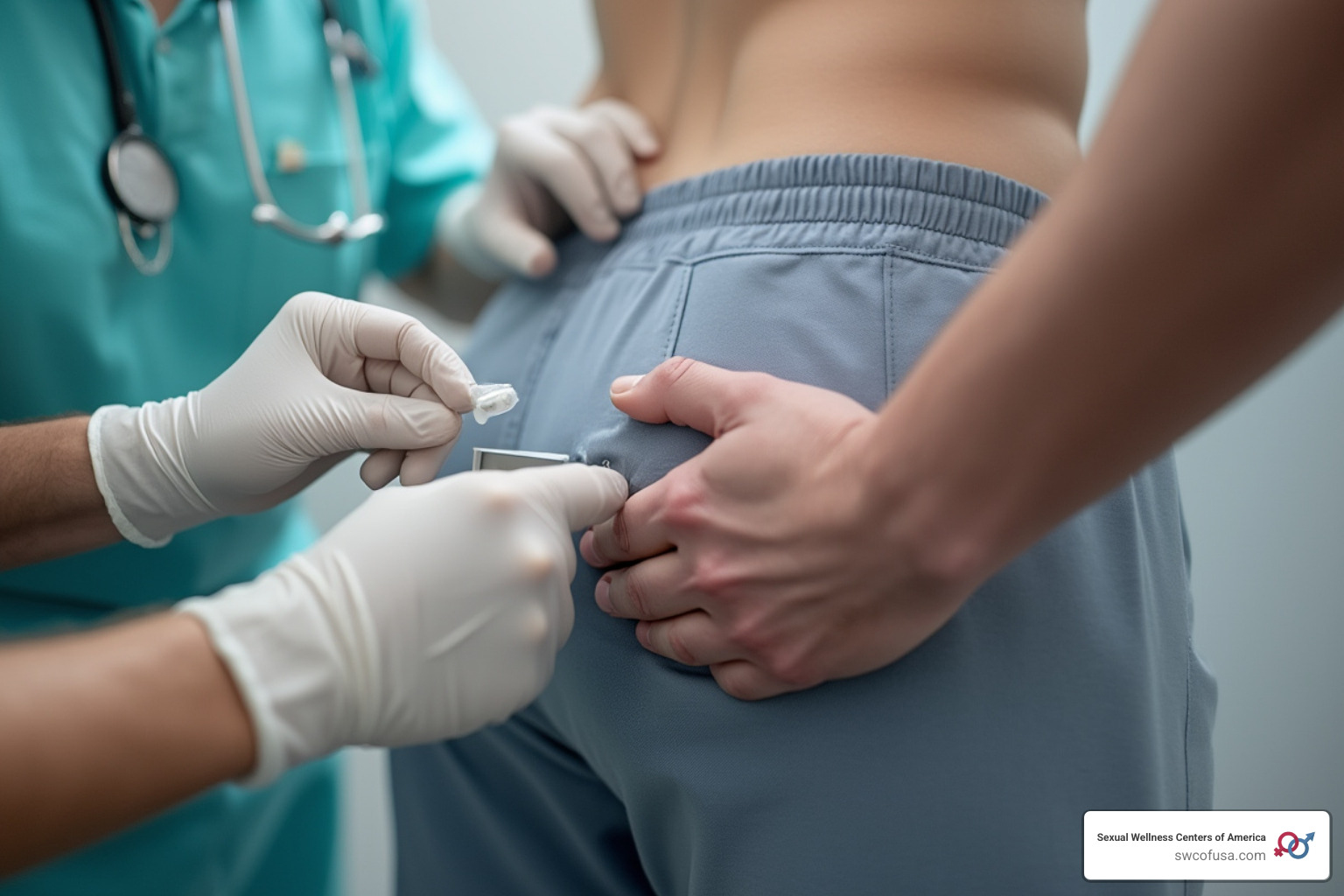
For those seeking maximum convenience, subcutaneous pellets are often ideal. These rice-sized implants are placed under the skin in a quick office procedure and steadily release testosterone for 3-6 months. As one patient shared: “I tried the gels but worried about transferring it to my wife. The pellet was a game-changer—I just get it placed every few months and forget about it.”
Newer options include nasal applications that avoid skin transfer concerns but require multiple daily doses, and oral medications that are less common in the U.S. but available in certain cases.
At Sexual Wellness Centers of America, we often recommend bioidentical hormone pellets for their convenience and stable delivery, but we tailor our recommendations to each individual’s needs and preferences.
Choosing the Right Hormone Therapy for ED Delivery
When helping you select the optimal delivery method for your hormone therapy for ED, we consider several important factors together.
Your daily routine matters—some men prefer the “set it and forget it” approach of pellets, while others don’t mind incorporating a quick gel application into their morning ritual. If you have sensitive skin, patches might cause irritation, making other options more suitable.
Cost considerations are important too. Insurance coverage varies widely by delivery method, and we’ll help steer these waters to find the most affordable option for your situation.
Some men strongly prefer the steady hormone levels that pellets or gels provide, rather than the peaks and valleys sometimes experienced with injections. And if you have a partner, the transfer risk of gels might make other methods more appealing.
Whatever method you choose, it’s important to have realistic expectations about timing. While some men notice improvements within just a few weeks, the full benefits typically develop over 3-6 months as your body adjusts to optimized hormone levels.
Our typical protocol includes initial hormone optimization, follow-up testing at 6-8 weeks to fine-tune your dosing, and then regular monitoring every 3-6 months to ensure everything stays on track. We make adjustments based on both your lab results and how you’re feeling—because numbers tell only part of the story.
Enhancing Outcomes with Lifestyle & Regen Treatments
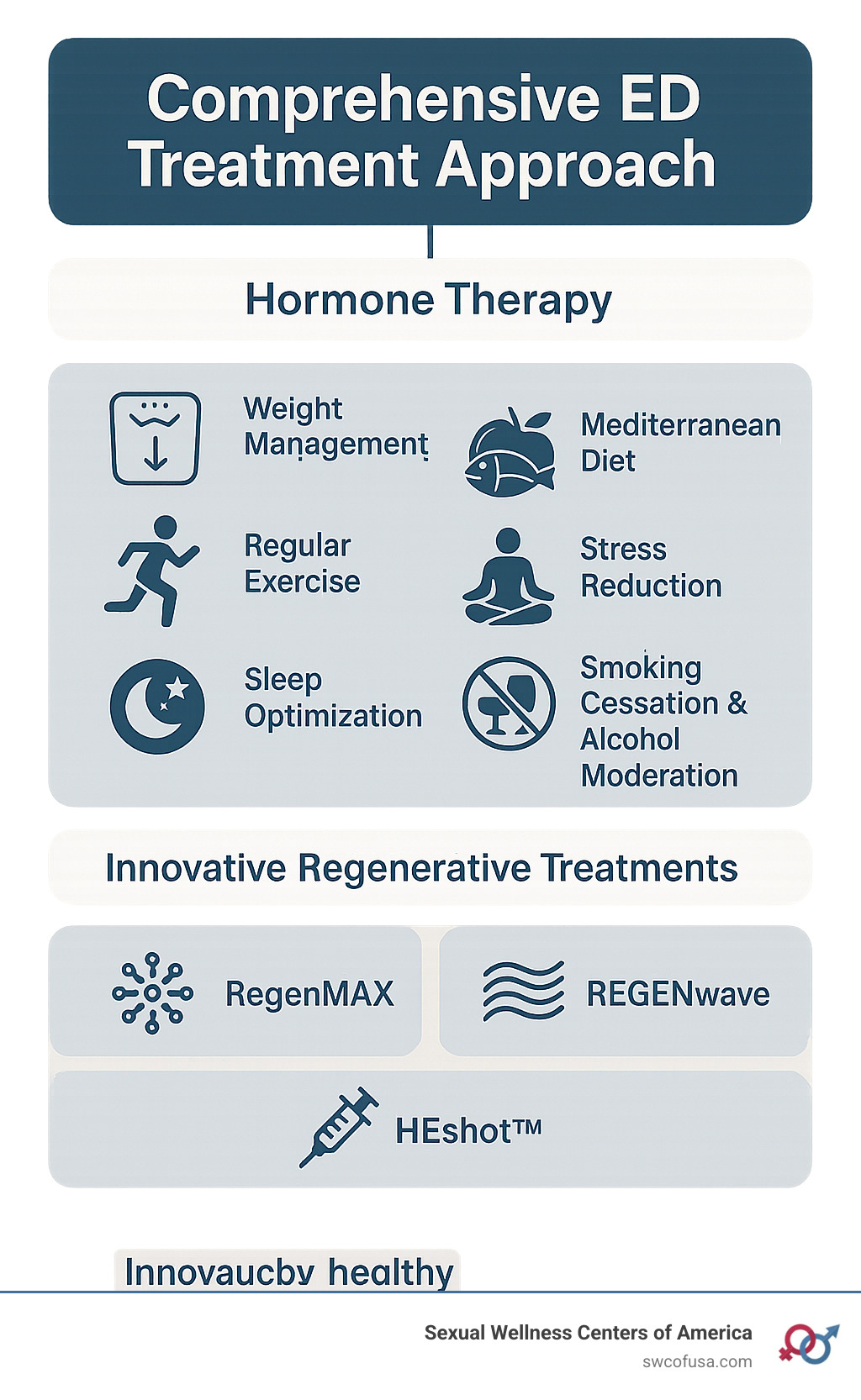
While hormone therapy for ED can be remarkably effective on its own, we achieve our 97.2% success rate by combining it with complementary approaches that address erectile function from multiple angles.
Lifestyle modifications significantly amplify the benefits of hormone therapy. Losing excess weight naturally improves hormone balance and vascular health—essential for strong erections. Following a Mediterranean diet rich in fruits, vegetables, olive oil, and lean proteins provides the nutrients your body needs for optimal sexual function.
Regular exercise—both cardio and strength training—improves blood flow and boosts natural testosterone production. Many men don’t realize that stress reduction techniques like meditation or deep breathing exercises can dramatically improve erectile function by lowering cortisol, which interferes with sexual performance.
Quality sleep is non-negotiable for healthy hormone production. As Mike, a 62-year-old patient, finded: “Once I started getting 7-8 hours of quality sleep, my morning erections came back for the first time in years.”
Quitting smoking and moderating alcohol intake removes two major obstacles to erectile health. Even cutting back can make a noticeable difference in your response to hormone therapy for ED.
Our innovative regenerative treatments take results to the next level. Our proprietary regenMAX technology stimulates tissue regeneration in the penis, while REGENwave uses low-intensity shockwave therapy to improve blood flow and stimulate new vessel growth. For many men, our specialized HEshot®™ treatment provides the final piece of the puzzle by improving tissue health and sensitivity.
One patient’s journey illustrates our comprehensive approach:
“At 58, I’d been struggling with ED for years. Pills helped sometimes, but not consistently. At Sexual Wellness Centers of America, they found my testosterone was 220 ng/dL—well below normal. They started me on pellet therapy, recommended specific supplements, helped me clean up my diet, and treated me with their regenMAX technology. Within two months, my testosterone was 820 ng/dL, and my erections were better than they’d been in a decade. Six months in, my wife says I’m like a new man—more confident, energetic, and definitely more amorous!”
This multi-faceted approach addresses erectile dysfunction from every angle. Hormonal optimization restores the foundation, lifestyle changes improve overall vascular health, and regenerative treatments improve tissue response. The psychological benefits create a positive feedback loop that further improves sexual confidence and performance.
Conclusion: Restoring Confidence and Connection
Hormone therapy for ED represents a fundamental shift in how we approach erectile dysfunction. Instead of just managing symptoms, we’re now addressing the root causes. By restoring optimal hormone balance, particularly testosterone levels, we can improve not just your erectile function but your overall vitality, energy, and well-being.
At Sexual Wellness Centers of America in Colleyville, TX, our comprehensive approach has achieved a remarkable 97.2% success rate in ED reversal. This success isn’t an accident—it comes from our personalized treatment protocols that combine several important elements.
First, we start with thorough diagnostic testing to understand exactly what’s happening in your body. Then we create customized hormone optimization plans custom specifically to your needs. We complement this with innovative regenerative technologies that help restore tissue health and function. Throughout your journey, we provide lifestyle modification support and ongoing monitoring to adjust your treatment as needed.
Erectile dysfunction isn’t just about sex—it’s about confidence, connection, and quality of life. I remember one patient who told me, “Getting my sexual function back wasn’t just about the physical act. It restored my confidence in every area of life and brought back an intimacy with my wife that I thought was gone forever.” His words capture what we see every day: treating ED transforms relationships and restores self-esteem.
If you’re struggling with ED, please know that you’re not alone. Millions of men face this challenge, and effective solutions exist. The first step is breaking the silence and having that conversation—no awkwardness, just straightforward medical care that addresses the real issues affecting your life and relationships.
To learn more about our personalized approach to erectile dysfunction, including hormone therapy for ED and our innovative treatments like HEshot®™ and regenMAX technology, contact Sexual Wellness Centers of America today. Our team is ready to help you restore not just sexual function, but the confidence and connection that make life fulfilling.
The journey to sexual wellness begins with understanding the underlying causes—and for many men, hormone optimization is the key that opens up renewed vitality and satisfaction. We’ve seen it transform countless lives, and we’re ready to help you write your success story too.