
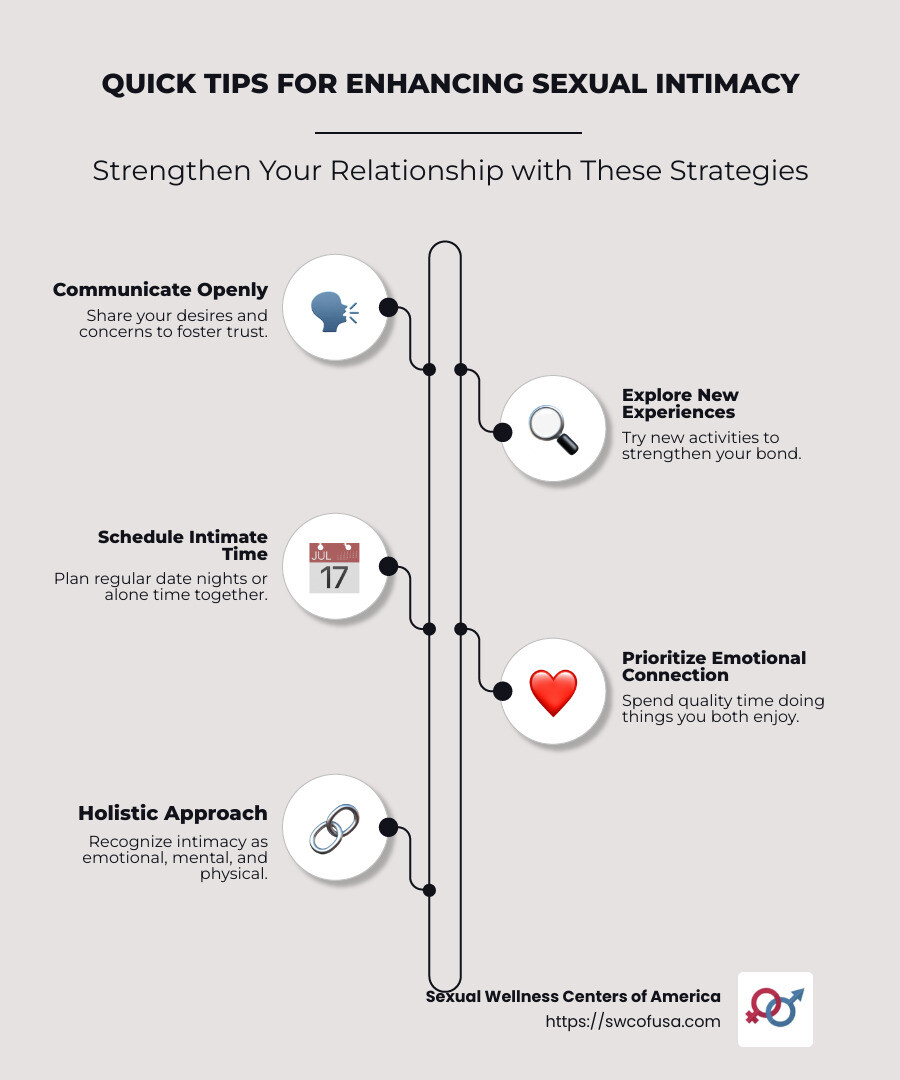
How to improve sexual intimacy is a question many couples ask at different stages of their relationship. Enhancing sexual intimacy isn’t solely about physical connection; it involves a deep bonding experience that nurtures emotional and mental well-being. Here are a few quick tips on how to improve sexual intimacy for those eager to ignite passion in their relationships:
- Communicate Openly: Share your desires and concerns with your partner to foster trust and understanding.
- Explore New Experiences: Try different activities, both in and out of the bedroom, to strengthen your bond.
- Schedule Intimate Time: Make time for each other by planning regular date nights or time alone.
- Prioritize Emotional Connection: Spend time together doing things you both enjoy; it builds a stronger emotional foundation.
Sexual intimacy is more than just a physical act; it’s a vital component that contributes significantly to the health and happiness of a relationship. Research indicates that couples who experience higher sexual satisfaction often enjoy better mental health and overall relationship satisfaction. Improved sexual intimacy can also lead to better sleep, reduced anxiety, and a stronger immune system.
I am Jeff Nuziard, CEO of Sexual Wellness Centers of America, where we are dedicated to helping individuals like Alex overcome intimate challenges. With my background in healthcare innovation, I’ve guided countless people on how to improve sexual intimacy through expert advice and personalized care. Let’s explore this important aspect of relationships.
Understanding Sexual Intimacy
Sexual intimacy is not just about the physical act of sex. It’s a complex blend of emotional, mental, spiritual, and physical connections that create a deep bond between partners. This multifaceted intimacy is what makes relationships more fulfilling and resilient.
Definitions and Dimensions of Intimacy
-
Emotional Intimacy: This involves sharing feelings, fears, and vulnerabilities with your partner. It’s about feeling understood and accepted without judgment.
-
Mental Intimacy: Sharing thoughts, dreams, and intellectual conversations helps build a strong mental connection. It fosters a sense of partnership and mutual respect.
-
Spiritual Intimacy: This involves sharing beliefs, values, and life goals. It’s about connecting on a deeper level and understanding each other’s purpose and vision in life.
-
Physical Intimacy: Beyond sexual activities, this includes any form of touch—holding hands, hugging, or cuddling. It’s about feeling safe and cherished in your partner’s presence.

The Role of Experiences and Expectations
Our past experiences and expectations play a significant role in shaping our sexuality. Personal history, cultural background, and previous relationships can influence how we view intimacy. For example, someone who grew up in an environment where open discussions about sex were taboo might find it challenging to express their needs.
Expectations, often shaped by media portrayals, can also impact intimacy. Movies and TV shows sometimes set unrealistic standards for what a “perfect” sexual relationship looks like. It’s crucial to remember that each relationship is unique, and what works for one couple might not work for another.
Common Challenges in Sexual Intimacy
Several factors can disrupt sexual intimacy, including:
-
Stress: Everyday stressors from work, family, or finances can dampen sexual desire. Stress affects mental health, which in turn affects intimacy.
-
Medical Conditions: Conditions like diabetes, heart disease, or hormonal imbalances can interfere with sexual function. Seeking medical advice is crucial for managing these issues.
-
Genetics and Hormones: Genetics can influence libido and sexual function. Hormonal changes, especially during menopause or andropause, can also impact sexual desire and performance.
-
Communication Barriers: Difficulty in expressing desires or concerns can lead to misunderstandings and dissatisfaction.
Overcoming Challenges
Addressing these challenges begins with open communication. Discussing concerns with your partner and seeking professional help when needed can make a significant difference. It’s not just about having sex; it’s about creating a fulfilling and supportive relationship that improves all aspects of intimacy.
By understanding the different dimensions of intimacy and recognizing the challenges, couples can take proactive steps to improve their connection. This holistic approach not only benefits the relationship but also contributes to individual well-being.
Jumping into the next section, we’ll explore how regular intimate connections can be nurtured through the 72-Hour Intimacy Rule, a practical approach to maintaining closeness and connection in your relationship.
The 72-Hour Intimacy Rule
The 72-Hour Intimacy Rule is a simple concept designed to help couples maintain a consistent and meaningful connection. This rule suggests that partners should aim to connect intimately—whether emotionally, mentally, spiritually, or physically—at least once every 72 hours. This regularity helps to keep the bond strong and the relationship thriving.
Why Regular Intimate Connection Matters
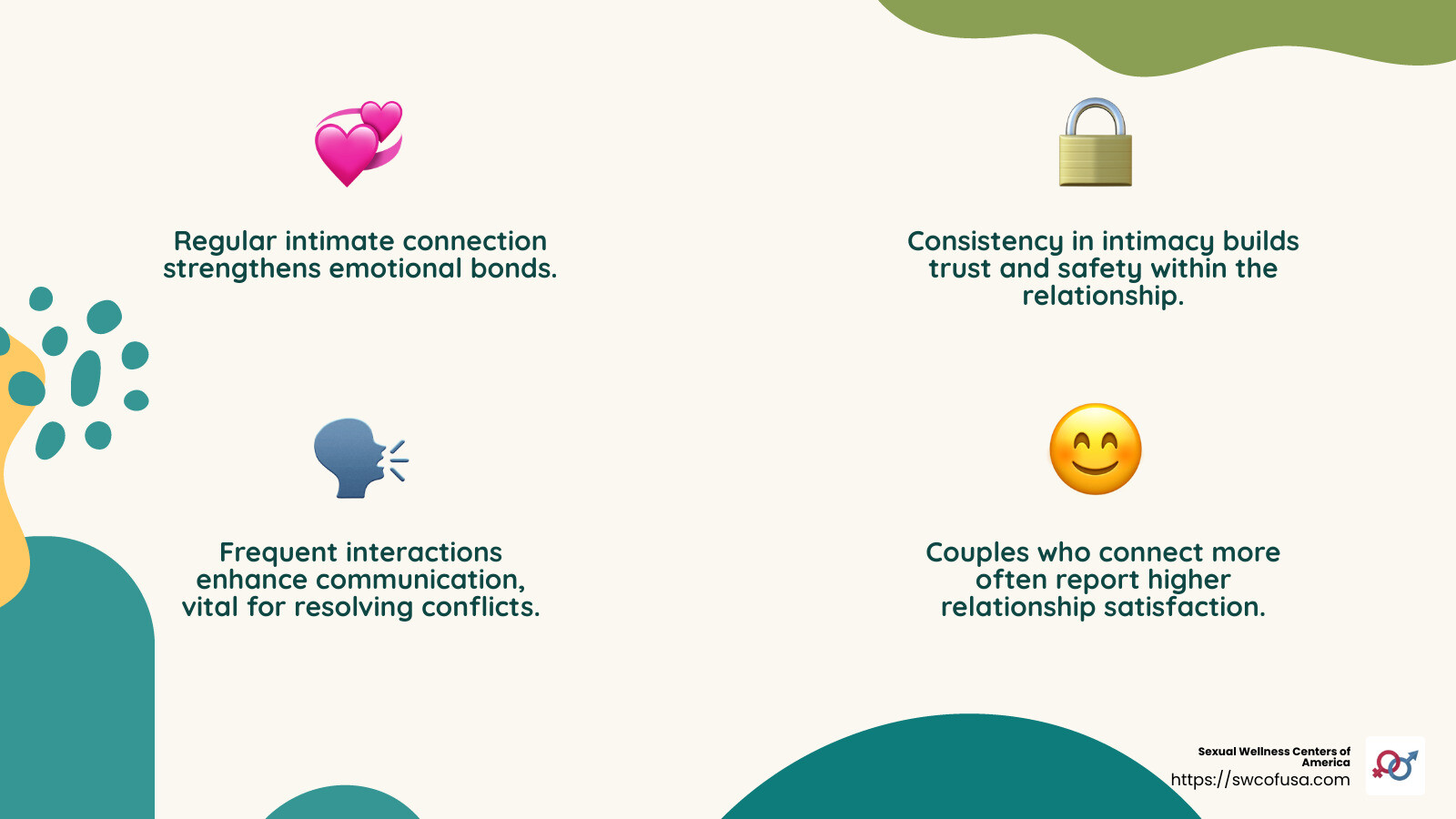
Regular intimate connection is crucial for several reasons:
-
Strengthens Emotional Bonds: By connecting frequently, partners can deepen their emotional ties. This constant engagement helps in understanding each other’s feelings and needs better.
-
Builds Trust and Safety: Consistent intimacy fosters a sense of security and trust. Knowing that your partner is there for you, regularly, can make you feel more secure in the relationship.
-
Improves Communication: Regular interactions encourage open dialogue. This communication is vital for resolving conflicts and expressing desires.
-
Improves Relationship Satisfaction: Studies have shown that couples who connect intimately more often report higher levels of relationship satisfaction. This satisfaction stems from feeling valued and loved.
Beyond Physical Interaction
While physical intimacy is a significant component, look beyond just the physical aspect. Building intimacy involves nurturing all dimensions:
-
Emotional Intimacy: Spend time sharing your thoughts and feelings. This could be as simple as discussing your day or sharing a personal story.
-
Mental Intimacy: Engage in activities that stimulate your minds. This could involve playing games, solving puzzles, or having deep conversations about shared interests.
-
Spiritual Intimacy: Share your beliefs and values. This might involve discussing life goals, attending a spiritual event together, or simply reflecting on your shared journey.
-
Physical Intimacy: Beyond sex, this includes holding hands, hugging, or simply sitting close to each other. It’s about being physically present and attentive.
Putting the Rule into Practice
Implementing the 72-Hour Intimacy Rule can be straightforward. Here are some practical tips:
-
Schedule It: Just like you would schedule a meeting or a workout, plan your intimate moments. This doesn’t mean it has to be rigid, but having a plan ensures it happens.
-
Be Present: When you connect, be fully present. Turn off distractions like phones or TV and focus on each other.
-
Mix It Up: Keep things exciting by varying how you connect. Try new activities, explore different topics, or find new ways to express affection.
-
Communicate Openly: Discuss how the rule is working for both of you. Adjust as necessary to ensure it meets both partners’ needs.
By incorporating the 72-Hour Intimacy Rule, couples can maintain a vibrant and fulfilling relationship. This regular connection not only strengthens the bond but also improves overall well-being.
Next, we’ll dig into the importance of communication as the foundation of intimacy, exploring how open dialogue can further enrich your relationship.
Communication: The Foundation of Intimacy
Effective communication is the bedrock of any intimate relationship. Without it, misunderstandings can arise, leading to frustration and disconnection. Let’s explore how to improve sexual intimacy through open and honest communication.
Importance of Open Communication with Your Partner
Talking openly with your partner about your needs, desires, and concerns is essential. It helps build trust and ensures that both of you feel heard and valued. More than 50% of adults engage in sexting, according to research, because it’s a fun and less intimidating way to express desires and initiate contact. This shows that many people find writing easier than speaking when it comes to sharing intimate thoughts.
Finding the Right Time and Setting for Discussions
Timing is everything. There are two types of sexual conversations: those that happen in the bedroom and those that don’t. It’s perfectly fine to share what feels good while you’re being intimate. However, for more significant discussions—like mismatched desires or emotional changes—choose a neutral setting outside the bedroom.
-
Find a Quiet Moment: Wait for a time when you both are relaxed and free from distractions. This could be during a walk or a quiet evening at home.
-
Set the Mood: Ensure the environment is calm and conducive to open dialogue. A comfortable setting makes it easier to talk about sensitive topics.
Avoiding Criticism and Using Positive Reinforcement
When discussing sensitive issues, it’s crucial to approach the conversation positively. Avoid criticism and instead focus on what you love about your partner. For example, instead of saying, “You never do this,” try, “I love it when you do that.” This approach encourages your partner and makes them more receptive.
- Admiration Journal: As suggested by experts, keeping an admiration journal can help. Write down small things you appreciate about your partner. This practice can thaw emotional coldness and strengthen your bond.
Discussing Physical and Emotional Changes
Our bodies and emotions change over time, affecting sexual intimacy. Being open about these changes is vital. For instance, if menopause leads to vaginal dryness or if stress affects arousal, talk to your partner about it. Let them know what’s going on rather than leaving them to guess.
-
Be Honest: Faking an orgasm or pretending everything is fine can lead to bigger issues down the road. It’s better to be truthful and address any problems together.
-
Confide in Each Other: Share how you’re feeling, both physically and emotionally. This openness can prevent misunderstandings and foster a deeper connection.
By incorporating these communication strategies, you can improve sexual intimacy in your relationship. Open dialogue not only strengthens your bond but also ensures that both partners feel understood and valued.
Next, we’ll explore ways to improve physical intimacy, focusing on practical techniques and solutions for common challenges.
Enhancing Physical Intimacy
Physical intimacy is a vital part of a healthy relationship. It goes beyond just the act of sex, encompassing the ways partners connect physically. Let’s explore some practical ways to improve sexual intimacy by focusing on exercise, relaxation, and other techniques.
Exercise: Boosting Blood Flow and Stamina
Regular exercise is crucial for maintaining sexual health. It improves blood flow, which is essential for arousal and stamina. Engaging in aerobic exercises like walking, running, or cycling strengthens the heart and blood vessels. This helps ensure adequate blood flow to vital areas during intimacy.
-
Strength Training: Lifting weights or doing bodyweight exercises can boost testosterone levels and improve muscle tone, enhancing physical appearance and confidence.
-
Consistency is Key: Aim for at least 30 minutes of moderate exercise most days of the week. This routine can improve overall health, increase energy levels, and improve sexual performance.
Importance of Relaxation: Techniques for a Calm Mind
Stress can be a significant barrier to sexual intimacy. Finding ways to relax can help you and your partner be more present and connected.
-
Deep Breathing: Simple deep breathing exercises can reduce stress and promote relaxation. Try inhaling slowly through your nose, holding for a few seconds, and exhaling through your mouth.
-
Yoga: Practicing yoga can improve flexibility and reduce anxiety. It’s a great way to prepare your body and mind for intimacy.
-
Mindfulness and Meditation: These practices can help you stay in the moment and enjoy the experience, rather than worrying about daily stressors.
Practice Touching: Sensate Focus Techniques
Touch is a powerful tool for building intimacy. Sensate focus techniques involve partners taking turns to give and receive touch without the pressure of intercourse. This practice helps build trust and awareness of each other’s bodies.
-
Start Small: Begin with gentle caresses or massages, focusing on non-genital areas. This can help reduce performance anxiety.
-
Communicate: Talk about what feels good and what doesn’t. This open communication can improve pleasure and connection.
Use of Lubrication: Comfort and Solutions for Vaginal Dryness
Vaginal dryness is a common issue that can make intimacy uncomfortable. Using lubrication can improve comfort and pleasure.
-
Choose the Right Product: There are many types of lubricants available, including water-based, silicone-based, and oil-based. Choose one that suits your needs and preferences.
-
Consider Medical Solutions: If dryness persists, consider consulting a healthcare provider. Treatments like hormone therapy or products like REGENmax, available at Sexual Wellness Centers of America, can help.
Enhancing physical intimacy requires attention to both the body and mind. By incorporating exercise, relaxation, and touch, you can create a more satisfying and connected intimate experience. Next, we’ll explore different forms of intimacy to further enrich your relationship.
Exploring Different Forms of Intimacy
When we think of intimacy, we often focus solely on the physical aspect. But intimacy is multifaceted, with emotional, mental, spiritual, and physical dimensions. Understanding and nurturing these various forms can improve sexual intimacy and strengthen your relationship.
Emotional Intimacy: The Core Connection
Emotional intimacy is about feeling safe and understood by your partner. It’s the trust and openness that allow you to share your innermost thoughts and feelings.
-
Share Your Day: Start by talking about your day, your worries, and your joys. This simple act can build a deeper connection.
-
Express Gratitude: Regularly express appreciation for your partner. A heartfelt “thank you” can go a long way in fostering closeness.
-
Be Vulnerable: Open up about your fears and dreams. Vulnerability can deepen your bond and create a strong foundation for other forms of intimacy.
Mental Intimacy: Connecting Minds
Mental intimacy involves sharing ideas, thoughts, and intellectual interests. It’s about stimulating each other’s minds and being on the same wavelength.
-
Engage in Discussions: Discuss books, movies, or current events. These conversations can reveal new facets of your partner and keep your connection fresh.
-
Learn Together: Take a class or start a new hobby together. Shared learning experiences can improve your mental connection.
-
Challenge Each Other: Play games or puzzles that stimulate your minds. Friendly competition can be fun and intellectually engaging.
Spiritual Intimacy: A Deeper Bond
Spiritual intimacy is about sharing beliefs and values. It can involve religion, but it also includes shared life philosophies and goals.
-
Explore Beliefs: Talk about your beliefs and listen to your partner’s. Understanding each other’s spiritual views can create a profound connection.
-
Set Goals Together: Discuss your future and set common goals. Working towards a shared vision can unite you on a spiritual level.
-
Practice Mindfulness: Engage in activities like meditation or nature walks. These can help you connect with each other and the world around you.
Physical Intimacy: Beyond the Bedroom
Physical intimacy is not just about sex. It’s about touch, closeness, and physical affection.
-
Hold Hands: Simple gestures like holding hands or hugging can convey love and affection.
-
Be Present: Focus on being physically present with your partner. Put away distractions and engage fully in the moment.
-
Explore Touch: Use touch to communicate care and affection. Whether it’s a gentle caress or a comforting accept, touch can speak volumes.
Building a Holistic Intimate Relationship
To build a holistic intimate relationship, it’s crucial to nurture all these forms of intimacy. Each one improves the others, creating a rich and fulfilling connection.
-
Balance is Key: Ensure that you’re giving attention to all forms of intimacy. A balanced approach can lead to a more satisfying relationship.
-
Check-In Regularly: Have regular check-ins with your partner to ensure that both of your needs are being met. This can prevent misunderstandings and keep your relationship strong.
-
Adapt and Grow: As you and your partner grow, so will your relationship. Be open to change and willing to adapt to new dynamics.
Fostering Closeness in Romantic and Non-Romantic Relationships
Intimacy isn’t just for romantic partners. It can be nurtured in friendships and family relationships too.
-
Be Genuine: Show genuine interest and care in all your relationships. This authenticity can deepen your connections.
-
Communicate Openly: Just like with romantic partners, open communication is key in non-romantic relationships. Share your thoughts and listen actively.
-
Celebrate Together: Celebrate each other’s successes and support each other through challenges. Shared experiences can strengthen your bonds.
By exploring and nurturing these different forms of intimacy, you can create a holistic and fulfilling relationship. Next, we’ll address common challenges in sexual intimacy and explore ways to overcome them.
Overcoming Challenges in Sexual Intimacy
Sexual intimacy can be a beautiful part of a relationship, but it’s not without its challenges. Many factors—like stress, medical conditions, genetics, and hormones—can affect your intimate life.
Common Challenges
Stress is a major player in disrupting sexual intimacy. It can stem from work, family issues, or financial concerns. Stress releases hormones like cortisol, which can lower libido and make it hard to focus on intimacy.
Medical conditions such as diabetes, heart disease, or depression can also impact your sexual health. These conditions can affect blood flow, energy levels, and mood, all of which are crucial for a healthy sex life.
Genetics can influence sexual desire and performance. Some people naturally have higher or lower libidos due to their genetic makeup.
Hormones play a significant role too. Changes in hormone levels, such as during menopause or due to thyroid issues, can lead to vaginal dryness, reduced libido, and other challenges.
Strategies for Addressing Arousal and Orgasm Struggles
If you’re facing difficulties with arousal or achieving orgasm, you’re not alone. Here are some strategies that might help:
-
Communication: Talk openly with your partner about what feels good and what doesn’t. This can help both of you understand each other’s needs better.
-
Experimentation: Try new things in the bedroom. Different positions or settings can bring excitement and help find what works best for you.
-
Use of Lubricants: For those experiencing vaginal dryness, lubricants can make a big difference. They can improve comfort and pleasure.
-
Relaxation Techniques: Stress management is key. Practices like deep breathing, yoga, or meditation can help you relax and be more present during intimate moments.
Importance of Professional Help
Sometimes, overcoming these challenges requires professional help. Seeking guidance from a sex therapist or counselor can be incredibly beneficial.
-
Sex Therapy: A sex therapist can help you explore issues affecting your sexual intimacy. They provide a safe space to discuss concerns and work on solutions.
-
Counseling: Couples counseling can improve communication and help you and your partner reconnect emotionally and physically.
-
Medical Consultation: If medical conditions are affecting your sex life, consulting a healthcare professional is crucial. They can offer treatments like hormone therapy or medications to help.
Seeking help is a positive step towards improving your relationship. It’s about building a healthier, more satisfying intimate life together.
In the next section, we’ll explore ways to improve sexual satisfaction and bring more joy to your intimate moments.
Enhancing Sexual Satisfaction
Enhancing sexual satisfaction in a relationship can be both exciting and rewarding. Here are some practical ways to ignite passion and deepen your connection with your partner.
Trying New Things in the Bedroom
One way to improve sexual intimacy is by trying new things in the bedroom. This could mean experimenting with different positions or exploring erotic immersion. Such changes can break the monotony and add a spark to your intimate life.
-
Different Positions: Trying new positions can be fun and help find what feels best for both partners. It encourages communication and exploration, which are key to a satisfying sexual experience.
-
Erotic Immersion: This involves fully engaging in the sexual experience, using all your senses. Think about the feel of your partner’s skin, the sound of their breath, and the scent of their body. This type of immersion can heighten pleasure and intimacy.
Planning for Pleasure
Planning for pleasure might sound unromantic, but it can significantly improve sexual satisfaction. Scheduling intimate time ensures that both partners prioritize their connection.
- Scheduling Intimacy: Set aside specific times for intimacy. This creates anticipation and allows both partners to mentally and physically prepare, leading to more fulfilling experiences. As noted in the research, scheduling can help couples maintain regular intimacy, reducing stress and increasing satisfaction.
Using Tools Like Vibrators and Arousal Gels
Incorporating tools like vibrators and arousal gels can add novelty and excitement to your intimate life. These tools can improve pleasure and help partners explore different sensations.
-
Vibrators: These can be used alone or with a partner to explore new forms of pleasure. Vibrators can be particularly helpful for individuals struggling with arousal or achieving orgasm.
-
Arousal Gels: These gels can heighten sensitivity and increase pleasure. They can be applied during foreplay to improve the experience for both partners.
Practicing Touching and Sensate Focus Techniques
Touch is a powerful tool for building intimacy and enhancing sexual satisfaction. Practicing touching and sensate focus techniques can help partners connect on a deeper level.
-
Touching: Spend time exploring each other’s bodies without the pressure of moving to intercourse. This can build anticipation and deepen the emotional connection.
-
Sensate Focus Techniques: These techniques involve focusing on the sensations of touch without the goal of orgasm. It encourages partners to be present and enjoy the moment, which can lead to more fulfilling sexual experiences.
By incorporating these strategies, couples can improve sexual satisfaction and strengthen their bond. The next section will explore the role of physical health in maintaining a vibrant and satisfying intimate life.
The Role of Physical Health in Sexual Intimacy
Physical health plays a crucial role in enhancing sexual intimacy. Let’s explore how exercise, lifestyle choices, and diet can make a significant difference.
Exercise: Boosting Blood Flow and Stamina
Regular exercise is key to a healthy sex life. Aerobic exercises, like running or swimming, improve heart health and boost blood flow, which is essential for arousal and performance. A study from the Journal of Sexual Medicine highlights that men who exercise regularly report better erectile function.
- Strength Training: Don’t skip the weights! Strength training helps build stamina and confidence. It can also increase testosterone levels, which boosts libido in both men and women.
Impact of Smoking, Alcohol, and Drugs
Lifestyle choices like smoking and excessive drinking can negatively impact sexual health.
-
Smoking: Smoking harms blood vessels and restricts blood flow, which can lead to erectile dysfunction in men and reduced arousal in women. Quitting smoking can improve these issues, as noted by research on peripheral vascular disease.
-
Alcohol: While a little alcohol might help relax, too much can dull the central nervous system and reduce sexual reflexes. Over time, heavy drinking can lead to liver damage and hormonal imbalances, further affecting sexual health.
-
Drugs: Recreational drug use can also interfere with sexual function and decrease libido. It’s important to be aware of these effects and consider healthier alternatives.
Importance of a Healthy Diet and Weight Management
A balanced diet contributes to overall well-being, including sexual health.
-
Healthy Diet: Eating a diet rich in fruits, vegetables, whole grains, and lean proteins supports cardiovascular health and energy levels. Foods high in antioxidants, like berries and nuts, can improve circulation and improve sexual function.
-
Weight Management: Maintaining a healthy weight reduces the risk of chronic diseases that can affect sexual health, like diabetes and heart disease. Weight loss can also boost self-esteem and body image, which are important for a satisfying intimate life.
By focusing on physical health, you can improve sexual intimacy and enjoy a more fulfilling relationship. Up next, we’ll explore how relaxation and stress management can further improve your intimate connections.
Relaxation and Stress Management
Relaxation is a key component in enhancing sexual intimacy. When our minds and bodies are relaxed, we are more open to connecting with our partners on a deeper level. Let’s explore some effective techniques for relaxation and why they matter.
Techniques for Relaxation: Deep Breathing, Yoga, and Games
-
Deep Breathing: This is one of the simplest yet most effective ways to calm the mind and body. Taking slow, deep breaths can reduce stress and anxiety, creating a sense of peace. Try inhaling deeply through your nose, holding for a moment, and then exhaling slowly through your mouth. Repeat this several times to feel more centered and relaxed.
-
Yoga: Practicing yoga combines physical poses, breathing exercises, and meditation to promote relaxation. According to research, yoga can help reduce stress and improve mental well-being, both of which are crucial for a fulfilling sex life. Certain poses, like the child’s pose or savasana, are particularly calming and can be done with your partner for added intimacy.
-
Games: Engaging in fun activities or games with your partner can lighten the mood and reduce stress. Whether it’s a board game, a card game, or a playful activity like charades, laughter and enjoyment can strengthen your bond and pave the way for more intimate moments.
Importance of Relaxation for Sexual Intimacy
Relaxation is not just about feeling good in the moment; it plays a vital role in sexual intimacy. Stress is a well-known brake on sexual desire and performance. When we’re stressed, our bodies release cortisol, a hormone that can decrease libido and make it difficult to enjoy intimate moments.
-
Reducing Stress: By incorporating relaxation techniques into your daily routine, you can lower stress levels and improve your overall mood. This reduction in stress allows for better communication and connection with your partner, leading to a more satisfying intimate life.
-
Enhancing Arousal: When you are relaxed, your body is more responsive to touch and other forms of affection. This heightened sensitivity can lead to more pleasurable experiences and improve your overall sexual satisfaction.
Creating a Comfortable and Distraction-Free Environment
A comfortable environment is essential for fostering intimacy. Here are some tips to create a space that invites relaxation and connection:
-
Lighting: Use soft lighting, like candles or dim lamps, to create a warm and inviting atmosphere. This can help set the mood and make you feel more at ease.
-
Sound: Consider playing soft music or nature sounds to drown out distractions and create a serene ambiance. Music can also improve emotional connection and set the tone for intimacy.
-
Declutter: A tidy space can help clear your mind. Take a few minutes to organize your surroundings and remove any potential stressors or distractions.
-
Scents: Aromatherapy can be a powerful tool for relaxation. Use essential oils like lavender or chamomile to create a calming scent in the room.
By focusing on relaxation and stress management, you can significantly improve sexual intimacy with your partner. These practices not only improve your mental and physical well-being but also strengthen your emotional connection, paving the way for a more fulfilling and satisfying intimate life. Next, we’ll dive into how exploring different forms of intimacy can further enrich your relationship.
The 72-Hour Intimacy Rule
The 72-hour intimacy rule is a simple yet effective guideline to help couples maintain a strong connection. It suggests that couples should engage in some form of intimate connection at least once every 72 hours. This doesn’t always mean having sex; it can be any activity that fosters closeness, like sharing a deep conversation, enjoying a romantic dinner, or cuddling on the couch.
Building Intimacy in All Its Forms
Intimacy is not just about physical connection. It’s a blend of emotional, mental, spiritual, and physical closeness. Let’s break down these forms:
-
Emotional Intimacy: This involves sharing your feelings and being open with your partner. It’s about feeling safe to express your thoughts without fear of judgment.
-
Mental Intimacy: Engaging in stimulating conversations or sharing interests can build mental intimacy. It’s about connecting through shared ideas and understanding each other on a deeper level.
-
Spiritual Intimacy: This doesn’t necessarily involve religion. It can mean sharing values, beliefs, or life goals. It’s about feeling aligned in your life’s journey.
-
Physical Intimacy: More than just sex, this includes holding hands, hugging, or simply being physically close to your partner.
By nurturing all these forms of intimacy, couples can create a well-rounded and fulfilling relationship.
Scheduling Regular Intimate Time with Your Partner
In our busy lives, it’s easy to let intimacy take a backseat. That’s why scheduling regular intimate time is crucial. It might sound unromantic, but setting aside dedicated time for each other can help ensure that intimacy remains a priority.
-
Plan a Date Night: Set a regular day each week or month for a date night. Whether it’s a night out or a cozy evening at home, the key is to focus on each other.
-
Morning or Evening Rituals: Start or end your day with a simple ritual together. It could be enjoying a cup of coffee together in the morning or sharing a few moments before bed.
-
Weekend Getaways: If possible, plan occasional weekend trips. A change of scenery can reignite passion and provide an opportunity to connect without distractions.
The goal is not to put pressure on yourselves but to create opportunities for connection. By following the 72-hour intimacy rule and being intentional about building intimacy in all its forms, you can strengthen your bond and improve your relationship.
Next, we’ll explore how communication serves as the foundation of intimacy, paving the way for deeper connections with your partner.
Professional Help and Resources
Navigating the complexities of sexual intimacy can sometimes require professional assistance. Knowing when to seek help and understanding the resources available can make a significant difference in enhancing intimacy.
When to Seek Help for Sexual Intimacy Issues
If you find that intimacy issues persist despite your efforts, it might be time to seek professional help. Persistent problems such as lack of desire, difficulty with arousal, or pain during sex are signs that a deeper issue may be at play. Seeking help early can prevent these challenges from affecting your overall relationship.
Role of Sex Therapists and Counselors
Sex therapists and counselors specialize in helping individuals and couples overcome intimacy challenges. They provide a safe space to discuss sensitive issues and can offer strategies custom to your specific needs. With their guidance, you can explore the root causes of intimacy issues and work towards resolution.
Personalized Plans and Treatments: HEshot®, SHEshot®, and regenMAX Technology
At Sexual Wellness Centers of America, we offer personalized treatments designed to address specific sexual health concerns. The HEshot® and SHEshot® use tissue regenerative fluid to improve sexual performance in men and women. These treatments aim to increase sensitivity and improve overall sexual functioning.
RegenMAX technology is another innovative option. It focuses on rejuvenating and enhancing sexual health through advanced medical techniques. These personalized plans are developed by our experienced professionals to suit your unique needs and goals.
Importance of Medical and Sexual History in Diagnosis
A thorough understanding of your medical and sexual history is crucial in diagnosing and treating intimacy issues. Your healthcare provider will consider factors such as past medical conditions, surgeries, and current medications. This comprehensive approach ensures that any treatment plan is safe and effective for you.
Available Treatments: Sex Education, Counseling, Medication, and Hormone Therapy
Several treatment options are available to address sexual intimacy issues:
-
Sex Education: Understanding your body and how it functions can empower you to address intimacy challenges. Educational resources can provide valuable insights into sexual health and relationships.
-
Counseling: Individual or couples counseling can help you steer emotional and relationship problems that impact intimacy. A counselor can guide you in improving communication and building a stronger connection with your partner.
-
Medication: For some, medication can play a role in enhancing sexual health. Discussing this option with a healthcare professional can help determine if it’s appropriate for your situation.
-
Hormone Therapy: Hormonal imbalances can significantly affect sexual desire and performance. Hormone replacement therapy may be recommended to restore balance and improve sexual health.
By exploring these resources and treatments, you can take proactive steps towards improving sexual intimacy in your relationship. Seeking help is a sign of strength and commitment to your well-being and that of your partner.
Next, we will dig into the role of exercise and physical health in enhancing sexual intimacy.
Conclusion
Enhancing sexual intimacy is a journey that involves understanding, communication, and a willingness to explore new avenues with your partner. Here’s a quick recap of the tips we’ve covered to help you improve sexual intimacy in your relationship:
-
Communicate Openly: Find the right time and setting to discuss intimacy issues with your partner. Avoid criticism and focus on positive reinforcement to foster a supportive environment.
-
Explore Different Forms of Intimacy: Beyond physical connection, build emotional, mental, and spiritual intimacy to foster a holistic relationship.
-
Try New Things: Experiment with new positions, tools, and techniques like sensate focus to keep things exciting and fulfilling.
-
Schedule Intimate Time: As unromantic as it may sound, scheduling time for intimacy ensures that you prioritize your connection amidst busy schedules.
-
Focus on Physical Health: Regular exercise, a balanced diet, and stress management can significantly impact your sexual health and satisfaction.
-
Seek Professional Help: If challenges persist, don’t hesitate to consult with sex therapists or counselors who can provide custom strategies and treatments.
A healthy sex life is an integral part of your overall well-being. It strengthens emotional bonds and contributes to a happier, more satisfying relationship. If you’re facing obstacles, seeking help is a proactive step towards nurturing your connection and ensuring both you and your partner enjoy a fulfilling intimate life.
Next, we will dig into the role of exercise and physical health in enhancing sexual intimacy.
FAQs
How to improve sexual intimacy?
Improving sexual intimacy involves more than just physical connection. It requires building intimacy in all its forms: emotional, mental, spiritual, and physical. Start by fostering open communication with your partner. Discuss your needs and desires honestly and without criticism. This will create a supportive environment where both partners feel valued and understood.
Regular intimate connection is crucial. This doesn’t mean just having sex; it involves spending quality time together, sharing experiences, and supporting each other emotionally. Exercise, relaxation, and communication play vital roles. Regular aerobic exercise and strength training can improve blood flow and stamina, enhancing sexual performance. Relaxation techniques like deep breathing and yoga can reduce stress, making it easier to connect intimately.
What is the 72-hour intimacy rule?
The 72-hour intimacy rule suggests that couples should connect intimately at least every 72 hours. This doesn’t always mean having sex; it can be any form of intimate connection, like cuddling, talking, or sharing a meaningful experience. Regular intimacy helps maintain emotional and physical closeness, preventing feelings of neglect or distance.
Maintaining regular intimacy strengthens the bond between partners and keeps the relationship vibrant. It’s a reminder that intimacy is a priority, even amidst busy schedules.
What are the 4 stages of sexual intimacy?
Understanding the four stages of sexual intimacy can help partners connect more deeply:
-
Excitement: This is the initial physiological response where arousal begins. It involves increased heart rate, blood flow, and heightened senses.
-
Plateau: In this stage, arousal and pleasure reach a heightened level. The body prepares for orgasm, and tension builds.
-
Orgasm: This is the peak of sexual pleasure. It involves intense pleasure and release of built-up tension.
-
Resolution: After orgasm, the body returns to its baseline state. This stage involves relaxation and a sense of well-being.
Recognizing these stages can help partners better understand and respond to each other’s needs during intimate moments.
Why do I struggle with sexual intimacy?
Struggling with sexual intimacy is common and can be influenced by various factors. Stress, medical conditions, genetics, and hormones can all play a role. Emotional, mental, spiritual, and physical intimacy are interconnected. If one area is lacking, it can affect overall intimacy.
Addressing these factors is essential. Consider seeking help from a professional if you’re facing challenges. They can offer guidance and strategies custom to your situation. Improving sexual intimacy is a journey that involves understanding and patience.
Conclusion
We’ve explored various ways to improve sexual intimacy in your relationship. From understanding the importance of open communication and emotional connection to trying new things in the bedroom, each step plays a vital role in revitalizing your intimate life.
Key Points Recap:
-
Communication is Crucial: Open and honest dialogue about desires, needs, and changes in your body can strengthen your bond and improve your sex life.
-
Physical and Emotional Intimacy: Both are equally important. Focus on building a connection that goes beyond the physical, fostering emotional, mental, and spiritual closeness.
-
Explore and Experiment: Don’t shy away from trying new things, whether it’s a new position, scheduling intimate time, or introducing tools like vibrators and arousal gels.
-
Health and Relaxation: Maintain a healthy lifestyle through exercise and relaxation techniques like yoga. These can improve stamina, reduce stress, and improve overall well-being.
Seeking Professional Help:
If you’re struggling with sexual intimacy, know that seeking professional help is a positive step forward. Whether it’s sex therapy, counseling, or personalized treatments like HEshot®™ and SHEshot®™ offered by Sexual Wellness Centers of America, professional guidance can provide custom strategies to improve your intimate life.
For more information on how we can assist with your sexual health needs, visit our Sexual Health Services.
A healthy sex life is an essential part of overall well-being. If you need assistance, don’t hesitate to reach out to professionals who can help guide you on this journey. Whether it’s through therapy or medical treatments, support is available to help reignite passion in your relationship.