
Understanding Your Options for Peyronie’s Disease Treatment
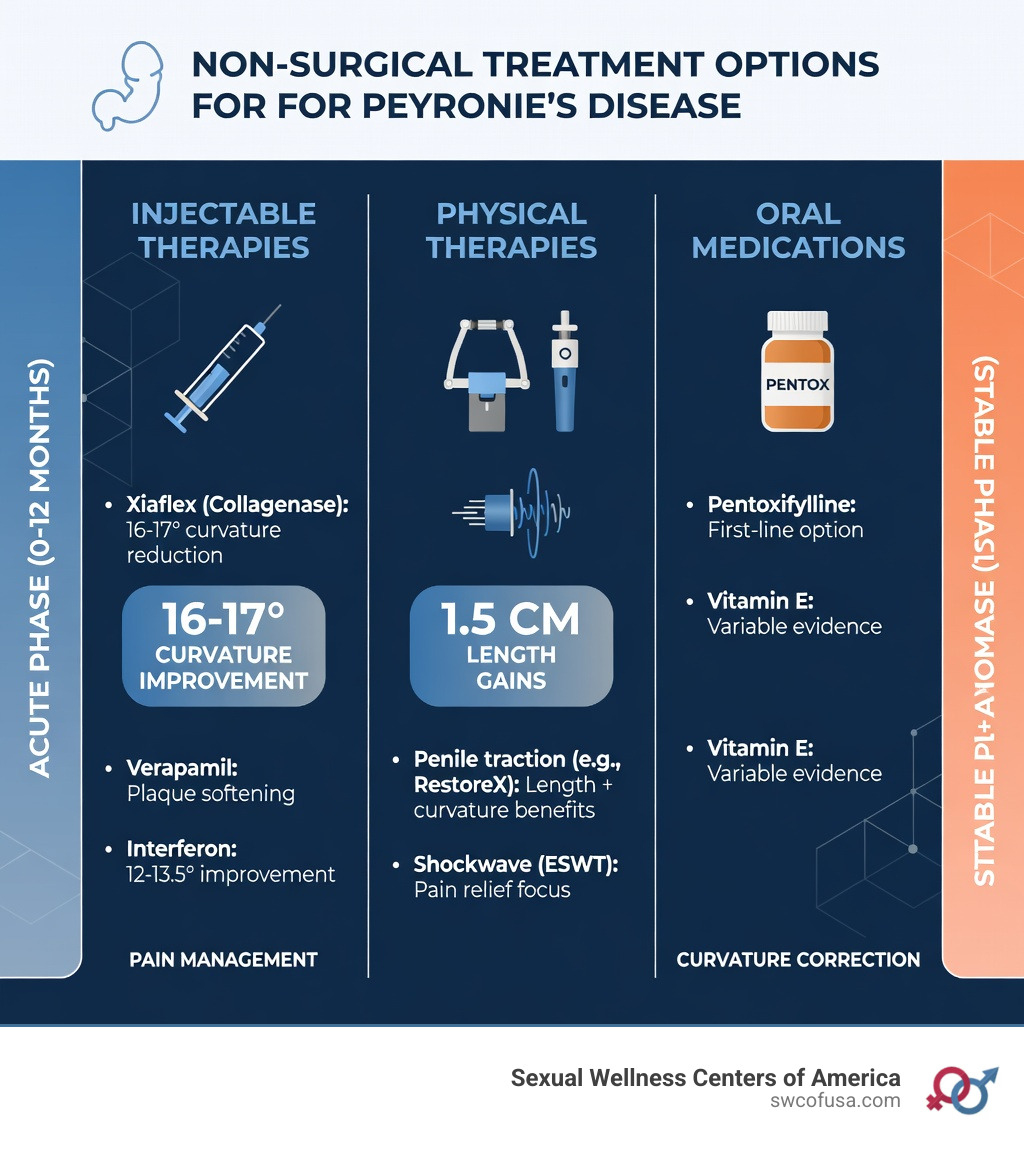
Non surgical treatment for peyronie’s disease includes several proven options that can help reduce curvature, minimize pain, and improve sexual function without the risks of surgery. Here are the main approaches available:
Injectable Therapies:
- Xiaflex (Collagenase Clostridium Histolyticum) – FDA-approved, reduces curvature by 16-17 degrees
- Verapamil – Calcium channel blocker injected into plaques
- Interferon alpha-2b – Reduces curvature by 12-13.5 degrees
Physical Therapies:
- Penile traction devices (RestoreX) – Increases length by 1.5 cm and reduces curvature
- Shockwave therapy (ESWT) – Primarily for pain relief
- Vacuum erection devices – May help with tissue remodeling
Oral Medications:
- Pentoxifylline – Often prescribed first
- Vitamin E and other supplements – Limited evidence but commonly used
Peyronie’s disease can be embarrassing and make you feel like it’s controlling your life. The condition affects about 4 in 100 men between ages 40 and 70, though the actual number may be higher since many men don’t seek treatment.
Peyronie’s disease develops when fibrous scar tissue forms inside the penis, creating plaques that cause curvature, pain during erections, and sometimes loss of length. The curvature can range from mild to severe—with angles of 60-90 degrees making intercourse nearly impossible.
The good news? You have options beyond surgery. Research shows that non-surgical treatments can significantly improve symptoms, especially when started early. The key is understanding which approach fits your specific situation—whether you’re in the acute phase with active pain and inflammation, or the stable phase where the curvature has stopped progressing.
I’m Jeff Nuziard, CEO of Sexual Wellness Centers of America, and I’ve dedicated my career to helping men overcome sexual health challenges including non surgical treatment for peyronie’s disease through evidence-based, personalized care. Over the years, I’ve seen how the right combination of treatments can restore confidence and intimacy without requiring surgery.
Simple non surgical treatment for peyronie’s disease word guide:
- Does insurance cover treatment for Peyronie’s disease
- Is Peyronie’s disease treatment covered by Medicare
- Over the counter treatment for Peyronie’s disease
Understanding Peyronie’s Disease: Causes and Symptoms
Peyronie’s disease (PD) is more than just a “bend” in the penis. It is a connective tissue disorder that involves the development of a fibrous plaque—essentially a localized area of scar tissue—within the tunica albuginea. This is the tough sheath of tissue that surrounds the erectile chambers.
What Causes the Plaque?
While the exact cause isn’t always clear, the leading theory involves microvascular trauma. This usually happens during vigorous sexual activity or athletic endeavors where the penis is accidentally bent or struck. In most men, these minor injuries heal normally. However, in men predisposed to PD, the healing process goes haywire. Instead of normal tissue repair, the body deposits excessive fibrin and collagen, leading to a hard, inelastic scar.
Key Symptoms to Watch For
- Fibrous Plaques: You can often feel these hard lumps under the skin.
- Penile Curvature: The penis may bend upward, downward, or to the side during an erection.
- Painful Erections: This is most common during the early stages of the disease.
- Loss of Length or Girth: The scar tissue can prevent the penis from fully expanding, leading to “indentations” or “hourglass” deformities.
Prevalence and Risk Factors
According to the Urology Care Foundation, approximately 4% of men aged 40 to 70 are affected. However, scientific literature suggests a wider prevalence range of 3.2% to 11.8%. Certain populations are at much higher risk:
- Diabetics: Up to 20% prevalence.
- Post-Radical Prostatectomy Patients: Roughly 16% of men develop PD following this surgery.
The psychological impact cannot be overstated. Research indicates that PD often leads to significant emotional distress, relationship problems, and a decline in self-esteem.
Non Surgical Treatment for Peyronie’s Disease: When is it Recommended?
Choosing a non surgical treatment for peyronie’s disease depends heavily on which stage of the disease you are currently experiencing.
The Two Phases of Peyronie’s
- The Acute Phase (6–12 months): This is the inflammatory stage. Symptoms include pain (especially during erections) and a changing curvature. The plaque is still forming.
- The Stable (Chronic) Phase: The pain has usually subsided, and the curvature has remained unchanged for at least three to six months. The plaque may have become calcified (hardened like bone).
When to Opt for Non-Surgical Options
Non-surgical routes are typically recommended for:
- Men in the acute phase to prevent the curve from worsening.
- Men with a curvature of less than 30 degrees that does not prevent intercourse.
- Men who wish to avoid the risks of surgery, such as further penile shortening or numbness.
- Patients who are not yet “stable” enough for surgical intervention.
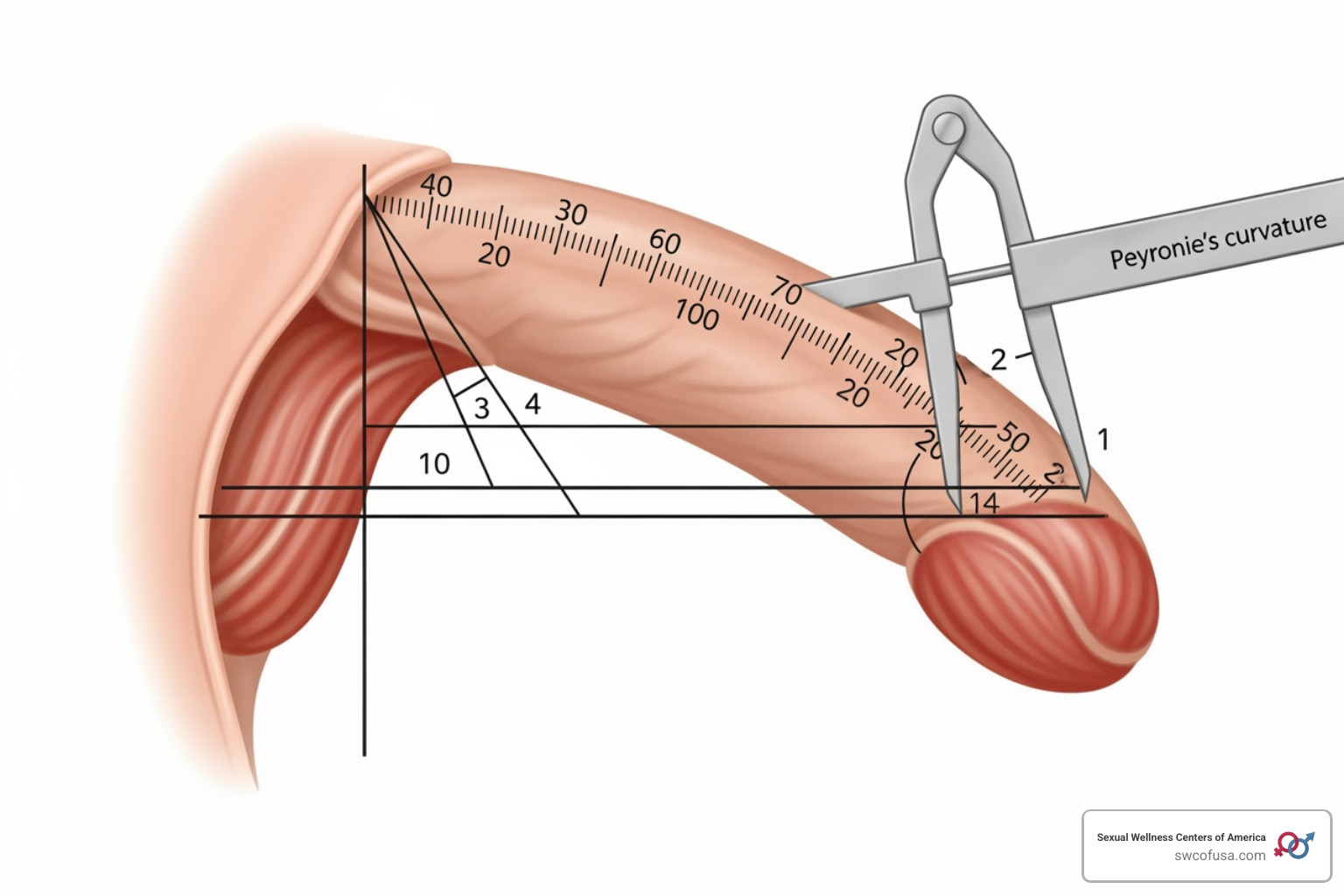
Consulting with a urologist is essential. They will use a curvature measurement illustration—often involving a vacuum pump or an injection to induce an erection—to accurately assess the degree of the bend.
Injectable Therapies for Plaque Reduction
Injectable treatments, or intralesional therapies, involve delivering medication directly into the plaque. This approach is highly favored because it concentrates the treatment where it is needed most.
Xiaflex (Collagenase Clostridium Histolyticum)
Xiaflex is currently the only FDA-approved medication for the treatment of PD in the stable phase. It works by breaking down the collagen that makes up the plaque.
- Effectiveness: Large-scale studies (IMPRESS I and II) showed a curvature improvement of 16.3–17 degrees compared to placebo.
- The Process: It involves cycles of injections followed by “modeling” performed by a doctor to help stretch and break the plaque.
Verapamil and Interferon
- Verapamil: A calcium channel blocker that may slow down the production of collagen. While not FDA-approved specifically for PD, it is widely used off-label.
- Interferon alpha-2b: This protein helps regulate the immune system and has been shown to reduce curvature by 12–13.5 degrees and plaque size by about 2 cm².
Safety and Side Effects
While effective, injectables carry risks. Common side effects include bruising, swelling, and pain at the injection site. A more serious but rare risk with Xiaflex is corporal rupture (penile fracture), which occurs in less than 1% of patients but may require surgical repair.
Mechanical and Physical Therapies
Physical therapies use mechanical force to remodel the scar tissue. These are often used in combination with other treatments to maximize results.
Mechanical and Physical Non Surgical Treatment for Peyronie’s Disease
Penile traction therapy (PTT) is one of the most promising non-invasive options. By applying a constant, gentle stretch to the penis over several months, these devices trigger “cellular mechanotransduction”—a process where cells respond to mechanical stress by remodeling the tissue.
- RestoreX: This is currently the only FDA-cleared traction device specifically for PD. Research on RestoreX shows it can improve stretched penile length by an average of 1.5 cm and significantly reduce curvature.
- Usage: Older devices required 3–8 hours of daily use, but newer models like RestoreX are effective with just 30–90 minutes a day.
Extracorporeal Shockwave Therapy (ESWT) and Pain Management
Shockwave therapy, such as our REGENwave® treatment, uses low-intensity sound waves to target the plaque.
- Primary Benefit: ESWT is exceptionally effective for pain management. Studies show a significant reduction in VAS (Visual Analogue Scale) pain scores, often by 1 to 5 points.
- Curvature: While ESWT is excellent for pain in the acute phase, evidence for its ability to reduce curvature in the stable phase is considered “low certainty” by major reviews like Cochrane.
Oral Medications and Supplements
Oral medications are often the first line of defense because they are easy to administer. However, their effectiveness is a subject of much debate in the medical community.
Oral Medications as a Non Surgical Treatment for Peyronie’s Disease
- Pentoxifylline: This is a non-specific phosphodiesterase inhibitor that has anti-fibrotic properties. It is often the first medication prescribed, especially in the acute phase.
- Potaba (Potassium Para-aminobenzoate): One of the few drugs with some evidence for reducing plaque size. One study showed subjective curvature improvement in 74.3% of patients. However, it requires taking a large number of pills daily and can cause stomach upset.
- Vitamin E: Despite being commonly recommended, randomized controlled trials have shown little to no difference between Vitamin E and a placebo for curvature reduction. It is often used as an antioxidant but should not be relied upon as a primary treatment.
| Medication | Intended Effect | Evidence Level |
|---|---|---|
| Pentoxifylline | Anti-fibrotic / Plaque reduction | Low to Moderate |
| Potaba | Plaque size reduction | Moderate |
| Vitamin E | Antioxidant / Curvature | Very Low |
| Coenzyme Q10 | Pain and Curvature reduction | Low |
| PDE5 Inhibitors | Blood flow / ED management | Recommended for ED |
Frequently Asked Questions about Peyronie’s Disease
Can Peyronie’s disease go away on its own?
Spontaneous improvement is rare. While the pain often goes away as the disease transitions from the acute to the stable phase, the curvature only improves on its own in about 10–13% of cases. In many men, the curve stays the same or worsens without treatment.
Is Xiaflex the only FDA-approved non-surgical option?
Yes, Xiaflex (Collagenase Clostridium Histolyticum) is the only medication currently FDA-approved specifically for the treatment of Peyronie’s disease. Other treatments like Verapamil or Interferon are used “off-label.”
How long does non-surgical treatment take to show results?
Patience is key. Most non-surgical protocols, whether they involve traction devices, oral pills, or injections, require 3 to 6 months of consistent use before significant changes in curvature or length are visible.
Conclusion
At Sexual Wellness Centers of America in Colleyville, TX, we understand that Peyronie’s disease is a deeply personal and often distressing condition. We don’t believe in a one-size-fits-all approach. Our team specializes in personalized wellness plans that may include hormone and vitamin panels to ensure your body has the foundation it needs to heal.
We offer innovative, non-invasive recovery options designed to restore your quality of life. From our REGENwave® shockwave therapy for pain management to the potential benefits of the HEshot®™ and our REGENmax® technology, we focus on cutting-edge science to help you avoid the operating room.
If you’re noticing a change in your curvature or experiencing painful erections, don’t wait for the condition to stabilize. Early intervention is the best way to preserve length and function.
Ready to take control? Improve the symptoms of Peyronie’s disease with REGENwave treatment or visit our Peyronie’s disease treatment page to learn more about how we can help you get back to your best self.
Our Specialized Services:
- Peyronie’s Disease Treatment in Colleyville, TX
- REGENwave® Technology
- REGENwave® in Colleyville, TX
- Peyronie’s Disease Overview