
A lot of young men think erectile dysfunction is something that belongs to middle age. The data says otherwise. About 17.9% of men ages 18 to 24 experience erectile dysfunction, according to Medical News Today's summary of current evidence. That number changes the conversation. Impotence in young men isn't rare, and it isn't automatically “just in your head.”
I've seen how confusing this can feel. A young man may have a few bad experiences, assume he's broken, panic, then make the problem worse by watching every response from his body too closely. Another may blame stress, only to learn later that blood pressure, hormones, medication effects, or early vascular problems were part of the story.
That's why this topic deserves a calm, complete explanation. Young men need more than reassurance. They need a way to understand what's normal, what's persistent, what might signal a deeper health issue, and what to do next.
Table of Contents
- Introduction to Impotence in Young Men
- Defining Impotence in Young Men
- Common Causes of Impotence in Young Men
- Diagnostic Approach for Impotence in Young Men
- Evidence Based Treatments for Impotence
- Red Flags and When to Seek Specialist Care
- Conclusion and Next Steps
- Frequently Asked Questions
Introduction to Impotence in Young Men
A common story goes like this. A guy in his twenties has trouble getting or keeping an erection once, then again. He tells himself it's stress. Then he starts worrying before sex even begins. Soon, he isn't sure whether the problem is anxiety, his body, his relationship, or all three at once.
That uncertainty is one of the hardest parts of impotence in young men. Sexual function sits at the intersection of the brain, blood vessels, hormones, nerves, habits, and emotions. If any one of those systems is off, erections can change. If several are off at the same time, things get even murkier.
Many young men also carry a harmful assumption: “I'm too young for this to be medical.” That belief delays evaluation. It can also cause someone to miss an early clue about sleep problems, medication side effects, hormone disruption, metabolic strain, or vascular health.
Practical rule: If erection problems are becoming a pattern instead of an occasional off night, it's worth treating them as health information, not a personal failure.
Impotence in young men is often treatable. The key is to stop guessing and start sorting the possibilities carefully.
Defining Impotence in Young Men
Impotence is the older everyday term for what clinicians now usually call erectile dysfunction, or ED. In plain language, it means ongoing difficulty getting or keeping an erection firm enough for satisfying sexual activity. The important word is ongoing.
One difficult night doesn't equal a diagnosis. Erections are sensitive to fatigue, alcohol, distraction, conflict, illness, timing, and anxiety. Most men will have occasional changes in erection quality. What concerns clinicians is a repeated pattern that keeps happening and starts affecting confidence, intimacy, or sexual function.
What counts as a real problem
Doctors often use questionnaires to measure erectile symptoms more systematically. You don't need to memorize those tools to understand the basic idea. They help separate occasional performance fluctuations from a persistent condition.
A simple way to think about it is this:
| Situation | More likely meaning |
|---|---|
| Trouble once in a while, especially during stress or after poor sleep | Normal variation |
| Trouble that happens repeatedly across different situations | Needs evaluation |
| Erections weaker than before, even when desire is present | Possible physical or mixed cause |
| Erections change along with anxiety, depression, or relationship strain | Possible psychological or mixed cause |
Why age no longer protects you from this topic
The old stereotype says ED belongs to older men. That's outdated. Erectile dysfunction affects approximately 17.9% of men aged 18 to 24, which directly challenges the idea that impotence is only age-related, as noted in Medical News Today's review of the evidence.
That matters for two reasons. First, it normalizes the experience enough that young men may seek help sooner. Second, it reminds us not to oversimplify. Youth doesn't rule out a physical issue. In some cases, erectile problems can be the first sign that blood vessels, hormones, or metabolic health need attention.
When erections change early in adulthood, the right question isn't “Am I too young for this?” It's “What is my body trying to tell me?”
Common Causes of Impotence in Young Men
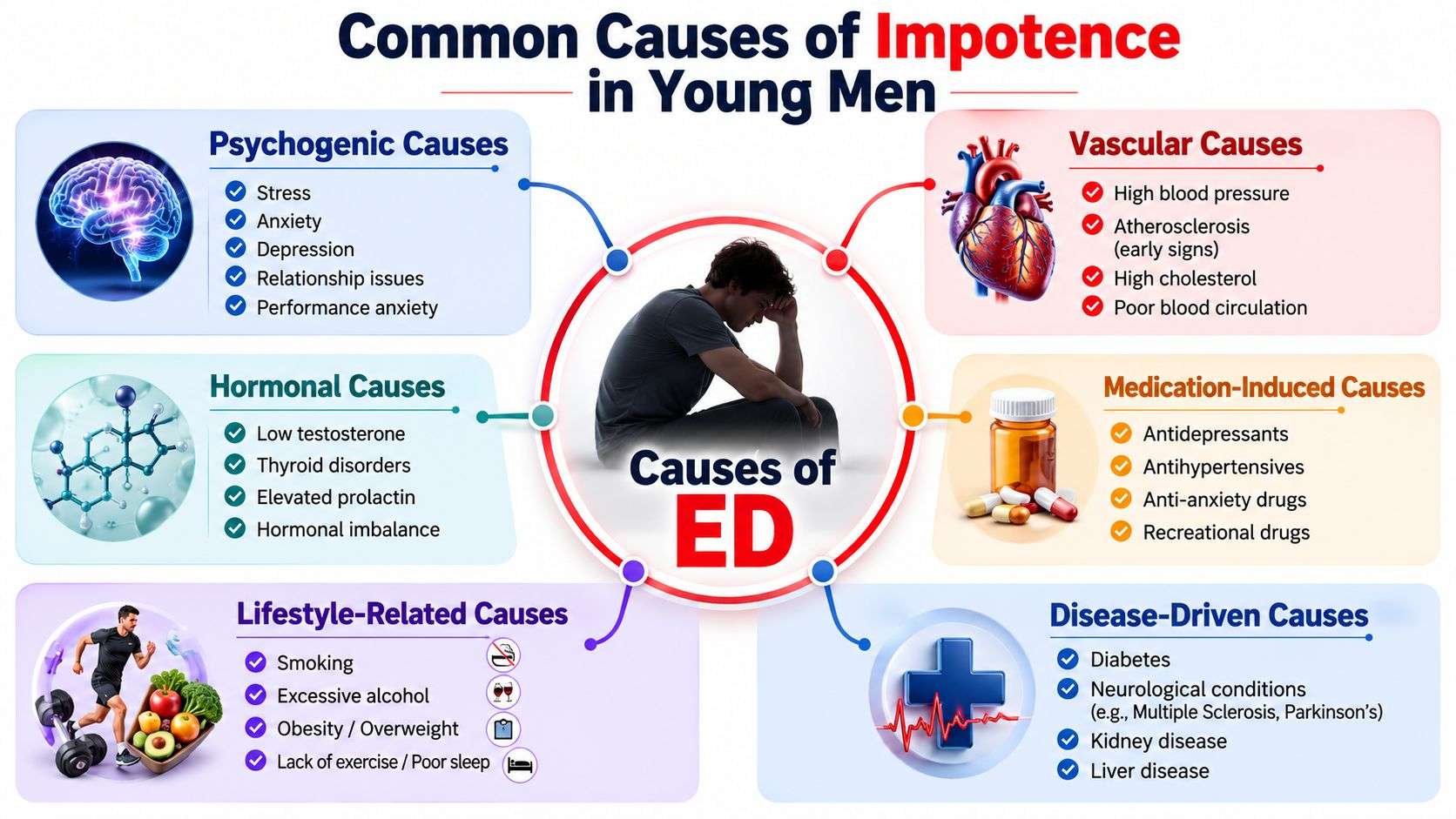
Among younger men with ED, psychological factors are the predominant cause, followed by medication side effects and underlying health conditions, according to Cleveland Clinic's overview of erectile dysfunction in the 20s. That's true, but it often gets misread. Predominant doesn't mean exclusive. Many young men have overlapping causes.
The mind can start the cycle
Stress, anxiety, depression, and relationship tension can all interfere with arousal. Performance anxiety is especially powerful because it creates a feedback loop. One difficult experience leads to fear. Fear increases monitoring. Monitoring disrupts arousal. Then the next experience feels even harder.
Psychological causes are real medical causes. They aren't fake, weak, or less deserving of treatment.
The body can quietly contribute
Young men are often told, directly or indirectly, that physical causes are unlikely. That isn't always safe advice. Blood flow problems, hormone disruption, nerve issues, and metabolic strain can all affect erections. A young man might still have normal desire and still struggle because the body isn't coordinating the erection response efficiently.
For a broader look at conditions that can feed into ED, this overview of contributory conditions that may cause erectile dysfunction is a useful starting point.
Causes often stack, not isolate
Here's a more realistic way to think about impotence in young men:
- Psychogenic factors: Anxiety, depression, stress, and conflict can interrupt arousal even when the body is otherwise healthy.
- Medication effects: Some medications can change libido, nerve signaling, or blood flow enough to interfere with erections.
- Lifestyle strain: Smoking, heavy alcohol use, low activity, poor sleep, and recreational drug use can make erection problems more likely.
- Hormonal disruption: Low testosterone rarely acts alone, but it can contribute, especially when paired with fatigue, lower desire, or other symptoms.
- Disease-related causes: Diabetes, neurologic conditions, and other health problems can affect the blood vessels or nerves involved in erections.
- Vascular issues: If blood can't enter the penis well or stay there effectively, erection quality drops.
A simple way to picture overlap
Think of erections like a band playing live. The brain is the conductor, hormones are the sound system, nerves are the wiring, and blood vessels are the instruments. If one part slips, the music sounds off. If several parts slip at once, the performance falls apart.
That's why “Is it physical or psychological?” is often the wrong question. For many young men, the honest answer is “both.”
Diagnostic Approach for Impotence in Young Men
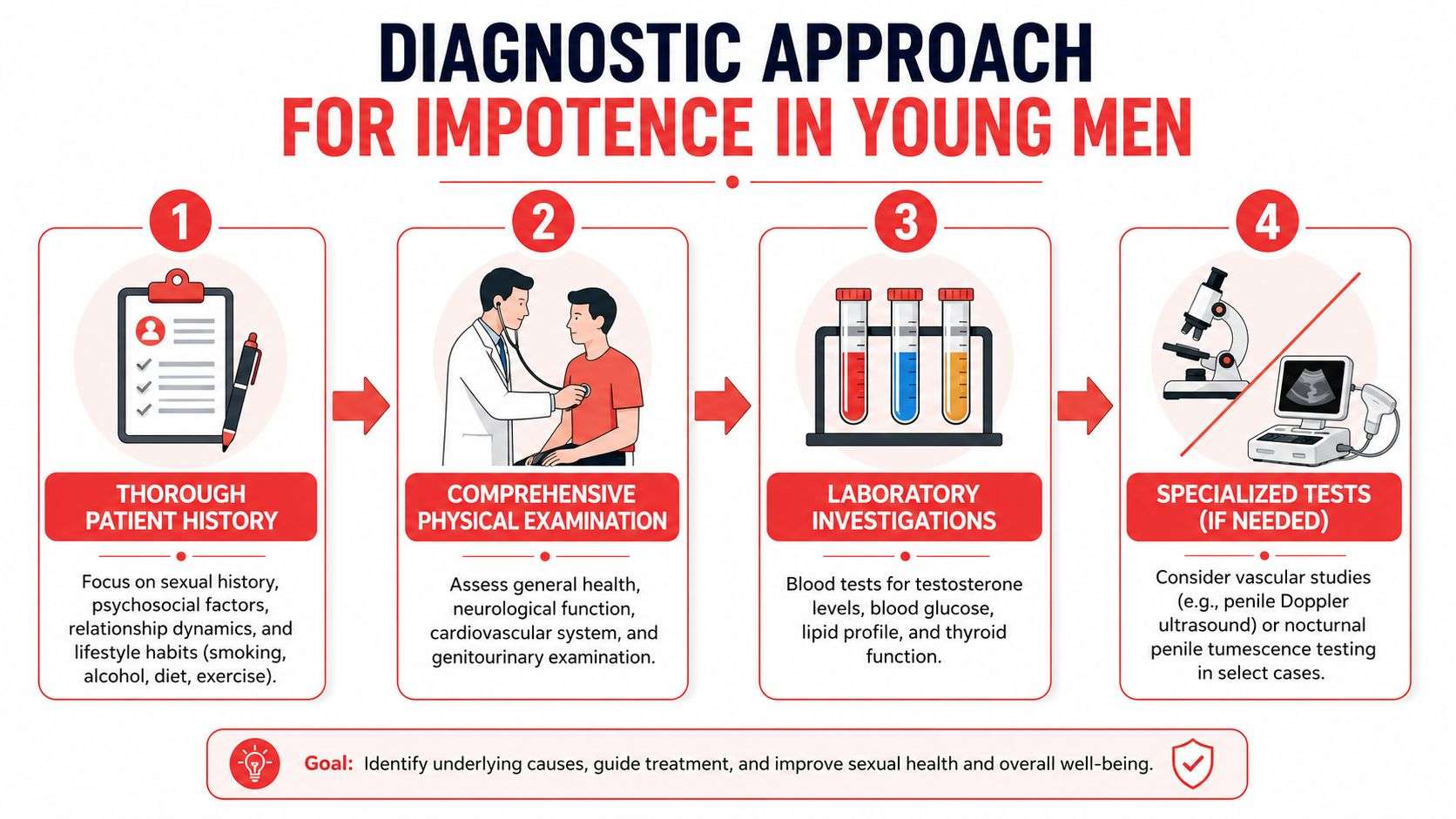
A good evaluation doesn't start with a pill. It starts with a story. A clinician needs to know when the problem began, whether it came on suddenly or gradually, whether it happens in all situations or only some, and whether desire, orgasm, mood, sleep, and relationship stress have changed too.
Step one is a detailed history
This part matters more than many patients expect. Doctors often ask about morning erections, masturbation, partnered sex, medications, substance use, mental health, and any recent life changes. Those details help sort patterns. A man who has normal erections in one setting but not another may need a different workup than someone whose erections have weakened across the board.
The exam looks beyond the penis
A focused physical exam can reveal clues about circulation, nerves, hormone status, body composition, and general health. In younger men with organic ED, the major etiologies are vascular, neurologic, and endocrine disorders, not merely age-related arterial change, as discussed in this PubMed Central review on organic ED in men under 40.
That point is easy to miss. A young man's age should not stop a clinician from thinking carefully about blood flow, neurologic function, and endocrine health.
If your clinician only says “you're young, it's probably stress” and doesn't ask about medications, sleep, hormones, blood pressure, or metabolic health, the evaluation may be incomplete.
Lab testing helps connect symptoms to systems
Common blood work may include checks related to testosterone, blood sugar, lipids, and thyroid function. The goal isn't to order everything. The goal is to match testing to the pattern of symptoms.
In some cases, more specialized testing helps. A vascular study may be useful when blood flow problems are suspected. Other tests can help distinguish whether erections occur normally during sleep, which can offer clues about whether the issue is more physical, more psychological, or mixed.
Evidence Based Treatments for Impotence
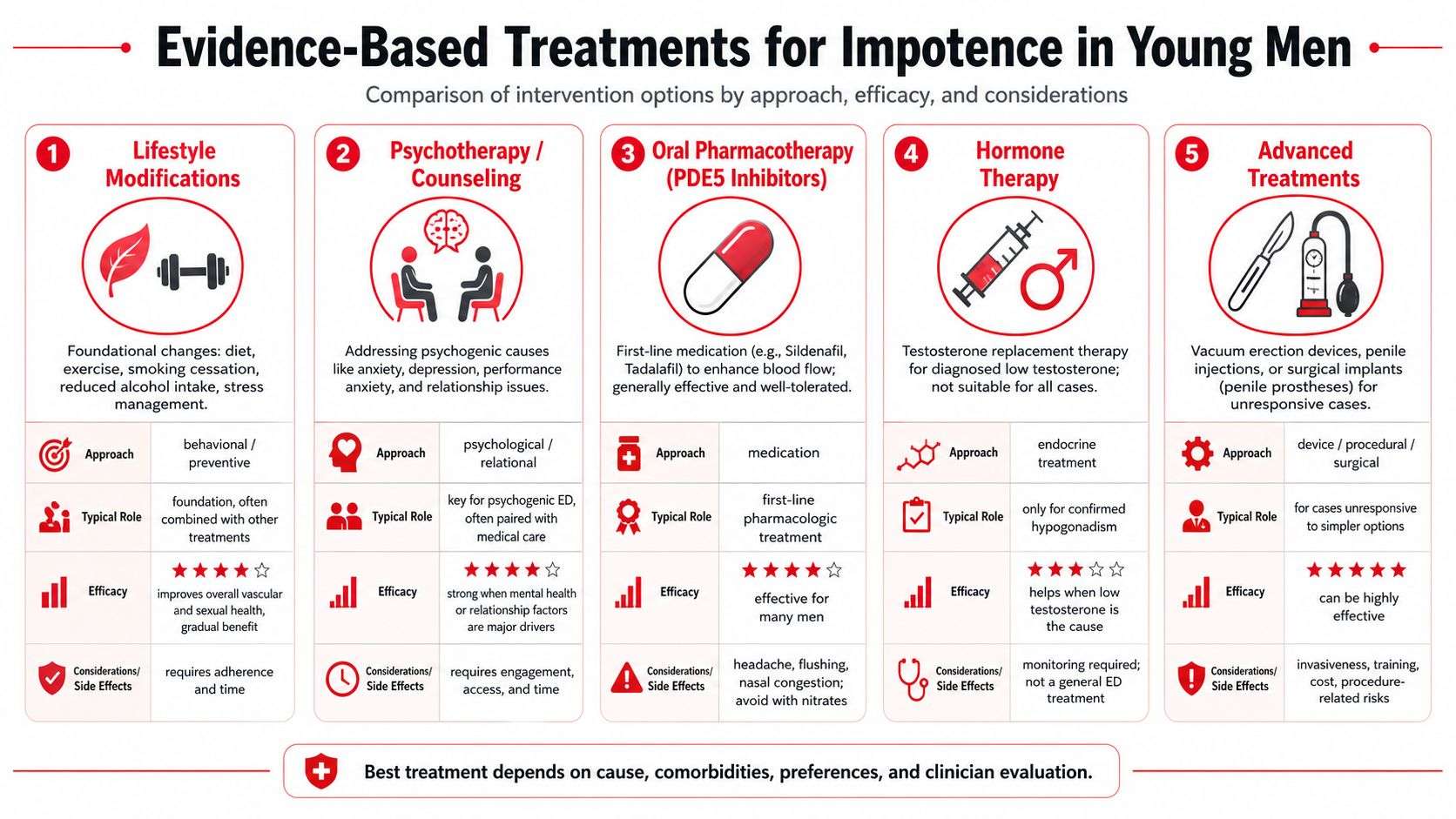
The best treatment depends on the cause. That sounds obvious, but many men skip that step and go straight to quick fixes. If anxiety is driving the problem, the answer may involve therapy, communication, and lowering pressure. If a medication is interfering, adjustment may matter. If blood flow, hormones, or metabolic health are part of the picture, treatment needs to address those factors directly.
Foundational changes that often get underestimated
Lifestyle treatment sounds basic, but it's often central. Quitting smoking, reducing alcohol, maintaining a moderate weight, and exercising regularly can improve erectile function in many younger patients. These changes support the very systems erections depend on: blood vessels, hormone regulation, sleep quality, confidence, and energy.
This doesn't mean every case can be fixed with better habits alone. It means the body works better when the foundation is stronger.
Psychological care is treatment, not a side note
When stress, depression, anxiety, or performance fear are involved, counseling can be one of the most effective interventions. Some men need individual therapy. Some benefit from sex therapy. Some need help breaking the cycle of anticipation, monitoring, and disappointment that keeps ED going after the original trigger has passed.
A practical example: a man has one poor experience after a stressful week. After that, he starts “checking” whether he's getting hard enough. That checking becomes the problem. Therapy helps him redirect attention, reduce catastrophic thinking, and rebuild confidence through more realistic expectations.
Medications can help, but they aren't the whole plan
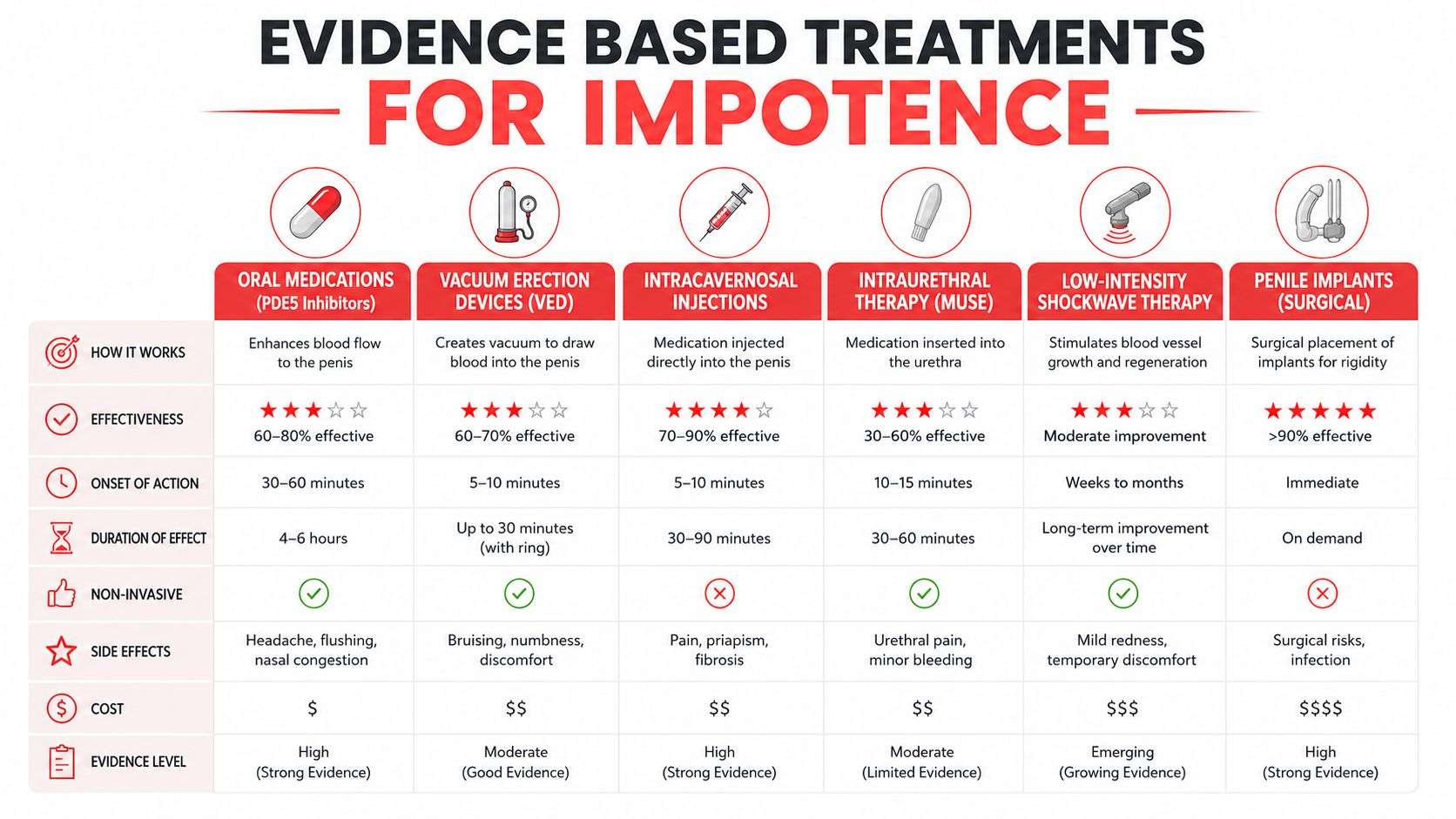
Oral medications are often used as first-line treatment because they improve blood flow signaling. For many men, they can reduce the panic that builds after repeated unsuccessful attempts. If you want a plain-language explanation of the mechanism, this article on how erectile dysfunction treatment pills actually work can help.
Still, medication works best when it's part of a broader plan. If someone keeps smoking heavily, sleeping poorly, staying sedentary, and ignoring severe anxiety, pills may not solve the whole problem.
Hormones and advanced options
If testing shows a true hormone issue, hormone treatment may be appropriate. But it should be targeted. Low testosterone is rarely the sole cause of ED in young men, so replacing hormones without a diagnosis can miss the underlying issue.
For men with mild to moderate ED, low-intensity extracorporeal shockwave therapy has shown dose-dependent efficacy, with 3000 pulses per session associated with improved endothelial proliferation, according to NCBI Bookshelf's review of LiSWT. The idea behind this approach is to support blood vessel health and tissue repair. Outcomes can be limited when major risk factors such as smoking, obesity, hypertension, or hyperlipidemia remain unaddressed.
Other medical options may include vacuum devices, injections, or implants when appropriate. Those choices depend on severity, cause, and response to first-line care.
Where regenerative clinic care may fit
Some men pursue non-surgical regenerative protocols after evaluation, especially when vascular health and tissue quality seem relevant. One example is Sexual Wellness Centers of America, which offers clinic-based ED evaluation along with regenerative options such as REGENwave™, REGENlase™, and the REGENmax® program. Those approaches should still sit inside a proper medical plan rather than replace diagnosis.
The strongest treatment plans don't ask, “What's the fastest fix?” They ask, “What combination actually matches the cause?”
Red Flags and When to Seek Specialist Care
Not every case of impotence in young men is a medical emergency. Some are clearly tied to stress, a new relationship, or a temporary life disruption. But some patterns deserve a closer look.
About 15% to 20% of ED cases in men under 40 are organic, driven by endothelial dysfunction, metabolic syndrome, or focal arterial occlusive disease, according to this PubMed Central article on early-onset ED and underlying disease risk. That's why persistent ED in a younger man shouldn't be brushed off automatically.
Signs that should prompt a fuller evaluation
- A sudden persistent change: If erections were consistently normal and then changed without an obvious temporary trigger, get checked.
- Loss of morning or spontaneous erections: That pattern can suggest the issue isn't just situational.
- Symptoms beyond sex: Fatigue, low libido, weight change, high stress, poor sleep, or other body-wide symptoms may point toward hormones, mood disorders, or metabolic strain.
- Medication timing: If ED started after a new prescription or a period of recreational drug use, bring that timeline to a clinician.
- Possible blood sugar issues: If you also have signs that raise concern about blood sugar or diabetes, review how diabetes affects erectile dysfunction and ask for medical evaluation.
When a specialist makes sense
A urologist or sexual medicine specialist may be appropriate when the problem is persistent, when first-line treatment hasn't helped, or when the pattern suggests vascular, neurologic, or endocrine causes. You don't need to wait until the issue becomes severe. Early evaluation can uncover problems while they're still easier to address.
Conclusion and Next Steps
Impotence in young men is real, common, and often more complex than people think. Yes, anxiety and stress matter. But so do blood vessels, nerves, hormones, medications, sleep, and metabolic health. If you only focus on one layer, you can miss the actual driver.
A useful next step is to make a short personal checklist before seeking care. Note when the problem started, whether it's situational or consistent, what medications or substances are involved, whether morning erections have changed, and what else in your health has shifted.
That kind of preparation helps a clinician see patterns faster. It also helps you move from fear to clarity. The goal isn't just to restore erections. It's to understand what your body is signaling, then choose treatment that fits the cause.
Frequently Asked Questions
How should I prepare for a first appointment
Bring a short timeline. Include when symptoms began, whether they're constant or occasional, any medications or supplements you take, changes in stress or sleep, and any other health symptoms you've noticed. That gives the clinician a clearer starting point.
Will I need lab work
Possibly. It depends on your history and symptoms. Many young men benefit from some level of screening when the pattern suggests hormone, metabolic, or vascular involvement.
How long does treatment take to work
That varies by cause. Some men improve quickly when the problem is mainly situational or medication-related. Others need a longer plan that addresses mental health, sleep, lifestyle, and medical factors together.
If I live out of town, can I still explore treatment
Many specialty clinics help patients coordinate scheduling, planning, and follow-up when travel is involved. Ask directly about logistics before booking.
Is financing ever available
Some clinics offer financing guidance for treatment plans or procedures. It's worth asking the office what options exist and what parts of care may or may not be included.
If you're dealing with impotence in young men and want a clinical evaluation that looks at both symptoms and possible underlying causes, Sexual Wellness Centers of America offers adult sexual health consultations and treatment planning in Colleyville, Texas. A structured visit can help you sort whether the issue is psychological, vascular, hormonal, medication-related, or mixed, and what next step makes the most sense.