
Understanding IV Infusion Therapy and Its Purpose
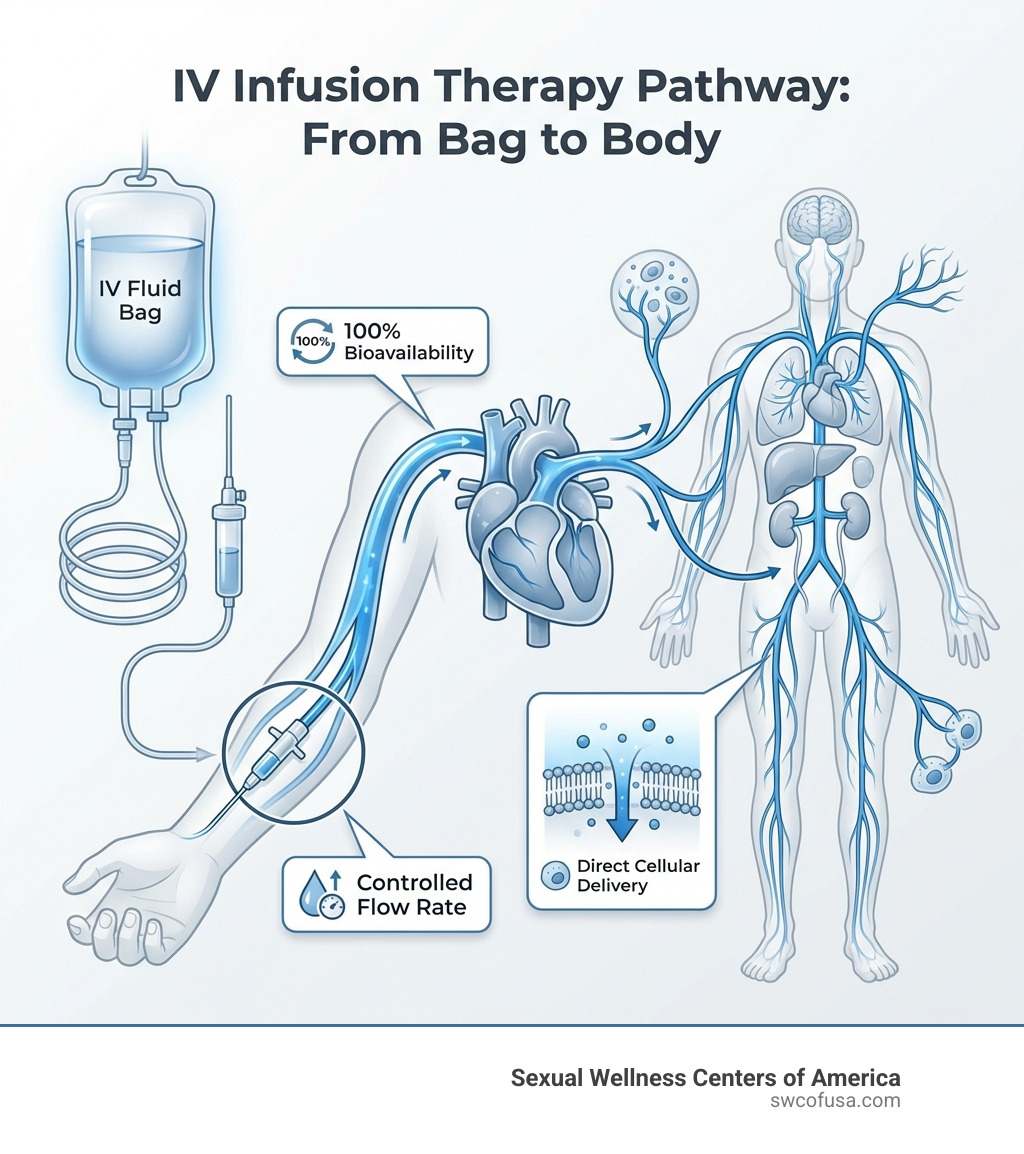
IV infusion therapy is a medical treatment that delivers fluids, medications, vitamins, or nutrients directly into your bloodstream through a vein. This method bypasses your digestive system, allowing for rapid absorption and immediate utilization by your body’s cells.
Key benefits of IV infusion therapy:
- Rapid delivery: Medications and fluids enter your circulatory system immediately, providing faster relief than oral supplements.
- 100% bioavailability: Your body absorbs all nutrients delivered intravenously, compared to only 15% to 20% from oral vitamins.
- Precise dosing: Healthcare providers can control exact amounts and delivery speed through infusion pumps.
- Medical applications: Used for hydration, medication delivery, nutrition support, chemotherapy, and blood transfusions.
Modern techniques developed significantly in the 1950s. Today, it serves critical medical needs in hospitals while also gaining popularity for wellness applications like the Myers’ cocktail, a vitamin and mineral blend designed to support energy and immune function.
The procedure involves inserting a small catheter into a vein, connecting it to tubing, and allowing the solution to flow at a controlled rate. Treatment typically takes 30 to 45 minutes and is monitored by trained healthcare professionals.
At Sexual Wellness Centers of America in Colleyville, TX, we help patients integrate IV infusion therapy into broader wellness programs that can include hormone optimization and targeted nutrient support. Our approach combines established medical best practices with individualized protocols based on each patient’s goals and clinical needs.
The Evolution and Benefits of IV Infusion Therapy
The journey of IV infusion therapy from ancient concepts to modern medicine is a testament to human ingenuity. While it seems contemporary, the idea of introducing substances directly into the bloodstream has roots stretching back centuries.
Early experiments in the 17th century by figures like Sir Christopher Wren laid the groundwork for understanding intravenous delivery. However, it wasn’t until the 19th and 20th centuries that this approach became a safe, standard treatment. Dr. Thomas Latta’s use of saline for cholera in the 1830s and the development of sterile techniques in the 1900s were pivotal. By the 1950s, modern IV therapy was widely available, and by the 1960s, total parenteral nutrition (TPN) became a reality.
A primary benefit of intravenous treatment is its unparalleled bioavailability. Oral medications must pass through the digestive system and the liver’s “first-pass metabolism,” which significantly reduces the active substance reaching the bloodstream. For oral vitamins, absorption can be as low as 15-20%.
In contrast, IV infusion therapy delivers substances directly into the circulatory system, ensuring 100% availability. This allows for:
- Rapid Recovery: Faster relief for conditions like severe dehydration or acute infections.
- Optimal Nutrient Absorption: Bypassing the gut ensures vitamins and minerals are fully used by cells.
- Precise Control: Healthcare professionals can manage exact dosages and delivery rates.
This efficiency makes intravenous treatment indispensable for both acute care and personalized wellness. For more scientific research on intravenous fluid choices, refer to this systematic review.
Clinical Applications and Delivery Methods
IV infusion therapy is a versatile tool in modern medicine. At our facility in Colleyville, TX, we use it for various purposes, including:
- Fluid Replacement: Rapidly rehydrating patients to maintain electrolyte balance.
- Medication Administration: Delivering antibiotics, chemotherapy, or pain relief directly for immediate effect.
- Electrolyte Balance: Quickly restoring levels of sodium, potassium, or magnesium.
- Nutritional Support: Providing parenteral nutrition for those unable to absorb nutrients through the digestive system.
- Imaging Contrast: Improving visibility in diagnostic procedures like MRI or CT scans.
We integrate these treatments into our wellness programs to support specialized care. More information is available on our IV services page.
Comparison of IV Lines
| Feature | Peripheral Lines | Central Lines |
|---|---|---|
| Placement | Veins in arms, hands, or feet. | Large central veins (e.g., superior vena cava). |
| Duration | Short-term (up to 96 hours). | Long-term (weeks to years). |
| Medication | Non-irritating fluids. | Irritating meds (chemo, TPN). |
| Risks | Infiltration, phlebitis. | Sepsis, pneumothorax. |
Common Methods of IV Infusion Therapy
- Peripheral Veins: The most common method for short-term treatments like rehydration.
- Central Lines: Used for long-term therapy or irritating medications. Examples include PICC lines, tunneled lines, and implantable ports.
- Catheters: Flexible tubes that remain in the vein for repeated access.
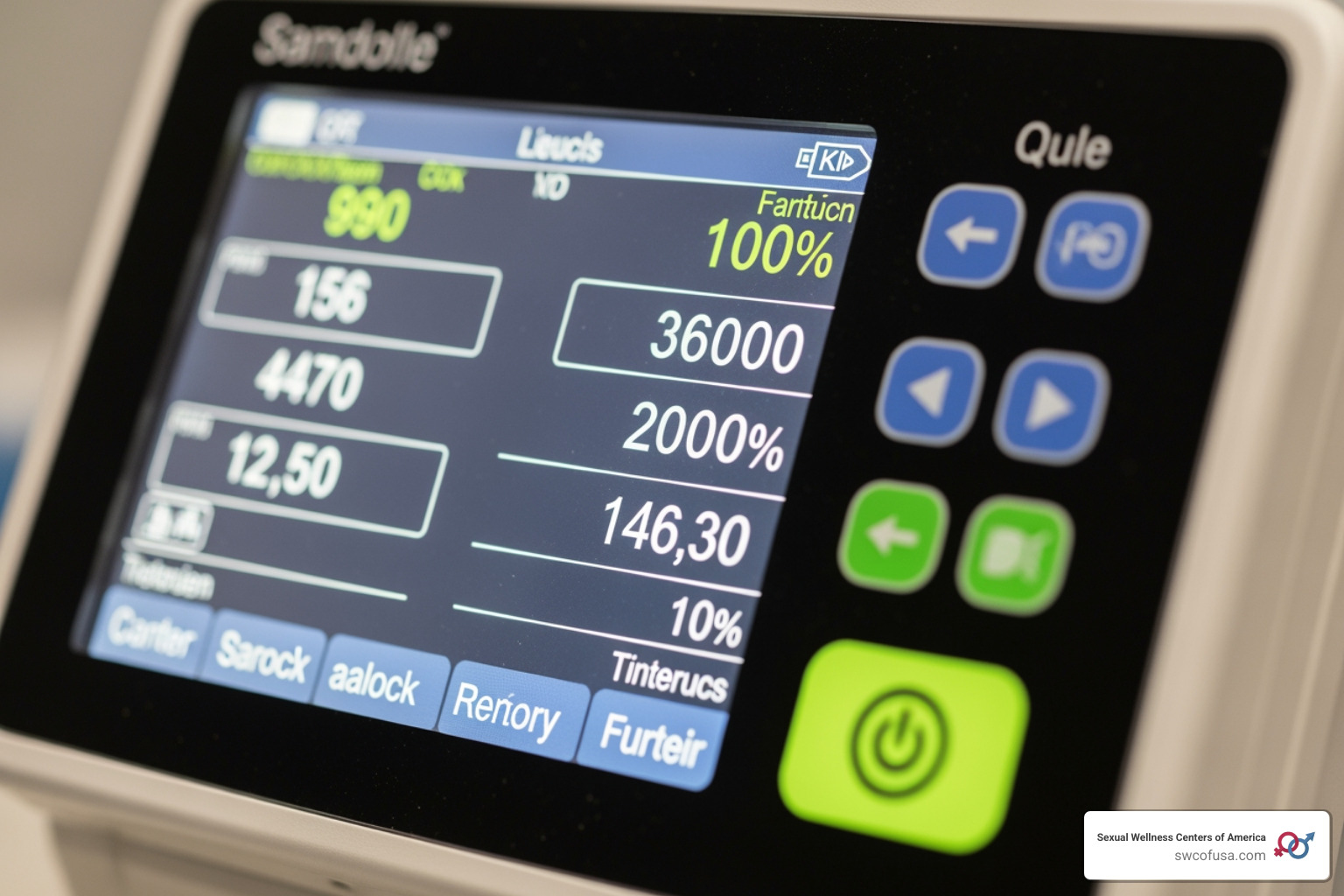
Most modern therapy relies on infusion pumps to program exact volumes and rates, ensuring precision.
The Rise of Vitamin IV Infusion Therapy
Vitamin-based infusions have surged in popularity for wellness. The Myers’ cocktail, containing vitamins B, C, calcium, and magnesium, is a well-known blend used to address fatigue and support immunity. By delivering nutrients directly into the bloodstream, the body absorbs 100% of them. For a beginner’s guide, see what are IV infusions?.
Patient Safety: Managing Risks and Adverse Effects
While IV infusion therapy is a cornerstone of treatment, it is an invasive procedure with inherent risks. Our team in Colleyville, TX, prioritizes safety protocols to minimize these complications.
Common Risks and Complications:
- Pain: Brief discomfort during needle insertion, often managed with topical anesthetics.
- Infection: Minimized through strict aseptic techniques. Guidelines suggest changing peripheral lines every 72-96 hours.
- Infiltration: When non-vesicant fluid enters surrounding tissue, causing swelling.
- Extravasation: A serious leak of tissue-damaging medication, requiring immediate intervention.
- Phlebitis: Inflammation of the vein, often caused by mechanical or chemical irritation.
- Hematoma: Bruising caused by blood leaking under the skin.
- Allergic Reactions: Reactions to medications or adhesives, ranging from rashes to anaphylaxis.
- Fluid Overload: Excess fluid in the circulatory system, managed by careful monitoring.
- Electrolyte Imbalances: Caused if the infused solution is inappropriate for the patient’s metabolic state.
We take every precaution, including thorough assessments, sterile procedures, and continuous monitoring, to ensure a safe and comfortable experience.
Specialized Care: Pediatrics and Wellness Considerations
IV infusion therapy must be highly customized for different populations. Children, in particular, require specialized care due to their delicate physiology.
- Access Sites: In infants, scalp veins may be used if peripheral veins are difficult to access. This is a safe and effective alternative.
- Stabilization: Padded boards are often used to prevent accidental dislodgement of the catheter in active children.
- Precision Control: Infusion pumps are mandatory in pediatrics to prevent fluid overload or dehydration, as children are highly sensitive to electrolyte changes.
- Caregiver Vigilance: Parents are taught to monitor for pump alarms, site redness, swelling, or tubing issues.
The benefits for children are significant. For example, IV magnesium sulfate has been shown to provide rapid relief for acute asthma. You can review the scientific evidence for IV magnesium in pediatric asthma for more details.
At our Colleyville, TX, center, we apply these principles of precision and diligent monitoring to all our adult wellness and sexual health patients, ensuring the highest standard of care.
Frequently Asked Questions about IV Infusion Therapy
Is IV therapy typically covered by insurance?
Coverage depends on the type of therapy and your specific plan:
- Medical Necessity: If prescribed for a diagnosed condition (e.g., iron deficiency, severe dehydration, chemotherapy), insurance is more likely to cover it. Deductibles and co-pays still apply.
- Wellness Infusions: Elective “lifestyle” infusions, like the Myers’ cocktail for energy, are typically not covered and are paid for out-of-pocket.
- Verification: We recommend contacting your provider to understand your benefits. Our team can provide documentation to assist with this process.
What are the typical costs associated with these treatments?
Costs vary based on several factors:
- Type and Ingredients: Simple hydration is less expensive than complex vitamin or medication blends.
- Service Fees: Covers professional staff time and facility use.
- Membership Models: We offer monthly programs that reduce the per-infusion cost and include additional perks like Vitamin B12 injections.
- Iron Infusions: Medically necessary iron infusions may cost around $300, plus administration fees.
When should I call a nurse or healthcare provider?
Seek immediate attention if you notice:
- Pump Alarms: Indicates a flow or device issue.
- Site Issues: Redness, warmth, swelling, or pain at the insertion site.
- Leakage: Fluid or wetness around the dressing.
- Systemic Signs: Fever, chills, shortness of breath, or chest pain.
- Allergic Signs: Rash, hives, or intense itching.
Always err on the side of caution. If something feels wrong, contact our Colleyville, TX, team immediately.
Conclusion
IV infusion therapy is a powerful and precise tool in modern healthcare, offering rapid and complete absorption of essential fluids, medications, vitamins, and nutrients directly into the bloodstream. From its earliest, rudimentary attempts to its sophisticated applications today, it has evolved to address critical medical needs and, increasingly, to support personalized wellness goals.
At Sexual Wellness Centers of America in Colleyville, TX, we believe in using the full potential of intravenous treatment to complement our innovative sexual health and wellness offerings. Our approach is rooted in personalized wellness, where we carefully assess your unique physiological needs through advanced hormone and vitamin panels. This allows us to tailor protocols that optimize your vitality, improve your energy, and support your overall health journey.
Whether you’re seeking to boost your immune system, improve your energy levels, or ensure optimal nutrient absorption to support treatments like HEshot®, SHEshot®, or REGENmax®, our expert team in Colleyville, TX, is dedicated to providing top-tier care. We ensure every session is conducted with the highest standards of safety, precision, and comfort, integrating seamlessly into your comprehensive wellness plan.
Ready to explore how intravenous nutrient therapy can lift your well-being? We invite you to learn more about our services and schedule an IV Infusion in Colleyville, TX today. Let us partner with you on your journey to optimal health and vitality.