Understanding Medical Weight Loss: A Science-Based Approach
Medical weight loss is a physician-supervised weight management approach that combines prescription medications, personalized nutrition plans, and behavioral support to help patients achieve sustainable weight loss. Unlike DIY diets, medical weight loss treats obesity as a chronic disease requiring professional intervention.
Key Elements of Medical Weight Loss:
- Physician supervision – Treatment guided by healthcare professionals
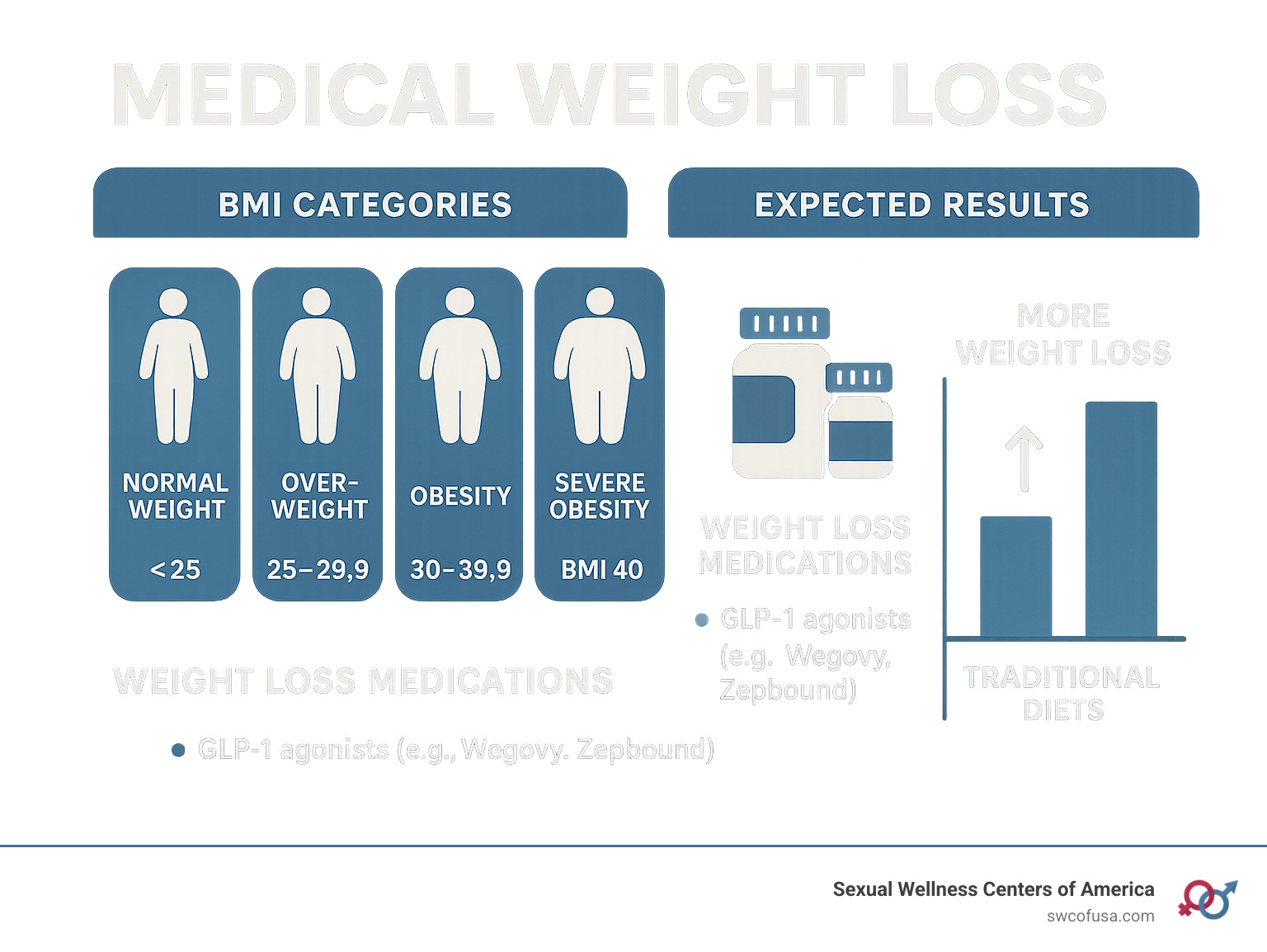
- Prescription medications – FDA-approved drugs like GLP-1 agonists (Wegovy, Zepbound)
- Personalized approach – Custom to individual health needs and goals
- Comprehensive care – Combines diet, exercise, medication, and behavioral therapy
- Ongoing support – Regular monitoring and adjustments to treatment
Medical weight loss programs are designed for adults with a BMI of 30+ (or 27+ with weight-related health conditions) who haven’t succeeded with diet and exercise alone. These programs can help patients lose 5-20% of their body weight, significantly improving related health conditions like diabetes, high blood pressure, and sleep apnea.
Weight loss medications work best when combined with lifestyle changes. On average, patients using prescription medications as part of a comprehensive program lose 3-12% more weight than those following lifestyle changes alone.
I’m Jeff Nuziard, CEO of Sexual Wellness Centers of America, where our medical weight loss programs have helped countless patients achieve sustainable results through personalized treatment plans integrating the latest FDA-approved medications with comprehensive lifestyle support.
The Medical Weight Loss Difference
Obesity has become a national health challenge, affecting more than 4 in 10 American adults, with nearly 1 in 10 living with severe obesity. This growing recognition has transformed how healthcare providers approach weight management—moving beyond simple “eat less, move more” advice to comprehensive medical solutions that address the whole person.
Medical weight loss isn’t just another diet plan. It’s a complete approach that acknowledges what many of us have experienced firsthand: weight management is complex and involves biological, psychological, and environmental factors. Rather than viewing excess weight as simply a matter of willpower, these programs treat obesity as the medical condition it truly is.
Medical Weight Loss vs DIY Diets
If you’ve tried diet after diet with disappointing results, you’re not alone. The difference between professional guidance and going it alone is significant:
When you choose medical weight loss, you gain access to evidence-based protocols developed through rigorous scientific research, not just the latest trending diet. You’ll work with healthcare professionals who monitor your progress and make adjustments based on your unique response. Perhaps most importantly, you can benefit from prescription medications that address the biological factors making weight loss so challenging.
DIY diets, while sometimes initially successful, often lack personalization and the comprehensive support needed for long-term success. They rarely address underlying health conditions and typically focus on just one aspect of weight management—usually diet or exercise alone.
“Losing weight and keeping it off is genuinely difficult,” as our healthcare team often reminds patients. This challenge isn’t because you’re not trying hard enough—it’s because your body has powerful mechanisms that defend against weight loss. Medical weight loss programs help overcome these barriers by providing:
- Professional accountability through regular check-ins
- Personalized nutrition guidance based on your specific health needs
- Behavioral coaching that addresses emotional eating and other patterns
- Regular monitoring of important health markers, not just the number on the scale
Who Qualifies for Medical Weight Loss?
Medical weight loss isn’t for everyone, but it might be right for you if you meet certain criteria:
You’re likely a good candidate if you’re an adult with a BMI of 30 or higher, or if your BMI is 27+ and you’re dealing with weight-related health conditions like high blood pressure, type 2 diabetes, or sleep apnea. In some cases, adolescents 12 and older with obesity may also qualify.
Important considerations include not being currently pregnant or breastfeeding, willingness to use contraception if prescribed weight loss medications, and having no history of certain medical conditions that would make treatment unsafe.
At Sexual Wellness Centers of America in Colleyville, TX, we take the time to conduct thorough health screenings before recommending any weight loss intervention. This includes reviewing your medical history, current medications, previous weight loss attempts, and appropriate lab work to ensure both safety and effectiveness of our approach. We believe in evidence-based practices that deliver real results.

Core Components of a Successful Program
A comprehensive medical weight loss program doesn’t rely on just one approach—it brings together several evidence-based strategies custom to your unique needs. At Sexual Wellness Centers of America, we’ve found that combining these core elements creates the foundation for lasting success.

Personalized Nutrition & Meal Plans
Think of nutrition as the cornerstone of your weight loss journey. Unlike those trendy diets that come and go, our medical weight loss approach focuses on eating plans you can actually maintain for life.
We’ll work with you to create a food strategy that fits your lifestyle, not the other way around. This includes finding your ideal calorie target based on your unique metabolism, balancing your proteins, carbs, and fats, and emphasizing whole foods that nourish your body.
Many of our patients find that portion control education is eye-opening—most of us have forgotten what a proper serving actually looks like! For some patients who need a jump-start, we might recommend structured meal replacements like OPTIFAST® initially, but our ultimate goal is teaching you sustainable eating habits.
What makes our approach different at Sexual Wellness Centers of America is that we address not just what’s on your plate, but how to steer real-life challenges like busy schedules, dining out, and those emotional moments when food becomes comfort. Learn more about our Health and Wellness Services.
Exercise & Activity Coaching
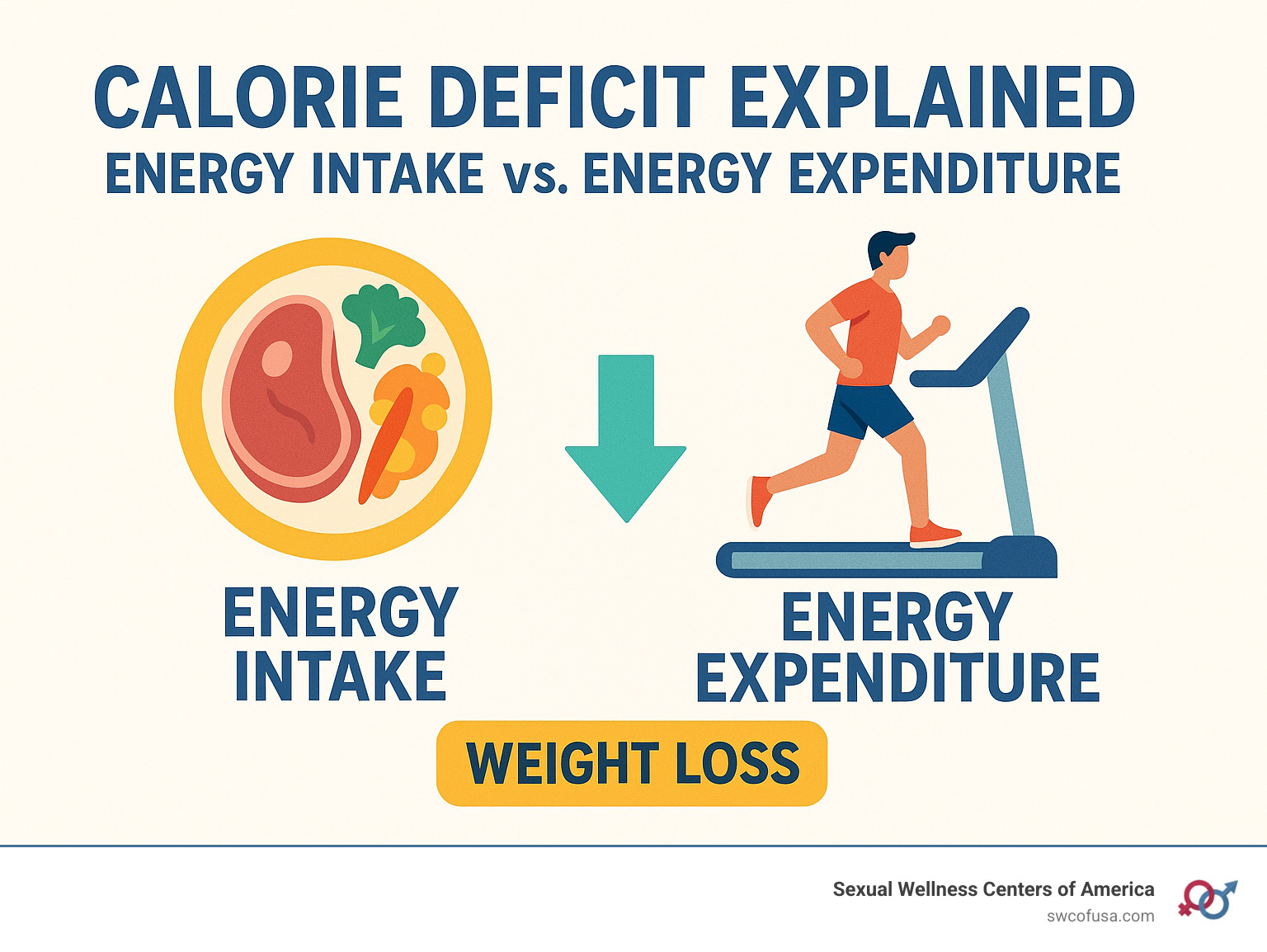
Moving your body isn’t just about burning calories—it’s about improving your overall health and preserving muscle while you lose fat. Our medical weight loss program includes exercise recommendations that start exactly where you are today.
We typically aim for about 150 minutes of moderate aerobic activity weekly, but don’t worry—we’ll help you build up gradually. Strength training at least twice weekly helps maintain your metabolism as you lose weight. And sometimes, the most effective changes come from simply increasing your everyday movement (what experts call NEAT).
What I love about our approach is that we don’t force you into exercises you hate. If you dread the treadmill, we’ll find alternatives you actually enjoy. Have knee issues or other limitations? We’ll work around them with adaptive options that keep you moving safely.
Ongoing Monitoring & Support
This might be the secret sauce that makes medical weight loss so much more effective than going it alone. Having professional support throughout your journey provides accountability and expert guidance when challenges arise.
At Sexual Wellness Centers of America, we combine monthly one-on-one visits with convenient telemedicine options so you’re never without support. We track not just your weight but your body composition—because losing fat while preserving muscle is the real goal.
We’ll monitor important health markers through regular blood work, make medication adjustments when needed, and provide behavioral coaching for those moments when emotional eating threatens to derail your progress. Many patients tell us that having someone in their corner makes all the difference.
Our team also helps you leverage technology through coaching apps and remote monitoring tools that keep you connected between visits. And perhaps most importantly, we focus on strategies to prevent relapse and maintain your results for the long haul—because sustainable change is what truly matters. Find out more about our weight loss management services.
Prescription Medication Roundup
The game-changer in medical weight loss has undoubtedly been prescription medications. These powerful tools address the biological factors that make losing weight—and keeping it off—so challenging for many people. Rather than simply telling you to “try harder,” these medications work with your body’s own systems to regulate appetite, increase feelings of fullness, and in some cases, reduce fat absorption.
GLP-1 Stars: Wegovy & Beyond
If you’ve been following weight loss news lately, you’ve probably heard the buzz about GLP-1 medications. These remarkable drugs mimic a hormone naturally produced in your gut that tells your brain “I’m satisfied” while also slowing down digestion.
Semaglutide (Wegovy®) has been nothing short of revolutionary. FDA-approved for adults with obesity (or overweight plus one weight-related condition), this once-weekly injection helps patients lose an average of 15% of their body weight over 68 weeks. Some of our patients at Sexual Wellness Centers of America have achieved even more impressive results—up to 20% of their starting weight!
“The difference with semaglutide is that patients don’t feel like they’re fighting their biology every step of the way,” we often explain to new patients. “It helps regulate those powerful hunger signals.”
Key benefits of semaglutide include:
– Only requires a simple once-weekly injection
– Gradually introduced to minimize side effects
– Now approved for adolescents 12+ with obesity
– Proven to reduce major heart events in adults with established cardiovascular disease
The newer kid on the block, Tirzepatide (Zepbound™), works on two hormone receptors instead of one—both GLP-1 and GIP. The results? Even more impressive weight loss averaging 15-20% of total body weight in clinical studies. As one of our patients recently told us, “I finally feel in control around food for the first time in my life.”
Other valuable GLP-1 options include Liraglutide (Saxenda®), a daily injection approved for both adults and teens, and oral semaglutide (Rybelsus®), which is primarily for diabetes but sometimes used off-label for weight management.
Classic Options & Off-Label Tools
While GLP-1s get most of the spotlight these days, several other effective medications remain important tools in our medical weight loss toolkit.
Orlistat (sold as prescription Xenical® or over-the-counter Alli®) takes a completely different approach. Instead of affecting your appetite, it blocks about 30% of dietary fat from being absorbed in your intestines. The weight loss is more modest—typically 3-5%—but it can be right for certain patients, especially those who prefer not to use injectable medications.
For patients needing stronger appetite control, Phentermine-topiramate (Qsymia®) combines two medications that work together to reduce hunger, typically producing 7-9% weight loss. Similarly, Naltrexone-bupropion (Contrave®) pairs an addiction medication with an antidepressant to help control food cravings, with patients usually losing 5-8% of their starting weight.
For rare cases of genetically-caused obesity, Setmelanotide (Imcivree®) targets specific genetic defects—a remarkable example of precision medicine.
We sometimes also use “off-label” medications like Metformin (primarily for diabetes) or Acarbose (which slows carb digestion) when appropriate for specific patient needs. And yes, you may have heard about Ozempic®—a diabetes medication containing semaglutide that’s sometimes prescribed off-label specifically for weight loss.
Safety, Side Effects & Duration
Let’s talk honestly about what to expect with these medications. No effective medicine is completely free of side effects, and weight loss medications are no exception.
With GLP-1 medications, the most common side effects include nausea, vomiting, and diarrhea—though these typically improve as your body adjusts. Many patients also experience constipation, abdominal discomfort, headaches, or fatigue, especially when first starting treatment or increasing doses.
More serious but fortunately rare side effects can include pancreatitis, gallbladder problems, kidney issues, severe digestive problems, increased heart rate, and mood changes including depression. This is why proper medical supervision is essential—we carefully monitor all our patients at Sexual Wellness Centers of America to ensure these medications are both safe and effective for you.
A question we hear almost daily is: “How long will I need to take this medication?” The honest answer is that it depends on your individual situation and goals. According to scientific research on GLP-1 efficacy, most patients will need to continue medication to maintain their results.
We typically recommend:
– Continuing medication if you lose at least 5% of your body weight within 3-6 months without serious side effects
– Considering a different approach if you achieve less than 5% weight loss after 3-6 months at the maximum dose
– Understanding that long-term or indefinite use may be necessary for maintenance, similar to medications for other chronic conditions like hypertension
– If discontinuation is desired, gradually tapering down while strengthening lifestyle habits to minimize weight regain
Obesity is a chronic medical condition—not a failure of willpower. Just as we wouldn’t expect someone with high blood pressure to take medication for a few months and then be “cured,” we now understand that weight management often requires ongoing medical support.
Choosing the Right Program & Understanding Costs
Finding the perfect medical weight loss program is a bit like dating – you need the right match for your unique needs, lifestyle, and budget. At Sexual Wellness Centers of America, we understand this is an important decision that affects both your health and wallet.
Provider Qualifications
When entrusting someone with your health journey, credentials matter. Look for programs led by physicians with specialized obesity medicine training, particularly those certified by the American Board of Obesity Medicine (ABOM). Our medical team at Sexual Wellness Centers of America brings years of weight management experience and stays on the cutting edge of evidence-based approaches – because your health deserves nothing less.
Comprehensive Approach
The most successful weight loss journeys address the whole picture – not just one piece of the puzzle. Effective programs integrate nutrition guidance, physical activity recommendations, behavioral coaching, and appropriate medications when needed. Be cautious of any program promising miracle results through supplements or extreme diets without proper medical oversight. True change requires a comprehensive strategy.
Personalization
Your body, your story, and your goals are uniquely yours – shouldn’t your weight loss plan be too? Cookie-cutter approaches rarely lead to lasting success. Our approach at Sexual Wellness Centers of America begins with understanding your specific health history, food preferences, lifestyle constraints, and personal objectives before creating your custom roadmap to success.
Understanding Costs and Coverage
Navigating the financial aspects of medical weight loss can sometimes feel more complicated than the weight loss itself! Here’s what you need to know:
Insurance Coverage:
Many insurance plans now recognize obesity as a medical condition deserving treatment coverage. This often includes provider visits and sometimes medications. However, coverage varies dramatically between plans – even within the same insurance company. Medicare covers obesity screening and counseling but has certain limitations on medication coverage. For newer GLP-1 medications, your provider may need to submit prior authorizations to your insurance company.
Out-of-Pocket Costs:
If you’re paying directly, expect initial consultations to run $150-300, with follow-up visits typically $75-200 each. Medication costs vary widely – from as little as $10 monthly for some options to $1,000-1,500 monthly for newer GLP-1 medications like Wegovy® without insurance coverage. Some programs (including ours) offer all-inclusive monthly packages around $499-599 for self-pay patients. Good news: your HSA or FSA funds can typically be used for medical weight loss services!
At Sexual Wellness Centers of America, we verify your insurance benefits before starting treatment and provide clear, transparent pricing for self-pay options. We’ll also help you access manufacturer savings programs and other resources to make your treatment more affordable.

Enrollment Process Made Simple
Starting your medical weight loss journey shouldn’t require jumping through hoops. We’ve streamlined the process at Sexual Wellness Centers of America to get you moving toward your goals quickly:
-
Initial Consultation: We’ll have an honest conversation about your health history, previous weight loss attempts, and what you’re hoping to achieve.
-
Medical Evaluation: This typically includes blood work, body composition analysis, and other assessments to identify any underlying factors affecting your weight.
-
Personalized Plan Development: Based on your evaluation, we’ll craft a custom plan with appropriate medications, nutrition guidance, and activity recommendations that fit your life.
-
Regular Follow-Up: Monthly check-ins help us monitor your progress, troubleshoot challenges, and fine-tune your plan as needed.
-
Transition to Maintenance: Once you reach your goal, we shift focus to helping you maintain your results for the long haul.
Our patients often tell us they appreciate our no-nonsense approach that provides comprehensive care without unnecessary complications or time-wasters.
Preventing Weight Regain Long-Term
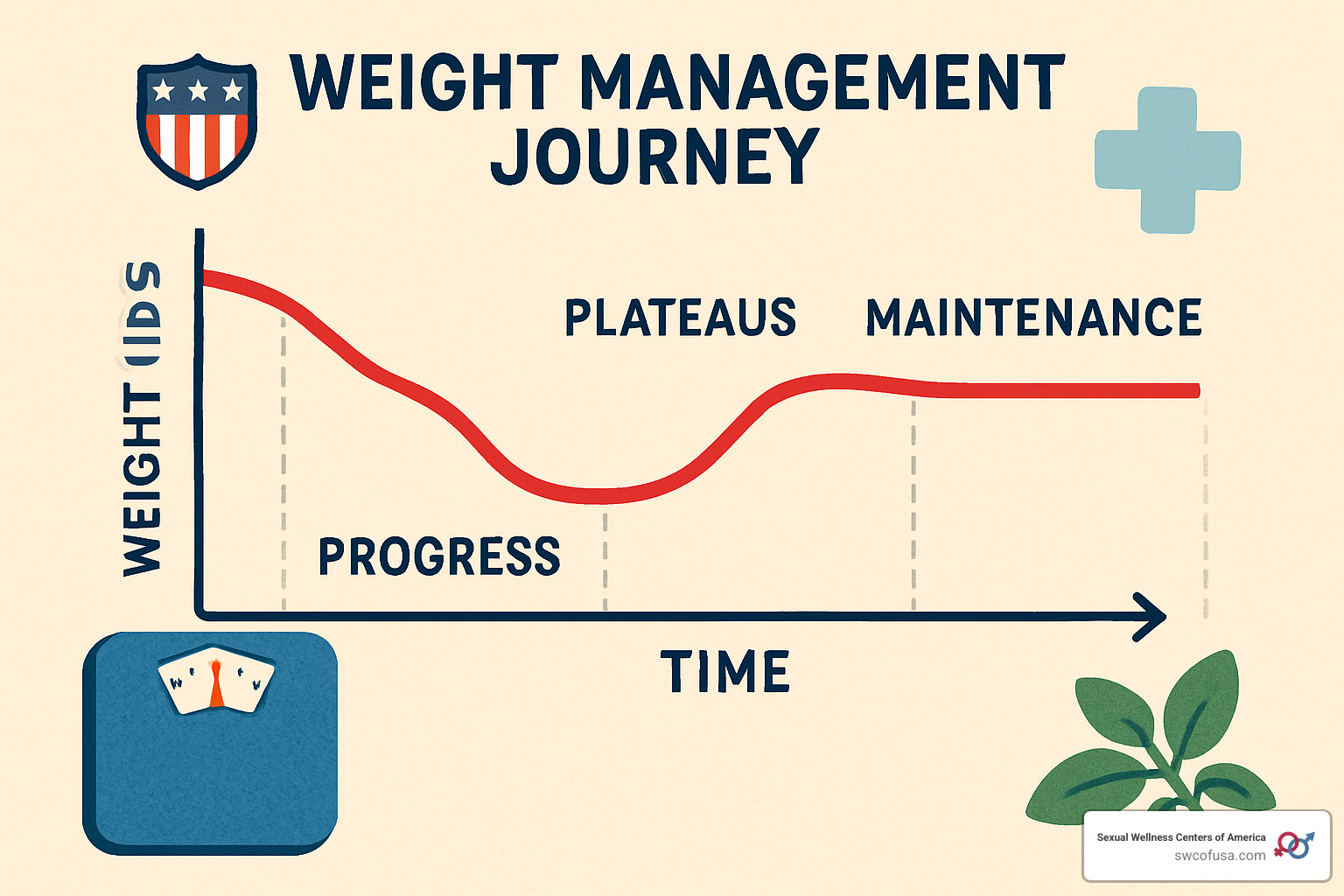
Let’s be honest – losing weight is challenging, but keeping it off can be even harder. Your body is biologically programmed to defend against weight loss, which is why so many people struggle with regain. Medical weight loss programs address this reality through several proven strategies:
Maintenance Dosing means continuing medications (often at the same or reduced doses) to help sustain your results. Just as someone with high blood pressure might need ongoing medication, weight management may require continued support.
Habit Formation focuses on developing sustainable eating and activity patterns that become second nature rather than feeling like a constant struggle. Small, consistent changes create big results over time.
Regular Monitoring, though less frequent than during active weight loss, provides accountability and early intervention if weight begins to creep back.
Trigger Management helps you identify and develop strategies for high-risk situations like holidays, stress, or travel that might otherwise derail your progress.
At Sexual Wellness Centers of America, we view weight management as a long-term health journey rather than a quick fix. Our maintenance programs provide the ongoing support needed to sustain your results for years to come. After all, true success isn’t just reaching your goal weight – it’s staying there comfortably.
Learn more about our comprehensive weight loss management services in Colleyville, TX or explore our full range of health and wellness services.
Frequently Asked Questions about Medical Weight Loss
How long will I need to stay on medication?
When patients begin their medical weight loss journey, this is often one of their first questions – and it’s an important one.
Weight management medications aren’t quick fixes or temporary solutions. They’re more like medications for other chronic conditions such as high blood pressure or diabetes – designed for long-term management. Your body has powerful biological mechanisms that work to maintain weight, which is why many patients experience weight regain when medications are discontinued.
Here’s what you can realistically expect:
If you achieve and maintain at least 5% weight loss without troublesome side effects, continuing medication makes good medical sense. For most people with obesity, long-term or even indefinite use may be necessary to maintain your results – though some patients can transition to a lower maintenance dose once they’ve reached their goals.
At Sexual Wellness Centers of America, we believe in setting clear expectations from day one. We’ll have honest conversations about medication duration and develop personalized recommendations based on your unique response and health goals. We also regularly reassess the benefit-risk ratio to ensure the treatment continues to serve you well.
Can teenagers join a medical weight loss program?
Yes – and with childhood obesity rates rising, this has become an increasingly important question for many families.
Several medical weight loss interventions have received FDA approval specifically for adolescents, including:
Orlistat for teens 12 and older
Semaglutide (Wegovy®) for chronic weight management in adolescents 12+ with obesity
Liraglutide (Saxenda®) also for adolescents 12+ with obesity
However, treating teens requires a significantly different approach than adult weight management. Adolescent bodies are still developing, and their nutritional and psychological needs are unique. At Sexual Wellness Centers of America, our teen programs are supervised by providers with pediatric expertise and always include family involvement when possible.
Rather than focusing solely on weight loss, we emphasize healthy growth and development. We carefully screen for eating disorders or body image concerns and build programs around sustainable healthy behaviors rather than restrictive approaches that could harm developing bodies and minds.
What happens if I stop the medication?
This might be the most crucial question to understand before starting any medical weight loss medication. The reality – which we believe in discussing openly – is that most patients will experience some degree of weight regain if medication is discontinued.
This isn’t a reflection of personal willpower or commitment. It’s simply how our biology works. Research consistently shows that after stopping GLP-1 medications like semaglutide, patients typically regain about two-thirds of their lost weight within a year. The rate and amount vary between individuals, but some regain is almost universal.
While maintaining your new healthy lifestyle habits can help minimize regain, these changes alone usually aren’t enough to prevent it entirely. That’s why we now understand obesity as a chronic condition requiring ongoing management – similar to how we approach diabetes or hypertension.
At Sexual Wellness Centers of America in Colleyville, TX, we help our patients understand these realities from the beginning. If medication needs to be discontinued for any reason, we typically recommend a gradual tapering approach rather than sudden discontinuation, and we’ll work closely with you to develop strategies to maintain as much of your progress as possible.
Conclusion
The journey to sustainable weight loss doesn’t have to be a lonely uphill battle. Medical weight loss has transformed how we approach weight management, moving beyond the oversimplified “just eat less and exercise more” advice that leaves so many feeling defeated.
When you choose a medical weight loss program, you’re choosing a path backed by science and supported by professionals who understand that your weight struggles aren’t due to lack of willpower. Your body has powerful biological mechanisms that fight against weight loss – and now we have the tools to work with your biology, not against it.
What makes medical weight loss different? It’s the combination of prescription medications that address hunger hormones, personalized nutrition plans that fit your life, physical activity recommendations that build strength and endurance, and behavioral support that helps you steer emotional eating and other challenges.
At Sexual Wellness Centers of America in Colleyville, TX, we see weight management as a health journey, not a number on a scale. Our patients tell us that beyond just losing weight, they’re sleeping better, moving more easily, and feeling more confident in their daily lives.
Remember these five truths about medical weight loss:
- It’s grounded in science and research, not trends or fads
- It’s custom specifically to your body, health history, and goals
- It addresses all aspects of weight – physical, emotional, and environmental
- It provides professional guidance to ensure safety and effectiveness
- It offers long-term support for a condition that requires ongoing care
If you’ve tried countless diets only to regain the weight (and then some), please know that it’s not your fault. Your body is designed to defend its weight, and sometimes you need medical intervention to overcome those biological barriers.
We invite you to find what’s possible when you have the right support, the right medications, and a plan designed just for you. At Sexual Wellness Centers of America, we’re committed to helping you achieve not just weight loss, but true health improvement that lasts.
The path to sustainable weight management is within reach. Let us help you take that first step.