
Why Traditional Depression Treatments Fall Short
Peptide therapy for depression is an emerging strategy that works with the brain’s own chemical messengers instead of pushing a single neurotransmitter system. This matters because the standard “serotonin-only” model leaves many people untreated or only partly relieved.
Quick facts:
• Mechanism: Targets neuropeptides such as hypocretin, oxytocin and vasopressin that fine-tune mood and stress circuits.
• Need: Roughly one-third of patients never reach remission with first-line antidepressants.
• Precision: Peptide regimens can be matched to a person’s unique peptide profile and genetics.
• Scope: Depression surged to 33.7 % globally after COVID-19, underlining the gap in care.
Recent UCLA work shows hypocretin peaks during positive emotions and social contact, while people with narcolepsy (who lose 95 % of hypocretin cells) frequently develop depression. The finding links peptide loss directly to low mood.
Traditional care still relies on a trial-and-error SSRI sequence that can take months and produces side effects—sexual dysfunction, weight gain, emotional blunting—that drive people to quit. Costs mount quickly, both in dollars and lost quality of life.
I’m Jeff Nuziard, CEO of Sexual Wellness Centers of America in Colleyville, TX. After seeing precision therapies transform sexual health, I’m convinced that a similar peptide-guided approach can rewrite the playbook for mood disorders.
Why Look Beyond SSRIs?
• Placebo-level benefits in a sizable minority of users
• 4–6-week lag before relief
• High rate of residual symptoms even in “responders”
• Side-effect burden that fuels non-adherence
Peptide therapy for depression addresses these pain points by modulating the neuropeptide networks that already keep mood, energy and connection in balance.
Understanding Neuropeptides and Mood Regulation
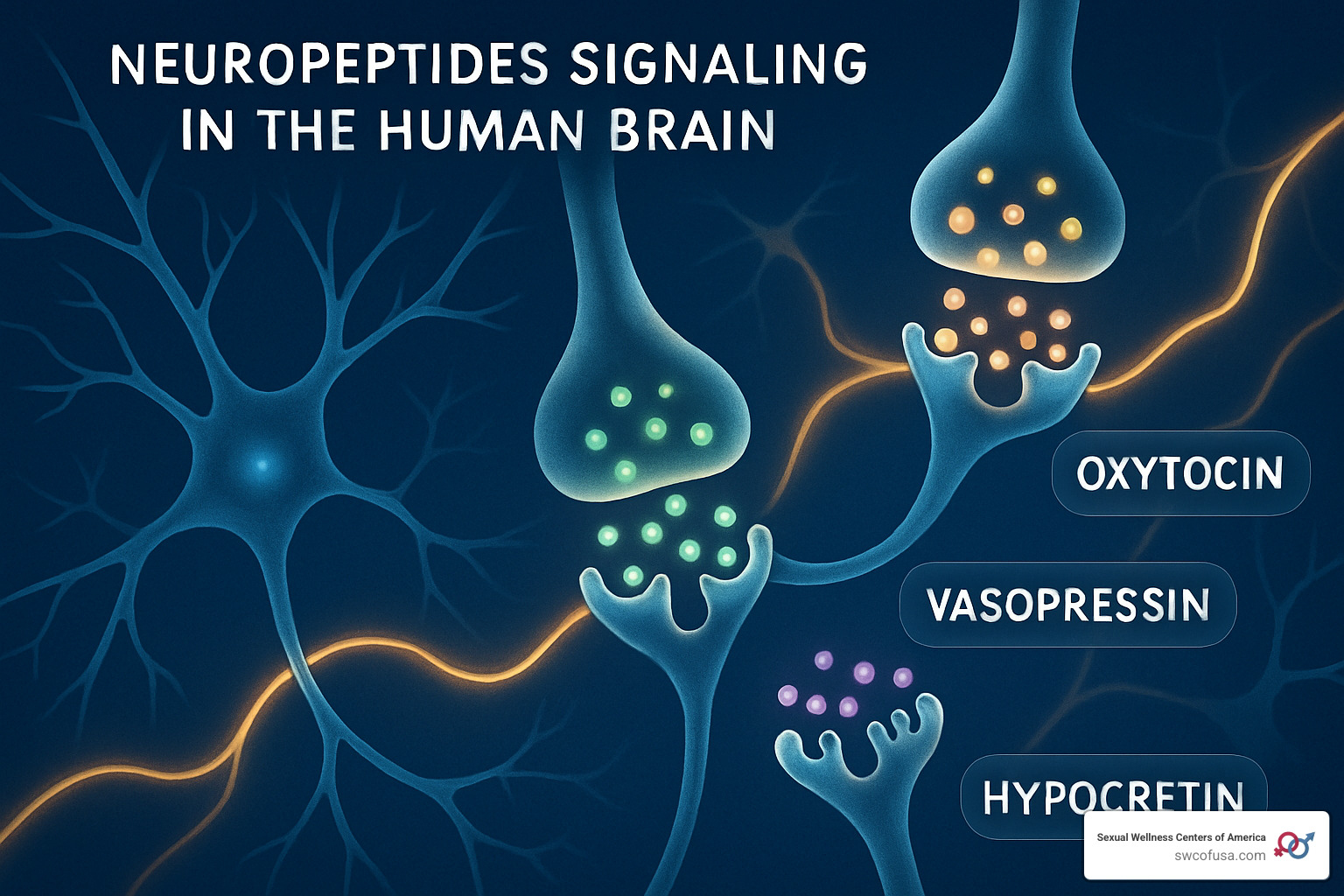
Your brain is more than serotonin and dopamine. It relies on dozens of neuropeptides—short chains of amino acids that deliver nuanced, context-specific instructions. Think of neurotransmitters as “light switches” and neuropeptides as the “dimmers” that set intensity and tone.
Core Mood-Related Peptides
• Hypocretin (orexin): Links wakefulness, motivation and positive emotion. Deficiency appears in narcolepsy and some depressive states.
• Oxytocin: The social-bonding and stress-buffer molecule; calms the amygdala.
• Vasopressin: Regulates the HPA (stress) axis through V1B receptors.
• Neuropeptide Y (NPY): Anxiolytic; correlates with stress resilience.
• Melanin-concentrating hormone (MCH): Couples sleep architecture to mood.
• CRF and α-MSH: Gatekeepers of stress response via melanocortin receptors.
Cross-Talk With Classic Neurotransmitters
Neuropeptides don’t replace serotonin, dopamine, GABA or glutamate—they refine them. Raising oxytocin, for example, improves serotonin receptor binding; NPY dampens excessive glutamate drive. Because peptides exhibit receptor specificity, therapy can zero in on circuits that matter while sparing the rest of the brain.
Key Neuropeptide Targets Linked to Depression & Anxiety
Scientists have homed in on several peptide systems that influence mood in ways traditional drugs cannot.
Hypocretin: The Motivation Switch
UCLA researchers recorded real-time spikes in hypocretin when volunteers felt joy or social connection. Narcoleptic patients—who lose hypocretin neurons—show high depression rates, hinting at a causal link.
Oxytocin: Natural Stress Shield
Oxytocin lowers amygdala reactivity, promotes trust and speeds recovery after social stress. Intranasal delivery can produce measurable effects within minutes, though dose and setting matter (the “oxytocin paradox”).
Vasopressin V1B Antagonists
Over-active vasopressin keeps the HPA axis stuck in high gear. Blocking V1B receptors with molecules such as SSR149415 normalizes cortisol rhythms and relieves depressive-like behavior in animal models. Early human studies are under way.
Neuropeptide Y: Resilience Booster
Higher NPY predicts better adaptation in extreme stress (e.g., combat soldiers). Synthetic NPY analogs aim to recreate this built-in shock absorber for PTSD and depression.
Peptide Therapy for Depression: How It Works

Instead of flooding the brain with serotonin, peptide therapy uses receptor-selective agonists or antagonists to adjust mood circuitry directly. Delivery routes matter:
• Intranasal sprays: Fast, needle-free, bypass the blood-brain barrier.
• Injectables (sub-Q / IM): Longer-lasting depot effects when needed.
• Emerging forms: Liposomal, transdermal and sublingual carriers.
Key mechanisms:
- Synaptic plasticity: Peptides spur growth factors that rewire negative thought loops.
- Neurogenesis: Restoration of hippocampal volume compromised by chronic stress.
- Cortisol control: V1B or CRF modulation quiets an over-active HPA axis.
- Anti-inflammatory action: Dampens cytokines linked to low mood.
Personalized Protocols
Sexual Wellness Centers of America already use hormone and micronutrient panels; the same approach applies to peptides. Biomarker testing plus pharmacogenomics guide which peptide—or combination—best fits your biology.
Comparing Peptide Therapy for Depression with Traditional Antidepressants
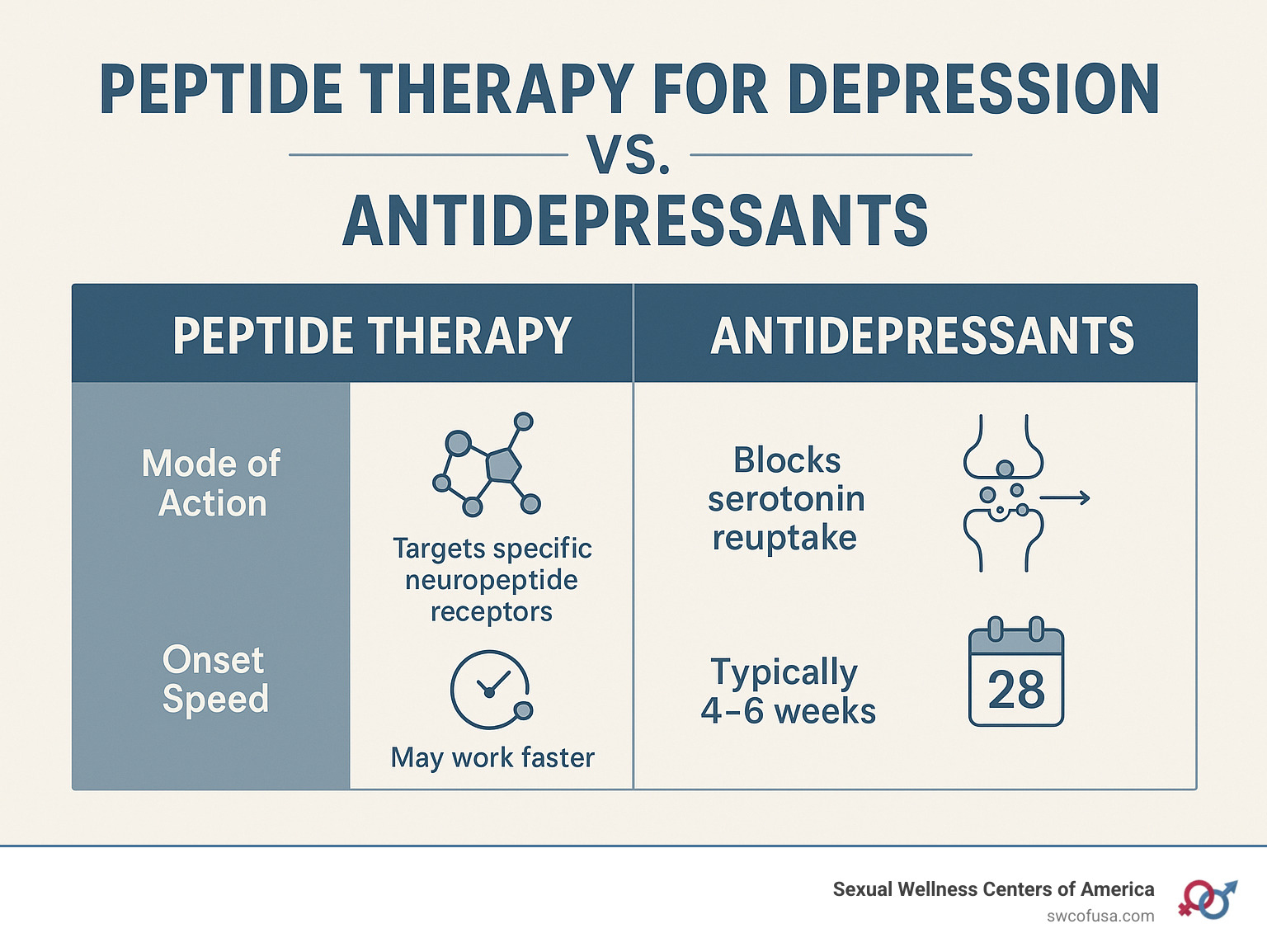
| Feature | SSRIs/SNRIs | Targeted Peptides |
|---|---|---|
| Primary Action | Global serotonin or norepinephrine increase | Receptor-specific modulation (hypocretin, oxytocin, V1B, etc.) |
| Onset | 4–6 weeks typical | Hours to days (varies by peptide) |
| Side Effects | GI upset, sexual dysfunction, weight gain, emotional blunting | Usually mild; depend on peptide & dose |
| Tolerance / Withdrawal | Possible | Rare because therapy works with natural pathways |
| Personalization | Limited | High (biomarkers + genetics) |
Trade-offs to Consider
Pros of peptides: precision, faster onset, fewer systemic effects, less drug-drug interaction.
Cons: higher cost, special storage, and fewer long-term studies.
Innovations like intranasal sprays and depot injectables are overcoming former delivery problems.
Evidence From Bench to Bedside
Animal work first proved that blocking vasopressin V1B or boosting oxytocin and NPY can reverse depressive-like behaviors. Human cerebrospinal fluid studies then confirmed peptide imbalances in major depressive disorder.
Key milestones:
• UCLA hypocretin imaging tied real-time peptide surges to positive emotion.
• Phase II V1B trials are testing oral antagonists in SSRI-resistant patients.
• Intranasal oxytocin adjunct studies show additive benefits for social withdrawal.
• MC4R modulators aim to treat mood and metabolic dysfunction simultaneously.
Regulatory path:
• Several neuropeptide agents now carry FDA Breakthrough Therapy status.
• Compassionate-use and compounding pharmacy avenues allow clinician-directed access for qualified patients today.
Scientific research on neuropeptide treatments continues to expand the evidence base.
Future Directions & Integrative Approaches
What’s next?
• Multi-peptide cocktails: Orchestrate several pathways for synergistic relief.
• AI-guided design: Algorithms craft peptide sequences matched to your genome.
• Gut–brain angles: GLP-1 agonists, ghrelin modulators and psychobiotics may amplify peptide therapy.
• Combo with neuromodulation: rTMS or vagus-nerve stimulation plus peptides could reinforce plasticity.
Lifestyle still counts—exercise, meditation and social engagement naturally lift beneficial peptides and can boost treatment durability.
Frequently Asked Questions about Peptide Therapy for Depression
Is peptide therapy FDA-approved?
Not yet for depression, but several candidates have Breakthrough Therapy designation and may receive approval in coming years. Off-label or compounded use is possible under physician supervision.
How fast will I notice changes?
Some people feel lighter or more connected within hours of an intranasal dose; others need several weeks. Expect a personalized timeline, similar to physical therapy for the brain.
Can I keep my current antidepressant?
Often yes, since peptides use different pathways, but adjustments must be made by a qualified provider to avoid overlaps in blood-pressure or cortisol effects.
Conclusion
Peptide therapy for depression moves mental-health care from guessing games to precision medicine. By tuning the brain’s own messengers—hypocretin for joy, oxytocin for connection, vasopressin and CRF for stress—we can target the root of mood dysregulation.
Sexual Wellness Centers of America in Colleyville, TX has already demonstrated the power of custom biology with a 97.2 % success rate in reversing erectile dysfunction using personalized protocols like HEshot®™ and SHEshot®™. The same individualized mindset guides our peptide-based mental-health programs.
If standard antidepressants have fallen short, exploring peptide-guided care could be your next step toward lasting relief.
More info about regenerative peptide protocols