
Understanding Sexual Health: More Than Just the Absence of Disease
Sexual health is a state of physical, emotional, mental, and social well-being related to sexuality—not just the absence of disease or dysfunction. It encompasses everything from safe and pleasurable experiences to respectful relationships, reproductive choices, and access to quality information and care.
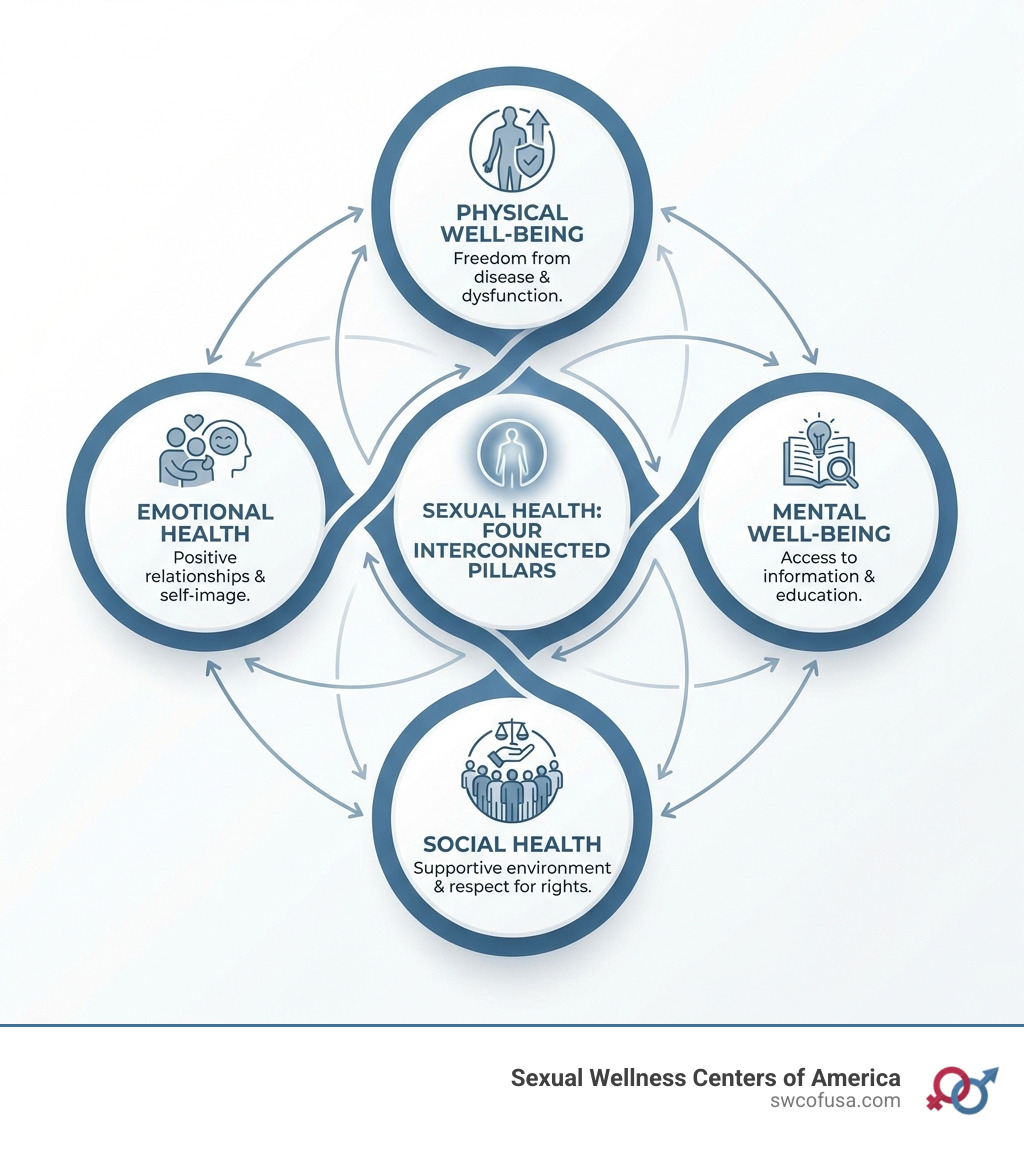
Key aspects of sexual health include:
- Physical well-being – Freedom from STIs, sexual dysfunction, and reproductive health issues
- Emotional health – Positive self-image, healthy relationships, and freedom from coercion or violence
- Mental well-being – Access to comprehensive information and education about sexuality
- Social health – Living in an environment that affirms and supports sexual wellness
According to the World Health Organization, achieving sexual health requires access to good-quality information, knowledge about risks, ability to access healthcare, and living in an environment that promotes sexual health. Sexual health-related issues range from sexual orientation and gender identity to pleasure and relationships, as well as concerns like STIs, unintended pregnancy, sexual dysfunction, and sexual violence.
Unfortunately, many people face barriers to sexual health. Fear of unplanned pregnancy, concerns about infertility, lack of information about STIs, chronic diseases, and certain medications can all impact sexual wellness. The good news? With the right knowledge, resources, and support, most sexual health challenges can be addressed effectively.
As Jeff Nuziard, CEO of Sexual Wellness Centers of America, I’ve dedicated my career to breaking stigmas and providing cutting-edge, science-backed solutions for sexual health concerns. My team and I are committed to helping individuals improve their intimate health through personalized, confidential care.
This guide will walk you through everything you need to know about sexual health—from understanding what it really means to exploring modern treatment options that can help you achieve optimal wellness at any age.
Find more about sexual health:
- natural erectile dysfunction remedies
- sexual wellness clinic near me
- sexual wellness doctors near me
Defining Sexual Health: A Holistic Perspective
When we talk about sexual health, we’re often thinking beyond just the physical act of sex. The World Health Organization (WHO) provides a comprehensive definition that truly captures its holistic nature: “Sexual health is a state of physical, emotional, mental and social well-being in relation to sexuality; it is not merely the absence of disease, dysfunction or infirmity. Sexual health requires a positive and respectful approach to sexuality and sexual relationships, as well as the possibility of having pleasurable and safe sexual experiences, free of coercion, discrimination and violence.” This definition underscores that true sexual health is about a positive, respectful, and safe experience of sexuality, free from any form of pressure or harm.
Why is this holistic view so important? Because sexual health is fundamental to our overall well-being. It contributes significantly to the health and happiness of individuals, couples, and families. When we are sexually healthy, we tend to experience higher self-esteem, better relationships, and a greater sense of life satisfaction. Conversely, issues in this area can lead to stress, anxiety, and relationship difficulties, impacting our mental and emotional states.
Achieving and maintaining sexual health is not just an individual pursuit; it also has broader implications for communities and countries. When individuals are empowered with knowledge and access to care, it fosters a healthier society. This includes our mental well-being, our ability to have respectful approaches to our sexuality, to experience pleasurable and safe sexual encounters, and to live free from coercion. Sexual health is a cornerstone of our complete well-being, integrating physical, emotional, mental, and social aspects into a harmonious whole. You can learn more about this comprehensive definition from the WHO’s work on sexual health.
Key Components of a Healthy Sexual Life
Achieving and maintaining optimal sexual health involves several interconnected factors. It’s about empowering individuals with knowledge and resources, fostering healthy relationships, and ensuring access to quality care. Our ability to achieve sexual health and well-being depends on our access to comprehensive, good-quality information about sex and sexuality, knowledge about the risks we may face, our vulnerability to adverse consequences of unprotected sexual activity, our ability to access sexual health care, and living in an environment that affirms and promotes sexual health.

At its core, a healthy sexual life thrives on consent, open communication, and the quality of our relationships. Consent is paramount, ensuring all sexual activity is mutually desired and freely given. Effective communication allows us to express our desires, boundaries, and concerns, fostering intimacy and trust. The quality of our relationships, whether romantic or platonic, significantly impacts our emotional and social well-being, which are integral to our sexual health.
The Role of Education in Sexual Health
Education plays a pivotal role in cultivating sexual health. Comprehensive information about sex and sexuality equips us with the understanding needed to make informed decisions. This includes awareness of potential risks and vulnerabilities associated with unprotected sexual activity. Digital health literacy, as highlighted by research on digital health literacy, is increasingly important, enabling us to steer online resources effectively to find accurate and reliable sexual health information.
Beyond just avoiding negative outcomes, education also contributes to positive aspects of sexual health, such as sexual satisfaction. For instance, research on sexual satisfaction explores how it indicates overall sexual health and well-being. This demonstrates that education isn’t just about problem prevention, but also about enhancing the positive experiences of sexuality.
Access to Quality Healthcare and Support
Access to quality healthcare is non-negotiable for sexual health. This includes regular screenings for sexually transmitted infections (STIs), access to contraception, and comprehensive care for any sexual health concerns. Our clinics, like Sexual Wellness Centers of America in Colleyville, TX, provide a discreet and professional environment for these services, ensuring you receive the personalized attention you need. We understand the importance of accessible care and strive to provide resources that support your journey.
In Colleyville, TX, we focus on providing local resources and referrals, ensuring our community members have direct access to the care they need. This includes consultations for various sexual health concerns and connections to specialized services.
Understanding and Preventing Sexual Health Issues
Sexual health encompasses a wide array of issues, including both positive aspects like sexual expression, relationships, and pleasure, and negative consequences or conditions. These negative consequences can range from infections like HIV, sexually transmitted infections (STIs), and reproductive tract infections (RTIs) to unintended pregnancy, sexual dysfunction, sexual violence, and harmful practices such as female genital mutilation (FGM). Understanding these challenges is the first step toward prevention and effective management.
Addressing Infectious Diseases and Prevention
Sexually transmitted infections (STIs) remain a significant public health concern. Common STIs include Chlamydia, Gonorrhea, Syphilis, Human Papillomavirus (HPV), Herpes, and HIV. Prevention is key, and several strategies can significantly reduce the risk of transmission:
- Condom Use: Consistent and correct use of condoms is highly effective in preventing many STIs and unintended pregnancies.
- PrEP (Pre-Exposure Prophylaxis): For individuals at high risk of HIV, PrEP is a highly effective medication that can prevent HIV infection. Research on PrEP distribution in pharmacies highlights efforts to make this vital prevention tool more accessible.
- Regular Testing: Many STIs are asymptomatic, meaning they show no visible signs. Regular testing, especially after unprotected sex or with new partners, is crucial for early detection and treatment. Our clinics offer confidential and comprehensive STI screening.
- Vaccinations: Vaccines are available for some STIs, most notably HPV. The global and regional estimates of genital human papillomavirus prevalence among men underscore the importance of widespread vaccination to reduce the burden of HPV-related diseases.
It’s also important to be aware of other infectious disease considerations. For example, research on viral shedding of SARS-CoV-2 in body fluids associated with sexual activity explores potential transmission routes for viruses beyond traditional STIs. Similarly, studies like those on the persistence of Ebola virus in semen remind us that infectious agents can have complex interactions with sexual health. For HIV, the concept of U=U (Undetectable = Untransmittable) is a powerful message: people living with HIV who achieve and maintain an undetectable viral load through treatment cannot sexually transmit HIV to others, reducing both transmission and stigma.
For comprehensive STI screening, including HIV and syphilis, standardized protocols exist to ensure effective testing, even in non-clinical settings, as shown by research on clinical utility evaluation of dual point-of-care tests.
TABLE: Common Contraception Methods
| Method | Description | Effectiveness (typical use) | Advantages |
Sexual Health: A Framework for Well-
Sexual orientation and gender identity are central to sexual health. The ability to express one’s identity and orientation freely, without fear of discrimination, is crucial for well-being. Individuals have sexual rights that are already recognized in international and regional human rights documents. These rights protect our ability to fulfill and express our sexuality and enjoy sexual health, with due regard for the rights of others and within a framework of protection against discrimination. These rights include:
- Equality and non-discrimination: The right to be treated equally, regardless of sexual orientation or gender identity.
- Freedom from torture: Protection from cruel, inhuman, or degrading treatment.
- Privacy: The right to control personal information and choices about one’s body and sexuality.
- Highest attainable standard of health: Access to quality healthcare services for sexual health.
- Reproductive rights: The right to make decisions about reproduction, including contraception and abortion.
- Information and education: Access to comprehensive and accurate sexual health information.
- Freedom of opinion and expression: The right to express one’s sexuality and identity.
When these rights are respected, individuals are more likely to seek out necessary care and information, leading to better sexual health outcomes. Conversely, discrimination and lack of recognition can create significant barriers to accessing care and living a healthy sexual life.
Promoting Sexual Health Across Different Age Groups
Sexual health is a lifelong journey, with unique considerations at every stage of life.
- Children: Early education about bodies, consent, and healthy relationships lays a foundation for future sexual health. Open communication with parents and caregivers about questions related to sex helps children develop a positive understanding of sexuality.
- Teenagers: This period involves significant physical and emotional changes. Education on puberty, contraception, STI prevention, and healthy relationships is crucial. Teenagers need access to confidential sexual health services and accurate information to make informed decisions.
- Men: Common sexual health concerns for men include erectile dysfunction, prostate health, and STI prevention. Understanding the male reproductive system is key.
- Women: Women’s sexual health considerations often include reproductive health, contraception, menstrual health, and menopause. Understanding the female reproductive system is essential.
- Older Adults: Sexual health and intimacy remain important as we age. However, chronic diseases like heart disease or cancer, and certain medications, can impact sexual desire and function. It’s important to address these concerns with healthcare providers to maintain intimacy and quality of life. Resources like those from the AGS Health in Aging Foundation can provide valuable insights for older adults.
Modern Innovations in Sexual Wellness
At Sexual Wellness Centers of America in Colleyville, TX, we understand that sexual health is a vital part of your overall well-being at any age. That’s why we’re committed to offering cutting-edge, personalized solutions to address a wide range of sexual health concerns. We believe in breaking down stigmas and providing a supportive environment where you can openly discuss your needs.
Our innovative treatments are designed to restore and improve your sexual vitality. For men, we offer the HEshot®™, a treatment aimed at improving erectile function and overall sexual performance. For women, the SHEshot®™ is custom to improve sensation, lubrication, and alleviate various sexual health issues.
We also use advanced regenMAX® technology, which leverages the body’s natural healing capabilities to promote tissue regeneration and improved function. Our approach is highly personalized, recognizing that each individual’s needs are unique. We conduct comprehensive hormone and vitamin panels to identify underlying imbalances that may be impacting your sexual health, allowing us to create a customized treatment plan just for you.
One of our most significant achievements is our reported 97.2% efficacy in erectile dysfunction reversal. This remarkable success rate underscores our commitment to delivering tangible results and helping our patients regain confidence and intimacy. We’re not just treating symptoms; we’re addressing the root causes to foster lasting sexual health and rejuvenation.
Frequently Asked Questions about Sexual Health
What are the most common sexually transmitted infections?
While the prevalence can vary, some of the most common sexually transmitted infections (STIs) globally include Chlamydia, Gonorrhea, Syphilis, Human Papillomavirus (HPV), Herpes Simplex Virus (HSV), and Human Immunodeficiency Virus (HIV). Many of these can be asymptomatic, meaning they show no noticeable symptoms, which is why regular testing is so important. Hepatitis B and C are also blood-borne infections that can be transmitted sexually. Early detection and treatment are crucial to prevent long-term complications and further transmission.
How does age affect sexual health and intimacy?
Age brings various changes to sexual health and intimacy, affecting both men and women. For men, concerns like erectile dysfunction, decreased libido, and changes in ejaculation patterns can become more common. For women, hormonal shifts during menopause can lead to vaginal dryness, reduced libido, and discomfort during sex. However, aging does not mean the end of a fulfilling sexual life. Many older adults continue to enjoy intimacy and sexual activity. Factors such as chronic diseases (like heart disease or cancer), medications, and psychological factors can also influence sexual health in older adults. Open communication with partners and healthcare providers, along with seeking appropriate treatments, can help maintain a healthy and satisfying sexual life at any age. The National Institute on Aging provides further insights into sexuality and intimacy in older adults.
What is the difference between sexual health and reproductive health?
While often discussed together, sexual health and reproductive health are distinct yet interconnected concepts. Sexual health is a broad term that encompasses the physical, emotional, mental, and social well-being related to sexuality. It includes aspects like sexual pleasure, respectful relationships, freedom from coercion and discrimination, and the ability to express one’s sexual identity. It’s about a positive and respectful approach to sexuality in all its forms.
Reproductive health, on the other hand, specifically focuses on the reproductive system and its functions and processes at all stages of life. This includes topics like fertility, family planning, pregnancy, childbirth, and maternal health. While reproductive choices are a component of sexual health, sexual health extends beyond the ability to reproduce, emphasizing overall well-being and positive experiences of sexuality.
Conclusion
Sexual health is far more than just the absence of disease; it’s a vibrant, holistic component of our overall well-being. It encompasses our physical state, our emotional connections, our mental clarity, and our social environment. By adopting a comprehensive and rights-based framework, we empower ourselves and others to seek information, access care, and enjoy pleasurable and safe sexual experiences free from coercion and discrimination.
Understanding the key components of a healthy sexual life, from education and consent to access to quality healthcare, allows us to proactively address issues and foster positive outcomes. Whether it’s preventing STIs, managing sexual dysfunction, or simply understanding how sexual health evolves with age, informed choices lead to better lives. At Sexual Wellness Centers of America in Colleyville, TX, we are dedicated to providing the innovative solutions and personalized care needed to support your journey toward optimal sexual health. We believe that everyone deserves the opportunity to experience a fulfilling and healthy sexual life.
To learn more about how we can support your sexual health journey, please visit our services page: More info about sexual health services