
A man in his late 40s or early 50s often arrives at this question after a frustrating bedroom experience. A prescription helped somewhat, but the erection still isn't dependable, the timing feels restrictive, or the result doesn't match what he wants. He isn't necessarily looking for a miracle. He wants to know whether shockwave for ED can address the vascular problem behind the symptom instead of helping for one encounter.
That's the right question, but the answer requires more nuance than most clinic advertisements provide. Low-intensity extracorporeal shock wave therapy, or Li-ESWT, is a noninvasive treatment that has been studied in randomized trials and meta-analyses, yet its benefits vary by diagnosis, protocol, and follow-up period. The most important issue is often not whether a man improves during the first few months. It's what happens after month six.
Table of Contents
- Why Men Are Searching for a Better ED Treatment in 2026
- What Shockwave for ED Actually Does to the Tissue
- What the Research Shows and Where the Evidence Is Thin
- How Shockwave Compares to Pills, Injections, and Surgery
- Inside a Typical Shockwave Protocol Including REGENwave
- Who Is a Good Candidate and Who Should Avoid It
- The Maintenance Question No One Talks About Enough
- Costs, Questions to Ask, and Next Steps
Why Men Are Searching for a Better ED Treatment in 2026
The search usually starts after partial success
Most men don't begin researching acoustic therapy because they're curious about medical technology. They start after a pill produces an incomplete erection, causes unwanted effects, or works only when several conditions line up. Some men dislike planning intimacy around medication. Others want to avoid escalating to injections, vacuum devices, or surgery.
That makes shockwave attractive. It promises an office-based approach aimed at penile tissue and circulation, rather than a temporary response created only when medication is active. The distinction matters, but the marketing language can easily get ahead of the evidence.
Low-intensity shockwave therapy emerged as a noninvasive ED treatment and has since been evaluated in multiple randomized trials and meta-analyses, particularly for vasculogenic ED, where impaired blood supply contributes to erection difficulty. A systematic review and meta-analysis of randomized controlled trials found improvements in erectile function and erection hardness compared with control treatment.
Why branded protocols create confusion
Men now encounter generic terms such as Li-ESWT, focused shockwave, radial acoustic therapy, and proprietary names such as REGENwave. These labels don't automatically tell you whether two clinics use the same device, energy level, pulse count, treatment sites, or follow-up process.
That's why a named protocol shouldn't be judged by branding alone. A responsible consultation should explain the device, treatment parameters, anatomical targets, patient selection process, and plan for measuring results. A clinic should also explain what happens if improvement is modest or fades.
Practical rule: Treat shockwave as a medical protocol, not as a single standardized product.
The sensible place for Li-ESWT is within the ED treatment ladder. It may suit a man with mild-to-moderate vascular ED who wants a noninvasive option, but it isn't a guaranteed cure, and it won't correct every hormonal, neurological, psychological, medication-related, or structural cause of erectile dysfunction.
What Shockwave for ED Actually Does to the Tissue
Low-intensity shockwave therapy uses acoustic pressure waves delivered through a handheld applicator. The energy is far lower than the destructive energy used for kidney-stone treatment. In an ED protocol, the clinician places the applicator against selected areas of the penis and sometimes the crura, using coupling gel so the waves transmit efficiently into tissue.
A useful analogy is controlled mechanical signaling. The pulses create a carefully dosed micro-stress, similar to tapping a construction site and telling nearby cells that repair activity is needed. The goal isn't to injure the penis or break up plaque. It's to stimulate a biological response associated with vascular and tissue support.
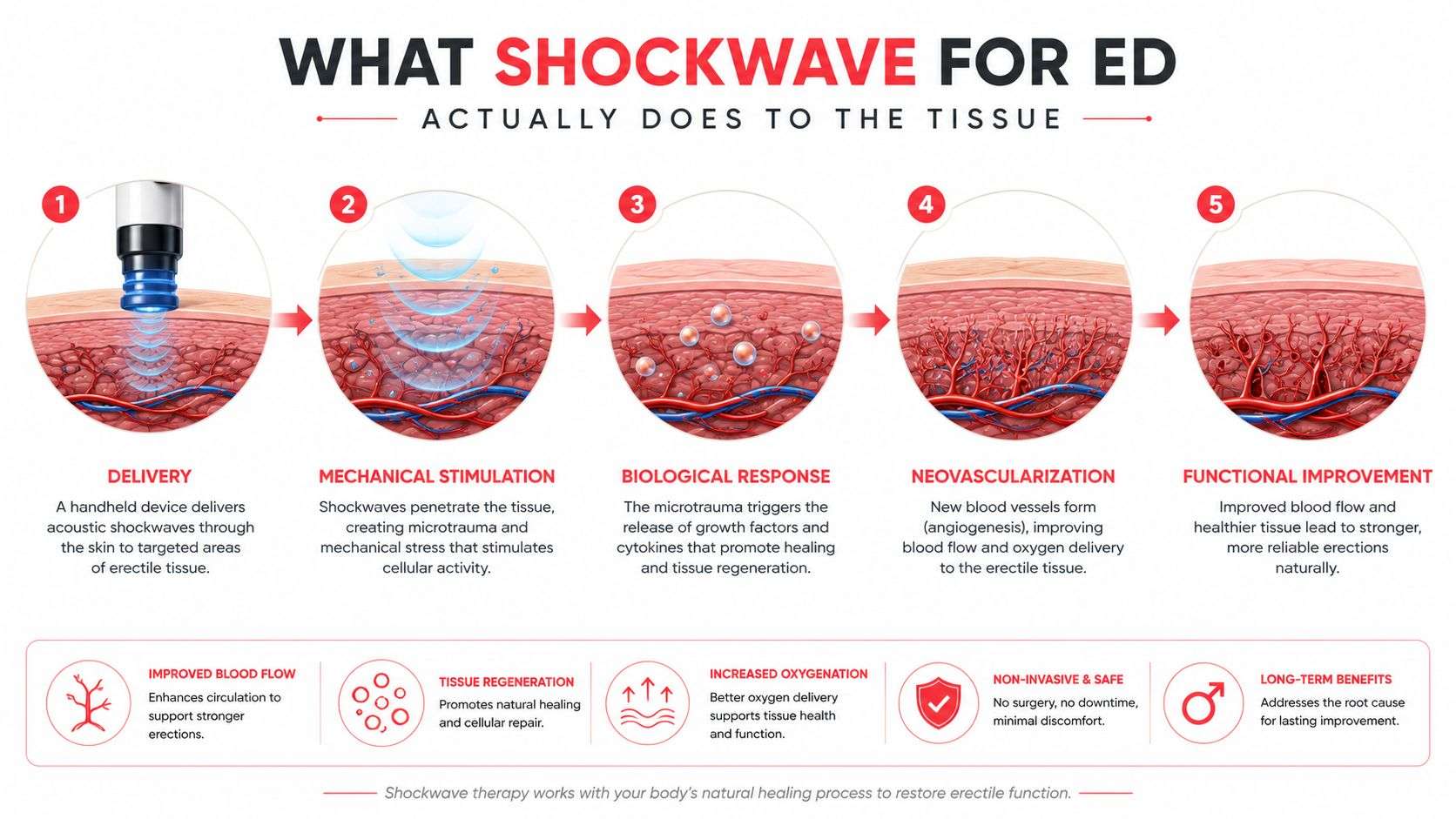
The proposed tissue sequence
The treatment is generally discussed as a sequence:
- Acoustic pulses reach the target tissue. The applicator delivers repeated low-intensity waves through the skin.
- Cells sense mechanical stress. This controlled stimulus can activate signaling pathways involved in repair.
- Vascular signaling increases. Research discussions connect the response with nitric oxide activity, endothelial function, and new vessel formation.
- Local repair processes are recruited. Progenitor and endothelial cells may participate in tissue remodeling.
- Blood-flow mechanics may improve. Better cavernosal filling can support a firmer and more sustainable erection when vascular insufficiency is the dominant problem.
The patient doesn't feel “new blood vessels” forming. What he may notice is easier erection development, improved firmness, better maintenance, or a stronger response to sexual stimulation. Some men notice little change, especially when their ED has a major neurological, hormonal, medication-related, or psychological component.
Why parameters matter
Energy flux density, pulse count, treatment frequency, probe design, and treatment zones vary between devices and clinics. That variation makes the word “shockwave” less informative than the actual treatment sheet.
A focused linear approach and a radial approach also don't deliver energy in exactly the same way. A recent systematic review comparing focused and radial approaches found that both were studied for erectile function, while also reporting substantial heterogeneity across the evidence base. The practical lesson is simple: ask what device is being used and why its settings fit your diagnosis.
What the Research Shows and Where the Evidence Is Thin
The evidence supports a modest, measurable benefit for selected men with vasculogenic ED, not a universal reversal of erectile dysfunction. A 2019 analysis of randomized trials found a pooled IIEF-EF gain of 3.97 points, with a 95% confidence interval of 2.09 to 5.84 and p<0.0001. The same published systematic review and meta-analysis reported an odds ratio of 4.35 for achieving an Erection Hardness Score of at least 3. A practical overview of what the shockwave evidence shows can help patients understand how these outcomes translate to treatment decisions.
For a patient, an IIEF-EF change represents improved erection-related function, not a promise of spontaneous normal erections. A man who currently becomes partly firm may achieve better reliability. Someone with severe, longstanding dysfunction may still need medication or another treatment.
The same analysis reported a peak systolic velocity increase of 4.12 units, with a 95% confidence interval of 2.30 to 5.94 and p<0.00001. Peak systolic velocity is a penile Doppler measure related to arterial inflow. A measurable Doppler change can support a vascular response, but it does not guarantee a dramatic functional transformation.
| Outcome Measure | Typical Reported Change | Patient-Relevant Meaning |
|---|---|---|
| IIEF-EF | +3.97 points in a randomized-trial meta-analysis | Some men may experience better erection quality, firmness, or reliability |
| EHS at least 3 | Odds ratio 4.35 versus control in the same analysis | A greater likelihood of an erection hard enough for intercourse, though individual response varies |
| Peak systolic velocity | +4.12 units in the same analysis | A measurable blood-flow signal, not a guarantee of symptom resolution |
| IIEF-EF in later evidence | Significant improvement in a meta-analysis of 12 RCTs involving 882 men, reported in the 2025 meta-analysis | Patient-reported function may improve more consistently than every ultrasound metric |
The more recent 2025 meta-analysis of 12 randomized trials and 882 men found significant improvements in IIEF-EF and in the proportion reaching an EHS of at least 3 compared with sham. It did not find consistent improvement in SEP-question outcomes or penile Doppler measures such as PSV, EDV, or RI. That difference matters because a man's reported erection quality and an ultrasound measurement do not always change together.
Evidence certainty remains limited. A 2025 Cochrane review concluded that treatment may improve erections in the long term and rigidity in the short term, while rating the certainty of evidence as low and noting that the effect may be too small for some men to notice. A systematic review of 799 patients found median IIEF-EF gains of 5.3 at six months, with responses plateauing or declining by twelve months in several studies, as summarized in the published trial and follow-up evidence.
The research also varies in energy settings, probe placement, patient mix, and outcome definitions. Those differences make generic clinic claims difficult to compare with sham-controlled trials or with a proprietary protocol such as REGENwave. The maintenance and durability gap is still important: improvement after the initial course does not establish the same result beyond six months. Set expectations around a probability of benefit, not a guaranteed result.
How Shockwave Compares to Pills, Injections, and Surgery
Li-ESWT shouldn't replace the standard ED ladder. It occupies a different position because it aims to influence the tissue environment and vascular function, while many established treatments create an erection through medication or mechanical support.
| Treatment | Mechanism | Onset and Duration | Invasiveness | Best Fit |
|---|---|---|---|---|
| Oral medication | Enhances the nitric oxide pathway when adequate nerve and vascular function remain | Usually used before sexual activity or on a regular schedule, depending on the prescription; duration varies by medication | Low | Men who respond adequately and tolerate medication |
| Intracavernosal injection | Directly relaxes penile smooth muscle and increases blood filling | Rapid and generally limited to the treatment occasion | Needle-based | Men needing a more reliable pharmacologic response |
| Intraurethral therapy | Delivers medication through the urethra | Used for an individual sexual encounter | Less invasive than an injection, but still local drug delivery | Men seeking an alternative to injections |
| Vacuum erection device | Creates negative pressure to draw blood into the penis, with a constriction ring helping maintain the erection | Mechanical effect during use | Non-surgical, equipment-dependent | Men who want a medication-free mechanical option |
| Li-ESWT | Uses low-intensity acoustic pulses to stimulate tissue and vascular signaling | Delayed response, with durability varying by patient and protocol | Noninvasive office treatment | Selected men with predominantly vasculogenic ED |
| Penile implant | Surgically places an inflatable or malleable device | Immediate mechanical reliability after recovery | Surgical | Refractory ED when other options don't provide an acceptable result |
Pills can be convenient, familiar, and effective, but they depend on an intact response pathway and still function as a treatment for the encounter or dosing period. Injections can produce a stronger response, though many men dislike the technique, and incorrect dosing can create a prolonged erection that requires urgent medical attention.
A vacuum device solves the blood-filling problem mechanically. It doesn't restore vascular function, but it can be valuable for men who can't use certain medications. For men who need dependable, definitive mechanical reliability after other treatments fail, an implant remains the surgical option.
Some patients also explore injection-based regenerative approaches. A clinic's explanation of PRP injection options for penile concerns should distinguish tissue-regenerative claims from established erection-producing therapies. Combining treatments may make clinical sense in selected cases, but it shouldn't be used to obscure uncertainty about any individual component.
Inside a Typical Shockwave Protocol Including REGENwave
A credible protocol starts with diagnosis, not with the applicator. The clinician should review medical history, medications, cardiovascular risk, hormones, erection pattern, and validated questionnaires. When vascular ED is suspected, penile duplex ultrasound can establish baseline blood-flow information and help determine whether the proposed treatment matches the underlying problem.
What happens in the treatment room
A representative office visit may include:
- Baseline assessment. The clinician reviews symptoms and prior treatment response, and may use penile duplex ultrasound to assess arterial inflow and related vascular findings.
- Positioning and preparation. The patient lies back while the clinician identifies the treatment zones. A topical anesthetic may be used for comfort, although low-intensity treatment is commonly tolerated without significant pain.
- Coupling and calibration. Gel helps transfer acoustic energy through the skin. The operator confirms the device setting, pulse count, and applicator type.
- Targeted application. Treatment may cover several standardized sites along the shaft and crura. A representative protocol can use 0.09 mJ/mm² and 1,500 to 3,000 pulses per site, but these settings aren't universal.
- Progress review. Between visits, the clinician asks about erection firmness, medication response, discomfort, and changes in sexual function.
A common clinic schedule may involve six sessions over three weeks, with the exact plan adjusted to the device and patient. That schedule shouldn't be confused with the separate sham-controlled regimen described in the literature, which used 12 sessions over six weeks, 5,000 impulses per session, 0.096 mJ/mm², and 5 Hz in men with moderate ED, as reported in the trial publication.
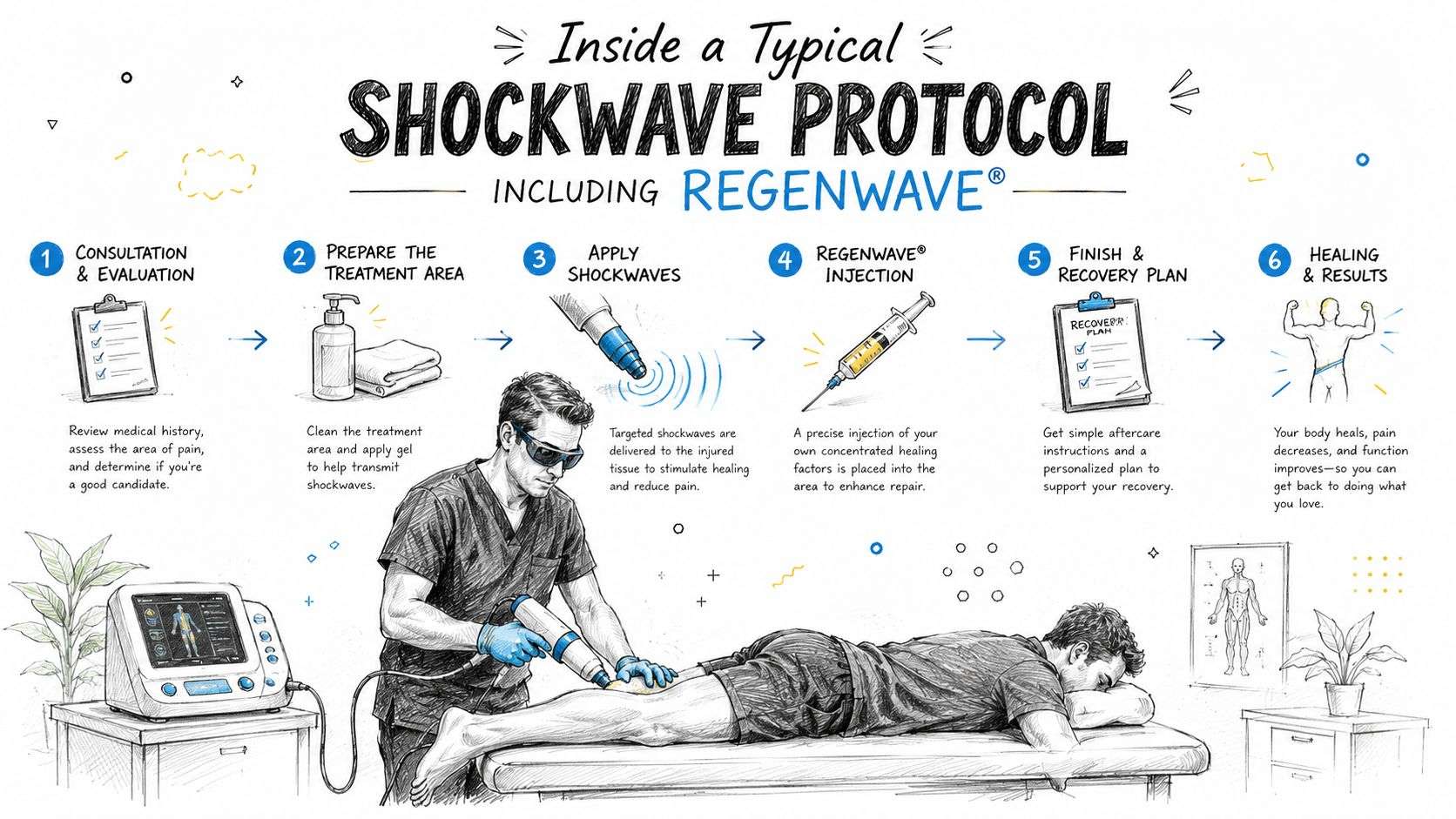
Where REGENwave may differ
A proprietary protocol such as REGENwave may use a defined probe pattern, gel application method, treatment map, and follow-up workflow. Some clinics also layer acoustic therapy with other regenerative or hormonal services. Those additions create a broader program, not proof that the shockwave component works better.
Ask for the actual treatment parameters. A brand name alone doesn't tell you whether the device is focused or radial, how energy is delivered, or how the clinician will decide whether to repeat treatment.
Who Is a Good Candidate and Who Should Avoid It
The most defensible candidate profile is a man with mild-to-moderate vasculogenic ED, especially when the condition is relatively recent and the patient retains at least some response to sexual stimulation or medication. Recent reviews describe better outcomes in younger men, men with milder vascular ED, and men with shorter disease duration, although the evidence remains heterogeneous. A 2025 network meta-analysis also indicates that protocol details may influence outcomes, without establishing a globally accepted regimen.
A practical evaluation should separate likely responders from men who need a different first-line approach.
| Category | Patient Profile | Recommendation |
|---|---|---|
| Stronger candidate | Mild-to-moderate ED with suspected or confirmed vascular insufficiency | Consider Li-ESWT after a medical evaluation |
| Potential candidate | Partial response to oral medication and a desire to reduce reliance on it | Discuss combination treatment and realistic goals |
| Uncertain candidate | Diabetes, neurological disease, complex medication exposure, or longstanding severe ED | Investigate all contributing causes before committing |
| Poorer fit | Primarily psychogenic ED without evidence of vascular impairment | Address anxiety, relationship factors, and psychological contributors directly |
| Defer or avoid | Active pelvic malignancy, bleeding disorder, significant anticoagulant concerns, penile implant, or recent priapism | Require specialist review and treatment of the underlying safety issue first |
| Correct before treatment | Untreated hypogonadism or major uncontrolled health conditions | Complete diagnostic workup and stabilize contributing factors |
The pre-treatment workup should include a focused sexual and medical history, hormone testing when indicated, vascular assessment, and validated erectile-function questionnaires. Severe cavernosal fibrosis, advanced neurological injury, or extensive tissue damage may limit the value of a vascular-focused treatment.
Post-prostatectomy cases deserve careful counseling rather than automatic inclusion. Reviews describe evidence as mixed or inconclusive across broader ED populations, including men after prostate surgery. A clinician should explain whether the goal is rehabilitation, medication reduction, or a meaningful improvement in unassisted erections, because those are different endpoints.
The Maintenance Question No One Talks About Enough
The first six months can create a misleading sense of permanence. A man may improve gradually after completing treatment, reach his best response around the early follow-up period, and then notice that the benefit levels off or declines. Long-term follow-up is one of the weakest parts of the shockwave literature.
A systematic review of 799 patients found median IIEF-EF gains of 5.3 at six months, with plateauing or declining responses by twelve months in several studies, according to the published review of treatment durability. Another recent evidence summary reports that benefits may fade after about two years and emphasizes that evidence about retreatment frequency and maintenance protocols remains thin, as described in the durability-focused review.
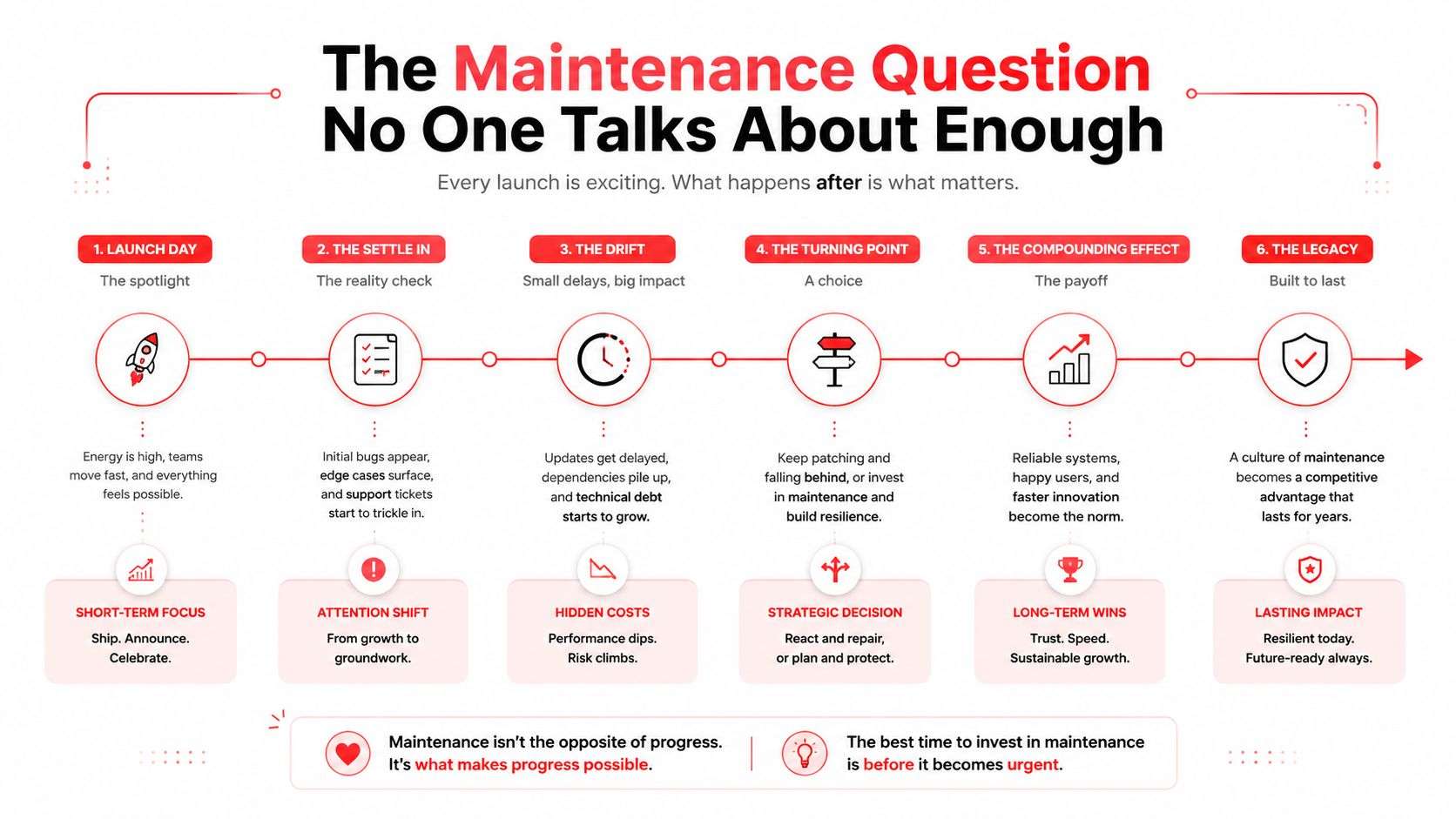
Who may need continued support
Maintenance becomes more plausible when the underlying vascular stress continues. A man with poorly controlled cardiometabolic risk factors, progressive vascular disease, severe baseline dysfunction, or a limited initial response may not maintain gains as easily as someone with mild, recent ED and stable health.
That doesn't mean retreatment is automatically necessary. It means the clinic should define how it will judge a fading response. A single maintenance session, a repeat course, medication support, hormone treatment where medically indicated, and lifestyle work are different strategies, and there isn't enough high-certainty evidence to promise one schedule for everyone.
A clinic that sells a one-and-done cure without discussing follow-up is leaving out the most important part of the decision.
A maintenance plan should include repeat erectile-function questionnaires, medication review, cardiovascular-risk assessment, and a conversation about whether the original diagnosis still explains the symptoms. If testosterone is low, treating confirmed hypogonadism may improve libido and treatment engagement, but hormone therapy isn't a substitute for diagnosing the cause of ED. Likewise, regular physical activity, sleep improvement, smoking cessation, and metabolic care may help protect any functional gains without proving that they preserve shockwave results specifically.
Costs, Questions to Ask, and Next Steps
Shockwave pricing varies by clinic, device, location, session count, and whether the program includes ultrasound, laboratory testing, injections, laser therapy, or follow-up care. Most insurers still treat Li-ESWT for ED as investigational, so patients should confirm coverage directly rather than assume reimbursement. HSA and FSA eligibility can also vary according to the plan and service classification.
Before booking, ask for a written treatment plan and clear financial terms.
| Question | Why It Matters | Red Flag Answer |
|---|---|---|
| What device and applicator will you use? | Device type affects how energy is delivered | The clinic won't identify the equipment |
| What energy flux density, pulse count, and treatment sites are planned? | Parameters help you compare protocols meaningfully | “Our secret settings always work” |
| Will you perform a vascular and medical evaluation first? | ED can have hormonal, neurological, medication-related, or vascular causes | Treatment begins without diagnosis |
| How will you track outcomes? | Questionnaires and follow-up make improvement measurable | The clinic relies only on testimonials |
| What happens after the initial course? | Durability and retreatment should be discussed upfront | No maintenance or reassessment policy |
| What's included in the quoted price? | Bundled services can change the total cost | Fees appear only after treatment starts |
Common consultation questions
Does it hurt? Most men describe low-intensity treatment as tolerable, but sensitivity varies by device, setting, and treatment zone. Tell the operator immediately if discomfort is significant.
How many sessions are needed? There's no universally accepted regimen. Published protocols differ, and a clinician should explain why the proposed schedule fits your diagnosis.
When should I expect results? Improvement may develop gradually rather than immediately. Early response doesn't guarantee long-term durability.
Can I continue medication? Often, treatment plans can include existing medication, but your prescribing clinician should coordinate any changes. Don't stop an effective prescription without medical guidance.
What if it doesn't work? A proper clinic should reassess the diagnosis, review vascular and hormonal findings, and discuss alternatives rather than automatically selling another course.
Sexual Wellness Centers of America evaluates erectile dysfunction through individualized medical assessments and offers non-surgical programs that may include REGENwave acoustic therapy, hormone optimization, and other regenerative services when clinically appropriate. Visit Sexual Wellness Centers of America to discuss whether a vascular-focused ED evaluation and a realistic maintenance plan fit your needs.