
Is Your Snore More Than Just Noise? Understanding Sleep Apnea Symptoms
Sleep apnea symptoms include:
- Nighttime symptoms:
- Loud, persistent snoring
- Witnessed breathing pauses during sleep
- Gasping or choking sounds
- Restless sleep or insomnia
-
Waking with dry mouth or sore throat
-
Daytime symptoms:
- Excessive daytime sleepiness
- Morning headaches
- Difficulty concentrating
- Irritability or mood changes
- Decreased libido or sexual dysfunction
If you’ve ever been nudged awake by a partner complaining about your thunderous snoring, or if you find yourself inexplicably exhausted despite a full night’s sleep, you might be experiencing more than just poor sleep habits. Sleep apnea symptoms affect millions of Americans, yet an estimated 90% of cases remain undiagnosed. This potentially serious sleep disorder occurs when your breathing repeatedly stops and starts during sleep, sometimes 5 to 30 times or more each hour throughout the night.
The consequences extend far beyond disrupted sleep. Untreated sleep apnea increases your risk of high blood pressure, heart disease, type 2 diabetes, and even stroke. Men with untreated sleep apnea are three times more likely to suffer a stroke, and the condition increases the risk of sudden death by 30%.
But how do you know if your snoring is just annoying or a sign of something more serious? Not everyone who snores has sleep apnea, and interestingly, not everyone with sleep apnea snores. The key difference lies in the pattern and accompanying symptoms.
I’m Jeff Nuziard, CEO of Sexual Wellness Centers of America, where we regularly help patients identify and address sleep apnea symptoms that impact both their overall health and sexual wellness. Having worked with numerous patients suffering from decreased libido and erectile dysfunction linked to undiagnosed sleep disorders, I’ve seen how proper treatment can transform lives.

What Is Sleep Apnea?
Ever woken up feeling like you barely slept, despite spending a full eight hours in bed? Sleep apnea might be the culprit. This isn’t just ordinary snoring or restless sleep – it’s a serious health condition where your breathing repeatedly stops and restarts throughout the night. These breathing pauses can last from a few seconds to minutes and might happen dozens of times each hour.
During these episodes, your oxygen levels take a nosedive, and your brain has to partially wake you up to kickstart your breathing again. These mini wake-ups are usually so brief you won’t remember them in the morning, but they’re enough to rob you of the deep, restorative sleep your body craves.
What’s truly alarming is that up to 90% of people with sleep apnea symptoms don’t know they have it. Many folks chalk up their constant fatigue to stress, busy schedules, or just getting older – never suspecting that interrupted breathing is actually stealing their rest.
The consequences go far beyond just feeling tired. Untreated sleep apnea puts significant strain on your heart and blood vessels, dramatically increasing your risk of high blood pressure, heart attacks, and strokes. Plus, the persistent daytime drowsiness makes you 2-3 times more likely to have car accidents – a sobering reminder that this condition affects more than just your sleep.
Types of Sleep Apnea Explained
There are three distinct types of sleep apnea, each with different causes:
Obstructive Sleep Apnea (OSA): This is the most common form, affecting roughly 10-30% of American adults. With OSA, the muscles in your throat relax too much during sleep, allowing the soft tissue to collapse and block your airway. Think of it like a temporary roadblock that prevents air from flowing normally.
Central Sleep Apnea (CSA): Less common (under 1% of people), CSA occurs when your airway remains open, but your brain fails to send the proper signals to your breathing muscles. It’s essentially a communication breakdown between your brain and respiratory system.
Complex Sleep Apnea (also called treatment-emergent central sleep apnea): This is a combination of both obstructive and central sleep apnea. Sometimes it appears after someone begins treatment for OSA, creating a new challenge for treatment.
Knowing which type you have is crucial because treatment approaches vary significantly depending on the underlying cause.
Why You Might Not Know You Have It
One of the trickiest aspects of sleep apnea is that you’re often the last person to realize you have it. Here’s why:
You’re asleep when the main sleep apnea symptoms occur. The most telling signs – loud snoring, gasping for air, and breathing pauses – happen while you’re unconscious.
Those micro-arousals when your brain partially wakes you to restart breathing are typically so brief that you have no memory of them by morning. Your sleep gets fragmented without you even realizing it.
Many sleep apnea symptoms mimic other conditions. Daytime fatigue, morning headaches, and irritability are easily blamed on stress, aging, or other health issues.
If you sleep alone, you don’t have anyone to witness your abnormal breathing patterns or alert you to concerning symptoms. Many patients at Sexual Wellness Centers of America only find their sleep apnea after a new partner notices something isn’t right, or when investigating seemingly unrelated health issues like high blood pressure or sexual dysfunction.
This “silent” nature of sleep apnea is precisely what makes it so dangerous – you can’t address a problem you don’t know exists.
Nighttime Sleep Apnea Symptoms
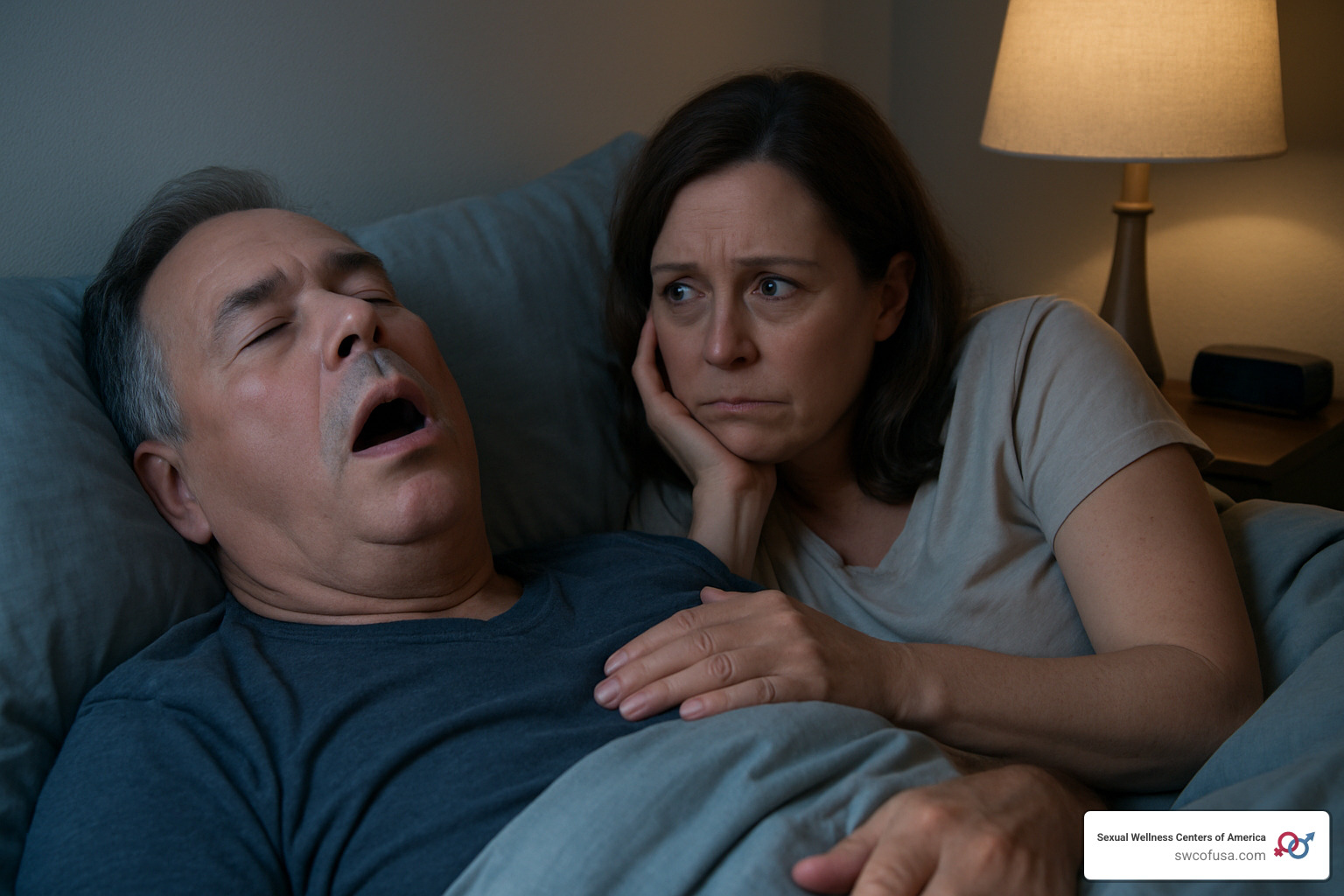
The bedroom often becomes the first place where sleep apnea symptoms reveal themselves. In fact, your sleeping partner might notice these warning signs long before you do. Those nighttime disruptions aren’t just annoying—they’re your body sending important signals.
Most Common Sleep Apnea Symptoms During Sleep
That thunderous snoring that keeps your partner awake? It’s more than just noise. Loud, persistent snoring is the hallmark symptom of obstructive sleep apnea, though not everyone who snores has the condition. What makes sleep apnea snoring distinctive is its pattern—loud, rhythmic sounds punctuated by eerie silences when breathing stops, followed by snorts or gasps when it resumes.
These breathing pauses can be frightening to witness. Your partner might notice moments where you seem to stop breathing completely for seconds or even over a minute. Then suddenly, your body fights back with gasping or choking sounds as it struggles to reopen your airway.
You might not be aware of your restless sleep, but your tangled sheets tell the story. The constant tossing and turning reflects your body’s unconscious battle to breathe properly throughout the night. Many patients are surprised when partners describe their jerky movements or constant position changes.
Waking up in damp pajamas? Those night sweats aren’t just about your thermostat setting. They’re often your body’s stress response to repeatedly fighting for oxygen throughout the night. Similarly, those frequent bathroom trips aren’t necessarily about drinking too much water before bed—they can be related to hormonal changes triggered by breathing disruptions.
That dry mouth or sore throat greeting you every morning isn’t just from sleeping with your mouth open. It’s often because your body switched to mouth breathing when normal nasal breathing became obstructed.
At Sexual Wellness Centers of America, we hear countless stories from patients whose partners finally convinced them to seek help after witnessing these frightening nighttime episodes.
How Symptoms Differ in Children vs. Adults
Children with sleep apnea often fly under the radar because their symptoms look remarkably different from adults. While adults typically drag themselves through the day fighting sleepiness, children paradoxically become hyperactive or aggressive. This energy burst often gets misdiagnosed as ADHD when the real culprit is disrupted sleep.
Parents might notice their child suddenly starts bedwetting after previously staying dry at night. Or they might sleep in strange positions—neck extended backward, knees tucked to chest, or even sitting up—unconscious attempts to keep their airway open.
Mouth breathing during daytime hours can be another clue, often due to enlarged tonsils or adenoids blocking normal breathing. Children with sleep apnea frequently experience worsening asthma symptoms and may show growth concerns since sleep disruption affects growth hormone release.
| Adult Symptoms | Child Symptoms |
|---|---|
| Loud snoring | Snoring, but often less pronounced |
| Excessive daytime sleepiness | Hyperactivity and behavior problems |
| Morning headaches | Morning irritability |
| Sexual dysfunction | Bedwetting |
| Dry mouth upon waking | Mouth breathing and drooling |
| Witnessed breathing pauses | Unusual sleeping positions |
| Insomnia | Nightmares or night terrors |
Differences Between Men and Women
When it comes to sleep apnea, biology creates different experiences. Men are 2-3 times more likely to develop sleep apnea before menopause, but this gap narrows significantly afterward when hormonal protection diminishes.
Men typically present with the “classic” picture—loud, freight-train snoring with obvious breathing pauses that partners can’t help but notice. This often leads to quicker referrals for sleep studies and earlier diagnosis.
Women’s symptoms tend to be more subtle and frequently misinterpreted. Rather than dramatic snoring, women often report persistent fatigue and insomnia. They’re more likely to experience morning headaches and mood disorders like anxiety and depression that mask the underlying breathing issue. Unfortunately, these symptoms are often dismissed as stress or anxiety, leading to years of delayed diagnosis.
After menopause, a woman’s risk increases substantially, highlighting how female hormones help maintain muscle tone in the upper airway. Many of our female patients at Sexual Wellness Centers of America express frustration at having their symptoms dismissed for years before finally receiving proper diagnosis and treatment.
Understanding these gender differences isn’t just academic—it can be the difference between years of suffering and getting the help you need. If you recognize these patterns in yourself or your partner, it might be time to discuss sleep apnea with a healthcare provider who understands these nuanced presentations.
Daytime Sleep Apnea Symptoms and Red Flags
While your partner might notice your nighttime symptoms, it’s the daytime effects that you’ll feel most personally. These aren’t just minor inconveniences – they’re your body’s way of waving a red flag that something’s wrong with your sleep.
Common Daytime Sleep Apnea Symptoms
That overwhelming afternoon sleepiness you’re fighting isn’t just because of a busy schedule. When you have sleep apnea, daytime drowsiness goes far beyond normal tiredness. You might find yourself nodding off during meetings, while watching TV, or even—most dangerously—behind the wheel. This isn’t just being tired; it’s what doctors call “excessive daytime sleepiness,” and it affects nearly 90% of people with sleep apnea.
Those morning headaches that seem to improve as your day goes on? They’re not random. They’re likely caused by oxygen deprivation during sleep. Your brain has been struggling all night, and by morning, it’s protesting with pain. While researchers aren’t completely certain of the exact mechanism, many believe it relates to how your blood vessels dilate when oxygen levels drop during sleep.
Have you noticed yourself reading the same email three times and still not absorbing it? Sleep apnea symptoms often include significant concentration problems. Your brain needs deep, restorative sleep to function properly. Without it, your mental focus suffers dramatically. This same disruption affects your memory too – both what happened yesterday and what you need to remember today.
The mood changes can be just as troubling. If you’ve found yourself snapping at loved ones or feeling unusually down, disrupted sleep might be the culprit. People with sleep apnea are five times more likely to experience clinical depression. It’s not just being cranky from tiredness – it’s a genuine chemical imbalance from poor sleep quality.
At Sexual Wellness Centers of America, we frequently see patients struggling with decreased libido and sexual dysfunction related to sleep apnea. For men, this often shows up as erectile difficulties – affecting up to 69% of male sleep apnea patients. Women typically report reduced sexual desire and satisfaction. These issues aren’t just coincidental; they’re directly connected to how sleep apnea affects your hormones and blood flow.
That persistent dry mouth or scratchy throat in the morning? It’s another telltale sign. When your airway is obstructed, you’re more likely to breathe through your mouth all night, leaving your throat parched by morning.
Perhaps most concerning are microsleeps – those brief moments when you essentially fall asleep for seconds or minutes during waking hours, sometimes without even realizing it happened. These dangerous episodes can occur while driving, operating machinery, or during important conversations.
Complications of Ignoring the Signs
The consequences of untreated sleep apnea extend far beyond daily discomfort. Your body is experiencing stress every night that can lead to serious health complications.
Hypertension becomes almost inevitable with untreated sleep apnea. The condition is present in 30-50% of people with high blood pressure, and treating sleep apnea often helps improve blood pressure control without additional medication.
Your heart faces significant strain too. Each time your breathing stops, your heart must work harder, increasing your risk of heart failure, coronary artery disease, and irregular heartbeats. Men with untreated sleep apnea are three times more likely to suffer a stroke than those without the condition, according to research from the American Academy of Sleep Medicine.
Type 2 diabetes becomes harder to manage with sleep apnea. The condition affects insulin resistance and glucose control, creating a frustrating cycle for those trying to manage their blood sugar.
Your liver health suffers too. People with sleep apnea show higher rates of abnormal liver function tests and nonalcoholic fatty liver disease. The repeated oxygen drops trigger inflammation throughout your body, contributing to metabolic syndrome – that dangerous cluster of conditions including increased blood pressure, high blood sugar, excess body fat around the waist, and abnormal cholesterol levels.
Even medical procedures become riskier. Sleep apnea can complicate anesthesia and post-surgical recovery, making it essential to inform all healthcare providers about your condition before any procedure.
Your relationships pay a price as well. When loud snoring drives your partner to sleep in another room, intimacy and connection often suffer. At Sexual Wellness Centers of America, we’ve seen how addressing sleep apnea can restore not just physical intimacy but emotional closeness as well.
Most alarming is the 30% increased risk of sudden death associated with untreated sleep apnea. Recent research has even linked the condition to more severe COVID-19 outcomes.
The good news? These risks are largely reversible with proper treatment. Many of our patients report that addressing their sleep apnea was the single most impactful health decision they’ve made, improving everything from their energy levels to their relationships to their sexual wellness.
Who Is at Risk & What Makes Symptoms Worse?
Understanding your risk factors for sleep apnea can help you recognize symptoms early and seek appropriate care. Some risk factors can’t be changed, while others can be modified to reduce your likelihood of developing sleep apnea or minimize its severity.
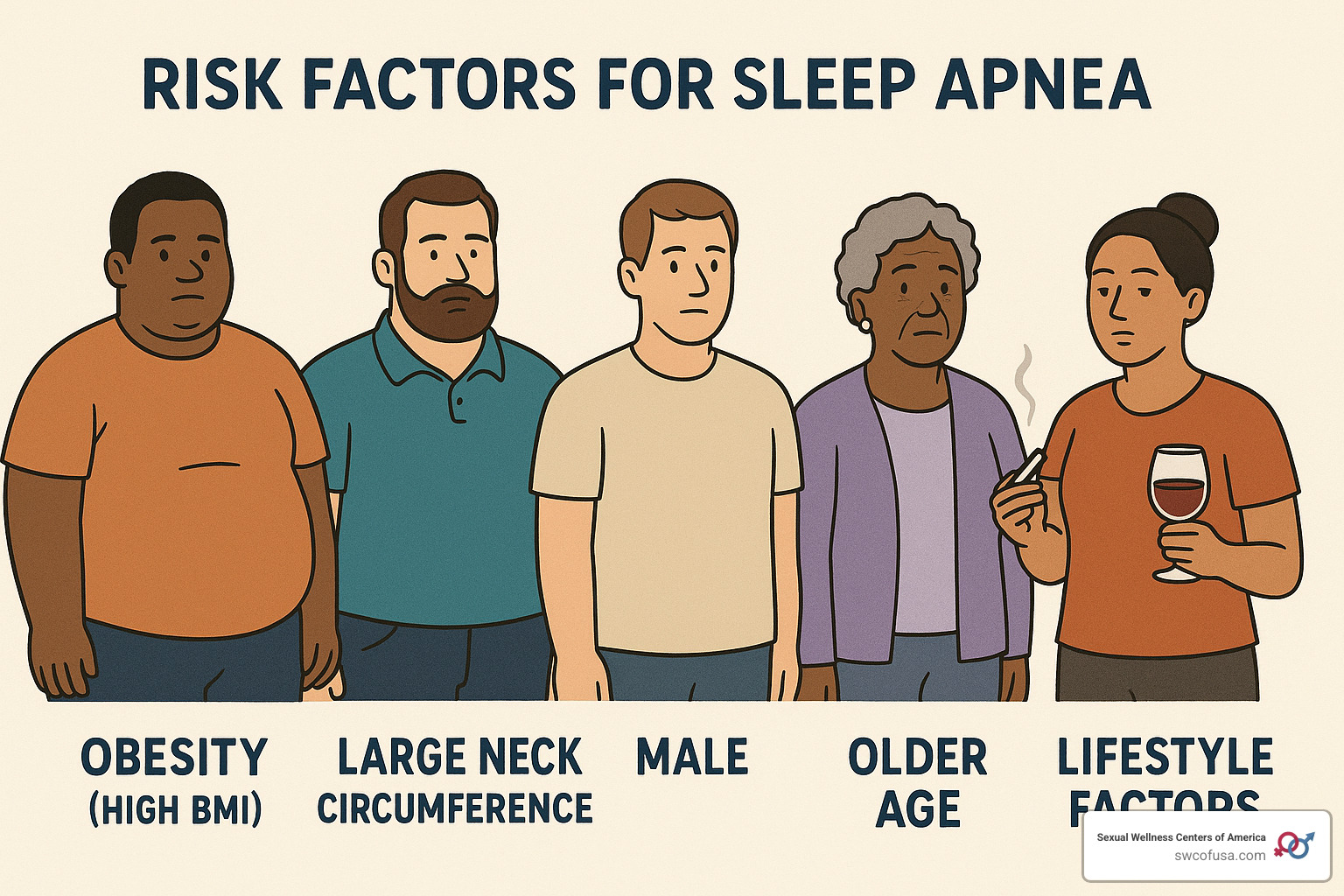
Risk Factors Checklist
When I talk with patients at Sexual Wellness Centers of America, I often find they’re surprised to learn about the many factors that can increase their risk of sleep apnea. Your body type plays a significant role – carrying extra weight, especially around your neck, puts you at much higher risk. A neck measuring over 17 inches for men or 15 inches for women often signals trouble, as that extra tissue can easily collapse around your airway during sleep.
Your natural physical features matter too. Some people are simply born with narrower airways, larger tonsils, or smaller jaws that create less room for air to flow. And yes, sleep apnea does tend to run in families, so if your parents or siblings have it, you’re more likely to develop it too.
Demographics also influence your risk profile. Men develop sleep apnea at 2-3 times the rate of premenopausal women, though women catch up after menopause when hormonal protection diminishes. The risk increases for everyone after age 40, and certain ethnic groups – particularly African Americans, Hispanics, and Pacific Islanders – show higher rates of sleep apnea.
Your overall health picture provides important clues too. Sleep apnea symptoms often appear alongside other conditions like high blood pressure, type 2 diabetes, chronic nasal congestion, and asthma (which increases risk by about 40%). Heart disorders, previous strokes, thyroid issues, and chronic lung diseases all raise red flags for potential sleep apnea.
Lifestyle choices can either protect you from or push you toward sleep apnea. Smokers face three times the risk of non-smokers. That nightcap before bed? Alcohol relaxes throat muscles, making collapse more likely. The same goes for sedatives, tranquilizers, and opioid medications – they may help you fall asleep, but they can make your breathing dangerously unstable through the night.
Lifestyle & Medical Triggers That Worsen Sleep Apnea Symptoms
Even if you already have sleep apnea, certain factors can make your sleep apnea symptoms significantly worse on any given night. Understanding these triggers can help you manage your condition more effectively.
Your sleeping position makes a tremendous difference. When you sleep on your back, gravity becomes your enemy, pulling your tongue and soft tissues backward and narrowing your airway. Many of my patients report dramatic improvement simply by training themselves to sleep on their side.
That glass of wine with dinner might seem harmless, but alcohol – even in moderate amounts – relaxes the muscles in your throat and worsens obstruction. I usually recommend avoiding alcohol for at least 4 hours before bedtime. The same caution applies to sedatives and sleep medications, which further relax throat muscles and can suppress your natural breathing drive.
Weight fluctuations matter too. I’ve had patients who notice their sleep apnea symptoms worsen after gaining just 5-10 pounds. The relationship between weight and sleep apnea is so strong that even modest weight loss often brings significant relief.
Breathing through your nose becomes nearly impossible when you’re congested from allergies, colds, or sinus infections. This forces mouth breathing, which increases snoring and airway collapse. Similarly, smoking irritates and inflames the upper airway, making obstruction more likely and more severe.
Many people don’t realize that untreated acid reflux (GERD) can reach the throat and cause inflammation that narrows the airway. And for women, hormonal changes during menstruation, pregnancy, and menopause can temporarily worsen sleep apnea symptoms.
At Sexual Wellness Centers of America, we work with patients to identify and address these modifiable factors as part of a comprehensive approach to managing sleep apnea and improving overall health.
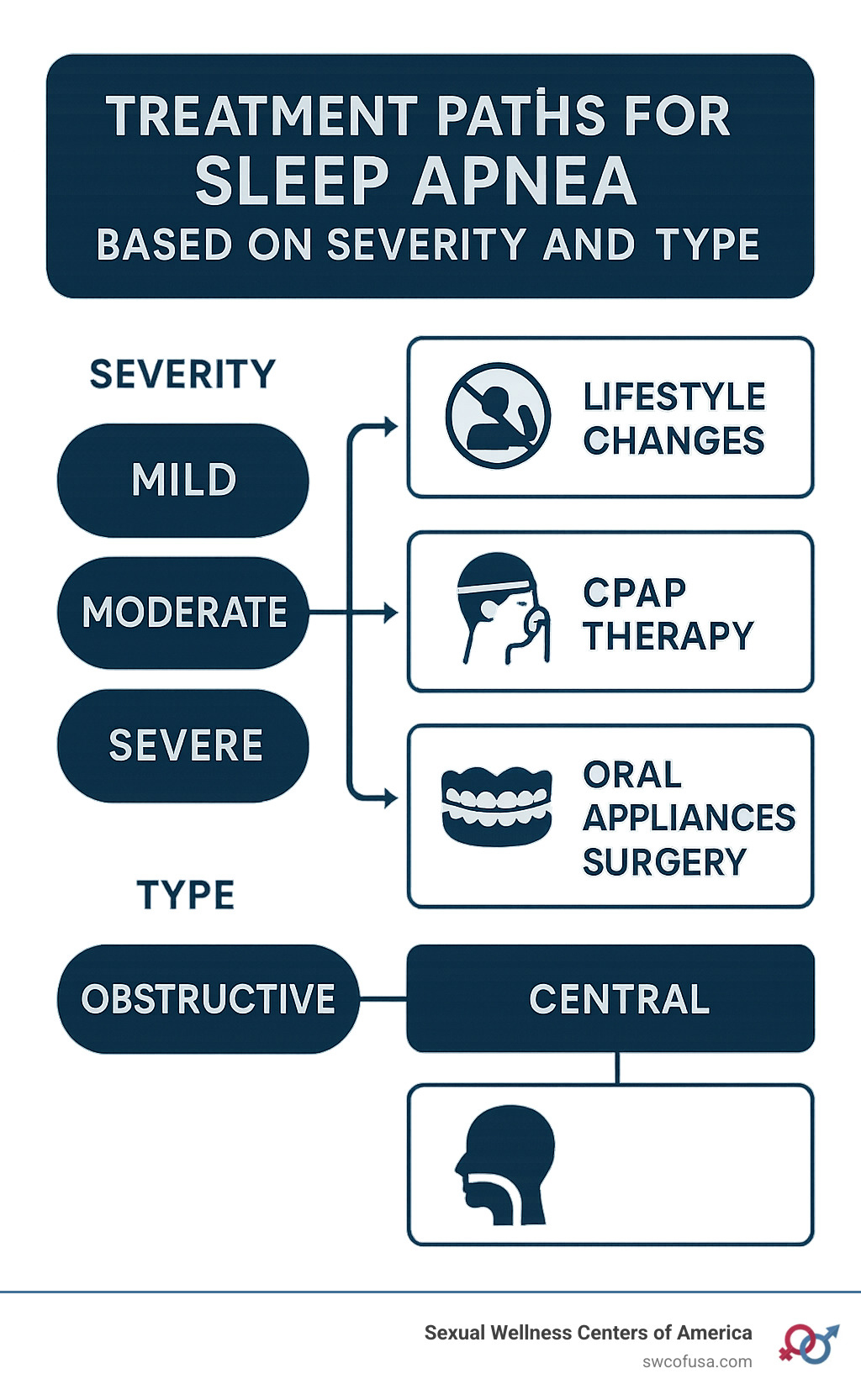
Diagnosis and What to Do If You Suspect Sleep Apnea
Recognizing sleep apnea symptoms in yourself or someone you care about is the first step—but what comes next? Getting properly diagnosed is crucial for your health and well-being. Let’s walk through the process together.
How Sleep Apnea Is Diagnosed
Think of sleep apnea diagnosis as solving a mystery where the clues only appear when you’re asleep. Your doctor needs to gather evidence in several ways:
First, expect a thorough conversation about your symptoms, sleep patterns, and medical history. Your doctor will examine your throat, mouth, and neck, looking for physical features that might contribute to airway obstruction—like a larger neck circumference or narrow throat.
The most definitive way to diagnose sleep apnea is through a sleep study, or polysomnography. During this overnight assessment, you’ll be connected to various sensors that monitor everything happening in your body while you sleep. These sensors track your breathing patterns, oxygen levels, heart rate, brain waves, and body movements. It’s like having a team of detectives watching over you while you sleep!
The sleep study results include your Apnea-Hypopnea Index (AHI), which counts how many times per hour your breathing stops or becomes significantly reduced. This number determines if your sleep apnea is mild (5-15 events hourly), moderate (15-30 events), or severe (over 30 events).
For some people, especially those with clear symptoms and no complicated health issues, home sleep testing might be an option. While not as comprehensive as a lab study, these portable devices can often provide enough information for a diagnosis from the comfort of your own bed.
Self-Assessment When You Sleep Alone
If you sleep solo, you’re missing a key witness to your nighttime breathing patterns. But don’t worry—there are still ways to gather clues:
Your smartphone can become your nighttime ally. Several apps can record sounds during sleep, potentially capturing telltale snoring patterns, gasping, or breathing pauses. The next morning, you might be surprised at what you hear!
Keeping a simple diary of daytime symptoms can also reveal patterns. Do you consistently wake with headaches? Feel exhausted despite sleeping eight hours? Track these symptoms alongside factors like alcohol consumption or sleeping position to spot connections.
Modern technology offers additional help. Many smartwatches and fitness trackers now monitor sleep quality and some even track blood oxygen levels—potentially flagging the oxygen dips characteristic of sleep apnea.
The Epworth Sleepiness Scale is another useful tool—this quick questionnaire helps determine if your tendency to doze off during the day falls outside the normal range. And don’t overlook physical clues: consistently waking with a dry mouth, sore throat, or jaw pain from teeth grinding can all point toward sleep apnea.
While these self-assessment methods can’t replace professional diagnosis, they can help you decide whether it’s time to talk to a doctor.
When to See a Doctor
Don’t hesitate to seek medical advice if:
Your snoring has become the stuff of family legends—loud enough to be heard through walls or to wake yourself up. If your partner has witnessed you stop breathing, gasp, or choke during sleep, consider this a significant red flag.
Pay attention if you’re fighting to stay awake during important daytime activities or if you consistently wake up feeling like you haven’t slept at all. Unexplained morning headaches that improve as the day progresses are another classic warning sign of sleep apnea symptoms.
Other reasons to consult a healthcare provider include struggling with high blood pressure despite medication, noticing changes in your mood or memory, or experiencing sexual dysfunction that might be sleep-related. And always mention suspected sleep apnea to your doctors before any surgery, as it can complicate anesthesia.
At Sexual Wellness Centers of America in Colleyville, TX, we understand the intimate connection between sleep health and sexual wellness. Poor sleep doesn’t just leave you tired—it can significantly impact your hormones and sexual function. Our comprehensive approach includes evaluating sleep issues as part of our sexual health assessments, helping you address the root causes of sexual concerns rather than just treating symptoms. More info about sleep-apnea services
Don’t let sleep apnea continue to affect your health and quality of life. With proper diagnosis and treatment, you can return to restful sleep and all the benefits that come with it.
Frequently Asked Questions about Sleep Apnea Symptoms
Can I Have Sleep Apnea If I Don’t Snore?
Absolutely yes! This is one of the most common misconceptions I hear from patients. While loud snoring often accompanies obstructive sleep apnea, you can definitely have sleep apnea without being a snorer.
This “silent” sleep apnea is particularly common in certain groups. People with central sleep apnea (where brain signaling rather than physical obstruction is the problem) may have no snoring at all. Women tend to have more subtle snoring patterns even with significant sleep apnea, which partly explains why they’re often underdiagnosed. Children with sleep apnea might not snore noticeably either, and those with milder cases may breathe quietly despite having breathing disruptions.
I had one patient who insisted she couldn’t have sleep apnea because her cat would sleep peacefully on her chest all night—surely a sign she wasn’t snoring! Her sleep study revealed moderate sleep apnea despite the quiet breathing. Her main symptoms were crushing daytime fatigue and morning headaches, which resolved beautifully with treatment.
If you’re experiencing excessive daytime sleepiness, morning headaches, or concentration problems despite spending enough time in bed, don’t rule out sleep apnea just because you don’t wake the neighbors with your snoring.
Are Morning Headaches a Reliable Warning Sign?
Morning headaches can indeed signal sleep apnea, but they’re not a universal symptom, and they can stem from other causes too. What makes sleep apnea symptoms like morning headaches distinctive is their pattern and characteristics.
Sleep apnea-related headaches typically greet you right as you wake up and gradually improve within a few hours as your oxygen levels normalize. They’re usually dull and affect your whole head rather than presenting as the throbbing of migraines or the band-like tension headaches. Many patients describe them as feeling like they’ve been “hit by a truck” or having a “hangover without the fun the night before.” These headaches tend to be regular visitors, showing up most mornings, and often bring friends: dry mouth, sore throat, and that frustrating feeling of waking up tired.
The science behind these headaches isn’t completely understood, but likely involves the oxygen deprivation that occurs during apnea episodes, changes in blood carbon dioxide levels, and the disruption of your normal sleep architecture. If morning headaches have become your unwelcome alarm clock—especially alongside other risk factors like being overweight or having high blood pressure—it’s definitely worth discussing with your healthcare provider.
How Quickly Do Symptoms Improve After Starting CPAP?
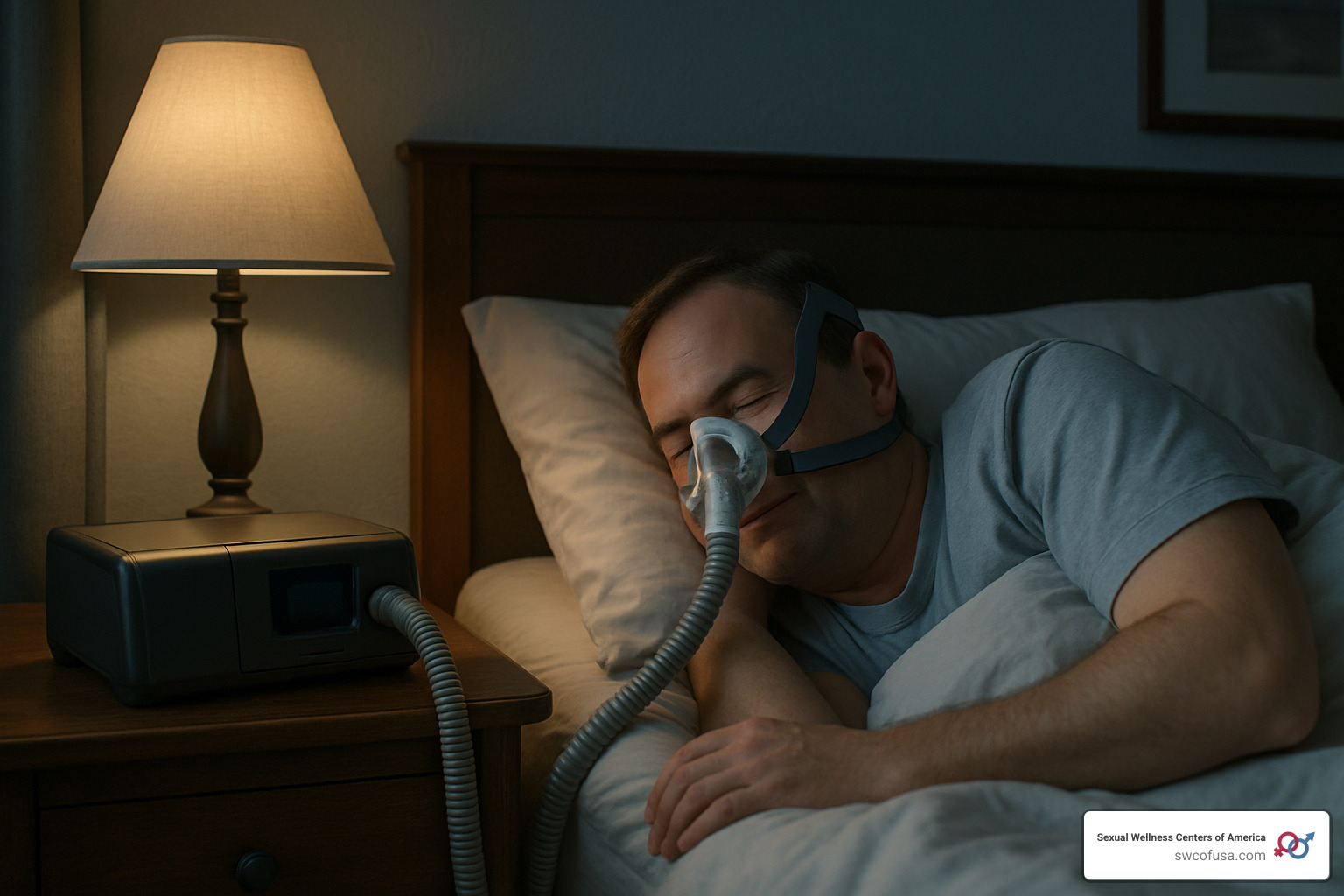
When patients start CPAP therapy (Continuous Positive Airway Pressure), they often ask me when they’ll start feeling better. The answer varies from person to person, but I can share what most people experience.
Some improvements happen almost magically fast. Many of my patients report better sleep quality and freedom from morning headaches literally after the first night of proper CPAP use. One gentleman told me he hadn’t realized how foggy his thinking had become until that first morning of clarity after using CPAP.
Daytime sleepiness usually improves within one to two weeks as your body begins to recover from its sleep debt. You might notice you’re less likely to nod off during meetings or while watching TV. The crushing afternoon fatigue many experience starts to lift.
Mood changes take a bit longer—typically two to four weeks. Family members often notice the improvement before patients do! Depression, anxiety, and that short fuse that comes with chronic sleep deprivation gradually resolve as your sleep quality stabilizes.
Physical health markers move on a slower timeline. Blood pressure improvements generally take one to three months, as your cardiovascular system adjusts to no longer having the stress of oxygen drops throughout the night.
At Sexual Wellness Centers of America, we frequently see improvements in sexual function within one to three months of starting CPAP therapy. The connection between sleep and sexual health is powerful—as overall health stabilizes and energy returns, sexual function often follows suit.
The key to experiencing all these benefits is consistent CPAP use. Using it for just part of the night or skipping nights significantly reduces its effectiveness. It’s like taking only half your antibiotic prescription—you won’t get the full benefit. If you’re struggling with your CPAP machine, don’t give up! Talk to your provider about adjustments or alternatives that might work better for your specific needs. More info about sleep-apnea services
Conclusion
If you’ve made it this far, you’re already taking an important step toward better health. Recognizing sleep apnea symptoms isn’t just about stopping the snoring that keeps your partner awake—it’s about protecting your heart, your brain, and yes, even your intimate relationships.
Think of untreated sleep apnea as a silent thief in the night. It doesn’t just steal your rest; it robs you of energy, mental clarity, and long-term health. The statistics are sobering: up to 90% of cases remain undiagnosed, men with untreated sleep apnea face three times the stroke risk, and the condition increases sudden death risk by 30%. Perhaps most alarming for daily life, those with untreated sleep apnea are 2-3 times more likely to be involved in car accidents due to daytime drowsiness.
But here’s the good news—effective treatments exist and can transform your life, often more quickly than you might expect. From simple lifestyle changes like weight loss and changing your sleeping position to medical interventions like CPAP therapy and oral appliances, there’s a solution that can work for you.
At Sexual Wellness Centers of America in Colleyville, TX, we see the profound connection between sleep health and sexual wellness every day. Many patients come to us for sexual health concerns, never realizing that disrupted sleep might be a root cause. When we address their sleep apnea, they often experience improvements not just in their sexual function, but in their overall energy, mood, and quality of life.
The path forward is clear. If you’ve checked off several sleep apnea symptoms on our lists, it’s time to take action. A proper evaluation and diagnosis is your first step, and we can help guide you through this process with our network of sleep specialists.
Don’t let another night go by with your breathing—and your health—at risk. The journey to better sleep and better health starts with acknowledging there might be a problem and reaching out for help. Learn more about our sleep apnea services and take that crucial first step today.
Addressing your sleep apnea isn’t just about sleeping better tonight—it’s about living better for all the days to come. Your future self will thank you for the gift of easier breathing, restful nights, and healthier days ahead.