
Why Understanding Your Treatment Options Matters
What are the treatments for peyronie’s disease? Options include:
- Non-Surgical Treatments – Collagenase injections (Xiaflex), verapamil, interferon alpha-2b, penile traction therapy, and vacuum devices.
- Oral Medications – NSAIDs for pain management.
- Surgical Options – Penile plication, plaque incision/grafting, and penile implants.
- Emerging Therapies – Shockwave therapy, platelet-rich plasma, and regenerative treatments.
Between 8% and 10% of men experience Peyronie’s disease. This condition causes curved, painful erections due to scar tissue. Without treatment, only 10% to 15% of men see improvement within a year, while symptoms worsen for about 45%.
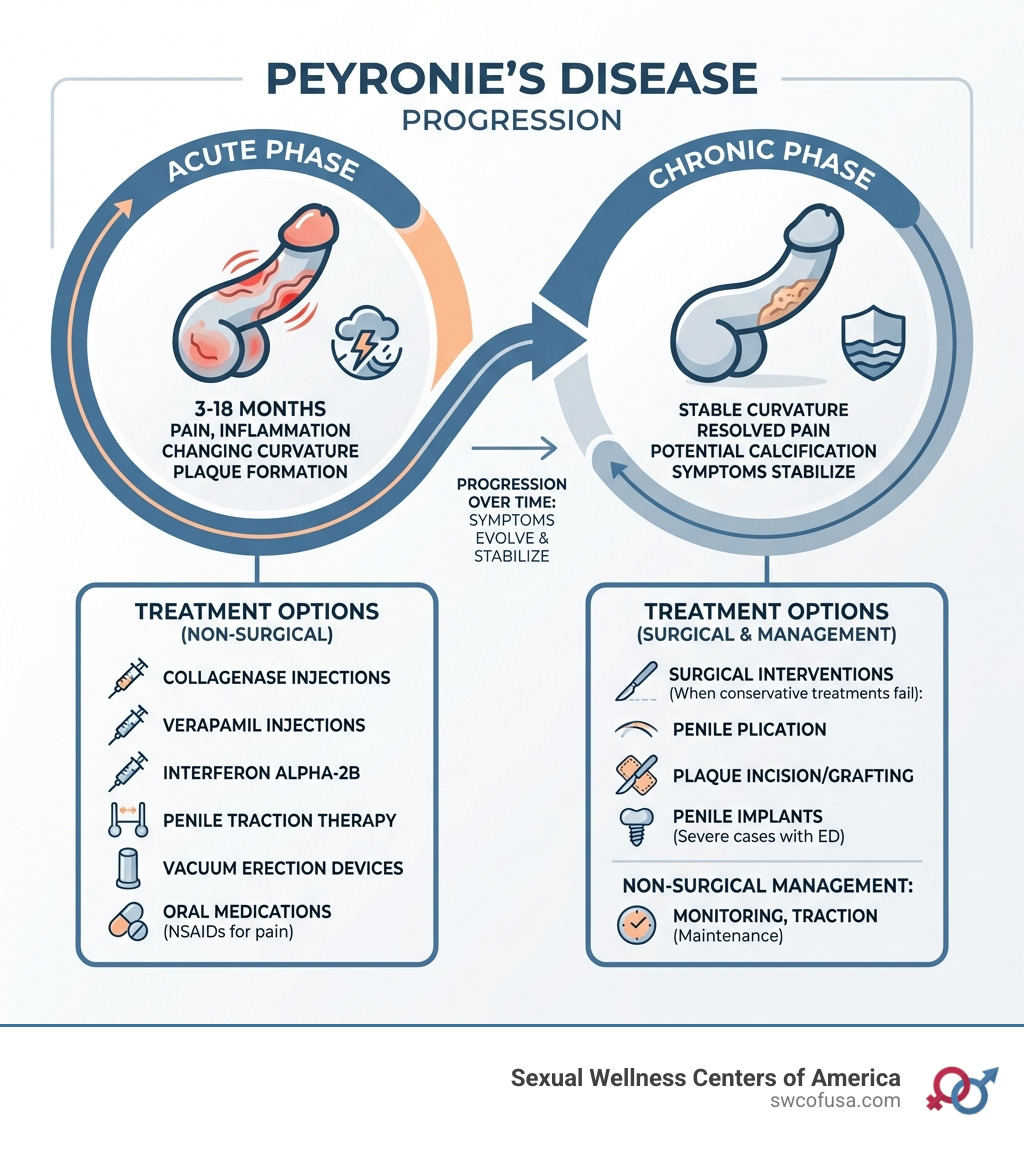
Modern medicine offers a range of solutions from non-invasive therapies to surgery. Peyronie’s typically progresses through two phases: the acute phase (3 to 18 months of pain and changing curvature) and the chronic phase (stabilized curvature).
A practical way to think about treatment is that there are usually 2 goals:
- Protect function early: reduce pain, preserve length, and limit worsening curvature during the acute phase.
- Restore mechanics later: once curvature stabilizes, focus on straightening options that match your anatomy and erectile function.
That is why evaluation matters. Two men can have the same degree of curvature but need different care based on factors like plaque location (top, side, or ventral), the presence of indentation or an hourglass shape, penile length changes, and whether erectile dysfunction (ED) is also present. In many cases, combining therapies (for example, injection therapy plus traction) produces better outcomes than relying on a single option.
I’m Jeff Nuziard, CEO of Sexual Wellness Centers of America. I’ve helped countless patients find personalized solutions that restore function and confidence. This guide explores what the research says and how to make informed decisions about your care.
Understanding the Stages: Acute vs. Chronic Phases
Peyronie’s disease evolves over time. Understanding its two main stages is crucial because what are the treatments for peyronie’s disease depends on your current phase.
The Acute Phase: When the Storm Begins
The acute phase involves active inflammation and scar tissue (plaque) formation. Lasting 3 to 18 months, symptoms are dynamic:
- Pain: Often experienced during erections, signaling active plaque formation.
- Changing Curvature: The bend may worsen, and indentations or hourglass shapes may appear.
- Plaque Development: A palpable lump or hardened area may be felt.
Without intervention, only 10% to 15% of men see relief in a year, while 45% worsen. Early treatment aims to halt progression and minimize curvature. For more details, visit our page on Peyronies Disease.
The Chronic Phase: When the Waters Settle
In the chronic phase, inflammation subsides and scar tissue matures.
- Stable Curvature: Deformities stop progressing.
- Pain Resolution: Pain typically resolves or lessens significantly.
- Calcification: Plaque may become bone-hard in about 1 in 3 cases.
Focus shifts from preventing progression to correcting established deformity. Early intervention during the acute phase can often prevent the need for invasive surgery later.
What are the treatments for Peyronie’s disease?
Treatments address scar tissue, reduce curvature, and restore function. The choice depends on disease stage, severity, and erectile function.
Before selecting a therapy, clinicians typically document:
- Degree and direction of curvature (often measured during an induced or home erection photo protocol)
- Plaque characteristics (size, location, and whether calcification is present)
- Penile deformities such as indentation or hourglass narrowing
- Erectile function (with or without PDE5 inhibitors)
- Phase of disease (acute vs. chronic)
That workup matters because it helps set realistic expectations. For example, some therapies aim to improve curvature but not length, while traction is most associated with length preservation and recovery.
Non-Surgical Treatment Options
Intralesional Injections
- Collagenase (Xiaflex): The only FDA-approved medication for Peyronie’s. It breaks down collagen in the plaque. About 75% of men see at least a 25% improvement, with an average reduction of 34%. Risks include bruising and rare corporal rupture. See Scientific research on collagenase efficacy.
- Verapamil: A calcium channel blocker that may interfere with collagen production. Evidence is less robust than for Xiaflex.
- Interferon Alpha-2b: An antifibrotic that can reduce curvature and plaque size, though it may cause flu-like symptoms.
Injection protocols are usually delivered as a series of office visits, and outcomes are often better when patients also follow a consistent at-home plan (for example, clinician-directed modeling and/or traction when appropriate). Your provider should also review warning signs after treatment (such as sudden severe pain, significant swelling, or a popping sensation) that require prompt medical attention.
Learn more at Peyronies Disease Treatment.
What are the treatments for Peyronie’s disease without surgery?
Penile Traction Therapy (PTT)
PTT uses devices like RestoreX to stretch the penis. It is the only treatment shown to improve penile length. Studies show PTT can reduce curvature by about 33%.
Consistency is the difference-maker. In practice, patients typically do best when they can follow a plan they will actually maintain (duration and frequency vary by device and clinician guidance). PTT is commonly used in the acute phase and may also be used in stable disease, including as a complement to other treatments.
Vacuum Erection Devices (VEDs)
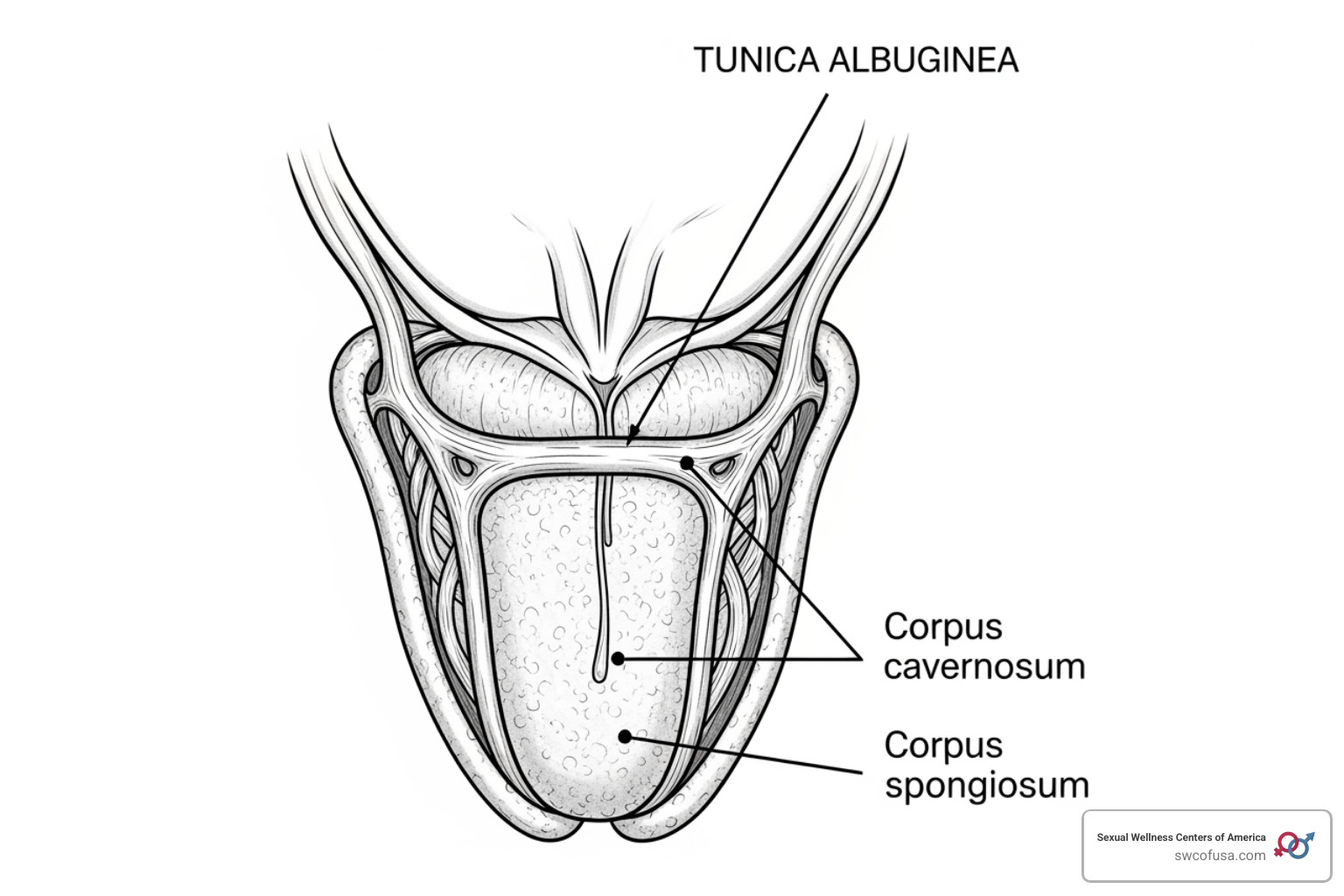
VEDs create a vacuum to draw blood into the shaft. While primarily for ED, they can help stretch the tunica albuginea and stabilize curvature during the acute phase. See Over the Counter Treatment for Peyronie’s Disease.
VEDs are not a cure for plaque, but they can be part of a structured program focused on tissue expansion and oxygenation. A clinician can help you use safe pressures and avoid overuse that could increase bruising or discomfort.
Oral Medications
Evidence for oral drugs like Vitamin E or Pentoxifylline is limited. NSAIDs are primarily used for pain management in the acute phase.
Because oral supplements are widely marketed, it is worth emphasizing: no pill has consistently shown the same curvature-reducing effect as FDA-approved intralesional therapy. That said, pain control and erectile support can still be meaningful in overall quality of life during the active phase.
What are the treatments for Peyronie’s disease and ED?
ED affects 40% to 60% of Peyronie’s patients. PDE5 inhibitors like Cialis or Viagra improve blood flow and may aid in tissue remodeling. Combined protocols, such as PDE5i with PTT, are often most effective. For insurance info, visit Does Insurance Cover Treatment for Peyronie’s Disease?.
When ED is part of the picture, treatment planning often prioritizes reliable rigidity first, because a straighter penis is not helpful if erections are not firm enough for sex. Depending on the individual, a combined approach may include:
- PDE5 inhibitors to improve erectile quality
- A curvature-focused option (such as intralesional therapy when appropriate)
- A mechanical therapy plan (PTT and/or VED) to support remodeling and preserve length
If you are unsure whether symptoms are more consistent with active inflammation or stabilized scar tissue, a focused evaluation can clarify which phase you are in and which options are most likely to help.
Surgical Interventions for Severe Curvature
Surgery is considered when curvature is severe (typically >60 degrees) and stable for 3-6 months.
Penile Plication
Best for men with good erectile function and moderate curvature. Sutures are placed on the side opposite the plaque to straighten the penis. While effective, it may result in some length loss.
Plaque Incision and Grafting
Reserved for severe curvature or complex deformities. The plaque is incised to release tension, and a graft is sewn into the gap. This carries a higher risk of ED and sensory changes. See Scientific research on surgical outcomes.
Penile Implants and Complex Reconstruction
For men with both severe Peyronie’s and ED, an inflatable prosthesis is the definitive solution. It restores rigidity and straightens the penis simultaneously. Learn more at Peyronies Disease Treatment Colleyville, TX.
Restorative and Novel Treatment Modalities
Emerging therapies focus on using the body’s natural healing mechanisms.
Low-Intensity Extracorporeal Shockwave Therapy (LI-ESWT)
LI-ESWT uses acoustic waves to stimulate blood flow and cellular repair. At Sexual Wellness Centers of America, we use REGENwave® technology as part of our REGENmax® protocol to reduce pain and improve tissue health. Learn more at Improve the Symptoms of Peyronie’s Disease with RegenWave Treatment.
Platelet-Rich Plasma (PRP) and Stem Cells
PRP involves injecting concentrated growth factors from your own blood into the plaque to promote repair. Stem cell research is also exploring tissue regeneration, though both remain in experimental stages with promising early results.
Psychological Impact and Coping Strategies
Over 75% of men with Peyronie’s report stress and depression. Nearly 50% meet the threshold for clinically meaningful depression. The condition can lead to anxiety, body image issues, and relationship strain.
Many men also describe a “feedback loop”: fear of pain or performance problems leads to avoidance, avoidance leads to more anxiety, and anxiety can worsen erections. Addressing the emotional side is not optional, it is part of restoring a satisfying sex life.
Common Emotional Challenges and What Helps
| Challenge | How it can show up | Support options that often help |
|---|---|---|
| Anxiety about intimacy | Avoiding sex, worry about partner reactions | Education, gradual re-introduction of intimacy, couples communication |
| Depressed mood | Low motivation, hopelessness, reduced libido | Counseling, primary care or mental health support, lifestyle habits |
| Body image concerns | Shame, checking or hiding, loss of confidence | Sex therapy, supportive partner dialogue, realistic treatment goals |
| Relationship stress | Misunderstandings, resentment, withdrawal | Couples counseling, structured check-ins, shared problem-solving |
| Performance pressure | ED or inconsistent erections | Medical ED support, pacing, reducing goal-focused sex |
Effective Coping Strategies
- Education: Understanding the condition reduces anxiety.
- Communication: Open dialogue with partners about intimacy is vital.
- Professional Support: Sex therapists or counselors can provide coping tools.
- Support Groups: Connecting with others combats isolation.
- Holistic Wellness: Exercise and healthy habits improve resilience.
If you ever notice persistent depression, panic, or relationship conflict that feels unmanageable, it is appropriate to involve a licensed mental health professional. Treating Peyronie’s disease is about more than degrees of curvature, it is also about comfort, connection, and confidence.
Prioritizing emotional health is as important as treating physical symptoms.
Frequently Asked Questions about Peyronie’s Treatment
Can Peyronie’s disease resolve without medical intervention?
Spontaneous resolution is rare. Only 10% to 15% of men see relief in a year without treatment, while 45% see symptoms worsen. About 13% may see the condition go away on its own, but early intervention is generally recommended.
When is the best time to start traction therapy?
Starting PTT early in the acute phase is best. It helps prevent length loss and improves curvature outcomes, especially when combined with injections.
What are the risks of penile injection therapy?
Xiaflex risks include bruising, swelling, and rare corporal rupture. Verapamil and Interferon may cause localized pain or flu-like symptoms. We discuss all risks thoroughly before treatment.
Conclusion
Understanding what are the treatments for peyronie’s disease is the first step toward recovery. From non-surgical injections to advanced REGENmax® technology, options exist to restore your quality of life.
At Sexual Wellness Centers of America in Colleyville, TX, we provide personalized plans incorporating HEshot®™ and SHEshot®™ to address both physical and emotional health. Don’t let Peyronie’s define your life. Reach out for a consultation today.
Peyronies Disease Treatment Colleyville, TX