
Up to 90% of postmenopausal women don't seek treatment for vaginal dryness, even though the symptom is common and often manageable (Harvard Health review). That gap matters because this isn't a small nuisance or a private failure to “tough it out.” It's a real tissue change tied to menopause, and it deserves the same clinical attention you'd give any other persistent symptom.
If sex feels scratchy, burning, or uncomfortable after menopause, you're not alone and you're not imagining it. The body changes, the tissue changes, and the right relief often depends on matching the treatment to the cause. A practical overview like the Lake City PT vaginal dryness tips can help you understand the day-to-day basics, but the bigger goal is to get from coping to real comfort.
Table of Contents
- Why Vaginal Dryness After Menopause Is More Common Than You Think
- The Physiology Behind Postmenopausal Vaginal Dryness
- Recognizing the Full Range of Symptoms
- Treatment Options From Simple to Advanced
- Regenerative Therapies and Emerging Options
- When and How to Talk to a Clinician
- Frequently Asked Questions About Vaginal Dryness After Menopause
Why Vaginal Dryness After Menopause Is More Common Than You Think
Vaginal dryness after menopause is common, but it often stays hidden. Many women never bring it up because they have been told to accept discomfort, or because sexual symptoms still feel difficult to discuss in a clinical visit. That silence is part of the treatment gap, and it leaves a very manageable symptom to linger longer than it should.
Why silence keeps the problem in place
Women usually do not skip care because they think the symptom is unimportant. They skip care because they assume dryness is just part of aging, worry that treatment will not help, or feel embarrassed to mention changes in sex, comfort, or arousal.
That delay has real consequences. Ongoing dryness can make intimacy, exercise, and daily movement feel irritating or painful, and the discomfort can become easier to ignore than to explain. The condition is menopause-related, not a personal failure, and it deserves the same direct attention you would give any other persistent symptom.
Practical rule: If a symptom changes how you move, sleep, have sex, or feel in your body, it deserves an evaluation, even if you have been living with it for a long time.
What the numbers are really saying
This symptom gets missed for a few predictable reasons. Menopause is often discussed in terms of hot flashes, while vaginal symptoms are left out of the conversation. In clinical practice, that means many women do not connect dryness with a treatable hormone-related change, and they wait longer than necessary to ask for help.
That is why symptom-driven care matters. If dryness is affecting your comfort, you are not asking for too much by raising it. You are identifying a real change in tissue health, and relief usually starts with naming that change clearly. A practical first step is to review simple measures at home, then move to clinician-guided options if symptoms persist, including a careful discussion of vaginal atrophy treatment and, when appropriate, regenerative approaches.
For women who want a clear place to start, resources such as Lake City PT vaginal dryness tips can help frame the early questions to ask, while Sexual Wellness Centers of America's guide to vaginal atrophy explains how dryness fits into the broader menopause-related tissue changes.
The Physiology Behind Postmenopausal Vaginal Dryness
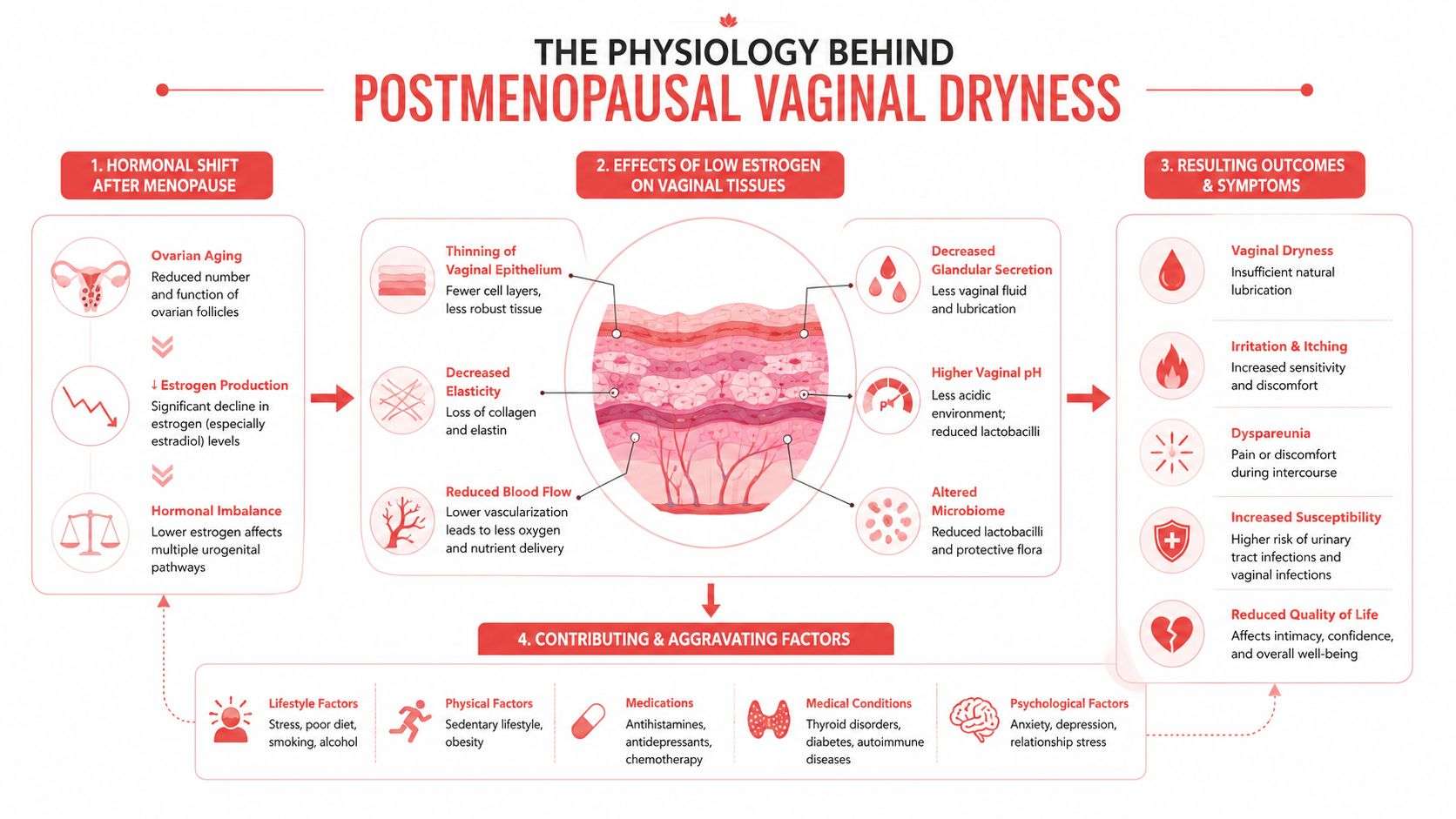
Menopause causes a sharp drop in estrogen, and the vaginal tissue feels that change directly. The hormone loss does more than reduce moisture for a short time. It changes the tissue environment, which is why dryness after menopause can become persistent instead of coming and going.
What estrogen loss does to tissue
Vaginal tissue starts to behave more like skin that has lost support. It becomes thinner, less elastic, and less well-lubricated (Mayo Clinic). Blood flow can decrease, the local microbiome can shift, and vaginal pH can rise. Those changes keep irritation active even when there has not been recent sex or another obvious trigger. A person can feel dry, sore, or raw without doing anything wrong.
The broader clinical term is genitourinary syndrome of menopause, or GSM (what vaginal atrophy is and how it can be treated). Vaginal dryness is one part of that pattern, but the same estrogen shift can affect nearby tissues that shape comfort, lubrication, and resilience. For a fuller look at the tissue changes behind signs of vaginal atrophy, the clinical picture becomes easier to connect. A helpful companion overview is what vaginal atrophy is and how it can be treated, which places dryness in the larger menopause-related tissue changes.
Why the symptoms can feel progressive
Once tissue is thinner and drier, friction happens more easily. Friction can trigger inflammation, and inflammation can make the lining even less comfortable. That loop is one reason the symptom can worsen over time if the underlying hormone-related tissue change is never addressed.
Clinical takeaway: Vaginal dryness after menopause is usually a tissue remodeling issue, not just a lubrication issue.
The pattern is common across postmenopausal women, and the risk stays higher as low-estrogen conditions continue (StatPearls and review in PMC). That is why a quick fix and a lasting plan are not the same thing. A lubricant can ease discomfort today, but it will not rebuild the tissue environment on its own.
Recognizing the Full Range of Symptoms
A lot of women come in saying only “it's dry,” then spend the next few minutes describing problems that were never labeled as related. One patient may notice a burning sensation after a walk, another may describe stinging during penetration, and another may say sex feels fine at first and then becomes painful halfway through. Those experiences can all belong to the same menopause-related pattern.
The symptom cluster people often miss
Vaginal dryness after menopause can show up with burning, itching, irritation, light bleeding after intercourse, pain during sex, urinary urgency, urinary frequency, and a higher risk of urinary tract infections (Harvard review). The symptom list matters because many women assume they have separate problems, when the underlying issue is often shared tissue change.
The sexual impact can be subtle at first. A woman may start avoiding intercourse because she anticipates pain. A partner may misread that avoidance as low desire, when the core problem is that the body has started to associate intimacy with discomfort. Over time, that pattern can affect confidence and closeness even when affection is still very much there.
If sex has become something you prepare to endure rather than enjoy, the symptom has crossed from minor inconvenience into a treatable medical issue.
When discomfort starts shaping behavior
The emotional burden is real. Women often start planning around symptoms, choosing certain clothes, skipping activities that feel irritating, or relying on avoidance to stay comfortable. That can narrow a person's life more than the original dryness ever seemed like it should.
A helpful way to self-check is to ask whether the symptom is only noticeable occasionally or whether it's changing choices. If you're modifying intimacy, workouts, or daily routines because of vaginal discomfort, it's time to evaluate the tissue problem rather than keep adapting around it. For a practical symptom checklist, the signs of vaginal atrophy page can help you compare notes with what you've been feeling.
Treatment Options From Simple to Advanced
The best treatment is the one that matches the severity of symptoms, your goals, and your comfort with different approaches. Some women only need nonhormonal support. Others need prescription therapy because the tissue changes are more established. Many do best with a layered plan.
A practical treatment ladder
| Treatment Type | How It Works | Time to Results | Best For |
|---|---|---|---|
| Vaginal lubricant | Adds slip at the time of intimacy | Immediate | Pain with sex, friction, dryness during activity |
| Vaginal moisturizer | Supports day-to-day hydration when used regularly | Gradual | Ongoing dryness and mild irritation |
| Low-dose vaginal estrogen cream, tablet, or ring | Restores vaginal tissue health with local estrogen delivery | Gradual | Persistent symptoms that need tissue-level support |
| Systemic hormone therapy | Addresses broader menopausal symptoms and may help dryness in some cases | Gradual | Women with hot flashes or other whole-body menopausal symptoms |
| Pelvic floor physical therapy | Addresses muscle tension and mobility issues that can amplify pain | Variable | Pain with penetration, guarding, pelvic tightness |
What usually helps first
For many women, the first step is a lubricant for sex and a moisturizer between sexual encounters. That distinction matters. Lubricants reduce friction during activity, while moisturizers are used regularly to support daily tissue comfort. Both can help, but they play different roles.
If symptoms are more than mild, low-dose vaginal estrogen is often the most direct medical option because it targets the tissue itself. Cream, tablet, and ring forms all work locally, which is why many clinicians consider them a foundational treatment for GSM-related dryness. If you're sorting through home care and product choices, the practical guide on improving vaginal lubrication can help you understand how supportive products fit into care.
Rule of thumb: If comfort only improves when you're actively applying product, the tissue still may need medical treatment.
When the issue isn't only dryness
Pain with sex isn't always just dryness. The pelvic floor can tighten in response to chronic discomfort, and that tension can make insertion more painful even after moisture improves. Pelvic floor physical therapy can be useful when muscles, tissue mobility, and guarding are part of the picture.
Systemic hormone therapy can make sense when vaginal symptoms are part of a wider menopause picture that includes other bothersome symptoms. The right choice depends on symptom pattern, medical history, and goals, not on a one-size-fits-all script. A careful evaluation helps separate what you can manage at home from what really needs prescription-level support.
Regenerative Therapies and Emerging Options
Some women want more than symptom relief. They want treatments that aim to improve tissue quality, not just coat the surface or temporarily blunt friction. That's where regenerative approaches enter the conversation, but they deserve an honest explanation.

How these therapies are supposed to work
Heat-based treatments such as laser therapy and radiofrequency aim to stimulate tissue remodeling through controlled energy delivery. The practical idea is to encourage collagen activity, improve tissue quality, and support a healthier vaginal environment over time. Injection-based regenerative protocols, such as the SHEshot®, are designed to deliver concentrated growth factors to support repair and sexual function.
Those concepts are appealing because they focus on regeneration rather than temporary compensation. They may fit well for patients who want a non-surgical option and who understand that outcomes vary. A closer look at tissue regeneration therapy can help frame how regenerative care is discussed in a clinical setting.
What to expect before you choose one
The key question is not whether a therapy sounds advanced. It's whether it's appropriate for your tissue condition, your medical history, and your expectations. Some women want to reduce dryness enough to enjoy intimacy again. Others are looking for a broader change in tissue quality and sensation.
Good candidates ask two questions before any regenerative treatment: What problem is this treating, and what result should I realistically expect?
A sexual wellness center may combine regenerative options with hormone optimization and supportive care instead of treating each symptom in isolation. Sexual Wellness Centers of America offers SHEshot® for women as part of its sexual wellness and vaginal rejuvenation services, which places it in the broader category of regenerative care discussed here. As with any newer option, the best choice depends on whether the treatment matches your goals, your comfort with the approach, and the clinician's ability to explain the trade-offs clearly.
When and How to Talk to a Clinician
Many women wait because they're embarrassed, unsure what to say, or afraid they'll be dismissed. A better approach is to treat the appointment like a problem-solving visit. You're not asking for permission to feel better, you're reporting a symptom that affects quality of life.
What to say when the topic feels awkward
A simple opener is often enough. You might say, “I'm having vaginal dryness and discomfort after menopause, and I want to talk about treatment options.” That sentence gives the clinician a clear signal and keeps the conversation focused.
If you want help preparing for the visit, the guide on being an active partner in your healthcare can help you organize symptoms and questions before you walk in. In the exam room, ask what's causing the dryness, what options fit your situation, and what side effects or limitations you should expect.
What a thorough visit should include
A serious evaluation usually covers symptom history, sexual goals, medication review, and a physical exam. Depending on the situation, a clinician may also discuss hormone testing or broader menopause management, especially if other symptoms are present. You should leave with a plan, not just reassurance.
Look for a provider who treats sexual pain and vaginal dryness as legitimate medical issues, not embarrassing side notes. If a practice offers integrated care that includes hormone optimization, pelvic floor support, and regenerative options, that can make treatment more efficient because the root causes are handled in one place. You don't need to wait for symptoms to become severe before asking for help.
Frequently Asked Questions About Vaginal Dryness After Menopause
How long does treatment take to work? Lubricants can help right away, while moisturizers and low-dose vaginal estrogen usually take longer because they're working on tissue, not just friction. The right timeline depends on how advanced the dryness is and which option you choose.
Can vaginal dryness go away permanently? Some women need ongoing maintenance, especially if the tissue changes are tied to sustained low estrogen. That doesn't mean you're stuck, it means the plan may need to be continued the way glasses or blood pressure treatment are continued.
How do I talk to my partner about it? Be direct and matter-of-fact. Say that sex has become uncomfortable because of a menopause-related tissue change, and that you're working on treatment so intimacy can feel good again.
Are treatments safe if I've had breast cancer or another hormone-sensitive condition? That question deserves an individualized discussion with a clinician who knows your history. Options can still exist, but the plan should be built carefully rather than guessed at.
If vaginal dryness after menopause is affecting your comfort, intimacy, or confidence, you don't have to keep managing it alone. Sexual Wellness Centers of America offers sexual wellness evaluations, hormone-focused care, and regenerative options that can be matched to the cause of your symptoms. Visit Sexual Wellness Centers of America to learn what a personalized treatment plan can look like and take the next step toward real relief.