
Acoustic wave therapy for ED typically runs about $300 to $500 per session, packaged as 6 to 12 sessions, so a full course commonly lands between roughly $1,800 and $6,000 out of pocket. Your real budget may be higher once consultation, follow-up, maintenance, bundled regenerative services, and travel are included.
You may be comparing two quotes that seem to describe the same treatment, yet one clinic lists a low per-session price while another presents a much larger package total. That confusion is common. Patients usually aren't comparing equivalent plans. One quote may cover acoustic therapy alone, while another includes medical evaluation, individualized planning, follow-up, or additional regenerative services.
The practical question isn't, “What does one session cost?” It's, “What will I pay from the first consultation through follow-up, and what exactly am I receiving for that amount?” That end-to-end view gives you a more useful way to assess acoustic wave therapy cost.
Table of Contents
- Why Acoustic Wave Therapy Cost Varies So Much
- What Acoustic Wave Therapy Is and Why It Is Cash-Pay
- Typical Acoustic Wave Therapy Price Ranges
- Factors That Affect Acoustic Wave Therapy Cost
- What Your Quote Should Include
- Financing, Insurance, and Cost-per-Outcome Thinking
- Frequently Asked Questions About Acoustic Wave Therapy Cost
Why Acoustic Wave Therapy Cost Varies So Much
A patient may receive two quotes for what appears to be the same ED treatment. One clinic lists an attractive session price. Another quotes a larger amount for a complete course. The difference often becomes clear after reviewing the details. The lower figure may cover treatment visits only, while the higher quote includes a defined protocol, medical oversight, follow-up, or related services. Acoustic wave therapy for ED commonly costs about $300 to $500 per session, with 6 to 12 sessions often packaged into a course, producing a typical out-of-pocket total of roughly $1,800 to $6,000 according to published cost guidance for shockwave therapy for ED.
That range reflects more than treatment technique. ED acoustic wave therapy is generally a cash-pay elective service, not a standardized procedure reimbursed through insurance. Clinics can differ in billing structure, treatment schedule, equipment, clinician involvement, and protocol design. A quote may cover one visit, the full initial course, or a broader regenerative plan such as REGENmax®.
The advertised number may not be your final number
A per-session price is only one part of the budget. Before accepting a quote, ask whether it includes:
- Consultation fees: The initial medical evaluation may be billed separately.
- Diagnostic work: Blood tests, hormone assessment, or other evaluation may add charges.
- Follow-up care: Reassessment may be included, or each review may have its own fee.
- Maintenance visits: Ongoing treatment after the initial course can create a separate expense.
- Bundled services: Laser therapy, injection protocols, or other regenerative services may be included in one plan and excluded from another.
The equipment and clinical infrastructure also affect pricing. One pricing overview cites focused devices costing about $50,000 to $200,000, before maintenance, consumables, and clinician time, as described in this overview of shockwave treatment pricing. Equipment cost alone does not justify every premium quote. It does help explain why a medically supervised clinic may charge differently from a provider offering a narrower service.
The full financial commitment can extend beyond the invoice. Patients traveling to the Dallas-Fort Worth area may need to budget for transportation, lodging, time away from work, and scheduling support. A bundled regenerative protocol may also carry a higher upfront cost while reducing separate consultation or follow-up charges. Ask for the total from consultation through planned follow-up, not just the lowest entry price.
Practical rule: Compare equivalent plans. Request the same number of visits, the same starting point, and a written list of included services before judging value. The useful question is cost per planned outcome and follow-up, not cost per appointment alone.
What Acoustic Wave Therapy Is and Why It Is Cash-Pay
Acoustic wave therapy uses sound-wave energy applied to erectile tissue as part of a repeated treatment plan. The intent is to support blood flow and tissue function, particularly when vascular factors contribute to ED. Unlike a pill taken shortly before sexual activity, the therapy is designed as a course of visits rather than a single-use response.
A useful analogy is a gym membership for blood vessels. One workout rarely changes conditioning, and one acoustic therapy visit shouldn't automatically be viewed as a complete solution. Repeated sessions give a clinician opportunities to apply the planned protocol, monitor the patient's response, and decide whether the course remains appropriate.
What the treatment is trying to address
ED can involve vascular health, metabolic factors, hormone status, medication effects, psychological influences, or a combination of causes. Acoustic therapy is most relevant when the treatment plan is directed at tissue and circulation concerns rather than masking symptoms for a short period.
That distinction matters financially. A symptom-focused option may be used only when needed, while a regenerative protocol requires an upfront course of care. Neither pricing model is automatically superior for every patient. The appropriate comparison depends on the cause of ED, the person's goals, medical history, tolerance for ongoing medication, and expectations about follow-up.
Patients can review how one provider describes its approach to shock wave treatment for erectile dysfunction before a consultation, but online descriptions shouldn't replace an individualized medical evaluation.
Why insurance usually isn't part of the quote
Historically, ED acoustic or shockwave protocols have generally been billed as elective outpatient care and haven't been covered by insurance. That leaves clinics to determine their own package design, consultation process, session count, and payment terms. The result can feel inconsistent even when two providers use similar language.
The cash-pay structure also changes how value should be judged. Insurance billing often uses established codes and coverage rules. Elective regenerative care usually requires the patient to ask more questions directly, especially about what the package includes and what happens after the initial series.
The price isn't arbitrary simply because it is cash-pay, but a cash-pay quote should still be transparent, itemized, and tied to a clearly explained treatment plan.
Typical Acoustic Wave Therapy Price Ranges
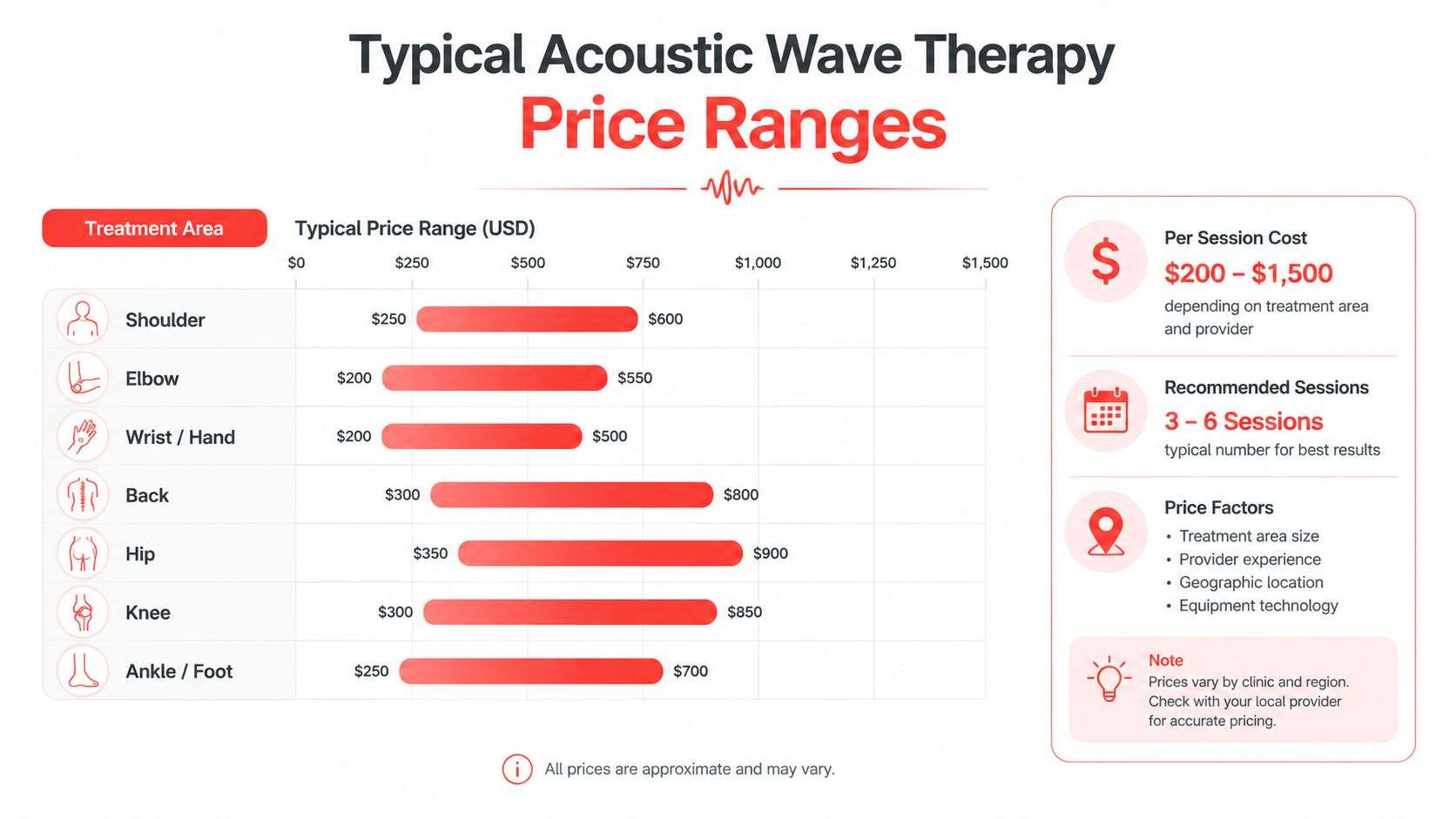
A patient traveling for care may see a low per-session advertisement, then discover separate consultation, follow-up, maintenance, or travel costs. Read acoustic wave therapy pricing in two layers: the price of one visit and the all-in cost of the recommended course. A clinic may advertise roughly $250 to $500 per session, while complete treatment plans can range from approximately $2,400 to $9,600, depending on visit count and bundled services. These figures are reference points, not a universal menu.
Acoustic Wave Therapy Cost at a Glance
| Cost Component | Typical Range | What It Means for You |
|---|---|---|
| Single ED session | $300 to $500 | Useful for comparing visit prices, but not enough to determine total treatment cost |
| Six-session course | $1,800 to $3,000 | A common course window, depending on the clinic and whether extras are included |
| Twelve-session course | $3,600 to $6,000 | A longer plan that can move spending toward the upper end of typical pricing |
| Modeled full course | $3,445 in 2022 dollars | A Medicare-oriented cost model estimate, not a universal clinic quote |
The six-session math is simple. At $300 per visit, six visits equal $1,800. At $500 per visit, they equal $3,000. The University of Utah describes a typical six-treatment regimen, with each treatment costing $400 to $500 out of pocket, implying $2,400 to $3,000 before add-ons, in its clinical guidance on shockwave therapy for ED.
A twelve-session plan increases the number of visits, but clinics do not all price those visits separately. Some reduce the effective per-session rate for a prepaid course. Others include different levels of medical oversight, reassessment, or supportive care. Compare the package total with its itemized contents rather than judging the discount alone.
Why course pricing became common
Package pricing became more visible as acoustic wave therapy developed into a cash-pay men's-health service. A course quote defines the proposed schedule and shows the initial financial commitment without requiring patients to calculate every appointment.
The quote still needs scrutiny. Ask whether it covers a complete protocol or only a prepaid block of visits. Confirm whether consultation, treatment planning, follow-up, maintenance visits, and any bundled regenerative protocol such as REGENmax® are included. Those details determine the budget.
For an out-of-town patient, add transportation, lodging, time away from work, and any repeat trips to the treatment total. The relevant figure is the all-in course cost, not the lowest number in an online advertisement. Patients can check regional availability through shockwave therapy for ED near you before comparing consultation options. Value also depends on the outcome being pursued and how that cost compares with ongoing pills, rather than on the session price by itself.
Factors That Affect Acoustic Wave Therapy Cost
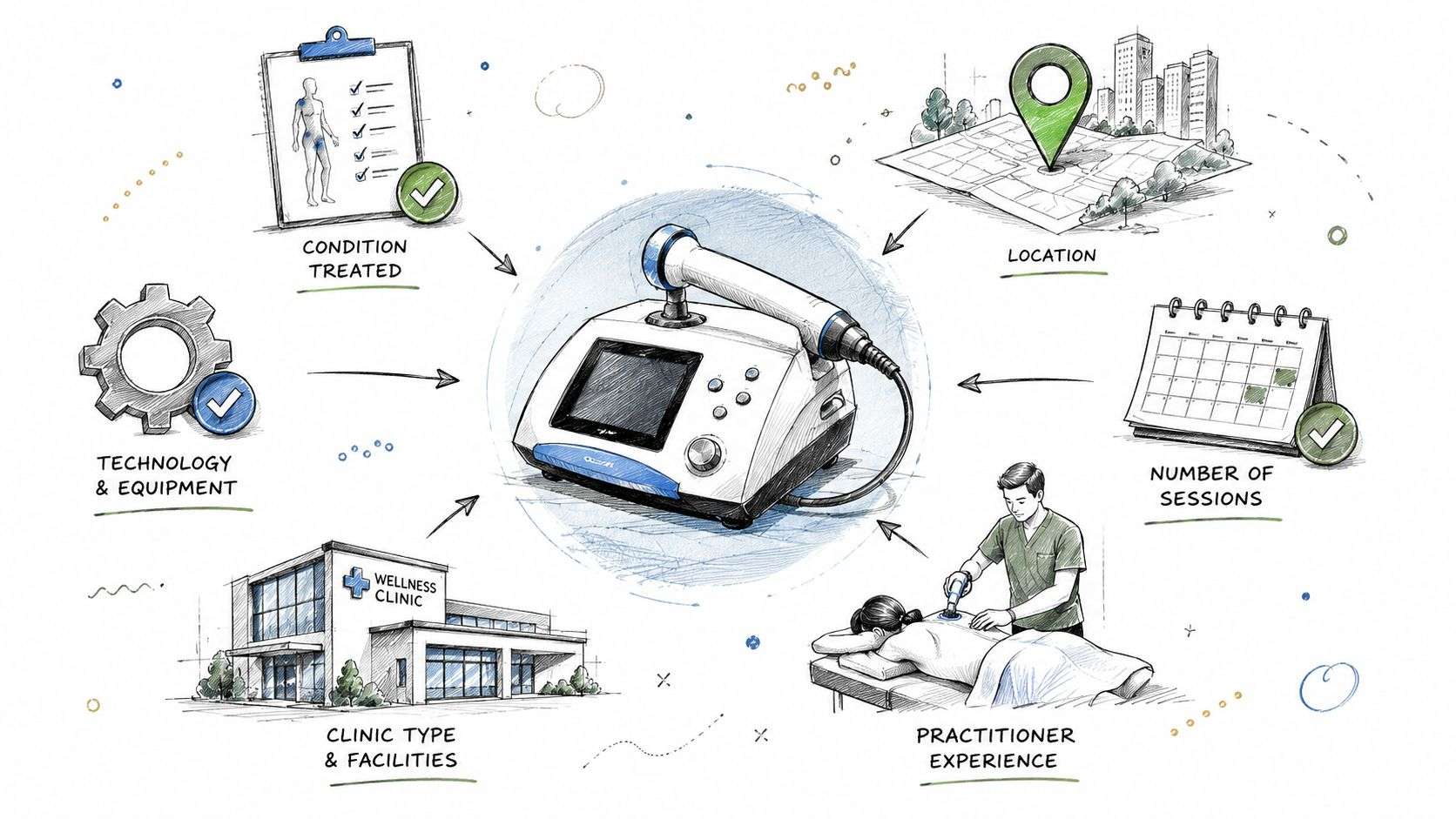
A patient may receive two very different quotes for what sounds like the same acoustic wave treatment. The gap usually reflects more than pulse count. It can include the protocol, equipment, clinician involvement, follow-up, bundled care, and the practical costs of completing treatment. Five factors explain most price differences.
Session count and protocol design
The number of visits directly affects the invoice, but the visit count should match a stated clinical plan. A longer course may be appropriate for a particular patient, while a shorter course may suit another. More sessions don't automatically mean more value. Ask why the clinician recommends that schedule, what each visit includes, and whether reassessment changes the plan.
A prepaid course can reduce the effective per-visit price, yet the package total matters more than the advertised discount. Compare the total commitment with the services included.
Device and treatment method
The device, energy delivery, treatment areas, and protocol design can all affect cost. Clinics may use “acoustic wave” as a broad label, even though treatment methods and equipment differ. Ask which technology the clinic uses, who sets treatment parameters, and how the protocol is customized.
Equipment represents a substantial operating investment. Focused devices may cost approximately $50,000 to $200,000, before ongoing maintenance and clinical operating expenses, according to the discussion of treatment pricing factors. That helps explain legitimate price variation. It does not justify a vague quote. The clinic should explain what its fee covers.
Clinician experience and medical oversight
A higher fee may reflect evaluation, contraindication screening, treatment planning, and follow-up judgment. Those services can change the course and prevent unsuitable treatment. A premium based only on a polished setting, recognizable branding, or broad promises is harder to defend.
Choose a provider who can explain expected benefits, limitations, alternatives, and the circumstances that would alter the plan. Medical oversight should be visible in the quote and during care.
Geography and patient logistics
Local rent, staffing, equipment, and operating expenses influence regional pricing. Out-of-town patients must also budget for transportation, lodging, meals, missed work, and repeat visits. These costs can make a seemingly lower session price more expensive overall.
The useful comparison is the all-in course cost, including travel and time away from work.
Bundled regenerative care
Some programs pair acoustic therapy with laser treatment or injection protocols such as REGENmax®. A bundle may support a broader plan, but it raises the upfront commitment. Ask what each component is intended to address, whether it fits your situation, and what the standalone options cost.
Judge value by the expected outcome and the full path to that outcome, including maintenance visits and alternatives such as ongoing pills. Avoid paying a premium for urgency, vague guarantees, or unexplained add-ons.
What Your Quote Should Include
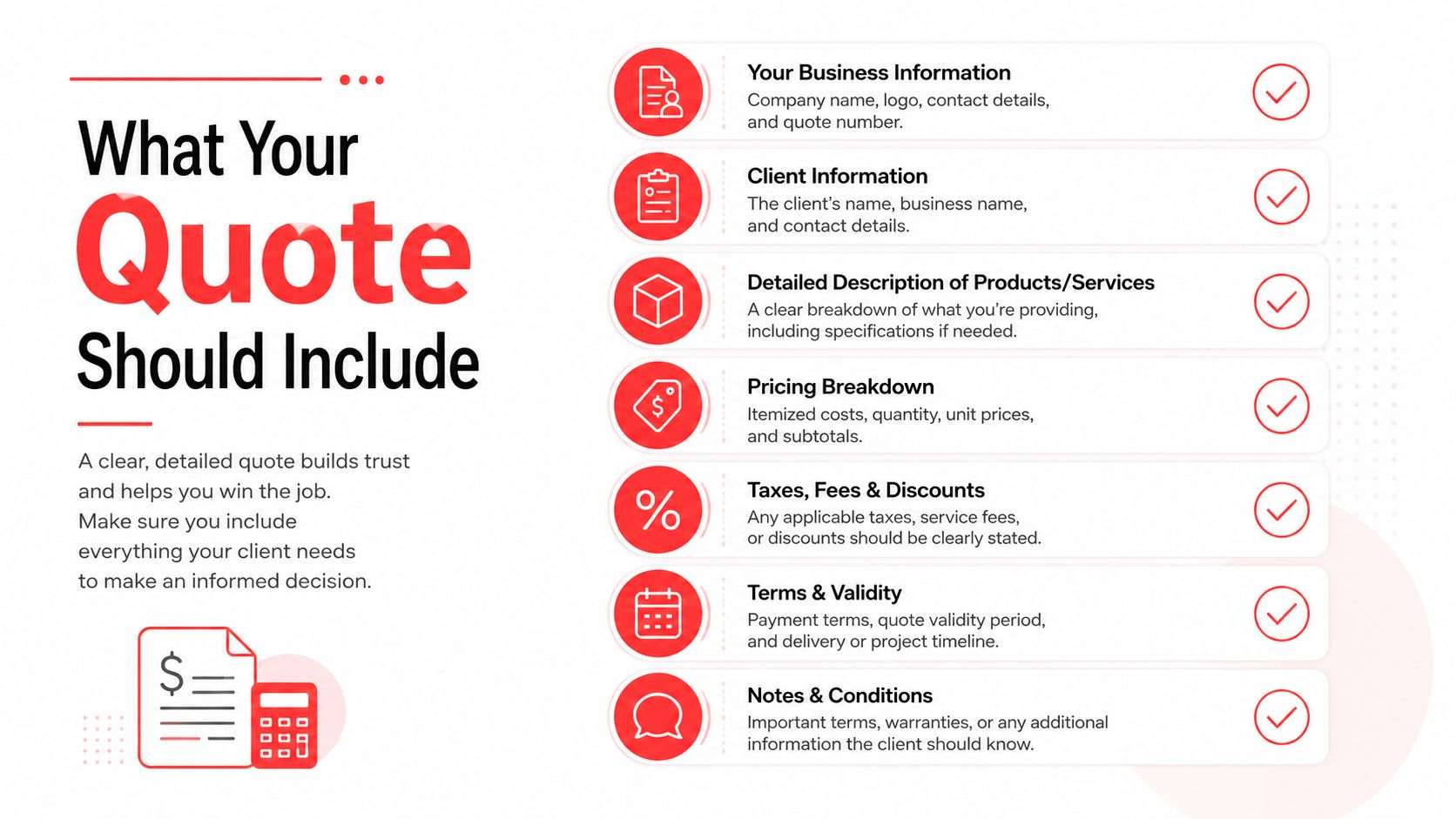
A usable quote should let you calculate the complete financial commitment before treatment begins. If the document lists only a session price, it isn't yet an all-in quote. Ask the clinic to convert the offer into a written course estimate.
Use this consultation checklist
- Initial evaluation: Is the consultation included, or will you pay a separate assessment fee?
- Clinical testing: Are blood work, hormone panels, or other evaluations recommended, and are they priced separately?
- Included visits: How many acoustic wave sessions does the quoted amount cover?
- Treatment scope: Does the plan identify the device, treatment areas, and protocol type?
- Follow-up appointments: Is post-course review included, and how often will the clinician reassess you?
- Maintenance care: Are future visits optional, expected, or part of a membership arrangement?
- Regenerative add-ons: Are laser therapy, injectables, or other components included or billed separately?
- Cancellation terms: What happens if you need to reschedule, pause, or stop the course?
- Travel coordination: If you're coming from outside the area, does the clinic help plan appointment timing and follow-up?
Turn the quote into one number
Write down the initial consultation, testing, course, follow-up, maintenance expectations, and travel costs. Then ask the provider to identify which items are fixed and which could change after evaluation.
A patient traveling to a clinic in the Dallas-Fort Worth area should also ask how many visits need to occur in person and whether follow-up can be coordinated around travel. A lower clinic price can lose its advantage if it requires additional trips that weren't included in the initial discussion.
The most common mistake is comparing an introductory per-session offer against another clinic's full-course quote. Ask both providers for the total price of the same number of sessions, with the same add-ons and follow-up expectations.
Financing, Insurance, and Cost-per-Outcome Thinking
A patient planning acoustic wave therapy for erectile dysfunction should treat it as a cash-pay decision unless an insurer confirms coverage in writing. The treatment is generally positioned as elective outpatient care rather than a routinely reimbursed service. Call your insurer for a direct answer, but keep reimbursement out of the budget until you have approval.
Financing can make the upfront payment easier to manage, but it does not reduce the treatment's total price. Review the full repayment amount, fees, payment schedule, and consequences of stopping early. If a clinic offers a maintenance membership, confirm whether it is optional, what visits it covers, and how recurring charges affect the long-term total. Review available financing options before committing, then judge the payment plan against your budget instead of focusing only on the monthly amount.
Compare the financial pattern, not just the first invoice
Pills may cost less at each use, yet become a recurring expense for as long as you depend on them. Acoustic wave therapy usually requires a larger initial payment because clinics commonly sell a course of visits. Surgery carries a different financial and medical burden, including the procedure, recovery, and possible complications.
Compare cost per meaningful outcome, not cost per appointment. Start with the result you want: occasional support, more consistent erectile function, or less reliance on medication. Then consider how long each option may remain useful. A recurring prescription and a defined treatment course create different spending patterns.
Your comparison should also include medical supervision. A lower price has limited value if the plan does not address relevant health factors or reassess your response. Ask what happens if the first approach does not fit, including whether reassessment, alternative care, or additional visits create new charges.
For an outside reference, University of Utah clinical guidance describes a typical six-treatment regimen, with each treatment costing $400 to $500 out of pocket. That implies $2,400 to $3,000 before consultation, follow-up, maintenance, travel, or regenerative add-ons. Use that figure as a planning reference, not a guaranteed quote.
A Medicare-oriented cost model estimated one complete course at $3,445 in 2022 dollars. That model is not a universal retail price, but it gives patients another benchmark when reviewing an all-in cash-pay quote. Include travel for out-of-town visits, since a lower advertised price may lose its advantage when repeated appointments, lodging, or missed work are added.
Frequently Asked Questions About Acoustic Wave Therapy Cost
Do more sessions always mean better value?
No. A longer course increases the total price, but it doesn't automatically improve your outcome. The value depends on whether the additional sessions have a clear clinical purpose, whether your response is being monitored, and whether the protocol addresses the likely contributors to your ED.
Ask the clinician why the proposed session count is appropriate for you. A transparent answer should connect the number of visits to your evaluation and treatment goals, not to a larger package.
Are cheap introductory offers ever worthwhile?
They can be, but only when the offer is clearly defined. Confirm the device, treatment area, session length or protocol scope, clinician involvement, and whether the introductory price converts into a larger package requirement.
The warning sign is a price that can't be compared with another quote because key details are missing. Before booking, ask for the total cost if you complete the recommended course, including consultation and follow-up.
How should I budget for maintenance visits?
Treat maintenance as a separate planning question. The initial course may have a defined price, while later visits, reassessments, or membership services may be billed separately. Ask whether maintenance is expected, how the clinic decides when it's appropriate, and what each visit includes.
Don't prepay for indefinite care unless you understand the terms. A written maintenance policy gives you more control than an open-ended promise that you'll need ongoing treatment.
Is a bundled program such as REGENmax® worth the higher price?
A bundled program can be reasonable when you understand the purpose and cost of every component. REGENmax® is described by Sexual Wellness Centers of America as combining REGENlase™ laser, REGENwave™ acoustic therapy, and concentrated HEshot® within an individualized regenerative protocol. That is a broader service than standalone acoustic wave sessions, so a higher price reflects more than additional acoustic therapy visits.
The bundle still needs to earn its place in your budget. Ask what each component contributes, whether you can choose acoustic therapy alone, what evaluation is included, and what follow-up applies to the complete program. Compare the expected clinical plan, not just the number of services listed.
A candid consultation should leave you knowing the total upfront course cost, possible add-ons, maintenance expectations, and travel implications. If the provider can't explain those items plainly, delay the financial commitment until the quote is complete.
Sexual Wellness Centers of America provides ED evaluations, REGENwave™ acoustic therapy, the REGENmax® regenerative program, hormone and lab-guided wellness services, maintenance planning, financing information, and guidance for out-of-town patients. Visit Sexual Wellness Centers of America to request a consultation and receive a clear discussion of your treatment options and end-to-end cost.