
What Are Hair Regrowth Peptides and How Do They Stimulate Follicles?
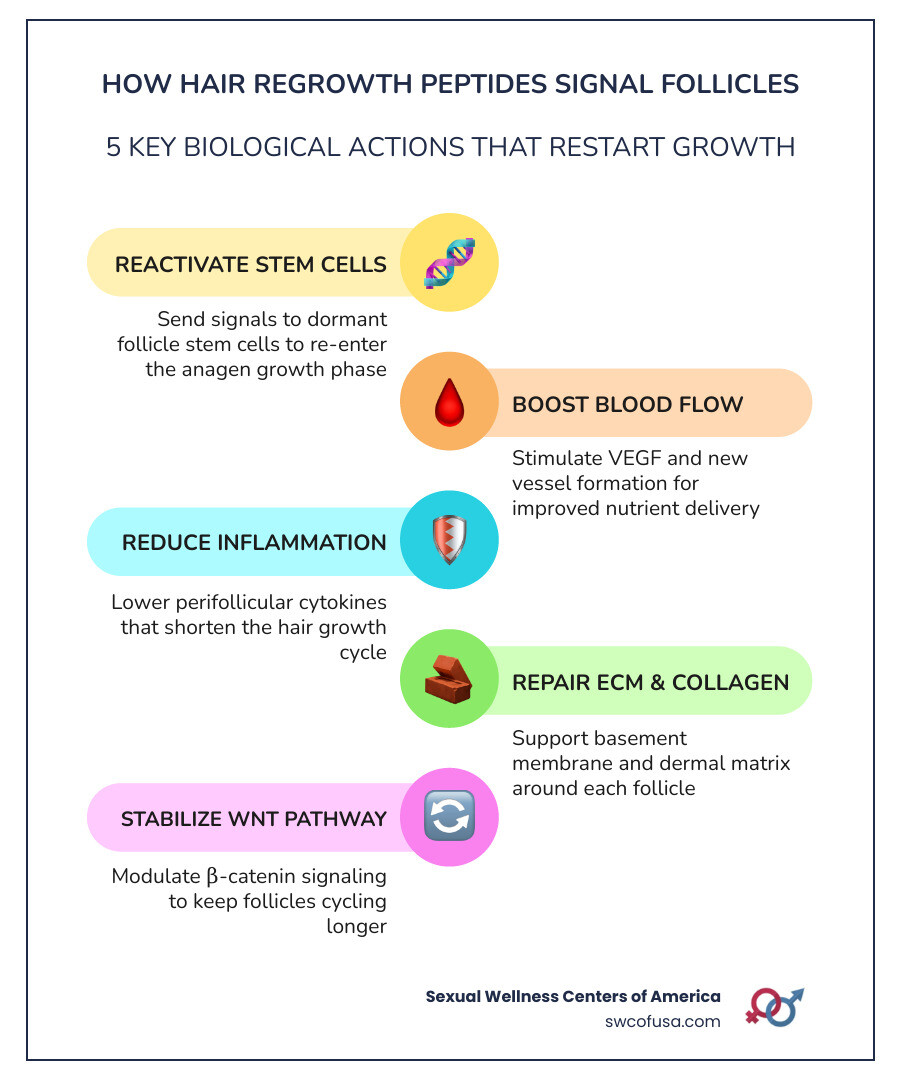
Hair regrowth peptides are short chains of amino acids that send targeted signals to hair follicles — telling them to repair, grow, and stay in the active growth phase longer.
Here’s a quick summary of how they work:
- Signal follicle stem cells to reactivate and re-enter the growth (anagen) phase
- Stimulate blood vessel formation (angiogenesis) to improve nutrient delivery to the follicle
- Reduce inflammation around the follicle that can shorten the hair cycle
- Support collagen and extracellular matrix repair in the scalp’s dermal layer
- Modulate key pathways like Wnt/β-catenin, which directly controls follicle cycling
Unlike most cosmetic ingredients, peptides don’t just coat the hair shaft. They interact with the biology inside the follicle itself.
Hair loss is more common than most people realize. Around 14.1% of men and 5.6% of women in South Asia alone are affected by androgenetic alopecia — and those numbers look similar across many global populations. For millions of people, standard treatments like minoxidil and finasteride either don’t work well enough or come with side effects they’d rather avoid. That’s exactly why interest in peptide-based approaches has grown so quickly.
I’m Jeff Nuziard, CEO of Sexual Wellness Centers of America, where I’ve worked closely with patients navigating hormonal imbalances and age-related changes — including hair loss — and I’ve seen how hair regrowth peptides are opening new doors for people who’ve run out of options with conventional treatments. In the sections ahead, we’ll break down the science, the evidence, and what actually matters when considering peptides for hair loss.
Introduction to Hair Regrowth Peptides
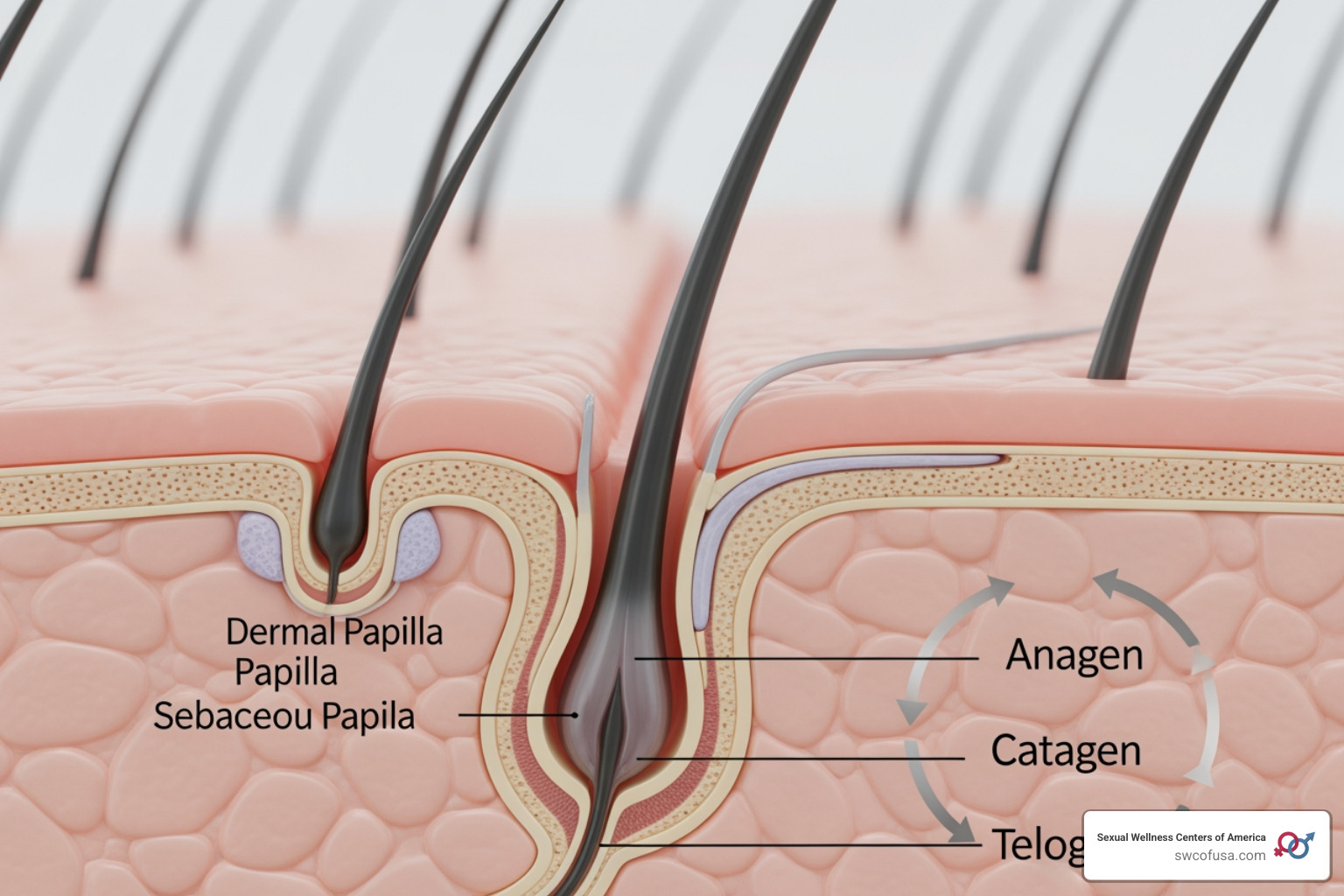
To understand peptides, it helps to understand the hair cycle first. Hair follicles are not “on” all the time. They move through:
- Anagen, the active growth phase
- Catagen, the transition phase
- Telogen, the resting and shedding phase
A typical follicle can stay in anagen for years, catagen for a few weeks, and telogen for a few months. At any given time, most scalp hairs are usually in anagen. In pattern hair loss, follicles gradually miniaturize, meaning they produce shorter, thinner, less visible hairs. That is why people often say, “My hair is still there, but it looks weaker.” The follicle has not always vanished. It may simply be underperforming.
Hair regrowth peptides are being studied because they may influence that cycle directly. Instead of acting only on hormones or blood flow, many peptides work as biologic messengers that help dermal papilla cells, stem-cell niches, and the surrounding scalp environment communicate more effectively.
How Hair Regrowth Peptides Work
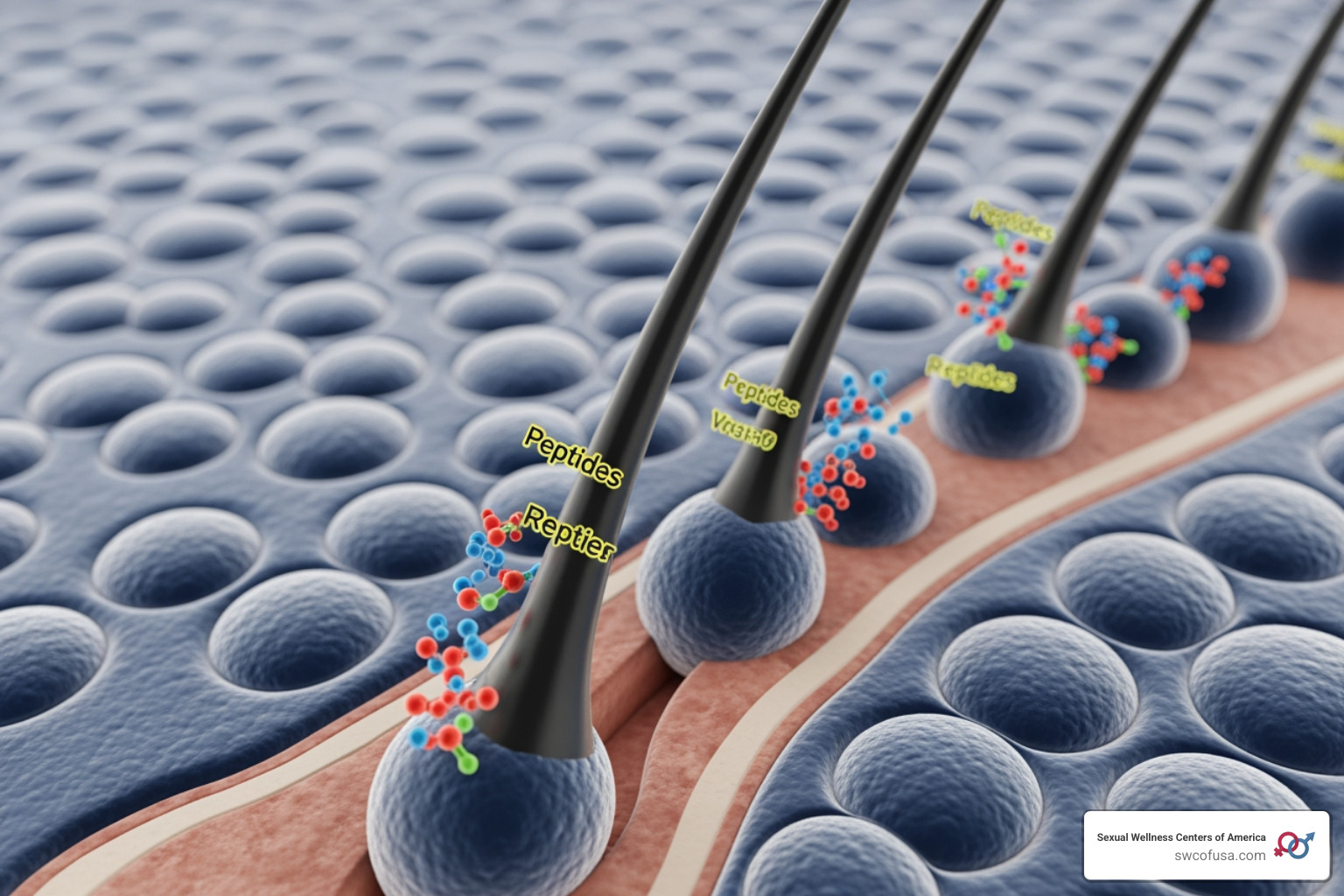
Peptides are made of amino acids, but their real power comes from signaling. Think of them less like “nutrition” and more like tiny text messages delivered to cells. Some tell follicles to grow. Some tell inflamed tissue to calm down. Some help rebuild the matrix around the follicle so it can function normally again.
Key structures and pathways include:
- Dermal papilla cells, which help orchestrate hair growth
- Hair follicle stem cells, which need the right signals to reactivate
- Wnt/β-catenin signaling, a major driver of follicle cycling
- VEGF and angiogenesis, which support blood supply
- Extracellular matrix, which helps anchor and support the follicle
- Inflammatory and oxidative stress pathways, which can damage the follicle environment
- Autophagy, a cellular cleanup process linked to follicle health
Many peptide approaches are attractive because they are non-hormonal. For people who want to avoid hormone-related side effects, that matters a lot.
Why hair regrowth peptides are different from standard cosmetic ingredients
Most cosmetic ingredients mainly improve the hair shaft. They may smooth, coat, hydrate, or reduce breakage. Useful? Absolutely. But that is different from waking up a sluggish follicle.
Peptides are different because they can be biomimetic, meaning they imitate natural signaling molecules already used by the body. In plain English, they are trying to speak the follicle’s language instead of just polishing the hair after it grows out.
That is why leave-on formulas matter. A rinse-off shampoo with peptides may be pleasant, but a leave-on serum, topical solution, or physician-guided treatment generally gives peptides more time to interact with scalp tissue. This is also why we often tell patients not to expect miracles from a fancy bottle with a nice label and an even nicer price tag.
Which hair-loss pathways peptides can influence
Different peptides act on different pathways. The main ones include:
- Wnt/β-catenin activation for stem cell re-entry into anagen
- Angiogenesis and VEGF support for better nutrient delivery
- Immune modulation for inflammatory hair loss states
- Extracellular matrix remodeling for stronger follicle support
- Stem cell activation and niche repair
- Microenvironment improvement, including oxidative stress control
This multi-pathway ability is one of the biggest reasons peptide science has generated so much interest by 2026.
Main Categories of Peptides Used for Hair Loss
Not all peptides belong in one bucket. It is more useful to group them by mechanism.
| Peptide category | Main mechanism | Evidence strength | Best fit |
|---|---|---|---|
| Wnt/β-catenin peptides | Stem cell reactivation, follicle cycling | Strong preclinical, emerging clinical | Androgenetic alopecia, dormant-but-active follicles |
| Copper and matrix peptides | ECM repair, anti-inflammatory support, dermal papilla signaling | Good preclinical, limited human trials | Early thinning, scalp support, combination therapy |
| Angiogenic and immune-modulating peptides | Blood flow support, cytokine modulation, wound-healing signals | Mostly preclinical | Inflammatory thinning, supportive use |
| Nutritional bioactive peptides | Systemic support, anti-shedding, matrix support | Some human data | Diffuse shedding, telogen effluvium support |
Wnt/β-catenin peptides for hair regrowth peptides
This category may be the most exciting. The Wnt/β-catenin pathway is central to follicle development and cycling. If that pathway is underactive, follicles can stall.
PTD-DBM is a well-known example. It is designed to disrupt the CXXC5-Dvl interaction, which helps release a brake on Wnt signaling. In simple terms, it helps remove a “do not grow” sign from the follicle.
Preclinical research has been impressive. In one mouse model, topical 2 mM PTD-DBM combined with valproic acid outperformed a minoxidil comparator for hair regrowth. That does not prove the same effect in humans, but it does show why Wnt-targeted peptides are receiving so much attention.
For readers wanting more background on this mechanism, see this overview of PTD-DBM.
Copper and matrix-support peptides
Copper peptides are among the best-known peptide ingredients in hair care. GHK-Cu is the headline name here, with AHK-Cu, biotinyl-GHK, and Biotinoyl Tripeptide-1 also relevant.
These peptides may help by:
- Supporting collagen and elastin production
- Improving extracellular matrix repair
- Reducing oxidative stress
- Calming inflammation around follicles
- Supporting basement membrane integrity
- Influencing dermal papilla signaling
Biotinoyl Tripeptide-1 is especially interesting because it is a biotin-linked derivative of GHK that appears to offer better stability and follicular substantivity than free GHK alone. Supplier and ex vivo data suggest it may help preserve structures important for follicle anchoring and retention.
You can learn more from this technical page on Biotinoyl Tripeptide-1 and our own guide on peptide therapy for hair growth.
Peptides that target blood flow, inflammation, and immune balance
Some peptides focus less on direct stem-cell activation and more on making the scalp a better place for hair to grow.
Examples include:
- Thymosin beta-4, linked to wound healing and angiogenesis
- Peptides that increase VEGF signaling
- Anti-inflammatory peptides that may reduce perifollicular inflammation
- Immune-balancing approaches that could matter in alopecia areata
This is especially important because not all hair loss is driven by the same biology. In androgenetic alopecia, miniaturization is key. In alopecia areata, immune attack is central. In telogen effluvium, cycling shifts are often the main issue. One pathway, one solution rarely works for everything.
Nutritional and bioactive peptides with supportive hair data
Some peptides are taken orally or used as nutritional bioactives rather than direct follicle-targeted drugs.
A notable example is egg yolk peptide. In a 76-subject clinical study, 250 mg daily produced significantly better hair density than placebo after 24 weeks. That is not the same as a targeted topical peptide, but it does suggest that peptide-based support may help certain patients, especially with diffuse shedding or weaker hair quality.
Collagen peptides also come up often. They are not a direct hair-loss drug, but they may support connective tissue, dermal health, and overall matrix quality. For more on that angle, see our article on how collagen peptides help hair growth.
What the Evidence Says About Hair Regrowth Peptides
This is where we need both excitement and honesty. Some peptide data are genuinely promising. Some are still very preliminary. And some are impressive in mice but nowhere near ready for victory laps in humans.
Human studies with the strongest evidence
The standout as of 2026 is PP405. In a phase 2A trial, 31% of participants achieved more than a 20% increase in hair density after just 8 weeks. That is notable because many standard therapies take longer to show visible changes.
Other human signals include:
- Egg yolk peptide: 76 subjects, significantly improved hair density versus placebo at 24 weeks
- GPIGS lotion: in a small study of 22 Japanese men with androgenetic alopecia, twice-daily use over 4 months improved baldness grading
- QR678 Neo: in 20 women with telogen effluvium, intradermal treatment increased mean hair counts by 5.64
These studies are encouraging, but they are not all equal in quality, size, or reproducibility. For a broader overview, visit our page on peptides for hair regrowth.
Preclinical peptides that outperformed or matched standard drugs in models
Several peptides have looked excellent in animal or ex vivo research:
- PTD-DBM plus valproic acid outperformed a minoxidil comparator in C3H mice
- APCP at 900 mg/kg achieved hair-growth promotion comparable to 1 mg/kg minoxidil in C57BL/6 mice after 16 days
- CyRL-QN15 at 100 nmol/L showed better hair regeneration than a minoxidil comparator in diabetic mice
- Placenderm at 200 mg/kg performed comparably to a bicalutamide comparator in mouse models
These are not small findings. But mouse skin, follicle cycling, and treatment response are not identical to human scalp biology. Mice are helpful. Mice are not paying clients in Colleyville.
What current peptide evidence still cannot prove
Here are the big limitations:
- Many studies are small
- Follow-up is often short
- Human dosing is not standardized
- Head-to-head trials are rare
- Publication bias may favor positive findings
- Cosmetic products often borrow peptide science without proving their own formula works
- Long-term safety and maintenance data are still limited
That means we should view peptides as a promising category, not a fully settled one.
Hair Regrowth Peptides vs Standard Hair-Loss Medications
Peptides are often compared with the better-known standards, especially minoxidil and oral 5-alpha-reductase inhibitors.
Effectiveness and speed: how hair regrowth peptides compare
Minoxidil has a response rate around 60% at 1 year, with onset often taking 16 to 52 weeks. Oral 5-alpha-reductase inhibitors can also improve hair counts over time, though results vary by patient and study design.
Peptides are harder to compare because the data are less uniform. Still, some signals are impressive:
- PP405 showed meaningful density response in 8 weeks
- Some topical peptide products report visible changes around 3 to 4 months
- Strong preclinical models suggest several peptides can rival standard comparators biologically
The fair takeaway: peptides may show faster early signals in some cases, but they do not yet have the same depth of long-term evidence as established medications.
Side effects and tolerability differences
This is where peptides may shine.
Minoxidil can cause:
- Irritant contact dermatitis
- Itching and dryness
- Unwanted facial or body hair growth
Oral 5-alpha-reductase inhibitors can cause:
- Sexual side effects
- Mood-related concerns
- Contraindications in certain patients
Peptides are generally viewed as more biocompatible, especially topical ones, but that does not mean “side-effect free.” Possible issues include:
- Local irritation
- Allergy to excipients
- Scalp sensitivity
- Theoretical immunogenicity, especially with more complex biologics or injectables
Patch testing is still smart. Boring advice, yes. Good advice, also yes.
When peptides may fit best in a treatment plan
Peptides may be especially useful for:
- Early thinning
- Diffuse shedding
- Patients who want a non-hormonal option
- Combination plans with microneedling, PRP, or light-based therapies
- People who cannot tolerate standard medications
They may also fit well when follicles are still active but weakening. That matters because many peptide strategies work best when there is still a vellus or miniaturized hair present rather than a fully scarred or long-dormant site.
For more on advanced treatment formats, see our article on peptide injections for hair loss solutions.
Delivery Challenges and the Next Generation of Peptide Therapies
If peptides are so smart, why are they not already everywhere in mainstream hair medicine? One major reason is delivery.
Why peptides are hard to deliver into the scalp
The scalp has defenses for a reason. The stratum corneum is a strong barrier, and many peptides have properties that make penetration difficult:
- They are often water-loving rather than oil-loving
- They may carry charge
- They can be degraded by enzymes
- They may have a short half-life
- The target tissue sits relatively deep in or around the follicle
So even a great peptide can fail if it cannot reach the follicle intact.
How nanotechnology is improving peptide delivery
This is where formulation science gets interesting. Newer delivery systems aim to protect peptides, improve penetration, and release them gradually.
Common approaches include:
- Liposomes
- Polymeric nanoparticles
- Nanoemulsions
- Micelles
- Follicular reservoir systems
- Dissolving microneedles
- Controlled-release topical carriers
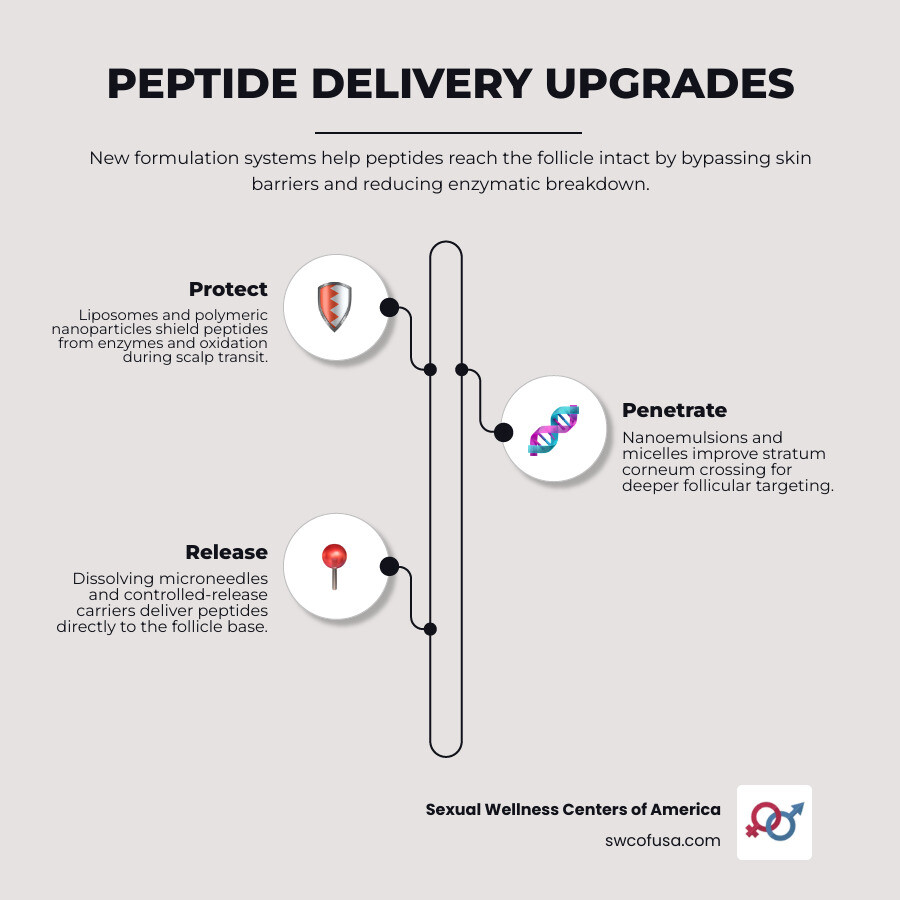
These systems may help peptides bypass some of the scalp barrier, reduce degradation, and concentrate activity around follicles instead of leaving the active ingredient stranded on the surface like a tourist with no map.
Emerging targets and smarter peptide design
The next generation of peptide therapy is likely to be smarter, not just stronger.
Researchers are exploring:
- Multi-pathway peptides with pleiotropic effects
- Peptides that address androgen signaling crosstalk without acting like hormone blockers
- Immune-niche targets for alopecia areata
- Autophagy-tuning peptides
- Rationally designed and AI-assisted peptide sequences
- Better strategies for scarring alopecia, where the challenge is much greater
This matters because hair loss is not a single disease. A peptide that helps androgenetic alopecia may do little for autoimmune or scarring forms. Precision matters. You can read more in our article on how peptides are revolutionizing hair growth.
Safety, Manufacturing, and How to Choose a Peptide Approach
A good peptide on paper can still become a bad product in real life if it is poorly made, unstable, contaminated, or oversold.
Safety questions beginners should ask before trying peptides
Before trying any peptide-based hair treatment, we suggest asking:
- Is it topical or injectable?
- What exact peptide is included?
- What concentration is used?
- Is there patch-test guidance?
- Do you have scalp dermatitis, allergies, or sensitivity?
- Are you pregnant or breastfeeding?
- Do you have a diagnosed cause of hair loss yet?
Not every thinning pattern should be self-treated. Sudden shedding, patchy loss, scalp pain, or scarring symptoms deserve medical evaluation.
Manufacturing and approval issues that matter
Peptides require careful manufacturing. Important issues include:
- Purity and batch consistency
- Oxidation control
- Correct formulation pH
- Compatible excipients
- Proper storage
- Sterility for injectable use
- Clear distinction between cosmetic and drug claims
Some ingredients, such as Biotinoyl Tripeptide-1, also have formulation windows where stability matters. If a brand cannot clearly explain what is in the bottle, that is not mysterious science. That is a red flag wearing a lab coat.
How to evaluate products and clinics without hype
Look for:
- Full ingredient transparency
- Leave-on rather than rinse-off use when appropriate
- Realistic claims
- Evidence tied to the actual peptide, not vague “complexes”
- A plan for combination therapy if needed
- Clear explanation of whether the goal is scalp support, shedding control, or true regrowth
For more on one commonly used cosmetic peptide, read our guide to acetyl tetrapeptide-3 hair growth.
Frequently Asked Questions About Hair Regrowth Peptides
Do hair regrowth peptides actually regrow hair or mainly support scalp health?
Both, depending on the peptide and the patient.
Some peptides mainly improve the scalp environment by reducing inflammation, supporting extracellular matrix repair, and improving follicle anchoring. Others, especially Wnt-related peptides, aim more directly at follicle reactivation and regrowth.
For androgenetic alopecia, peptides may help most when follicles are miniaturized but still active. For advanced bald areas with long-inactive follicles, results are less predictable. In other words, peptides are not magic seeds for a concrete driveway.
How long does it take to see results from hair regrowth peptides?
Some early signals can appear around 8 weeks, as seen with PP405 data. More often, visible changes take 3 to 4 months or longer because hair growth is slow and the follicle cycle has built-in lag time.
Consistency matters. Missed applications, weak formulations, or switching products every 10 days usually does not end well.
Are hair regrowth peptides safe to combine with minoxidil, microneedling, or PRP?
Often yes, but the details matter.
Combination therapy may make sense because different treatments work through different pathways. For example:
- Minoxidil may support growth signaling and local blood flow
- Microneedling may improve penetration and trigger repair pathways
- PRP may add growth-factor support
- Peptides may target signaling, inflammation, and matrix repair
The main caution is irritation. Layering too many actives on an already sensitive scalp can backfire. Physician guidance is especially useful with injections, deeper delivery systems, or mixed protocols.
Conclusion: Are Hair Regrowth Peptides Worth Considering?
Yes, hair regrowth peptides are worth considering, especially for people with early thinning, diffuse shedding, or a strong preference for non-hormonal strategies. The science is real, and some of the early data are impressive, particularly around Wnt-targeted and regenerative peptides. But the field is still developing, and not every peptide product deserves the hype it gets.
Our balanced view is simple:
- Peptides are promising
- Some have meaningful human data
- Many still need better trials
- Delivery and formulation matter a lot
- Combination therapy may offer the best real-world results
At Sexual Wellness Centers of America in Colleyville, TX, we believe hair restoration should be personalized, evidence-aware, and honest about both upside and limitations. If you are exploring what comes after disappointing over-the-counter products or want a more regenerative approach, learn more about our REGEN hair services in Colleyville.
You can also continue reading our related resources:
- Peptide Therapy for Hair Growth
- From Thin to Thick: How Peptides Are Revolutionizing Hair Growth
- Beyond Serums: Exploring Peptide Injections for Hair Loss Solutions
- Peptides for Hair Regrowth
- Collagen Peptides Help Hair Growth
If you want to know whether peptides fit your hair-loss pattern, the best next step is a professional evaluation and a plan based on your scalp, your goals, and the biology driving your hair loss.