
Why BPC 157 Ligament Healing Has Everyone Talking
BPC 157 ligament repair has become one of the most controversial topics in regenerative medicine today. This synthetic peptide, nicknamed “the Wolverine peptide” by athletes and biohackers, promises to dramatically accelerate healing of injured ligaments, tendons, and other soft tissues.
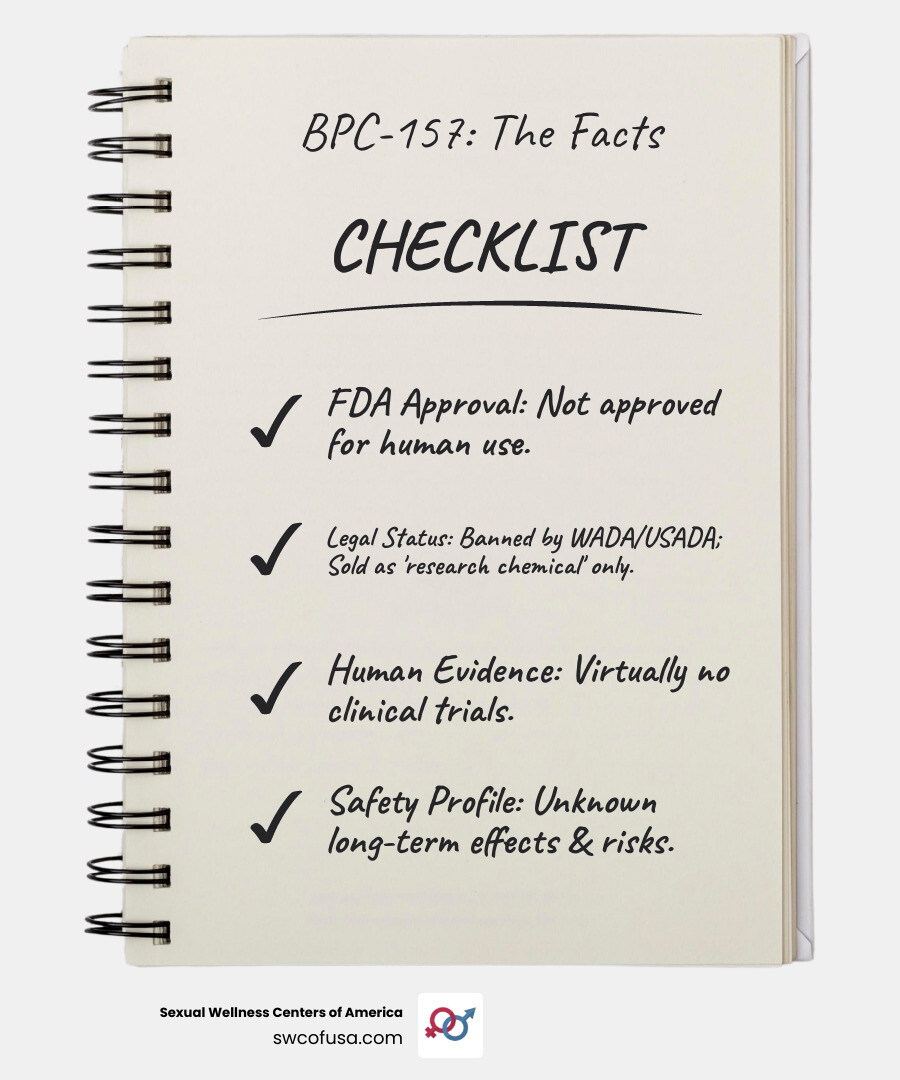
Quick Facts About BPC 157 for Ligament Healing:
- What it is: A 15-amino acid synthetic peptide derived from stomach proteins
- Legal status: Not FDA-approved for human use; banned by WADA and USADA for athletes
- Evidence: Promising animal studies, but virtually no human clinical trials
- Safety: Unknown long-term effects and potential risks in humans
- Availability: Sold illegally as “research chemicals” through unregulated sources
The buzz around BPC 157 stems from impressive animal studies showing faster healing of transected ligaments in rats. Research suggests it may work by promoting new blood vessel formation, stimulating collagen production, and enhancing cellular repair mechanisms. However, the gap between promising lab results and proven human benefits remains enormous.
The reality is stark: Despite years of animal research and countless anecdotal reports, we still lack the rigorous human clinical trials needed to confirm BPC 157’s safety and effectiveness for ligament injuries. This leaves patients navigating a minefield of unproven claims, legal risks, and potential safety concerns.
As Jeff Nuziard, CEO of Sexual Wellness Centers of America, I’ve witnessed the growing interest in BPC 157 ligament healing among patients seeking faster recovery from injuries. Through our work with evidence-based regenerative therapies, I’ve learned the critical importance of distinguishing between promising research and clinically proven treatments.
Bpc 157 ligament vocabulary:
What is BPC-157 and Its Connection to Ligament Healing?
Imagine a tiny molecular helper that your stomach naturally produces to protect itself from damage. That’s essentially what BPC-157 is – except scientists have taken this natural body protection compound and created a synthetic version that might do much more than just shield your stomach lining.
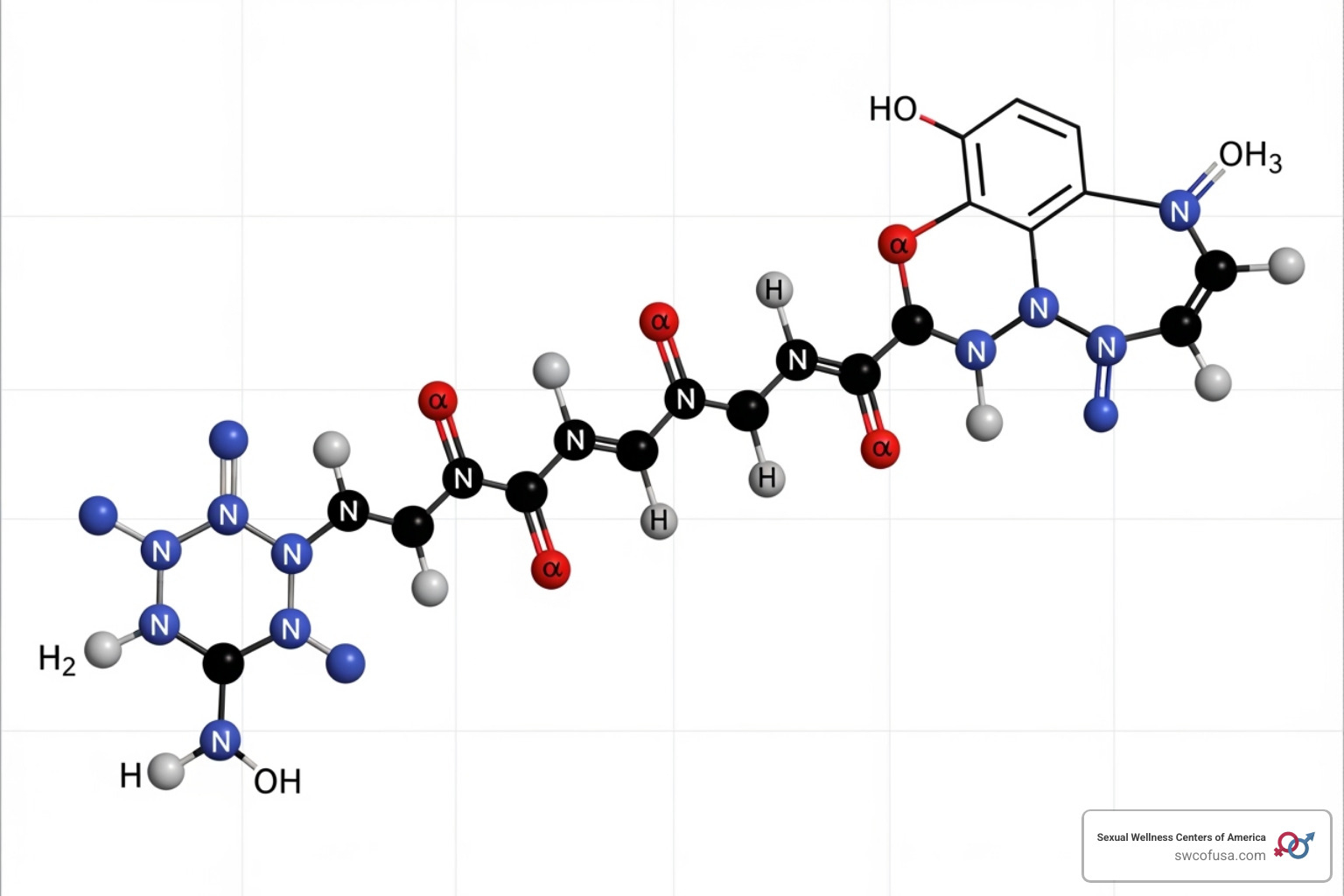
BPC-157, short for Body Protection Compound 157, is a synthetic peptide made up of 15 amino acids. Think of it as a concentrated fragment of a larger protein that your body already makes in your gastric juice. What makes this little molecule so intriguing is its remarkable stability and potential healing properties.
While researchers initially studied BPC-157 for stomach problems, they soon finded something fascinating. This gastric peptide seemed to have protective effects on all sorts of tissues – not just the stomach. Studies began showing potential benefits for soft tissue repair, including tendons, muscles, and bones.
The excitement around BPC 157 ligament healing comes from this broader tissue-protective ability. Athletes and the biohacking community have latched onto anecdotal reports of faster recovery times and improved healing. However, it’s crucial to understand that most of this evidence remains unproven in humans. More info about peptides for healing.
The Origins of BPC-157
BPC-157’s story starts in an unlikely place – your stomach. This peptide is derived from a naturally occurring stomach protein that helps maintain the integrity of your gastric lining. It’s like nature’s own repair crew, working around the clock to protect one of your body’s most vulnerable areas.
What makes BPC-157 special is its incredible stability. Unlike many peptides that break down quickly in stomach acid, BPC-157 can survive in gastric juice for at least 24 hours. This durability means it might actually work when taken orally, which is unusual for peptides.
The original research focused on cytoprotection – basically, how well it protects cells from damage. Scientists finded that BPC-157 didn’t just protect stomach cells; it seemed to offer organoprotection across multiple body systems. This broader protective effect is what sparked interest in its potential for healing injuries beyond the digestive tract.
Why is it Discussed for Ligament Injuries?
Here’s where things get really interesting for anyone dealing with a stubborn ligament injury. Ligaments are those tough, rope-like tissues that connect your bones and keep your joints stable. The problem? They’re notoriously slow healers.
Unlike muscles, which are packed with blood vessels, ligaments have a poor blood supply. This means they get less oxygen, fewer nutrients, and waste products stick around longer. It’s like trying to heal a wound with barely any blood flow – everything just takes forever.
For athletes and active people, this slow healing process is incredibly frustrating. A ligament injury can sideline you for months, watching your fitness and performance decline while you wait for nature to do its work. This is why the athlete interest in BPC-157 has exploded, along with enthusiasm from the broader biohacking community.
The appeal is obvious: if a substance could speed up the body’s natural repair processes, it might help overcome the inherent challenges of ligament healing. The quest for faster recovery has led many people to explore BPC-157, despite the lack of human clinical trials proving its effectiveness.
The reality is that ligaments’ slow healing isn’t just an inconvenience – it’s a fundamental biological limitation. When you understand why BPC 157 ligament healing has captured so much attention, it becomes clear that people are desperately seeking solutions to one of medicine’s most persistent challenges.
The Science Behind BPC-157: How Does It Claim to Work?
Understanding how BPC 157 ligament healing supposedly works requires diving into some fascinating cellular biology. The proposed mechanisms are quite complex, involving several biological pathways that are crucial for tissue repair. Much of what we know comes from animal models and in-vitro studies – essentially research done on cells in petri dishes rather than living humans. More info about peptide therapy for inflammation.
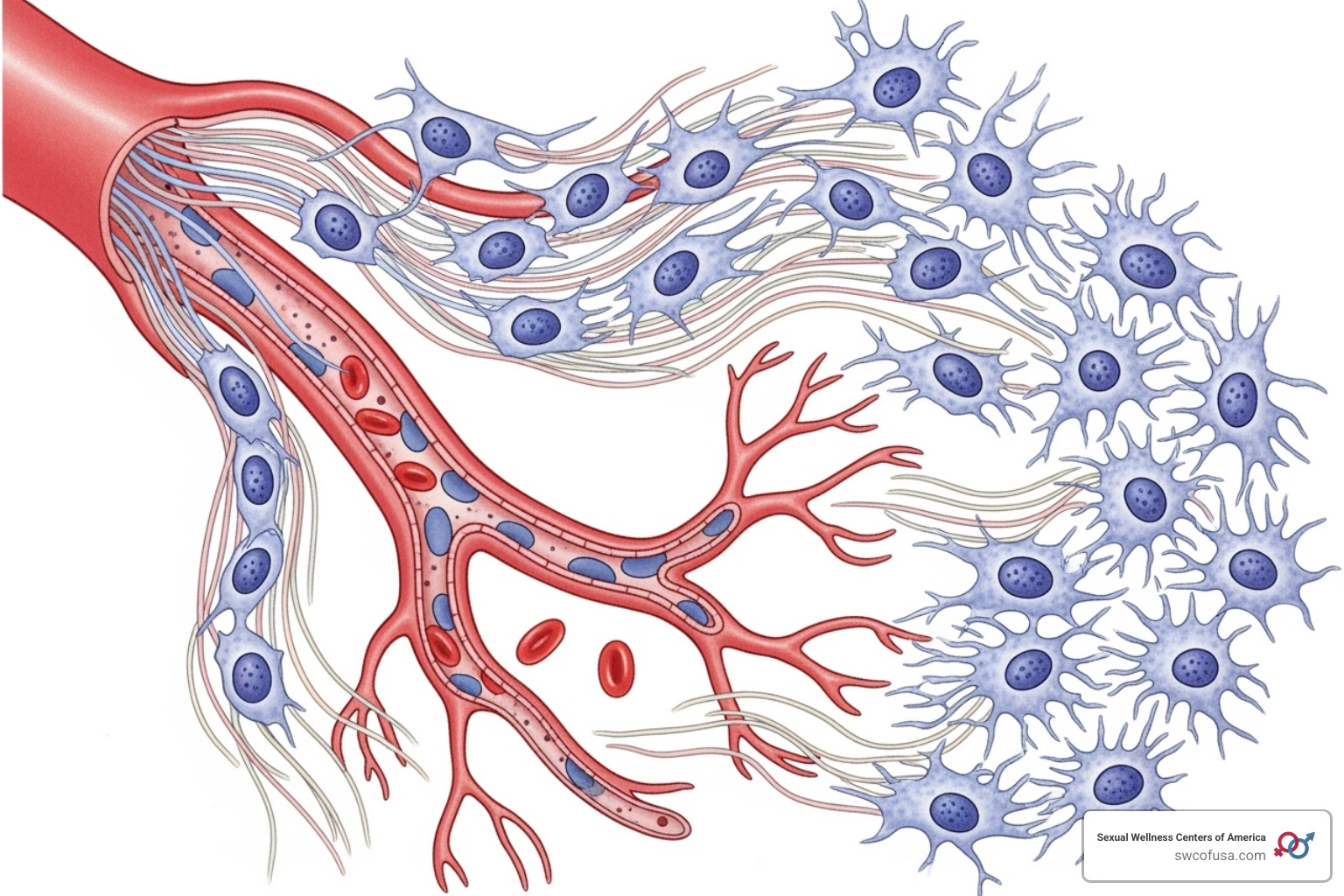
Think of tissue healing like renovating a house after a storm. You need three key things: new plumbing and electrical (blood vessels), skilled workers (cells that build tissue), and good communication between the construction crew (growth factors and receptors). BPC-157 appears to influence all three areas, at least in laboratory settings.
Promoting Angiogenesis
One of the most promising aspects of BPC-157 research involves angiogenesis – the formation of new blood vessels. Imagine your injured ligament as a neighborhood that just lost its water supply. Angiogenesis is like installing new pipes to bring fresh water (nutrients and oxygen) to every house while also creating better drainage for waste removal.
This process is absolutely critical for BPC 157 ligament healing because ligaments naturally have poor blood supply. That’s why they heal so slowly compared to other tissues. Animal studies on BPC-157’s angiogenic effect have shown that BPC-157 can boost levels of vascular endothelial growth factor (VEGF), which is essentially the body’s signal to start building new blood vessels.
The research suggests that BPC-157 doesn’t just promote any blood vessel growth – it seems to encourage the formation of well-organized, functional blood vessels that can actually deliver nutrients where they’re needed most. This could theoretically transform the healing environment around an injured ligament.
Stimulating Fibroblasts and Collagen
Here’s where the real construction work happens. Fibroblasts are like the skilled carpenters of your body – they’re the cells responsible for building and repairing connective tissue. These hardworking cells produce collagen, which is essentially the scaffolding that gives ligaments their strength and structure.
Research on BPC 157 and tendon fibroblasts has shown some intriguing results. In laboratory studies, BPC-157 appears to help fibroblasts in several ways: it speeds up their movement to injury sites, improves their survival under stressful conditions like inflammation, and increases their activity in producing new collagen.
What’s particularly interesting is that BPC-157 doesn’t just make fibroblasts work harder – it seems to help them work smarter. The collagen they produce appears to be better organized, which is crucial for rebuilding strong, functional ligaments rather than just scar tissue. This process of tissue remodeling is what determines whether a healed ligament will be as strong as the original.
Interaction with Growth Hormone Receptors
This mechanism is where BPC-157 gets really clever on a molecular level. Rather than trying to be a growth factor itself, BPC-157 appears to make cells more sensitive to the body’s own growth hormone. It’s like upgrading your radio antenna so you can pick up signals more clearly.
A 2014 study found that BPC-157 increases the number of Growth Hormone Receptors (GHR) on tendon fibroblasts. This upregulation essentially turns up the volume on the body’s natural healing signals. When growth hormone binds to these receptors, it activates the JAK2 signaling pathway, which promotes cell proliferation and tissue repair.
This mechanism is particularly neat because it works with your body’s existing systems rather than trying to replace them. By sensitizing cells to growth hormone, BPC-157 could theoretically make the entire healing process more efficient without overwhelming the system.
The challenge, of course, is that all of this promising preclinical research still needs to be proven in human clinical trials. The gap between what happens in a laboratory and what happens in a living person can be enormous, especially when it comes to complex biological processes like ligament healing.
The Evidence Gap: BPC 157 Ligament Repair in Humans
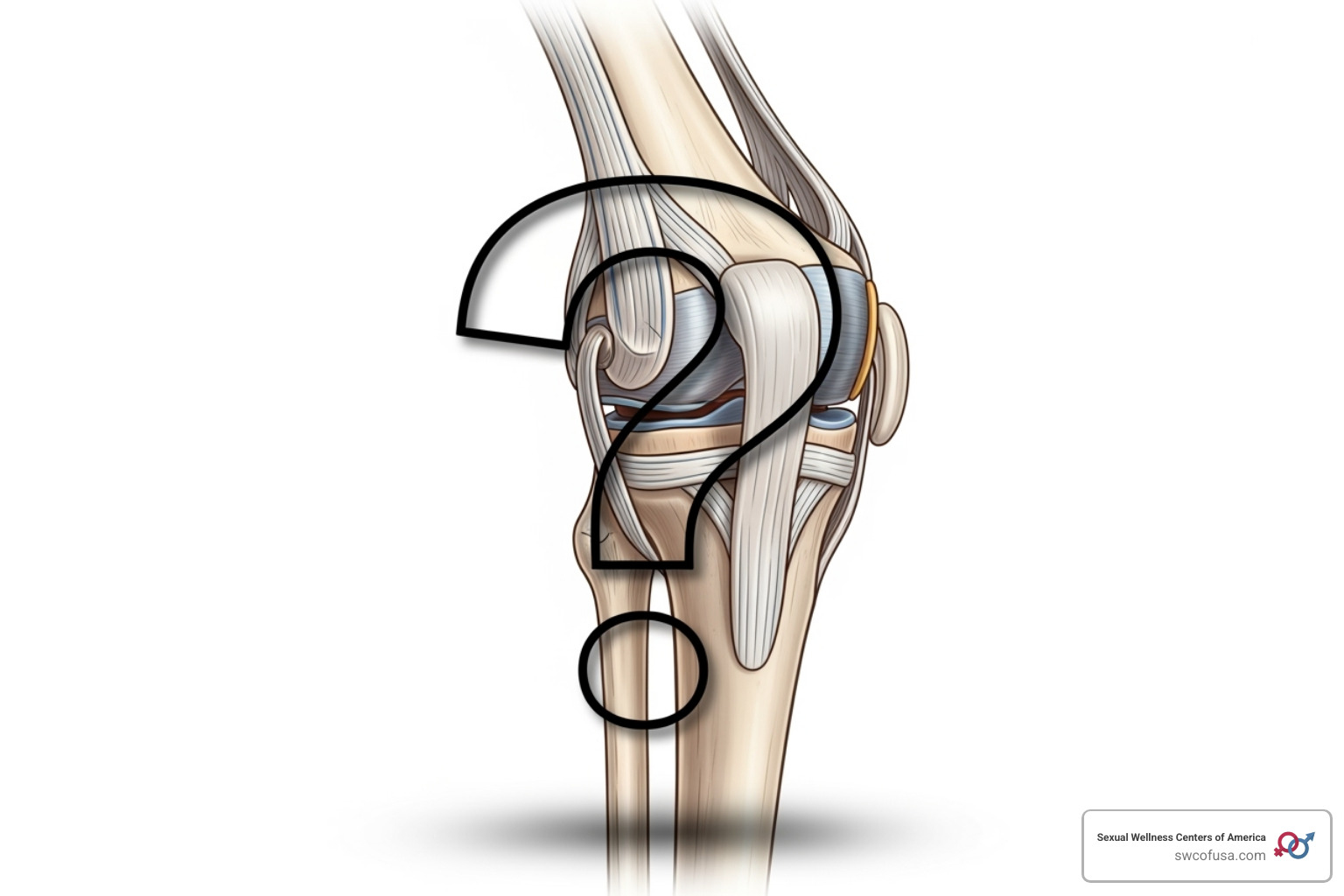
Here’s where things get tricky. Despite all the exciting talk about BPC 157 ligament healing, we’re facing a massive gap between what sounds promising and what’s actually proven in humans.
The State of Human Research on BPC 157 for Ligaments
Let me be completely honest with you: almost everything we know about BPC 157 ligament healing comes from studies on rats. Yes, rats. While these little creatures have contributed enormously to medical research, they’re not exactly walking into our clinics complaining about their ACL tears.
The research that gets everyone excited, like a key study on rat ligament healing, showed impressive results when rats with severed ligaments were treated with BPC-157. These studies consistently demonstrate faster healing, stronger tissue repair, and better overall outcomes. It’s genuinely exciting stuff – if you happen to be a rat.
But here’s the reality check: we have virtually no large-scale human clinical trials for BPC-157 and ligament injuries. The few small pilot studies that exist focus on other conditions entirely, like bladder pain or general knee discomfort. Even more concerning, some planned human studies have been cancelled before completion, leaving us with insufficient data to make any real claims about efficacy or safety.
This means that every glowing testimonial, every “miracle recovery” story, and every bold claim about BPC 157 ligament repair in humans is based on speculation, not solid scientific evidence.
Why Animal Study Success Doesn’t Guarantee Human Results
If only medical research were as simple as “it worked in rats, so it’ll work in people!” Unfortunately, the human body didn’t get that memo. The leap from laboratory success to human application is where many promising treatments stumble and fall.
Metabolic differences between species are huge. What a rat processes safely and effectively might be completely different in your body. Dosing challenges are equally complex – translating the right amount from a 200-gram rat to a 180-pound human isn’t just math, it’s educated guesswork at best.
Then there’s the complexity of human physiology. We’re not just bigger rats. Our immune systems, hormonal patterns, genetic variations, and countless other factors create a web of interactions that can’t be predicted from animal studies alone. What works beautifully in a controlled lab environment might fail spectacularly in the messy reality of human biology.
Perhaps most importantly, animal studies can’t reveal the safety profile unknowns that matter most to real people. Long-term effects, rare adverse reactions, and interactions with other medications or conditions – these critical safety questions remain unanswered.
The Bottom Line on BPC 157 Ligament Healing Claims
Here’s what we actually know: the preclinical data is genuinely promising and absolutely warrants further investigation. The mechanisms make biological sense, and the animal studies are consistently positive. That’s worth paying attention to.
But here’s what we don’t know: whether it’s safe for humans, what the right dosage might be, what side effects to expect, or whether it actually works for human ligament injuries. Until we have rigorous, large-scale, randomized controlled trials in humans, any claims about BPC 157 ligament repair effectiveness are speculative at best.
This isn’t about being pessimistic – it’s about being realistic. The scientific method exists for good reasons, and skipping steps in the name of faster results often leads to disappointment or worse. Right now, anyone using BPC-157 for ligament injuries is essentially participating in an uncontrolled experiment with unknown risks and unproven benefits.
The responsible approach is cautious optimism paired with patience for proper research to be completed.
The Red Flags: Legality, Safety, and Regulatory Status
This is perhaps the most critical section for anyone considering BPC 157 ligament repair. The lack of human evidence isn’t just an academic concern; it has serious real-world implications that could affect your health, legal standing, and athletic career.

Regulatory and Legal Status
Let’s cut straight to the chase about BPC 157 ligament healing and its legal status. The regulatory landscape around this peptide is crystal clear, and it’s not good news for those hoping to use it legally.
Key Regulatory Stances:
- FDA: Not approved for human use; Placed on a list of substances that pose a significant safety risk.
- WADA & USADA: Prohibited for athletes under the S0 Non-Approved Substances category.
- Prescription: Illegal to prescribe as a medication; Sold as a “research chemical only”.
The FDA has been particularly firm about BPC-157. They’ve explicitly stated there’s no legal basis for selling it as a drug, food, or dietary supplement. When the FDA places something on their “significant safety risk” list, they’re essentially waving a giant red flag saying “stay away.”
For athletes, the situation gets even more complicated. Since January 1, 2022, both WADA and USADA have banned BPC-157 under their prohibited substances list. This means competitive athletes caught using it face potential suspensions and career-ending consequences. Just ask 19-year-old speed skater Kamryn Lute, who learned this lesson the hard way.
So how do people still get their hands on BPC-157? Many suppliers use a legal loophole by selling it as a “research chemical only” with labels stating it’s “not for human consumption.” This is a common tactic used by companies trying to skirt regulations, but it doesn’t make the substance any safer or more legal for human use.
Safety Concerns and Potential Side Effects
Here’s where things get genuinely concerning. When you’re dealing with an unregulated substance, you’re essentially volunteering to be a test subject in an uncontrolled experiment.
The lack of safety data is staggering. We have virtually no idea what BPC-157 might do to human health over months or years of use. While some online forums are filled with people claiming it’s “well-tolerated,” these anecdotal reports aren’t worth much without proper clinical oversight.
Unknown long-term risks represent perhaps the biggest concern. What happens to your cardiovascular system, hormonal balance, or immune function after extended BPC-157 use? Nobody knows because nobody has studied it properly in humans.
Then there’s the contamination problem. Since BPC-157 isn’t manufactured under FDA oversight, there’s no guarantee about what you’re actually getting. The FDA has issued warnings about compounding pharmacies using unapproved substances, highlighting serious concerns about purity, potency, and sterility.
Potential adverse reactions could range from mild injection site reactions to serious systemic effects. Some users report localized swelling or fluid retention, but without proper reporting systems, we’re missing the full picture. As one researcher put it, with BPC-157 dosing and safety, “we’re flying blind.”
The bottom line? You’re taking significant legal and health risks for a substance that hasn’t proven its worth in human studies. That’s a gamble most people shouldn’t be willing to take.
Safer, Evidence-Based Alternatives for Ligament Injuries
Given the significant legal, safety, and evidence gaps surrounding BPC 157 ligament repair, it’s time to shift our focus to treatments that actually work. The good news? There are plenty of proven, safe, and effective options that don’t require you to steer legal gray areas or risk unknown side effects.

When you’re dealing with a ligament injury, it’s natural to want the fastest possible recovery. But sometimes the tortoise really does beat the hare – and in this case, the “slow and steady” approach of evidence-based medicine consistently delivers better, safer results than experimental shortcuts.
Established First-Line Treatments
The foundation of ligament injury recovery starts with treatments that have been tested, refined, and proven effective over decades of clinical use. These aren’t glamorous or cutting-edge, but they work.
Physical therapy remains the gold standard for ligament recovery. A skilled physical therapist will create a customized program that addresses your specific injury, corrects muscle imbalances, and gradually rebuilds strength. They’ll also work on improving your biomechanics – essentially teaching your body how to move properly to prevent future injuries.
The classic RICE method (Rest, Ice, Compression, Elevation) might seem old-fashioned, but it’s still incredibly effective for acute injuries. It helps control swelling and pain during those crucial first few days when your body is just beginning to heal.
Bracing and support provide stability during the vulnerable healing phases. Think of it as giving your ligament a helping hand while it does the hard work of repairing itself. Strength training and proprioception exercises come later in the recovery process, helping to rebuild not just the physical strength of the injured area, but also your body’s ability to sense joint position and maintain balance.
Exploring Evidence-Based Regenerative Therapies at Sexual Wellness Centers of America
While conventional treatments form the backbone of recovery, regenerative medicine offers exciting advances that can improve your body’s natural healing abilities. At Sexual Wellness Centers of America, we’re passionate about providing cutting-edge treatments that have undergone rigorous testing and meet the highest safety standards.
Our approach to regenerative medicine is built on science, not speculation. We offer innovative technologies like REGENmax® technology, which is designed to stimulate your body’s natural healing processes through proven mechanisms. Our SHEshot® and HEshot® treatments leverage regenerative principles to promote tissue revitalization – and while these are specialized for sexual wellness, the underlying regenerative science applies broadly to tissue health and repair.
REGENlase® and REGENwave® represent advanced therapies that use specific energy forms to promote cellular repair and improve circulation. These treatments create an optimal environment for tissue regeneration by addressing the fundamental challenges that make ligament healing so difficult – poor blood supply and limited nutrient delivery.
We also offer approved peptide therapies that have established safety profiles and proven efficacy. Unlike experimental compounds, these treatments have gone through proper testing and regulatory approval. More info about peptide therapy benefits. Our focus extends beyond just injury recovery to overall wellness and anti-aging benefits. More info about anti-aging peptide therapy.
What sets us apart is our personalized approach. We start with comprehensive assessments including hormone and vitamin panels to create a custom plan custom to your specific needs. This isn’t a one-size-fits-all solution – it’s precision medicine designed around your unique biology and recovery goals.
Our commitment to evidence-based care shows in our results. We maintain a 97.2% efficacy rate in erectile dysfunction reversal for our specialized treatments, demonstrating that when you choose proven, safe, and effective treatments, you get consistent, reliable outcomes. When it comes to your health and recovery, that’s exactly what you want – results you can count on, not experimental gambles with unknown risks.
Conclusion
The story of BPC 157 ligament repair is one of tantalizing promise that hasn’t quite reached reality. While the preclinical research paints an exciting picture of accelerated healing through angiogenesis and fibroblast stimulation, we’re still waiting for the crucial human studies that would prove its safety and effectiveness in people like you and me.
This gap between laboratory promise and clinical proof creates some serious concerns. The FDA hasn’t approved BPC-157 for human use, and anti-doping agencies have banned it outright for athletes. You’ll often find it sold as a “research chemical only” – a red flag that signals we’re venturing into uncharted territory. The truth is, we simply don’t know what long-term risks might be lurking around the corner.
I understand the appeal. When you’re dealing with a stubborn ligament injury that seems to heal at a snail’s pace, the idea of a “Wolverine peptide” that could speed things up sounds incredibly tempting. But as someone who’s spent years in the regenerative medicine field, I’ve learned that the most exciting-sounding treatments aren’t always the safest or most effective ones.
At Sexual Wellness Centers of America, we take a different approach. We believe your health deserves treatments that have been thoroughly tested and proven safe. That’s why we focus on evidence-based regenerative therapies like our REGENmax® technology, SHEshot®, HEshot®, REGENlase®, and REGENwave® treatments. These methods harness the power of regenerative medicine while maintaining the highest safety standards.
The bottom line? Your healing journey is too important to leave to chance. While researchers continue studying BPC 157 ligament repair in proper clinical trials, you have access to proven alternatives that can help you recover safely and effectively. When exploring advanced healing options, partnering with experts who use approved, well-researched methods isn’t just smart – it’s essential for your long-term health and wellbeing.
Ready to explore safe, effective regenerative treatments? Explore our approved peptide therapy services and find how evidence-based medicine can support your healing journey.