
Yes, you can ovulate without having a visible or regular period, although it's uncommon and occurs in only 3 to 4% of women. Ovulation and menstruation are two separate hormonal events, so a missing period doesn't always mean your ovaries didn't release an egg.
If you're reading this because your period has stopped, become irregular, or hasn't returned after childbirth, you're asking an important question. The practical issue isn't just whether silent ovulation can happen. It's that this can change both your pregnancy chances and your contraception decisions in ways many people don't expect.
Table of Contents
- The Short Answer Is Yes You Can Ovulate Without a Period
- Understanding Your Cycle Ovulation and Menstruation Explained
- Common Causes of Ovulation Without a Period
- How to Detect Ovulation When You Have No Period
- What This Means for Your Fertility and Contraception
- When to See a Doctor About Irregular or Absent Cycles
- Frequently Asked Questions About Ovulation
The Short Answer Is Yes You Can Ovulate Without a Period
A patient misses a period, assumes pregnancy is off the table, and stops using contraception. That is the mistake I want people to avoid.
Yes, ovulation can happen without a visible or predictable period. Ovulation is the release of an egg. Menstrual bleeding is the shedding of the uterine lining. Those events often happen in a pattern, but they are not the same event, and they do not always stay in sync.
That distinction matters in real life. If an egg is released, pregnancy can happen. If you are trying to avoid pregnancy, a missing period is not a reliable sign that you are in a safe window. If you want to conceive, absent bleeding does not automatically mean you are not ovulating.
Some patients hear terms like silent ovulation or hidden ovulation. In practice, that usually means the ovary may still release an egg, but the usual bleeding pattern is absent, delayed, or too light to recognize clearly. I often explain it this way to patients: the body can still send out an egg even when the monthly signal you expect to see is missing.
This comes up often after childbirth, during breastfeeding, in PCOS, during perimenopause, and during periods of major stress, illness, weight change, or heavy exercise. It can also happen when bleeding is reduced or blocked for uterine reasons, even if the ovaries are still active. For patients sorting through these hormone-related changes, support around hormone balancing for women can help connect symptoms with what the body is doing.
The key takeaway is practical. No period does not always mean no ovulation, and it definitely does not mean no pregnancy risk.
Understanding Your Cycle Ovulation and Menstruation Explained
Ovulation and menstruation are related, but they come from different steps in the cycle. In clinic, I often find that patients feel less confused once they separate what the ovary is doing from what the uterus is doing.
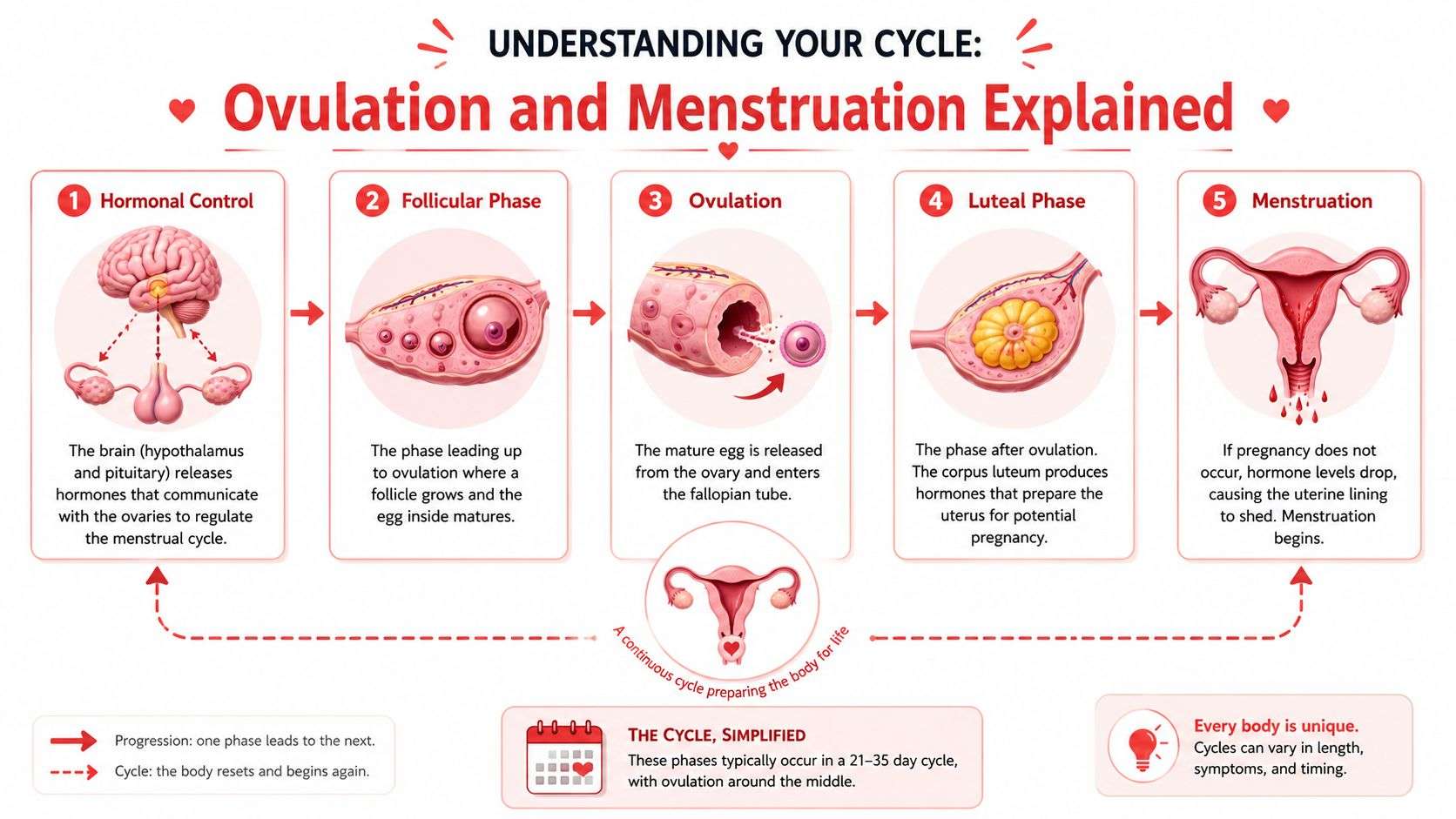
Two systems working together
The ovaries manage egg development and release. The brain sends hormonal signals, mainly follicle-stimulating hormone and luteinizing hormone, to guide a follicle toward maturity. When the timing is right, the ovary releases an egg.
The uterus is responding on a parallel track. Estrogen helps thicken the uterine lining. After ovulation, progesterone helps hold that lining in place so the body is prepared if pregnancy occurs. If pregnancy does not occur, hormone levels drop and the lining sheds.
These processes usually coordinate well, but they are not identical. An ovary can release an egg even when bleeding is delayed, very light, absent, or not able to exit normally.
For patients trying to connect symptoms with hormone patterns, support focused on hormone balancing for women can help make sense of what the cycle is doing.
Why the two can fall out of sync
Several things can interrupt the uterine side of the cycle without fully stopping ovarian activity. The lining may not build up enough to create noticeable bleeding. Hormone shifts may lead to ovulation without a clear period afterward. In some cases, bleeding is present but so light or irregular that it is not recognized as a true period.
That distinction has practical consequences. Pregnancy depends on egg release, not on whether a period showed up on the calendar.
Timing also becomes harder to judge when there is no reliable bleed to count from. Ovulation often happens about two weeks before a period, but if periods are absent or irregular, that calendar method becomes much less useful. This is one reason I encourage patients not to assume they are in a low-risk window solely because they have not bled.
If you want a clearer picture of how estrogen, progesterone, and related signals shape fertility, this guide to key hormones for cycle and pregnancy explains the hormone side well.
Common Causes of Ovulation Without a Period
A common clinical scenario looks like this: someone has not bled in months, assumes pregnancy is off the table, and is surprised to learn the ovaries may still release an egg from time to time. That gap between what the calendar shows and what the ovaries are doing is where risk and confusion tend to build.
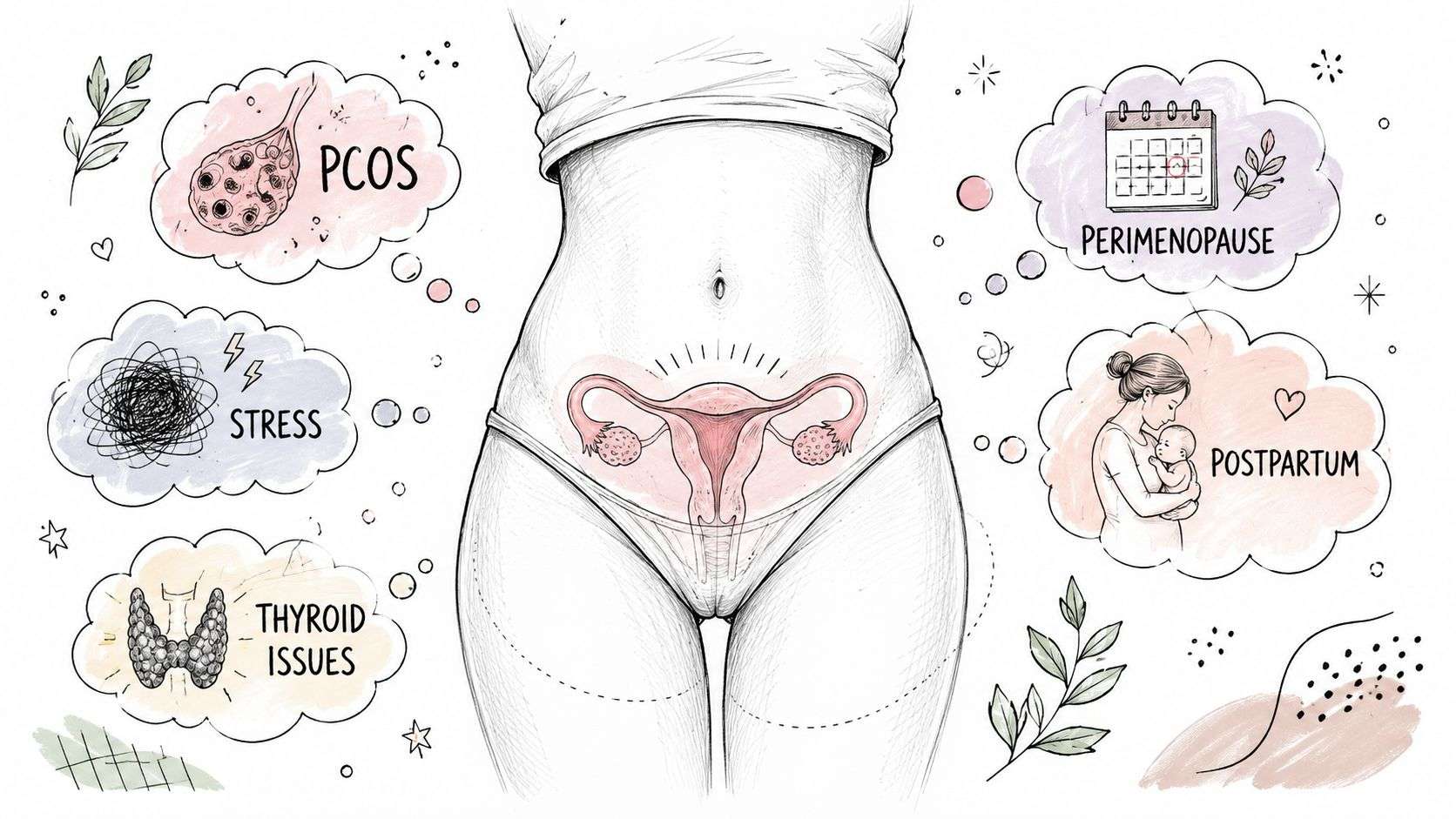
Hormonal conditions and life stages
PCOS is one of the most common reasons this happens. The ovaries may not follow a predictable monthly pattern. Some cycles do not release an egg. Others do, but without the usual timing cues a patient expects. Bleeding can be infrequent, very delayed, or absent, so the lack of a period does not reliably tell you whether fertility is present.
Breastfeeding is another setting where people get caught off guard. Prolactin often suppresses ovulation, but not always completely and not forever. In real life, postpartum fertility returns unevenly. A first ovulation can happen before the first postpartum period, which is why contraception planning matters even when bleeding has not resumed.
Perimenopause also causes this mismatch. Estrogen and progesterone can rise and fall unevenly, and the brain-ovary signaling becomes less consistent. Some months still include ovulation. Other months do not. For women who assume skipped periods mean zero chance of pregnancy, this stage deserves more caution than it usually gets.
If you want more context on how estrogen, progesterone, and related signals interact, this guide to key hormones for cycle and pregnancy gives helpful background.
Structural and lifestyle factors
Sometimes the ovary releases an egg, but bleeding is minimal, irregular, or unable to exit normally.
Uterine scarring is one example. If the uterine lining cannot build or shed in a typical way, periods may become very light or disappear, even if ovarian activity continues. I also see patients with hormone patterns that allow occasional ovulation but do not produce a clear, recognizable bleed afterward.
Daily physiology matters too. Stress, under-fueling, significant weight loss, thyroid dysfunction, and recovery after a major illness can all disrupt the coordination between the brain, ovaries, and uterine lining. The result is an uneven pattern. Ovulation may occur, but the period may not arrive in the expected way, or may be so light that it is missed.
For some patients, symptoms overlap with estrogen-related patterns such as breast tenderness, heavy past periods, fluid retention, or mood shifts. This review of treating estrogen dominance can help connect those symptoms to the bigger hormone picture.
The practical question is not only why the period is missing. It is whether ovulation is still happening unpredictably, because that changes both pregnancy planning and pregnancy prevention.
How to Detect Ovulation When You Have No Period
A missed period often creates false reassurance. I regularly see patients assume they are not fertile because nothing is bleeding. The harder truth is that ovulation can still happen unnoticed, and the first sign may be pregnancy if you are not watching for it.
Without a monthly bleed to anchor the calendar, detection shifts from date counting to body pattern tracking. One clue rarely settles the question. A pattern over time is much more useful.
What signs to watch for
Basal body temperature can help confirm that ovulation likely already occurred. You take your temperature first thing each morning, before getting out of bed, and look for a small sustained rise. This method is inexpensive and useful, but it works best for hindsight rather than prediction.
Cervical mucus gives earlier clues. Around ovulation, mucus often becomes clear, slippery, and stretchy, similar to raw egg white. For patients with no period, this can be one of the most practical home signs, although it takes a cycle or two of observation to feel confident about what is normal for your body.
LH ovulation predictor kits may help identify the hormone surge that often comes before egg release. They can be useful, but they are not perfect in people with very irregular hormone patterns. A positive test suggests your body is trying to ovulate. It does not guarantee that the egg was released.
If symptoms point to a wider hormone issue, review common solutions for hormonal imbalance symptoms. That can help you recognize when home tracking is no longer enough and a medical workup makes more sense.
Practical rule: If you have no periods and pregnancy prevention matters, do not rely on a single fertility sign by itself.
Ovulation Detection Methods Compared
| Method | How It Works | Accuracy | Cost & Effort |
|---|---|---|---|
| Basal body temperature | You take your temperature every morning before getting out of bed and look for a sustained rise after ovulation | Helpful for confirming ovulation after it occurs | Low cost, moderate daily effort |
| LH ovulation predictor kits | You test urine for the hormone surge that often happens before egg release | Helpful for identifying the likely fertile window | Moderate cost, moderate effort |
| Cervical mucus tracking | You observe changes in discharge, especially clear and stretchy mucus | Useful when done consistently, but more subjective | Low cost, low to moderate effort |
| Clinical hormone testing | A clinician uses lab work to look for evidence that ovulation likely occurred | Stronger confirmation when home signs are unclear | Higher effort, clinic-based |
When the picture is still unclear, clinical testing can give better answers than home signs alone. A serum progesterone test, timed appropriately, can help confirm whether ovulation likely happened. In some cases, ultrasound or additional hormone labs are the better next step, especially if you are trying to conceive, trying to avoid pregnancy, or dealing with long gaps between bleeds.
What This Means for Your Fertility and Contraception
A common scenario in clinic is this: someone has not had a period for months and assumes pregnancy is off the table. Then ovulation happens first, bleeding comes later, and the surprise is a positive test.
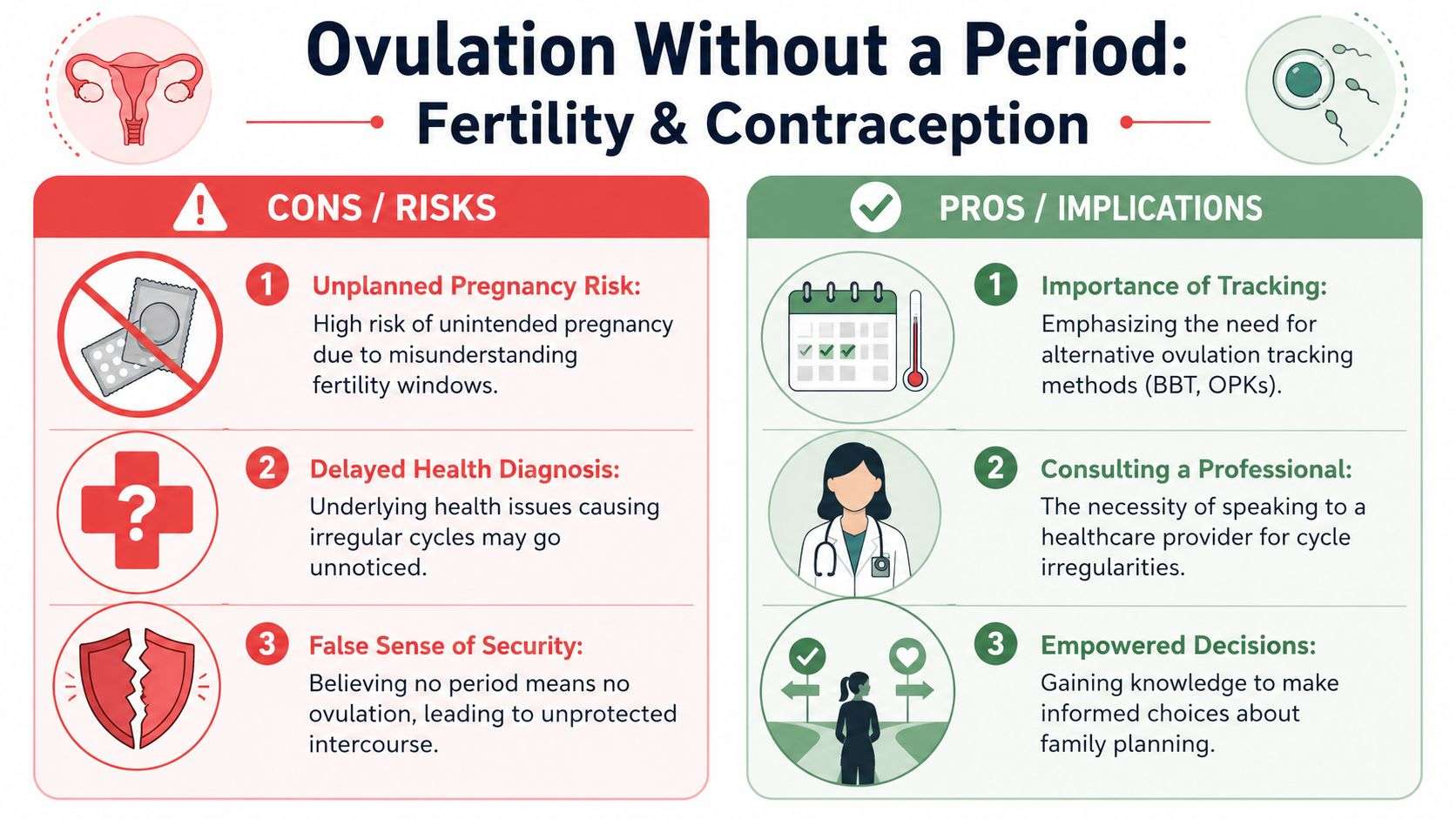
If you're trying to avoid pregnancy
The practical point is simple. You can get pregnant before your first period returns, because ovulation happens before menstruation, not after it.
That matters after childbirth, during breastfeeding, after stopping hormonal birth control, and during stretches of irregular or absent cycles. In each of those situations, bleeding may be absent or unreliable while the ovaries can still become active without much warning. A calendar cannot predict that shift if there is no stable cycle pattern to count from.
Use contraception based on your pregnancy goals, not on whether you have seen a recent period. If pregnancy prevention matters, choose a method you can use consistently and correctly. For some people, that means a long-acting option. For others, it means condoms plus a clear backup plan. The trade-off is between convenience, side effects, reversibility, and how much uncertainty you are willing to tolerate.
Postpartum patients often ask whether breastfeeding is enough. It can reduce the chance of ovulation for a time, but it is not reliably protective unless strict criteria are met, and many people do not realize when that protection has ended. The same caution applies to irregular cycles from stress, weight changes, perimenopause, or hormone-related conditions.
Supportive habits still matter, especially if you are also trying to improve sleep, stress load, nutrition, or vaginal comfort while working through hormone changes. Momotaro Apotheca's holistic wellness guide offers added context, but it should sit alongside medical guidance, not replace contraception.
If absent periods may relate to perimenopause or other hormone shifts, a clinician can also help you sort through symptom patterns and treatment options, including how hormone replacement therapy for women is evaluated and used.
If you're trying to conceive
Absent periods do not automatically mean infertility. In practice, they mean timing is harder and the cause needs clarification.
An egg is released before a period appears. So if ovulation is happening occasionally, pregnancy may still be possible even when bleeding is rare or missing. That is why I tell patients not to read too much into the absence of a period by itself. The better question is whether ovulation is occurring at all, how often, and what may be interrupting the normal cycle.
The trade-off here is time versus certainty. You can keep trying with home tracking if signs are reasonably clear, but if cycles remain absent or confusing, earlier medical evaluation usually saves frustration. For patients who want pregnancy, a targeted workup often gives a clearer path than waiting for a textbook cycle to return.
When to See a Doctor About Irregular or Absent Cycles
A common scenario in clinic is this. Someone has not had a period for months, assumes pregnancy is off the table, and then realizes they have no reliable way to judge ovulation, fertility, or birth control risk. That is the point to get answers.
If your periods changed suddenly, stopped, or became far apart, a medical visit can help identify whether you are dealing with stress-related cycle disruption, postpartum hormone shifts, thyroid issues, PCOS, perimenopause, medication effects, or a problem involving the uterus or ovaries. The goal is not to assume the worst. The goal is to figure out whether you are still ovulating unpredictably, not ovulating at all, or bleeding less for a different reason.
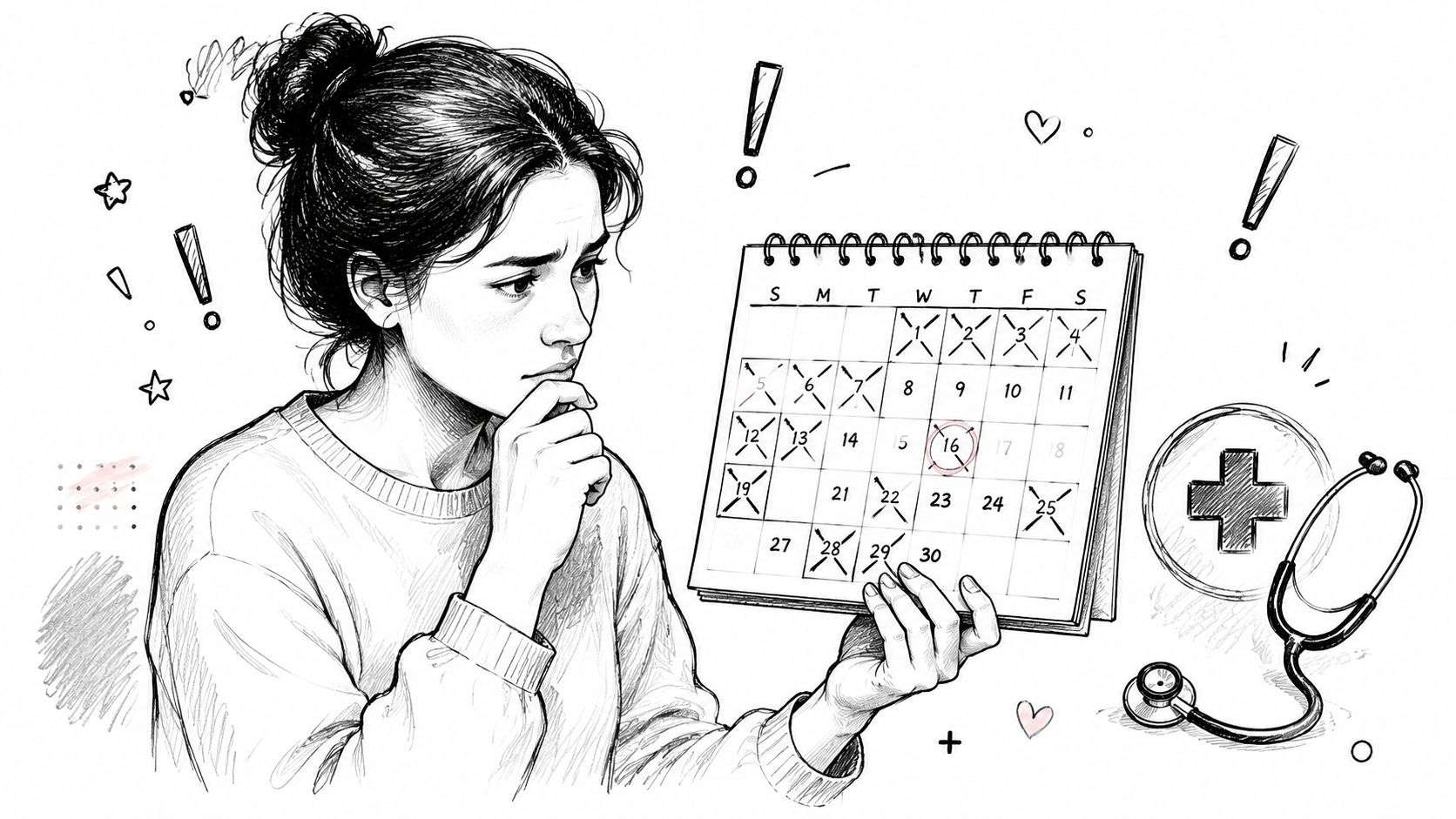
When a visit makes sense
Schedule an evaluation if any of these apply:
- Your period has stopped and you do not know why
- You are sexually active and need clear guidance about pregnancy risk
- You are trying to avoid pregnancy but cannot rely on cycle timing
- You are trying to conceive and have no predictable pattern to work with
- You have new symptoms such as pelvic pain, acne changes, hot flashes, unusual hair growth, major stress, or weight changes
- You had a uterine procedure and your bleeding pattern changed afterward
I encourage earlier evaluation in one specific situation. If you are assuming "no period" means "no ovulation," that assumption can create real problems, especially if you are depending on it for contraception.
What an evaluation often includes
A good visit starts with the story behind the cycle change. Your clinician may ask about pregnancy possibility, breastfeeding, recent illness, exercise intensity, eating patterns, medications, sleep, stress, and symptoms that point toward thyroid, ovarian, or adrenal hormone shifts.
Testing depends on your history, but often includes:
- Pregnancy testing
- Hormone blood work
- Thyroid assessment
- Pelvic imaging when indicated
- A review of your goals, including contraception, fertility, symptom relief, or cycle regulation
That last part matters. The right plan for someone hoping to conceive is different from the right plan for someone trying to prevent pregnancy, and different again for someone dealing with hot flashes, vaginal dryness, or perimenopausal cycle changes. If those symptoms are part of the picture, it helps to review how hormone replacement therapy for women is evaluated and used.
Frequently Asked Questions About Ovulation
Can this happen after giving birth before my first period returns?
Yes. Postpartum ovulation can happen before you see your first postpartum bleed. That's one reason pregnancy can occur sooner than expected.
If I don't bleed, how would I know I ovulated?
You may need to watch for fertility signs such as a basal body temperature shift, egg-white cervical mucus, or a positive LH test. In some cases, lab testing offers clearer confirmation.
Does no period mean I'm infertile?
No. Lack of menstruation and lack of fertility are not the same thing. Some women still ovulate unpredictably even when they aren't bleeding.
Is one missed period always a sign of silent ovulation?
No. A missed period can happen for many reasons. Sometimes ovulation didn't occur. Sometimes it did. The pattern over time matters more than one isolated cycle.
Should I use period tracking alone for birth control if my cycles are absent?
No. If you have absent or highly irregular periods, period tracking alone is not dependable contraception.
If you're dealing with absent periods, confusing cycle changes, postpartum fertility questions, or symptoms that suggest hormone imbalance, Sexual Wellness Centers of America offers clinical evaluation and hormone-focused care for adults who want clear answers and a personalized plan.