
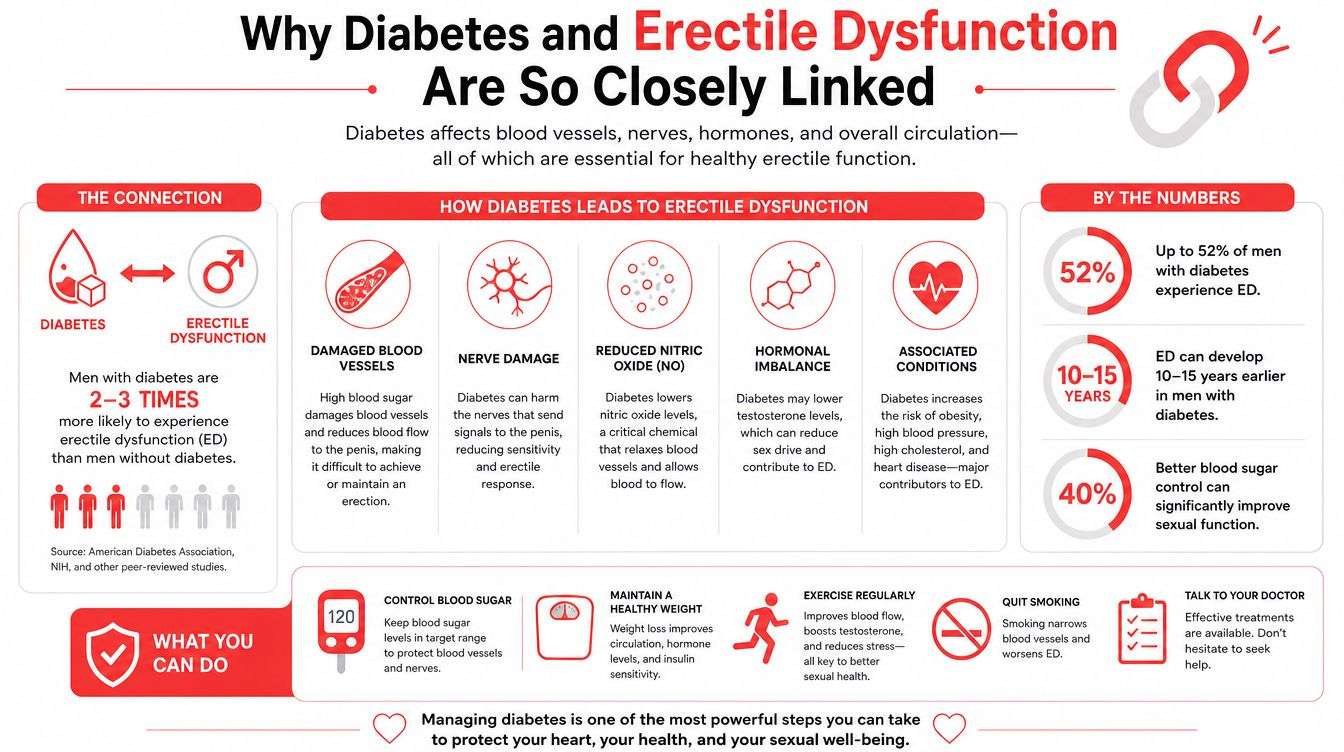
A 2022 systematic review and meta-analysis of 145 studies found that erectile dysfunction affects 52.5% of men with diabetes overall, including 66.3% of men with type 2 diabetes and 37.5% of men with type 1 diabetes. Men with diabetes also had 3.62 times the odds of ED compared with healthy controls (major systematic review and meta-analysis). The practical message is clear: if you have diabetes and erections are becoming less reliable, you're not dealing with an unusual or purely psychological problem.
Diabetic ED is often a cardiometabolic warning sign, not merely a bedroom complaint. The same injury that limits blood flow in the penis can affect other vascular beds, while nerve damage, hormonal disruption, inflammation, and structural changes make the problem progressively harder to reverse. A prescription may help create an erection for a specific encounter, but durable improvement usually requires a broader evaluation.
Table of Contents
- Why Diabetes and Erectile Dysfunction Are So Closely Linked
- How High Blood Sugar Actually Breaks the Erection Pathway
- What Diabetic ED Looks Like Compared to Other Forms
- How Doctors Screen and Diagnose Diabetes-Related ED
- Standard Treatments and Where They Fall Short
- Why Regenerative Protocols Are a Different Approach
- When to See a Specialist Instead of Another Prescription
- A Practical First Step for Men With Diabetes and ED
Why Diabetes and Erectile Dysfunction Are So Closely Linked
Diabetes attacks the three systems an erection depends on: healthy blood vessels, functioning nerves, and balanced hormones. An erection requires arterial inflow, nitric oxide signaling, relaxation of cavernosal smooth muscle, sensory stimulation, and enough testosterone and libido to support the response. Chronic diabetes can interfere with every stage.
The timing also matters. Clinical evidence has long shown that ED appears 10 to 15 years earlier in men with diabetes than in sex-matched peers without diabetes (clinical review on diabetes and ED). Diabetes Canada guidance describes ED as affecting approximately 34% to 45% of adult men with diabetes, with some men already experiencing it at diagnosis and a substantial long-term burden after diagnosis. The condition often begins as an occasional failure, then becomes weaker morning erections, less dependable rigidity, and faster loss of the erection during intercourse.
Why the heart connection matters
Penile arteries are highly sensitive to endothelial injury. When the lining of those vessels stops producing and responding to nitric oxide normally, the penis may show impaired vascular function before a man notices symptoms elsewhere. That doesn't mean every case of ED predicts a cardiac event, but it does mean new or worsening ED deserves cardiovascular attention.
Clinical rule: Treat a new erectile problem in a man with diabetes as a reason to review vascular risk, not just as a reason to refill a pill.
That review should include glucose patterns, blood pressure, cholesterol, kidney health, weight, physical activity, smoking, sleep, medication effects, and cardiac symptoms. For men working on metabolic health, resources focused on telehealth for type 2 diabetes weight loss may help support the broader risk-reduction plan, although weight management should complement, not replace, a medical ED evaluation. A patient-friendly overview of how diabetes affects your sex life and what to do can also help men prepare for that conversation.
How High Blood Sugar Actually Breaks the Erection Pathway
High blood sugar doesn't produce diabetic ED through one isolated pathway. It creates a multi-hit neurovascular injury pattern involving the endothelium, nerves, hormones, and erectile tissue.
The vascular injury
Persistent hyperglycemia increases oxidative stress and advanced glycation end-products. These changes impair endothelial nitric oxide synthase activity and reduce nitric oxide bioavailability. Without adequate nitric oxide, cavernosal smooth muscle doesn't relax efficiently, arterial inflow is limited, and the penis struggles to trap blood and maintain pressure.
A major review describes the process as more than simple narrowing of a blood vessel. Hyperglycemia can lower nitric oxide, increase vasoconstrictive and prothrombotic activity, and activate inflammatory pathways that impair erection hemodynamics (diabetes and ED mechanisms).
The nerve and hormonal injury
Autonomic neuropathy can blunt the parasympathetic signal that initiates and sustains an erection. Peripheral sensory neuropathy may also reduce genital sensation, making sexual stimulation less effective. Nerve ischemia and vascular injury reinforce each other, because damaged small vessels can deprive nerves of the oxygen and nutrients needed for signaling.
Hormonal factors add another layer. Some men with diabetes develop hypogonadism, which can reduce libido and weaken the biological support for erectile function. Low desire and poor rigidity can coexist, but they aren't interchangeable. Testosterone treatment may improve desire in an appropriately diagnosed patient, while the erection itself may still require vascular treatment.
The structural changes
Advanced glycation end-products and chronic inflammation can alter the erectile tissue and surrounding tunical structures. Fibrotic tissue expands less effectively, so even improved blood flow may not produce the same rigidity. This helps explain why glucose control is essential but may not fully restore function after structural injury has become established.
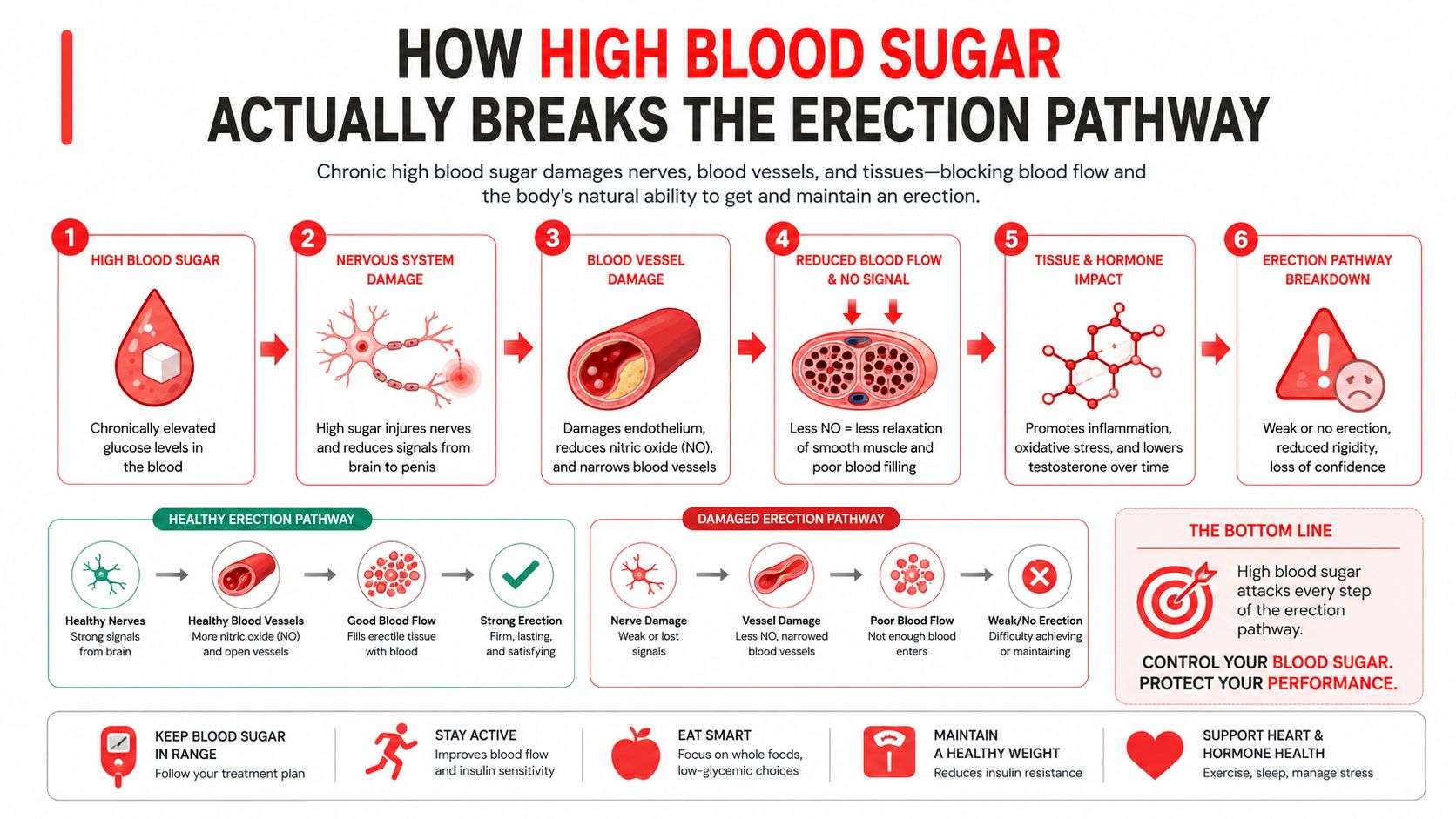
The result is a system problem. A drug that improves one signaling step can't fully correct endothelial dysfunction, neuropathy, hormonal deficiency, and fibrosis at the same time. That's why diabetic ED often responds less reliably to a single therapy than uncomplicated vasculogenic ED. More detail on the nerve component is available in this discussion of diabetic neuropathy and ED.
What Diabetic ED Looks Like Compared to Other Forms
Consider a representative patient, a man in his early fifties with a long history of diabetes. His erections didn't disappear overnight. They gradually became softer, morning erections became uncommon, and a medication that had initially helped stopped working reliably. He could sometimes achieve penetration, but maintaining rigidity required constant stimulation and the erection often faded before intercourse was complete.
That pattern differs from many situational forms of ED. Psychological or relationship-related ED can appear suddenly, vary by partner or setting, and coexist with firm nocturnal or morning erections. Diabetic ED more often follows a progressive course, especially when vascular complications, neuropathy, poor metabolic control, or hormonal symptoms are present.
| Feature | Diabetic ED | Other ED |
|---|---|---|
| Onset | Often gradual and earlier than expected | May be sudden, situational, or age-related |
| Morning erections | Frequently become weaker or less consistent | May remain intact in predominantly psychological ED |
| Rigidity | Partial firmness, difficulty maintaining pressure | Can vary substantially by circumstance |
| Sensation | May decline with neuropathy | Often preserved unless another condition is present |
| Libido | Can fall when hypogonadism or illness is present | May remain normal in isolated vascular or situational ED |
| Medication response | PDE5 response may be partial or unreliable | Response depends on the underlying cause |
| Course | Often progresses with duration and complications | May remain stable or fluctuate with stress and context |
Men often describe faster detumescence, reduced penile sensitivity, a longer interval before they can respond again, or the feeling that the erection is present but not firm enough. Some notice reduced desire before they recognize the vascular problem. Others still have desire but can't convert arousal into dependable rigidity.
The distinction isn't about assigning blame. It helps determine whether the evaluation should focus on glucose-related vascular and nerve injury, medication effects, testosterone, cardiovascular status, relationship factors, or several causes together. A man can have diabetes-related endothelial dysfunction and performance anxiety at the same time, so a careful history should avoid false either-or conclusions.
How Doctors Screen and Diagnose Diabetes-Related ED
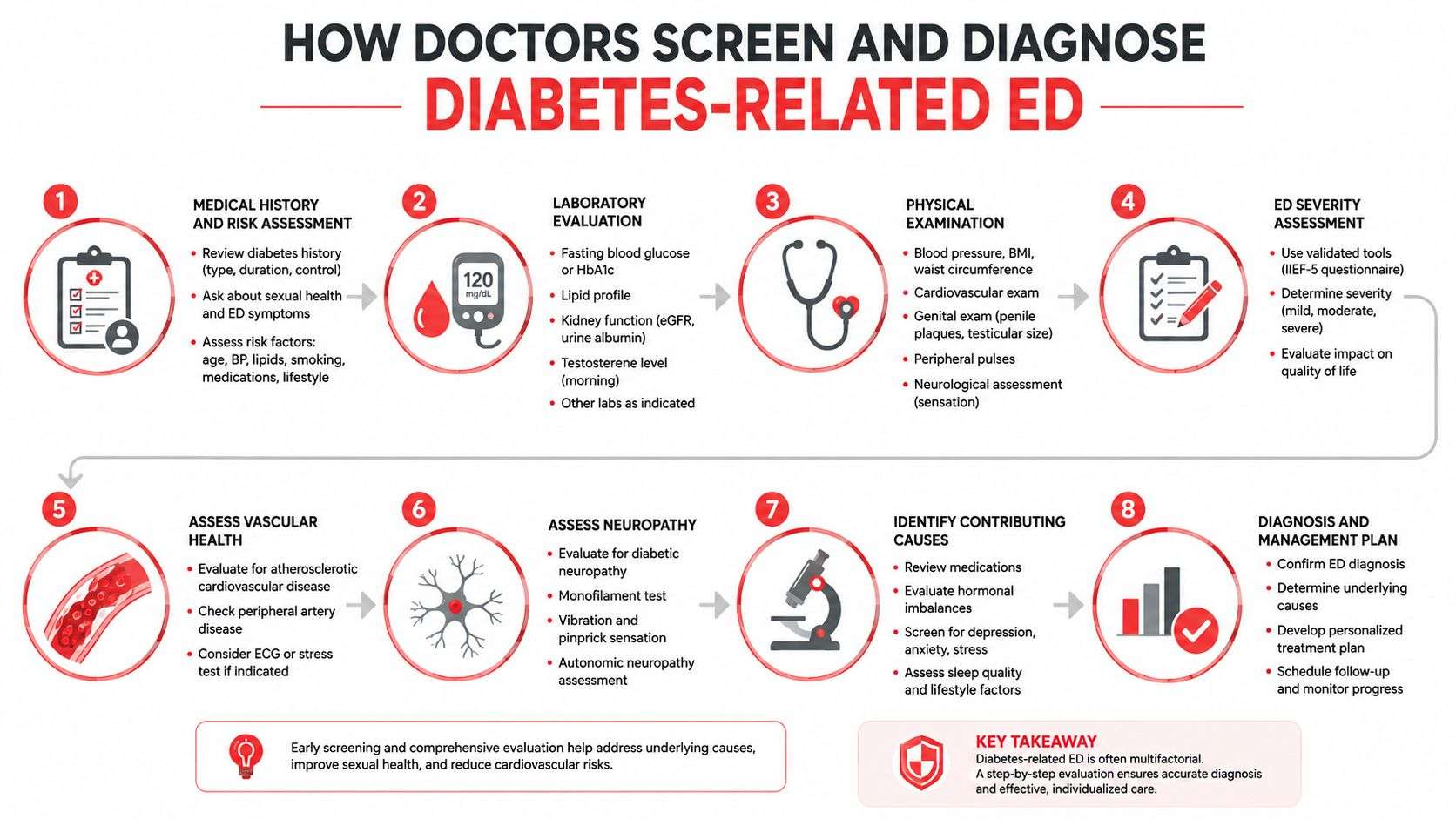
A proper ED evaluation in a man with diabetes is partly a cardiovascular risk assessment disguised as a sexual-health visit. The clinician needs to determine whether the problem is primarily vascular, neuropathic, hormonal, medication-related, psychological, or mixed.
The process usually starts with a validated questionnaire such as the IIEF-5 or SHIM. These tools document severity and create a baseline, but they don't identify the cause by themselves. The history should cover diabetes type and duration, glucose patterns, HbA1c, time in range when available, medications, blood pressure, cholesterol, kidney disease, sleep, mood, libido, ejaculation, morning erections, and any chest discomfort or exertional shortness of breath.
The physical examination
A focused exam can reveal clues that a prescription-only visit misses.
- Vascular findings: Blood pressure, waist circumference, femoral and peripheral pulses, and signs of vascular disease help establish cardiometabolic risk.
- Neurologic findings: Foot sensation, genital sensation, and relevant reflexes can support an assessment of peripheral or autonomic neuropathy.
- Genital findings: Penile plaques, curvature, testicular size, and other abnormalities can point to structural or hormonal contributors.
- General findings: Body composition, sleep-apnea features, and medication effects may change the treatment plan.
Laboratory testing often includes morning total testosterone, with free testosterone when appropriate, along with HbA1c, lipid profile, thyroid-stimulating hormone, prolactin, and renal function. The exact panel should reflect the individual's symptoms and medical history.
The cardiovascular workup
Men with diabetes and ED may need resting ECG testing and formal cardiovascular risk calculation. Depending on symptoms and risk profile, a clinician may consider additional evaluation such as an exercise stress test or coronary calcium assessment. Those decisions belong with the treating clinician, especially if the patient has exertional symptoms, established vascular disease, or uncertain exercise tolerance.
Penile duplex ultrasound can assess arterial inflow and venous trapping when the diagnosis is unclear or treatment has failed. Nocturnal penile tumescence testing can sometimes help distinguish preserved sleep-related erections from a predominantly organic pattern, although it isn't required for every patient.
Standard Treatments and Where They Fall Short
Treatment works best when it matches the injury. Improving glucose and cardiovascular risk reduces ongoing damage, but established diabetic ED may require direct sexual-health treatment as well.
| Treatment Layer | Mechanism | Strengths in Diabetic ED | Key Limitation |
|---|---|---|---|
| Metabolic optimization | Reduces continuing glucose-related vascular and nerve stress | Protects erectile tissue and overall health | May not reverse established fibrosis or neuropathy |
| Lifestyle change | Supports endothelial function, fitness, sleep, and weight management | Improves several contributors at once | Rarely restores advanced ED by itself |
| PDE5 inhibitors | Amplify nitric oxide-related smooth-muscle relaxation | Convenient and effective for some men | Requires enough residual nerve and endothelial function |
| Testosterone therapy | Corrects documented hypogonadism | Can improve libido and selected symptoms | Doesn't reliably repair vascular ED when testosterone is normal |
| Vacuum therapy | Draws blood into the erectile tissue mechanically | Avoids reliance on nitric oxide signaling | Erections can feel less spontaneous and require device use |
| Local medication | Directly stimulates erection locally | Useful when oral therapy is inadequate | Requires instruction, planning, and tolerance of local treatment |
| Penile implant | Provides mechanical rigidity | Reliable option for severe refractory disease | Invasive and permanent compared with other options |
What glucose and lifestyle changes can and can't do
Better glucose management matters because it limits further endothelial and nerve injury. Weight management, aerobic exercise, pelvic-floor training, smoking cessation, a heart-supportive eating pattern, and adequate sleep can improve vascular conditions that influence erections. A person who needs dietary structure may find an AI Meal Planner for diabetes useful for organizing meals, but a meal plan cannot substitute for medication review or cardiovascular screening.
These measures often improve treatment responsiveness. They don't promise that damaged nerves or fibrotic erectile tissue will immediately return to normal.
Why pills sometimes disappoint
PDE5 inhibitors such as sildenafil, tadalafil, and vardenafil depend on a functioning arousal signal and some remaining nitric oxide activity. Diabetic men may have less of both because hyperglycemia has impaired the endothelium and autonomic nerves. A poor response isn't evidence that the problem is psychological, and it doesn't necessarily mean the medication was used incorrectly. It may mean the underlying biology needs more treatment.
Testosterone replacement belongs only in men with appropriate symptoms and confirmed deficiency. It may improve libido, energy, and sexual interest, but it isn't a universal rigidity treatment. Devices, local medication, and implants remain valid options when tissue injury is advanced or less invasive treatments don't provide a satisfactory result.
For men researching nonprescription approaches, this overview of the best natural supplement for ED can provide general context, but supplements shouldn't delay diabetes assessment, cardiovascular evaluation, or evidence-based treatment.
Why Regenerative Protocols Are a Different Approach
PDE5 inhibitors improve the erection response during a specific period. Regenerative protocols pursue tissue-level improvement, addressing the endothelial and nerve environment that supports erections. This distinction matters in diabetic ED because impaired nitric oxide signaling, altered cavernosal smooth muscle, inflammation, and neuropathy may occur together. ED in this setting can also signal broader cardiometabolic injury, so treatment should address the underlying tissue conditions rather than focus only on one sexual encounter.
Focused acoustic therapy is used to stimulate local vascular remodeling and improve tissue signaling. Platelet-rich plasma, or PRP, supplies concentrated growth factors intended to support repair processes in treated tissue. Exosome or peptide-based signaling approaches aim to influence inflammation and cellular communication, although evidence quality and regulatory status vary by modality and protocol.
The integrated rationale
An integrated program such as REGENmax® combines REGENwave™ acoustic therapy, REGENlase™ laser treatment, and concentrated HEshot® injections. The proposed roles are complementary. Acoustic therapy addresses vascular signaling, laser treatment supports erectile tissue, and the injection component places concentrated biological factors in the local tissue environment.
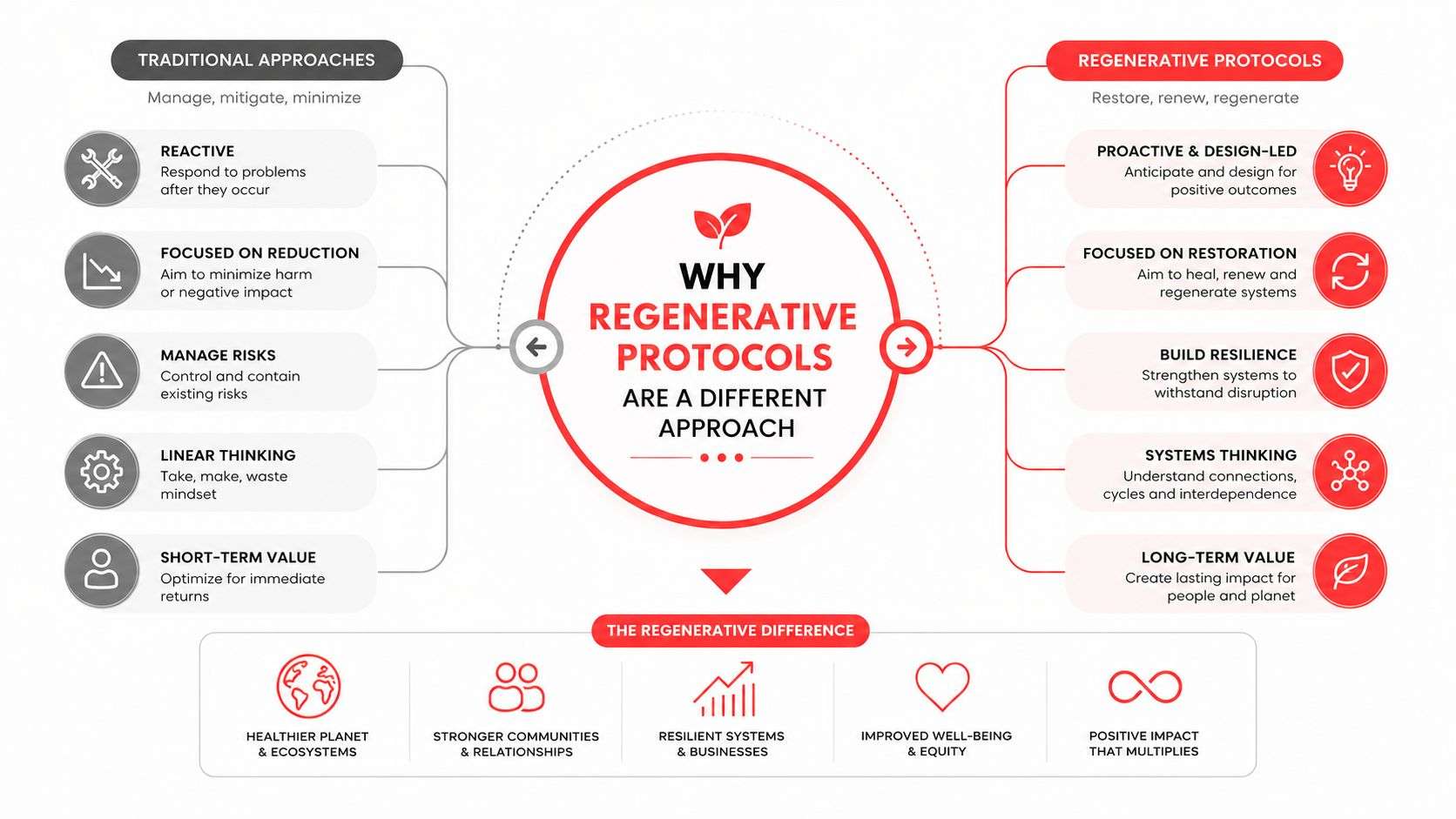
Regenerative therapy is not a guaranteed cure or a replacement for glucose and cardiovascular management. Its practical aim is to improve the conditions required for erections over a treatment course. Patients should ask what evidence supports each component, which risks apply, how improvement will be measured, and what the next option is if the response remains limited.
Who may benefit
Men with controlled diabetes, mild to moderate vasculogenic ED, and erectile tissue that remains impaired but functional are more reasonable candidates for a non-surgical protocol. Severe arterial occlusion, extensive fibrosis, major penile deformity, or profound neurologic loss may require vascular or surgical consultation instead. A tissue-regeneration therapy evaluation can help determine whether the anatomy and severity fit a regenerative approach.
The protocol should include follow-up, laboratory review, and continued metabolic care. Regeneration cannot work well in tissue repeatedly exposed to uncontrolled hyperglycemia, smoking, untreated sleep apnea, or severe cardiovascular disease. That is why regenerative treatment is best considered as part of a broader plan for endothelial and nerve health, not as an isolated procedure.
When to See a Specialist Instead of Another Prescription
A repeat prescription is reasonable when a medication works safely and the underlying evaluation is current. It becomes a weak strategy when the clinical pattern suggests progressive vascular, nerve, hormonal, or cardiac disease.
Seek a sexual-health or men's-health specialist when:
- Glucose remains poorly controlled: Persistent HbA1c above 8% should prompt coordinated diabetes management and a review of whether ongoing metabolic injury is limiting ED treatment. The threshold should be interpreted by the treating clinician in context.
- Morning erections are progressively disappearing: This pattern favors an organic contribution and deserves more than a dose adjustment.
- Neuropathy is present: Burning, numbness, or reduced sensation in the feet can indicate broader nerve involvement that may affect erection signaling.
- Cardiac status is unstable: Chest discomfort, unexplained breathlessness, fainting, or poor exercise tolerance must be addressed before sexual-activity and ED treatment decisions.
- Hypogonadism symptoms appear: Low desire, reduced energy, loss of muscle, or testicular changes warrant hormonal testing rather than automatic testosterone treatment.
- Two or more PDE5 trials fail: Repeated nonresponse calls for diagnostic clarification, not endless refills.
A specialist assessment may include penile Doppler ultrasound, morning hormone testing, cardiovascular risk stratification, and a review of medication interactions and contraindications. It can also determine whether a regenerative protocol is reasonable or whether local medication, a vacuum device, or an implant makes more sense.
The referral isn't a last resort. It's a triage decision. An endocrinologist or primary-care clinician may lead glucose and cardiovascular care, a urologist may evaluate vascular anatomy and surgical options, and a sexual-wellness clinician may coordinate erectile, hormonal, and regenerative treatment layers.
A Practical First Step for Men With Diabetes and ED
Start this week by turning a vague concern into measurable clinical information. Don't wait for the problem to become severe before documenting what's changing.
Confirm your metabolic status. Ask for a current HbA1c and review your continuous-glucose data, including time in range and noticeable variability. A 2025 study reported that lower time in range was independently associated with ED in men with type 2 diabetes, suggesting that glucose patterns may add information beyond HbA1c alone (2026 review discussing this evidence).
Book cardiovascular risk assessment. Request a review of blood pressure, lipids, kidney function, smoking, exercise tolerance, and symptoms that could indicate vascular disease. New ED can be the reason a man finally receives a more complete cardiometabolic evaluation.
Request a hormonal panel. Ask whether morning total testosterone, free testosterone when indicated, prolactin, and thyroid testing fit your symptoms. Treating a laboratory-confirmed hormonal problem is different from taking hormones without a diagnosis.
Record severity with a validated questionnaire. Complete the IIEF-5 or SHIM before treatment and again during follow-up. Track morning erections, rigidity, erection duration, sensation, libido, and medication response in plain language.
Ask about the next diagnostic step. If PDE5 treatment is incomplete or ineffective, ask whether penile vascular testing, local therapy, or an integrated regenerative protocol is appropriate. Recent evidence has explored possible erectile-function benefits associated with several diabetes medicines, including metformin and GLP-1 receptor agonists, but medication changes should be individualized and stronger trials are still needed (2025 meta-analysis).
Diabetic ED is a treatable system injury, not an inevitable endpoint. The most useful plan addresses glucose exposure, cardiovascular risk, nerves, hormones, erectile tissue, and the patient's actual goals at the same time.
Sexual Wellness Centers of America provides erectile dysfunction evaluations, diabetes-related ED management, hormone assessment, and non-surgical protocols such as REGENmax® for men who may be appropriate candidates. Visit Sexual Wellness Centers of America to discuss your symptoms, review the underlying contributors, and schedule a personalized evaluation.