
You're in the part of the cycle where every trip to the bathroom can feel loaded. The discharge in your underwear looks a little different, maybe a little more noticeable, and your brain immediately starts asking the same question from every angle: is this just normal after ovulation, or could it mean pregnancy? That question is reasonable, because the body does change in a predictable rhythm, but the hard truth is that discharge by itself can't give you a yes or no answer.
What it can do is give you clues. The trick is learning which clues point to the normal luteal phase, which ones fit early pregnancy leukorrhea, which ones look more like spotting or a period starting, and which ones deserve a medical call instead of more guesswork. If you want a broader women's health resource while you're thinking through symptoms and recovery, postpartum care essentials can also be a useful reference point for what supportive care looks like around body changes.
By the end of this guide, you'll know how to read the pattern over time, when to stop analyzing and test, and when discharge is really a sign to check in with a clinician. That matters because the goal isn't to turn you into your own lab. It's to help you feel steadier in the two-week wait and more confident about what to do next.
Table of Contents
- What You're Actually Looking For in the Two-Week Wait
- How Hormones Shape Cervical Mucus Across Your Cycle
- Discharge After Ovulation If Pregnant vs a Normal Cycle
- Implantation Bleeding, Spotting, and Discharge Compared
- When Discharge Is a Red Flag Instead of a Sign of Pregnancy
- When and How to Test for Pregnancy With Confidence
- Your Two-Week Decision Flow After Ovulation
- Common Questions Readers Still Ask
What You're Actually Looking For in the Two-Week Wait
A few days after ovulation, it is normal to check your underwear more often than you expected. You are looking for something, anything, that might tell you whether this cycle is different. That instinct makes sense, because cervical mucus really does change in response to hormones, but the change is only one clue, not proof.
The clearer way to read discharge after ovulation if pregnant is to watch the pattern over time. Your body is giving you a signal, not a verdict. Around ovulation, mucus becomes more fertile, then after ovulation it usually shifts again. If pregnancy happens, some people notice a later increase in thin, clear, or milky-white discharge, but normal post-ovulation discharge can look similar enough to keep you uncertain.
Practical rule: one day of creamy, watery, or white discharge does not tell you much. The timing, the persistence, and the test result matter more than the snapshot.
That is why this topic gets so confusing online. Many readers want a single visual clue, but the answer is usually a sequence of changes. A small change after ovulation can fit normal luteal-phase physiology, early pregnancy changes, or even irritation from something unrelated to fertility. If you are also dealing with body changes after childbirth, postpartum care essentials can be part of the same larger conversation about how hormonal shifts affect more than one system at once.
Discharge by itself cannot give you a yes or no answer. The more useful question is whether the pattern looks ordinary, whether it is time to test, or whether symptoms have crossed into the territory where you should call a provider. If you want a fuller picture of how hormone shifts shape those patterns, hormone balancing for women helps connect the dots between cycle changes and the mucus you notice day by day.
How Hormones Shape Cervical Mucus Across Your Cycle
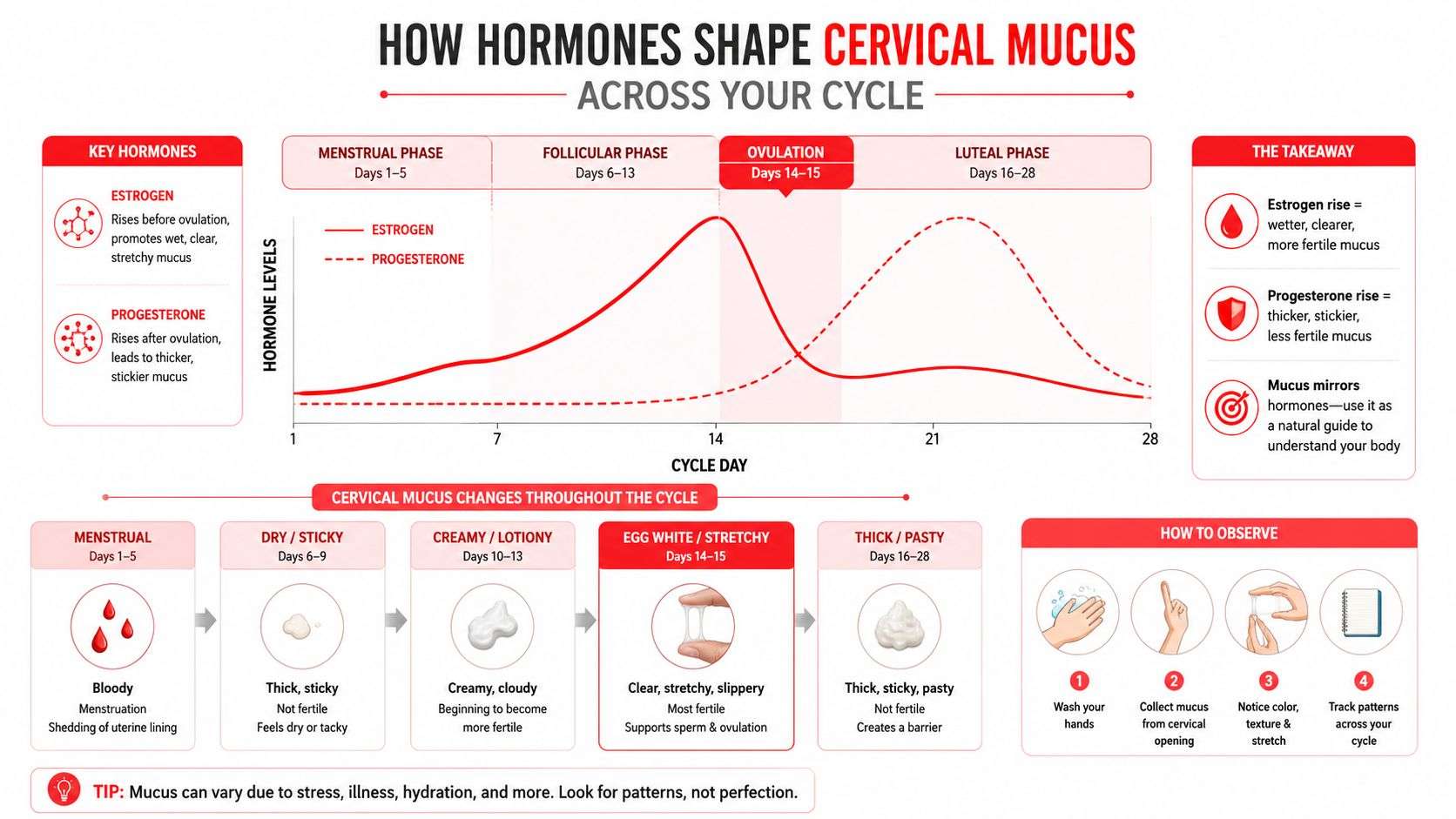
The body doesn't make cervical mucus at random. It follows hormonal instructions, and those instructions change across the cycle. In a typical menstrual cycle, ovulation happens about 14 days before the next period, and cervical mucus usually shifts from dry or thick to stretchy, clear egg-white fluid around that fertile window. After ovulation, it often dries up or becomes thicker unless pregnancy occurs, which is why mucus tracking became such a useful fertility-awareness tool in the first place. Cleveland Clinic's cervical mucus overview lays out that hormone-driven pattern clearly.
Estrogen opens the door
Before ovulation, estrogen rises. That rise makes mucus thinner, clearer, and slipperier, which helps sperm move more easily. A helpful mental image is a slip-and-slide. The body is making the route easier because fertility is at its peak.
Progesterone changes the texture
After ovulation, progesterone takes over. That usually makes mucus thicker, stickier, or creamier. This change happens as the body shifts from a slippery path to a sticky trap once the fertile window has passed. That change is normal, and it doesn't mean anything is wrong.
The key is not whether discharge exists, it's what it looks like at that point in the cycle.
This is why post-ovulation discharge can be so misleading. The same hormone pattern that creates a fertile window also creates a later phase where mucus naturally changes again. If pregnancy happens, the body may keep producing more noticeable discharge, but the timing and texture can overlap with a normal luteal phase. That overlap is exactly why discharge can feel informative without being diagnostic.
Discharge After Ovulation If Pregnant vs a Normal Cycle
After ovulation, progesterone commonly makes mucus thicker, stickier, or creamier even when pregnancy has not occurred, while early pregnancy can also produce thin or watery leukorrhea, so discharge alone is not a reliable pregnancy test. That single fact explains why so many people feel stuck in the middle of hope and uncertainty. The same appearance can belong to two different cycles.
| Cue | Non-pregnant luteal phase | Early pregnancy |
|---|---|---|
| Texture | Often thicker, stickier, or creamy | Often thin, watery, or milky |
| Color | White or cream is common | White, clear, or milky-white can appear |
| Smell | Usually mild or not noticeable | Usually mild or not noticeable |
| Timing | Appears after ovulation and often settles before the period | May persist or become more noticeable near the missed period |
| What it means | Often normal progesterone physiology | Possible early pregnancy clue, not confirmation |
The difference is not one wipe, it's the pattern over several days. If your discharge looks creamy right after ovulation, that can be completely normal. If it stays noticeable, becomes more watery, or seems to increase as the missed period approaches, that's more consistent with the way early pregnancy discharge is often described. Even then, it's still a clue, not proof.
If you're trying to interpret your own cycle, improve vaginal lubrication is a useful phrase to keep in mind because lubrication and discharge can overlap visually, especially when hormones are shifting. A person may see more moisture and assume one explanation when the body is doing something routine.
One way to stay grounded is to ask three questions instead of one. Is this new for me? Is it persisting? Is it lining up with the days after ovulation rather than the days before my period? Those answers won't diagnose pregnancy, but they will tell you whether the picture is leaning toward normal cycle changes or whether it's time to test.
Implantation Bleeding, Spotting, and Discharge Compared
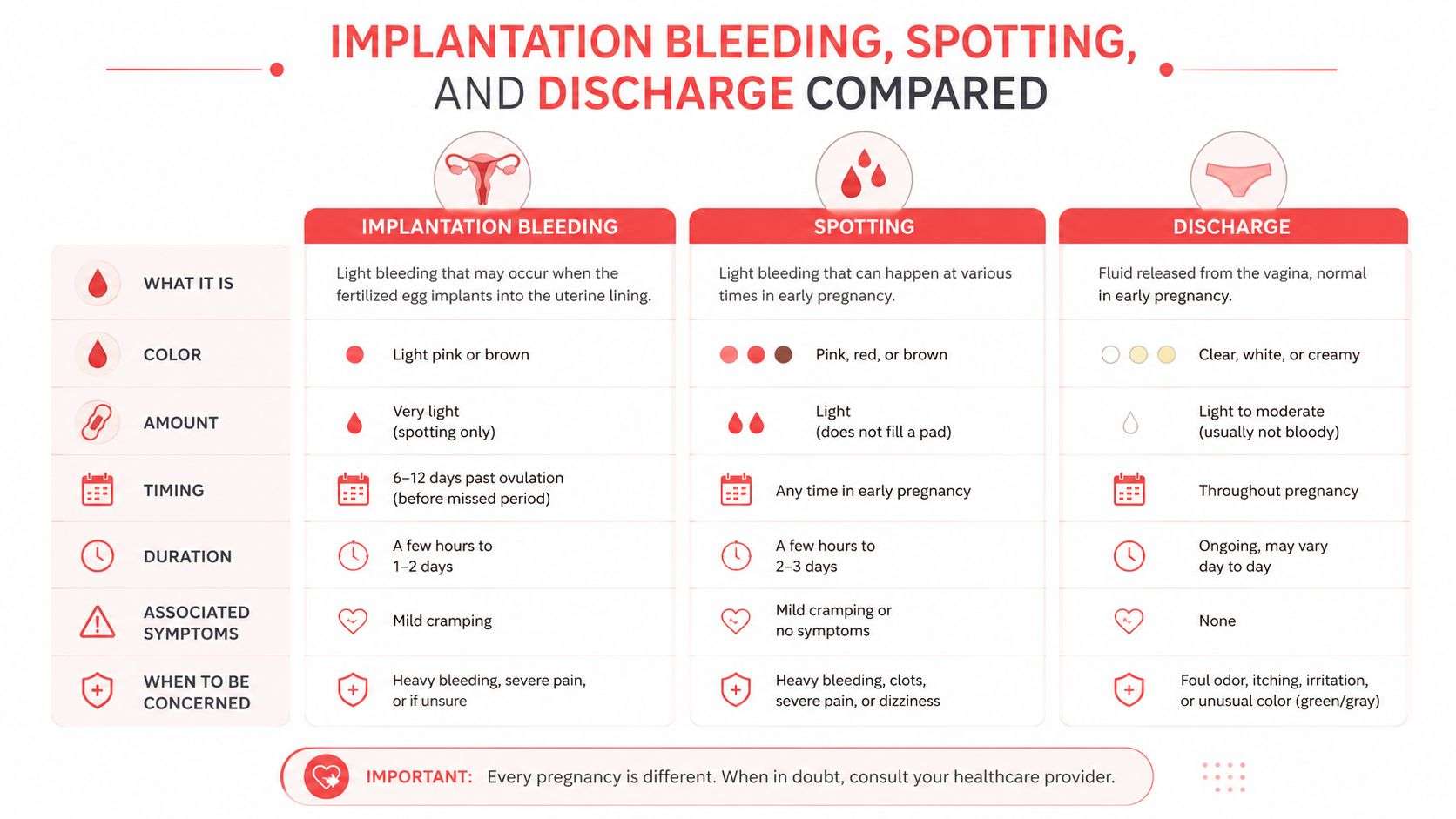
Spotting and discharge are easy to confuse because both can show up as unexpected color changes on underwear or toilet paper. The clearest way to tell them apart is to look at volume, color, and timing together. Implantation bleeding can be mistaken for unusual discharge, but it happens in only about 15% to 25% of pregnancies according to a clinical summary on implantation bleeding, which means most pregnancies do not involve that sign.
What implantation bleeding usually means
Implantation bleeding is light spotting related to the embryo attaching to the uterus. It usually stays brief and sparse, not like a true flow. A small amount of pink or brown color when wiping fits spotting better than discharge.
What a period usually looks like
A period usually becomes a more obvious flow. It does not stay a tiny stain on tissue. If the bleeding grows heavier, needs a pad, and follows your usual menstrual pattern, it is more likely that the cycle is ending than that pregnancy has started.
What brown or pink discharge often is
Brown or pink-tinged discharge after ovulation is usually old blood mixed with cervical fluid. That can happen for several reasons and does not automatically point to implantation. The practical question is whether the color stays light and brief, or whether it turns into a steadier flow that behaves like a period.
Keep a liner, not a conclusion. A small amount of spotting can justify watching the pattern. It cannot confirm pregnancy on its own.
If you are checking every wipe, ask whether the color is staying faint, whether the amount is tiny, and whether the timing fits implantation rather than menstruation. If the answer is no to those questions, the body may just be doing something ordinary.
When Discharge Is a Red Flag Instead of a Sign of Pregnancy
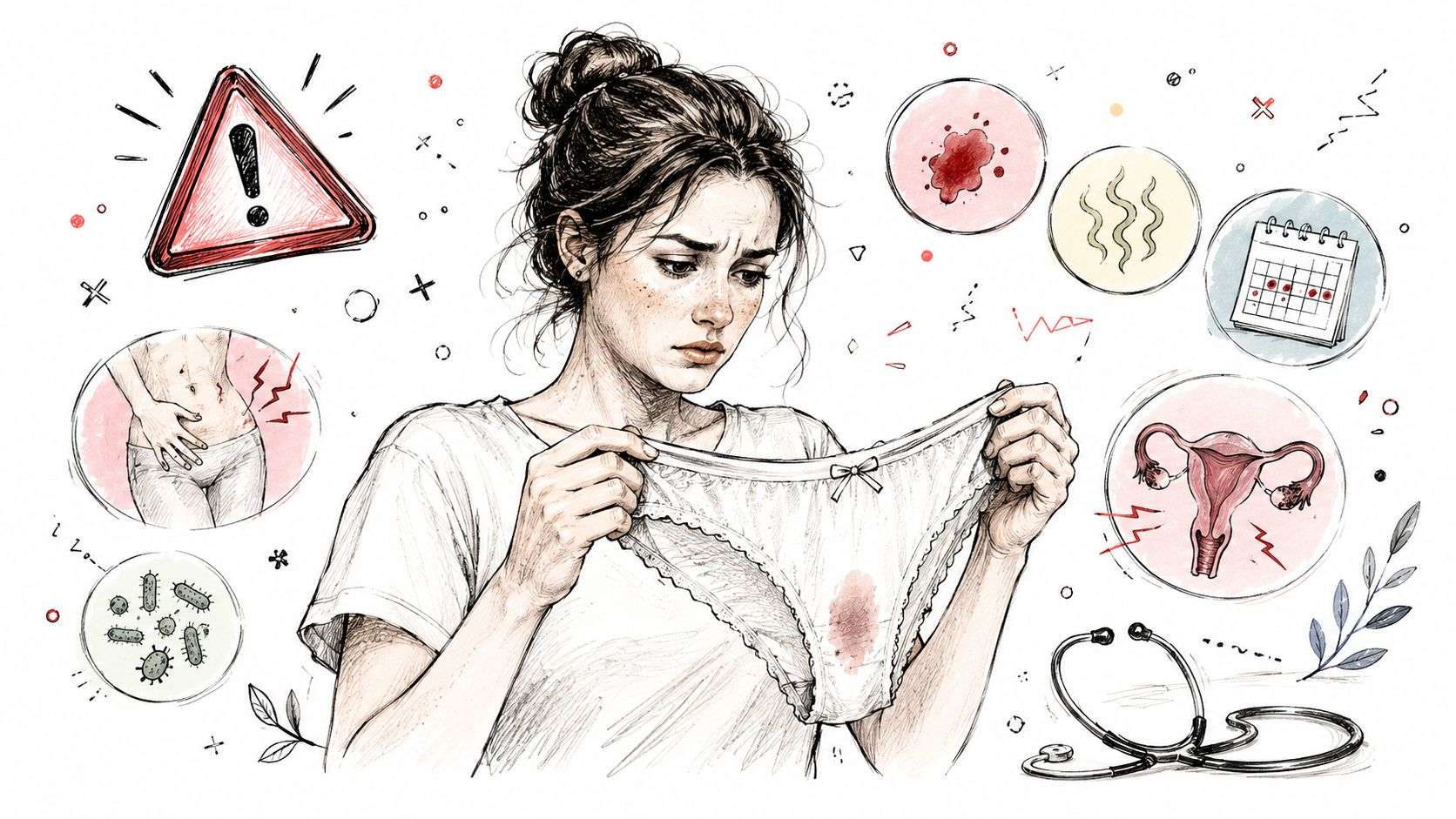
Pregnancy-related discharge is usually mild, not alarming. Normal pregnancy discharge is typically clear, white, or pale yellow, thin, and odorless, but thick or clumpy discharge, foul odor, itching, burning, or leakage that soaks a panty liner warrants medical evaluation as Cleveland Clinic notes. That distinction matters, because the most urgent question is not “am I pregnant?” but “does this look like something that needs care?”
Signs that point away from a normal cycle
Thick, clumpy, or cottage-cheese-like discharge can fit a yeast infection pattern. A strong fishy or foul odor points more toward bacterial imbalance than fertility. Itching, burning, swelling, or pain with urination also move the situation away from a routine hormone shift.
A sudden gush or steady leakage that soaks a liner is different from the usual small amount of discharge people notice after ovulation. That can mean fluid leakage that deserves prompt evaluation, especially if it's accompanied by pain or a sense that something just feels off.
What to do with concerning symptoms
If the discharge is changing in color, smell, or texture and you also have irritation, don't keep trying to interpret it as a fertility sign. That's the moment to stop symptom-guessing and speak to a clinician. The point is not to panic, it's to avoid missing an infection or another problem that won't improve just because you keep waiting.
If discharge comes with odor, itching, burning, or a clumpy texture, treat it like a health issue first and a cycle clue second.
That approach keeps you from over-reading a symptom that belongs in a different category. Pregnancy discharge can be more noticeable, but it shouldn't be painful, foul-smelling, or irritating.
When and How to Test for Pregnancy With Confidence
A positive or negative test gives you a clearer answer than discharge ever can. Home urine tests are usually most useful after a missed period, while blood testing can detect pregnancy earlier. That timing matters because a negative test before your period is due can just mean hCG has not risen enough yet.
A simple testing timeline
If you know when ovulation happened, use that date instead of guessing from the calendar. Wait until the expected period window before putting much weight on a home test. If your cycles are irregular, the ovulation date gives you a better anchor than counting days on a calendar. Blood testing makes more sense when you want an earlier answer or when a clinician needs a clearer picture.
What a test can and cannot do
A pregnancy test looks for hCG, the hormone that rises after implantation. It does not read your discharge pattern the way you do. Creamy, watery, or absent mucus can all happen for reasons that have nothing to do with pregnancy, which is why symptoms can suggest a possibility but never confirm it.
Rule of thumb: if your period is late and a home test is negative, repeat it or ask for blood testing instead of treating that one result as final.
If you are deciding whether to walk into a clinic, your local sexual health clinic walk-in options and what to expect can make the visit feel more manageable. Having a plan for where to go, what to bring, and what happens next often lowers the stress around testing.
The main point is simple. Discharge can help you decide when to test, but it cannot replace the test itself. As noted earlier, the pattern over time matters more than a single day, and the confirmation belongs to hCG, not to guesswork.
Your Two-Week Decision Flow After Ovulation
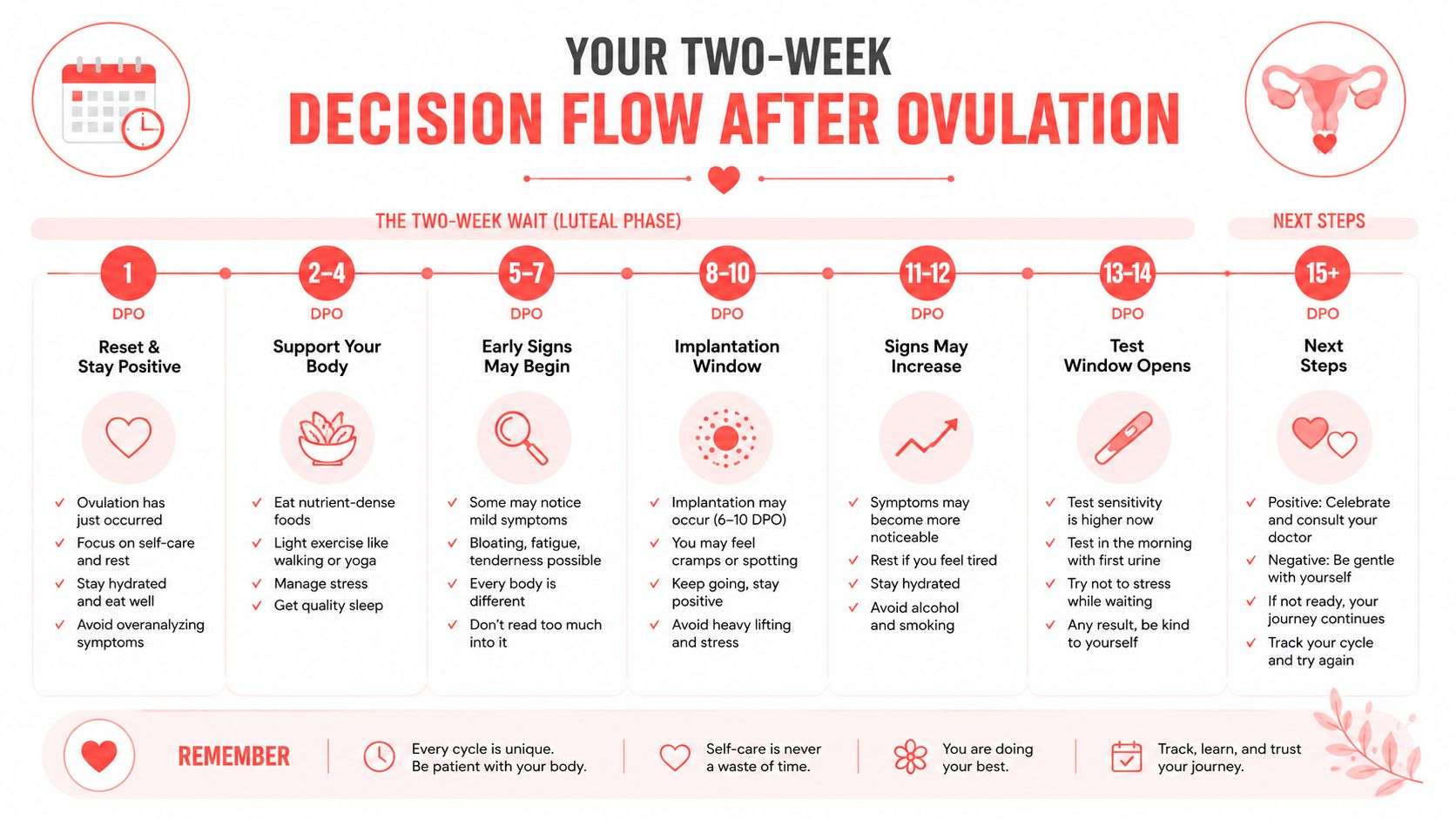
Start by noticing the pattern, not one isolated day. Early after ovulation, creamy or thicker discharge can still be normal progesterone activity. As the days pass, watch whether the discharge settles, stays the same, or becomes more thin and noticeable near the missed period.
Use this simple filter:
- If it looks like your usual post-ovulation discharge, keep observing and don't over-interpret it.
- If it becomes thin, watery, or milky and lingers, pregnancy becomes more plausible, but only a test can confirm it.
- If it turns clumpy, smelly, itchy, or burning, think infection or irritation, not pregnancy.
- If bleeding starts to behave like a period, shift your attention from implantation theories to cycle timing.
The useful habit is to ask, “Is this changing in a way that fits one pattern better than another?” That question keeps a single wipe from hijacking your entire day.
By the time your period is due, the question is no longer about guessing from mucus. It's about testing. Discharge is a clue, not a verdict, and the confirmation belongs to hCG, not to wishful interpretation.
Common Questions Readers Still Ask
Can discharge after ovulation predict pregnancy? It can suggest a fertile or early-pregnancy pattern, but it can't predict pregnancy with certainty. The same hormones that change discharge in a non-pregnant cycle can also overlap with early pregnancy changes.
What does brown or pink discharge after ovulation usually mean? It usually means a small amount of blood is mixing with cervical fluid. That can happen for several reasons, so timing and amount matter more than color alone.
Why do some people have almost no discharge in a successful cycle? Not every pregnancy looks the same, and not every body makes the same amount of visible mucus. If you want a gentle reset while you wait, Milk&Lace on rediscovering yourself is a thoughtful read on feeling more like yourself through body changes.
How soon after implantation do discharge changes happen? Some people notice a later change after implantation, but the exact timing isn't reliable enough to use as a standalone sign. The test still gets the final say.
Sexual Wellness Centers of America helps adults get clear answers about body changes, hormone shifts, and sexual health concerns without making you guess alone. If discharge after ovulation has left you wondering whether your symptoms are normal, visit Sexual Wellness Centers of America to explore care options and learn what a focused, clinician-guided conversation can do for you.