
You're probably here because something smells different and you're trying to decide whether it means genital herpes, a yeast issue, bacterial vaginosis, or something else entirely. That worry is common, and it makes sense. Odor changes around the vulva or penis can feel alarming, especially when they show up with soreness, bumps, discharge, or burning.
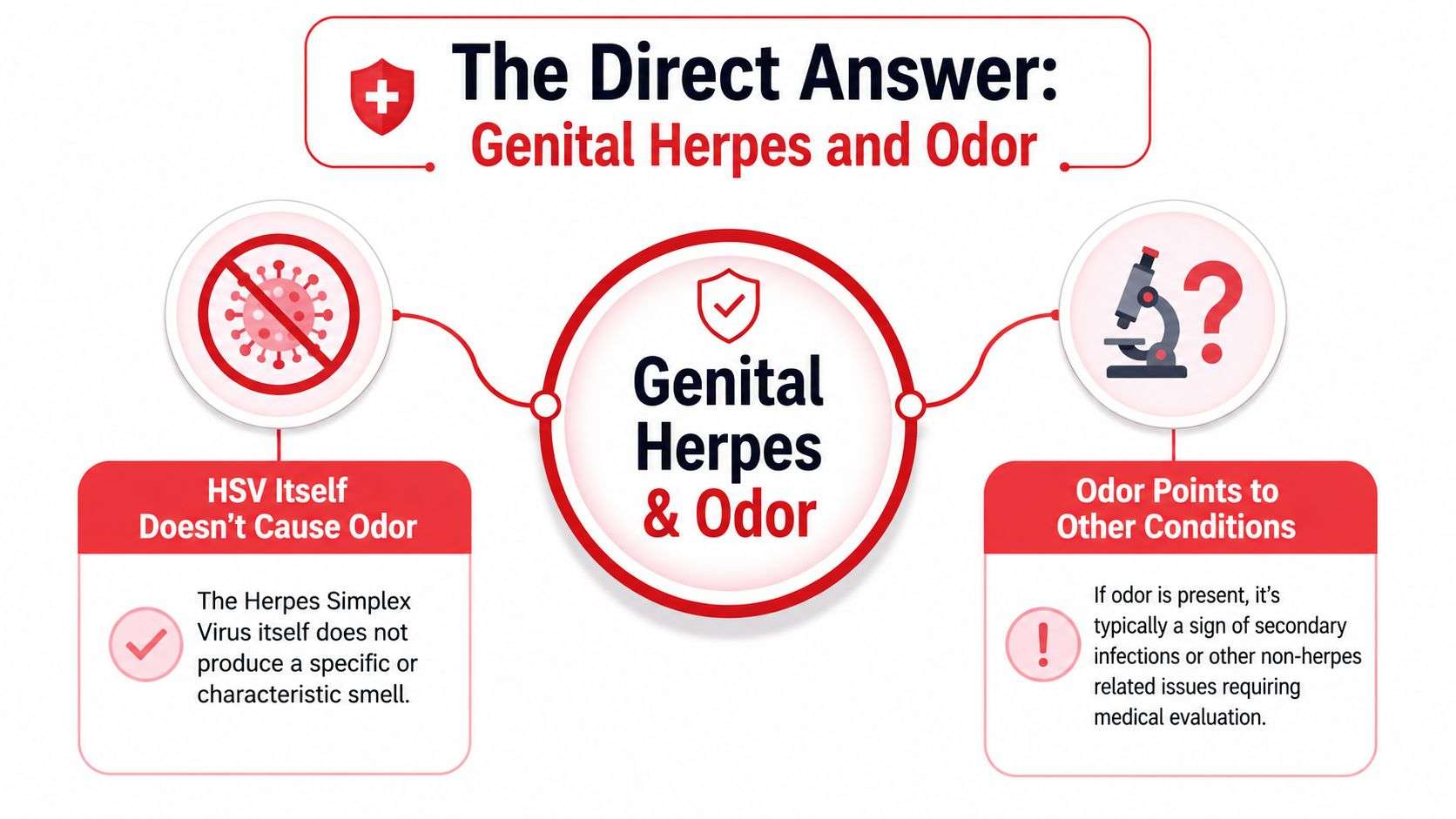
The direct medical answer is reassuring: genital herpes itself is not known to produce a virus-specific smell. When odor is present, clinicians look first for a secondary bacterial infection or another genital condition that explains the smell more accurately, because herpes sores can become irritated, inflamed, and secondarily infected, which can lead to thick or foul-smelling discharge rather than an odor from the virus itself. That distinction matters, because the smell is often the clue that something else is going on, not proof of herpes. Merck Manual's genital herpes guidance supports that clinical distinction.
Table of Contents
- The Direct Answer About Genital Herpes and Odor
- Why a Herpes Outbreak Can Sometimes Cause an Odor
- Distinguishing Odors from Other Genital Conditions
- Steps to Take If You Notice a Genital Odor
- Treatment and Managing Your Genital Health
- When to See a Doctor and Where to Find Expert Care
The Direct Answer About Genital Herpes and Odor
A genital herpes outbreak usually does not have a distinctive smell. The virus itself is not an odor-producing infection, and smell is not part of the classic picture that points to HSV. When odor shows up during a flare, the more likely cause is irritated sores with secondary bacterial contamination or another genital infection occurring at the same time.
What that means in real life
If you notice an odor, treat it as a signal to look at the full symptom pattern, not as proof of herpes. Smell can come from discharge, sweat, blood, irritated skin, trapped moisture, or bacteria that have settled into open sores. A genital odor by itself never confirms herpes, and it does not rule it out either.
Practical rule: a strong or persistent genital odor deserves medical evaluation, because it more often points to bacterial vaginosis, trichomoniasis, or another mixed infection than to herpes alone.
A broader sexual health review is more useful than focusing on one symptom in isolation. For context on the emotional side of sexual health concerns, see this discussion of why sexual symptoms affect more than the body. A person can have herpes without odor, odor without herpes, or herpes plus another infection at the same time.
Why smell is not a reliable herpes test
Herpes is a common lifelong STI, but many people never notice symptoms at first. Clinical guidance summarized in accessible sources says genital herpes often starts without obvious symptoms, and diagnosis is usually made by testing samples from active sores rather than by smell. Medical News Today confirms that PCR testing is more sensitive than viral culture, and blood tests can distinguish HSV-1 from HSV-2.
That is the key point. Odor is a clue, not a diagnosis. If the smell is new, strong, or persistent, getting checked is the right next step.
Why a Herpes Outbreak Can Sometimes Cause an Odor
A herpes outbreak can create the conditions for odor even though the virus itself isn't smelly. Open sores are tender, they can ooze, and they're easier for bacteria to colonize. When that happens, the smell is coming from the secondary infection or the discharge, not from HSV.
The main mechanisms that change odor
The first mechanism is secondary bacterial infection. Broken skin is easier for bacteria to enter, especially if the area stays moist or is repeatedly rubbed by underwear or during urination. That's the setting where a sore can shift from painful to more inflamed, with drainage that starts to smell unpleasant.
The second mechanism is discharge mixing with bacteria. When genital herpes causes discharge, it's usually described as clear, white, or cloudy, and any odor is generally mild and nonspecific, not a dependable sign of HSV. Healthline's overview of herpes discharge reflects that pattern. Once that fluid mixes with bacteria, sweat, or another infection, the smell can become much more noticeable.
The third issue is practical hygiene difficulty during an outbreak. Pain can make regular washing uncomfortable. Some people also avoid touching the area because it stings, which can allow sweat and discharge to linger longer than usual. That doesn't mean the person is “unclean.” It means the outbreak has made normal care harder.
A painful outbreak can change how the area smells without changing what the virus is.
Distinguishing Odors from Other Genital Conditions
Many individuals face confusion on this point. A distinct or strong genital odor doesn't point neatly to herpes. More often, it fits a different genital health concern that needs its own treatment. The 2024 European guidelines for the management of genital herpes note that when odor is present, the more evidence-based explanation is usually related infections or inflammatory processes rather than HSV itself.
Common causes of genital odor
| Condition | Typical Odor | Discharge Characteristics | Other Common Symptoms |
|---|---|---|---|
| Bacterial vaginosis | Often fishy | Thin or altered discharge | Irritation, change in vaginal balance |
| Trichomoniasis | Often fishy or musty | Unusual discharge that may look different from normal | Burning, irritation, discomfort |
| Yeast infection | Often yeasty or bread-like | Thick discharge is common | Itching, soreness, redness |
| Herpes with secondary infection | Usually nonspecific, can become foul if infected | Clear, white, or cloudy fluid may be present | Painful sores, burning, irritation |
The important pattern is this, fishy odor is classically associated with BV rather than HSV. That's why a clinician won't use smell alone to diagnose herpes. They'll look for lesions, discharge pattern, irritation, and test results instead.
If you're comparing symptoms and want a broader explanation of vaginal tissue changes, this overview of vaginal atrophy and treatment can help you see how dryness and tissue irritation can also complicate what people think is “odor.”
For anyone trying to reduce BV recurrence, a practical prevention resource like GutRx's guide to BV prevention can be useful as background reading, especially when odor keeps returning and herpes isn't the actual explanation.
How to think about the smell
Use the smell as a sorting tool, not a verdict. A mild, vague odor during a sore outbreak may reflect discharge and irritation. A strong, persistent, or fishy odor is more consistent with BV, trichomoniasis, or a mixed infection and should be tested rather than assumed.
Steps to Take If You Notice a Genital Odor
Start with the most useful move, don't panic and don't keep guessing. Over-the-counter deodorizing washes, douches, and scented products often make genital irritation worse, especially if sores are already present. A clinician can sort out whether the odor comes from herpes with a secondary infection, BV, yeast, trichomoniasis, or something else.
What a good evaluation usually includes
A visit usually starts with a symptom review and a physical exam of the area. If lesions are present, the clinician may swab them for PCR testing, because that is a reliable way to identify HSV. If discharge or irritation suggests another infection, testing may also look for BV, trichomoniasis, or yeast.
Helpful expectation: diagnosis is faster when you describe the smell exactly, for example fishy, foul, sour, or yeast-like, because that detail can narrow the next test.
If you want to know what a walk-in visit usually involves, this guide to local sexual health clinic walk-in options and what to expect is a practical place to start. A clinician can explain which tests fit your symptoms and why one cause is more likely than another.
What to bring up at the appointment
- Timing of the odor: say when it started and whether it changed after sex, urination, or wiping.
- Discharge details: note color, thickness, and whether it is new.
- Sore symptoms: mention burning, crusting, pain, or swelling.
- Anything you used: soaps, wipes, lubricants, creams, or home remedies.
Those details help a clinician separate herpes itself from a second infection. The pattern matters more than the smell alone, especially when BV, yeast, or another irritation is also possible.
Treatment and Managing Your Genital Health
Treatment depends on the cause of the smell. If herpes is active, antiviral medicines may help the outbreak settle sooner. If the odor comes from BV, trichomoniasis, yeast, or a secondary bacterial infection, that condition needs its own treatment instead of guessing based on smell alone.
Treat the cause, not the odor
Antiviral treatment can reduce the severity of a herpes outbreak, but it won't fix BV or yeast. That's why an odor that lingers or worsens should not be managed with herpes treatment alone. If bacteria are involved, antibiotics may be needed. If yeast is the issue, an antifungal is usually the relevant treatment.
A useful way to think about it is simple, odor is a symptom of imbalance or infection, not a diagnosis by itself. The source of the smell matters because the wrong treatment can delay relief and sometimes irritate the area further.
Make the area easier to heal
During an outbreak, gentle care matters more than aggressive cleaning.
- Use mild cleansing: wash with lukewarm water and a gentle, unscented cleanser if your clinician says cleansing is appropriate.
- Keep it dry: pat, don't rub, and change damp underwear quickly.
- Choose breathable fabrics: loose cotton underwear reduces trapped moisture.
- Avoid irritants: skip scented sprays, deodorants, and douches.
- Reduce friction: avoid anything that rubs sore skin until healing improves.
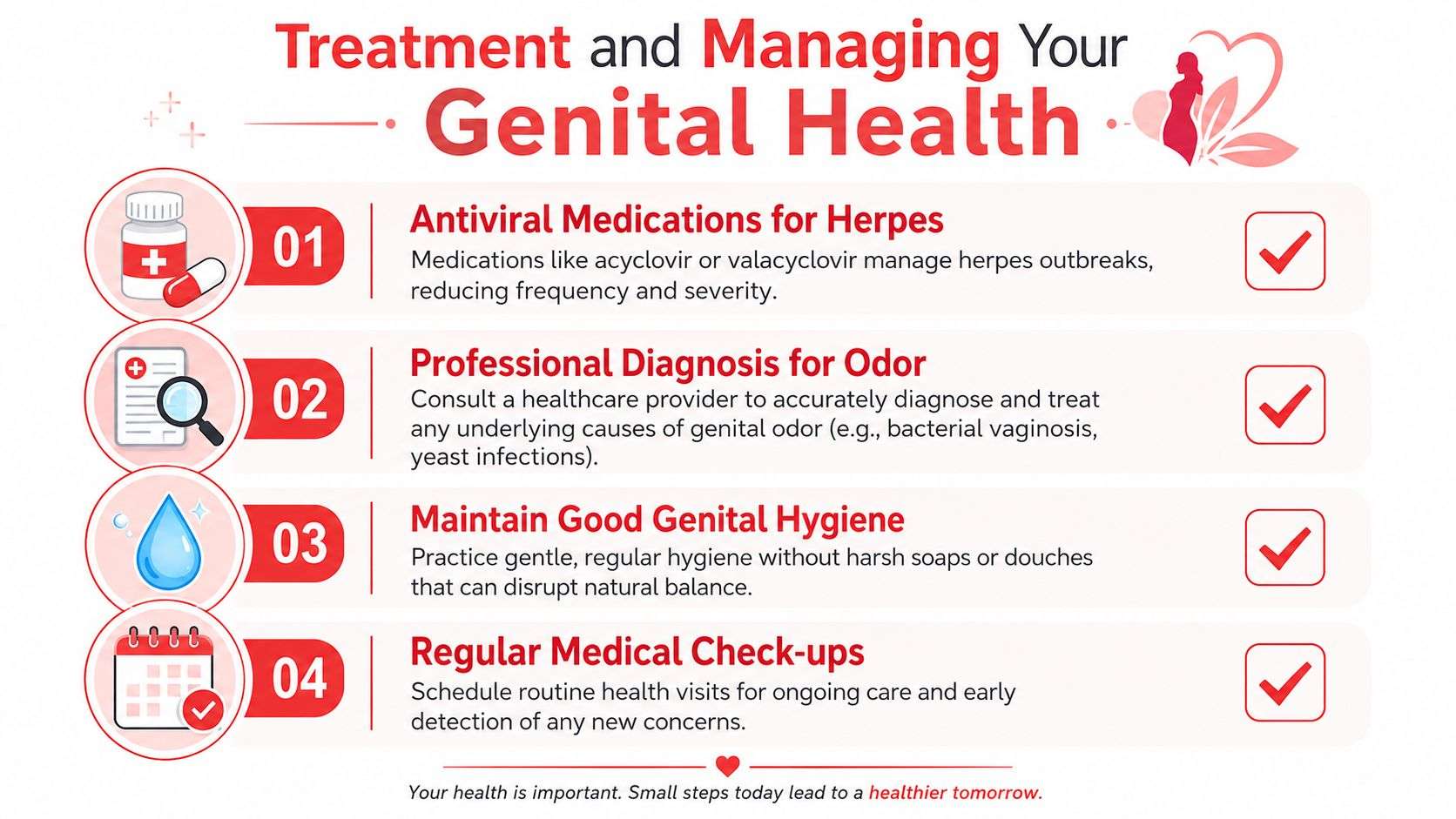
The general pattern described in clinical summaries is that the source of odor matters, because people often mix up herpes lesions, discharge, and secondary infections. That's exactly why treatment should follow testing, not assumptions.
Good hygiene supports healing, but it can't replace diagnosis when odor is new or strong.
When to See a Doctor and Where to Find Expert Care
A new genital odor during a herpes outbreak deserves prompt medical attention, especially if it is getting stronger, if the pain is severe, or if you also have fever, trouble urinating, or sores that look more swollen, red, or irritated than before. Those changes can point to a secondary infection or another genital condition that needs treatment, and waiting usually only makes it harder to sort out what is causing the smell.
A persistent odor is a good reason to be examined even if the outbreak itself seems familiar. Herpes alone usually does not explain a strong smell, so a clinician needs to look for other possibilities, such as bacterial vaginosis, a yeast issue, or a skin infection around the sores. If you want a practical reminder about choosing the right care for infection symptoms, BacteriaFAQ on seeking medical help explains why diagnosis should come before treatment decisions.
The clearest next step is an in-person exam, because odor plus genital sores is a symptom pattern that needs interpretation, not guesswork. A local sexual health clinic can check whether the odor is coming from discharge, irritated skin, or a separate infection, and it can also arrange testing when needed. If you are looking for a nearby option, your local sexual health clinic walk-in options and what to expect can help you prepare for that visit.
The bottom line is simple, genital herpes usually doesn't smell on its own. When odor is present, it usually means there is another issue to identify and treat, not that the virus has a distinct scent. If you want clear answers, discreet testing, and a personalized plan, schedule a visit with Sexual Wellness Centers of America today.