
You start doxepin, sleep a little better, and then one morning the bathroom scale catches your eye. The number is up, your jeans feel a touch tighter, and the question lands fast, is this medication going to make me gain weight, or is something else going on?
The honest answer is that doxepin weight gain is not a single yes-or-no issue. Dose matters a lot, and the reason you're taking it matters too. Low-dose doxepin for insomnia behaves very differently from the higher antidepressant doses used for depression or anxiety, and that difference changes what a person can expect.
Table of Contents
- What Most People Notice in the First Weeks on Doxepin
- How Doxepin Changes Appetite and Metabolism
- What the Research Shows About Doxepin and Weight
- Who Is Most Likely to Gain Weight on Doxepin
- How Fast the Weight Change Usually Happens
- How to Monitor and Manage Doxepin Weight Gain
- Alternatives Worth Discussing With Your Clinician
- When to Talk to Your Doctor and What to Ask
What Most People Notice in the First Weeks on Doxepin
The first clue is often subtle. A patient notices they're snacking later at night, or their shirt feels a little snug, or the scale is up after a few days of normal eating. That moment can feel alarming, but it doesn't automatically mean the medication is causing true fat gain.
The key question is which version of doxepin you're taking. Low-dose doxepin for insomnia sits in a different category from the higher doses used for depression or anxiety, so the same drug can have a very different weight story depending on the prescription. That's why articles that treat it as one uniform medication end up confusing people.
Two very different use cases
At the sleep doses, doxepin is usually discussed as a hypnotic, not as a classic antidepressant. At those doses, the evidence base looks much closer to weight neutrality, which is why many people using it for sleep don't notice a major change in appetite or body size.
At higher antidepressant doses, the picture shifts. Older tricyclic data connect doxepin with weight gain more consistently, and that's the version of the drug most mean when they've heard the warning from a friend or read a caution online. The medication operates as a tool with two settings: a light setting for sleep and a much stronger setting for mood.
Practical rule: don't ask, “Does doxepin cause weight gain?” Ask, “What dose am I on, and what problem is it treating?”
A useful way to keep this in view is to track three things from the start, your dose, your appetite, and your clothing fit. If you're only seeing normal daily scale noise, that's different from a steady climb that lasts week after week. People are not imagining the concern, but they also shouldn't jump to conclusions from one weigh-in.
If you're trying to sort through the bigger picture of appetite and body signals, a plain-language overview of appetite suppressants and brain signals can make the biology easier to picture.
How Doxepin Changes Appetite and Metabolism
A person can take doxepin for sleep and wonder why their appetite feels a little different a few days later. The answer starts at the receptor level. Doxepin fits tightly into the H1 histamine receptor, and histamine helps regulate wakefulness as well as appetite signaling. When that receptor is occupied, the brain can send a weaker “I'm full” signal and a stronger “keep eating” signal than usual.
There is more than one pathway involved. Doxepin also has anticholinergic and α-adrenergic effects, and those can make the body slightly less efficient at burning energy at rest. Appetite can rise, energy use can drift lower, and those small changes can add up over time even if a person does not feel as though they are eating much more.
Why low-dose and antidepressant-dose doxepin don't feel the same
A low-dose insomnia review described doxepin as roughly 100-fold more selective for H1 receptors than for norepinephrine or serotonin targets (PMC review). That selectivity helps explain why the sleep doses, usually 1 to 6 mg, are treated separately from antidepressant doses in the clinical literature. At those lower doses, the medication behaves more like a targeted sleep aid.
The higher-dose picture is different. Once doxepin is used more like a tricyclic antidepressant, more of the side-effect profile comes into view, including the appetite and metabolism changes that can support weight gain. That difference is why two people can describe the same drug in opposite ways and still both be describing something real. The dose changes the biology.
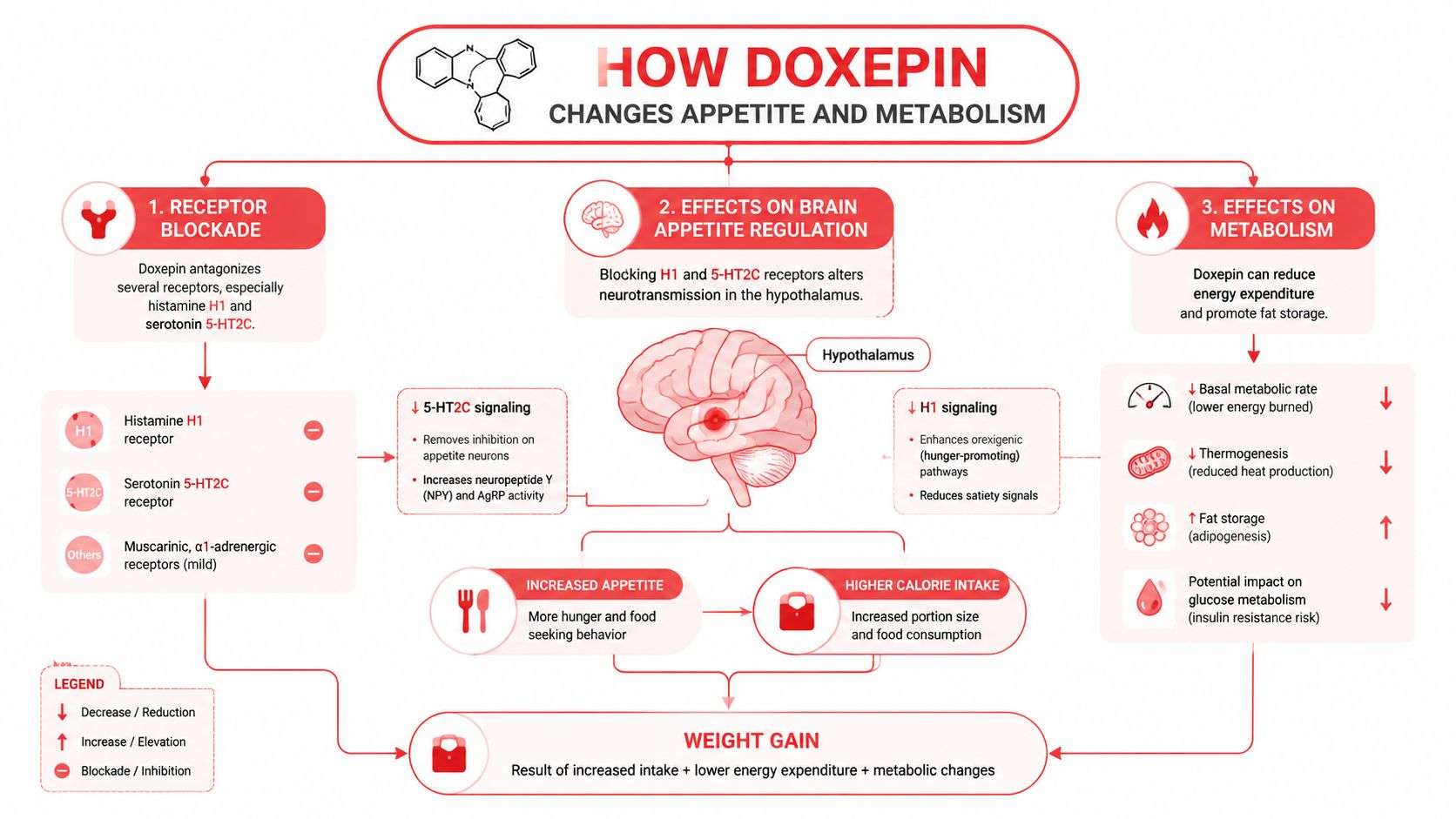
The practical takeaway is easier to see when you separate the appetite signal from the metabolism signal. If the brain feels a bit less satisfied after meals and the body is burning slightly less at rest, weight can creep up slowly without any dramatic change in eating habits. That is why a plain-language look at appetite suppressants and brain signals can help make the underlying biology easier to picture.
What the Research Shows About Doxepin and Weight
The clearest way to separate rumor from reality is to look at dose. In a 35-day trial of 229 adults, low-dose doxepin at 3 mg or 6 mg produced no spontaneous reports of weight gain or increased appetite, and body mass index stayed in the same general range across groups, with mean BMI values of 26.4 for placebo, 27.8 for doxepin 3 mg, and 27.4 for doxepin 6 mg (Sleep trial). That is the modern evidence base for insomnia treatment, where doxepin is being used as a sleep medicine rather than as a classic antidepressant.
The higher-dose picture looks different. Once doxepin is used more like a tricyclic antidepressant, more of the side-effect profile comes into view, including the appetite and metabolism changes that can support weight gain. A PubMed-indexed study of tricyclic antidepressants reported the largest body-weight increases in the amitriptyline and doxepin groups, and the weight change did not track with diagnosis, dose, age, sex, or education. That makes the medication effect look real, even though it does not affect every person in the same way (PubMed study).
A quick dose split
| Use case | Dose range | Population studied | Weight signal |
|---|---|---|---|
| Insomnia treatment | 3 mg or 6 mg | 229 adults, 35 days | No spontaneous reports of weight gain or increased appetite, BMI stayed broadly stable |
| Antidepressant treatment | Higher tricyclic doses | 329 patients with major depressive disorders and neurotic states | Largest body-weight increases in the doxepin group |
That split fits the broader tricyclic pattern. Weight gain is a known issue across antidepressant treatment, and the risk becomes more visible when doxepin is being used at doses that engage the full tricyclic profile rather than the low-dose sleep profile. The same prescription name can therefore point to two different biological situations, which is why dose matters so much in the conversation about doxepin and body weight.
If you are trying to judge your own risk, it helps to check your metabolic markers while you and your clinician watch the trend, especially if blood sugar or lipid concerns are already part of the picture.
Doxepin at sleep doses and doxepin at antidepressant doses are not the same practical question. The dose is the hinge.
Who Is Most Likely to Gain Weight on Doxepin
The people most likely to run into weight gain usually have more than one factor pushing in the same direction. Higher antidepressant doses, longer treatment, a baseline weight already in the overweight or obese range, and a more sedentary routine all make the scale more likely to drift upward. Add in pre-existing metabolic concerns or other medications that affect weight, and the risk climbs further.
Lifestyle details matter too. Alcohol can loosen appetite control, untreated sleep apnea can worsen fatigue and cravings, and high-stress periods can push eating patterns in an unhelpful direction. None of those factors prove doxepin is the only cause, but they can amplify what the medication is already doing.
A simple self-check
- Dose and duration: Are you on a higher antidepressant dose, and have you been on it long enough for appetite changes to accumulate?
- Baseline metabolic picture: Did you already have trouble with weight, glucose, or lipids before starting?
- Daily movement: Does most of your day involve sitting, driving, or limited physical activity?
- Sleep and stress: Are poor sleep, snoring, or intense stress already affecting your appetite?
- Other medications: Are you taking anything else that can make weight control harder?
Some people still gain weight at similar doses while others don't. One plausible reason is that receptor sensitivity varies from person to person, especially in the histamine and muscarinic systems that help regulate appetite and fullness. Researchers are still sorting out that variation, so it's normal if your experience doesn't match someone else's.
The clearest practical point is this, risk is not evenly distributed. A person taking a small bedtime dose for short-term insomnia is not in the same bucket as someone taking a higher dose for mood symptoms over months. That difference should shape how closely the scale is watched.
How Fast the Weight Change Usually Happens
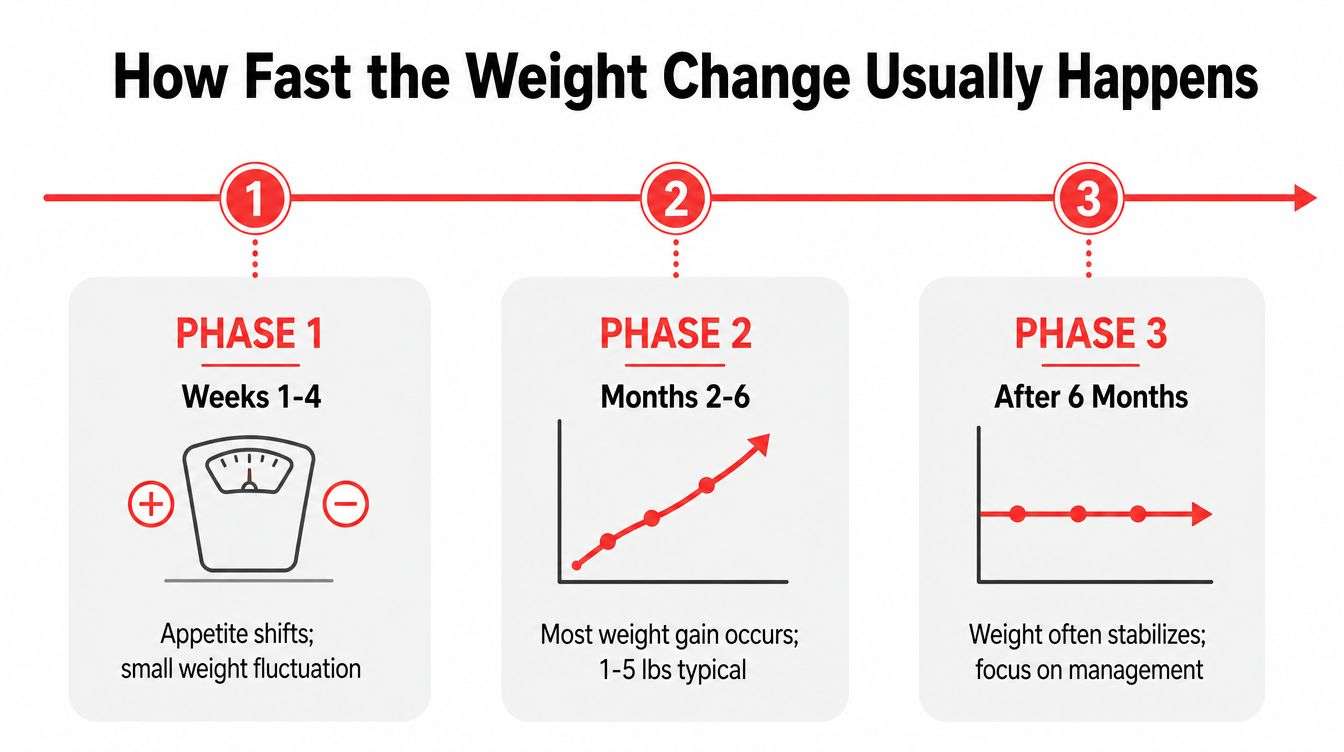
The earliest changes are usually behavioral before they're dramatic on the scale. In the first few weeks, people often notice a shift in cravings, late-night hunger, or morning appetite, but the bathroom scale may still bounce around in the normal day-to-day range. That's why a single weigh-in can mislead you.
By the second or third month, the pattern can become clearer if the medication is pushing appetite up or energy expenditure down. Some people notice that waistbands fit differently, their face looks fuller in photos, or they start carrying a little more weight in the midsection. Others never see more than a small bump, especially at low doses or when their routines stay steady.
What the long-term biology suggests
Preclinical work gives the long-range picture some support. In mice, chronic doxepin exposure produced 1.2× higher body weight, 2.2× greater body-weight change, and 2.3× greater body-weight gain than controls, along with increased food intake, worse glucose homeostasis, reduced leptin signaling, and lower UCP1 expression in brown fat (PMC preclinical study). Animal data don't translate perfectly to people, but they do show a plausible mechanism for gradual gain over time.
What people usually notice first is not a lab number. It's the practical stuff, a waistband, a ring, a pillow face in the morning, a little more hunger at night. What they don't feel directly is the slow change in leptin signaling or resting metabolism, which is why the scale trend matters more than a one-off impression.
Useful pattern: early appetite change doesn't always equal immediate weight gain, but it can be the first signal that the dose needs a closer look.
How to Monitor and Manage Doxepin Weight Gain
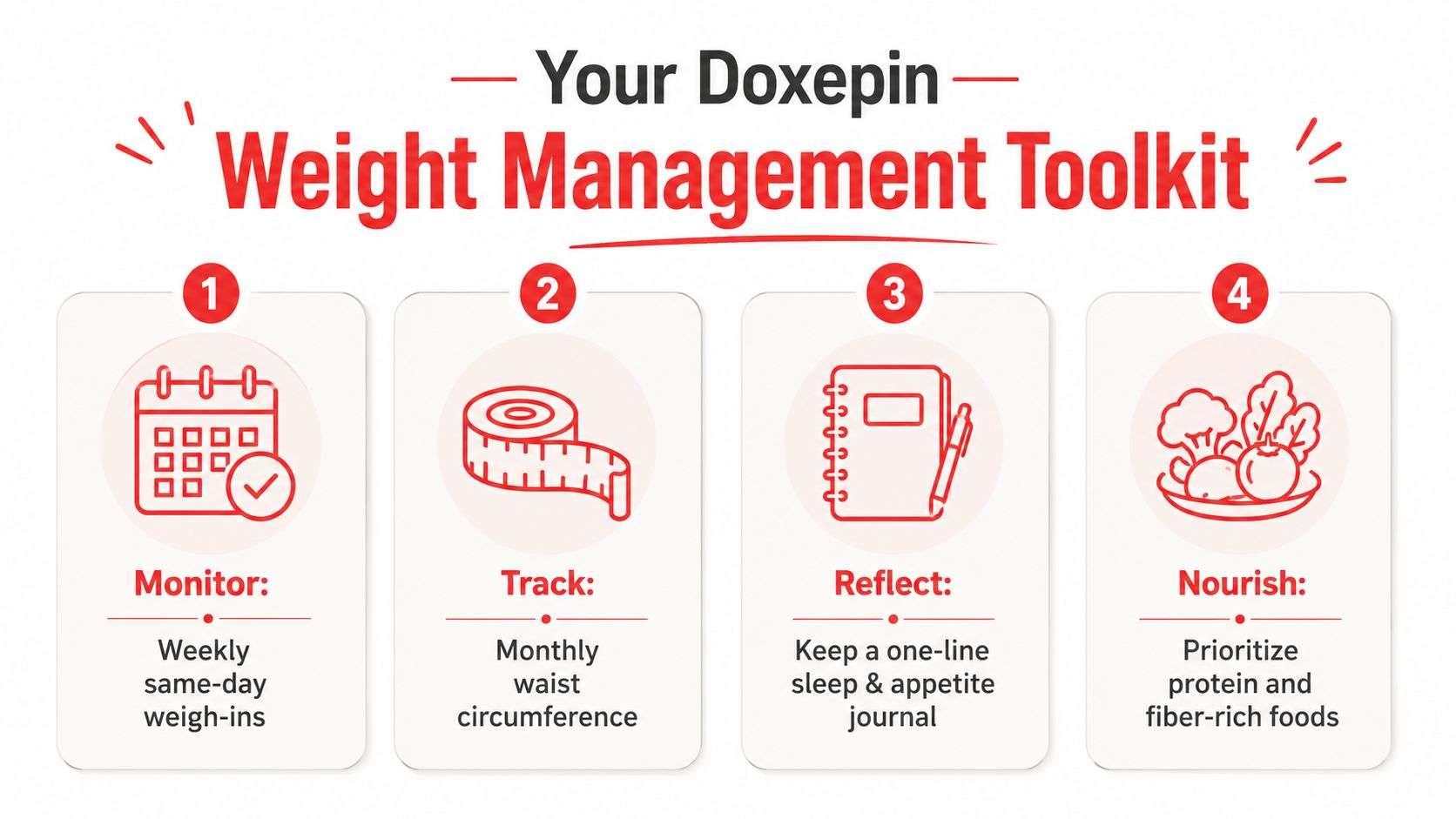
Start simple and stay consistent. Weigh yourself once a week, on the same day and at roughly the same time, then measure your waist once a month. Add a one-line note about sleep and appetite, because the pattern matters more than any single number.
That tiny log helps you tell medication effect from normal fluctuation. If weight rises steadily over several weeks, that's different from a holiday bump or a salty dinner. The point is not to obsess, it's to spot a trend early enough to do something about it.
Habits that work with the biology
- Protein-forward meals: Build meals around protein and fiber so cravings don't steer the day.
- Structured meal timing: Eat at predictable times, especially if the medication makes evening snacking stronger.
- Resistance training: Keep muscle mass active, because that helps protect resting energy expenditure.
- Sleep hygiene: Treat sleep like part of the weight plan, since doxepin is often being used to improve sleep in the first place.
- Medication review: Ask whether the dose or timing can be adjusted, but only with the prescriber.
For patients who want a broader framework for medication-related weight concerns, integrative weight management on antidepressants can offer useful ideas to discuss with a clinician, even though every antidepressant has its own profile.
If you need a clinic-based weight management pathway, medically managed weight loss is one option to ask about in a broader care plan.
The red flags are straightforward. If you're gaining more than a small amount of weight in a short period, if cravings suddenly feel hard to control, or if blood pressure or glucose readings start to move the wrong way, call your clinician. You're not failing the medication, you're giving the medication a reality check.
Alternatives Worth Discussing With Your Clinician
The best alternative depends on why you were prescribed doxepin in the first place. If it's for sleep, your clinician may be able to use the lowest effective dose or shift to a non-drug sleep approach. If it's for mood symptoms, the conversation may be about switching to a different antidepressant with a more favorable weight profile.
Side-by-side options
| Option | Likely weight impact | Evidence strength | Best fit |
|---|---|---|---|
| Lower the doxepin dose | May reduce appetite-related effects | Moderate, depends on indication | People who still need doxepin but are sensitive to weight change |
| Switch to a more weight-neutral antidepressant | Often more favorable than a tricyclic | Varies by drug and condition | Depression or anxiety treatment when weight is a major concern |
| Cognitive behavioral therapy for insomnia | Weight neutral | Strong for insomnia care | People using doxepin mainly for sleep |
| Complementary sleep support, such as melatonin under guidance | Usually weight neutral | Variable | Short-term sleep support when medically appropriate |
For some patients, hormone and sleep issues are tangled together, which makes a broader evaluation worthwhile. A general hormone replacement therapy and weight loss discussion can be helpful when weight change is happening alongside fatigue, sleep disruption, or menopausal symptoms.
A note on choice and trade-offs
No single alternative fits everyone. A medication that helps sleep but worsens weight may still be worth using for a period of time if the sleep benefit is large and the plan includes monitoring. On the other hand, if the weight change is creating new health problems, it's reasonable to ask whether another path makes more sense.
The goal isn't to avoid every side effect. It's to choose the trade-off you can live with safely.
When to Talk to Your Doctor and What to Ask
Call sooner if the weight change feels rapid, if you notice swelling, new snoring or possible sleep apnea symptoms, mood changes, blood sugar shifts, or a sense that the medication is helping one problem while clearly worsening another. Those are the moments when a dose review or treatment change deserves real attention.
Bring a short list to your appointment. Ask what dose you're on, what the medication is treating, whether a lower dose would still work, whether the timing could be adjusted, what monitoring schedule makes sense, and which alternatives fit your medical history. If you've been trying to sort this out on your own, a neighborhood guide to weight loss management and doctors can help you think through the kind of care to ask for.
Your next seven days can be practical. Pick one weigh-in day, start the one-line journal, choose one protein-centered meal pattern, add one movement habit you can repeat, and book the appointment if the trend worries you. The single most useful question is simple, “Is my current dose still the best trade-off for what I'm treating?”
Sexual Wellness Centers of America offers clinician-guided weight loss management as part of broader medical care, along with sleep apnea, hormone, and wellness services that can matter when weight changes and medication effects overlap. If you want to talk through whether your symptoms fit a medication, hormone, or lifestyle pattern, visit Sexual Wellness Centers of America and start the conversation with a medical team that can help you sort out the next step.