
You wash your hair because your scalp feels tight, itchy, or flaky. A few hours later, your roots look slick again. So you switch products. Then you wash more often. Then you try heavier moisturizers because the flakes must mean dryness.
And that's where many people get stuck.
Dry scalp but oily hair is one of the most confusing scalp patterns because the symptoms seem to cancel each other out. If your scalp is dry, why is your hair greasy? If your hair is oily, why are you seeing flakes? The answer usually isn't “you need more oil” or “you need stronger cleansing.” It's that your scalp's barrier, oil glands, and microbiome aren't working in sync.
That mismatch is common. In a Global Consumer Insights scalp care survey, 41% of consumers reported dry scalp, 24% reported oily scalp and buildup, and 30% reported flaking or dandruff. In practice, that overlap matters because many people don't fit neatly into one category.
Table of Contents
- The Frustrating Paradox of a Dry Scalp and Oily Hair
- Why Your Scalp Is at War With Itself
- Identifying the Root Cause of Your Scalp Imbalance
- Your At-Home Regimen for a Balanced Scalp
- When to Seek Medical and Professional Treatment
- The Hormone Connection and Advanced Hair Restoration
- Frequently Asked Questions About Scalp Health
The Frustrating Paradox of a Dry Scalp and Oily Hair
If you're dealing with this, your mornings probably start with mixed signals. Your scalp feels uncomfortable, maybe even flaky around the hairline or crown, but your roots flatten fast and your hair starts looking unwashed long before the day ends.
That combination leads people into a constant overcorrection loop. They buy rich scalp oils because the skin feels dry. Then the roots get heavier. Or they use stronger cleansers because the hair looks greasy. Then the scalp feels even tighter and more reactive.
The problem is that most advice is built for one condition at a time. Standard “dry scalp” guidance assumes you need more moisture everywhere. Standard “oily hair” guidance assumes you need more oil control everywhere. Neither approach fits when the scalp skin is irritated while the follicles are still pumping out excess sebum.
Practical rule: Treat the scalp and the hair as two different zones. The scalp needs balance. The hair shaft usually just needs enough cleansing at the roots and lighter conditioning on the lengths.
This is less a contradiction than a regulation problem. Your scalp can be oil-rich but water-poor. It can also be inflamed, which changes the kind of flakes you see and the products that help.
That's why symptom management alone often fails. If you only chase grease, you risk stripping the barrier. If you only chase dryness, you can feed buildup and worsen irritation. The useful question isn't “Is my scalp dry or oily?” It's “What's making my scalp behave like both?”
Why Your Scalp Is at War With Itself
A scalp with dry flakes and oily roots behaves like a thermostat that's lost calibration. One system is pushing out more oil. Another system is failing to hold onto moisture. Then the products meant to fix one side often aggravate the other.
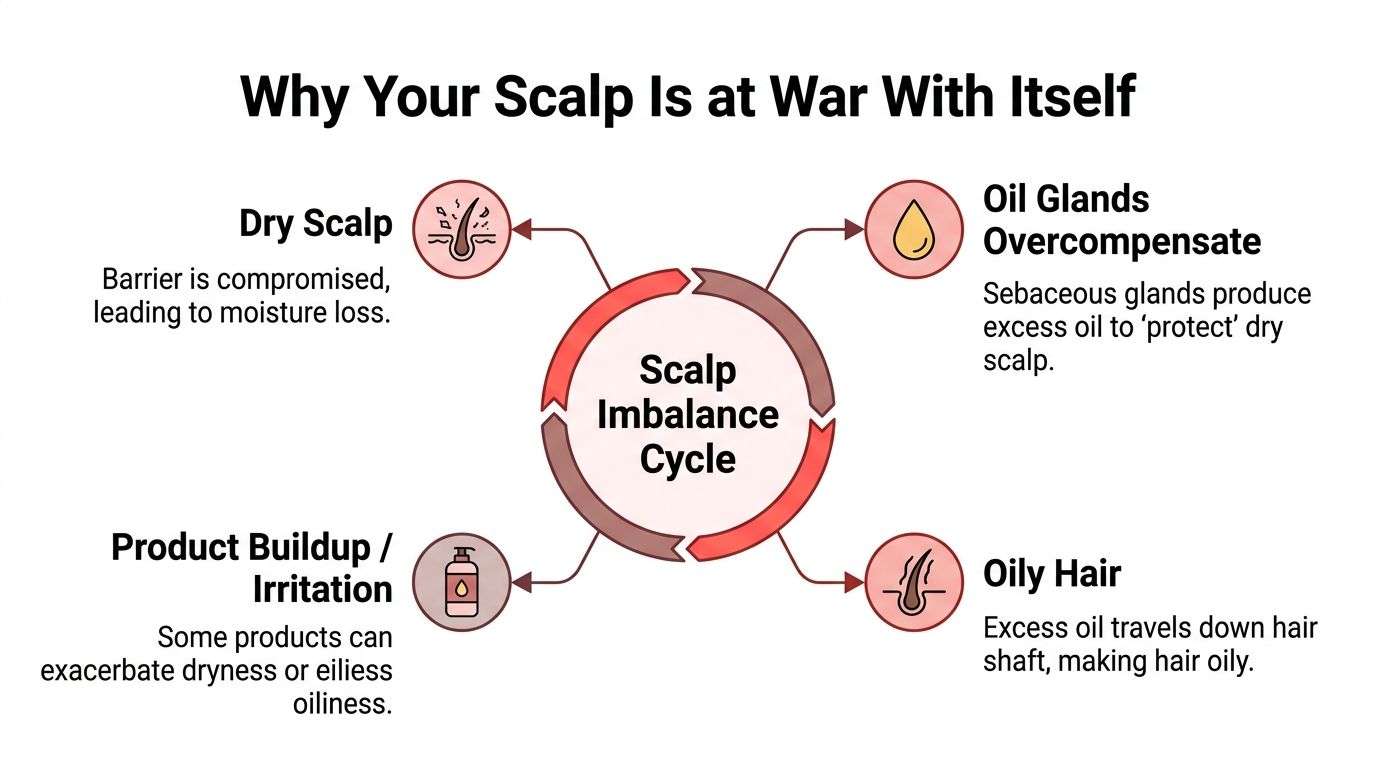
Oil production isn't the same as scalp hydration
Many people assume oil equals moisture. It doesn't. Sebum helps protect the scalp, but it isn't the same thing as a healthy skin barrier.
Oily hair is driven by overactive sebaceous glands, and androgens play a major role in that process. Specifically, dihydrotestosterone, or DHT, signals scalp glands to enlarge and produce excess oil. That means you can have plenty of oil at the follicle level while the surface skin still feels irritated, flaky, or tight.
A simple way to understand this is:
- Sebum is oil: It coats hair and scalp.
- Barrier health is protection: It helps skin retain comfort and resist irritation.
- Hydration is water balance: It affects how the skin feels and sheds.
When you overwash, use harsh surfactants, or pile on aggressive “clarifying” routines, you may remove too much from the barrier without fixing the reasons your glands are overproducing oil. Your roots stay greasy. Your scalp gets angrier.
The microbiome changes the picture
The third piece is the scalp microbiome. A healthy scalp isn't sterile. It's an ecosystem. When excess oil, irritation, and product buildup change that environment, flakes can stop being a simple dryness issue and become an inflammatory one.
That's why some people say, “My scalp feels dry, but it doesn't respond to moisturizing products at all.” In those cases, the flakes may not come from lack of oil. They may come from a disturbed scalp environment.
A scalp can be shiny at the roots and still be struggling underneath. Grease on the hair doesn't prove the skin is healthy.
Once you understand that, the paradox makes more sense. The goal isn't to force the scalp into “dry” or “oily” treatment. The goal is to calm the barrier, reduce triggers, and stop feeding the cycle that keeps both symptoms alive.
Identifying the Root Cause of Your Scalp Imbalance
The flakes matter. Their type matters even more.
Small, dry-looking particles can come from simple irritation. But larger, clingier, or greasy flakes often point to a different process. The biggest mistake I see is assuming every flake means the scalp needs richer moisture.
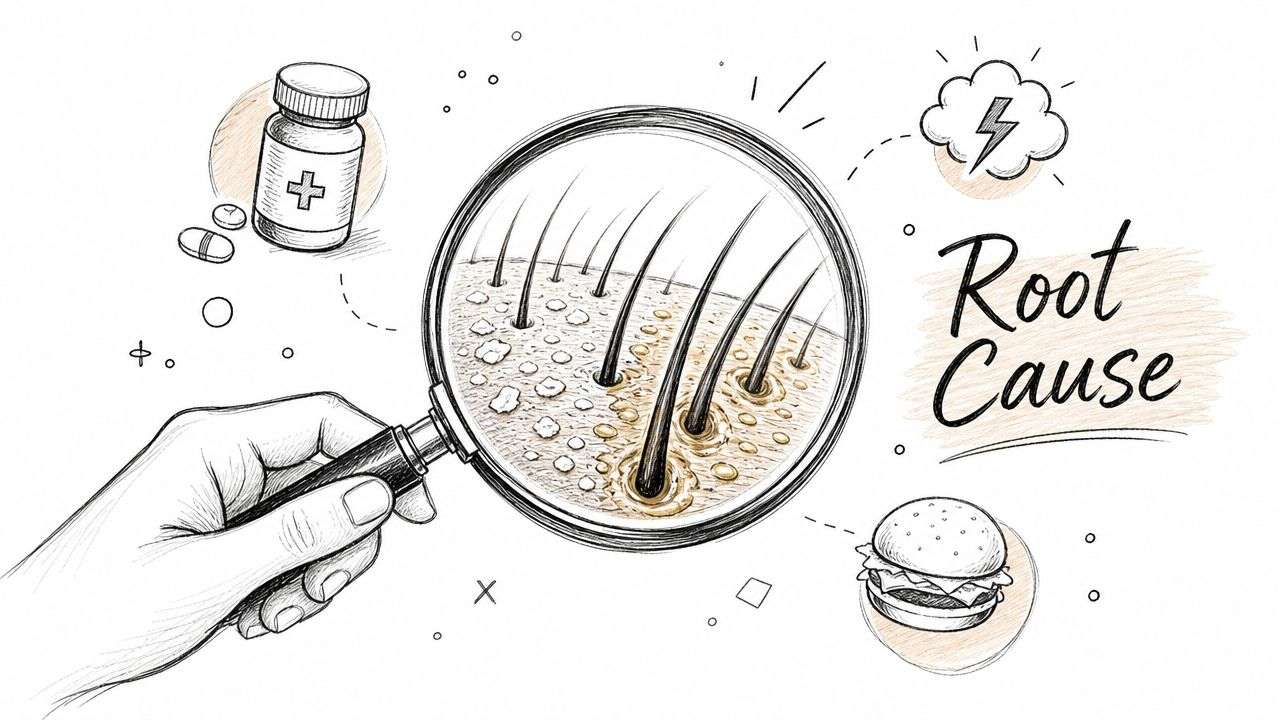
When flakes are really an oily scalp problem
One of the most important distinctions is the gap between dry scalp and seborrheic dermatitis with an oily scalp. That gap gets missed often. A critical diagnostic issue is that Malassezia can feed on excess sebum, cause flaking that mimics dryness, and lead people to use moisturizing products that can make the problem worse.
That's why heavy oils, thick leave-ins on the scalp, and repeated home remedies aimed only at “dryness” can backfire.
Look more closely at the pattern:
| Pattern | More likely meaning |
|---|---|
| Fine flakes with tightness after washing | Barrier irritation or overwashing |
| Flakes plus greasy roots and itch | Oil-driven scalp imbalance |
| Yellowish or sticky scale | More suggestive of seborrheic involvement |
| Flaking with scalp tenderness or redness | Inflammation, not simple dryness |
Other common triggers that keep the cycle going
Sometimes the root cause isn't one thing. It's several smaller habits that stack on top of each other.
- Overwashing: Frequent washing can leave the scalp feeling “clean” for an hour and stripped by evening. The skin becomes reactive even while the roots rebound fast.
- Harsh product selection: Strong detergents, abrasive exfoliation, and frequent clarifying can create a rough scalp surface that sheds more visibly.
- Scalp buildup: Styling products, dry shampoo residue, and heavy conditioners at the roots can trap oil and dead skin in place.
- Hormonal drive: Androgen activity can keep oil glands active even when you're trying to calm the scalp from the outside.
- Stress load: Stress doesn't create the whole condition by itself, but it often makes oil regulation and inflammation harder to control.
A quick self-check helps:
- Do your flakes get worse when you “moisturize” the scalp?
- Do your roots look greasy shortly after washing?
- Does itching improve briefly after shampooing, then return fast?
- Do stronger shampoos make your scalp feel raw rather than relieved?
If you answered yes to several of those, the “dry” part of your dry scalp but oily hair pattern may be secondary to irritation, yeast overgrowth, or barrier damage instead of simple dehydration.
If the scalp gets oilier but the flakes don't improve, you're probably treating the symptom you can see, not the cause driving it.
Your At-Home Regimen for a Balanced Scalp
Many individuals don't need a dozen products. They need a routine that stops bouncing between stripping and smothering.
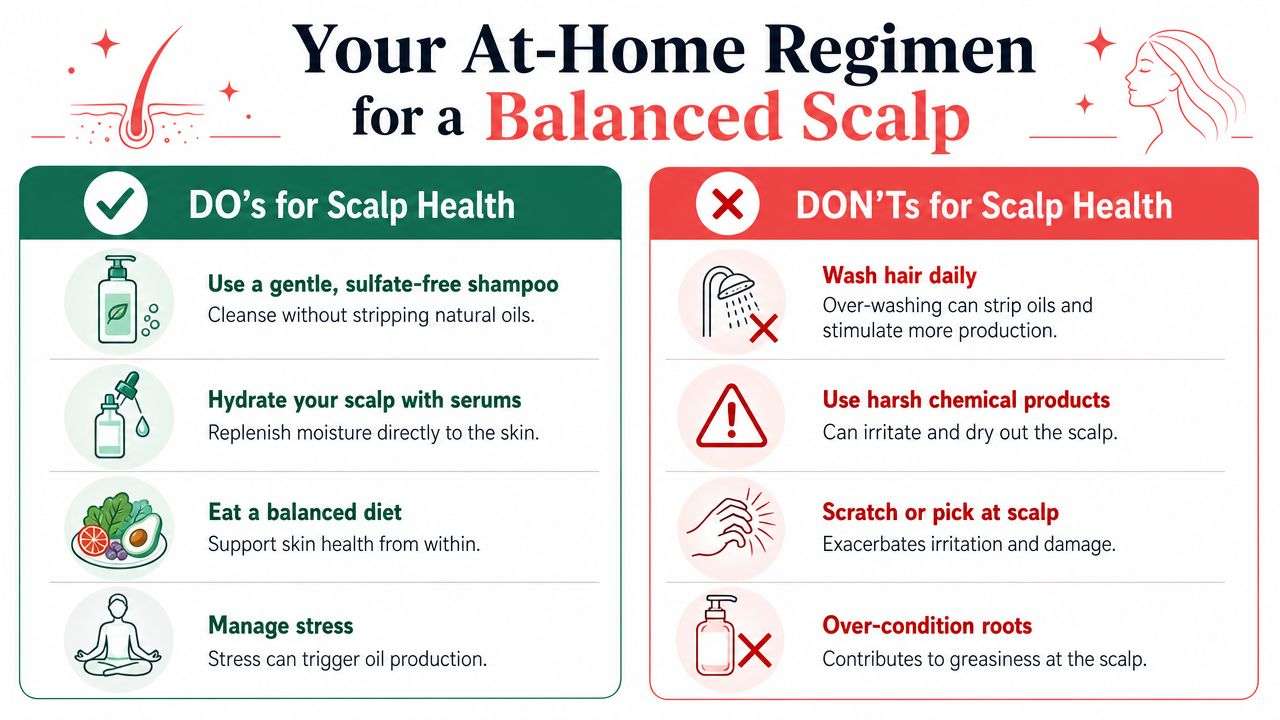
A wash routine that usually works better
For oily-scalp hair, expert guidance recommends washing 2 to 3 times weekly with firm, circular motions and mild, sulfate-free shampoos. That schedule is often a strong starting point when your scalp is flaky but your roots get greasy quickly.
Some people do better with an every-2-to-3-day rhythm rather than fixed weekday washing. The main point is consistency. Wide swings between daily washing and “scalp recovery” stretches usually make the scalp less predictable.
Use a targeted wash method:
- Wet the scalp thoroughly with lukewarm water.
- Apply shampoo to the scalp roots, not the full hair length first.
- Massage with your fingertips in firm circular motions.
- Rinse completely.
- Apply conditioner only from mid-lengths to ends.
If you're looking for a gentle product option, an organic aloe shampoo for oily hair can fit this kind of root-focused routine when the goal is cleansing without making the scalp feel stripped.
For readers interested in a more regenerative angle on scalp support, this guide on why GHK-Cu is the secret sauce for your scalp offers useful context on how peptides are being discussed in scalp care.
What to use and what to stop using
Here, product choices usually help or hurt the most.
| Do more of this | Stop doing this |
|---|---|
| Gentle, sulfate-free cleansing | Scrubbing aggressively with nails |
| Lightweight conditioner on ends only | Putting rich masks and conditioners on the scalp |
| Root-focused shampoo application | Coating the scalp in heavy oils |
| Simple routines with fewer irritants | Constantly rotating products every wash |
Ingredients and categories to think about:
- Look for scalp-balancing actives: If flakes are oily, itchy, or persistent, actives such as zinc pyrithione, ketoconazole, or salicylic-acid-based shampoos may make more sense than richer moisturizing products.
- Favor lightweight hydration: Serums or scalp-supporting formulas tend to work better than thick butters or dense oils on the roots.
- Be careful with heavy styling products: Waxes, dense creams, and scalp-applied shine products often turn a manageable situation into a buildup problem.
- Avoid fragrance overload when irritated: A reactive scalp often tolerates simpler formulas better.
A few practical don'ts matter just as much:
- Don't chase squeaky-clean hair. That feeling often means you've taken too much from the barrier.
- Don't apply conditioner high at the roots. It makes the hair look greasy faster and can complicate scalp assessment.
- Don't scratch off flakes. That creates more irritation and can trigger a fresh wave of shedding.
A good routine should leave your scalp calmer over time, not just cleaner for half a day.
When to Seek Medical and Professional Treatment
At-home care has limits. If your scalp keeps cycling through itch, flakes, grease, and irritation despite a sensible routine, it's time to stop experimenting and get a proper evaluation.
Signs home care isn't enough
Professional help is worth seeking when symptoms become persistent or more inflammatory than cosmetic.
Watch for patterns like these:
- Ongoing itch that doesn't settle
- Visible redness or soreness
- Yellow, greasy, or adherent scale
- Breakouts around the scalp margin
- Noticeable hair thinning or extra shedding
- A scalp that burns after many products
These signs often mean you're no longer dealing with a simple care mismatch. You may be dealing with seborrheic dermatitis, a stronger inflammatory response, or another scalp disorder that needs diagnosis rather than guesswork.
What a clinician may add
For oily dandruff patterns, Malassezia overgrowth is a primary cause, and management may involve shampooing as little as 1 to 2 times per week or less so antifungal treatments can work without further stripping the scalp. That's one reason self-treatment can get confusing. The right wash frequency depends on what's driving the flakes.
A dermatologist or trained clinician may recommend:
- Prescription-strength antifungal shampoos
- Short-term anti-inflammatory lotions or scalp solutions
- A rotation plan for washes and treatment days
- Evaluation for psoriasis, eczema, or contact dermatitis
- Hair-loss assessment if thinning is part of the picture
When shedding has become part of the problem, readers may also want a broader view of peptide therapy for hair growth, especially if scalp inflammation and hair quality seem to be moving in the same direction.
Home care should improve the trend. If it only creates temporary relief and repeated rebound, you need a diagnosis, not a stronger shampoo.
The Hormone Connection and Advanced Hair Restoration
You wash because your roots feel greasy by noon, then notice tightness, flaking, and more hair in the brush. That pattern often points to a scalp receiving mixed signals, not just the wrong shampoo.
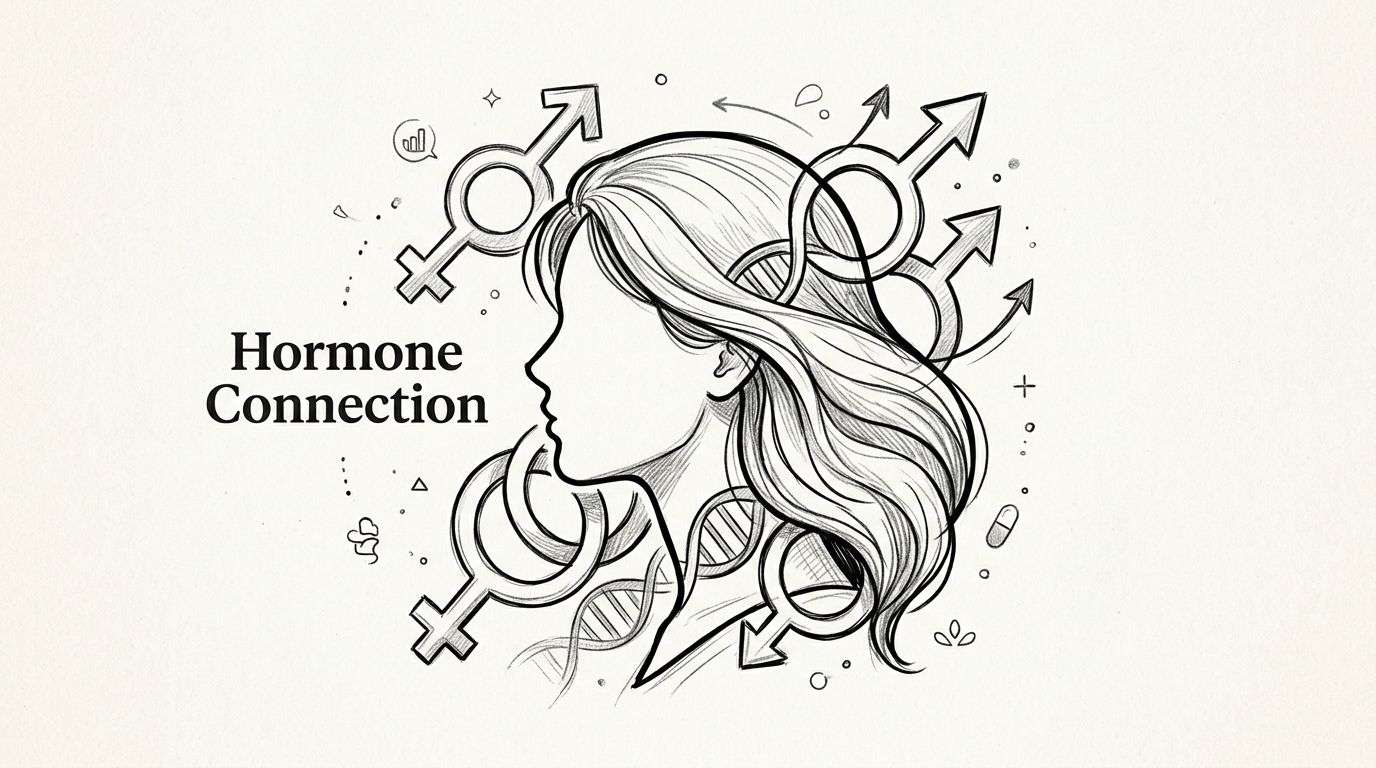
Why hormones can sit underneath scalp symptoms
Sebaceous glands respond to hormones all the time. Higher androgen activity, including DHT sensitivity, can push the scalp to produce more oil, while stress-related cortisol can increase inflammation and make the barrier harder to calm. The result is confusing but common: a scalp that feels dry on the surface and overactive at the root.
The microbiome matters here too. When oil output rises and the barrier becomes irritated, the scalp environment shifts. Yeast and bacteria that normally stay in balance can start to overgrow or trigger more inflammation. That is one reason flakes, itch, grease, and shedding often travel together.
In practice, I treat this as a pattern to investigate, not a cosmetic inconvenience.
When scalp imbalance overlaps with thinning
If scalp irritation is now showing up with widening parts, more breakage, or gradual loss of density, the goal changes. Relief still matters, but root cause matters more. A proper workup may include hormone review, scalp examination, lab testing when indicated, and a look at whether inflammation is shortening the growth phase of the hair cycle.
Treatment options depend on what is driving the pattern. Some people need better control of inflammation and oil first. Others also need support for follicle health, especially if DHT sensitivity, chronic stress, postpartum shifts, perimenopause, thyroid changes, or insulin resistance are part of the picture.
Some people also explore supportive technologies such as Solawave red light hair therapy as part of a broader hair-health routine. These approaches tend to work better when the scalp barrier is calmer and the inflammatory trigger is being addressed at the same time.
For readers comparing topical options, this guide to boosting hair density with targeted scalp serums can help clarify which products support density and which instead coat the hair.
A dry scalp with oily hair can be an early surface clue. Sometimes the underlying issue is hormonal signaling, microbiome dysbiosis, or a chronic inflammatory loop that needs more than trial-and-error home care.
Frequently Asked Questions About Scalp Health
How do I manage this if I work out often
Sweat doesn't always mean you need a full shampoo every day. For this dual pattern, a targeted wash protocol of washing every 2 to 3 days with a gentle, pH-balanced shampoo at the roots and a lightweight conditioner on the ends is considered the most effective strategy.
On non-wash days after workouts, rinse the scalp with lukewarm water if needed, let it dry fully, and avoid piling on styling products at the roots.
Can food and stress affect my scalp
Yes, they can influence the environment your scalp is working with. Stress can make oil regulation harder to control, and some people notice flare-ups when sleep, blood sugar habits, or overall diet quality slip. The point isn't to chase a perfect diet. It's to notice whether your scalp worsens during periods of high stress and high inflammation.
Will it ever go away for good
That depends on the cause. If the problem is mostly product misuse and overwashing, it may settle well with a consistent routine. If hormones, seborrheic dermatitis, or chronic inflammation are involved, it usually needs management rather than a one-time fix.
Should I moisturize my scalp if it feels dry
Only if you're confident the flakes are from simple dryness. If your roots are oily and the flakes are itchy, sticky, or recurring, heavy scalp moisturizers may make things worse. In that situation, barrier-friendly care and scalp-specific treatment usually work better than richer oils.
Is dry shampoo a good idea
Sometimes, but use it carefully. It can help the hair look fresher between washes, but repeated use on an already irritated scalp can add buildup and make flakes harder to interpret.
If your scalp symptoms are showing up alongside hair thinning, hormonal changes, or broader wellness concerns, Sexual Wellness Centers of America offers adult-focused care that includes hormone optimization, peptide therapy, and regenerative hair restoration support. For people who need more than trial-and-error product changes, that kind of medical evaluation can help connect scalp symptoms to the bigger picture.