
You're likely here because arousal has started to feel inconsistent, confusing, or frustrating. Maybe your desire is there, but your body isn't responding the way it used to. Maybe intimacy feels more like work than connection, or you've started avoiding sex because dryness, tension, or lack of sensation keeps getting in the way. That experience is common, and it deserves a real medical response, not dismissal.
Female arousal disorder treatment works best when it's treated as a whole-person issue. The modern approach looks at hormones, blood flow, nerve function, pain, stress, relationship dynamics, medications, and pelvic floor health together, because arousal doesn't come from one system alone. The most useful care plans are built around the actual subtype of dysfunction, not a guess based on symptoms that can overlap.
Table of Contents
- What Is Female Arousal Disorder
- Common Causes and How It Is Diagnosed
- Foundational Treatments for Arousal
- Medical and Hormonal Therapy Options
- Advanced Regenerative Treatment Options
- Building Your Personalized Treatment Plan
- Frequently Asked Questions About Treatment
What Is Female Arousal Disorder
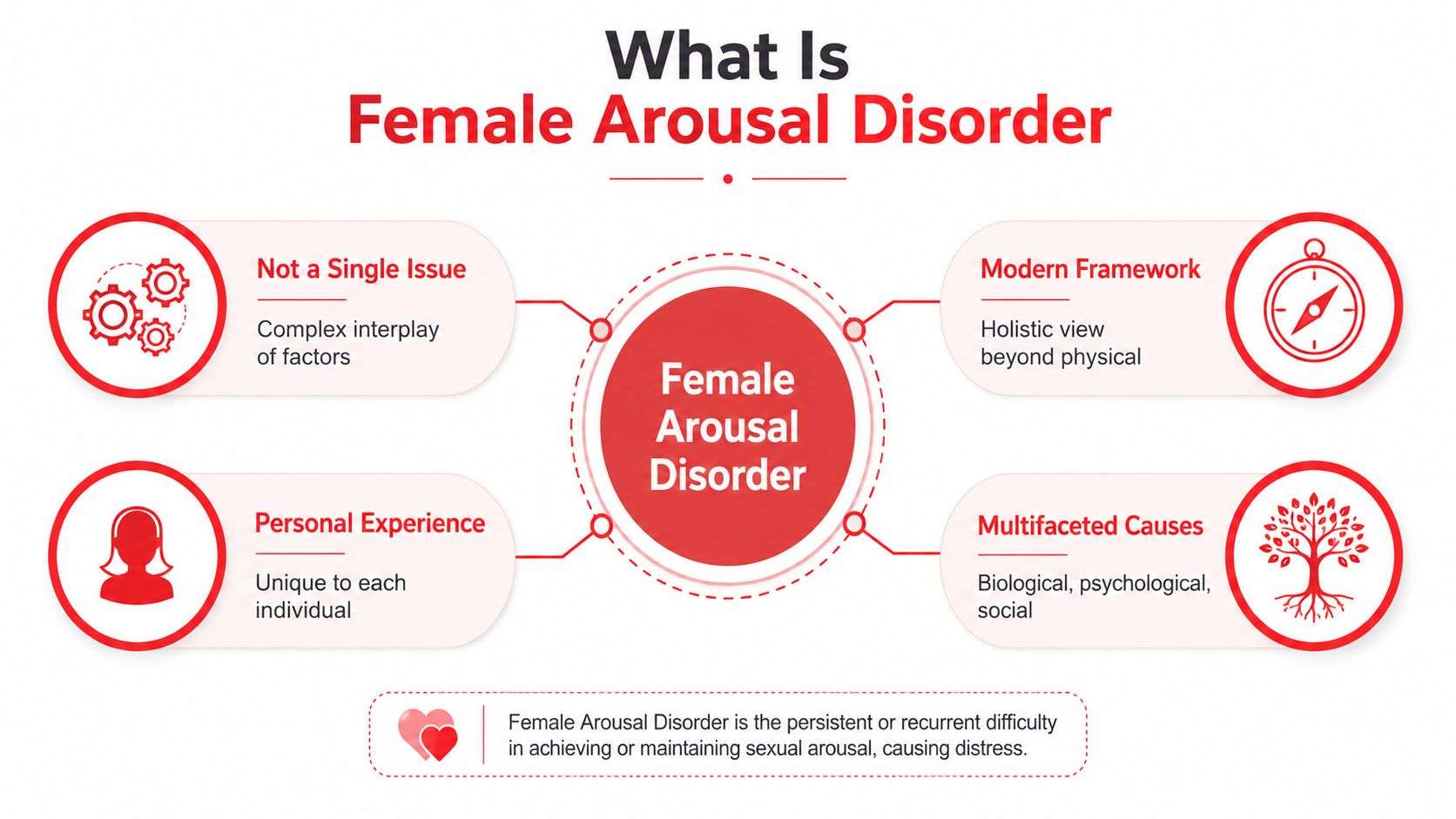
Female arousal disorder is a clinical problem with more than one pathway. A biopsychosocial model fits it better because physical changes, psychological strain, relationship context, and social stressors can each shape arousal. Two women can describe the same symptom and still need different treatment plans.
The condition often shows up as a mismatch between subjective arousal and genital arousal. Subjective arousal is the internal sense of being turned on, while genital arousal is the body's physical response. Those two responses do not always track together, and that gap can feel frustrating or confusing even when desire is still present. A recent PubMed review notes that this mismatch is common enough that a single-symptom approach can miss the underlying problem.
Why the old model falls short
Older explanations often treated arousal concerns as mainly psychological or mainly hormonal. That narrow view leaves out pain, dryness, medication effects, partner dynamics, menopause-related tissue change, and chronic illness. In practice, that kind of oversimplification can delay the right evaluation.
Practical rule: If arousal is discussed only as “mental” or only as “hormonal,” the assessment is probably incomplete.
A better approach is to ask which part of the arousal process is breaking down. The problem may involve physical readiness, emotional engagement, body confidence, pain, lubrication, or several of these at once. The treatment plan changes once that pattern is clear.
The FDA's history with flibanserin shows why the field has had to broaden its thinking. In August 2015, it approved flibanserin as the first drug for treating female sexual interest/arousal disorder, and FDA patient materials later emphasized that there are still no drugs approved specifically for FSIAD/FSAD interest or arousal symptoms. Those same materials note that off-label options can include sildenafil, testosterone, estrogen therapy, and antidepressants, which reflects how limited the dedicated drug pathway still is. FDA-related review
For many people, the condition makes more sense within the broader sexual health category instead of a single isolated label. If you want a fuller overview of overlapping female sexual concerns, this female sexual dysfunction resource can help frame the larger picture.
Common Causes and How It Is Diagnosed
Arousal symptoms usually come from more than one source, and that matters because treatment should follow the pattern, not a shortcut label. Physical contributors can include hormone shifts, tissue dryness, changes in blood flow, or nerve-related changes. Psychological contributors can include stress, anxiety, depression, trauma history, and body-image strain. Medical contributors can include medication side effects, chronic illness, and pain disorders.
Midlife and menopause deserve close attention because symptoms often change over time instead of staying fixed. Many women notice that desire, lubrication, comfort, and responsiveness do not all decline in the same way. That is why a modern evaluation should look at the full sexual response cycle, plus the body systems that support it.
Arousal problems also fit within a biopsychosocial model, where physical, emotional, and relational factors interact. In practice, that means a patient may need hormone assessment, medication review, and a careful look at stress, relationship strain, or prior pain experiences at the same time. A single-cause explanation often misses the underlying driver.
What a careful diagnostic visit should include
Diagnosis should begin with a detailed sexual, medical, and medication history. A specialist should ask when the problem began, whether it is linked to menopause, pain, dryness, a new medication, or a specific life event, and whether arousal is absent all the time or only in certain situations. That pattern often reveals more than a quick checklist does.
A focused exam and targeted labs may follow, especially when hormone imbalance or another medical condition is suspected. In practice, that can help separate primary arousal dysfunction from symptoms driven by GSM, medication effects, or systemic illness. A careful visit should also screen for vulvar or pelvic pain, because pain can suppress arousal even when interest is present.
A good diagnosis does not chase one symptom. It identifies the driver or drivers and then matches treatment to them.
Distress matters too. Some women have physical symptoms without much distress, while others feel significant frustration or loss of confidence even when the outward symptoms look mild. That is one reason many clinicians use a structured, multimodal evaluation instead of assuming the problem is only stress or only hormones. The broader sexual health picture is often clearer than a single label.
If fatigue is part of the bigger picture, especially in midlife, it can worsen interest and responsiveness. Low energy also makes it harder to sustain the attention and comfort that arousal requires. A practical companion resource on menopause fatigue treatment tips can be useful when fatigue is feeding into intimacy problems.
Foundational Treatments for Arousal
The base layer of treatment is often non-invasive, and that's not a consolation prize. For many patients, counseling, pelvic floor therapy, and lifestyle changes do the heavy lifting because they address the parts of arousal that medications can't fully fix. They also pair well with medical or regenerative care when those are needed.
Counseling and pelvic floor care
Sex therapy and couples counseling can help when arousal is being dampened by performance pressure, fear of pain, conflict, or difficulty communicating needs. The goal isn't to talk a person into wanting sex. It's to reduce the barriers that keep the body from following the mind.
Pelvic floor physical therapy matters when muscles are too tight, too weak, or poorly coordinated. A tense pelvic floor can make penetration uncomfortable and can interfere with normal sexual response. A skilled therapist can also teach relaxation, breathing, and muscle control in a way that supports comfort and sensation.
Clinical insight: When pain and arousal problems show up together, treating the pain generator first often makes every other intervention work better.
Lifestyle changes are more useful than they're often given credit for. Stress reduction, movement, sleep repair, and nutrition support blood flow, mood stability, and energy, which all affect sexual response. If vaginal dryness is part of the symptom cluster, practical measures can help right away, and this guide to improve vaginal lubrication may be a helpful starting point for comfort-focused care.
Arousal also improves when partners stop treating intimacy like a performance metric. Slower arousal, more direct communication, and less pressure around “finishing” can make a real difference, especially when symptoms have been building for months or years. That's one reason treatment often works best when it includes the relationship, not just the body.
Medical and Hormonal Therapy Options
A woman can have arousal symptoms for very different reasons, so treatment has to match the mechanism, not just the label on the chart. Some patients need hormone support, others need a carefully chosen prescription, and some need local treatment for dryness or tissue change. The right plan depends on whether the main problem is moisture, comfort, desire, arousal, pain, or a medication effect.
Comparing the main medical choices
| Treatment Type | Primary Target | Best For |
|---|---|---|
| Hormone optimization | Estrogen, testosterone, and other hormone-related contributors | Menopause-related symptoms, low energy, and tissue changes |
| FDA-approved medication for HSDD | Brain pathways linked to desire and interest | Carefully selected premenopausal women with generalized acquired HSDD |
| Off-label medications | Specific symptom patterns or medication-related issues | Selected cases where a clinician is addressing a defined cause |
| Vaginal estrogen or local moisturizers | Dryness and discomfort | Local vaginal symptoms, especially around menopause |
Hormones matter because sexual response depends on tissue health, mood, energy, and circulation at the same time. Estrogen helps vaginal tissue stay more comfortable, while testosterone is often discussed in relation to desire and vitality. If testosterone is being considered, clinicians usually want to verify levels and interpret them in context, which is why a resource such as testosterone test options UK can help patients understand testing approaches before treatment decisions are made. For women considering broader hormone support, this guide to HRT for women gives useful background on how replacement therapy is commonly approached.
What's supported and what's limited
Flibanserin has an important place in the history of care because it was the first medication approved by the FDA for female sexual interest and arousal disorder in 2015. The later FDA caution still matters, because approved options for arousal symptoms remain limited and off-label prescribing is not the same as a broad, established standard of care. FDA-related review
Current reviews note that flibanserin and bremelanotide are the only FDA-approved drugs for premenopausal generalized acquired HSDD in the U.S. A 2025 systematic review found that CBT improves desire and arousal-related outcomes, flibanserin improves desire, and bremelanotide helps both desire and arousal, but the evidence still centers on a limited set of interventions.
Topical estrogen, lubricants, and moisturizers are often overlooked because they seem simple, yet they can be the difference between ongoing discomfort and usable arousal. If a woman is bracing against dryness, no amount of pressure to “relax” will solve the problem on its own. In clinic, local tissue support often makes the difference between partial improvement and meaningful comfort.
Sexual Wellness Centers of America also offers SHEshot® as part of its clinic-based approach for women, along with hormone optimization, when a patient needs a structured medical pathway. That option belongs in the broader conversation, but it should be considered in the context of the actual diagnosis, not as a one-size-fits-all answer.
Advanced Regenerative Treatment Options
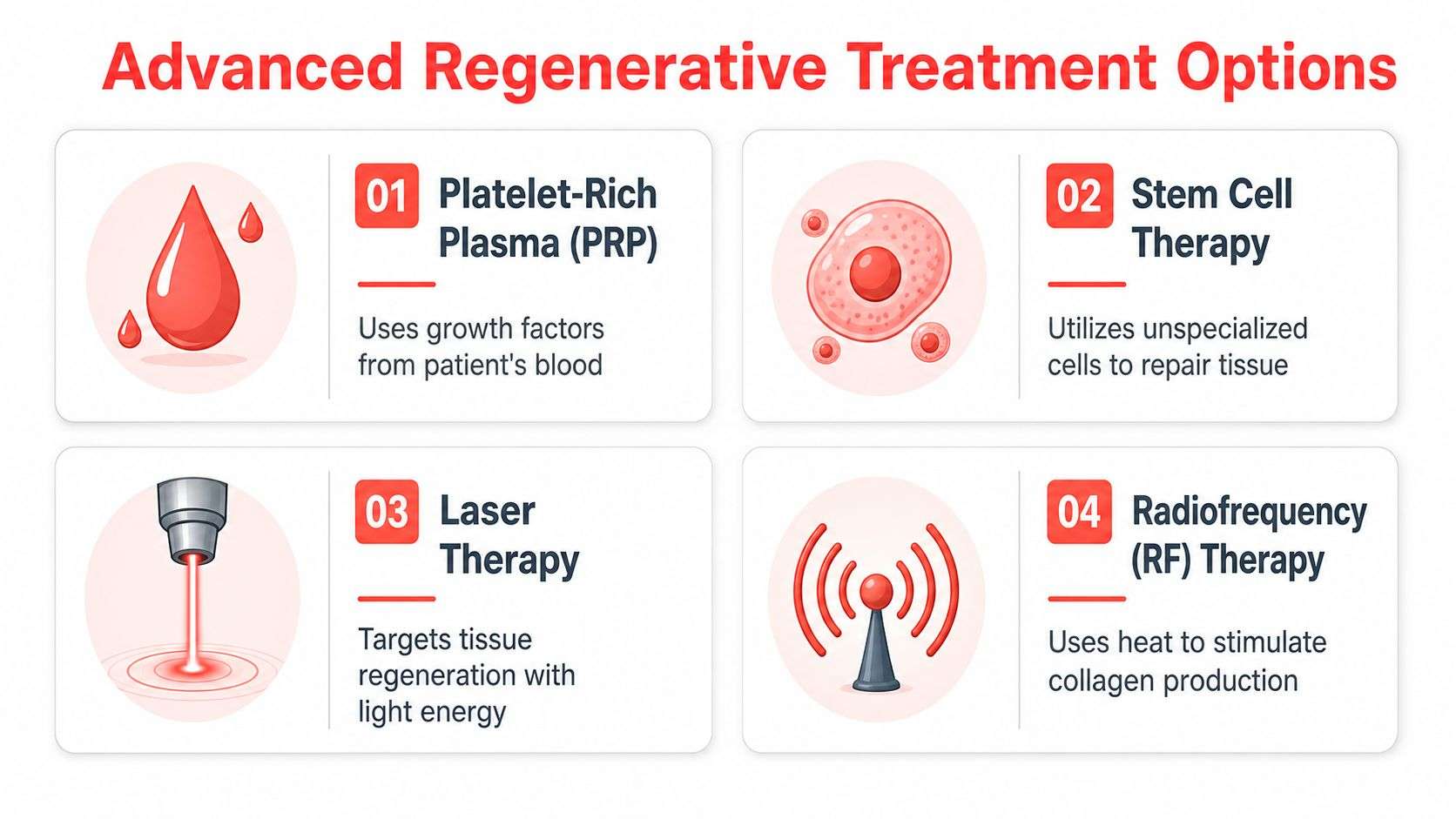
For people who don't get enough relief from foundational or conventional medical therapy, regenerative care offers another path. These approaches are designed to support tissue quality, circulation, and sensitivity rather than masking symptoms. They're typically offered in specialized settings and are chosen for specific patient needs, not as universal first-line therapy.
How regenerative care is being used
Platelet-rich plasma, or PRP, uses growth factors from a patient's own blood to support tissue repair. In women's sexual health, that concept is used to target local tissue quality and potentially improve sensation and responsiveness. Regenerative clinic protocols may also pair PRP with other modalities when the goal is both comfort and sensitivity.
Energy-based options take a different route. Acoustic therapy is used to stimulate blood flow and tissue response, while laser therapy aims to support natural repair processes through light-based energy. Radiofrequency uses heat to stimulate collagen production, which can be relevant when tissue laxity or reduced elasticity is part of the problem.
Important distinction: These are not interchangeable treatments. A patient with dryness, a patient with reduced sensation, and a patient with postmenopausal tissue change may each need a different combination.
Because the evidence base is still developing, these options should be framed carefully. They're promising, but they're not a substitute for diagnosis, and they don't replace hormone management or therapy when those are the underlying drivers. The most useful clinics are the ones that match the procedure to the problem rather than promising that one protocol fixes everything.
Specialized practices may build these therapies into broader sexual wellness plans. At Sexual Wellness Centers of America, those options include REGENwave™, REGENlase™, and SHEshot®, which are presented as part of a larger regenerative and hormone-focused clinic model. For some patients, that combination makes sense after standard care has been reviewed and the symptom source is clear.
Building Your Personalized Treatment Plan
The strongest treatment plans usually combine more than one strategy. A woman with menopause-related dryness may need local hormone support and lubricants. Another woman with stress-linked arousal changes may do better with counseling and pelvic floor work. A third may need medical therapy plus regenerative care because tissue change and reduced sensation are both in play.
Matching the plan to the diagnosis
A personalized plan starts by naming the dominant driver. If the main issue is pain, the first goal is comfort. If the main issue is hormonal change, the first goal is restoring tissue and systemic support. If the main issue is relationship strain or anxiety, therapy may be the central intervention before any procedure is considered.
Combination care is often the most realistic path. One patient might use hormone optimization alongside pelvic floor therapy. Another might pair counseling with a regenerative protocol when tissue responsiveness is also part of the picture. The right mix depends on what the history, exam, and labs show.
What follow-up usually looks like
Follow-up matters because sexual function changes over time. Symptoms can improve unevenly, and a plan that worked at first may need refinement if pain eases but sensation remains low, or if energy improves but dryness persists. That's normal, not failure.
Good sexual medicine is iterative. The plan should adjust as your body responds.
Expect any meaningful care plan to be specific about comfort, timing, and maintenance. If a treatment only works when the rest of the diagnosis is ignored, it usually isn't the right fit. The goal is a stable, usable improvement in intimacy, not a short-lived boost that disappears the moment the underlying issue returns.

Frequently Asked Questions About Treatment
A common point of confusion is the difference between low desire and low arousal. Low desire means interest in sex is reduced. Low arousal means the interest may still be present, but the body is not responding with enough lubrication, sensation, swelling, or ease. The two can overlap, yet they do not always respond to the same treatment.
Women often ask which treatments are most useful after menopause. The answer depends on the source of the symptom. If dryness and tissue discomfort are dominant, local vaginal treatments and hormone support are often central. If the main problem is broader hormone-related change, systemic hormone optimization may matter more. Vaginal dryness is common in this phase of life, which helps explain why local symptoms often become a major part of the picture.
Another frequent question is whether arousal symptoms tied to chronic illness or SSRI use can improve. They often can, but treatment should target the driver. If medication side effects are part of the problem, the prescribing clinician may need to review alternatives. If diabetes or another chronic illness is contributing, better disease control can improve the sexual response environment before any specific sexual therapy is added.
What to expect from timing and evidence
Results do not arrive on one universal timeline. Counseling and pelvic floor therapy may build gradually. Hormone-based and local tissue treatments can also require adjustment. Regenerative options are often used when standard approaches have not been enough, but evidence is still evolving and the selection has to be careful. A 2025 review found benefit in specific outcome areas with CBT, flibanserin, and bremelanotide, while also showing that the evidence remains concentrated in a limited number of interventions. 2025 systematic review
Cost and coverage vary by treatment type, clinic, and diagnosis. Because insurance policies differ so much, it is smartest to ask for the exact plan, the likely sequence of visits, and whether any part of care requires preauthorization before you commit.
If you are ready to stop guessing, Sexual Wellness Centers of America can help you sort out whether your symptoms are primarily hormonal, pelvic-floor related, medication-related, or a mix of factors. Visit Sexual Wellness Centers of America to explore a clinic-based evaluation and discuss treatment options that fit your diagnosis, not someone else's.