
If you're reading about hormone pellets for men, there's a good chance you're already tired of feeling off. Energy isn't what it used to be. Libido has dropped. Work feels harder to focus on. Sleep may be less restorative, workouts less productive, and your mood less steady than it was a few years ago.
Most men don't need more hype. They need a clear explanation of what this treatment is, how it works, what it can realistically improve, and where it may not be the best fit. That's how pellet therapy should be discussed. Not as a miracle, but as one testosterone replacement option with real strengths, real limitations, and a place in thoughtful care.
Table of Contents
- What Hormone Pellets Are and How They Restore Balance
- The Pellet Insertion Procedure A Step by Step Guide
- Your Timeline for Results What to Expect and When
- Hormone Pellets vs Other Testosterone Therapies
- Are You a Good Candidate for Pellet Therapy
- Understanding and Managing Potential Risks
- Frequently Asked Questions About Hormone Pellets
- How long do hormone pellets last
- How often will I need another insertion
- Are pellets better than injections
- Do pellets hurt
- Can I exercise after the procedure
- Will insurance cover pellet therapy
- What does pellet therapy cost
- Can hormone pellets affect fertility
- What if I don't feel better right away
What Hormone Pellets Are and How They Restore Balance
A common scenario is a man who feels better on testosterone treatment, but not on the schedule. He gets a lift after an injection, then notices energy, focus, or libido drift before the next dose. Hormone pellets are designed to reduce that swing by delivering testosterone continuously over time.
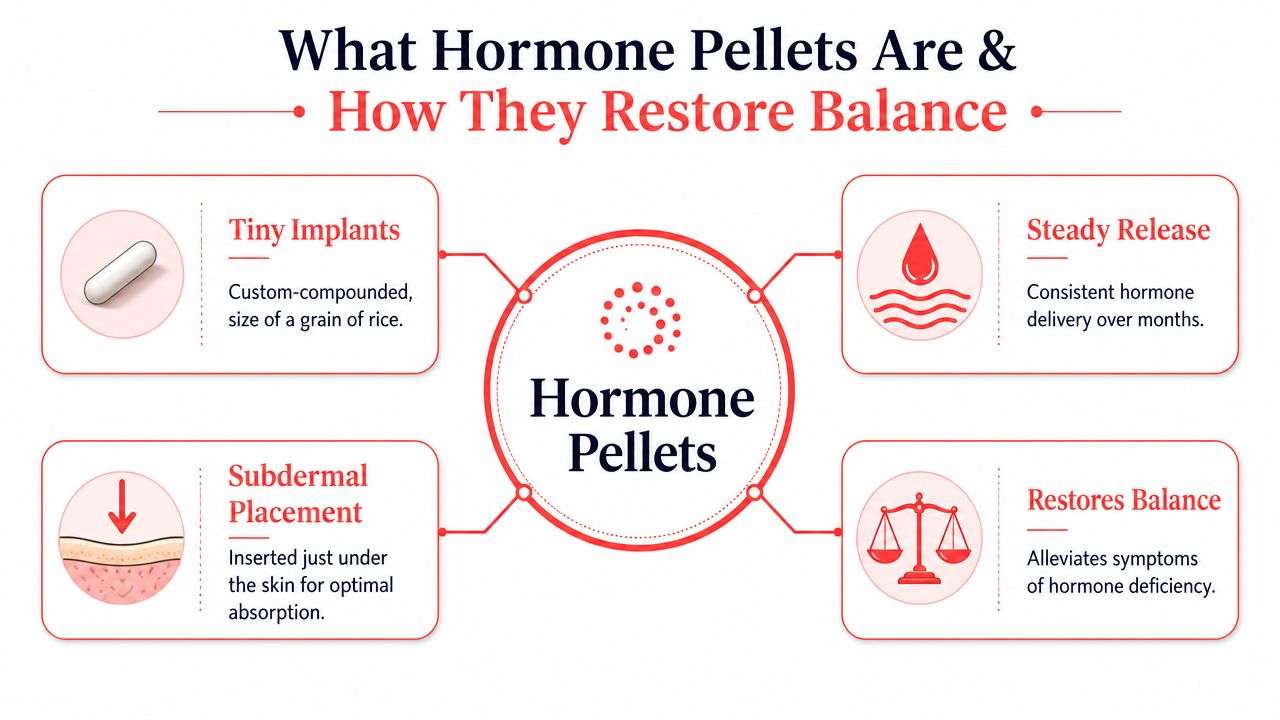
Hormone pellets for men are small implants placed beneath the skin that release testosterone slowly as the body absorbs them. They are usually inserted in the upper hip or gluteal area and provide long-acting testosterone delivery through the subcutaneous tissue. The American Urological Association includes subcutaneous pellets among accepted testosterone therapy options in its testosterone deficiency guideline.
A steady delivery pattern is the main reason some men prefer pellets. Instead of managing daily skin application or planning life around repeat injections, they receive a longer-acting dose intended to keep hormone levels more even between visits.
How the delivery system works
After insertion, the pellets sit in the fatty layer under the skin and dissolve gradually. That slower absorption can help avoid the sharper peaks and troughs some men notice with shorter-acting options. In practice, that may mean fewer complaints about a weekly crash, less variability in mood and drive, and a more predictable baseline from day to day.
Consistency is the main advantage. The trade-off is flexibility.
Why dosing matters
Pellet therapy works best when dosing is individualized rather than copied from a template. Men differ in body size, symptom burden, absorption, activity level, and how quickly they metabolize testosterone. Those differences affect how well a given pellet dose holds symptom relief over the full treatment interval.
That point matters in clinic. With injections, a dose can be adjusted at the next shot. With gels, the daily amount can be changed more easily. Pellets offer less day-to-day decision-making, which many men appreciate, but they also give us less room to fine-tune once they are placed. That trade-off shapes almost every treatment decision.
Hormones also affect body composition, insulin handling, and energy regulation in ways patients often notice before they can explain them. If you want a plain-English overview of that connection, Understanding Ageing's guide to metabolism is a worthwhile companion read.
For men comparing options, pellets make the most sense as one part of a broader hormone replacement therapy program for men.
The Pellet Insertion Procedure A Step by Step Guide
The procedure itself is much simpler than many men expect. Pellet insertion is an in-office treatment, not a surgery in the way patients often imagine that word. The goal is to place the pellets into the subcutaneous tissue with as little disruption as possible.
What happens during the visit
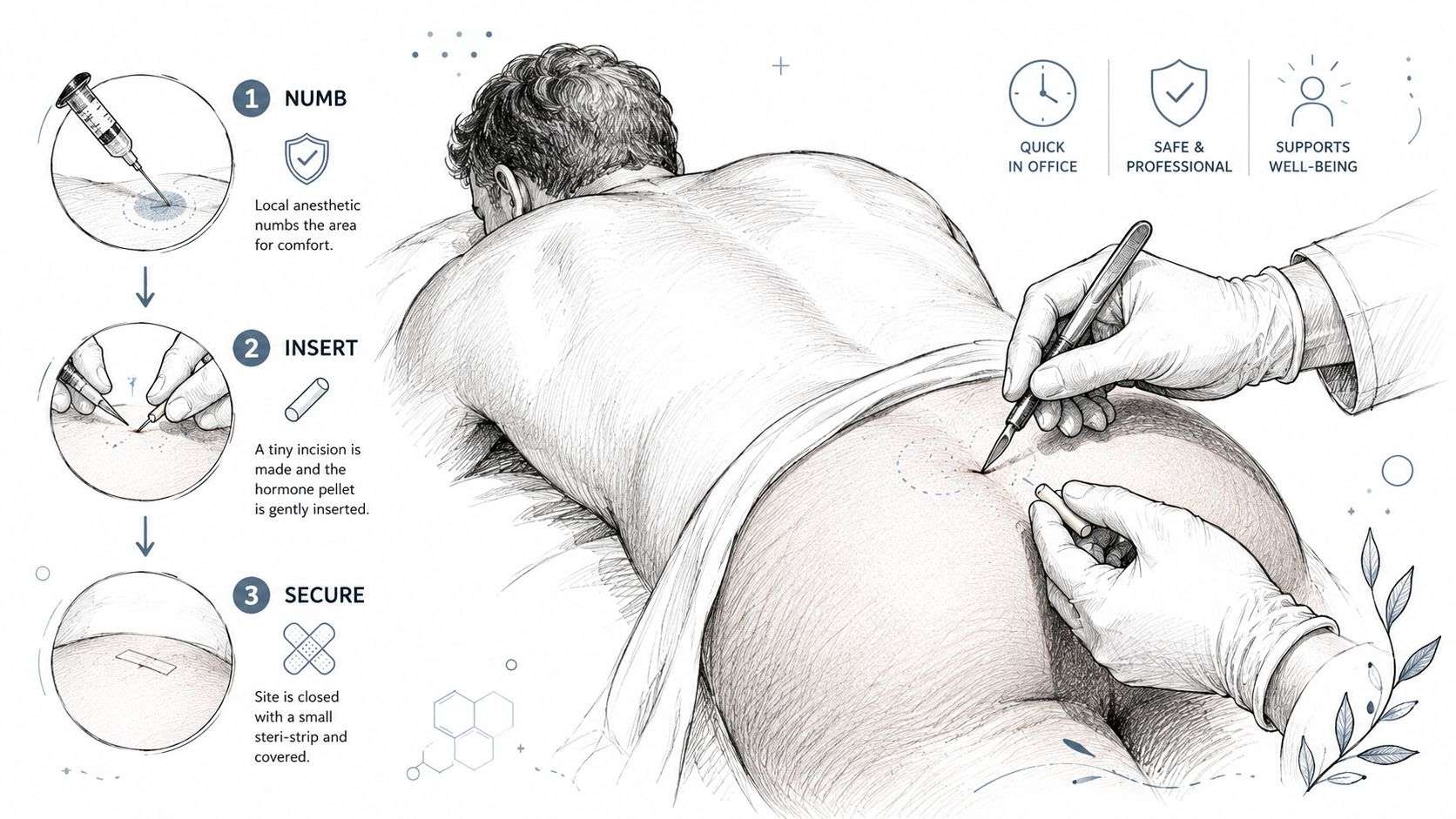
A typical visit starts with confirming the plan based on prior labs and clinical evaluation. The insertion site is usually in the upper hip or gluteal area, where there's enough soft tissue to place the pellets comfortably. The skin is cleaned carefully, and a local anesthetic is used to numb the area.
Once the area is numb, the clinician makes a very small incision and uses a dedicated insertion tool to place the pellets under the skin. The opening is small enough that it is commonly closed with a sterile strip rather than stitches. After that, a dressing is applied and you can leave the office.
What the patient usually feels
Most men describe pressure more than pain. The numbing medication typically handles the discomfort during the procedure itself. Afterward, the area may feel sore, tight, or bruised for a short time, especially when sitting directly on that side or doing movements that stress the gluteal region.
The procedure should feel controlled, brief, and predictable. If it feels rushed or poorly explained, that's a process problem, not a pellet problem.
Practical aftercare
Good aftercare helps reduce local irritation and lowers the chance of problems at the insertion site. The instructions vary by clinician, but the general purpose stays the same. Protect the area while the tiny incision seals and the pellets settle into place.
A few practical points matter most:
- Keep the site clean: Follow the clinic's dressing instructions and avoid unnecessary handling of the area.
- Limit stress on the insertion side: Heavy lower-body activity or repeated friction too soon can irritate the site.
- Watch for changes: Redness, drainage, increasing tenderness, or anything that seems out of proportion deserves a call to your provider.
If you want a better anatomical sense of why the upper hip and buttock region is commonly used for procedures like this, this guide to the gluteal injection site gives a useful orientation to the area.
Your Timeline for Results What to Expect and When
A common scenario plays out after pellet insertion. A man feels hopeful, then starts checking himself every day for a dramatic change. That usually creates unnecessary frustration, because pellet therapy tends to build gradually rather than all at once.
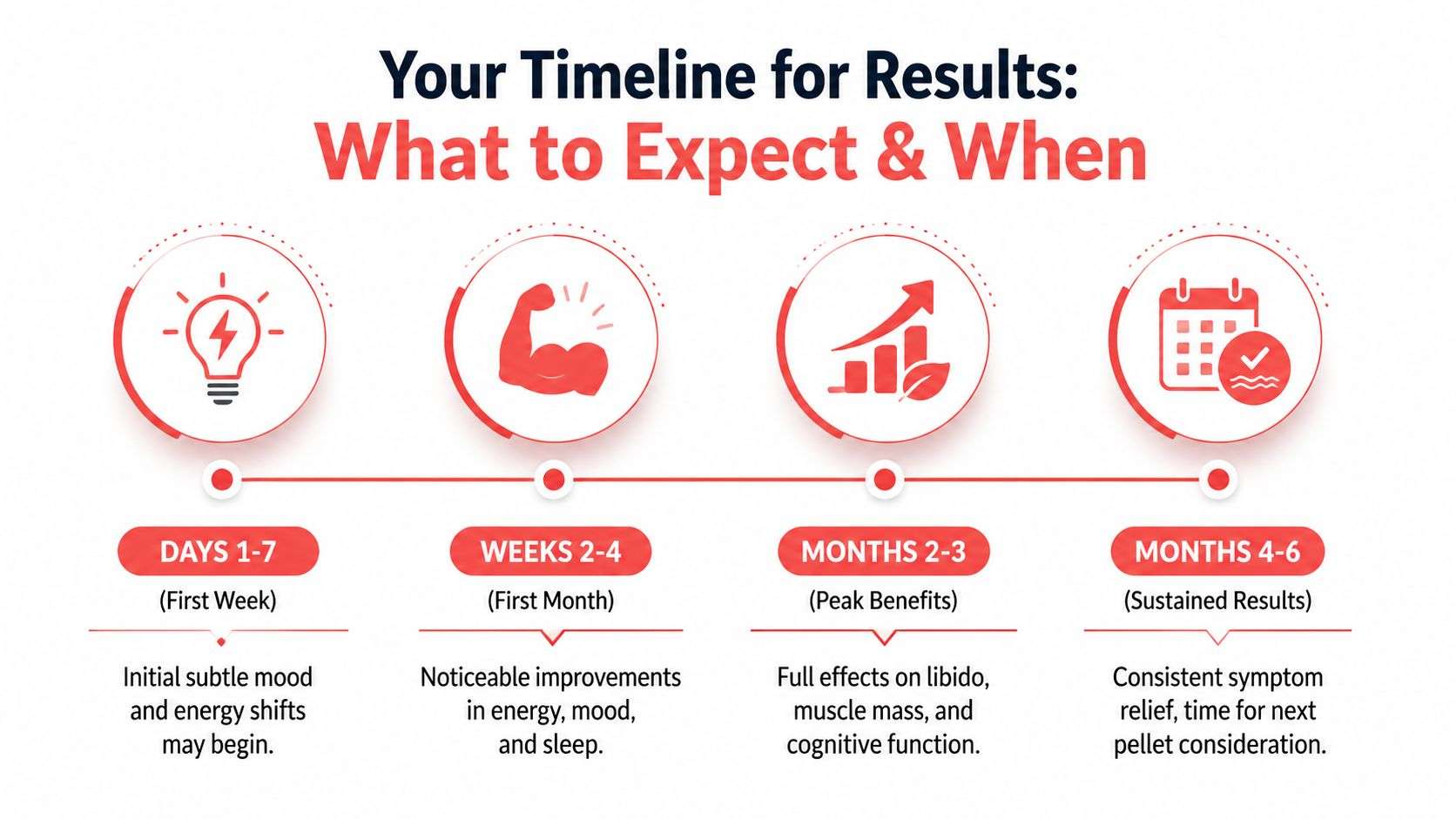
The men who do best with this treatment understand the timeline before they start. Pellets are designed for steady release, so the response usually comes in phases. Early symptom relief can show up first. Sexual function, mood consistency, and body composition changes often take longer.
Early weeks
In the first several weeks, the changes are often subtle. Men may notice less afternoon fatigue, better morning drive, improved focus, or a modest lift in libido. These are real improvements, but they are rarely dramatic on day three or day seven.
Published guidance from the American Urological Association on testosterone deficiency supports what we see in practice. Symptom response varies, and follow-up should be based on both labs and clinical response rather than a fixed promise about exactly when every benefit will appear. You can read more about how hormone therapy helps men with low testosterone if you want a broader overview of what treatment can and cannot improve.
One practical point matters here. If a man starts therapy with poor sleep, untreated sleep apnea, heavy alcohol use, high stress, or very low activity, pellets may still help, but the response is often less impressive than expected.
Mid-course improvements
As testosterone exposure stays more stable, many men report clearer gains in libido, erection quality, mood, and motivation. Some also notice that their energy feels more even across the day. That steadier pattern is one reason pellets appeal to men who dislike the ups and downs they felt on other forms of therapy.
This stage is also where honest follow-up matters. If symptoms are not improving, the answer is not always "wait longer." It may mean the original diagnosis needs review, the dose was not ideal, estradiol or hematocrit needs monitoring, or another medical issue is contributing to fatigue and sexual symptoms.
I tell patients to watch function, not just feelings. Are workouts more productive? Is sexual interest returning? Is concentration better at work? Those markers are often more useful than trying to judge progress from mood alone.
Good testosterone care tracks symptom change, lab response, and side effects together. Any one of those by itself can be misleading.
Later months and re-dosing
By the later part of the pellet cycle, the benefits are usually easier to describe in daily life. Sexual function may feel more reliable. Mood can be less flat. Energy often holds up better through the afternoon, and some men find recovery from exercise improves.
Pellets also come with a trade-off that deserves a clear explanation. The steady delivery is convenient, but the dose is not easy to adjust once the pellets are in place. If levels taper earlier than expected, or if the dose proves a little too high or too low, the next step is usually reassessment rather than a quick day-to-day correction. That is different from injections, where titration is simpler.
As the cycle nears its end, some men notice old symptoms returning in a gradual way. That does not automatically mean treatment failed. It usually means it is time to review symptoms, repeat labs, and decide whether re-dosing still makes sense for your goals and risk profile.
A short symptom log helps more than memory. Track changes in these areas:
- Energy: morning stamina, afternoon slump, workout recovery
- Sexual health: libido, erection quality, sexual interest, confidence
- Mood and cognition: irritability, focus, motivation, mental clarity
- Physical function: strength maintenance, body composition, exercise tolerance
That record gives your clinician something concrete to work with, which leads to better decisions than guessing from memory at a follow-up visit.
Hormone Pellets vs Other Testosterone Therapies
No testosterone therapy is best for every man. The right option depends on how much convenience you want, how precisely the dose needs to be adjusted, how comfortable you are with routine maintenance, and what other health factors need close monitoring.
The biggest mistake is treating pellets as automatically superior. They are excellent for some men, but not ideal for all.
The real trade-off
A recent analysis emphasized an important point that patients deserve to hear clearly: pellets avoid peaks and troughs, but they lack dose flexibility, while weekly injections allow for more precise titration based on lab work and may be safer for some men with metabolic syndrome or cardiovascular history, as discussed in this clinical discussion of pellets versus injections.
That trade-off shapes almost every treatment decision.
TRT Method Comparison
| Feature | Hormone Pellets | Injections | Gels/Creams |
|---|---|---|---|
| Delivery pattern | Steady release over months | Dose rises and falls between injections | Daily absorption that can vary |
| Convenience | Low-maintenance once inserted | Requires regular injection schedule | Requires daily application |
| Dose adjustment | Slow to adjust after insertion | Easy to titrate with follow-up labs | Can be adjusted, but requires consistent daily use |
| Lifestyle fit | Good for men who want fewer treatment tasks | Good for men who want control and flexibility | Good for men who prefer non-invasive treatment |
| Main limitation | Can't pause or fine-tune quickly mid-cycle | Ongoing self-management is required | Daily compliance matters |
When pellets tend to work best
Pellets often fit men who want simplicity. They don't want to think about testosterone every few days. They prefer a stable delivery system and are comfortable committing to a dose that will stay in place until it gradually wears off.
They can also be a good match for men who have struggled with adherence. If daily gels get forgotten or injections are repeatedly delayed, a long-acting option can improve consistency by removing those friction points.
When another method may be better
Injections may be the more practical choice if close dose titration matters. A man with changing symptoms, a sensitive hematologic response, a complicated cardiovascular profile, or a history that demands tight monitoring may benefit from a method that can be adjusted more quickly.
Gels and creams appeal to men who want to avoid procedures and avoid injections. Their main challenge is routine. If daily application is inconsistent, results are often inconsistent too.
If you're trying to understand where treatment choices fit into the broader picture of low testosterone care, this overview of how hormone therapy can help men with low testosterone gives additional context.
Are You a Good Candidate for Pellet Therapy
A good candidate isn't solely a man who feels tired. Symptoms matter, but they need to be evaluated in context. Low libido, reduced energy, lower exercise recovery, depressed mood, and poor concentration can overlap with stress, sleep disruption, weight gain, medication effects, thyroid issues, and other medical conditions.
Pellet therapy makes the most sense when symptoms and lab findings point in the same direction.
Signs that support a pellet evaluation
Men who often do well with pellet therapy usually share a few features:
- Persistent symptoms: Not a bad week or two, but an ongoing pattern that affects quality of life.
- Confirmed low testosterone: Treatment should follow blood work, not guesswork.
- Interest in convenience: Pellets are attractive to men who don't want frequent dosing tasks.
- Willingness to follow up: Long-acting therapy still requires monitoring and reassessment.
What a careful workup should include
A responsible evaluation looks beyond one testosterone number. It should include a review of symptoms, medication history, sleep, body composition, cardiovascular history, and prostate considerations. Follow-up planning matters just as much as the initial insertion.
A thoughtful clinic also asks about future fertility goals. That's not a side issue. It's central to choosing the right therapy.
Men who may want children later shouldn't treat fertility as an afterthought when starting testosterone care.
Fertility and long-term planning
Testosterone replacement can suppress the body's own sperm production, and with pellets you can't just stop the dose halfway through a cycle once it's been inserted. That's one reason men who are actively planning for fertility need a more individualized discussion before choosing this route.
Supportive lifestyle work also matters more than many men realize. Nutrition, sleep quality, metabolic health, and micronutrient status all affect the bigger picture. For men thinking specifically about reproductive health, this male prenatal vitamin guide offers practical background on nutrient support during fertility planning.
Understanding and Managing Potential Risks
Every testosterone therapy has risks. Pellets are no exception. The right way to discuss safety is neither alarmist nor dismissive. Patients should know what can happen, how often it happens when data exists, and how experienced clinicians reduce those risks.
The reassuring part is that the procedure itself has a strong safety profile when performed properly and followed appropriately.
What the data shows
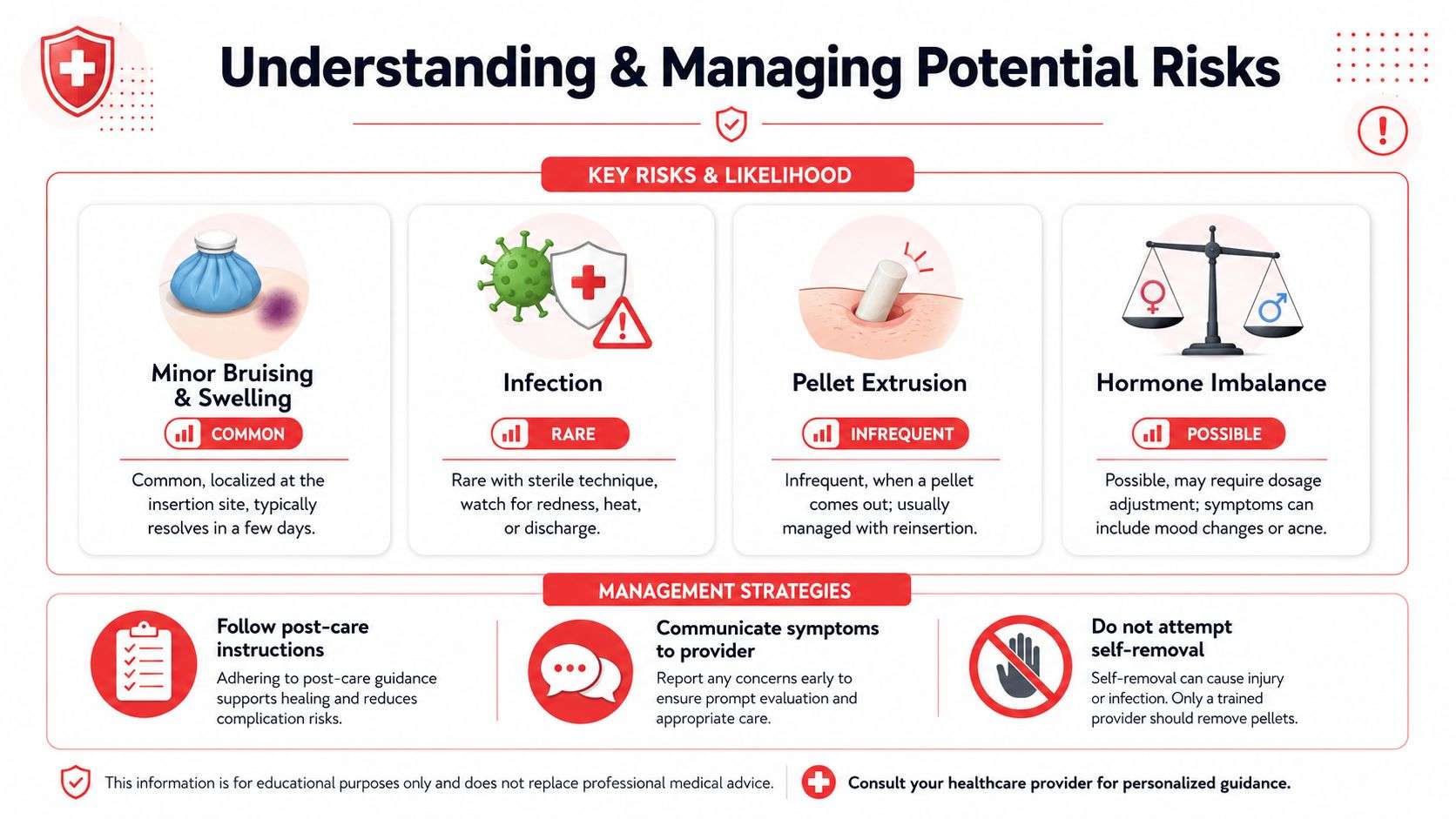
A 7-year retrospective analysis of 1,204,012 subcutaneous implant procedures across 376,254 patients found an overall complication rate of less than 1%. In that same body of evidence, infection rates ranged from 0.3% to 0.4% and pellet extrusion occurred in about 0.3% to 1.1% of cases. The review also noted that more than 95% of patients using testosterone pellets for 6 to 12 months reported satisfaction, and that men often returned for the next round at 4 to 5 months. A 2023 study published in The New England Journal of Medicine also confirmed that men on testosterone replacement therapy did not have an increased risk of cardiac events, according to this review of safety and outcomes in testosterone pellet therapy.
Those are encouraging numbers, but they don't remove the need for judgment. They support the idea that pellets can be safe in the right patient with proper follow-up.
The common concerns to discuss before treatment
Most risk discussions should include both procedure-related issues and hormonal issues.
Procedure-related concerns include:
- Local irritation: Bruising, soreness, or swelling near the insertion site
- Infection: Rare, but important to recognize early
- Extrusion: A pellet can occasionally work its way out through the incision area
Hormonal concerns are broader and depend on the individual response:
- Blood count changes: Some men develop elevations that require monitoring
- Estradiol or PSA shifts: These may need follow-up interpretation
- Overexposure risk: A pellet can't be easily reduced once inserted if the dose ends up too strong
Long-term safety requires honesty
One issue that deserves more attention is the downside of a non-adjustable delivery system. If a man is sensitive to higher sustained levels, pellet therapy may create a longer period of unwanted exposure than an adjustable regimen would. That concern becomes more relevant in men with complicated cardiometabolic histories, sleep apnea concerns, or fertility priorities.
Practical rule: The safer testosterone plan isn't always the most convenient one. The safer plan is the one your body tolerates and your labs support.
Risk management depends on the basics done well. Clean technique. Good dosing judgment. Clear aftercare. Repeat labs. Honest symptom review. A clinic that downplays follow-up is missing the part that keeps treatment safe.
Frequently Asked Questions About Hormone Pellets
How long do hormone pellets last
In men, pellets generally last for several months. The exact timing depends on the dose used, your body size, and how quickly you metabolize testosterone. In practice, follow-up is based on symptoms and lab review rather than the calendar alone.
How often will I need another insertion
Many men need repeat treatment when the initial effect begins to taper and symptoms return. The timing isn't identical for every patient. The better approach is reassessment, not automatic re-insertion on a fixed schedule without checking how you responded.
Are pellets better than injections
Not universally. Pellets offer convenience and steadier delivery. Injections offer more control. If you value low maintenance and stable release, pellets may fit well. If you need tighter dose adjustments, injections may be the better clinical choice.
Do pellets hurt
The insertion is typically well tolerated because the area is numbed first. Most of the discomfort is afterward, and it usually feels more like localized soreness or bruising than procedural pain.
Can I exercise after the procedure
Most men can return to routine activity quickly, but clinicians commonly advise protecting the area for a short period to reduce irritation and lower the chance of site-related problems. You should follow the specific instructions given at your visit rather than assuming all activity is fine immediately.
Will insurance cover pellet therapy
Coverage varies widely. Some plans cover parts of testosterone evaluation or treatment, while others do not. The only reliable answer is to verify benefits directly with your insurer and with the treating clinic before starting care.
What does pellet therapy cost
Cost depends on the formulation used, the dose, the region, and whether lab work and follow-up are bundled or billed separately. Because pricing structures differ, the most useful question to ask a clinic is not just “What is the insertion fee?” but “What is included in the full treatment cycle?”
Can hormone pellets affect fertility
Yes. Testosterone therapy can suppress sperm production, and pellets deserve special caution because you can't withdraw the dose once it has been placed. Men who want children now or in the future should bring that up before starting treatment, not after symptoms improve.
What if I don't feel better right away
That doesn't automatically mean the treatment isn't working. Hormonal improvement often takes time. The more useful next step is to review the timeline, recheck symptoms carefully, and decide whether labs or treatment adjustment are needed.
If you're weighing testosterone treatment and want a medically grounded conversation about whether pellets, injections, or another option fits your symptoms and goals, Sexual Wellness Centers of America offers evaluation and hormone optimization care in a clinical setting focused on adult sexual health and wellness.