
Understanding Hormone Replacement Therapy Benefits and Risks
Hormone replacement therapy (HRT) is a treatment that replaces hormones that decline during menopause to help manage symptoms and protect long-term health. Here’s what you need to know:
- What it is: Medical treatment that replaces estrogen and sometimes progesterone
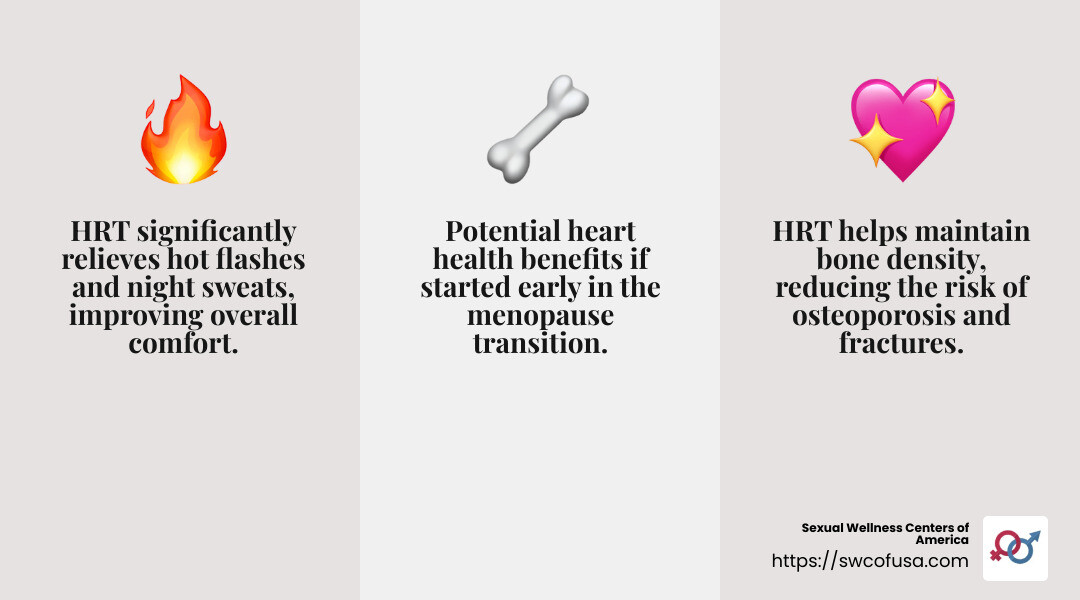
- Primary benefits: Relieves hot flashes, night sweats, vaginal dryness, mood swings, and helps prevent bone loss
- Main risks: Potential increased risk of breast cancer, blood clots, stroke, and heart disease (risks vary based on age, type of HRT, and duration)
- Best candidates: Women with moderate to severe menopause symptoms, especially when started within 10 years of menopause or before age 60
- Not recommended for: Those with history of breast cancer, blood clots, stroke, heart attack, or liver disease
Making an informed decision about hormone replacement therapy involves weighing personal symptoms against potential risks. The good news is that for many women, especially those who start therapy early in menopause, the benefits often outweigh the risks.
HRT isn’t one-size-fits-all. It comes in different forms (pills, patches, gels, creams, and vaginal applications) and can be customized to your specific needs and medical history. The key is working with a healthcare provider who specializes in hormone therapy to develop a personalized approach.
I’m Jeff Nuziard, CEO of Sexual Wellness Centers of America, where I’ve helped countless individuals steer the complexities of hormone replacement therapy to restore balance, vitality, and sexual wellness in their lives. Our approach to hormone replacement therapy emphasizes personalized treatment plans that maximize benefits while minimizing risks.
Basic hormone replacement therapy vocab:
- hormone replacement therapy and weight loss
- hormone replacement therapy cost
- hormone replacement therapy near me
Understanding Hormone Replacement Therapy (HRT)
When the body’s natural hormone production begins to decline, life can throw some unexpected challenges your way. That’s where hormone replacement therapy comes in – it’s essentially a helping hand that provides the hormones your body is no longer making enough of on its own.
Think of HRT as filling in the gaps. While most commonly associated with managing menopause symptoms in women, it’s also used for other hormonal imbalances that might arise throughout life.
During menopause, your ovaries gradually reduce their production of estrogen and progesterone – the hormones that have been regulating many of your body’s functions for decades. This transition doesn’t happen overnight; it typically begins during perimenopause (those years leading up to menopause) and continues well into postmenopause.
“The goal of hormone therapy is to manage the symptoms of menopause, not necessarily to restore or return to your previous hormone levels,” our hormone specialists at Sexual Wellness Centers of America often explain to patients. This distinction matters – hormone replacement therapy isn’t about turning back time completely. Rather, it’s about making the journey more comfortable and protecting your long-term health along the way.
If you’re looking for reliable information about medications available for menopause management, the FDA provides excellent guidance through their resource Menopause: Medicines to Help You.
How Hormone Replacement Therapy Works in the Body
When you start hormone replacement therapy, something remarkable happens inside your body. Those supplemental hormones step in to stabilize the wildly fluctuating hormone levels that make menopause so challenging for many women.
These replacement hormones are like perfect stand-ins – they fit into the same receptors in your body that your natural hormones would use. By mimicking the actions of your body’s own hormones, they help relieve those frustrating symptoms caused by declining levels.
Estrogen is truly a multitasker in the female body. It keeps your internal thermostat working properly (goodbye, hot flashes!), maintains healthy vaginal tissue and natural lubrication, supports strong bones, influences your mood and thinking, and even helps protect your heart.
For women who still have their uterus, progesterone typically joins the party for an important reason. It acts as a protective shield for your uterine lining, preventing abnormal growth and reducing cancer risk. It also helps manage any remaining menstrual cycles during perimenopause.
The relief that comes with hormone replacement therapy can feel nothing short of miraculous for many women. As one of our patients at Sexual Wellness Centers of America recently shared: “Within three weeks of starting HRT, my hot flashes had decreased by 80%, I was sleeping through the night again, and I felt like myself for the first time in years.”
For many women, that feeling of getting back to “normal” is what makes HRT worth considering. It’s not just about managing individual symptoms – it’s about reclaiming your quality of life and facing the future with confidence.
Types of Hormone Replacement Therapy
Understanding the different types of hormone replacement therapy available is crucial for making an informed decision about treatment. Each type has specific applications, benefits, and considerations.
When I first started helping women steer menopause treatments, I noticed how overwhelmed they felt by all the options. Let me break this down into simple terms you can actually use.
Think of HRT like shoes – there’s no one-size-fits-all approach. Some women need full-body symptom relief, while others might only need targeted therapy for specific issues. The good news? We have options for everyone.
Here’s what you should know about the main types:
| Type | Description | Best For |
|---|---|---|
| Estrogen-only therapy | Contains only estrogen | Women who have had a hysterectomy |
| Combined therapy | Contains estrogen and progesterone/progestin | Women with an intact uterus |
| Systemic therapy | Delivered via pills, patches, gels, sprays | Treats whole-body symptoms like hot flashes |
| Local therapy | Vaginal creams, rings, tablets | Treats localized symptoms like vaginal dryness |
| Bioidentical hormones | Chemically identical to those produced by the body | Available in FDA-approved and compounded forms |
Estrogen-Only HRT
If you’ve had a hysterectomy, estrogen-only hormone replacement therapy might be your best option. Since your uterus has been removed, you don’t need the protective effects of progesterone.
Many women find tremendous relief with estrogen therapy alone. It effectively tackles those middle-of-the-night hot flashes that leave your sheets soaked. It also helps with the vaginal dryness that can make intimacy uncomfortable or even painful.
What many women don’t realize is that estrogen also protects your bones. Without it, bone density can decline rapidly during menopause, increasing fracture risk.
Interestingly, the Women’s Health Initiative study found that women who had hysterectomies and took estrogen-only therapy actually saw a 23% reduction in breast cancer risk. They also had 40% fewer breast cancer deaths compared to those not taking estrogen. This finding surprised many in the medical community and helped reshape how we think about HRT risks.
Combined Hormone Replacement Therapy
Still have your uterus? Then combined hormone replacement therapy is typically recommended. This approach pairs estrogen with progesterone (or a synthetic version called progestin) to protect your uterine lining from abnormal growth.
I often explain to my patients that it’s like having checks and balances. Estrogen alone can stimulate the uterine lining to grow excessively, which increases endometrial cancer risk. Progesterone keeps this growth in check.
You have two main options for taking combined HRT:
With continuous combined therapy, you take both hormones every day, which typically eliminates monthly bleeding. Many of my postmenopausal patients prefer this approach because they’re done with periods and ready to move on.
With sequential therapy, you take estrogen daily but add progesterone for just 10-14 days each month. This often results in light monthly bleeding, similar to a period. Many women in perimenopause find this approach provides a more natural transition.
As one patient told me recently, “I was terrified of HRT until I understood I could take it in a way that worked for my body and lifestyle. Now I feel like myself again.”
Bioidentical Hormone Replacement Therapy
Bioidentical hormones have become increasingly popular, and for good reason. These compounds have the exact same chemical structure as the hormones your body naturally produces. While they’re often derived from plant sources like yams and soy, they still undergo processing in a laboratory to achieve the final structure.
There’s often confusion about bioidentical hormones, so let me clarify:
FDA-approved bioidentical hormones include products like Estrace, Vagifem, and Bijuva. These medications have undergone rigorous testing for safety and effectiveness. They’re manufactured according to strict quality standards and come in standardized doses.
Compounded bioidentical hormones are custom-mixed formulations prepared by specialized pharmacies. While they can be customized to individual needs, they haven’t undergone the same FDA approval process, and quality can vary between pharmacies.
At Sexual Wellness Centers of America, we primarily offer FDA-approved bioidentical hormone options. Many of our patients feel more comfortable using hormones that closely match what their bodies once produced naturally. As one patient put it, “Knowing my treatment uses hormones identical to what my body recognizes gives me peace of mind.”
The best HRT approach is the one customized specifically to your symptoms, medical history, and personal preferences. That’s why we start with comprehensive testing and a detailed conversation about your goals before recommending any treatment plan.
Benefits of Hormone Replacement Therapy
When it comes to hormone replacement therapy, the benefits extend far beyond just taming those pesky hot flashes. For many women walking through the door at our Colleyville center, HRT becomes nothing short of transformative – restoring not just comfort, but a genuine sense of wellbeing that menopause may have temporarily taken away.

Relief from Menopause Symptoms
Let’s talk about what brings most women to consider hormone replacement therapy in the first place – those frustrating menopause symptoms that can hijack your days and nights.
Hot flashes and night sweats – those sudden waves of heat that leave you flushed, sweaty, and reaching for the nearest fan – respond remarkably well to HRT. Clinical studies show these symptoms can decrease by up to 85% with proper treatment. As one of our patients recently told me with a laugh of relief, “Before starting HRT, I was having 15-20 hot flashes a day. I couldn’t sleep, couldn’t concentrate at work, and was basically living in the frozen food section of the grocery store for relief. Two weeks into treatment, I’m down to maybe one mild flash a day. I’ve packed away my emergency fan collection!”
Beyond the temperature rollercoaster, hormone replacement therapy tackles other common menopause complaints too. Vaginal dryness and discomfort improve as estrogen helps restore tissue health and natural lubrication. Those annoying urinary symptoms – the constant bathroom trips, the sudden urgency, those frustrating recurring UTIs – often resolve as the urinary tract tissues regain strength and resilience. Even your skin benefits, with many women noticing improvements in dryness and elasticity as estrogen helps maintain collagen levels.
The Postmenopausal Estrogen/Progestin Interventions trial confirms what we see daily in our practice – both estrogen-alone and estrogen-plus-progestin treatments significantly reduce these life-disrupting symptoms compared to placebo.
Prevention of Bone Loss and Osteoporosis
One of the silent but serious consequences of menopause is its effect on your bones. Think of estrogen as your skeleton’s best friend – when levels drop, bone density often follows suit, increasing your risk for osteoporosis and fractures.
Hormone replacement therapy provides powerful protection for your bone health. It’s like putting a security system in place – HRT reduces the accelerated bone loss that happens during menopause, increases bone mineral density, and significantly lowers your risk of fractures, particularly in vulnerable areas like the hip and spine.
What’s fascinating is that even relatively short-term use of HRT (just 1-2 years) during the menopausal transition can have lasting benefits for bone health. This timing matters because bone loss is most rapid in those first few years after menopause – exactly when protection is most crucial.
The science backs this up. Scientific research on HRT and bone health consistently shows that women using HRT have significantly lower rates of osteoporotic fractures compared to non-users. It’s one of those benefits that you might not feel immediately but could literally save you from a life-altering fracture down the road.
Positive Effects on Mood and Sleep
“I feel like myself again” – perhaps the most common phrase we hear from women after starting hormone replacement therapy. There’s a good reason for this emotional change.
The hormonal rollercoaster of menopause doesn’t just affect your body – it can significantly impact your mental wellbeing too. Mood swings, irritability, anxiety, even depression can all make unwelcome appearances during this transition. Add in the sleep disruptions from night sweats, and it’s no wonder many women feel like they’re barely functioning.
HRT helps stabilize these symptoms in multiple ways. By reducing night sweats, it allows for deeper, more restorative sleep. It also directly affects brain neurotransmitters that influence mood, helping to smooth out those emotional peaks and valleys.
As our hormone specialist often points out, “The improvement in sleep quality alone can be transformative. When women start sleeping better, we see a beautiful domino effect – better energy during the day, improved concentration, more emotional resilience, and just a greater capacity to enjoy life again.” One patient described it as “getting my brain back” – a simple but powerful testament to how hormone replacement therapy can restore quality of life.
Potential Cardiovascular Benefits
The relationship between hormone replacement therapy and heart health has been the subject of evolving research and some controversy. What we’ve learned is that timing matters tremendously.
When HRT is started early – within 10 years of menopause or before age 60 – it appears to offer protective cardiovascular benefits. This “timing hypothesis” has been supported by multiple studies showing that early initiation may improve cholesterol profiles, reduce calcification in coronary arteries, and potentially lower heart disease risk.
However, the same benefits don’t necessarily apply when therapy begins later in life. Starting HRT more than a decade past menopause or after age 60 may actually tip the risk-benefit scale in the other direction.
At Sexual Wellness Centers of America, we take this timing factor seriously when developing personalized hormone replacement therapy plans. We believe in an individualized approach that considers your unique health history, risk factors, and where you are in your menopause journey. This careful consideration helps ensure you receive the maximum benefits while minimizing potential risks.
For many women, the comprehensive improvements in quality of life – from better sleep and mood to protection against osteoporosis, along with relief from those uncomfortable hot flashes and night sweats – make hormone replacement therapy worth considering. The key is working with specialists who understand how to tailor treatment to your specific needs and circumstances.
Risks and Side Effects of Hormone Replacement Therapy
While hormone replacement therapy can be life-changing for many women, it’s important to have an honest conversation about the potential risks and side effects. After all, making a good decision about your health means seeing the complete picture.
Understanding the Potential Risks
The story of HRT risks has evolved quite a bit over the years. When the Women’s Health Initiative (WHI) study came out in 2002, it caused quite a stir – and honestly, scared many women away from HRT altogether. But as with many things in medicine, the full picture is more nuanced than those initial headlines suggested.
When it comes to breast cancer, the type of HRT makes a significant difference. Combined therapy (estrogen plus progestin) may increase breast cancer risk, especially if used for more than 5 years. But here’s something interesting – estrogen-only therapy for women who’ve had a hysterectomy may actually decrease breast cancer risk.
The WHI study showed about a 24% increased risk of breast cancer with combined therapy after about 5.6 years. That sounds scary until you realize what it means in real numbers: less than one additional case per 1,000 women per year. It’s still a risk to consider, but context matters.
For cardiovascular risks, there are a few things to be aware of. Blood clots (especially with oral estrogen) and a slight increase in stroke risk exist, particularly with pills rather than patches or creams. With heart disease, timing is everything – HRT started early in menopause might actually protect your heart, while starting later might increase risk.
I often tell my patients that understanding their personal risk factors is crucial. If you have a family history of breast cancer or have had blood clots before, your risk calculation looks different than someone without those factors.
Scientific research on HRT risks dives deeper into how these risks vary based on the type of therapy, how you take it, and your individual health history.
Managing Side Effects
Beyond the serious risks, there are also the day-to-day side effects that can affect quality of life when starting hormone replacement therapy. The good news is that many of these are temporary and manageable.
When you first start HRT, you might experience breast tenderness that makes you want to hug a pillow instead of getting hugged. Bloating might have you wondering if your pants shrunk in the wash. Headaches, nausea, mood swings that make you cry at dog food commercials, and irregular spotting are all possibilities too.
“Most women find that these side effects settle down after a few months as their body adjusts,” explains Dr. Melissa Hayes at Sexual Wellness Centers of America. “It’s like your body needs to recalibrate to its new hormone levels.”
At our centers, we’ve developed strategies to help minimize these side effects from the start. We typically begin with the lowest effective dose – just enough to help with symptoms but not enough to cause unnecessary side effects. It’s like dipping your toe in the water before diving in.
The delivery method matters too. Patches and gels allow the hormone to enter your bloodstream directly through your skin, bypassing your liver and often causing fewer side effects than pills. For some women, the difference between a patch and a pill can be night and day in terms of how they feel.
Sometimes it takes a bit of detective work to find your perfect HRT match. Maybe the first progestin we try causes mood issues, but another type works beautifully. Or perhaps taking your hormones on a different schedule makes all the difference.
“Finding the right hormone replacement therapy regimen is a bit like finding the perfect pair of jeans,” one of our patients recently told me. “The first pair might not fit quite right, but when you find the right ones, you know it immediately.”
Regular check-ins are essential during the early stages. We want to know how you’re feeling, what’s working, and what’s not, so we can make adjustments before small issues become big problems. Your experience matters, and we’re here to listen.
With careful monitoring and personalized adjustments, most women can find an HRT approach that maximizes benefits while keeping side effects to a minimum. It’s not about enduring discomfort – it’s about finding the right balance for your unique body.
Ideal Candidates for Hormone Replacement Therapy
Deciding whether hormone replacement therapy is right for you isn’t always straightforward. It’s a bit like finding the perfect pair of shoes – what fits one person beautifully might be completely wrong for another. Let’s talk about who tends to benefit most from HRT and who might want to explore other options.
Who Should Consider Hormone Replacement Therapy
If you’re waking up drenched in sweat several times a night or experiencing hot flashes that make you want to stick your head in the freezer, you might be an ideal candidate for hormone replacement therapy. Women with moderate to severe menopause symptoms often experience the most dramatic relief with HRT.
Early menopause is another important consideration. If you’ve entered menopause before age 45 – whether naturally, surgically, or due to premature ovarian insufficiency – you’re missing out on years of natural hormone protection. In these cases, hormone replacement therapy can help restore what your body would naturally have produced for several more years.
“I see this all the time with my younger patients who’ve had surgical menopause,” says our hormone specialist at Sexual Wellness Centers of America. “They often feel like they’ve aged overnight, and HRT can help them feel like themselves again.”
Women with osteoporosis risk factors should also give HRT serious thought. If you have low bone density, a family history of osteoporosis, or you’re small-framed, the bone-protecting benefits of hormone replacement therapy can be especially valuable.
Timing matters tremendously when starting HRT. The research consistently shows what we call the “window of opportunity” – women who start within 10 years of menopause or before age 60 generally have the most favorable balance of benefits to risks. This timing can maximize benefits while minimizing potential concerns.
Before recommending hormone replacement therapy at our center, we take time to understand your complete picture. We’ll review your symptoms, medical history, family health patterns, and run comprehensive hormone panels. We’ll also talk about what matters most to you – whether that’s sleeping through the night, feeling emotionally stable, or protecting your long-term bone health.
Contraindications for Hormone Replacement Therapy
While HRT can be life-changing for many women, it’s not the right choice for everyone. There are some situations where the risks clearly outweigh the benefits.
Hormone replacement therapy is generally not recommended if you have:
- Current breast cancer or a history of breast cancer
- Known or suspected estrogen-sensitive cancers
- Unexplained vaginal bleeding
- Active liver disease
- Current blood clots or a history of deep vein thrombosis or pulmonary embolism
- Recent heart attack or stroke
Some conditions fall into a gray area where we need to be extra careful. These include migraine headaches with aura, strong family history of breast cancer, gallbladder disease, or very high triglyceride levels. In these cases, we might still consider certain forms of HRT, but we’ll proceed with additional caution and monitoring.
“Sometimes we can find creative solutions,” our medical director explains. “For instance, a woman with certain contraindications who’s suffering primarily from vaginal dryness might still safely use low-dose vaginal estrogen, which has minimal systemic absorption.”
At Sexual Wellness Centers of America, we never take a one-size-fits-all approach to hormone replacement therapy. We recognize that each woman brings her unique health history, risk factors, and personal preferences to the table. Our goal is to help you make an informed decision that aligns with your health needs and quality of life priorities.
Even if standard HRT isn’t right for you, we have many other options to help manage menopause symptoms and protect your long-term health. The key is working with providers who understand the full spectrum of treatment options and can tailor recommendations to your specific situation.
Administration and Monitoring of Hormone Replacement Therapy
When it comes to hormone replacement therapy, how you take your hormones matters just as much as which hormones you take. Finding the right delivery method and keeping tabs on how your body responds are crucial parts of a successful treatment plan.

How Hormone Replacement Therapy is Administered
“Think of hormone replacement therapy like getting a custom-custom outfit instead of something off the rack,” says Dr. Lisa Martinez at Sexual Wellness Centers of America. “The delivery method needs to fit your lifestyle, preferences, and medical needs.”
The beauty of modern HRT is the variety of options available. You’re not limited to just taking a pill every day (though that remains a popular choice for many).
If you prefer the convenience of oral medication, pills like Premarin (conjugated estrogens) or Estrace (estradiol) might be your go-to. They’re straightforward—just one pill daily—but they do pass through your liver, which can slightly increase blood clot risk for some women.
Many of our patients at Sexual Wellness Centers of America prefer transdermal options—patches, gels, or sprays that deliver hormones through your skin. Estradiol patches like Estradot or Vivelle-Dot need changing just once or twice weekly, while gels like Divigel or EstroGel become part of your daily routine. The big advantage? They bypass your liver, potentially reducing blood clot risk while providing steady hormone levels throughout the day.
For women primarily concerned with vaginal dryness or urinary symptoms, vaginal options offer targeted relief with minimal whole-body effects. Products like Estrace cream, Estring vaginal rings, or Vagifem tablets deliver estrogen directly where it’s needed most. This approach is particularly helpful for women who might have concerns about systemic hormone therapy.
“I had a patient who was terrified of taking hormones because her mother had a history of blood clots,” recalls our hormone specialist. “We started her on a low-dose vaginal ring, and it completely transformed her intimate life without raising her clot risk. She called it her ‘miracle ring’ at her follow-up appointment.”
At Sexual Wellness Centers of America, we go beyond standard options with our innovative regenMAX technology, which improves hormone delivery for optimal effectiveness. Our approach is always personalized—what works wonderfully for your friend might not be the best fit for you.
More info about personalized hormone therapy services is available on our website for those wanting to explore our customized approach in greater detail.
Importance of Regular Monitoring
Starting hormone replacement therapy isn’t a “set it and forget it” situation. Regular check-ins ensure you’re getting the maximum benefit with minimum risk.
“I tell my patients that monitoring HRT is like adjusting the thermostat in your home,” explains our hormone specialist. “Too low, and you’re still suffering symptoms. Too high, and you might experience side effects. We need to find your perfect temperature.”
When you begin therapy at Sexual Wellness Centers of America, we typically schedule a follow-up visit about three months after you start. This gives us time to see how your body is responding. During this visit, we’ll discuss whether your symptoms have improved, check for any side effects, and potentially adjust your dosage or formulation. Depending on your specific situation, we might also run blood tests to check your hormone levels.
After that initial adjustment period, annual monitoring becomes the norm. These yearly check-ins include a comprehensive review of how therapy is working for you, a physical examination including blood pressure, appropriate cancer screenings like mammograms, and sometimes pelvic exams or endometrial assessments if needed.
Many women wonder how their doctor knows if their hormone dose is right. While blood tests provide some information, your symptoms and experiences are equally important metrics. If you’re no longer having hot flashes but are experiencing breast tenderness, for example, we might need to adjust your dosage or try a different formulation.
“One of my patients came in for her annual check-up feeling frustrated because while her hot flashes were gone, she was dealing with constant bloating,” shares Dr. Martinez. “We switched her from oral estrogen to a patch, and within weeks, the bloating disappeared while maintaining control of her hot flashes. Those small adjustments can make a huge difference in quality of life.”
Regular monitoring also gives us the opportunity to reassess whether continuing hormone replacement therapy still makes sense for you as your health status and risk factors may change over time. This ongoing conversation ensures your treatment evolves as you do.
At Sexual Wellness Centers of America, we pride ourselves on being responsive between scheduled appointments too. If you notice changes or have concerns, we want to hear about them promptly so we can address issues before your next formal check-up.
Hormone Replacement Therapy and Long-Term Health
When we talk about hormone replacement therapy, it’s not just about getting through those difficult menopause symptoms. HRT can actually play a significant role in your long-term health, particularly when it comes to your bones, heart, and even your brain.
HRT and Bone Health
One of the most remarkable benefits of hormone replacement therapy is how it protects your bones as you age. Estrogen is like your skeleton’s best friend – it helps maintain bone strength, and when estrogen levels drop during menopause, your bones can become more fragile.
Research has consistently shown that HRT helps in several important ways:
It slows down bone loss during and after menopause, increases bone mineral density throughout your body, and significantly reduces your risk of fractures – including those painful and dangerous hip and spine fractures that can be life-changing.
What’s particularly interesting is that even using HRT for just a year or two during early menopause can have lasting benefits for your bone health. This timing is crucial because bone loss happens most rapidly in those first few years after menopause.
One of our patients at our Colleyville location shared her experience: “After going through early menopause at 42, I was shocked when my doctor told me I’d already lost significant bone density. Five years on HRT has not only stopped the bone loss but actually improved my density scores. I feel like I’m investing in my future mobility.”
HRT and Heart Health
The relationship between hormone replacement therapy and heart health has been a bit of a medical journey, with researchers coming to understand it better over time. Current evidence supports what experts call the “timing hypothesis,” which essentially means that timing is everything.
When women start HRT early – within 10 years of menopause or before age 60 – it may actually reduce their risk of coronary heart disease. However, if started later in life, the cardiovascular risks might outweigh the benefits.
This timing effect appears to be related to the condition of your blood vessels. In early menopause, estrogen helps maintain healthy arterial walls, but years later, it might actually have adverse effects on already-developed plaques.
How you take your hormones matters too. Transdermal methods (patches or gels) seem to be kinder to your cardiovascular system than pills, particularly regarding blood clot risk. This is because when you apply hormones to your skin, they bypass your liver, which is where oral estrogen increases production of clotting factors.
Scientific research on HRT and long-term health dives deeper into these cardiovascular effects if you’re interested in the details.
HRT and Cognitive Function
Can hormone replacement therapy help keep your mind sharp? It’s a fascinating question that researchers continue to explore. Some observational studies suggest that estrogen may actually have protective effects on the brain when started during what scientists call the “critical window” near menopause.
The current evidence points to several interesting possibilities:
Starting HRT early may help maintain cognitive function as you age. However, starting after 65 doesn’t seem to prevent cognitive decline and might even increase dementia risk in some cases. The specific type of hormones you use, when you start, and how long you take them all seem to influence brain health outcomes.
“The brain has numerous estrogen receptors, particularly in areas involved in memory and cognitive function,” explains our hormone specialist at Sexual Wellness Centers of America. “This suggests that maintaining estrogen levels during the menopausal transition may support brain health, though we’re still learning more about this fascinating connection.”
What we do know is that many women report improved mental clarity and focus when their hormone levels are balanced through properly managed HRT. While the long-term cognitive benefits are still being researched, the immediate improvements in sleep, mood, and concentration that many women experience can significantly improve quality of life and potentially support better brain health.
At Sexual Wellness Centers of America, we take a personalized approach to hormone replacement therapy, considering not just your immediate symptoms but how treatment might benefit your long-term health in these important areas.
Alternatives to Hormone Replacement Therapy
Let’s face it – while hormone replacement therapy works wonders for many women, it’s not the right fit for everyone. Whether you can’t use HRT for medical reasons or simply prefer a different approach, you have options. The good news? There are several effective alternatives that can help you steer the menopause journey.

Non-Hormonal Medications
When hot flashes have you peeling off layers in the middle of winter or night sweats are ruining your sleep, prescription medications that don’t contain hormones might be your answer.
Many women find relief from hot flashes and night sweats with certain antidepressants. Medications like paroxetine (sold as Brisdelle – the only FDA-approved non-hormonal medication specifically for hot flashes), venlafaxine, and escitalopram can reduce those sudden heat surges by 30-60%. One of our patients described it as “turning down the thermostat that had gone haywire in my body.”
Gabapentin, originally developed for seizures, has become a go-to option for managing night sweats. It can be particularly helpful if your sleep is constantly interrupted by temperature fluctuations. Meanwhile, clonidine, primarily a blood pressure medication, has shown promise in moderating hot flash frequency and intensity.
For women struggling with vaginal dryness and painful intercourse, ospemifene (Osphena) offers relief without estrogen. This selective estrogen receptor modulator (SERM) specifically targets vaginal tissue. Many women also find substantial comfort from over-the-counter vaginal moisturizers like Replens and Hyalo Gyn, which can be used regularly to maintain comfort, while lubricants can make intimate moments more comfortable.
While these medications can make a real difference, they typically don’t address the comprehensive range of symptoms that hormone replacement therapy does. Each also comes with its own potential side effects, so discussing options with your healthcare provider is essential.
Lifestyle Changes
Sometimes the simplest changes can have profound effects on how you experience menopause. Our patients are often surprised by how much they can improve their symptoms through everyday adjustments.
For managing hot flashes, becoming a “temperature detective” helps tremendously. Identifying your personal triggers – whether it’s spicy foods, that glass of wine with dinner, your morning coffee, stressful situations, or even hot weather – gives you power over your symptoms. Dressing in layers allows you to adjust quickly when a hot flash strikes, while keeping your bedroom cool and using moisture-wicking sleepwear can transform your sleep experience.
Sleep disruptions are among the most frustrating aspects of menopause, but establishing good sleep hygiene makes a difference. Maintaining a regular sleep schedule (yes, even on weekends!), creating a cool, dark sleeping environment, and avoiding screens before bedtime signal to your body that it’s time to rest. Many women at our Sexual Wellness Centers of America find that relaxation techniques like gentle stretching or deep breathing before bed help quiet the mind.
Your overall well-being during menopause benefits enormously from regular physical activity – aim for 30 minutes most days. Exercise not only helps manage weight (which can reduce hot flashes) but also improves mood and sleep quality. A balanced diet rich in whole foods provides the nutrients your changing body needs, while ensuring adequate calcium and vitamin D intake protects your bone health now that estrogen’s protective effects are diminished.
Complementary and Alternative Therapies
Many women find meaningful relief through approaches that fall outside conventional medicine. While scientific evidence varies for these methods, they’re worth considering as part of your menopause toolkit.
Black cohosh remains one of the most popular herbal supplements for hot flashes. Research results are mixed, but many women report improvement. Phytoestrogens – plant-based compounds with mild estrogen-like effects found in soy foods and red clover – may provide subtle symptom relief. Some women swear by evening primrose oil for hot flashes, though studies haven’t consistently supported this use.
Mind-body practices offer benefits beyond symptom relief, addressing the emotional aspects of this transition. Acupuncture has shown promising results for hot flash reduction in several studies. Yoga combines gentle movement, breathing, and mindfulness that can improve mood, sleep, and overall well-being. Mindfulness meditation teaches techniques to reduce stress and change your relationship with uncomfortable symptoms – not eliminating them, but making them less disruptive to your life.
“I was skeptical about meditation helping my hot flashes,” shares Maria, a patient at our Colleyville location. “While it didn’t make them disappear completely, it changed how I responded to them. They became mere sensations rather than emergencies, and that made all the difference in my daily life.”
The quality and safety of herbal supplements can vary significantly. Always discuss these options with your healthcare provider before trying them, especially since some can interact with medications.
For evidence-based information on complementary approaches, the National Center for Complementary and Integrative Health offers excellent resources like Menopausal Symptoms: In Depth and 4 Things to Know about Menopausal Symptoms and Complementary Health Practices.
At Sexual Wellness Centers of America, we believe in meeting you where you are. Whether that means hormone replacement therapy, non-hormonal medications, lifestyle adjustments, or complementary approaches – or some combination of these – we’re here to help you find your path to feeling your best during this important life transition.
The Changing Perception of Hormone Replacement Therapy
The story of hormone replacement therapy is one of dramatic ups and downs – a medical treatment that has gone from being hailed as a wonder solution to feared as a dangerous risk, and now finally settling into a more balanced middle ground. This evolution reflects our growing understanding of how hormones affect women’s bodies during and after menopause.
The Women’s Health Initiative and Its Aftermath
The year 2002 marked a watershed moment in women’s health when the Women’s Health Initiative (WHI) study published its initial findings. This massive research project, which began in 1991, aimed to get definitive answers about hormone replacement therapy‘s effects on postmenopausal women’s health.
The headlines that followed were alarming, to say the least. Newspapers and TV reports warned women that HRT increased risks of breast cancer, heart disease, stroke, and blood clots. Almost overnight, millions of women stopped taking their hormones, often without medical guidance.
“I remember that time vividly,” shares Dr. Lisa Matthews, our senior hormone specialist at Sexual Wellness Centers of America. “Women were coming in terrified, many having thrown away their prescriptions after seeing the news. Some were suddenly experiencing severe hot flashes and sleep disruption after years of relief.”
The statistics tell the story: HRT prescription rates plummeted from 8.6% to just 1.9% in the two years following the report. But as is often the case with medical research, the full picture was more complex than those initial headlines suggested.
As researchers continued analyzing the WHI data, important nuances emerged. The average woman in the study was 63 years old – more than a decade past the typical onset of menopause. For these older women who began HRT many years after menopause, certain risks were indeed higher. But what about women in their early 50s, just entering menopause?
“We now understand that the timing of when you start hormone replacement therapy makes all the difference,” explains Dr. Matthews. “The WHI findings were inappropriately applied to all women, when they really shouldn’t have been generalized to younger women just beginning their menopause journey.”
Current Understanding and Guidelines
Today’s approach to hormone replacement therapy is worlds away from the one-size-fits-all prescribing of the 1990s or the near-abandonment of the early 2000s. The pendulum has settled in a more reasonable middle ground, guided by science and personalization.
Modern guidelines from respected organizations like the North American Menopause Society and the American College of Obstetricians and Gynecologists emphasize individualized care. They recognize that HRT remains the most effective treatment for debilitating menopause symptoms while acknowledging that benefits and risks vary considerably from woman to woman.
For most women experiencing moderate to severe symptoms, starting hormone replacement therapy within 10 years of menopause or before age 60 offers the most favorable balance of benefits to risks. This “timing hypothesis” has been supported by numerous studies showing that early initiation of HRT can even provide cardiovascular benefits, rather than the risks seen in older women.
“It’s about the right treatment for the right person at the right time,” says our hormone specialist. “At Sexual Wellness Centers of America, we consider each woman’s personal and family medical history, symptom severity, preferences, and risk factors before recommending any treatment plan.”
The evolving understanding has also led to more options in how hormones are delivered. Traditional pills have been joined by patches, gels, sprays, and vaginal preparations, each with different risk profiles and benefits. Lower-dose options are now standard, following the guideline to use “the lowest effective dose for the shortest necessary duration.”
Perhaps most importantly, the conversation around hormone replacement therapy has become more open and nuanced. Women are encouraged to be active participants in decision-making, weighing potential benefits against risks with the guidance of knowledgeable healthcare providers.
“We’ve come full circle in many ways,” reflects Dr. Matthews. “Before the WHI, HRT was sometimes prescribed too casually. After the WHI, it was often withheld even from women who could have greatly benefited. Now, we’re in a more balanced place, focusing on personalized care and shared decision-making.”
At Sexual Wellness Centers of America, we stay current with the evolving research to provide evidence-based, personalized hormone replacement therapy options. We believe that each woman deserves access to treatments that can dramatically improve her quality of life, guided by the most current understanding of both benefits and risks.
Frequently Asked Questions about Hormone Replacement Therapy
Is Hormone Replacement Therapy Safe?
When patients first visit us at Sexual Wellness Centers of America, this is often their number one concern – and it’s a great question. The truth is, the safety of hormone replacement therapy isn’t black and white. It’s more like a personalized equation with several important variables.
Think of it as a balance scale unique to you. On one side, we place your age, how recently you entered menopause, your personal and family medical history, and the specific type of hormones we might use. On the other side are the benefits you might experience.
For most women who start hormone replacement therapy within that critical 10-year window after menopause begins (or before age 60), the scale typically tips toward benefits outweighing risks. But this is precisely why we never rush into treatment decisions.
“I always tell my patients that hormone replacement therapy isn’t inherently ‘safe’ or ‘unsafe’ – it’s about whether it’s right for you specifically, based on your unique health profile and symptoms,” explains our hormone specialist. “That’s why we spend so much time on your initial evaluation.”
Some women come to us worried after reading alarming headlines about HRT. We take the time to explain how research has evolved and how personalized approaches have transformed treatment safety over the years.
How Long Should I Stay on Hormone Replacement Therapy?
“How long will I need to take these hormones?” This question comes up in nearly every consultation we have. The honest answer is that it depends on your individual situation – there’s no one-size-fits-all timeline.
Current medical guidelines suggest using the lowest effective dose for the shortest duration needed to manage your symptoms. But what does that actually mean for you? Several factors come into play:
First, we consider the severity of your symptoms and their impact on your quality of life. A woman with debilitating hot flashes that disrupt her sleep and work may need treatment longer than someone with milder symptoms.
Your age and risk factors matter too. Women who experience early menopause (before 45) often benefit from longer-term therapy to protect bone health and potentially reduce cardiovascular risk.
We also pay attention to how your body responds if you attempt to taper or discontinue therapy. Some women find their symptoms have naturally subsided after a few years, while others experience a quick return of troublesome symptoms when trying to stop.
At Sexual Wellness Centers of America, we view hormone replacement therapy as a partnership. We check in regularly, typically at least once a year, to reassess whether your current treatment plan still makes sense for your changing body and life circumstances.
Can Men Use Hormone Replacement Therapy?
Absolutely! While menopause gets most of the attention, men experience their own version of hormonal decline with age – sometimes called andropause. Like women, men can experience significant quality of life improvements with appropriate hormone therapy.
Men naturally produce less testosterone as they age, typically declining about 1% per year after age 30. For some men, this reduction happens more rapidly or drops below the threshold where symptoms become noticeable. These can include:
Low energy that makes it hard to get through the day. Reduced muscle mass despite maintaining the same exercise routine. Increasing body fat, especially around the middle. Mood changes, irritability, or even depression. Brain fog or difficulty concentrating. And yes – decreased libido and sexual function issues.
“Many men come to us frustrated because they’ve been told these changes are ‘just aging’ and they should accept them,” shares our specialist. “But when testing reveals significantly low testosterone levels, appropriate therapy can be life-changing.”
At Sexual Wellness Centers of America, we specialize in men’s hormone health too, offering innovative treatments including our HEshot®™ technology. This breakthrough approach has demonstrated a remarkable 97.2% efficacy rate in addressing erectile dysfunction and other sexual health concerns.
Just like with women, hormone therapy for men requires thorough evaluation, appropriate testing, and ongoing monitoring to ensure both safety and effectiveness. Our goal is helping men feel like themselves again, with renewed energy, focus, and vitality.
Conclusion
Hormone replacement therapy offers a guide of hope for women navigating the often challenging waters of menopause. When thoughtfully prescribed and carefully monitored, HRT doesn’t just ease those frustrating hot flashes—it can transform quality of life while potentially safeguarding long-term bone, heart, and cognitive health.
After exploring the ins and outs of hormone therapy, here’s what I hope you’ll take away from our conversation:
The relief that hormone replacement therapy provides from those middle-of-the-night sweats, mood swings, and uncomfortable vaginal dryness can be truly life-changing. Many women tell us they finally feel like themselves again after starting treatment.
Timing matters tremendously. Women who begin HRT within that critical 10-year window after menopause starts (or before turning 60) generally experience the most favorable balance of benefits versus risks. This isn’t just about immediate symptom relief—it’s about long-term health protection too.
The days of one-size-fits-all hormone therapy are behind us. Whether you prefer the convenience of a twice-weekly patch, the simplicity of a daily pill, or the targeted relief of vaginal applications, today’s options allow us to tailor treatment specifically to your body and lifestyle.
Your journey with hormone replacement therapy shouldn’t end after your first prescription. Regular check-ins and monitoring ensure your treatment continues working effectively while minimizing any potential risks. We’re partners in this process, adjusting as needed along the way.
The decision to start hormone therapy is deeply personal. Your unique medical history, symptom severity, personal preferences, and risk factors all deserve careful consideration. What works beautifully for your sister or best friend might not be right for you—and that’s completely normal.
At Sexual Wellness Centers of America, we’ve witnessed countless women reclaim their vitality through personalized hormone replacement therapy. Our approach begins with listening—truly understanding how menopause is affecting your day-to-day life. From there, we conduct comprehensive hormone testing, design a treatment plan that addresses your specific concerns, and stay connected through regular follow-ups to fine-tune your care.
“I used to dread going to bed, knowing I’d wake up drenched in sweat at least three times a night,” shares one of our patients. “Six weeks after starting my personalized hormone therapy, I’m sleeping through the night again. I had forgotten what feeling rested was like!”
If hot flashes, mood swings, or other menopause symptoms are stealing your joy and disrupting your days, please know you don’t have to simply endure this transition. Menopause is natural, yes—but suffering through it unnecessarily isn’t something we recommend.
We invite you to start a conversation about whether hormone replacement therapy might help you steer this chapter with greater comfort and confidence. Our Colleyville location specializes in creating personalized solutions for women just like you.
More info about our hormone replacement therapy services
Menopause isn’t just something to “get through”—with the right support and treatment, it can be a time of renewed energy, clarity, and wellness.