
There is no single definitive test for erectile dysfunction. Diagnosis combines a structured medical history, a focused physical exam, and selective laboratory work, while a validated questionnaire such as the IIEF-5 is often the smartest first step you can take at home.
The most popular advice about ED testing is also the least helpful: “Just get your testosterone checked.” Testosterone matters, but one blood test can't explain every erection problem, and a normal result doesn't mean your symptoms aren't real. In practice, how to test for erectile dysfunction means building a clinical picture that connects erection quality with cardiovascular health, medications, hormones, metabolic conditions, sleep, stress, and relationship or situational patterns.
I've evaluated thousands of men, and the first barrier is usually embarrassment rather than complexity. Once the conversation starts, most men discover that the process is structured, respectful, and far less invasive than they expected. The goal isn't to label you. It's to identify what changed, determine whether a broader health issue may be involved, and choose a treatment path that fits the cause.
Table of Contents
- Recognizing the Early Signs That It Is Time to Get Checked
- Taking a Validated Questionnaire Before Your Appointment
- What to Expect During a Clinical Evaluation for ED
- Understanding the Diagnostic Tests Your Provider May Order
- Interpreting Results and Knowing When to Seek Urgent Care
- Exploring Treatment Pathways and When to See a Specialist
- Next Steps to Take After You Understand Your Results
Recognizing the Early Signs That It Is Time to Get Checked
A man may first notice that an erection takes longer to develop. Later, he may find that firmness fades during intercourse, or that he can maintain an erection in one situation but not another. He may tell himself it happened because of stress, alcohol, poor sleep, or an awkward evening. That explanation may be accurate once. It becomes less reassuring when the same pattern keeps returning.
Occasional difficulty is common and doesn't automatically indicate a medical disorder. A recurring change in erection quality, penetration ability, or maintenance deserves attention, especially when it affects confidence or intimacy. Erectile dysfunction can also accompany broader vascular, metabolic, or hormonal problems, which is why guidelines treat evaluation as more than a bedroom-focused conversation. A 2024 NIH summary reports that about 52% of U.S. men aged 40 to 70 have ED, with approximately 40% affected at age 40 and about 70% by age 70; the same summary estimates that at least 150 million men globally are affected. The NIH clinical overview of erectile dysfunction places those figures in the context of a condition that warrants medical attention rather than silent resignation.
A practical self-check
Ask yourself:
- Pattern: Has the problem happened repeatedly rather than as an isolated event?
- Firmness: Are erections less rigid than they used to be?
- Maintenance: Does firmness decline before or during penetration?
- Desire: Has libido changed along with erection quality, or is desire unchanged?
- Context: Does the problem occur with a partner, during masturbation, or only in certain situations?
- Health changes: Have blood pressure, blood sugar, weight, sleep, mood, or medications changed?
- Impact: Are you avoiding intimacy or feeling persistent distress?
A strong erection during some circumstances can suggest a situational or psychological contribution, but it doesn't conclusively rule out an organic cause. Major guidance treats nocturnal or morning erections as a clue, not a definitive test. Persistent symptoms should therefore be assessed rather than explained away.
You can also review health conditions that may contribute to ED through this guide to contributory conditions that may cause erectile dysfunction. Don't stop a prescribed medicine on your own, even if you suspect it's affecting sexual function. Bring that concern to the clinician so the risks and alternatives can be reviewed safely.
Practical rule: If a change is recurring, distressing, or accompanied by other health symptoms, stop relying on self-monitoring and arrange an evaluation. Seeking help is a responsible health decision, not a sign of failure.
Taking a Validated Questionnaire Before Your Appointment
The most useful home screening step is a validated questionnaire, not a random online quiz. The International Index of Erectile Function, introduced in 1997, measures five domains of male sexual function: erectile function, orgasmic function, sexual desire, intercourse satisfaction, and overall satisfaction. Its shorter IIEF-5, also called the SHIM, focuses on erectile function and is widely used to quantify severity and track response to treatment. The original IIEF validation publication established the questionnaire as a clinical measurement tool.
How to use the IIEF-5
Answer the five questions based on your recent experience and choose the response that most accurately reflects your symptoms. The questionnaire asks about confidence in getting and keeping an erection, erection firmness, ability to maintain an erection through intercourse, difficulty maintaining an erection to completion, and satisfaction with attempted intercourse.
Use these principles while completing it:
- Answer privately and accurately. Don't choose the answer you wish were true.
- Think about a pattern. One unusually stressful encounter shouldn't dominate your responses.
- Don't confuse desire with erection. Low libido and erection difficulty can occur together, but they measure different problems.
- Record the total. Bring the score to your appointment, even if you feel awkward discussing it.
- Use the result as a starting point. A score helps quantify severity, but it doesn't identify the cause by itself.
The score ranges are clinically meaningful:
| Score Range | Severity Level | What It Suggests |
|---|---|---|
| 22 to 25 | No ED | Erectile function isn't suggestive of ED on this screening measure |
| 17 to 21 | Mild ED | Mild symptoms may be present |
| 12 to 16 | Mild-to-moderate ED | A more noticeable pattern warrants clinical discussion |
| 8 to 11 | Moderate ED | Symptoms are likely interfering with sexual function |
| 5 to 7 | Severe ED | Significant erectile difficulty is indicated |
A primary-care review notes that an IIEF-5 score below 21 is suggestive of ED, while the scale itself separates severity across the ranges above. The questionnaire is therefore a legitimate triage tool, not merely a curiosity. It can help you describe a problem that otherwise feels vague.
What the questionnaire cannot tell you
The IIEF-5 doesn't diagnose diabetes, vascular disease, medication effects, low testosterone, depression, or relationship stress. It also doesn't replace questions about orgasm, ejaculation, pain, curvature, penile sensation, or neurological symptoms. A lower score should prompt a thoughtful evaluation, not automatic conclusions about the cause.
A useful appointment note includes your score plus a short symptom timeline. Write down when the change began, whether it's constant or situational, whether morning erections occur, which medicines and supplements you take, and whether libido has changed. That information gives the clinician context that a number alone can't provide.
What to Expect During a Clinical Evaluation for ED
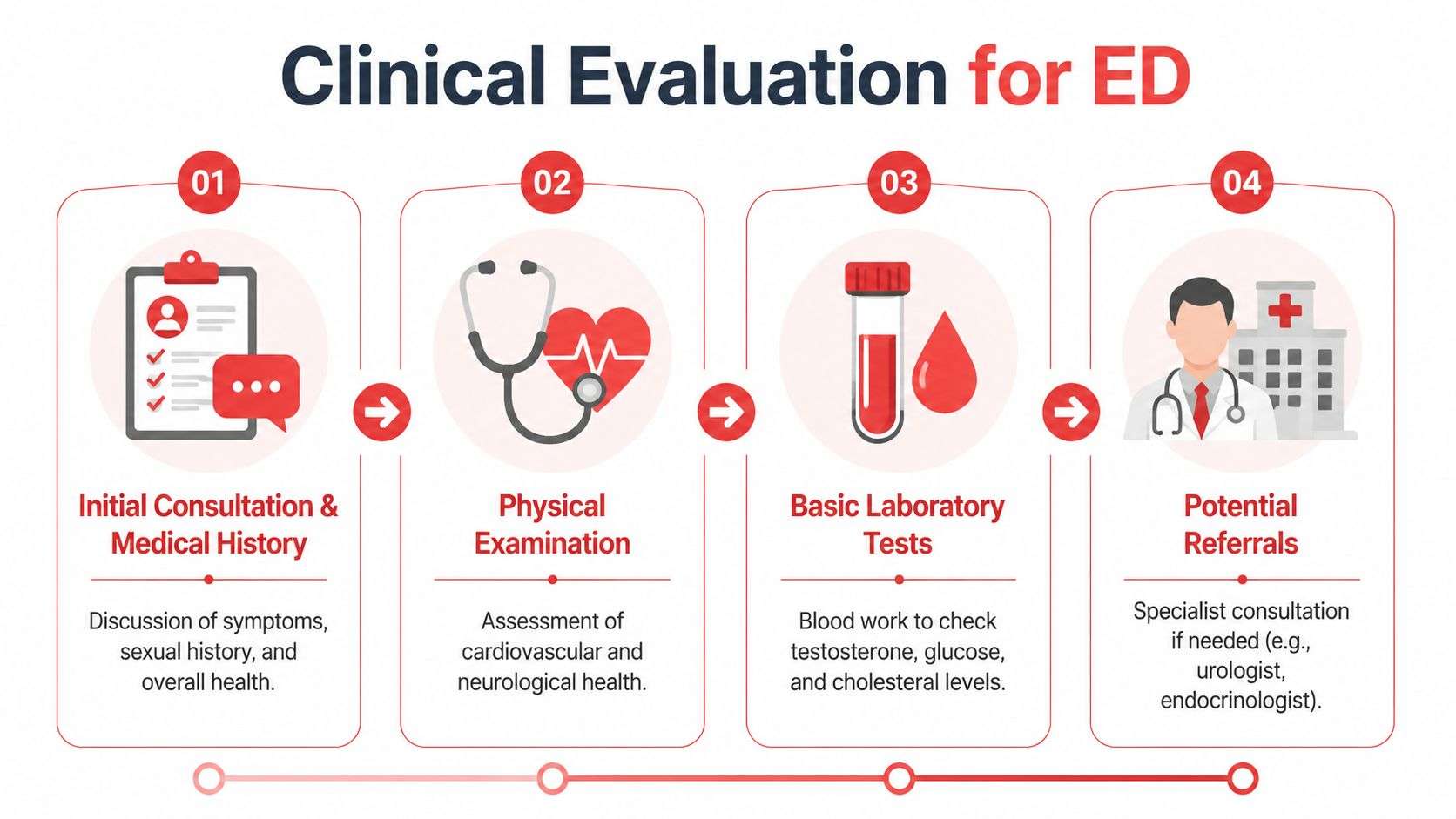
A guideline-based evaluation starts with conversation. You won't usually walk into an ED appointment and go straight to an advanced scan or invasive procedure. The clinician first gathers enough detail to determine whether the complaint involves erection, ejaculation, orgasm, desire, pain, or a combination of problems.
The history comes first
Expect questions about onset, frequency, progression, and circumstances. A clinician may ask whether you can become erect, whether the erection is firm enough for penetration, how long you can maintain it, and whether the pattern differs with masturbation or a partner. These aren't intrusive questions for their own sake. Each answer helps separate possible vascular, hormonal, medication-related, neurological, psychological, and situational contributors.
Your medical history matters just as much. Discuss cardiovascular disease, high blood pressure, diabetes, pelvic surgery or injury, neurological conditions, sleep concerns, mood symptoms, alcohol or recreational drug use, and every prescription or over-the-counter product you take. The American Urological Association ED guideline-guideline) recommends a structured medical and sexual history, physical examination, and selective laboratory testing, including morning serum total testosterone for men with ED.
The focused physical examination
The physical exam is usually targeted to the information you've provided. It may include blood pressure measurement, cardiovascular assessment, examination of the genital area, and a neurological screen. The clinician may assess pulses, body composition, testicular size, penile plaques or curvature, and signs that point toward hormonal or neurological involvement.
This examination isn't designed to embarrass you. It gives the provider objective information that a questionnaire can't capture. It may also identify a condition that needs attention even if the sexual symptoms feel like your only concern.
Selective laboratory testing
There isn't a universal ED blood panel for every patient. Depending on your history and examination, a provider may consider morning total testosterone, fasting glucose or HbA1c, lipid testing, blood pressure, and BMI assessment. The purpose is to identify potentially reversible contributors and broader cardiovascular risk rather than order every available test.
One common diagnostic mistake is accepting the word “ED” without clarifying the actual complaint. A man may have normal erections but difficulty ejaculating, reach orgasm without adequate rigidity, or experience a problem only with a particular partner or circumstance. The clinician should explicitly separate erection quality, penetration, maintenance, libido, ejaculation, orgasm, and situational patterns before deciding what testing is appropriate.
What to bring: Your IIEF-5 score, medication and supplement list, relevant diagnoses, symptom timeline, and a candid description of when erections work and when they don't.
Understanding the Diagnostic Tests Your Provider May Order
ED testing usually starts with a focused clinical question, not an expensive test. Blood work can look for hormonal, metabolic, and vascular contributors. Imaging can assess penile blood flow, while nighttime monitoring records whether erections occur during sleep. The provider chooses among these options according to your symptoms, medical history, examination, and the decision that the result needs to inform.
Blood tests identify systemic contributors
A provider may order morning serum total testosterone because levels vary during the day and timing affects interpretation. A low value does not establish the cause by itself. Symptoms, medical history, the examination, and repeat assessment when appropriate all help determine whether androgen status may be contributing before hormone treatment is considered.
Glucose or HbA1c testing can identify disordered blood sugar that may affect nerves and blood vessels. A lipid profile helps assess cholesterol-related vascular risk. Blood pressure and BMI are not blood tests, but they provide useful context for the same risk assessment. For a plain-language review of the hormones and related tests a clinician may consider, see this guide to hormone panel tests.
These tests can reveal health issues that deserve attention beyond sexual function. They also help the provider decide whether additional evaluation is likely to change management.
Penile Doppler evaluates circulation
A penile Doppler ultrasound assesses arterial inflow and venous outflow after the erectile tissue has been medically stimulated. It is generally reserved for cases where the provider needs more detail about a suspected vascular cause, treatment failure needs clarification, or a procedure is under consideration.
Doppler measures blood-flow behavior rather than inferring circulation from symptoms alone. It is not automatically needed at the first visit. The findings still require interpretation alongside the physical examination and medical history, and the test itself may be uncomfortable or anxiety-provoking for some men.
Nighttime monitoring measures erections during sleep
Nocturnal penile tumescence and rigidity monitoring, often called NPTR, is an objective test used when the clinician needs to examine possible psychogenic and organic components. It generally takes place across at least two separate nights, using strain-gauge or Rigiscan-type equipment to record erectile episodes, circumference changes, rigidity, and duration. The European Association of Urology guidance on erectile dysfunction describes the test and its commonly cited physiologic benchmarks.
A functional erectile mechanism is commonly associated with at least 60% tip rigidity lasting 10 minutes or more. Patterns described as normal may include three to six erections per night, a mean duration of more than 30 minutes, rigidity above 70% at the base and tip, and circumference increases above 3 centimeters at the base and 2 centimeters at the tip. These are reference criteria, not proof that one recording explains your complete experience.
| Test | Main question | Main limitation |
|---|---|---|
| Morning testosterone | Could hormone status contribute? | Does not identify every cause of ED |
| Glucose or HbA1c | Is blood sugar a potential contributor? | Requires clinical context |
| Lipid profile | Is vascular risk present? | Does not directly measure penile blood flow |
| Penile Doppler | How does blood enter and leave erectile tissue? | Usually reserved for selected cases |
| NPTR monitoring | Are erections occurring during sleep? | Sleep quality can affect results |
Poor sleep, an abnormal sleep schedule, or unsatisfactory testing conditions can produce a false negative on NPTR monitoring. A disappointing result does not automatically prove an organic disorder, just as nighttime erections do not completely exclude one. Advanced testing is most useful when the provider has already defined the question and knows how the answer could affect your care.
Interpreting Results and Knowing When to Seek Urgent Care
A result only becomes useful when it changes the clinical conversation. A lower morning testosterone result may prompt assessment of hormone-related symptoms and confirmation. Abnormal glucose may direct attention toward metabolic management. An unfavorable lipid profile may shift the focus toward cardiovascular risk reduction. Doppler or nighttime findings may add information about vascular or sleep-related erectile physiology.
No single abnormal result proves that it caused ED. Men often have mixed contributors, such as vascular risk combined with performance anxiety, medication effects combined with poor sleep, or reduced libido alongside a separate erection problem. The clinician's task is to weigh the pattern rather than force every symptom into one category.
Why the screening method matters
The way symptoms are measured can affect how often ED is reported. A primary-care practice study summarized in guideline changes from the European Association of Urology reported ED prevalence ranging from 20% to 57.8%, depending on the questionnaire used. That doesn't mean one number is universally correct. It shows why careful questions and validated instruments matter when clinicians assess severity.
A reasonable interpretation process looks like this:
- Erection-specific symptoms with vascular risk: The provider may prioritize blood pressure, glucose, lipids, and selected vascular testing.
- Low desire with possible hormonal symptoms: Morning testosterone and a broader clinical review may be appropriate.
- Situation-dependent difficulty: Psychosocial assessment can be as important as laboratory testing.
- Pain or curvature: The examination should look for a structural condition rather than treating the problem as uncomplicated ED.
- Normal initial findings with persistent symptoms: The clinician may revisit the history, medications, sleep, and the distinction between erection and orgasmic or ejaculatory dysfunction.
Symptoms that shouldn't wait
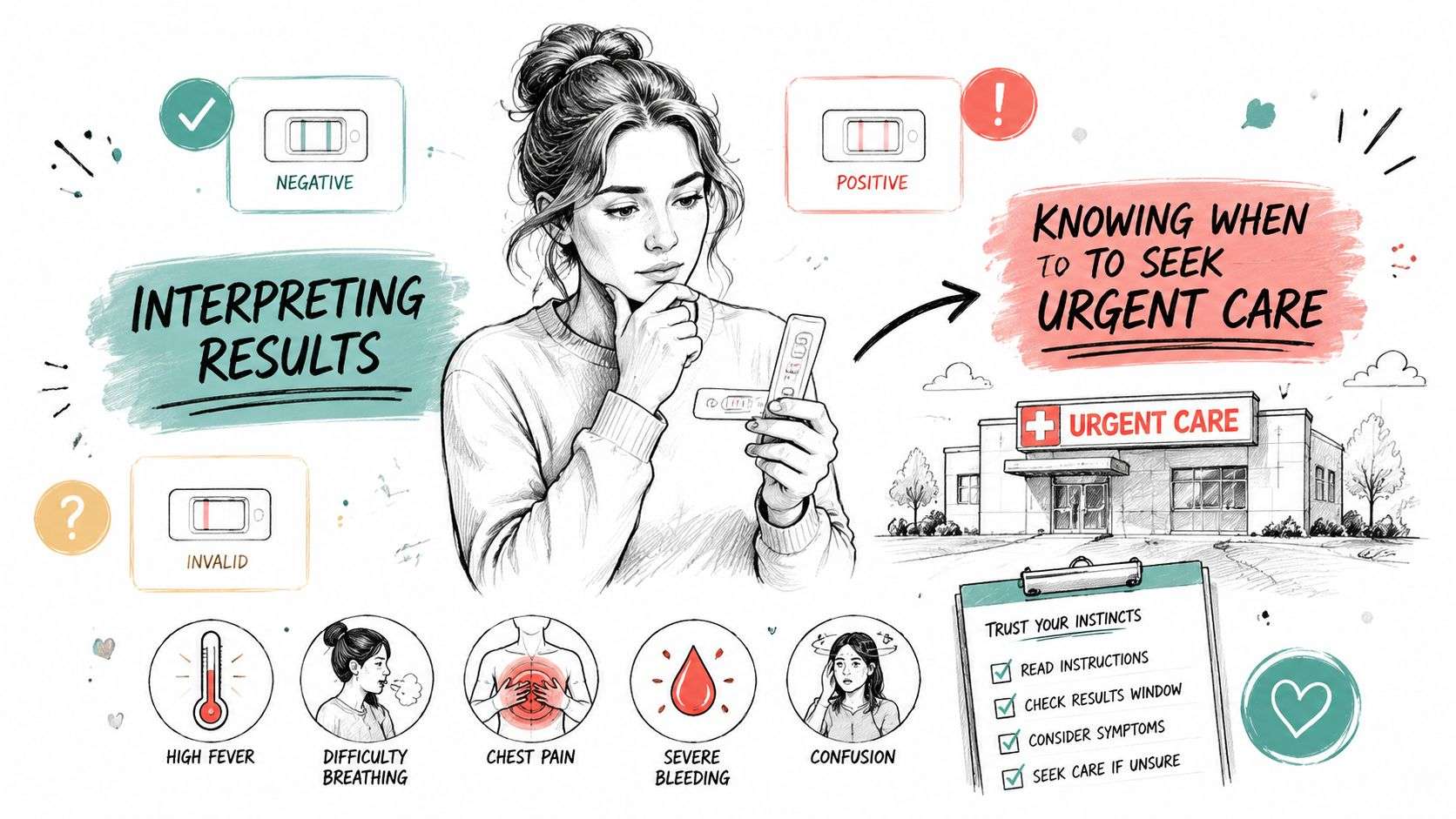
ED itself is usually not an emergency, but certain accompanying symptoms deserve prompt medical evaluation. Sudden erectile difficulty with chest pain, shortness of breath, or leg discomfort can signal a broader cardiovascular concern. Painful erections or new penile curvature may indicate a structural condition such as Peyronie's disease. New numbness, weakness, or other neurological changes require timely assessment.
A prolonged painful erection is also urgent and needs immediate medical care. Don't wait for a routine follow-up if severe symptoms develop.
Ask your provider to connect the dots: “What do these results suggest about the cause, and what will we do next if the first treatment doesn't work?”
Exploring Treatment Pathways and When to See a Specialist
Testing should lead to a plan, but the plan won't be identical for every man. Treatment may begin with addressing blood pressure, glucose, sleep, medication contributors, stress, or relationship factors. For suitable patients, prescription ED medication may be considered, while counseling, vacuum devices, injections, or specialist procedures may fit other circumstances. The safest choice depends on medical history, contraindications, preferences, and the suspected cause.
Comparing the main paths
Medication can be practical for men who want an established, as-needed approach, but it requires a review of other medicines and health conditions. It doesn't automatically create an erection or increase sexual desire, and sexual stimulation remains necessary. Men must discuss chest-pain medicines and other blood-pressure-lowering drugs with a clinician before treatment.
Lifestyle and underlying-condition management may address the health factors that contribute to vascular or metabolic ED. This path can involve improving physical activity, nutrition, sleep, tobacco exposure, alcohol use, and management of diagnosed conditions. It often supports other treatments rather than replacing them immediately.
Regenerative and device-based protocols require careful scrutiny. Acoustic therapies, laser approaches, and injection protocols are offered in some specialty settings, but patients should ask what evidence supports the exact protocol, how outcomes are measured, what risks apply, and what follow-up includes. The existence of a branded protocol doesn't remove the need for individualized assessment or realistic expectations.
Sexual Wellness Centers of America offers ED evaluations and non-surgical programs, including the REGENmax protocol, which combines REGENlase laser therapy, REGENwave acoustic therapy, and concentrated HEshot tissue-regenerative injections. The practice also provides hormone optimization, peptide therapy, and lab-guided support for men with diabetes-related erectile difficulties. Its website reports a 97.2% outcome in a study of 250 patients, stated as regaining the ability to achieve and maintain an erection after completing the protocol. That is a clinic-reported outcome, so ask to review the study design, patient selection, follow-up, and definition of success before making a decision.
When specialist care makes sense
A primary-care clinician can often begin the history, examination, risk assessment, and initial labs. A urologist or sexual medicine specialist may be appropriate when symptoms persist, initial treatment is ineffective or unsafe, penile curvature or pain is present, vascular testing is needed, or the diagnosis remains uncertain.
Before committing to a treatment plan, ask:
- What cause or combination of causes seems most likely?
- Which test supports that conclusion?
- What are the alternatives, risks, and expected limits?
- How will success be measured?
- What happens if the first approach doesn't help?
- What follow-up and maintenance will I receive?
You can use this ED treatment doctor resource when deciding what type of clinical support to seek.
Next Steps to Take After You Understand Your Results
Review every result with a qualified provider and ask how it changes your treatment options. Bring your medication and supplement list, your IIEF-5 score, and a clear description of your goals. If combination care or a specialist protocol is suggested, ask about evidence, risks, follow-up, and how progress will be monitored. Embarrassment may delay the first appointment, but it doesn't have to control what happens next. Getting tested is a practical act of confidence, and ED is a treatable health concern rather than a permanent verdict.
Sexual Wellness Centers of America provides structured ED evaluations, targeted hormone and metabolic testing, penile vascular assessment when indicated, and non-surgical treatment options including REGENmax in its Colleyville, Texas clinic. Visit Sexual Wellness Centers of America to schedule a consultation, bring your current medication list, and discuss your symptoms and treatment goals confidentially.