
What Is BPC 157 Gut Healing and Does It Actually Work?
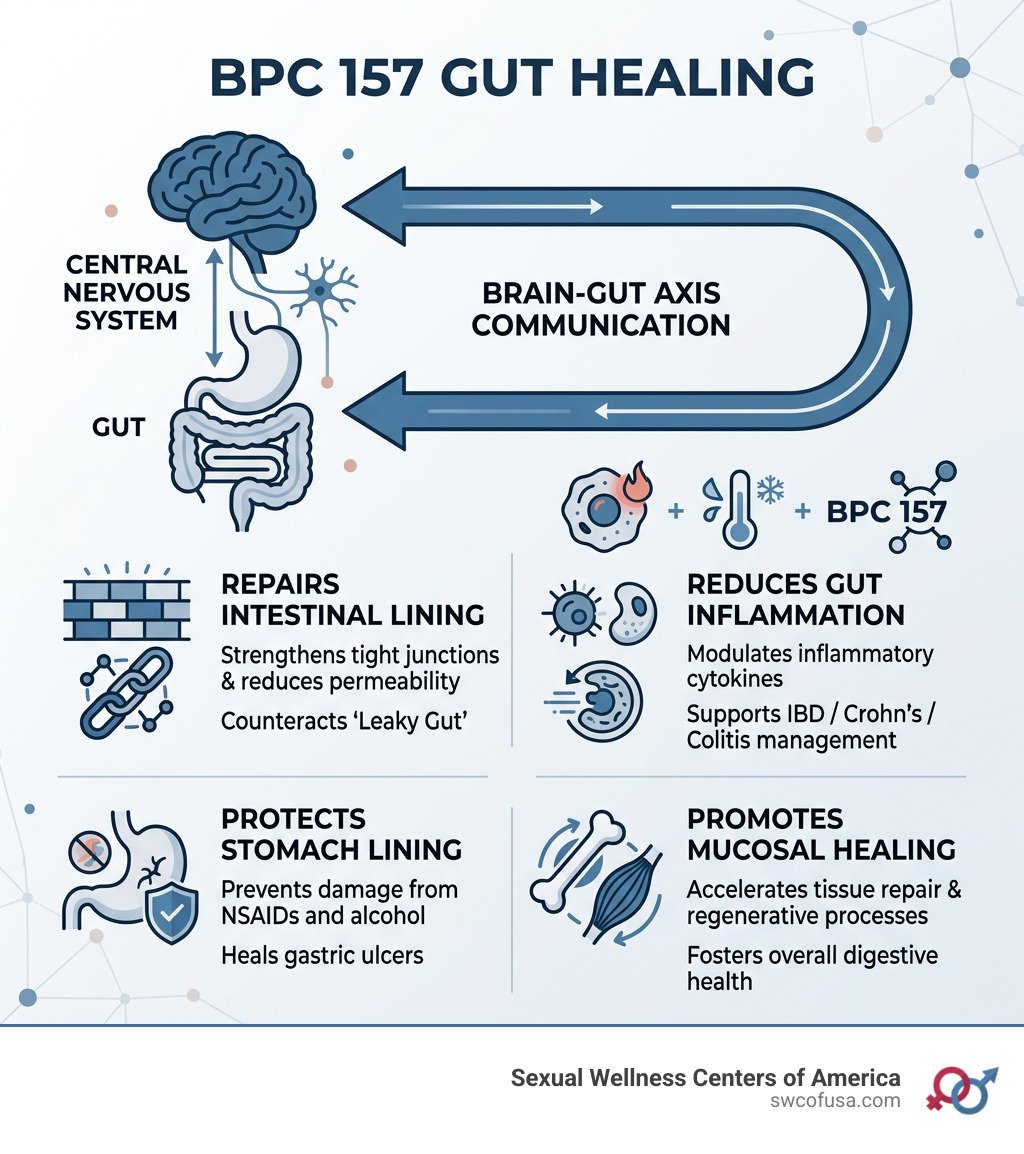
BPC 157 gut healing refers to the use of a synthetic peptide — derived from a protein naturally found in human gastric juice — to repair and protect the digestive tract lining, reduce gut inflammation, and restore healthy function.
Here’s a quick overview of what BPC-157 may help with:
| Gut Condition | Proposed Benefit |
|---|---|
| Leaky gut | Repairs intestinal lining and tight junctions |
| IBD / Crohn’s / Ulcerative Colitis | Reduces inflammation and promotes mucosal healing |
| Gastric ulcers | Protects stomach lining from NSAID and alcohol damage |
| Short-bowel syndrome | Supports nutrient absorption and intestinal adaptation |
| Fistulas | Promotes closure even when treatment is delayed |
What makes BPC-157 stand out is its unusual stability. Unlike most peptides, it survives in human gastric juice for more than 24 hours — meaning it can be taken orally and still reach the gut intact.
The research base is still growing. Most evidence comes from animal studies, with limited but promising human data. It is not FDA-approved for human use, and that context matters when evaluating its use.
I’m Jeff Nuziard, CEO of Sexual Wellness Centers of America, where I lead a team focused on science-backed, personalized health solutions — including emerging therapies like BPC 157 gut healing that intersect digestive health with overall vitality and wellness. Let’s walk through exactly how this peptide works and how it may fit into a total internal repair protocol.
Important bpc 157 gut healing terms:
Understanding BPC-157 and Its Origins
To understand why bpc 157 gut healing is such a hot topic in regenerative medicine, we have to look at where it comes from. BPC-157 is a “pentadecapeptide,” which is just a fancy way of saying it’s a chain of 15 amino acids. In biology, peptides are like the body’s software code—they tell cells exactly what to do.
While our bodies naturally produce over 7,000 different peptides, BPC-157 is a synthetic version of a protein sequence found in our own stomach acid. Its full name is “Body Protection Compound,” and it was named that for a good reason. Scientists discovered that this specific sequence was responsible for the stomach’s incredible ability to keep from digesting itself while simultaneously repairing the constant micro-damage caused by food, acid, and bacteria.
We often think of stomach acid as purely destructive, but it contains the very blueprints for tissue protection. Researchers like Predrag Sikiric have spent decades studying how this compound acts as a “cytoprotective” agent—meaning it protects cells from injury. This natural origin gives BPC-157 a unique affinity for the gastrointestinal tract, making it a primary candidate for those looking to “reboot” their digestive system.
The Science of BPC 157 Gut Healing
The magic of bpc 157 gut healing isn’t just about “coating” the stomach. It works at a deep molecular level to change how your body handles repair. If your gut is a construction site that’s been abandoned, BPC-157 is the project manager who shows up with a fresh crew and a new set of blueprints.
One of the most critical aspects of BPC-157 is its stability. Most peptides are fragile; they fall apart the moment they hit the harsh, acidic environment of the stomach. However, BPC-157 is stable in human gastric juice for more than 24 hours. This allows it to be taken orally, where it can travel through the entire digestive tract, from the esophagus to the colon, providing repair along the way.
Proposed Mechanisms of BPC 157 Gut Healing
How does it actually fix things? There are three main “tools” BPC-157 uses:
- Angiogenesis (Building New Roads): BPC-157 triggers the release of Vascular Endothelial Growth Factor (VEGF). This process creates new blood vessels in damaged areas. Think of it like building new highways into a disaster zone so that supplies (nutrients and oxygen) can get in to fix the damage.
- Nitric Oxide (NO) Modulation: Nitric oxide helps control blood flow and inflammation. BPC-157 helps balance the NO system, ensuring your gut has enough blood flow to heal but not so much inflammation that it causes further pain.
- The FAK-paxillin Pathway: This is a cellular signaling pathway that helps cells move. When you have a “hole” in your gut lining (like an ulcer or leaky gut), BPC-157 encourages healthy cells to migrate to the site of the injury to “fill the gap.”
Research indicates that Stable Gastric Pentadecapeptide BPC 157 May Recover Brain–Gut Axis function, suggesting that it doesn’t just fix the plumbing—it helps the “control center” (the brain) and the “engine room” (the gut) communicate better.
Research and Evidence for BPC 157 Gut Healing
While we are still waiting for large-scale, multi-center human clinical trials, the preclinical evidence is extensive. In animal models, BPC-157 has shown a remarkable ability to heal:
- NSAID-induced damage: It counteracts the “holes” punched in the gut by overusing ibuprofen or aspirin.
- Alcohol-induced lesions: It protects the stomach lining from the corrosive effects of high-proof alcohol.
- Intestinal adaptation: In cases of “short-bowel syndrome,” it helps the remaining intestine grow and absorb nutrients more effectively.
A preclinical safety evaluation of BPC-157 found that the peptide had no toxic effects even at high doses, which has paved the way for the pilot human studies we are seeing today.
Targeted Conditions and Administration Protocols
At Sexual Wellness Centers of America, we see many patients in Colleyville, TX, who struggle with systemic issues that start in the gut. If your gut isn’t absorbing nutrients properly, your hormone levels, energy, and even sexual health can suffer. BPC 157 gut healing is often used as a foundational step to ensure the rest of our treatments—like REGENmax®—work at their full potential.
| Peptide | Primary Focus | Best For |
|---|---|---|
| BPC-157 | Tissue Repair & Angiogenesis | Ulcers, Leaky Gut, IBD, Tendons |
| KPV | Anti-Inflammatory | Colitis, Mast Cell issues, Skin inflammation |
| TB-500 | Systemic Recovery | Muscle tears, overall circulation, heart health |
Often, clinicians will combine BPC-157 with KPV. While BPC-157 acts as the “repairman,” KPV acts as the “firefighter,” calming down the immune system’s overreaction and reducing the burning inflammation common in IBD and food sensitivities.
Administration Methods for BPC 157 Gut Healing
For gut-specific issues, you generally have two choices:
- Oral Application (Capsules/Liquid): This is the preferred method for bpc 157 gut healing. Because the peptide is stable in stomach acid, taking it orally allows it to make direct contact with the lining of the stomach and intestines. It’s like applying a salve directly to a wound.
- Subcutaneous Injection: Some people prefer injections for systemic issues (like a shoulder injury). While this still helps the gut, the oral route is usually more efficient for targeting digestive “hot spots.”
Treatment durations typically run in 6 to 12-week cycles. Most patients report noticing a difference in their digestion—less bloating, more regular movements, and reduced pain—within the first few weeks of starting their cycle.
Dosage Guidelines for BPC 157 Gut Healing
Standard research dosages for adults typically range from 200 mcg to 500 mcg, taken once or twice daily.
It’s important to note that “more is not always better.” Because BPC-157 works by activating specific cellular pathways, the body responds best to consistent, moderate levels rather than massive “megadoses.” In a 2024 pilot trial, even severe conditions like interstitial cystitis responded to controlled dosing, with 100% of the women in the study reporting significant symptom improvement.
Safety, Side Effects, and Regulatory Status
We have to talk about the “elephant in the room”: the regulatory status of BPC-157. Currently, BPC-157 is not FDA-approved for human use. In late 2023, the FDA moved BPC-157 into “Category 2,” which effectively banned compounding pharmacies from making it. This was due to “significant safety risks” and a lack of long-term human data.
Furthermore, the World Anti-Doping Agency (WADA) added BPC-157 to its prohibited list in 2022. If you are a competitive athlete, this peptide is a no-go.
Sourcing and Risks
Because of these bans, many people turn to “research chemical” websites. This is the Wild West of the supplement world. When you buy from unregulated online sources, you run several risks:
- Contamination: Products may contain heavy metals, bacteria, or leftover solvents.
- Inaccurate Dosing: You might be getting half of what’s on the label—or double.
- Purity: Many “research” peptides are only 70-80% pure, whereas medical-grade peptides should be 99%+.
Angiogenesis and Cancer Concerns
One of the theoretical risks of BPC-157 involves its primary mechanism: angiogenesis. Because BPC-157 is so good at growing new blood vessels, there is a concern that it could “feed” a pre-existing tumor. While there is no evidence that BPC-157 causes cancer, anyone with a history of malignancy should avoid it, as tumors use angiogenesis to grow and spread.
Common side effects are generally mild but can include:
- Dizziness or lightheadedness
- Nausea
- Changes in blood pressure
- Injection site redness (if using the injectable form)
Always consult with a qualified clinician before starting any peptide protocol. We recommend a full hormone and vitamin panel to ensure your body is in the right state to handle regenerative therapies.
Frequently Asked Questions about BPC-157
Is BPC-157 FDA approved for human use?
No. As of now, the FDA has not approved BPC-157 for any medical condition. It is classified as an investigational compound, and its use in compounding pharmacies has been restricted.
How long does it take to see results for gut issues?
In clinical case series, most patients notice improvements in pain and digestion within 6 to 12 weeks. However, some people report changes in bloating and acid reflux in as little as 7 to 10 days.
Can BPC-157 be taken orally for leaky gut?
Yes. Unlike most other peptides (like insulin or growth hormone), BPC-157 is highly resistant to degradation by stomach acid. This makes it uniquely suited for oral administration to target the gut lining directly.
Conclusion
The potential for bpc 157 gut healing is undeniable, offering a glimpse into a future where we can repair our internal systems with the same precision we use to fix a broken bone. By harnessing the body’s natural “protection compound,” we can address the root causes of digestive distress rather than just masking the symptoms with antacids.
At Sexual Wellness Centers of America in Colleyville, TX, we believe that total wellness is an “inside-out” job. Whether you are looking to improve your vitality through our HEshot®™ or SHEshot®™ treatments, or you want to explore the latest in regenMAX® technology, everything works better when your gut is healthy.
We don’t just look at one symptom; we provide personalized wellness plans based on comprehensive hormone and vitamin panels. Our goal is to help you achieve total internal repair so you can live your life with 100% confidence.
Ready to reclaim your health? If you’re in the Colleyville area and want to explore how personalized peptide therapy and regenerative technology can transform your life, schedule your consultation with us today. Let’s build a plan that works for your unique biology.