
What Men Over 40 Are Asking About BPC 157 and Erectile Dysfunction
BPC 157 erectile dysfunction is one of the most searched peptide topics among men looking for alternatives to traditional ED treatments — and for good reason.
Here’s a quick snapshot of what the research actually shows:
| Question | Short Answer |
|---|---|
| Does BPC-157 help with ED? | Possibly — through improved blood flow and reduced inflammation, but no human ED trials exist yet |
| Is it FDA-approved for ED? | No |
| Is it banned in sports? | Yes — WADA and USADA banned it in 2022 |
| Is it safe? | Unknown for long-term human use; mild side effects reported |
| How is it taken? | Injection or oral (arginate form has higher bioavailability) |
ED affects roughly 50% of men over age 40, and more than 80% of those cases are tied to vascular dysfunction — poor blood flow to the penis. BPC-157 is a synthetic peptide that may support the very mechanisms behind that dysfunction: blood vessel growth, tissue repair, and inflammation control.
But here’s the catch: almost all the evidence comes from animal studies. The excitement is real, but so are the knowledge gaps.
This guide breaks down what BPC-157 is, what it might do for erectile function, and what you need to know before considering it — including safer, clinically supported options.
I’m Jeff Nuziard, CEO of Sexual Wellness Centers of America, where I’ve spent years helping men navigate cutting-edge and evidence-based solutions for BPC 157 erectile dysfunction and broader sexual health concerns. In that time, I’ve seen which emerging therapies hold real promise — and which ones need more science behind them before patients should act.
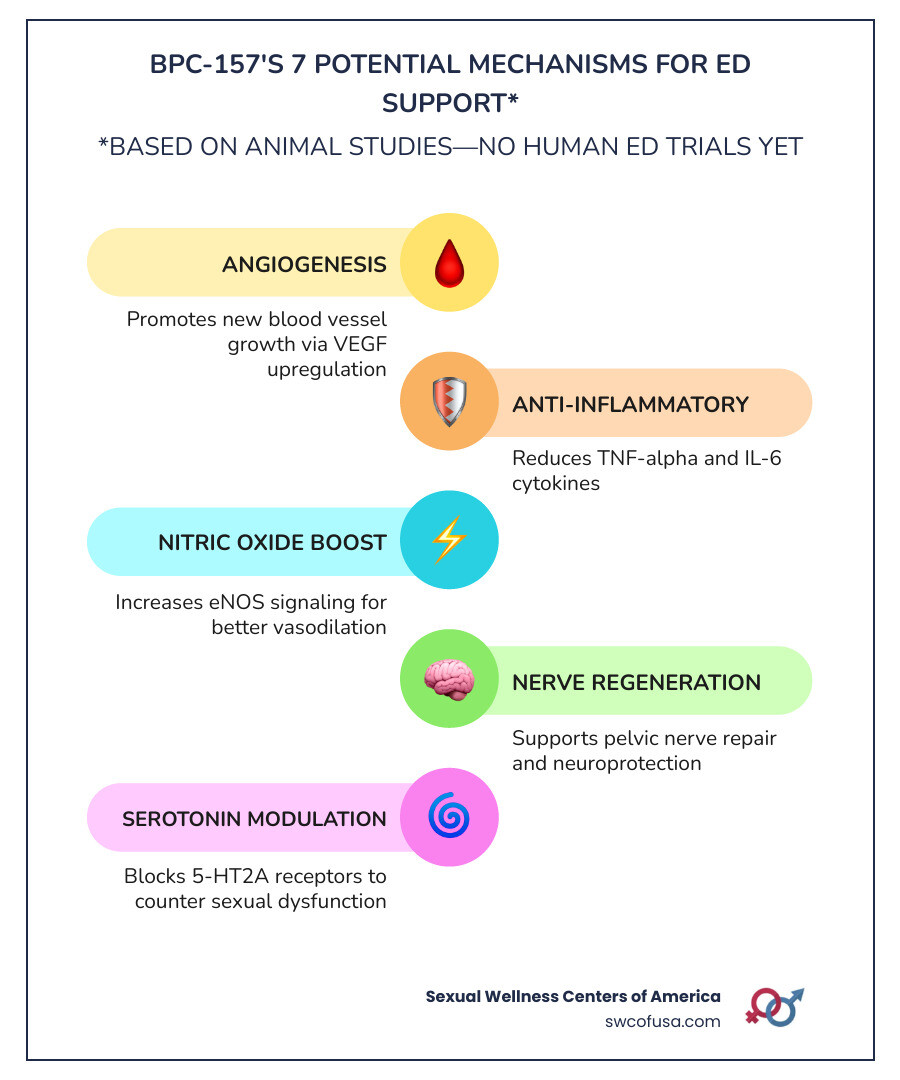
Quick look at bpc 157 erectile dysfunction:
What is BPC-157 and How Does It Work?
BPC-157 stands for “Body Protection Compound.” It is a synthetic pentadecapeptide, which is a fancy way of saying it’s a short chain of 15 amino acids. While it is made in a lab for research purposes today, it is actually derived from a protein naturally found in human gastric (stomach) juice.
In the stomach, this compound acts as a natural guardian, protecting the lining from acid and helping to heal ulcers. However, researchers discovered that its “superpowers” aren’t limited to the gut. When administered elsewhere, BPC-157 (sometimes called Bepecin) appears to trigger a cascade of cellular repair and protein synthesis.
At its core, BPC-157 works by improving the local environment of injured or inflamed tissue. It doesn’t just “mask” pain; it encourages the body to prune away damaged parts and nurture healthy new growth. This is why it has earned the nickname “the Wolverine peptide” among some fitness enthusiasts. For those interested in the broader scope of how these compounds work, you can explore more info about peptide therapy benefits to see how they support overall longevity.
Scientists have observed that BPC-157 accelerates the healing of various tissue types, including muscles, tendons, and ligaments. According to scientific research on BPC-157 tissue healing, the peptide’s ability to promote tissue growth makes it a fascinating subject for regenerative medicine. But how exactly does a stomach-derived peptide help with performance in the bedroom? The answer lies in the vascular system.
The Potential Benefits of BPC 157 Erectile Dysfunction Support
When we talk about bpc 157 erectile dysfunction, we are primarily looking at how the peptide affects blood flow. As we mentioned, over 80% of ED cases are “vasogenic,” meaning they are caused by issues with blood vessels. If the pipes are clogged or the pump isn’t working right, you can’t get the pressure you need.
BPC-157 may help address this through a process called angiogenesis — the formation of new blood vessels. It does this by upregulating Vascular Endothelial Growth Factor (VEGF). Think of VEGF as a construction foreman who tells the body to build new “highways” for blood flow.
But BPC-157 goes a step further. It doesn’t just increase the foreman (VEGF); it also increases the number of receptors (VEGFR2) that listen to him. This makes the whole process of vessel repair much more efficient. Furthermore, the activation of these receptors increases eNOS signaling, which leads to higher production of nitric oxide.
Nitric oxide is the “secret sauce” for an erection. It tells the smooth muscles in the penis to relax, allowing blood to rush in. Without enough nitric oxide, an erection is physically impossible. By supporting endothelial health and nitric oxide production, BPC-157 addresses the root cause of many ED cases. You can find research on BPC-157 and blood vessel formation that details these vascular pathways. For those seeking immediate clinical solutions, we offer more info about erectile dysfunction treatment at our Colleyville center.
BPC 157 Erectile Dysfunction and Nerve Regeneration
Beyond blood flow, erections require a clear signal from the brain to the pelvic nerves. If those nerves are damaged — whether by surgery, injury, or chronic conditions like diabetes — the “message” to get hard never arrives.
BPC-157 has shown neuroprotective properties in animal models. It may help with the repair of pelvic nerves, ensuring that the neurological “wiring” for sexual function remains intact.
Interestingly, BPC-157 also interacts with the brain’s serotonin system. High levels of serotonin, often caused by SSRI antidepressants, are notorious “boner killers.” They can cause penile numbness, delayed ejaculation, and low libido. BPC-157 acts as a 5-HT2A antagonist, meaning it may block some of the sexual side effects caused by excess serotonin. This makes it a potential candidate for men suffering from antidepressant-induced sexual dysfunction. If you believe your ED is linked to hormonal or chemical imbalances, you can check out more info about hormone therapy for ED.
Reducing Inflammation with BPC 157 Erectile Dysfunction Protocols
Inflammation is the silent enemy of sexual health. Chronic, low-grade inflammation damages the delicate lining of your blood vessels (the endothelium) and increases oxidative stress. This prevents the vessels from dilating properly.
BPC-157 is a potent anti-inflammatory. It helps regulate cytokines — small proteins that signal inflammation. Specifically, it has been shown to downregulate pro-inflammatory cytokines like TNF-alpha and IL-6, while upregulating anti-inflammatory ones like IL-10.
By cleaning up the “fire” of inflammation in the body, BPC-157 may protect the vascular system of the penis from further damage. Research on BPC-157 anti-inflammatory effects suggests that this systemic cleanup is one of the peptide’s most significant benefits for long-term health.
Scientific Evidence: Human vs. Animal Studies
It is vital to distinguish between what happens in a petri dish or a rat and what happens in a human body. While the theoretical benefits of bpc 157 erectile dysfunction are exciting, the clinical data is still catching up.
| Study Type | Subject | Outcome | Direct ED Data? |
|---|---|---|---|
| Animal (Rat) | Muscle Crush Injury | Increased vessel formation and faster healing | No |
| Animal (Mouse) | Diabetic Wounds | Stimulation of granulation tissue and repair | No |
| Human Pilot | Knee Pain (16 people) | Significant pain relief and improved mobility | No |
| Human Pilot | Bladder Pain (12 people) | Improved symptoms of interstitial cystitis | No |
| Human Clinical | ED Patients | No published studies to date | N/A |
As you can see, the “hard” evidence for ED is currently missing in humans. We have seen BPC-157 work wonders for rats with muscle injuries and mice with diabetic wounds, but we haven’t seen a double-blind, placebo-controlled human trial for erectile function.
The USADA warning on lack of clinical trials is a reminder that while the peptide is popular in the “biohacking” community, it hasn’t passed the rigorous testing required for medical approval. However, we do know that BPC-157 shares similar regenerative pathways with stem cell therapy. In one study, 37.5% of men were able to achieve erections after injections of placental matrix-derived stem cells — a treatment that, like BPC-157, focuses on tissue and vessel repair. For more on the connection between metabolic health and performance, read our more info about diabetes and ED.
Safety, Side Effects, and Legal Status
Before you rush to buy a vial online, we need to talk about the “red tape.”
As of 2024, BPC-157 is not FDA-approved for human use. It is classified as a “research chemical.” This means it is legal to buy for laboratory research, but it is not legal to sell as a supplement or prescribe as a standard medication. The FDA warning on compounding safety risks highlights that substances like BPC-157 may present significant safety risks because they haven’t been vetted for human consumption.
For athletes, the news is even more restrictive. The World Anti-Doping Agency (WADA) added BPC-157 to its prohibited list in 2022. Even if you aren’t an Olympian, if you compete in any drug-tested sport, BPC-157 is a “no-go.” You can view the WADA prohibited substance list for the full details.
Known Side Effects
While BPC-157 is generally considered “well-tolerated” in animal studies (even at massive doses), humans have reported some side effects, including:
- Nausea and digestive discomfort
- Dizziness or light-headedness
- Headaches
- Irritation or redness at the injection site
- Changes in appetite
The biggest risk, however, isn’t the peptide itself — it’s the source. Because BPC-157 is unregulated, products bought from “gray market” websites may be impure, under-dosed, or contaminated with bacteria. This is why working with a licensed medical professional in a clinical setting is non-negotiable.
Administration and Dosage: Injection vs. Oral
If you are exploring bpc 157 erectile dysfunction protocols, you’ll find two main ways people take it:
- Subcutaneous Injection: This is the most common method for injury repair. The peptide is typically sold as a “lyophilized” (freeze-dried) powder in a vial. It must be reconstituted using bacteriostatic water. A small insulin syringe is used to inject the solution into the fatty tissue, usually around the abdomen.
- Oral Capsules: This is where it gets tricky. Most peptides are destroyed by stomach acid. However, since BPC-157 is derived from the stomach, it is more stable. Specifically, the BPC-157 Arginate salt form has been shown to have over 90% bioavailability when taken orally, compared to only 3% for the older Acetate form.
For gut health, oral is usually preferred. For systemic issues like ED or muscle repair, many “researchers” prefer injections to ensure the compound enters the bloodstream directly.
Standard dosages used in various studies range from 250mcg to 500mcg, taken twice daily. However, there is no “official” dose for ED. Timing is also a factor; for gut issues, it’s often taken on an empty stomach, while for general healing, consistency is more important than the time of day. For those curious about the results people see, you can look at more info about BPC-157 before and after.
Frequently Asked Questions about BPC-157
Is BPC-157 FDA approved for ED?
No. BPC-157 is not currently approved by the FDA for any medical condition, including erectile dysfunction. It is currently designated for research use only. While some clinics may offer it as part of an experimental regenerative plan, it is not a “standard of care” like Sildenafil or Tadalafil. If you are looking for more info about peptides for healing, it is essential to consult with a provider who understands the regulatory landscape.
How long does it take for BPC-157 to work?
It depends on what you’re looking for. Some users report a reduction in inflammation and pain within just a few days. However, biological processes like angiogenesis (building new blood vessels) and tissue repair take time. Most protocols suggest a cycle of 4 to 12 weeks to see significant structural changes. For more on tissue-specific healing, see more info about BPC-157 for ligaments.
Can BPC-157 cause anxiety?
While BPC-157 is generally described as “anxiolytic” (anti-anxiety) because it helps stabilize the HPA axis (your stress response system), everyone is different. There are anecdotal reports of users feeling increased anxiety or “brain fog.” This may be due to the peptide’s interaction with dopamine and serotonin systems. Research on BPC-157 and the HPA axis shows it generally acts as an adaptogen, helping the body cope with stress, but individual reactions vary.
Conclusion: Proven Alternatives for Sexual Wellness
While bpc 157 erectile dysfunction research is promising, many men don’t want to wait for “research chemicals” to be proven safe. You want results now, and you want them to be backed by clinical success.
At Sexual Wellness Centers of America in Colleyville, TX, we specialize in the very regenerative mechanisms BPC-157 tries to mimic — but we use proven, FDA-cleared technologies and protocols with a 97.2% efficacy rate in ED reversal.
Our approach includes:
- HEshot®™: A proprietary procedure that uses your body’s own growth factors to rejuvenate penile tissue and improve blood flow.
- REGENwave®: Utilizing high-frequency, low-intensity shockwaves to break up plaque in blood vessels and stimulate the growth of new ones (angiogenesis) without needles or surgery.
- REGENmax® Technology: Our comprehensive system for total sexual optimization, combining hormone panels, vitamin assessments, and targeted therapies.
- REGENlase®: Advanced laser therapy designed to enhance tissue sensitivity and vascular health.
We don’t believe in “one-size-fits-all” pills. We provide personalized wellness plans based on your specific biology. If you’re ready to stop experimenting with “research chemicals” and start a proven path to recovery, we invite you to explore our more info about peptide therapy services or schedule a consultation at our Colleyville location.
The truth is, your sexual health is too important to leave to chance. Whether it’s through peptides, shockwave therapy, or regenerative injections, the goal is the same: restoring the natural function of your body so you can perform with confidence.