
The surprising truth about IV therapy is that its strongest use case often isn't “boosting wellness” in a healthy person. It's correcting a real physiological problem when digestion, absorption, hydration, inflammation, or recovery pathways aren't working well enough on their own.
That distinction matters. IV therapy has become highly visible in wellness culture, yet the evidence is much stronger for targeted, medically supervised use than for one-size-fits-all drips sold as a shortcut to energy, immunity, or athletic recovery. If you're trying to improve vitality, hormone response, or sexual function, the question isn't whether IV therapy is trendy. The question is whether it fits your biology, your labs, and your treatment goals.
Table of Contents
- The Rise of IV Therapy Beyond the Wellness Trend
- What Is IV Therapy and How Does It Work
- Decoding Common IV Formulations and Their Purposes
- The Clinically Recognized IV Therapy Benefits
- Understanding Risks and Choosing a Reputable Provider
- How IV Therapy Supports Regenerative Sexual Health
- Your IV Therapy Session What to Expect
- Achieve Vitality with Medically Guided IV Therapy
The Rise of IV Therapy Beyond the Wellness Trend
IV therapy didn't rise because marketing teams got creative. It grew because direct fluid and nutrient delivery fills a real medical need, and people increasingly want treatments that work faster and more predictably than oral options when absorption or recovery is compromised.
That demand now has a visible economic footprint. The global intravenous hydration therapy market was valued at USD 2.83 billion in 2025 and is projected to reach USD 5.66 billion by 2033, with a projected 9.2% CAGR from 2026 to 2033 according to Grand View Research's intravenous hydration therapy market analysis. That doesn't prove every claim made about IV drips, but it does show this category is far more than a passing novelty.
Why the growth matters
Patients are looking for support in a few predictable situations:
- Rapid rehydration needs when oral intake is too slow or poorly tolerated
- Deficiency correction when the gut isn't absorbing nutrients well
- Adjunctive care during recovery, illness, or high physiological stress
- Regenerative support when broader treatment plans depend on better cellular function
What gets lost in the hype is that these are not all the same problem.
Clinical lens: A hydration drip for dehydration, a nutrient infusion for malabsorption, and an IV used alongside hormone or regenerative care should not be treated as interchangeable services.
Wellness trend versus medical tool
The phrase IV therapy benefits gets used loosely online. In practice, the divide is simple. One model treats IVs as convenience wellness. The other uses them as a precision tool.
A medically grounded approach asks better questions first. Is there poor oral absorption? Is there a documented deficiency? Is inflammation interfering with recovery? Is there a sexual health condition tied to vascular stress, metabolic disease, or hormone imbalance? When those questions guide the plan, IV therapy moves out of the fad category and into legitimate supportive care.
What Is IV Therapy and How Does It Work
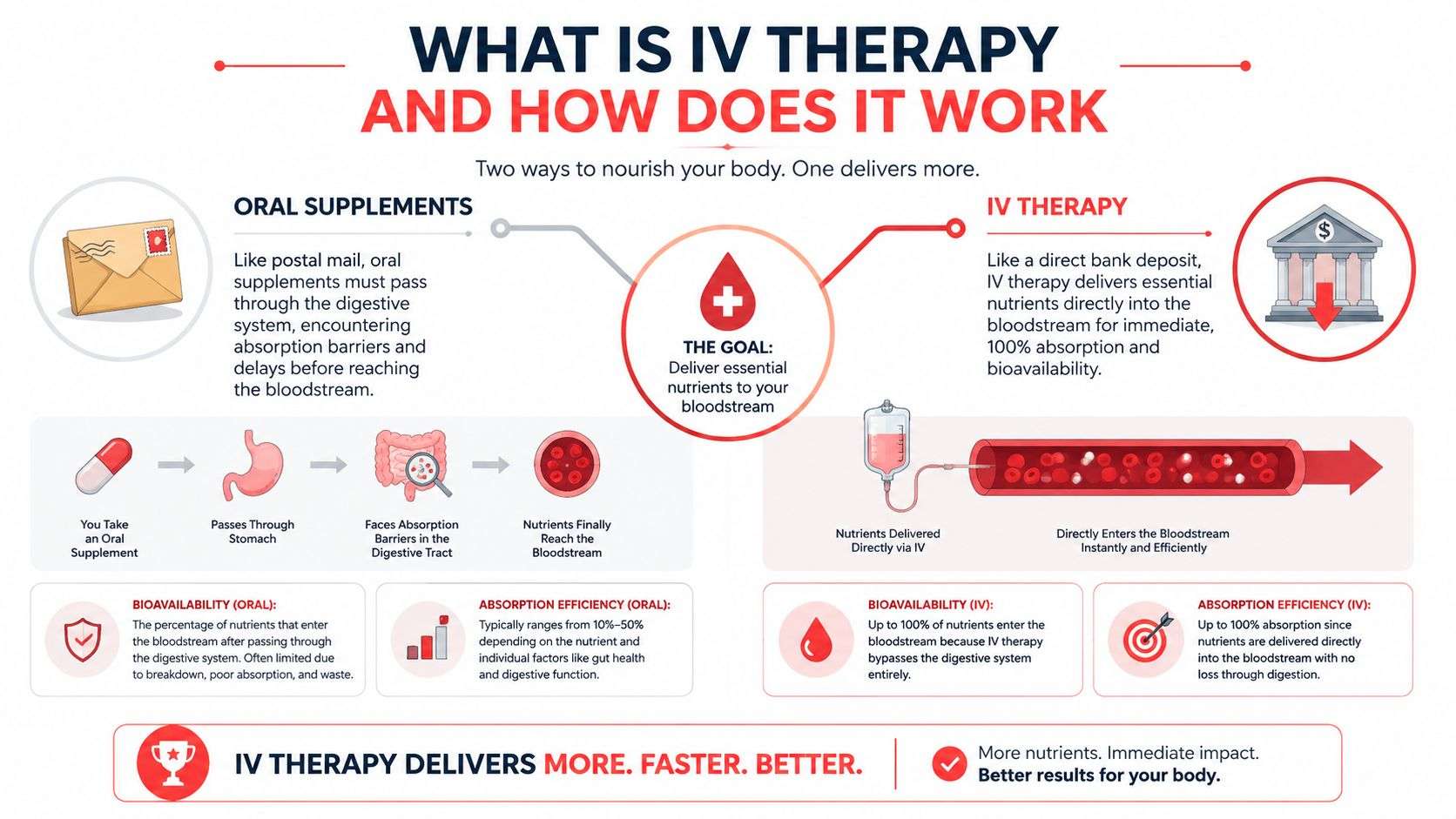
IV therapy delivers fluids, electrolytes, vitamins, or medications directly into the bloodstream under medical supervision. That route matters because it bypasses digestion entirely and gives the clinician more control over dose, timing, and concentration than an oral supplement can provide.
Oral nutrients still have a place. For routine maintenance, they are often the simpler and more appropriate option. The advantage of IV therapy shows up when the clinical goal is faster repletion, more reliable delivery, or support for a patient whose gut, hydration status, or symptom burden makes oral intake less effective.
Why direct delivery can change the result
With an IV, what is infused reaches circulation immediately. There is no delay from stomach emptying, no interference from digestive irritation, and no uncertainty about how much was absorbed that day.
That difference matters most in patients with malabsorption, nausea, dehydration, inflammatory gut issues, or a documented deficiency that needs prompt correction. It also matters in sexual health and regenerative care, where progress may depend on restoring the physiologic basics first. Cells need adequate fluid balance, electrolyte stability, and nutrient availability before higher-level therapies can do their best work.
What IV therapy does well in a clinical setting
A well-chosen infusion can support care in several practical ways:
- Replaces fluids efficiently when dehydration is affecting energy, circulation, or recovery
- Delivers nutrients predictably when oral absorption is unreliable
- Raises blood levels faster when a patient needs repletion rather than routine maintenance
- Supports broader treatment plans by improving the physiologic conditions that hormone and peptide therapies rely on
That last point is often missed. In a medically guided sexual wellness program, IV therapy is rarely the whole treatment. It is more often an adjunct that helps the rest of the plan work better.
For example, hormone replacement therapy may address libido, mood, body composition, or vaginal and erectile tissue health. Peptide therapies may be used to support repair, metabolic function, or vascular performance in selected patients. If the patient is underhydrated, depleted, inflamed, or poorly nourished, the response to those therapies can be less consistent. IV support helps correct those barriers. It does not replace HRT or peptides. It can make the terrain more favorable for them.
Where expectations should stay grounded
Direct bloodstream delivery sounds powerful because it is. It is not automatically better for every person or every goal.
A healthy person with good digestion, no deficiency, and no clear treatment target may do just as well with oral hydration, nutrition, sleep, and targeted supplementation. That is where drip-bar marketing tends to overpromise. Clinical IV therapy works best when there is a defined reason to use it and a plan for measuring whether it helped.
What this means in practice
The right question is not whether IV therapy is trendy or effective. The right question is whether the patient in front of you has a problem that IV delivery solves better than oral care.
When the answer is yes, IV therapy becomes a precise medical tool. When the answer is no, simpler options usually make more sense.
Decoding Common IV Formulations and Their Purposes
Most patients don't need a long menu. They need to know what a formulation is trying to do.
An IV bag is not a magic blend. It's a delivery vehicle for a specific group of ingredients chosen to match a problem. The same base fluid can be paired with very different nutrient combinations depending on whether the clinical priority is hydration, deficiency correction, oxidative stress support, or metabolic recovery.
Myers style nutrient blends
The best-known multinutrient formulation is often called a Myers' cocktail. It typically includes magnesium, calcium, B vitamins, and vitamin C. Clinicians have used similar blends when the goal is broad nutrient repletion and support for cellular metabolism.
These formulations are usually discussed when a patient reports fatigue, poor recovery, high stress load, or symptoms that suggest multiple nutrient gaps rather than a single isolated deficiency.
A mixed nutrient infusion makes the most sense when the physiology is mixed. It makes less sense when a patient needs one targeted correction.
Hydration and electrolyte focused drips
Some infusions are built primarily around fluid and electrolyte restoration. These are less about “energy” in the marketing sense and more about correcting a body that's running poorly because hydration status is off.
Typical uses include illness recovery, significant fluid loss, travel-related depletion, or a period when oral hydration hasn't been enough. In these cases, the benefit often comes from the fluid and electrolyte component more than from any vitamin add-on.
Antioxidant centered support
Other IV plans emphasize antioxidants such as vitamin C or glutathione. These are usually considered when the treatment goal involves oxidative stress, recovery burden, or tissue support.
In sexual wellness and regenerative care, this category becomes more relevant because endothelial health, nitric oxide signaling, and tissue repair are all sensitive to inflammatory and oxidative load. That doesn't mean every patient needs antioxidant infusions. It means the formulation should match the mechanism you're trying to influence.
A simple way to think about formulations
| Formulation type | Typical purpose | Best use case |
|---|---|---|
| Broad nutrient blend | General repletion | Multi-factor fatigue or poor intake |
| Hydration and electrolytes | Fluid restoration | Dehydration or post-illness recovery |
| Antioxidant focused infusion | Oxidative stress support | Recovery-heavy or regenerative protocols |
| Targeted deficiency support | Correct a known gap | Lab-based nutrient deficiency or malabsorption |
The key is customization. A patient with diabetes-related vascular stress, a patient with low B12 absorption, and a patient seeking generic “wellness” should not walk out with the same drip.
The Clinically Recognized IV Therapy Benefits
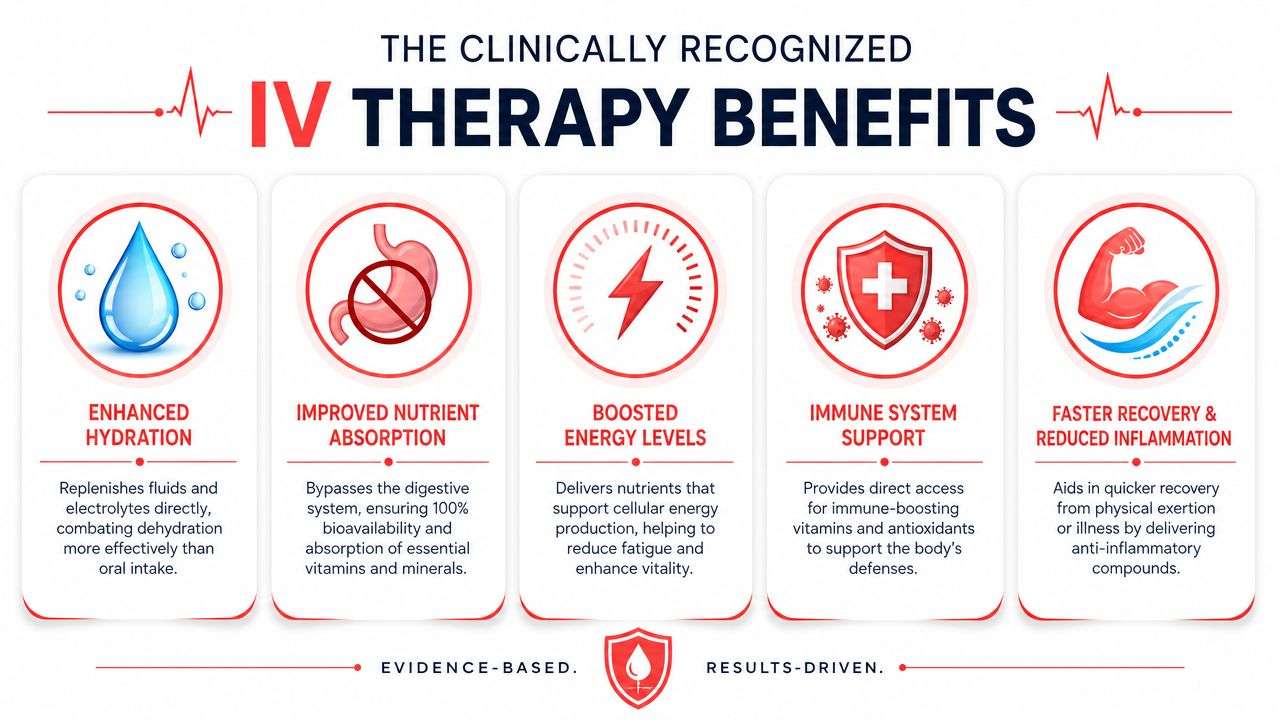
The clinically recognized benefits of IV therapy are narrower, and more meaningful, than wellness marketing suggests. In practice, the treatment has the strongest value when it solves a specific physiologic problem, supports a diagnosed condition, or improves the response to a broader medical plan.
That distinction matters in sexual health care. A targeted infusion used alongside hormone replacement therapy or peptide therapy serves a different purpose than a generic “energy drip.” The goal is not to flood the body with ingredients. The goal is to improve delivery, correct deficits, support endothelial function, reduce recovery burden, and help other therapies work in a better internal environment.
A frequently cited example comes from fibromyalgia care. An earlier referenced review summarized findings from a small study in which patients receiving an intravenous vitamin protocol reported improvement in pain, mood, and quality of life. That does not make IV therapy a universal answer. It does show that selected patients can experience meaningful benefit when the formulation matches the clinical problem.
Where the evidence is most clinically useful
Clinicians tend to view IV therapy as most appropriate in a few clear scenarios:
- Documented nutrient deficiency that has not responded to oral replacement
- Malabsorption or GI impairment that limits what the patient can absorb
- Dehydration or electrolyte depletion where faster correction changes how the patient feels and functions
- Selected chronic conditions or recovery states where infusion support is one part of a medically supervised plan
- Adjunctive care in regenerative and sexual medicine when hydration, micronutrient status, oxidative stress, or vascular support are limiting progress
The unifying principle is precise indication. IV therapy works best when there is a delivery barrier, a measurable need, or a treatment target that oral supplementation is not addressing well.
Benefits patients actually notice
Patients usually describe the benefit in plain language. They report less fatigue, fewer dehydration-related headaches, better stamina, improved recovery, or more consistent day-to-day function.
In sexual wellness practice, the benefit is often indirect but still important. Better hydration and nutrient availability can support tissue health, nitric oxide signaling, and vascular responsiveness. That can matter for patients dealing with erectile dysfunction, low arousal, post-menopausal tissue change, or fatigue that is undermining libido and performance. IV therapy does not replace hormones, peptides, sleep, metabolic control, or relationship factors. It can make a well-built treatment plan work more effectively.
This is the part many drip bars miss.
A patient with low testosterone, insulin resistance, endothelial dysfunction, and chronic fatigue does not need a generic infusion menu. That patient needs a physician-guided plan that decides whether IV therapy belongs at all, what the infusion should contain, and how it fits with HRT, peptides, labs, and symptom goals. That is the standard behind medically guided IV infusion therapy in Colleyville.
Benefits that deserve careful framing
Claims around immunity, anti-aging, athletic performance, and “detox” are often presented too broadly. The more generalized the promise, the weaker the medical footing tends to be.
A better standard is simple. The expected benefit should connect to a known mechanism, a patient-specific need, and an outcome that can be followed over time. If the promise is vague, the formulation is generic, and no one is tracking whether it helped, the treatment is drifting away from medicine and toward wellness theater.
Understanding Risks and Choosing a Reputable Provider
IV therapy is invasive. That alone should change how you think about where and how it's administered.
The biggest mistake patients make is assuming that because a treatment contains vitamins or fluids, it's automatically low risk. The route matters. Any infusion requires needle access, sterile technique, appropriate screening, and someone qualified to recognize when a patient should not receive that formulation.
What the evidence says about overuse
A 2020 systematic review found insufficient evidence to recommend IV therapy outside medically necessary situations such as documented deficiencies or malabsorption, and it also noted risks that require professional oversight, as covered in Forbes' medical review of IV therapy.
That doesn't mean IV therapy lacks value. It means patients should be wary of claims that frame it as universally beneficial for healthy people.
Real risks to keep in mind
Potential complications include:
- Vein irritation such as phlebitis
- Bleeding or bruising at the insertion site
- Infection risk if technique or environment is poor
- Fluid overload in the wrong patient
- Formulation mismatch when ingredients don't fit the patient's condition, medications, or organ function
Some patients also need extra caution because of kidney, heart, or vascular issues. That's why medical screening matters before the first bag is ever hung.
How to judge a provider
A reputable clinic doesn't start by asking which drip sounds good. It starts by determining whether IV therapy is appropriate at all.
Look for these signs:
- Medical oversight: A physician or qualified advanced clinician supervises care.
- Health review: The team asks about diagnoses, medications, symptoms, and contraindications.
- Lab-guided planning: Nutrient choices are based on data when possible.
- Sterile clinical process: The setting feels like healthcare, not casual retail.
- Customization: The formulation is built for your needs rather than selected from a trendy menu.
Patients who want a clearer picture of what clinically managed infusions look like can review this page on IV infusion services in Colleyville.
If a provider offers the same infusion to nearly everyone, they're selling convenience first and clinical judgment second.
The right mindset
The safest way to approach IV therapy is to treat it like any other medical intervention. Ask why it's needed, what it contains, what problem it addresses, and what risks apply to you specifically. If a provider can answer those questions clearly, you're in a much better position to benefit.
How IV Therapy Supports Regenerative Sexual Health
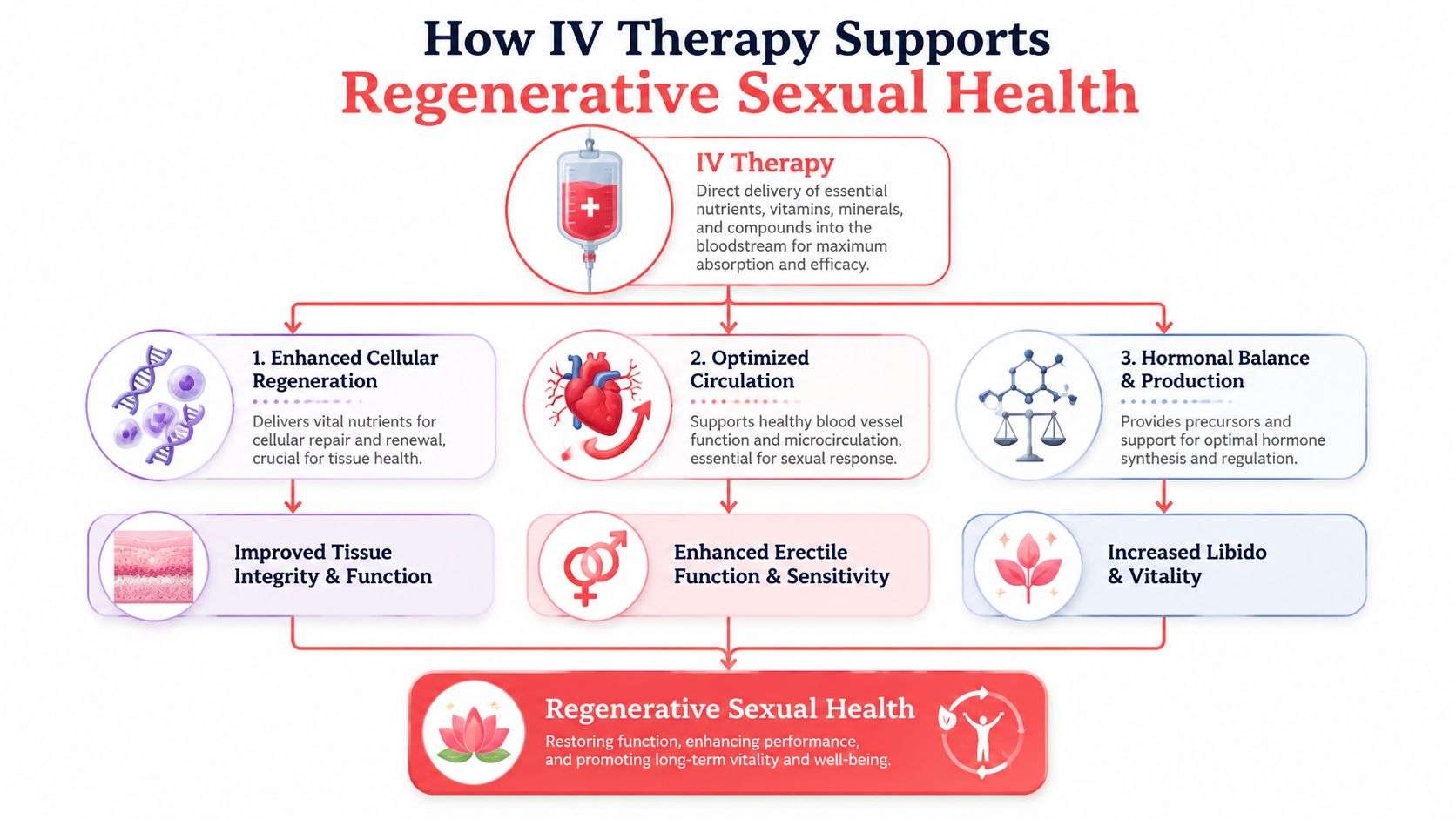
Sexual dysfunction is often discussed as if it were isolated to one organ. Clinically, that's rarely true. Erectile function, arousal, sensitivity, orgasm, and tissue responsiveness all depend on broader systems working well together. Circulation matters. Hormone signaling matters. Inflammation matters. Nutrient status matters.
That's where IV therapy can become more than a general wellness add-on.
The difference between vanity wellness and pathology support
For healthy adults seeking a quick boost, the benefit of IV therapy may be limited. For patients with diabetes-related erectile dysfunction, chronic inflammation, poor absorption, or nutrient deficits that affect vascular health, the logic is different.
In those cases, IV therapy can bypass the GI tract and help achieve therapeutic concentrations of nutrients such as L-carnitine, B12, and zinc, which may be difficult to achieve orally in patients with absorption challenges. That mechanism has been highlighted in reporting on how IV vitamin therapy may matter more for certain medical conditions, including diabetes-induced ED and malabsorption, in this discussion from the University of Colorado Anschutz.
Why that matters for erections and sexual response
Erectile function depends heavily on vascular health. If the endothelium is under chronic stress, if circulation is impaired, or if metabolic disease is interfering with nitric oxide pathways, symptom-focused treatment alone may not be enough.
Targeted IV support can fit into care by helping address conditions that contribute to poor performance:
- Nutrient delivery problems that limit cellular repair
- Oxidative stress burden that strains vascular function
- Inflammatory load that interferes with tissue response
- Recovery bottlenecks during regenerative treatment plans
The synergy with HRT and peptide therapy
Most public-facing content on IV therapy falls short. Its discussions revolve around energy. It doesn't explain treatment integration.
Hormone replacement therapy relies on a body that can respond to hormones well. Peptide therapy also depends on a biologic environment capable of repair, signaling, and tissue remodeling. If oxidative stress and inflammation remain high, patients may not feel the full downstream benefit they expected.
That's why some clinicians use IV support as part of a layered strategy. Antioxidant-focused infusions may help reduce the internal stress burden that can interfere with vascular and hormonal function. Nutrient repletion may also improve the conditions needed for tissue repair and metabolic stability. If you want a clear primer on how peptides fit into broader wellness and regenerative care, this guide on peptide therapy explained is a useful companion resource.
Sexual performance is not just a hormone issue. It's a circulation issue, a tissue issue, a recovery issue, and sometimes an absorption issue.
Where IV therapy belongs in the plan
IV therapy should not replace primary treatment for erectile dysfunction, Peyronie's disease, menopausal symptoms, or other sexual health disorders. It works best as a complementary therapy that supports the terrain in which those primary treatments operate.
For the right patient, that distinction changes everything. The infusion is no longer a luxury drip. It becomes part of a regenerative strategy aimed at helping the body respond better, recover better, and perform better.
Your IV Therapy Session What to Expect
Individuals are often less worried about the ingredients than the experience. That's understandable. Anything involving an IV can sound more intimidating than it feels.
A well-run session is usually straightforward, calm, and structured. The process should feel clinical, not rushed.

Before the infusion
The visit should begin with a medical review. That includes your symptoms, health history, medications, treatment goals, and any relevant lab work. If the plan is thoughtful, the clinician will explain why a specific formulation fits you and why another one doesn't.
For patients who want a more detailed walkthrough of that care model, this patient guide to IV infusion therapy management gives a useful overview.
During the session
The actual IV start usually feels like a brief pinch. After that, most patients sit back while the infusion runs. A comfortable chair, quiet environment, and periodic monitoring make a difference.
Some patients notice a cool sensation in the arm or an unusual taste with certain ingredients. Others don't notice much at all beyond the passage of fluid.
What patients often appreciate
A good session tends to include:
- Clear communication about what's being infused
- Comfortable pacing so the drip isn't pushed too quickly
- Observation during treatment in case adjustments are needed
- Privacy and professionalism rather than a retail feel
The best IV session is uneventful. That's what safe, competent infusion care should feel like.
After the infusion
Many patients return to normal activity shortly afterward. Some feel more hydrated, clearer, or steadier that day. Others notice the effect more gradually, especially if the infusion is part of a longer corrective or regenerative plan.
The key expectation is this. IV therapy rarely solves a complex issue in one sitting. Its role is to support the body in a targeted way, often as part of a broader plan that may also include hormone optimization, regenerative procedures, nutrition, sleep, and metabolic care.
Achieve Vitality with Medically Guided IV Therapy
Medically guided IV therapy earns its place by doing something oral supplements often cannot do reliably. It delivers specific fluids and nutrients directly into circulation, in doses and combinations chosen for a defined clinical goal.
That distinction matters.
The strongest IV therapy benefits do not come from a spa-style menu or a one-size-fits-all “energy” drip. They come from precision. Patient selection, formulation, timing, and monitoring determine whether an infusion is useful, unnecessary, or poorly matched to the problem. In practice, its value is often in support: correcting dehydration, replenishing nutrients, improving recovery capacity, or helping a patient respond better to a broader treatment plan.
For sexual health, I want patients to understand one point clearly. Targeted IV therapy is rarely a stand-alone fix for low libido, erectile dysfunction, poor arousal, fatigue, or hormone-related decline. It works best as a complementary therapy. When a patient is also addressing hormone deficiencies with HRT, tissue repair and signaling with peptides, sleep disruption, metabolic strain, or vascular health, IV support can improve the physiologic conditions those therapies depend on. Better hydration, better nutrient status, and less treatment-limiting fatigue can translate into better follow-through and, in the right patient, a stronger overall response.
There are trade-offs. IV therapy is more direct than oral supplementation, but it also requires screening, skilled administration, and a clear reason to use it. Some patients do well with injections or oral replacement instead. If you are comparing those options, this resource on understanding B12 shot frequency offers useful context.
If you want to know whether IV therapy belongs in your care plan, start with an evaluation rather than a drip menu. A proper medical review can sort out whether your symptoms point to dehydration, nutrient depletion, absorption issues, oxidative stress, hormone-related strain, or a sexual health condition that needs a more integrated strategy. You can schedule a medical consultation for personalized IV therapy planning.
If you want IV therapy integrated into a serious sexual wellness and regenerative care plan, Sexual Wellness Centers of America provides medically guided evaluation and personalized treatment in a clinical setting. The goal is simple: determine whether targeted IV support can help you feel better, recover better, and respond more effectively to HRT, peptide therapy, and the rest of your treatment plan.