
Most men are told the wrong thing about sexual health. They're pushed toward a pill-first mindset, as if erections are the whole story and every other symptom is background noise. In clinic, that shortcut misses the point. Men's sexual health is really about blood flow, hormones, nerves, sleep, metabolism, confidence, and the ability to enjoy sex without pain, pressure, or guesswork.
That broader view matters because sexual symptoms often show up before men connect the dots with the rest of their health. Erectile dysfunction is common and strongly age-related, but it isn't only an aging problem. Large studies show prevalence well before retirement age, and the World Health Organization notes that sexually transmitted infections remain a major global burden, so sexual health sits at the intersection of performance, prevention, and whole-body care (European Association of Urology epidemiology review, WHO sexually transmitted infections fact sheet)).
In practice, that means a good plan does more than chase symptoms. It checks whether the problem is vascular, hormonal, neurological, or lifestyle-driven, then chooses treatment that matches the cause. At Sexual Wellness Centers of America, that integrated model is built around evaluation, regeneration, hormone support, and follow-up, not just symptom suppression.
Table of Contents
- Why Men's Sexual Health Is More Than Just Performance
- How Male Sexual Function Works
- Common Sexual Health Problems Men Face
- Hidden Risk Factors That Undermine Sexual Health
- What a Thorough Diagnostic Workup Looks Like
- Evidence-Based Non-Surgical Treatment Options
- Your Patient Journey at a Sexual Wellness Center
- Lifestyle Strategies and When to Seek Specialist Care
Why Men's Sexual Health Is More Than Just Performance
Sex gets reduced to erection quality because that is the easiest symptom to discuss. It is also the easiest one to misread. A man can have trouble getting or keeping an erection, but the root driver may be vascular disease, low desire, anxiety, poor sleep, medication side effects, relationship strain, low testosterone, or a mix of those factors.
That is why sexual health deserves the same seriousness as blood pressure or cholesterol. Sexual symptoms often show up before men think to connect them with metabolic health, sleep quality, or hormone changes, and that delay costs time. The policy review found that men's sexual and reproductive health is still poorly covered in policy, especially for fertility, sexual dysfunction, reproductive cancers, and sexual pleasure. It also showed that only 16% of policies addressed male fertility or infertility while just 5% addressed male sexual dysfunction (policy review). The gap in coverage does not mean the problems are rare. It means many men are under-assessed.
Practical rule: if a sexual symptom persists, do not assume it is “just age.” Treat it as a clue.
The bigger clinical frame
Men also bring in concerns that do not fit the blue-pill script. They ask about libido, orgasm quality, curvature, fertility, anxiety, and whether a symptom signals a broader health problem. Those questions matter because sexual dysfunction is common across adult life, and the burden is not limited to one age group. The EAU epidemiology review reports that erectile dysfunction is seen in a substantial share of men in population studies, with severity ranging from minimal to complete dysfunction.
A clinic approach looks at root causes, not just response to a tablet. In practice, that means asking whether the problem is mostly blood flow, nerve signaling, hormones, sleep disruption, insulin resistance, stress, or relationship dynamics, then deciding which piece needs treatment first. That is the right mindset for long-term vitality, confidence, and relationship satisfaction, because sexual function and general health are tied together whether men want that to be true or not.
How Male Sexual Function Works
Sexual function depends on three systems working at once. It is comparable to a house with plumbing, wiring, and fuel delivery. If any one of those fails, the whole system underperforms.
Blood flow, nerves, and hormones have to coordinate
An erection starts in the brain, moves through the nerves, and ends in the penile blood vessels and smooth muscle. Nitric oxide tells the smooth muscle to relax, blood fills the corpora cavernosa, and the tissue traps that blood long enough to create rigidity. If the arteries are narrowed, the nerves are sluggish, or the smooth muscle does not relax properly, erection quality drops.
Hormones matter too. Testosterone affects libido, energy, mood, and sexual motivation, but it does not act alone. If a man's sleep is poor, stress is high, or metabolic health is off, testosterone signaling and sexual interest can both suffer. In practice, that is why sexual problems often show up alongside fatigue, weight gain, diabetes risk, or low mood.
What that means in plain language
Blood flow is the plumbing. Nerve signaling is the wiring. Hormones are the fuel gauge. If a patient understands that model, treatment makes more sense.
An erection is a whole-body event, not a single-organ event.
That is why one man may need vascular support, another may need hormone assessment, and a third may need sleep and medication review before anything else helps. A careful clinician also has to ask about stress, relationship strain, and whether the couple needs help to improve communication and boundaries, because sexual function does not happen in isolation. The physiology decides the protocol, not the other way around.
Common Sexual Health Problems Men Face
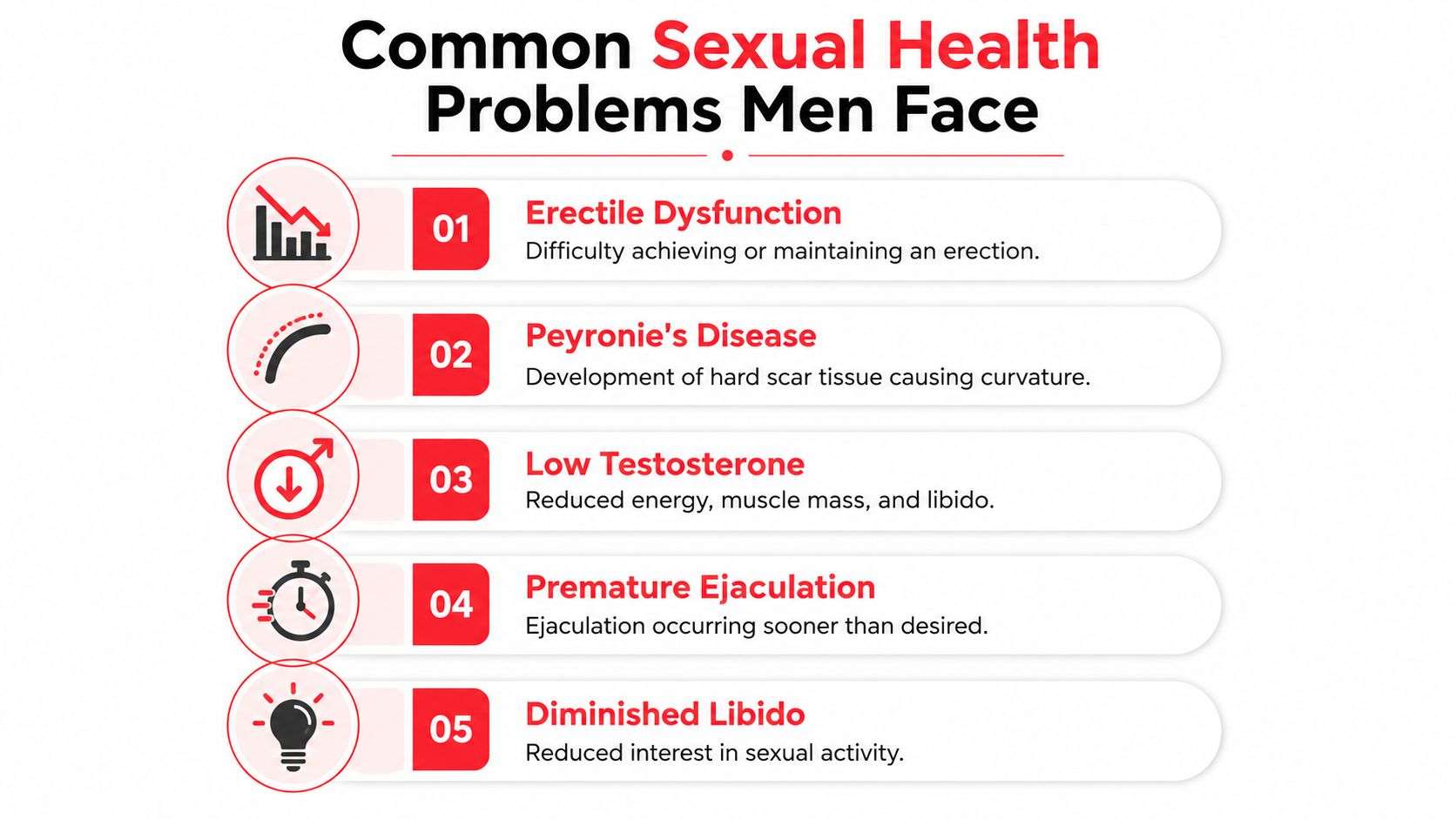
Men usually come in with one complaint, but the pattern behind it is often broader. Some problems affect firmness, some affect timing, some affect desire, and some affect comfort or shape. They can overlap, and when that happens, the symptom in the bedroom is often only the part the man notices first.
The five problems that come up most often
Erectile dysfunction means difficulty getting or keeping an erection. In practice, it is more than a performance problem, because it can point to vascular disease, nerve injury, diabetes, medication effects, or emotional strain. The useful question is not just whether erections happen, but how often they happen, how dependable they are, and in what settings they fail.
Peyronie's disease is scar tissue in the penis that can cause curvature, pain, or shortening. Men often notice it when the erection changes shape or starts to hurt. Even when erections are still possible, the condition can interfere with confidence and intercourse.
Low testosterone can show up as lower libido, reduced energy, slower recovery, and fewer spontaneous sexual thoughts. It can also affect body composition and mood. That is why the symptom pattern matters more than chasing one lab result in isolation.
Premature ejaculation is a timing problem that feels out of control to the patient and his partner. It is not a character flaw or a sign of poor willpower. It can involve sensitivity, anxiety, conditioning, or other physiologic factors.
Diminished libido means reduced interest in sex. It can come from hormone shifts, stress, poor sleep, relationship disconnection, depression, medication side effects, or a mix of them.
For couples who need help talking about pressure, expectations, and sexual frustration, the resource on improve communication and boundaries can be useful.

Why each one deserves evaluation
These problems are not just about sex itself. Erectile dysfunction can be an early clue that the vascular system needs attention. Curvature can make intercourse painful or impossible. Low testosterone can drain energy and motivation in ways men often dismiss as getting older. Timing problems can create avoidance and tension in the relationship. Low desire can be a medical signal, not a personality change.
A practical first question is simple, what changed, and when did it change? That answer often points toward the right workup and keeps treatment from turning into guesswork.
Medication review matters here too. Some blood pressure drugs can affect sexual function, so a careful discussion of blood pressure medication sexual side effects belongs in the evaluation when symptoms line up with treatment changes.
Hidden Risk Factors That Undermine Sexual Health
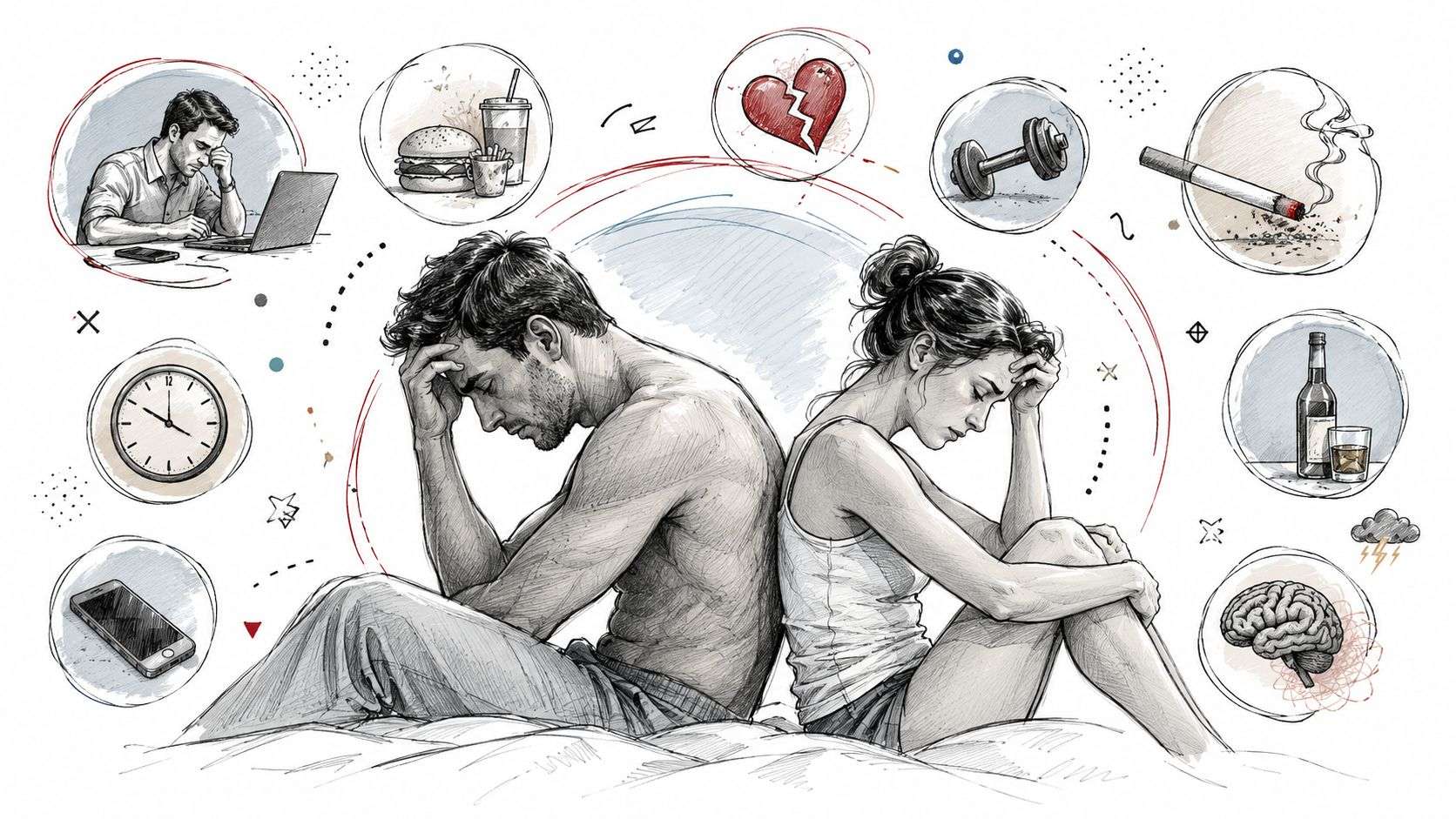
Many men focus on the symptom they can see and miss the drivers that are building underneath it. Sexual dysfunction is often downstream of metabolic strain, sleep disruption, stress, medications, or substance use. That's why a short conversation about erections rarely gives the full answer.
Upstream health problems that show up in the bedroom
Metabolic disease is a major one. Blood sugar problems, insulin resistance, and excess body fat all make blood vessels less responsive, which matters because erection quality depends on healthy endothelial function. Sleep apnea is another frequent culprit. A man can take an ED medication and still underperform if he's chronically under-slept and oxygen-deprived.
Stress and depression also change the picture. They can lower desire, disrupt arousal, and make performance anxiety worse after one bad experience. Medication side effects matter too, especially some antidepressants and blood pressure drugs. For men dealing with medication-related symptoms, a practical overview of managing bp medication problems can be a helpful starting point, and the internal discussion at /blood-pressure-medication-sexual-side-effects/ fits the same concern from a sexual-health angle.
The supplement trap
Unregulated testosterone boosters deserve caution. Men often assume “natural” means safe and effective, but that's not how endocrine systems work. If a supplement is pushing hormones without a diagnosis, it can muddy the clinical picture instead of fixing it.
Sexual symptoms are often a vital sign. If the bedroom changed, the rest of the body may be asking for attention.
That's the contrarian truth many mainstream articles skip. Sexual health is not isolated from heart health, sleep, mood, or metabolic status. The man who understands that gets treated faster and more accurately.
What a Thorough Diagnostic Workup Looks Like
A real evaluation starts by naming the symptom clearly, then checking the systems that can cause it. A single testosterone number is rarely enough. A useful workup connects lab data, symptom history, and functional testing so treatment isn't just educated guessing.
What clinicians usually look for
The first layer is history. When did symptoms start, what changed before they started, and are they constant or situation-specific? That interview often reveals whether the pattern leans vascular, hormonal, medication-related, or psychological.
The second layer is measurement. The IIEF-15 is a standardized tool that scores erectile function, orgasmic function, sexual desire, intercourse satisfaction, and overall satisfaction so baseline severity and response to treatment can be tracked instead of inferred (IIEF-15 overview). That's useful because patients often describe progress or decline loosely, while the questionnaire turns it into something comparable over time.
A practical test map
| Test or Assessment | What It Reveals |
|---|---|
| Sexual history and symptom timeline | Whether the problem is sudden, gradual, situational, or persistent |
| Hormone evaluation | Whether testosterone-related issues may be contributing |
| Metabolic screening | Whether blood sugar or insulin resistance could be part of the problem |
| Lipid assessment | Whether vascular risk may be affecting penile blood flow |
| Vascular testing | Whether blood flow or venous leakage is limiting erections |
| Sleep evaluation | Whether sleep-disordered breathing may be undermining sexual function |
| IIEF-15 questionnaire | Baseline severity and treatment response across key sexual domains |
Sleep studies may be ordered when snoring, fatigue, or daytime sleepiness point toward apnea. Penile vascular testing can help separate arterial insufficiency from venous leak. Those differences matter because treatment selection changes once the mechanism is clear.
The point isn't to gather every test possible. It's to gather the right ones. That's what turns a sexual complaint into a clinically useful plan.
Evidence-Based Non-Surgical Treatment Options
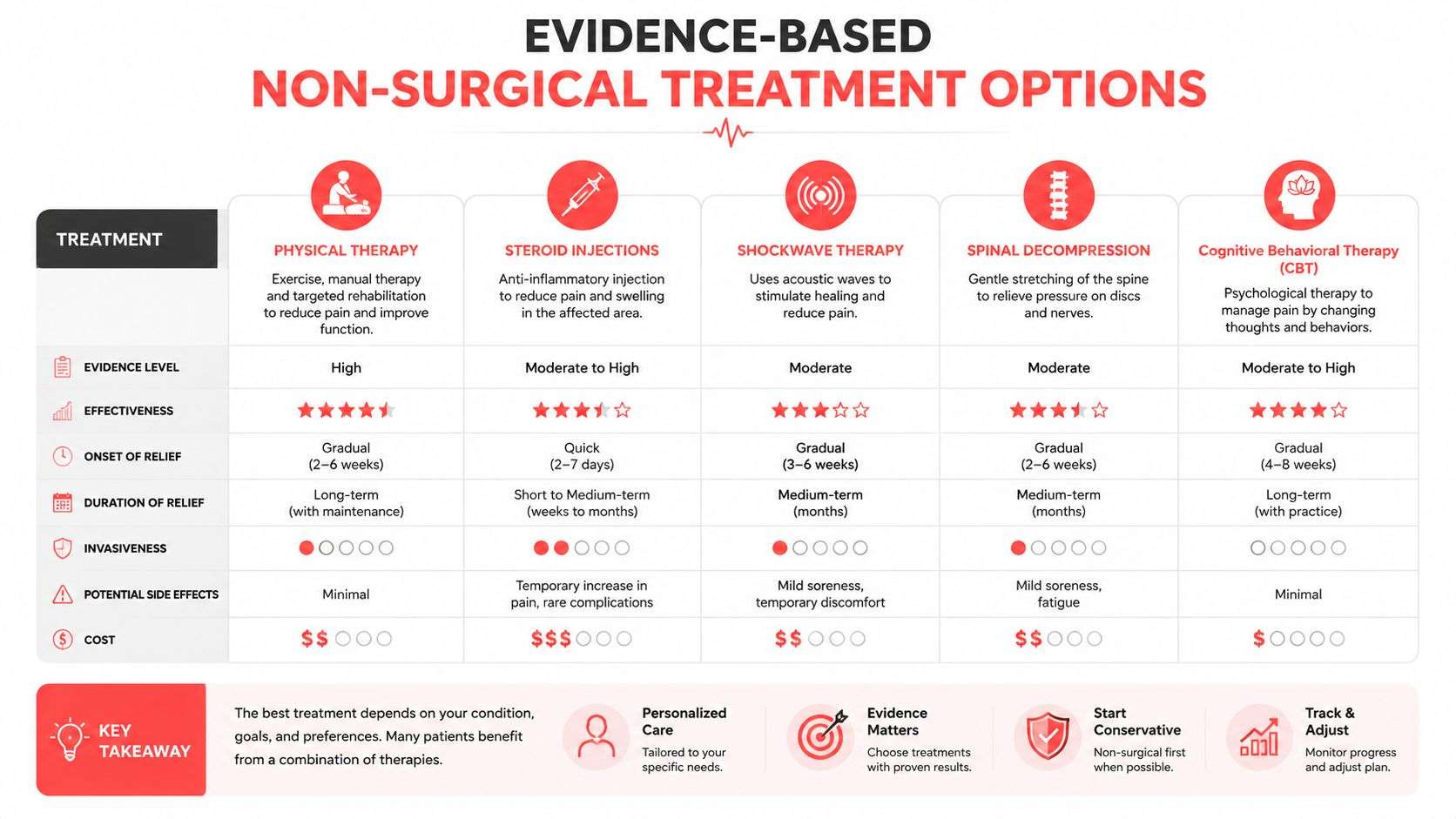
Once the cause is clearer, treatment can match the biology instead of chasing the symptom. For some men, medication is enough. For others, non-surgical regenerative care is a better fit, especially when the goal is tissue support, improved blood flow, or a more durable plan than symptom suppression alone.
How the main options differ
Acoustic wave therapy is used to stimulate blood flow and support new vessel formation in erectile tissue. In a clinic setting, it's usually considered for men whose symptoms are vascular in nature and who want a non-surgical option with little downtime.
Low-level laser therapy is aimed at erectile tissue support and regeneration. It's typically positioned for men who need a tissue-level intervention rather than a temporary pharmacologic boost.
Regenerative injections deliver concentrated biologic material to target tissue repair and function. They're most relevant when the goal is to improve local responsiveness rather than just chase a short-lived effect.
Hormone replacement therapy addresses endocrine causes when testing and symptoms line up. It's not a fix for every man, and it shouldn't be used casually, but when true deficiency is present, it can be part of a broader plan.
Peptide therapy is used in some programs to support targeted physiologic pathways, especially when labs show that a more individualized approach is needed.
Sexual Wellness Centers of America offers the REGENmax® program, which combines REGENlase™, REGENwave™, and HEshot® into an individualized protocol for men with erectile concerns.
How to think about the trade-offs
Medication can help quickly, but it doesn't repair the underlying tissue problem in every case. Regenerative modalities may take longer to assess, but they're designed around function, not just a single encounter. HRT can be powerful when deficiency is real, but it needs lab-guided monitoring and careful selection.
For men with vascular ED, the internal overview on vascular erectile dysfunction treatment is relevant because vascular drivers are often what separate short-term response from durable improvement. The question is not which treatment sounds newest. It's which one matches the mechanism.
Your Patient Journey at a Sexual Wellness Center
The first visit is often calmer than men expect. It begins with a private consultation, a symptom review, and a direct discussion of what has changed, what has already been tried, and what the patient wants back. If the concern is erectile function, low desire, pain, curvature, or a mix of symptoms, the plan should match that reality instead of forcing everything into a generic template.
What the process looks like from the patient side
After the consultation, testing helps narrow the cause. That can include hormone and metabolic work, along with targeted evaluation if blood flow problems or sleep disruption are part of the picture. The main advantage is practical, the treatment plan is built around the pattern of symptoms and labs, not around guesswork.
A clinic like Sexual Wellness Centers of America can fit that model. It offers non-surgical sexual health care, regenerative protocols, hormone support, and follow-up in one setting, which helps prevent the drift that happens when men are sent between unrelated appointments. For readers comparing visit types and what a clinic provides, what is a sexual health clinic gives a clear overview. For readers comparing clinic models and service sets, Herbilabs Labware comparison is also listed here as a reference point.
A useful journey also looks at the whole physiology behind the complaint. Sleep, insulin resistance, blood pressure, medications, testosterone, and vascular health can all shape sexual function, and a serious clinic checks those pieces instead of chasing one symptom in isolation. That broader view matters because a short-lived response from a pill often leaves the underlying problem untouched.
What men usually want to know
Will it hurt? Most in-office procedures are built to be tolerable and brief, with little to no downtime depending on the treatment chosen. A man may feel pressure, warmth, or brief discomfort, but the goal is to keep the visit manageable.
What about privacy? Sexual-health visits are handled as medical visits. Records, testing, and treatment discussions should stay confidential, and patients should expect that standard of care.
How long until I know if it's working? That depends on the intervention and the root cause. Tissue-focused care, metabolic correction, and hormone management usually require follow-up visits and symptom tracking, not a one-time judgment after the first appointment.
Can I travel for care? Yes, many men do, especially when a center offers structured scheduling, financing guidance, and follow-up support. Travel makes more sense when the clinic can coordinate testing, treatment, and reassessment without forcing repeated inefficient trips.
Men also want straight talk about expectations. If erectile dysfunction is driven by vascular injury, poor sleep, or low testosterone, the first visit is only the start of the process. A good center explains what is reversible, what needs maintenance, and what kind of response is realistic for the cause at hand.
The best patient journeys feel organized. They do not depend on luck or on a single prescription. They depend on a clear diagnosis, a plan that matches the mechanism, and follow-up that keeps the work from stalling after the first visit.
Lifestyle Strategies and When to Seek Specialist Care
The best lifestyle changes are the ones that improve blood flow, sleep, and hormonal resilience at the same time. Resistance training helps preserve muscle and supports metabolic health. Cardiovascular exercise improves circulation. Better sleep supports hormone regulation. These aren't side tips, they're part of the treatment plan.
What helps most in daily life
Start with sleep regularity. If sleep is fragmented, libido and erection quality often take a hit. Then tighten up alcohol use, because heavier drinking can blunt nerve signaling and hormone balance. Nutrition matters too, especially when the goal is to reduce insulin strain and support vascular health.
Stress control is not optional. Men who stay chronically activated often see sexual problems persist even when labs look acceptable. Relationship communication matters for the same reason, because pressure and avoidance can keep a functional problem alive after the original trigger has passed.
When to stop waiting
Seek specialist care if symptoms are persistent, sudden, painful, or paired with other health changes. Sudden ED in a younger man, penile pain or curvature, or sexual dysfunction with chest pain or shortness of breath deserves prompt evaluation. Don't try to power through those signs.
A few common questions come up often. Men ask whether treatment lasts, and the honest answer is that durability depends on the cause and the maintenance plan. They ask whether regenerative therapy is the same as daily ED medication, and it isn't. One supports function through repeated symptom control, the other aims at tissue-level improvement and broader root-cause management.
If you're dealing with sexual symptoms that haven't improved with general advice, schedule a real evaluation and get the cause identified. The clinicians at Sexual Wellness Centers of America can help you sort out whether the issue is blood flow, hormones, sleep, stress, or something else, then build a plan that fits your goals and your body.