
You may be in this exact spot right now. You tried a pill once and it worked. The next time it was unreliable. Then you started planning intimacy around timing, food, stress, and whether your body would cooperate.
That pattern often pushes men toward the wrong conclusion. They assume they need a stronger pill, a higher dose, or better timing. In many cases, the issue is simpler and more important. The blood vessels involved in erection aren't delivering enough inflow, or they aren't trapping blood well enough to maintain firmness.
Vascular erectile dysfunction treatment starts with that shift in thinking. An erection is not just a sexual event. It's a blood flow event. When the vascular system is compromised, symptom relief can help, but it doesn't necessarily repair the tissue or circulation problem underneath.
Table of Contents
- Is It More Than Just a Pill Problem
- Understanding Your Body's Vascular System
- The Diagnostic Process for Vascular ED
- Standard Treatments A Stepwise Approach
- Advanced Regenerative Therapies That Heal Tissue
- When Are Surgical or Endovascular Options Needed
- Your Questions on Vascular ED Treatment Answered
Is It More Than Just a Pill Problem
A common story goes like this. A man notices weaker erections, gets a prescription, and feels relieved because there is finally a solution. Then the results become inconsistent. Sometimes the medication helps. Sometimes it doesn't. Sometimes there is firmness, but not enough duration or spontaneity to feel normal.
That pattern matters.
Pills can improve the chemical signaling that helps blood vessels relax, but they still depend on blood vessels being capable of doing their job. If the arterial supply is sluggish or the veins let blood escape too quickly, medication may feel like trying to boost water pressure through a worn-out hose.
When the response to pills is inconsistent
In practice, inconsistency often points toward an underlying vascular issue rather than a simple performance issue. Men usually describe one of two problems. They either don't get fully firm, or they do get firm but lose the erection too quickly.
Both complaints fit the same broad category. The plumbing is underperforming.
For men trying to make sense of why medication can help one night and disappoint the next, it helps to understand how erectile dysfunction pills actually work. These drugs support the erection pathway. They don't rebuild damaged vessels, restore tissue quality, or correct every blood flow defect.
Clinical reality: If a treatment only works when everything else lines up perfectly, it's not restoring function. It's compensating for a weak system.
Why the root cause matters
Vascular ED is often part of a larger health picture. Blood pressure issues, metabolic disease, smoking history, and aging-related endothelial decline can all affect the delicate vessels involved in erection. When men understand that, the conversation changes from “What pill should I take?” to “What is my circulation doing?”
That's where vascular erectile dysfunction treatment becomes more precise. Instead of only chasing a stronger response on demand, treatment can be organized around diagnosis, tissue health, blood flow, and long-term function.
That doesn't mean every man needs advanced therapy. It means every man deserves to know whether he's treating a temporary symptom or a blood vessel problem that won't improve with pills alone.
Understanding Your Body's Vascular System
An erection works like a controlled hydraulic system. Blood has to enter quickly, expand the erectile chambers, and stay trapped long enough to create rigidity. If either side fails, the result is a weaker erection.
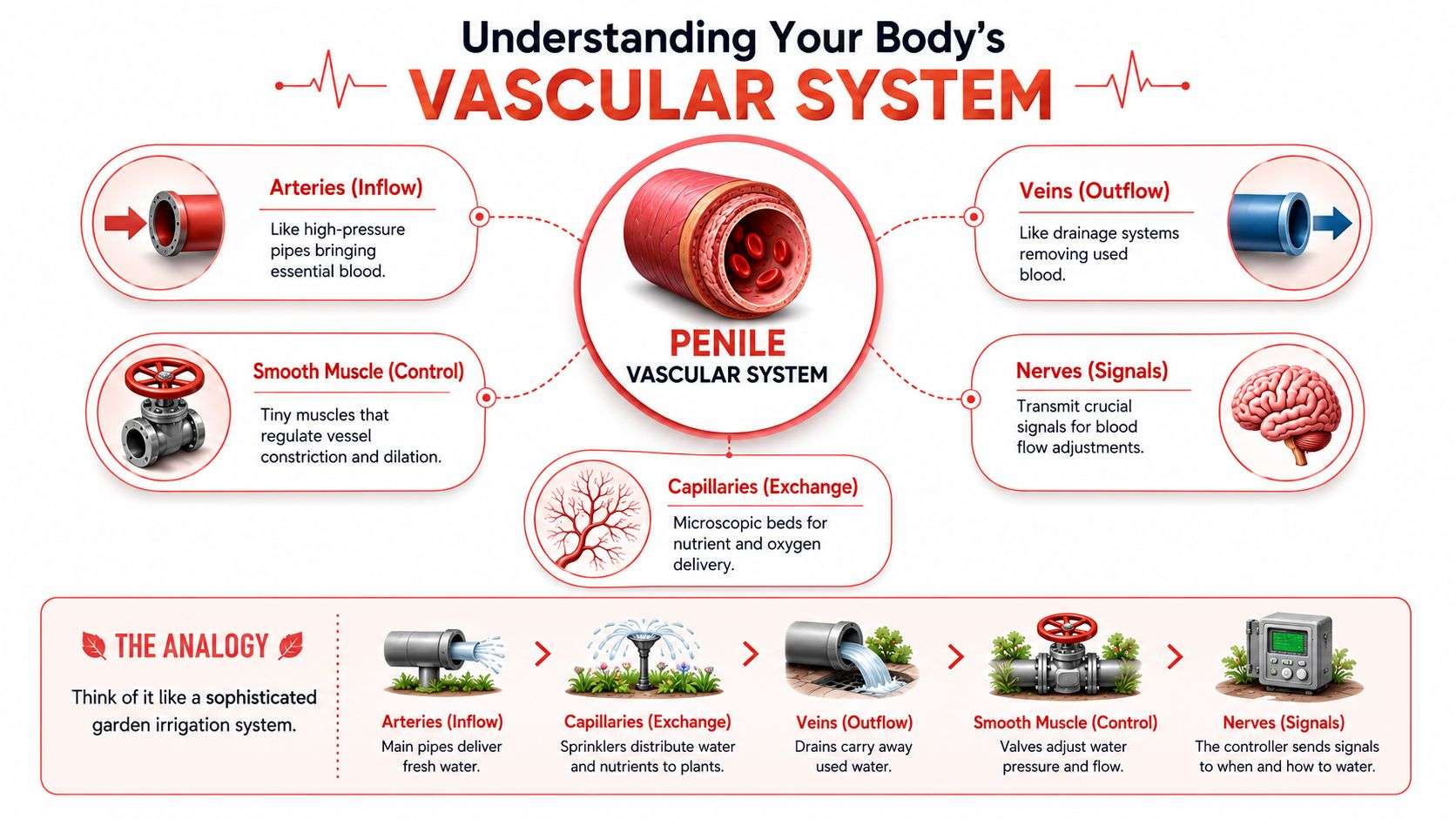
A garden irrigation system operates similarly. You need a good water supply coming in, and you need valves that hold pressure where it belongs. If the supply line is narrowed, flow is weak. If the drainage side doesn't close properly, pressure never builds.
Two jobs must happen at the same time
The first job is arterial inflow. Arteries bring oxygen-rich blood into the penis. During arousal, smooth muscle relaxes, the vessels open, and inflow rises.
The second job is veno-occlusion. As the erectile tissue fills, the veins should compress enough to reduce outflow. That trapping mechanism is what lets an erection become firm and stay firm.
Here is the simplest version:
| Function | What should happen | What failure feels like |
|---|---|---|
| Inflow | Blood enters efficiently | Partial fullness, delayed firmness |
| Retention | Blood stays trapped | Good start, poor staying power |
What damages the system
The vascular system doesn't weaken in isolation. It reflects overall health. Diabetes, cardiovascular disease, high blood pressure, smoking exposure, and excess weight can all affect the small vessels, the vessel lining, the smooth muscle response, and the tissue's ability to expand and compress correctly.
If you're dealing with medical factors that can affect erections, it's useful to review conditions that may cause erectile dysfunction. That broader context often explains why ED can be one of the earliest signs that the vascular system is under strain.
A good erection depends on healthy arteries, responsive smooth muscle, intact nerve signaling, and veins that close at the right moment. It is never just one switch.
When men say, “I still have desire, but my body doesn't respond the same way,” this is often what they are describing. Desire starts the process. The vascular system has to finish it.
The Diagnostic Process for Vascular ED
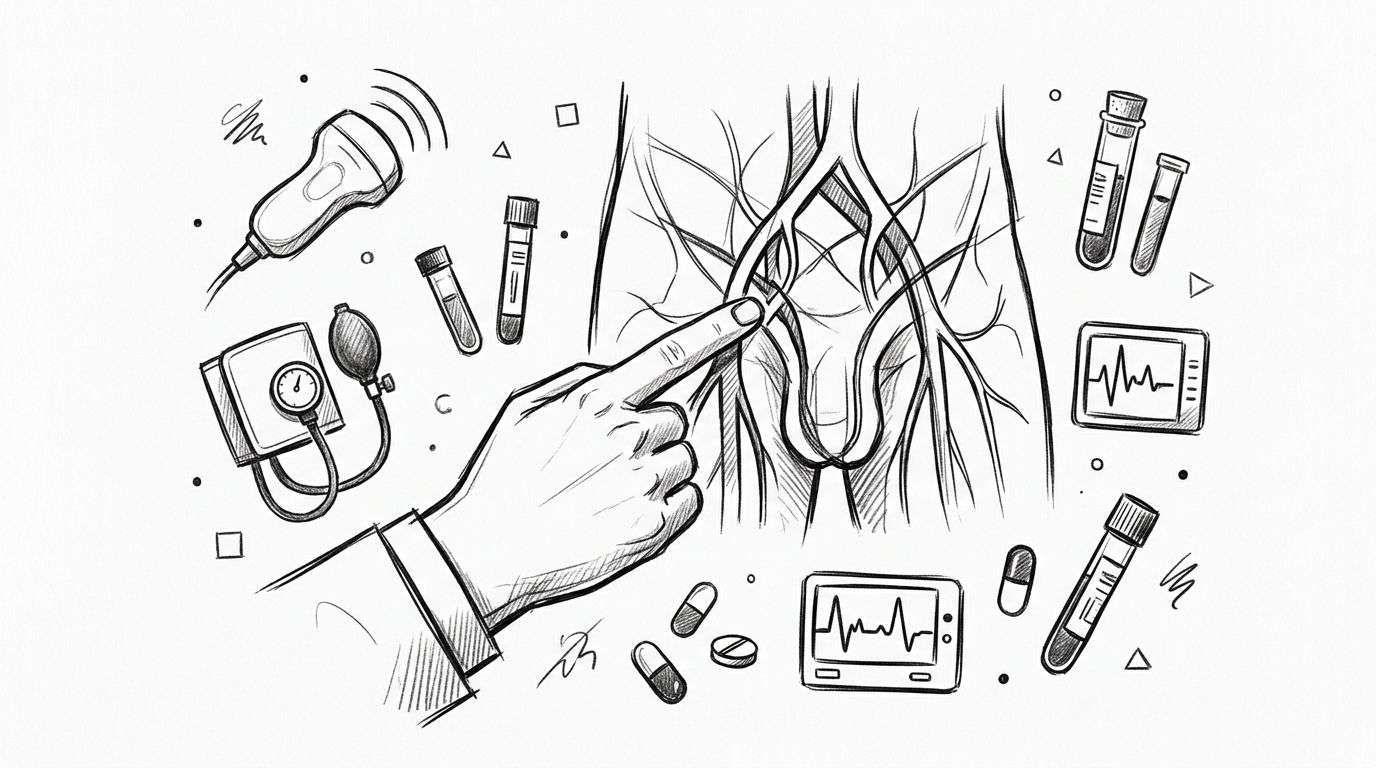
Good treatment begins with identifying the failure point. Guesswork leads to frustration. A structured evaluation turns a vague complaint into a specific plan.
What the first visit should clarify
A proper workup usually starts with the history. Not just whether erections are weak, but how they changed. Was the decline gradual or sudden? Is the problem getting firm, staying firm, or both? Are morning erections still present? Is there diabetes, blood pressure disease, pelvic trauma, surgery, or medication use in the background?
Then comes the physical exam and targeted lab work. The point isn't to create a long checklist. The point is to rule in or rule out factors that can mimic or worsen vascular ED, including hormonal or metabolic problems.
A focused evaluation often looks at:
- Pattern of dysfunction. Inconsistent response, gradual decline, and loss of rigidity each suggest different mechanisms.
- Health contributors. Glucose control, cardiovascular risk, smoking history, and hormone status can change the treatment plan.
- Tissue clues. Curvature, plaque, atrophy, or pelvic findings may point to added structural issues.
Why penile Doppler testing matters
The most useful test for suspected vascular ED is often a penile duplex Doppler ultrasound. This study measures blood flow in real time after medication is used to stimulate an erection during the exam. It helps answer two practical questions. Is enough arterial blood getting in, and is blood being retained well enough once it arrives?
That matters because treatment differs by mechanism. Men with inflow problems, men with suspected venous leak, and men with mixed dysfunction should not all be managed the same way.
What patients often find reassuring: the test isn't about passing or failing. It's about seeing the blood flow pattern clearly enough to stop guessing.
When the diagnosis is precise, expectations get better. Some men are ideal candidates for conservative care. Others fit regenerative protocols. A smaller group may need procedural or surgical evaluation because the blood flow defect is too specific or too severe to ignore.
Standard Treatments A Stepwise Approach
Most men should begin with standard medical care. That's not a compromise. It's the logical first rung on the ladder.
What helps first
The foundation is vascular health. If a man smokes, has poorly controlled blood sugar, is sedentary, sleeps badly, or has untreated blood pressure issues, those factors affect erectile performance the same way they affect other blood vessels in the body. Better circulation habits won't create an overnight fix, but they do improve the environment every other treatment depends on.
Then come oral medications. These are useful because they can increase blood flow support during arousal. For the right patient, they are practical, familiar, and easy to use.
Standard care usually moves in this order:
- Lifestyle correction. Improve the terrain the blood vessels live in.
- On-demand or daily medication. Support the erection pathway when blood vessels are still responsive enough.
- Injection therapy. Create a more reliable erection when pills are no longer sufficient.
Where standard care starts to fall short
Pills are symptom tools. They can work very well, but they don't reverse established vascular damage. If a man needs increasingly ideal conditions for a pill to work, that often means the underlying circulation problem is progressing.
Injection therapy can be effective for men who want a dependable mechanical result without surgery. But many patients hesitate for understandable reasons. They may dislike the planning, dislike the invasiveness, or feel that a technically successful erection still doesn't feel like restored sexual function.
A quick comparison helps:
| Option | Main strength | Main limitation |
|---|---|---|
| Lifestyle change | Supports whole-body vascular health | Slow and indirect |
| Pills | Convenient and familiar | Doesn't repair vessels |
| Injections | Often more reliable than pills | More invasive and less spontaneous |
The right way to view standard care is this. It buys time, improves function, and sometimes solves the problem well enough. But when men want treatment aimed at the tissue and blood vessel problem itself, the conversation usually needs to expand beyond a single modality.
Advanced Regenerative Therapies That Heal Tissue
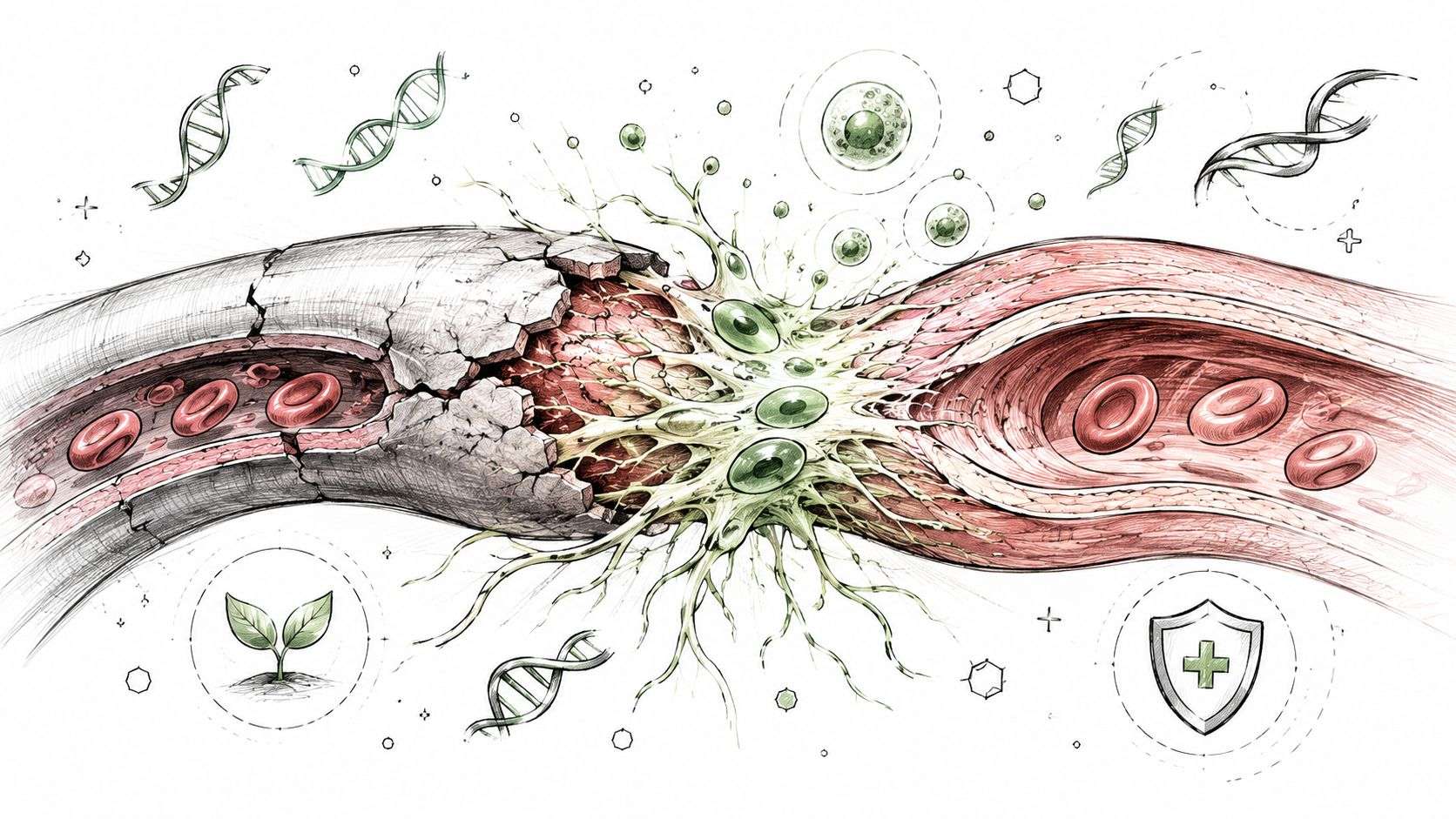
When vascular damage is the underlying problem, many men want more than temporary assistance. They want treatment aimed at tissue quality, circulation, and the biologic environment that supports natural erection.
Why single modality treatment often has limits
Many clinics often oversimplify the story. One tool may help, but vascular tissue problems are rarely one-dimensional. Poor endothelial function, impaired microcirculation, tissue fatigue, and reduced regenerative signaling can coexist in the same patient.
Low-intensity shockwave therapy is the best-known example. According to the NIH summary, low-intensity shockwave therapy shows an overall success rate of about 40% for sustained erectile improvement over 30 months in men with mild to moderate ED, with reported satisfactory improvement ranging from 40% to 80%, but it remains investigational in the United States, is not currently recommended by the FDA for routine use, and benefits may decline after 12 months without ongoing improvement beyond the early treatment window (NIH review of low-intensity shockwave therapy for ED).
That doesn't make shockwave unhelpful. It means expectations should be mature. It can stimulate vascular and tissue responses, but it isn't magic, and it doesn't solve every presentation equally well.
One modality can nudge biology. A broader protocol is often better suited to patients with layered vascular dysfunction.
How combination treatment is designed
A multi-modal strategy tries to address more than one bottleneck at once. Acoustic therapy aims to stimulate blood vessel response. Laser-based therapy is used to support tissue health and local cellular activity. Biologic injections are intended to deliver concentrated signaling factors into the treatment zone.
Each approach targets a different part of the same repair problem:
- Acoustic wave treatment focuses on mechanical stimulation of vascular repair pathways. Men considering that option can read more about shock wave therapy for erectile dysfunction.
- Laser therapy is generally positioned as a tissue support modality. The goal is local optimization, not an instant erection.
- Biologic injection protocols are used with the idea that damaged tissue may respond better when repair signals are concentrated where function has declined.
The logic is straightforward. If a patient has poor inflow, tired tissue, and weak retention mechanics, a single input may only partially move the system. Combination care is designed to improve the environment from several angles instead of betting everything on one lever.
At Sexual Wellness Centers of America, the REGENmax® program combines REGENwave™ acoustic therapy, REGENlase™ laser therapy, and a concentrated HEshot® protocol as one non-surgical option for men pursuing a multi-modal regenerative plan. That type of design makes the most sense when the goal is not just temporary assistance, but broader support for vascular erectile dysfunction treatment at the tissue level.
This is also where honest counseling matters. Regenerative care should be framed as biologic treatment with variable response, not guaranteed reversal. The best candidates are usually men who still have recoverable tissue function and who understand that maintenance, health habits, and individualized planning still matter.
When Are Surgical or Endovascular Options Needed
Some men have a blood flow defect that is too specific for conservative care alone. In those cases, procedural treatment enters the conversation.
Who may need a procedure
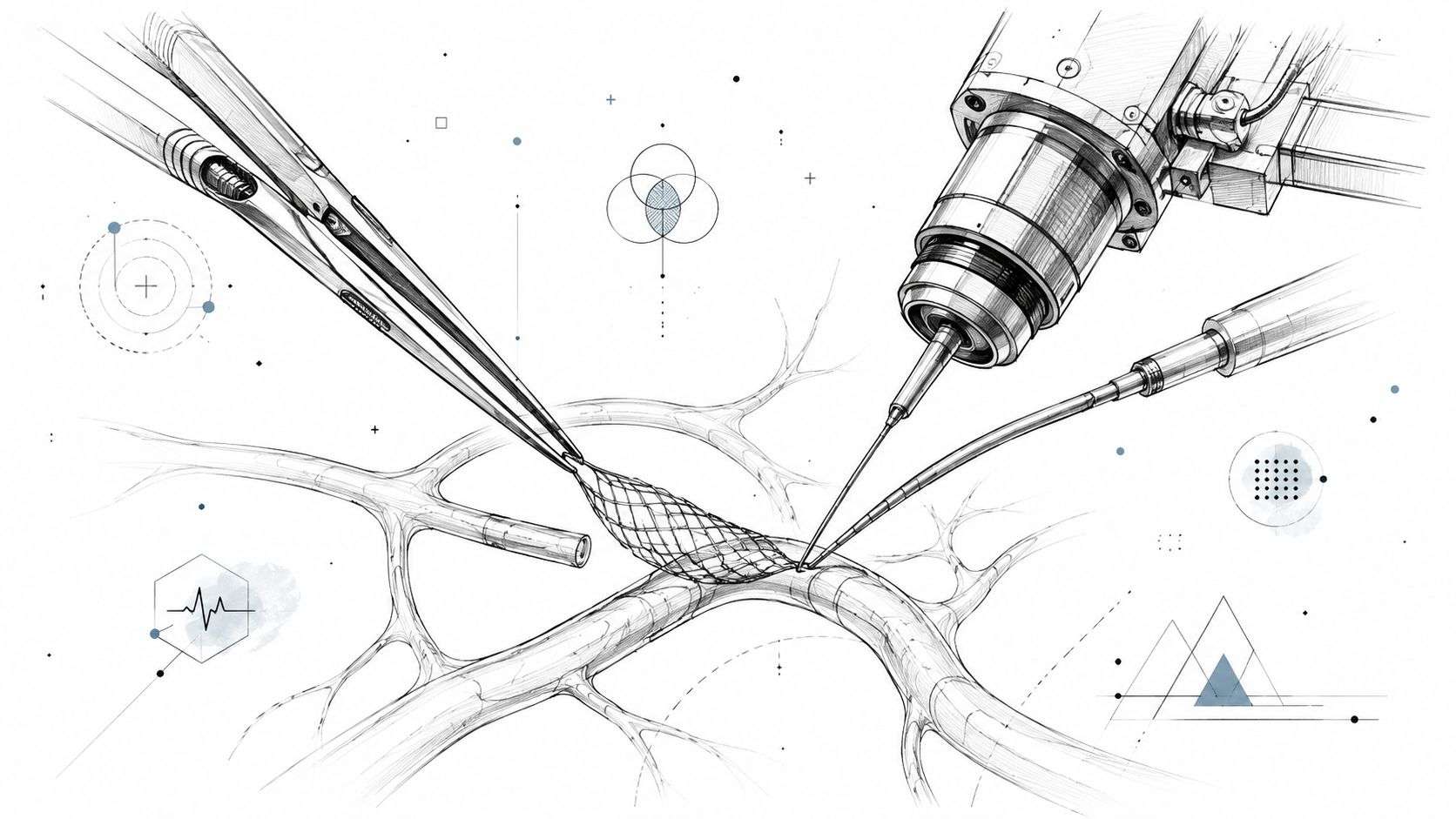
The classic example is a younger man with a focal arterial injury after blunt pelvic or perineal trauma. If the blockage is localized and the history fits, endovascular repair such as angioplasty with drug-eluting stent placement may be considered in medically refractory cases, based on the clinical discussion in this review of endovascular treatment for vasculogenic ED.
Another example is documented venous leak. In selected men, transcatheter embolization is used to occlude leaking veins after the leak is carefully demonstrated with imaging.
Why these options are selective
These interventions are not broad first-line solutions. They depend on anatomy, operator expertise, and proper patient selection. They also ask more from the patient in terms of procedure planning and follow-up.
For venous erectile dysfunction, transcatheter embolization has an overall clinical success rate of 59.5%, with reported outcomes ranging from 21.9% to 100% across studies, which shows both the promise and the variability of this approach (Frontiers review of venous leak embolization in ED).
That range tells you something important. A procedure can be exactly right for one patient and underwhelming for another.
A practical way to think about escalation is:
- Try conservative care first when the problem is mild to moderate and tissue may still be recoverable.
- Consider regenerative care when the goal is to move beyond symptom support and address tissue quality without surgery.
- Reserve endovascular or surgical treatment for well-defined defects, refractory cases, or anatomy-driven problems.
Patients usually do best when procedures are used with precision, not desperation.
Your Questions on Vascular ED Treatment Answered
How long does shockwave therapy take to work
This is one of the most important expectation-setting questions. Clinical data summarized by Cleveland Clinic notes that non-surgical shockwave therapy typically takes two months for initial improvement, and many protocols require 6 to 12 sessions. That same summary also highlights a major counseling issue. There is no standardized maintenance protocol, and claims of very high efficacy from private clinics can conflict with the therapy's investigational-only status in the U.S. as described in that overview (Cleveland Clinic overview of ED treatment timelines and shockwave status).
So the practical answer is this. Shockwave is not an overnight fix. Men should expect a treatment course, a waiting period, and uncertainty about how long gains will hold without ongoing care.
Can diabetic vascular damage be reversed
Diabetes makes vascular ED harder to treat because it can affect blood vessels, nerves, and tissue quality at the same time. Some men improve meaningfully when glucose control, hormone balance, circulation-focused care, and erection-specific treatment are addressed together.
But “reversed” is not the word I use casually. In diabetic patients, the better question is often whether function can be improved, supported, and preserved. That is usually a more realistic framework than promising a complete return to earlier baseline function.
The more advanced and longstanding the vascular damage, the more treatment becomes a management strategy rather than a simple reset.
What if you are traveling for care
Traveling patients should look for a program that starts with diagnosis, not sales language. You want to know what kind of vascular problem is suspected, what the treatment is trying to change biologically, what maintenance may be needed, and what fallback plan exists if response is partial.
Ask direct questions:
- How is candidacy determined before treatment starts?
- What is the plan if pills helped somewhat but not enough?
- How is maintenance handled when you live out of town?
- What signs suggest that a procedural referral would make more sense?
A thoughtful clinic should be able to answer those without overpromising. Good vascular erectile dysfunction treatment is rarely about one dramatic intervention. It is usually about matching the right patient to the right level of care, then adjusting as the body responds.
If you're trying to figure out whether your ED is mainly a blood flow problem, Sexual Wellness Centers of America offers clinic-based evaluation and non-surgical treatment planning for adults seeking options such as standard care, regenerative protocols, and ongoing maintenance support.