
The Best Peptide Creams Worth Your Money (Quick Answer)
The best peptide creams available right now, ranked for effectiveness and value:
| Rank | Product | Best For | Price Range |
|---|---|---|---|
| 1 | Naturium Multi-Peptide Moisturizer | Best Overall | Budget |
| 2 | Paula’s Choice Pro-Collagen Peptide Plumping Moisturizer | Lightweight/Combo | Mid-range |
| 3 | SkinCeuticals Tripeptide-R Neck Repair | Neck & Mature Skin | Premium |
| 4 | SkinFix Barrier+ Restoring Gel Cream | Oily Skin | Mid-range |
| 5 | The Ordinary Multi-Peptide + HA Serum | Budget-Friendly | Budget |
| 6 | Olay Collagen Peptide Face Moisturizer | Best Drugstore | Budget |
| 7 | Kate Somerville Peptide K8™ Power Cream | Clinic-Grade Results | Premium |
Your skin starts losing collagen more rapidly in your late twenties and early thirties. By your fifties, that loss is hard to ignore — think fine lines, sagging, and skin that just doesn’t bounce back like it used to.
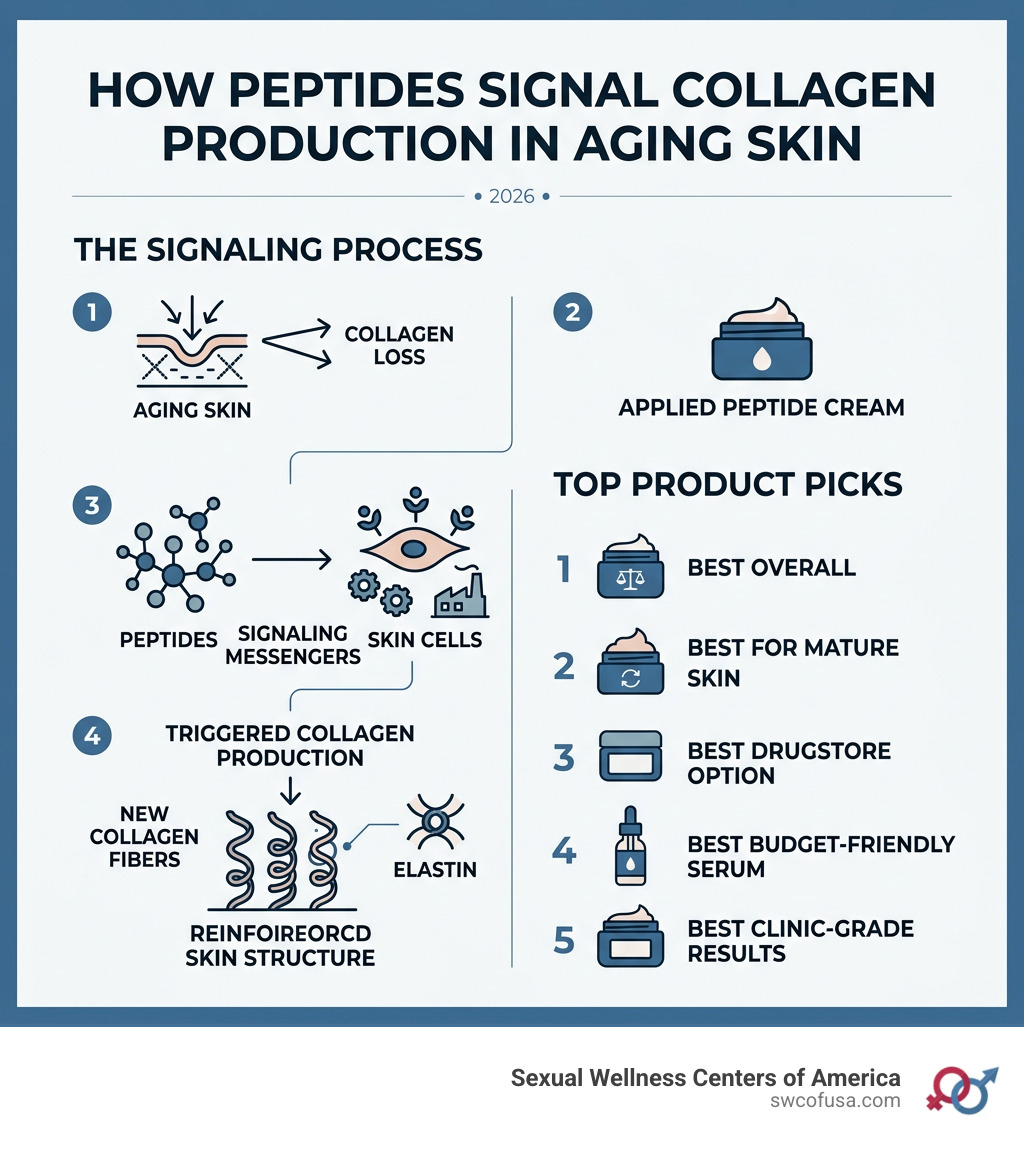
Peptide creams have become one of the most talked-about tools for slowing that process down. They work by sending signals to your skin cells to produce more collagen and elastin — essentially reminding your skin how to repair itself. And unlike injectables, they do it without needles.
With over 550 peptide skincare products on the market from more than 100 brands, choosing the right one can feel overwhelming. Not all peptide creams are created equal. Some are packed with clinically supported ingredients. Others are mostly marketing.
This guide cuts through the noise. We compared the top-rated options across price points, skin types, and specific concerns — so you know exactly what to reach for.
I’m Jeff Nuziard, CEO of Sexual Wellness Centers of America, where I focus on science-backed solutions that support whole-body health and aging — including skincare. My work with advanced wellness treatments has given me a close-up view of what actually works when it comes to the best peptide creams and their role in healthy, resilient aging. Let’s get into it.
Best peptide creams terms to remember:
What Are Peptides and Why Does Your Skin Need Them?
To understand why we need the best peptide creams, we first have to understand what a peptide actually is. In the simplest terms, peptides are short chains of amino acids. These amino acids are the essential building blocks of proteins that our skin relies on, specifically collagen, elastin, and keratin.
Think of your skin like a house. Collagen is the frame that provides structure, while elastin is what allows the walls to flex without cracking. As we age—and as we are exposed to UV rays and environmental stress—that frame starts to weaken. According to Nathan Newman, MD, peptides function as signaling molecules. They effectively “trick” your skin into thinking it has suffered an injury, which prompts skin cells to perform specific tasks like producing more collagen or repairing the skin barrier.
When you apply a high-quality Peptide Cream, you aren’t just adding moisture; you are initiating a communication process. This bioactive signaling is why many experts view peptides as a non-invasive topical alternative to more aggressive treatments. While they aren’t a “miracle in a jar,” scientific research on bioactive peptides in dermatology shows they play a critical role in wound healing, reducing inflammation, and reinforcing the skin’s upper layers.
How to Choose the Best Peptide Creams for Your Skin Type
Choosing the best peptide creams isn’t just about picking the most expensive bottle on the shelf. Different peptides serve different masters. If you want to firm up sagging skin, you need one type; if you want to relax expression lines, you need another.
| Peptide Type | Primary Benefit | Best For |
|---|---|---|
| Signal Peptides | Stimulates collagen & elastin | Firming, anti-aging |
| Carrier Peptides | Delivers trace elements (like copper) | Wound healing, repair |
| Enzyme-Inhibitor | Slows collagen breakdown | Preventing future aging |
| Neurotransmitter Inhibitor | Softens muscle contraction | Expression lines (Botox-like) |
For most of us, a “multi-peptide” formula is the way to go because it addresses several concerns at once. However, your skin type dictates the vehicle those peptides arrive in. If you have sensitive skin, look for fragrance-free options. If you’re prone to breakouts, a non-comedogenic gel-cream is your best friend.
Best Peptide Creams for Mature Skin and Firming
As we move into our 40s and 50s, skin density becomes a major concern. We start to see “crepey” texture and a loss of that youthful plumpness. The best peptide creams for this stage often combine peptides with other heavy hitters like slow-release retinol or specialized tripeptide concentrates.
A standout in this category is the SkinCeuticals Tripeptide-R Neck Repair. Since the neck has thinner skin and fewer oil glands, it shows age faster. This formula uses a 2.5% tripeptide concentrate to specifically target sagging. For the face, a Collagen Peptide Serum can be layered under a thicker moisturizer to provide a double dose of firming signals.
Another powerhouse is the Kate Somerville Peptide K8™ Power Cream. In clinical tests, 97% of users saw an improvement in fine lines and wrinkles in just two weeks. It uses “Ceramide-Infused Peptides” which help repair the barrier while simultaneously smoothing out deep-set lines.
Best Peptide Creams for Oily and Combination Skin
If you have oily skin, the thought of a “rich cream” might make you break out in a cold sweat. Fortunately, the best peptide creams for oily types come in lightweight, breathable textures.
The SkinFix Barrier+ Restoring Gel Cream is a favorite among dermatologists for this very reason. It provides deep hydration without the grease, making it perfect for those who still want anti-aging benefits but struggle with shine. Similarly, the Paula’s Choice Pro-Collagen Peptide Plumping Moisturizer is a gel-cream that sinks in instantly. It’s a great choice for combination skin because it hydrates the dry spots without overwhelming the T-zone.
Maximizing Results: Layering and Timing Your Routine
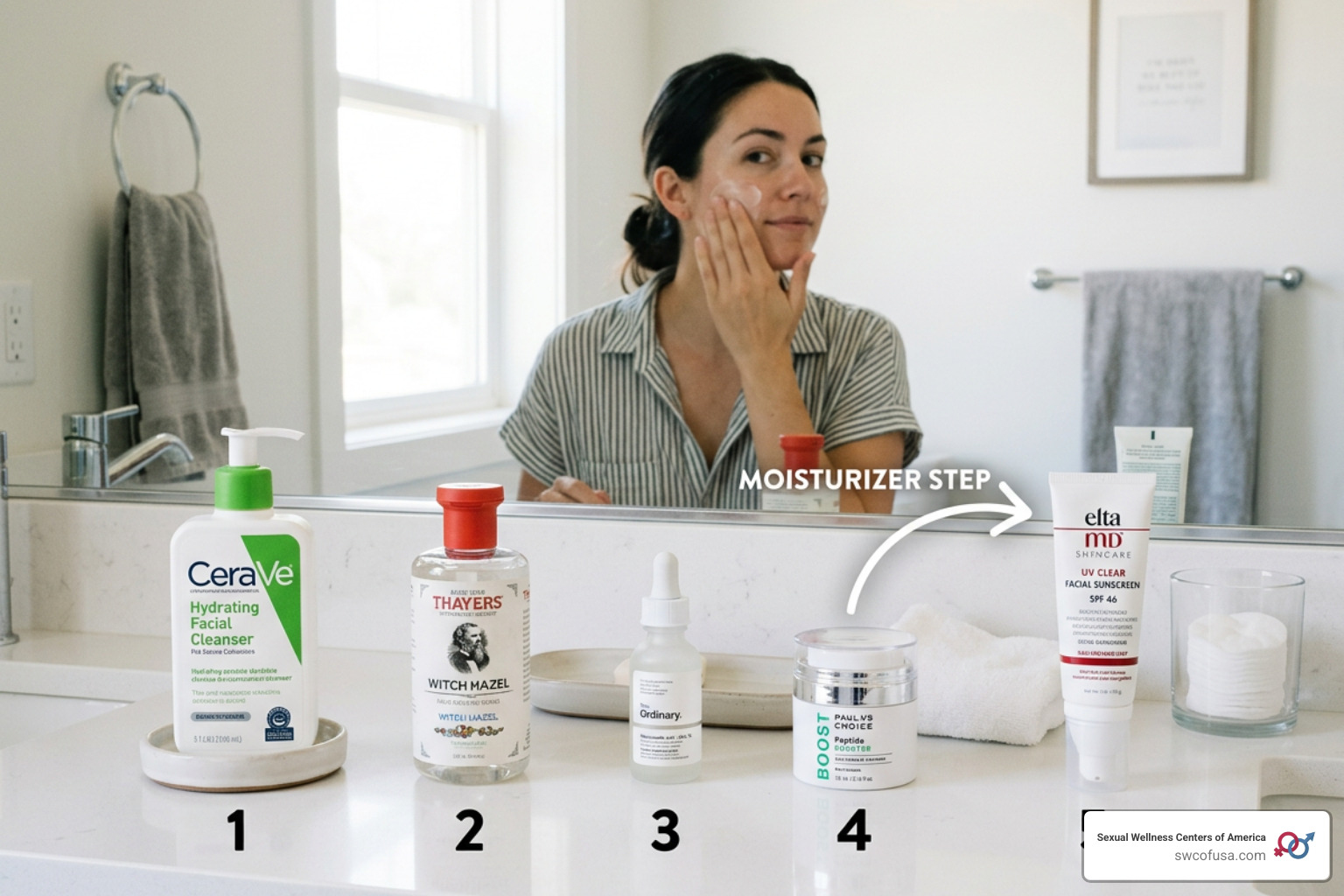
You’ve bought one of the best peptide creams—now, how do you make sure it actually works? Timing is everything.
- The 6-12 Week Rule: Unlike a physical exfoliant that gives you instant smoothness, peptides are a “slow burn.” You can expect to see subtle improvements in texture and firmness after about 6 to 12 weeks of consistent use.
- Morning vs. Night: You can use peptides twice a day. In the morning, they help protect the skin; at night, they support the repair process.
- Layering with Retinol: Peptides and retinol are a match made in heaven. In fact, David Kim, MD notes that peptides can actually help soothe the skin and reduce the irritation often caused by retinoids.
- The “Injectable-Like” Effect: While they won’t replace a syringe, using the best peptide creams as a non-invasive alternative to injectables can help extend the life of your office treatments or provide a gentle smoothing effect for those who prefer to avoid needles.
Precautions and Ingredient Incompatibilities
While peptides are generally the “skincare unicorns”—rarely causing irritation and playing well with others—there are a few rules to follow.
The biggest enemy of a peptide is a low pH. Very acidic products, like certain Vitamin C serums (L-ascorbic acid) or high-strength AHA/BHA exfoliants, can “destabilize” peptides. This means the acid breaks the peptide chain before it can do its job.
To avoid this, we recommend:
- Spacing them out: Use your Vitamin C in the morning and your peptide cream at night.
- The 15-Minute Rule: If you must use an AHA/BHA and a peptide in the same routine, wait about 15 minutes after applying the acid to let your skin’s pH normalize before applying the peptide.
- Patch Testing: Even though peptides are gentle, many creams contain other ingredients like fragrances or oils. Always patch test a small area first, especially if you have eczema or rosacea.
Frequently Asked Questions About Peptide Skincare
How long does it take to see results from the best peptide creams?
Patience is a virtue here. While your skin might feel more hydrated immediately, the structural changes—like increased firmness and reduced wrinkle depth—typically take 6 to 12 weeks of daily application. This is because your body needs time to actually build new collagen fibers.
Can peptide creams be layered with retinol and AHAs?
Yes, but with caution. Peptides are excellent for reinforcing the skin barrier, which makes them a perfect companion for retinol. However, avoid layering them directly with strong AHAs (like glycolic acid) in the same step, as the acidity can break down the peptides. Use your acids every other night or wait for the product to fully dry before applying your peptide cream.
Are peptides suitable for sensitive skin types?
Absolutely. In fact, Dr. Ariel Ostad often recommends peptides as a gentler alternative for those who cannot tolerate retinoids. They are non-irritating and can even help reduce redness and support skin that is prone to conditions like rosacea.
Conclusion
Investing in the best peptide creams is an investment in your skin’s long-term health. Whether you are looking for the budget-friendly efficacy of Naturium or the clinical precision of SkinCeuticals, adding these amino acid chains to your routine is one of the smartest moves you can make for aging gracefully.
At Sexual Wellness Centers of America, we believe that wellness is holistic. Just as we use REGENmax® technology and personalized hormone panels to revitalize your internal health, your skincare should be equally science-backed and personalized. From our Colleyville, TX location, we help our clients achieve 97.2% efficacy in wellness goals—and that commitment to excellence extends to every recommendation we make.
Ready to take your skin to the next level? Click here to learn more about peptide creams and how they can transform your daily regimen.