
Understanding Peptides and Their Role in Weight Management
Peptide supplements for weight loss are a major topic in health and wellness. With medications like Wegovy and Ozempic making headlines for dramatic results, many people are asking what peptides are and how they work.
Quick Answer for Peptide Supplements for Weight Loss:
- What they are: Short chains of amino acids that act as signaling molecules in your body.
- FDA-approved options: Semaglutide (Wegovy, Ozempic), Liraglutide (Saxenda), Tirzepatide (Zepbound).
- How they work: Reduce appetite, slow digestion, and increase feelings of fullness.
- Weight loss results: 14-48 pounds on average in clinical trials.
- Availability: Prescription required for effective weight loss peptides.
- Over-the-counter: Collagen peptides may help with body composition but aren’t proven for significant weight loss.
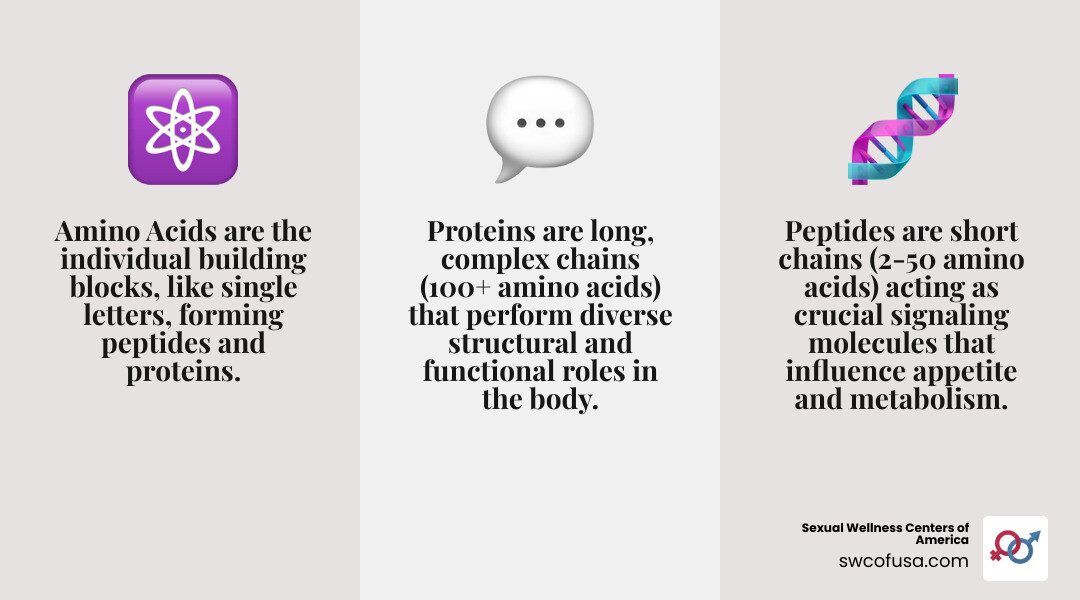
Peptides are the middle ground between amino acids and proteins. Think of amino acids as letters, peptides as “words,” and proteins as “sentences.” These peptide molecules act as messengers, telling different body systems what to do.
Peptides are strings of amino acids, structurally similar to protein but smaller. Their unique ability to influence appetite, metabolism, and how your body processes food makes them powerful tools for weight management.
I’m Jeff Nuziard, CEO of Sexual Wellness Centers of America. I’ve spent years helping individuals optimize their health with personalized wellness solutions, including guidance on peptide supplements for weight loss. My experience has shown me how proper peptide therapy can transform not just weight, but overall vitality and confidence.
Terms related to peptide supplements for weight loss:
How Do Peptides Influence Weight Loss?
The science behind how peptide supplements for weight loss work is quite fascinating. Think of peptides as your body’s internal messaging system, sending signals between organs to coordinate everything from hunger to metabolism. For weight management, certain peptides act as negotiators between your gut, brain, and hormones.
The effects happen through several key mechanisms. Appetite suppression is the most noticeable—you simply feel less hungry. These peptides also improve satiety, meaning you feel satisfied with smaller portions, leading to lasting fullness.
Peptides effective for weight loss typically slow the movement of food through the gut and reduce cravings. This slowing of gastric emptying means food stays in your stomach longer, giving your body more time to send “I’m satisfied” signals to your brain. These effects extend to your metabolic rate and hormone signaling, as a regulated appetite and stable blood sugar help your metabolic system function more efficiently. These peptides work by influencing the complex hormonal communication that controls eating behaviors and energy balance.
The Science of Satiety and Metabolism
The stars of the peptide supplements for weight loss world are two natural hormones: GLP-1 (Glucagon-like peptide-1) and GIP (Glucose-dependent insulinotropic polypeptide). Released by your intestines after eating, these incretin hormones are game-changers for weight management.
They multitask by coordinating insulin release and improving blood sugar control. Their main weight loss power comes from their direct line to your brain’s hunger centers. Peptides play crucial roles in various biological processes, acting as signaling molecules, hormones, and enzymes. When GLP-1 and GIP reach your brain, they turn down hunger signals and turn up satisfaction signals.
The process is well-orchestrated. After a meal, these peptides slow how quickly food leaves your stomach, giving your body more time to process nutrients and signal fullness. They also keep blood sugar steady, preventing energy crashes that lead to cravings. This process improves your body’s natural systems rather than fighting against them. For those interested in the research, scientific studies on GLP-1 provide comprehensive backing for these mechanisms.
The result is that many people naturally eat less, feel full longer, and have fewer cravings. It’s like having a built-in, natural-feeling portion control system.
A Guide to FDA-Approved Prescription Peptides
For peptide supplements for weight loss that deliver significant results, we look to FDA-approved injectable medications. These require a doctor’s prescription and medical supervision. Many of these treatments were initially developed for diabetes but were later approved for chronic weight management after participants in clinical trials lost significant weight. You can find more at the FDA information on new weight management drugs. These peptides work with your body’s natural systems, communicating with your brain and digestive system without the jittery side effects of stimulants.
GLP-1 Receptor Agonists: Semaglutide and Liraglutide
The leading prescription peptide supplements for weight loss are GLP-1 receptor agonists. These are amplified, longer-lasting versions of hormones your body already produces.
Semaglutide (brand names Wegovy, Ozempic, Rybelsus) mimics the natural GLP-1 hormone. It signals the pancreas to release insulin, prevents the liver from releasing excess sugar, and makes you feel satisfied with less food. Ozempic users have lost up to 14 pounds, while Wegovy, approved for weight management, shows more dramatic results. Clinical trials report an average loss of about 15% of body weight (around 35 pounds), with one study showing a 14.9% loss over 68 weeks.
Liraglutide (brand name Saxenda) works similarly. In trials, one in three people taking Saxenda lost over 10% of their body weight, with users losing an average of 18 pounds over a year. Both medications are injectable and started at a low dose that gradually increases to minimize side effects.
Dual-Action Peptides: GLP-1/GIP Receptor Agonists
Even more advanced are dual-action peptides that target two hormone pathways, GLP-1 and GIP, for the most effective weight loss treatment available.
Tirzepatide (brand names Zepbound for weight management, Mounjaro for diabetes) activates both pathways for a comprehensive approach to appetite and metabolism. The GIP component adds benefits for insulin function and fat processing. Clinical trial results are remarkable, with people losing up to 48 pounds in a 17-month trial. Average weight reduction ranged from 15% to 21% of body weight, with one study showing a 20.9% reduction at 36 weeks—results previously seen only with bariatric surgery.
Comparing Prescription Weight Loss Peptides
| Active Ingredient | Brand Names | Mechanism | Average Weight Loss |
|---|---|---|---|
| Semaglutide | Wegovy, Ozempic, Rybelsus | GLP-1 Receptor Agonist | Up to 14 lbs (Ozempic), ~15% body weight / 35 lbs (Wegovy), 14.9% body weight over 68 weeks (clinical trial) |
| Liraglutide | Saxenda, Victoza | GLP-1 Receptor Agonist | 1 in 3 people lost >10% body weight, ~18 lbs over a year |
| Tirzepatide | Zepbound, Mounjaro | Dual GLP-1 and GIP Receptor Agonist | Up to 48 lbs (17-month trial), 15% to 21% body weight, ~20.9% body weight at 36 weeks |
These prescription medications are the cutting edge of peptide supplements for weight loss, offering life-changing results for qualified individuals under the care of a healthcare provider.
Over-the-Counter Peptide Supplements for Weight Loss: Do They Work?
Beyond prescription medications, a world of non-prescription peptide supplements for weight loss exists in stores and online. These powders, capsules, and drops promise to help you shed pounds. However, unlike FDA-approved prescription peptides, most over-the-counter (OTC) supplements haven’t undergone the same rigorous testing. This requires a healthy dose of skepticism about their weight loss claims.
The Role of Collagen Peptides in Body Composition
Collagen peptides are popular OTC peptide supplements for weight loss. Collagen is the most abundant protein in the body, providing structure to skin, hair, and joints. As we age, our bodies produce less collagen. Hydrolyzed collagen, broken down into smaller, easier-to-absorb peptides, can help.
While not as dramatic as prescription GLP-1 medications, collagen can support weight management by:
- Boosting protein intake: A serving typically adds about 10 grams of protein, which can increase satiety and reduce snacking.
- Supporting lean muscle mass: Muscle burns more calories than fat, so maintaining muscle helps keep your metabolism active.
Research shows promising effects on body composition. One 12-week clinical trial on collagen and body fat found that older adults taking 15 grams of collagen daily saw a decrease in total body fat mass, while the placebo group’s fat mass increased. Combining collagen with resistance training appears even more effective, with studies showing reductions in body weight and fat mass in older and middle-aged men.
Collagen won’t produce the 35-48 pound losses seen with prescription peptides, but it can be a valuable part of a health plan focused on body composition.
Evaluating Other Non-Prescription Peptide Supplements for Weight Loss
You may encounter other non-prescription peptides like BPC-157, Ipamorelin, and CJC-1295, often marketed as “research chemicals.” Approach these with extreme caution for several reasons:
- Regulation Gap: These peptides are generally not FDA-approved for human use, meaning they lack rigorous safety, efficacy, and quality testing.
- Evidence Problem: There is often little to no solid human clinical trial data to back up their weight loss claims, with most evidence coming from lab or animal studies.
- Delivery Challenges: Many peptides are ineffective when swallowed and must be injected, which poses safety risks without proper training. Oral versions often have very low bioavailability (less than 1%).
- Safety Concerns: The safety profiles are often unknown. Side effects can be serious, and some synthetic peptides are banned by the World Anti-Doping Agency.
Our advice is to be extremely cautious with non-prescription peptide supplements for weight loss that promise dramatic results. Always consult a qualified healthcare professional before considering these products.
Eligibility, Risks, and Side Effects
Considering prescription peptide supplements for weight loss is a significant health decision that requires careful medical oversight. Your body’s metabolic systems are complex, and working with a qualified healthcare provider is essential for safety and success.

Who Qualifies for Prescription Peptides?
These medications are intended for individuals who need medical intervention for weight management. The FDA has established clear guidelines for eligibility:
- A Body Mass Index (BMI) of 30 or higher (obesity).
- A BMI of 27 or higher (overweight) with at least one weight-related health condition, such as high blood pressure, Type 2 diabetes, or high cholesterol.
For adolescents, Wegovy is approved for ages 12+ with a weight at or above the 95th percentile, while Saxenda is for ages 12+ with a BMI of 30 or higher and weighing over 132 pounds. A healthcare provider will conduct a thorough evaluation to determine if these treatments are appropriate for you.
Understanding the Potential Side Effects
Like any powerful medication, prescription peptide supplements for weight loss can have side effects. Most are mild to moderate and improve as your body adjusts.
Common side effects are primarily digestive, including nausea (especially when starting or increasing the dose), diarrhea, constipation, vomiting, and stomach pain. Headaches, fatigue, dizziness, and injection site reactions are also possible.
Serious but less common risks require awareness. These include pancreatitis (inflamed pancreas), gallbladder problems (including gallstones), and gastroparesis (a rare condition of very slow stomach emptying). Other potential risks are kidney problems, vision changes, and a potential risk of thyroid C-cell tumors (based on animal studies). These medications are not suitable for individuals with a personal or family history of certain thyroid cancers.
Also, watch for low blood sugar (if taking other diabetes drugs), severe allergic reactions, and mood changes. For more details, you can review information on potential side effects.
Open communication with your healthcare provider is key to managing side effects. Never obtain these medications from unregulated sources, as counterfeit products pose serious health risks. At Sexual Wellness Centers of America, we emphasize proper medical supervision for any weight management strategy.
Frequently Asked Questions about Peptides for Weight Loss
Exploring peptide supplements for weight loss brings up many questions. Here are answers to the most common concerns.
How long does it take to see results with weight loss peptides?
The timeline for results with peptide supplements for weight loss varies. With prescription peptides like Semaglutide or Tirzepatide, appetite changes are often noticeable within a few weeks. You may feel full with smaller portions and have fewer cravings.
Significant weight loss typically becomes apparent over several months. Clinical trials followed participants for 68 weeks to 17 months, with the most noticeable results appearing after four to six months of consistent use. This gradual approach is healthier and depends on medication type, dosage, metabolism, and lifestyle changes. Patience and consistency are key.
Do I still need to diet and exercise while taking peptides?
Absolutely, yes. Prescription peptide supplements for weight loss are powerful tools, but they work best as part of a comprehensive health plan. Peptides give you an advantage by reducing hunger, making it easier to stick to healthy habits. However, the principle of burning more calories than you consume still applies.
Combining peptide therapy with exercise dramatically improves results. Research shows that combining liraglutide with regular exercise doubled weight and body fat loss compared to medication alone. At Sexual Wellness Centers of America, our personalized plans integrate medical solutions with nutrition and activity guidance for long-term success.
What happens if I stop taking prescription weight loss peptides?
For most people, weight regain is possible after stopping prescription peptide supplements for weight loss. These medications manage obesity, a chronic condition. Like drugs for high blood pressure, their benefits often cease when the treatment is discontinued, and appetite regulation can revert to previous patterns.
Clinical research confirms this. Studies show that participants who stopped medication and switched to a placebo regained a significant portion of their lost weight. This highlights why these treatments are often designed for long-term use. If you stop, established healthy eating and exercise habits are critical. Medical guidance is essential during any transition to develop a sustainable plan for continued weight management.
Conclusion: A Personalized Path to Weight Management
We’ve explored peptide supplements for weight loss, from powerful prescription medications to over-the-counter options. The clear takeaway is that not all peptides are created equal.
Prescription peptides like Semaglutide, Liraglutide, and Tirzepatide are the gold standard. These FDA-approved medications mimic gut hormones to reduce cravings and help you feel full, with clinical trials showing weight losses of 14 to 48 pounds. They are powerful medical tools for chronic weight management.
Over-the-counter supplements like collagen peptides play a valuable supporting role. They won’t produce dramatic weight loss but can help with body composition and muscle preservation when expectations are realistic.
The most crucial message is that professional guidance is essential. When considering peptide supplements for weight loss, working with qualified healthcare providers ensures your safety and success through proper supervision, dosing, and monitoring.
At Sexual Wellness Centers of America in Colleyville, TX, we know true wellness is more than the number on a scale. Our approach integrates cutting-edge treatments like HEshot®, SHEshot®, and REGENmax® technology with personalized health plans based on comprehensive hormone and vitamin panels. Addressing the whole person leads to the most satisfying and lasting results.
Your health path is unique. We create custom health plans for your individual needs, whether you’re exploring peptide therapy, hormone optimization, or other wellness solutions.
Ready to see what personalized wellness can do for you? Learn more about our personalized wellness services – because your health journey deserves a partner who understands that one size never fits all.