
Supervised peptide therapy typically costs $250–$600 per month for a single-compound protocol and $600–$1,500 per month for a multi-peptide program once consultation, lab work, and monitoring are included. More complex regimens can exceed $800 per month, while some branded GLP-1 peptide medications may cost roughly $900–$1,400 per month when paid for in cash.
You may have already seen a much lower number advertised online. A monthly price appears, you enter your contact information, and it looks as though treatment will cost about the same as a routine subscription. Then the clinic adds an intake visit, laboratory testing, follow-ups, injection supplies, and pharmacy charges. The amount leaving your bank account during the first year can look very different from the headline peptide price.
That difference matters. Peptide therapy is usually a recurring care model, not a one-time procedure. The responsible way to compare providers is to calculate the full cost of the protocol, including the clinical work required to select, monitor, and adjust treatment.
Table of Contents
- Why Peptide Therapy Pricing Is So Confusing
- What Peptide Therapy Actually Is
- What Drives Peptide Therapy Costs
- Typical Price Ranges Across Treatment Models
- Insurance Coverage and Financing Options
- How to Estimate and Minimize Your Out-of-Pocket Cost
- Making a Confident Decision About Peptide Therapy
Why Peptide Therapy Pricing Is So Confusing
A prospective patient may see a peptide program advertised for a few dozen dollars monthly, then find another priced in the several-hundred-dollar range or above two thousand dollars per month. A published-price survey recorded a monthly spread from $20 to $2,083, while consultation and intake fees ranged from free to $1,500.
Those figures can all be accurate because they describe different products and care levels. One offer may cover the compound alone. Another may charge for telehealth membership with limited clinical involvement. A higher-priced program may include clinician evaluation, laboratory review, pharmacy coordination, supplies, follow-up appointments, and multiple compounds.
The advertised monthly amount is often only the starting point. During the first year, the actual out-of-pocket cost can include the initial consultation, baseline and follow-up labs, monitoring visits, injection supplies, shipping, and pharmacy handling. A clinic that quotes a low monthly figure may still produce a much higher first-year total once these items are added.
Three prices can describe three different services
The compound is one cost component. Providers may also charge for:
- Clinical evaluation: A licensed clinician reviews medical history, medications, symptoms, and treatment goals.
- Laboratory work: Baseline and follow-up panels help determine whether treatment is appropriate and whether adjustments are needed.
- Ongoing supervision: Dose changes, side-effect review, refill decisions, and follow-up communication require staff time.
- Supplies and handling: Reconstitution materials, syringes, shipping, and storage instructions may appear as separate charges.
- Program access: A membership may bundle messaging, appointments, refills, and monitoring, or provide only limited access.
A low advertised price is not automatically a poor choice. It does require a precise explanation. Ask whether the quoted amount covers medication only, a monthly membership, or a supervised protocol with clinical support.
Practical rule: Compare equivalent services. Add every required consultation, test, monitoring visit, supply, and handling charge before comparing providers.
The market includes different pricing tiers. One peptide-and-hormone membership example charges $220 per month with an initial month of $400, while another clinic advertises peptide therapy at $200–$600 per month. The useful question is not which number is cheapest. Ask what the price includes and which costs remain yours.
What Peptide Therapy Actually Is
Peptides are short chains of amino acids that act as signaling molecules in the body. Depending on the peptide and the clinical goal, they may be used to influence pathways related to tissue repair, metabolic regulation, hormone signaling, or immune activity. The treatment isn't one standardized medication. It's a protocol built around a particular compound, dose, delivery method, and monitoring plan.
That distinction explains why treatment prices vary. A patient using one compound for a narrowly defined goal has a different clinical and financial profile from a patient receiving a layered protocol involving several compounds and more frequent follow-up.
Start with the clinical question
A sound evaluation generally follows a logical sequence:
- Define the goal. The clinician should identify what the patient wants to address, such as recovery support, metabolic concerns, hormone-related symptoms, or another health objective.
- Review the patient context. Medical history, current medications, prior reactions, and relevant conditions affect whether a peptide protocol is appropriate.
- Establish a baseline. Laboratory testing can provide information needed for treatment selection and future monitoring.
- Choose the narrowest reasonable protocol. A single-peptide approach may be more appropriate than adding several compounds at the outset.
- Monitor and adjust. The clinician evaluates response and tolerability rather than treating the initial dose as permanently fixed.
Medical supervision matters because dosing isn't a matter of selecting a product from a menu. The provider must consider the patient's health status, the compound's intended use, the delivery schedule, and potential interactions or contraindications. A protocol without meaningful follow-up may look inexpensive while leaving the patient responsible for decisions that require clinical judgment.
Single compounds and multi-peptide stacks
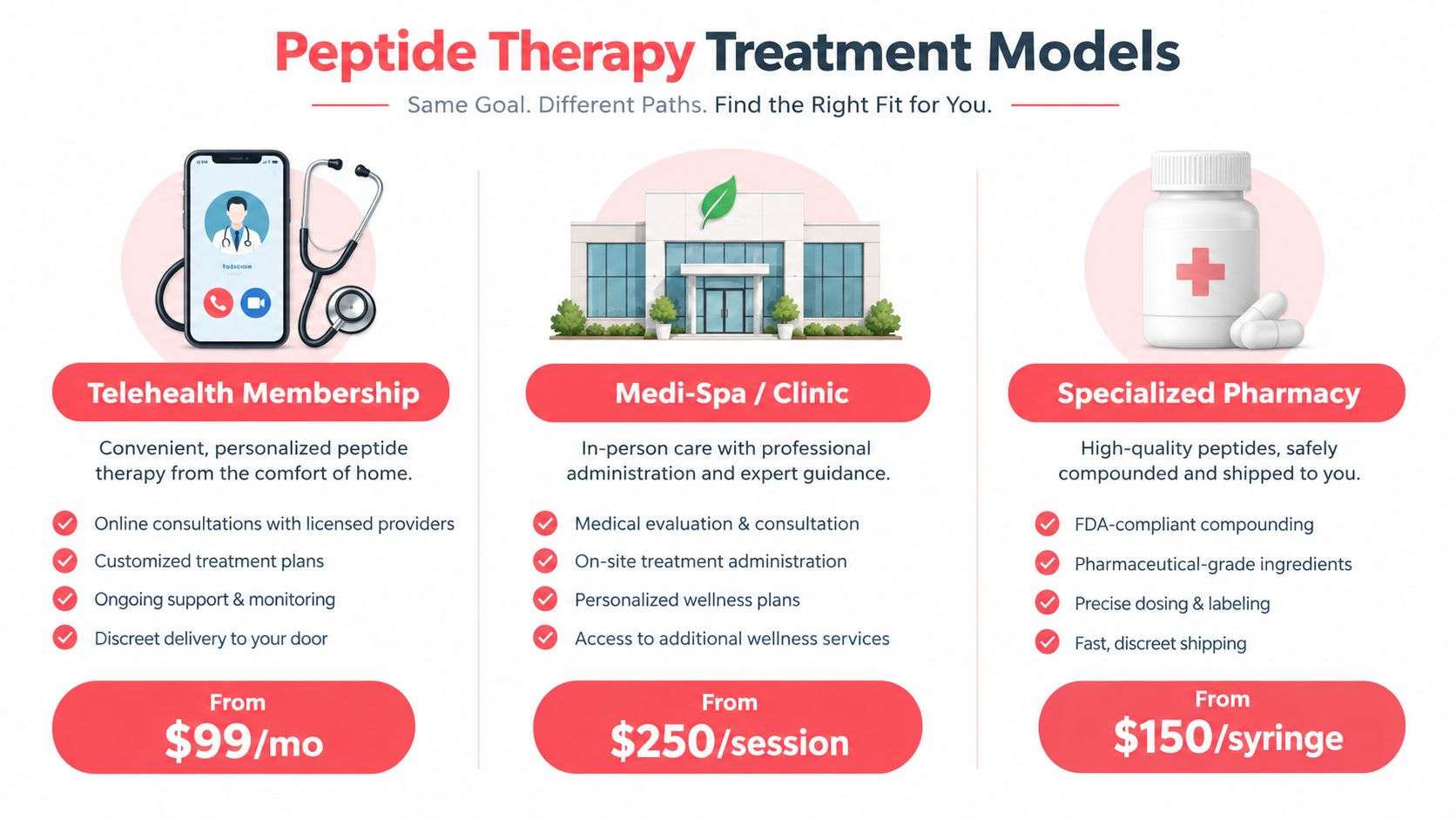
A single-compound protocol uses one primary peptide and generally has fewer variables to evaluate. A multi-peptide stack combines compounds, which may increase the complexity of dosing, follow-up, supplies, and laboratory interpretation. More components don't automatically mean better care. They mean the clinician has more decisions to make and more outcomes to monitor.
Patients who want a plain-language overview of treatment principles can review everything you need to know about peptide therapy before a consultation. The goal should be a medically reasoned plan, not the largest stack a clinic can sell.
What Drives Peptide Therapy Costs
The advertised monthly compound price is only one part of the bill. A patient's first-year out-of-pocket cost can also include intake, laboratory testing, follow-up visits, dose changes, injection supplies, shipping, and administration support. Treatment pricing reflects the molecule, prescribed amount, dosing frequency, sourcing, and clinical work required around it.
Research-grade market pricing is often listed per milligram. A 2026 index covering 53 peptides reported a median range of about $3.30–$8.50 per milligram, with a 110× difference between lower-cost and higher-cost compounds in the same market. That figure does not show the monthly dose, dosing frequency, vial concentration, or preparation requirements. A low per-milligram price can therefore produce a higher monthly bill than a patient expects.
What your bill may contain
| Cost Component | Typical Range | Frequency |
|---|---|---|
| Peptide compound | About $200–$600 for many clinical protocols | Monthly |
| Supervised single-peptide care | About $300–$800 including clinical services | Monthly |
| Multi-peptide program | About $600–$1,500 including added complexity | Monthly |
| Consultation or intake | Free to $1,500 in observed clinic pricing | Initial visit or program start |
| Laboratory work and monitoring | Varies by panel and follow-up schedule | Baseline and periodic |
| Supplies and administration | Varies by delivery method and provider | At setup and during treatment |
Provider-level cost breakdowns place supervised single-peptide and multi-peptide care within these ranges, including the compound, consultation, and laboratory monitoring. The consultation range comes from the published clinic pricing survey cited earlier.
Why dose frequency changes the math
A vial price does not equal a month of treatment. Frequent dosing can use medication and supplies faster. A stronger or more involved protocol may also require additional clinical review. Reconstitution adds practical tasks, including instructions, sterile supplies, storage, and accurate measurement.
The first-year total rises when staff review more laboratory information, adjust doses more often, or coordinate several compounds. A supervised program can therefore cost substantially more than the raw ingredient, even when the advertised monthly medication price appears modest.
Follow-up is part of treatment
An initial consultation without reassessment does not provide the same level of care as ongoing monitoring. Follow-up lets the clinician review symptoms, tolerability, adherence, and laboratory findings, then decide whether to continue, modify, or stop the protocol. Those visits may determine whether the treatment remains appropriate and whether additional costs are incurred.
Before committing, ask whether the quoted amount includes:
- Initial assessment: Confirm whether medical history review and treatment planning are included.
- Baseline testing: Ask which labs are required and whether the price includes them.
- Follow-up visits: Clarify appointment frequency and whether visits are included.
- Refills: Determine whether pharmacy and shipping charges are separate.
- Supplies: Ask who provides syringes, reconstitution materials, and disposal guidance.
Patients considering injectable treatment can review peptide injection therapy to understand why administration instructions and clinical support belong in the cost discussion. A useful estimate should show both the recurring monthly charge and the likely first-year total.
Typical Price Ranges Across Treatment Models
The advertised monthly peptide price rarely equals the first-year amount a patient pays. Providers may group care into low-touch telehealth, supervised clinic protocols, or programs covering several treatment components. Each model includes different levels of assessment, monitoring, communication, and administrative support, so comparing monthly fees alone can produce a misleading result.
Low-touch telehealth memberships
Some telehealth memberships focus on remote access and recurring medication coordination. The monthly charge may include a remote evaluation and limited messaging, while laboratory testing, follow-up appointments, shipping, or injection supplies are billed separately. Market commentary places some plans' annual costs around $2,388–$2,800, although the services included vary by program.
This arrangement may work for a patient with a straightforward protocol who understands the exclusions. Its apparent savings can narrow quickly if the patient needs additional lab review, dose adjustments, education, or more frequent clinician contact.
Supervised clinic protocols
A local or specialty clinic usually includes more direct clinical decision-making. Supervised single-peptide protocols may run about $300–$800 per month, while more involved programs commonly range from $600–$1,500 per month when medication, consultations, and monitoring are included. The exact total depends on the protocol, visit schedule, laboratory requirements, and whether supplies are separate.
The higher fee reflects ongoing evaluation and treatment decisions, not access to medication. A patient should ask for the first-year estimate, including the intake visit, required testing, follow-up, refills, shipping, and administration materials.
Programs covering several treatment components
Some higher-touch programs combine multiple peptides with hormone evaluation, broader laboratory panels, and structured follow-up. Annual costs may reach $3,000–$5,000 or more, depending on the protocol and the services provided.
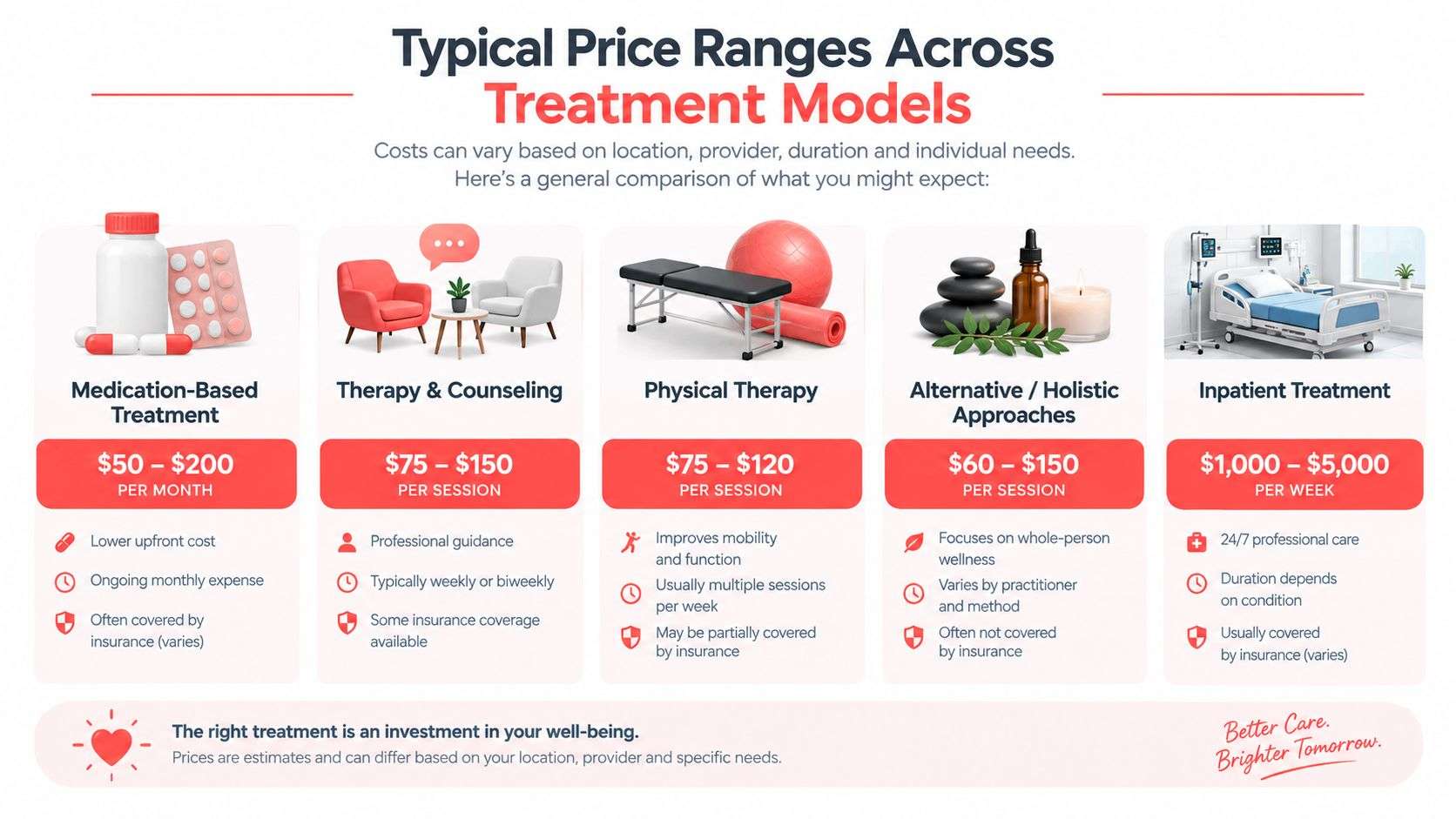
The appropriate tier depends on the patient's clinical needs and the reason for each included service. A broad package can create unnecessary expense when several components lack a clear purpose. The least expensive option can also leave out monitoring needed for safe treatment.
A fair quote shows the care model clearly. If a provider cannot explain what changes between tiers, do not assume the highest-priced package is medically necessary.
Insurance Coverage and Financing Options
Many patients approach peptide therapy expecting their health plan to function like it does for a conventional prescription. That expectation often leads to frustration. Coverage depends on the specific medication, indication, plan rules, coding, and whether the treatment is considered a covered medical service, a compounded medication, or a cash-pay wellness protocol.
Don't assume coverage or exclusion from a general statement. Call the insurer and ask about the specific treatment, the prescribing indication, laboratory benefits, specialist visits, and any prior authorization requirement. Patients who want a broader framework for checking benefits can verify therapy insurance benefits before scheduling care.
Build a cash-pay budget first
Even when a clinic submits claims for certain services, the patient may still face deductibles, coinsurance, noncovered medication charges, or laboratory fees. A realistic budget separates the initial setup period from ongoing maintenance.
During setup, account for:
- Consultation: The evaluation and protocol design.
- Baseline labs: Testing required before treatment begins.
- Medication and supplies: The compound, delivery materials, and shipping.
- Early follow-up: Appointments or communication needed to assess tolerance.
During maintenance, determine which charges recur and which disappear after setup. Some programs reduce the monthly burden after the initial evaluation, while others keep laboratory and membership charges active throughout treatment.
HSA and FSA questions
Some patients may be able to use health savings or flexible spending funds for eligible medical expenses, but eligibility depends on plan rules and documentation. Ask the account administrator before assuming that peptide therapy, laboratory work, or consultation fees qualify.
A clinic may offer financing, but financing changes the timing of payment rather than eliminating the underlying cost. Read the agreement carefully, including the total repayment obligation, recurring charges, cancellation rules, and whether treatment continues if the financing arrangement ends.
Prescription requirements also affect budgeting and sourcing. Review whether peptide therapy requires a prescription with a qualified provider rather than treating online availability as proof that a product is appropriate for self-use.
How to Estimate and Minimize Your Out-of-Pocket Cost
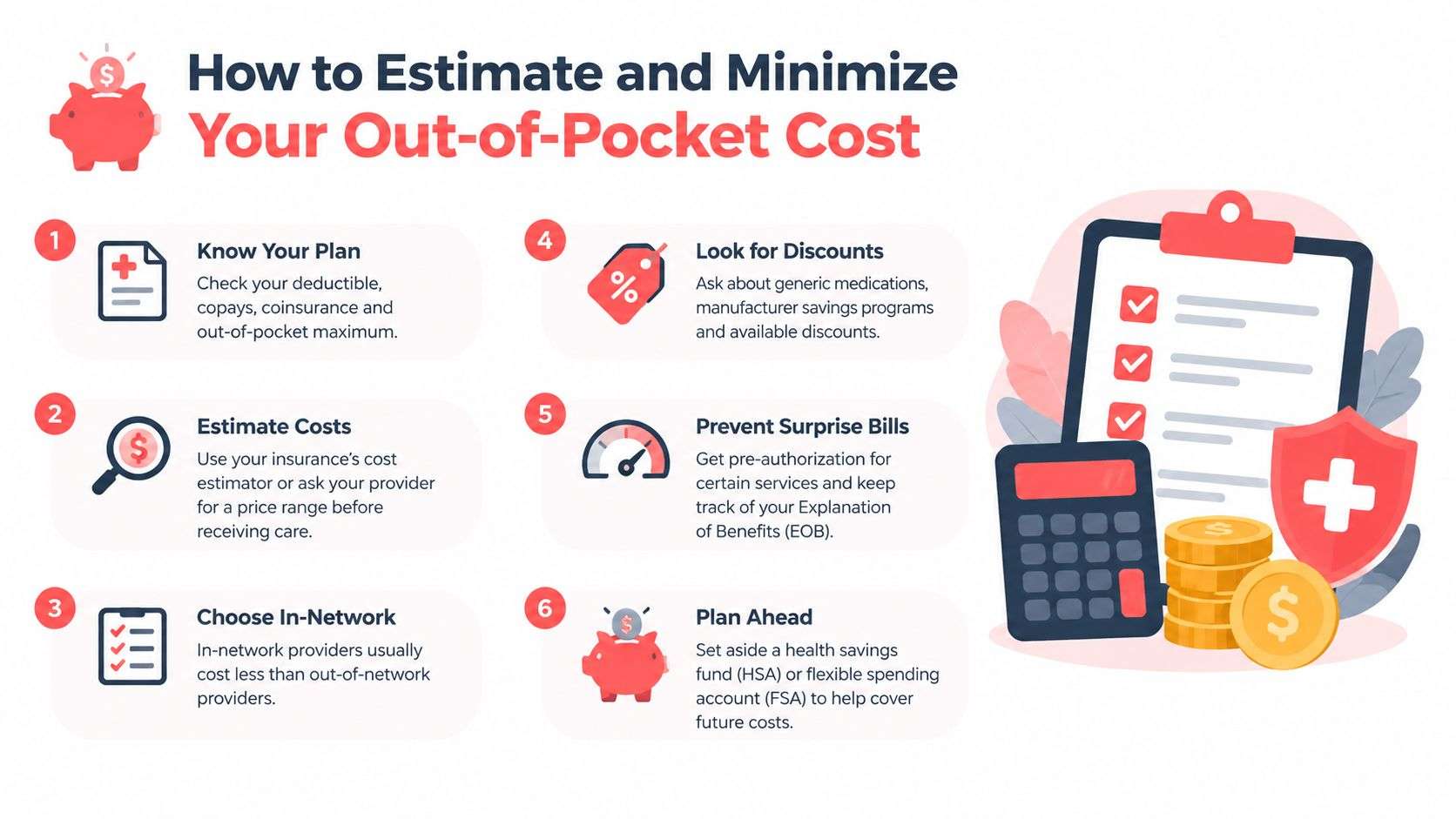
The most reliable estimate starts with an itemized quote, not a promotional monthly number. Ask the provider to separate medication, clinical care, testing, supplies, shipping, administration, and follow-up so you can calculate the first year without guessing.
A practical estimate can be built in six steps:
- Define the starting protocol. Ask whether the clinician recommends one compound or several, and request the reason for each component.
- Separate setup from maintenance. Identify which consultation, laboratory, and education charges occur at the beginning and which repeat later.
- Request the dose schedule. Frequency, concentration, and titration rules affect how quickly supplies and medication are used.
- Price every follow-up. Ask whether dose reviews, refill approvals, and laboratory interpretation are bundled or billed separately.
- Calculate the first-year total. Add the initial charges to each recurring monthly or periodic fee. Don't multiply the advertised price alone.
- Ask about payment support. Confirm whether the clinic offers financing, membership options, or assistance with insurance paperwork.
Lower cost without cutting safeguards
The safest savings usually come from reducing unnecessary complexity, not from eliminating clinical oversight. Starting with a single compound may make it easier to evaluate response and avoid paying for several interventions before the first one has been assessed. A clinician may also coordinate required labs with testing already scheduled through primary care, provided the results are clinically appropriate and sufficiently current.
Ask whether the plan has a loading phase followed by maintenance dosing. Those phases can use different amounts or schedules, so a single monthly figure may not describe the entire treatment course.
Be cautious when a provider refuses to disclose the pharmacy source, doesn't explain monitoring, or advertises a price that excludes nearly every service. For patients dealing with insurance paperwork or prior authorization questions, a resource offering prior authorization help on MedTrack may provide useful administrative guidance, but it shouldn't replace direct confirmation from the insurer and prescribing clinic.
Making a Confident Decision About Peptide Therapy
The fairest way to assess peptide therapy cost is to treat it as the price of a care pathway. That pathway may include a compound, medical evaluation, baseline testing, dose oversight, supplies, follow-up, and decisions about whether treatment should continue. A low medication price can be reasonable when the rest of the care is clearly explained. It becomes misleading when the patient discovers essential charges only after enrollment.
As a practical benchmark, many supervised single-compound plans fall around $250–$600 per month once the core services are included, while provider-level estimates for supervised single-peptide care can reach $300–$800 per month depending on the program. Multi-peptide treatment commonly occupies the $600–$1,500 monthly range, and some complete first-year estimates land around $2,000–$2,800 after setup and testing. These ranges aren't a quote for your treatment. They're a reminder to ask for the all-in figure.
Before choosing a provider, confirm:
- What the monthly price includes.
- What you'll pay before the first dose.
- Which labs are required and when they repeat.
- How dose changes and side effects are handled.
- Whether the protocol uses one compound or several.
- What happens if treatment isn't appropriate or needs to stop.
DIY sourcing can appear cheaper because it removes consultation and monitoring costs. It also removes the clinical safeguards that help identify unsuitable treatment, dosing problems, interactions, and avoidable complications. A qualified provider should be able to explain both the expected cost and the clinical reason behind every major charge.
Sexual Wellness Centers of America offers lab-guided peptide therapy, targeted supplementation, hormone optimization, and related cash-pay wellness services in a clinic setting, with financing information available for eligible patients. Visit Sexual Wellness Centers of America to request a consultation and receive a treatment plan that clearly separates peptide costs from labs, monitoring, supplies, and follow-up care.