
Why Prescription Requirements Matter for Peptide Therapy
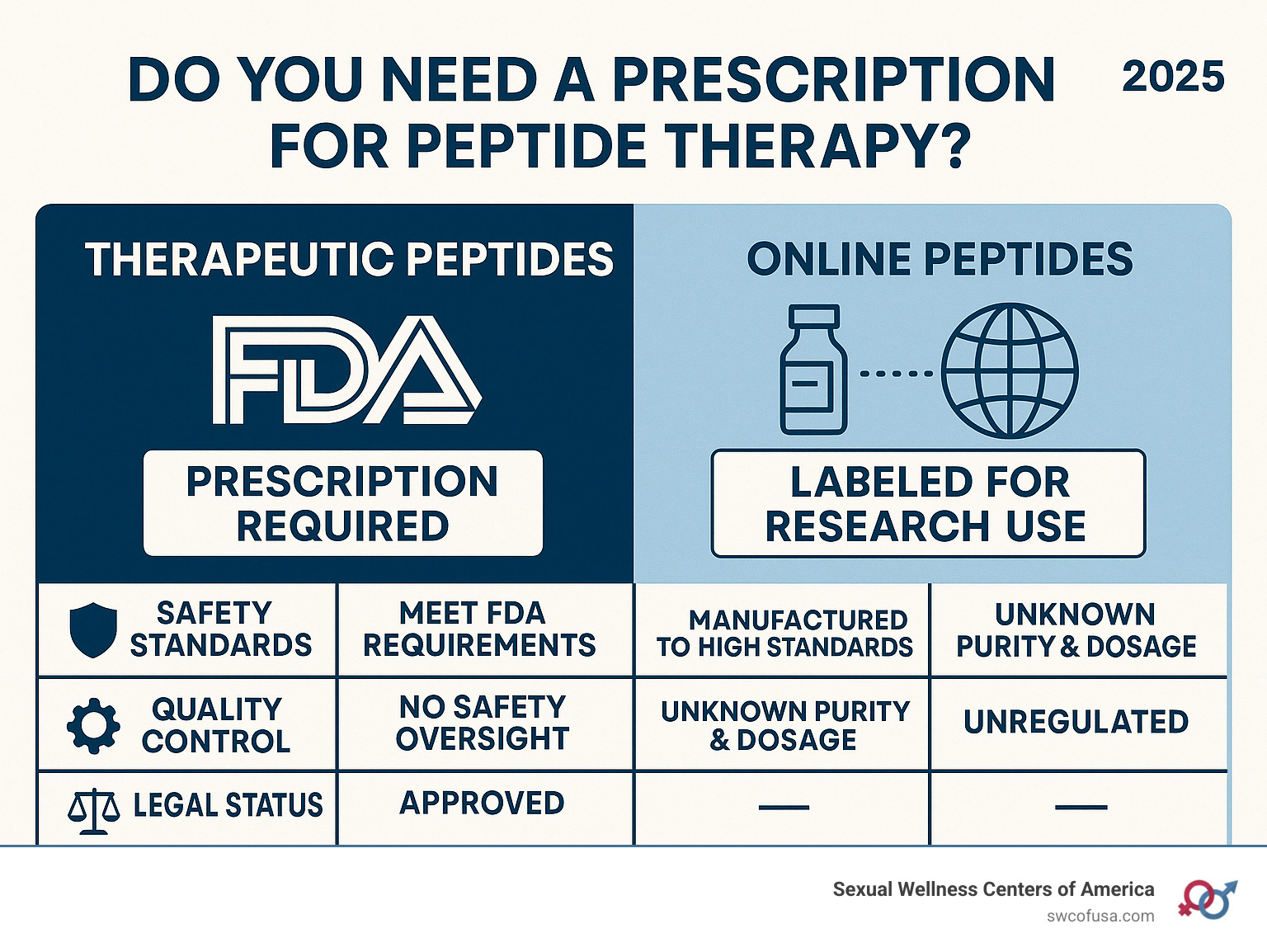
Do you need a prescription for peptide therapy? For any therapeutic use—including sexual wellness, anti-aging, and hormone optimization—the answer is almost always yes.
Quick Answer:
- FDA-approved therapeutic peptides: Require a prescription.
- Medical peptide therapy: Must be prescribed by a licensed healthcare provider.
- Over-the-counter peptides: Limited to cosmetic products and supplements.
- “Research” peptides online: Not approved for human use and potentially dangerous.
Peptide therapy has surged in popularity for its benefits in sexual health, weight management, and anti-aging. This has created confusion about how to access these treatments safely and legally. Many people risk their health by purchasing unregulated products online, failing to understand the difference between potent therapeutic peptides and over-the-counter supplements.
This confusion exists because peptides fall into multiple categories: regulated medications, unregulated supplements, and products dangerously labeled “for research only.” Understanding these distinctions is crucial for your safety.
As Jeff Nuziard, CEO of Sexual Wellness Centers of America, I’ve seen the importance of proper medical oversight for peptide treatments. My goal is to help patients steer this landscape safely to achieve their health goals.
Key terms for do you need a prescription for peptide therapy:
The Critical Difference: Therapeutic Peptides vs. Over-the-Counter Products
Peptides are short chains of amino acids that act as messengers, telling your body what to do and when. They orchestrate everything from hormone production to tissue repair. However, not all peptides are created equal in the eyes of medicine and law.
The key difference lies in their intended use and regulation. A peptide can be a harmless supplement or a powerful medication, depending on its purpose and potency.
Are peptides considered medications or supplements?
Peptides can be both medications and supplements—it all depends on what they’re designed to do.
As medications, peptides are biologically active compounds that create significant changes in your body. Insulin, a life-saving peptide hormone, is a classic example. Modern weight-loss peptides are also medications because they powerfully affect metabolism and appetite. These therapeutic peptides are intended to treat, prevent, or cure health conditions and must undergo rigorous FDA testing.
In the supplement category, you’ll find products like collagen peptides in health stores. The FDA doesn’t verify supplement claims before they hit shelves, so their effectiveness is not guaranteed. If a peptide is meant to treat a medical condition or significantly alter bodily function, it’s a prescription drug.
For cosmetic use, peptides for skin treatments are designed to improve appearance rather than treat medical conditions.
Can peptides be purchased over-the-counter?
Yes, but with important caveats. Cosmetic peptides are widely available in skincare like peptide creams. These are generally safe for external use. Dietary supplements containing peptides, like collagen, are also common but fall under food regulations, meaning they don’t have to prove safety or effectiveness.
This brings us to the risky “research chemicals” loophole. Many online suppliers sell peptides labeled “for research purposes only” or “not for human use.” This labeling allows them to bypass FDA drug regulations. These products lack pharmaceutical manufacturing standards, sterility testing, or quality control. People who buy these for self-treatment are taking a serious gamble with their health.
If you’re wondering do you need a prescription for peptide therapy for genuine therapeutic benefits, the answer is yes. The over-the-counter and “research” markets cannot provide the safety, purity, and potency needed for medical treatment. Understanding what are peptide supplements helps clarify these distinctions.
Why Do You Need a Prescription for Peptide Therapy? Understanding FDA Regulations
The FDA requires prescriptions for peptide therapy to ensure your safety. Peptides are powerful compounds that can dramatically affect your hormone signaling, immune function, and tissue repair. When a substance can change your body at a fundamental level, medical oversight is essential.
The FDA treats therapeutic peptides like any other potent medication, requiring rigorous testing and quality control. This is the difference between a proven, effective treatment and a dangerous gamble.
What is the FDA’s stance on peptides?
The FDA’s position is clear: if a peptide is intended for therapeutic use (to treat, diagnose, or prevent a condition), it is regulated as a drug. This includes popular peptides for weight loss, muscle growth, and anti-aging. Over 80 peptide medications are FDA-approved in the U.S., having undergone extensive clinical trials for safety and efficacy.
All FDA-approved peptides must be made under Good Manufacturing Practices (GMP), ensuring every batch meets strict standards for quality, purity, and potency. This is a world away from the unregulated online market. You can learn more about the FDA’s complex evaluation process through their tools to evaluate complex drugs like peptides.
What are the potential side effects and contraindications?
Even well-studied peptides can cause side effects, which is why medical supervision is non-negotiable. The question do you need a prescription for peptide therapy becomes critical when you consider what can go wrong.
Common side effects can include:
- Injection site reactions (redness, swelling)
- Gastrointestinal issues (nausea, vomiting)
- Increased appetite or fluid retention
- Changes in blood sugar levels
- Headaches, fatigue, or dizziness
More serious risks from unregulated products include allergic reactions, infections from non-sterile preparations, and unknown long-term effects that could lead to organ damage.
Medical contraindications make peptides dangerous for some individuals. A qualified provider will screen for these issues:
- History of certain cancers
- Pregnancy or breastfeeding
- Kidney or liver disease
- Interactions with other medications
A thorough medical evaluation is the only way to ensure peptide therapy is safe for you. Our Anti-aging Peptide Therapy programs always begin with comprehensive health assessments because patient safety is our top priority.
The Dangers of the Unregulated Market: Risks of Buying Peptides Online
The internet makes it easy to buy peptides, but easy access is dangerous when it comes to substances you inject into your body. The question do you need a prescription for peptide therapy isn’t an inconvenience; it’s your safety net.
The unregulated peptide market is a Wild West of snake oil salesmen operating in legal gray areas. They use labels like “for research only” to avoid FDA oversight, but most buyers are using these products on themselves, unaware of the risks.
What are the risks of purchasing peptides without a prescription?
Buying peptides from unregulated sources is a gamble with your health. These products have no quality control, and your safety is not a priority. The primary risks include:
- Contamination: Products may contain harmful bacteria, mold, or heavy metals, leading to serious infections.
- Dosage Inaccuracy: The vial might contain far more or less of the peptide than labeled, leading to dangerous side effects or ineffective treatment.
- Unknown Ingredients: Suppliers may use fillers or entirely different substances to cut costs.
- Lack of Sterility: Injecting non-sterile products can cause life-threatening infections.
- Ineffective Treatment: Improper storage and shipping can degrade the delicate peptide molecules, rendering them useless.
The FDA has warned about the risks of certain bulk drug substances for compounding, highlighting that even raw materials are dangerous without proper oversight.
What are the legal implications?
Beyond health risks, there are serious legal consequences. Purchasing unapproved drugs can lead to legal trouble, including confiscation of products and other penalties. The legal hammer falls even harder on suppliers, who can face massive fines and prison time for selling unapproved drugs.
The FDA actively monitors the market and issues warning letters to companies selling unapproved products. By seeking peptides without a prescription, you’re not just risking your health—you’re potentially breaking federal law. It’s not worth the risk when safe, legal alternatives are available through proper medical channels, a topic we often cover on our Health and Wellness Blog.
Your Safe and Legal Path to Peptide Therapy

There is a clear, safe pathway to legitimate peptide therapy. While it’s more involved than ordering online, each step is designed to protect your health and ensure results.
Step 1: Consulting a Healthcare Provider
Your journey begins with a qualified medical professional specializing in functional medicine, age management, or sexual wellness. This consultation is the foundation of safe treatment. It will involve:
- A discussion of your health goals to see if peptide therapy is a good fit.
- A thorough review of your medical history to identify any contraindications.
- Comprehensive lab work, including hormone and vitamin panels, to create a personalized plan. At Sexual Wellness Centers of America, we use this data for treatments like our HEshot®™, SHEshot®™, and other therapies using regenMAX® technology.
- An opportunity to ask questions about benefits, risks, and costs.
Step 2: The Prescription Process and Why Do You Need a Prescription for Peptide Therapy
If your provider determines peptide therapy is right for you, they will write a prescription. This is where the answer to do you need a prescription for peptide therapy becomes crystal clear: yes, for any therapeutic use. A licensed provider is the only one who can legally and safely prescribe these treatments.
Your provider creates a personalized treatment plan with precise dosages and the best administration method. This medical expertise is crucial, as too little is ineffective and too much can cause side effects. They will also provide ongoing monitoring to track your progress, adjust dosages, and manage any issues, which is vital for treatments like Peptide Therapy for Inflammation.
Step 3: Using Compounding Pharmacies
Your prescription will be filled by a reputable compounding pharmacy. These specialized facilities are essential for preparing customized medications.
- Role: They create your exact prescription to your provider’s specifications, which is often necessary for peptides.
- Regulation: They are governed by State Boards of Pharmacy and follow strict quality standards like USP <795> and <797>.
- Quality: They use pharmaceutical-grade ingredients from FDA-registered facilities, not questionable “research-grade” chemicals.
- Testing: The best pharmacies perform third-party testing for potency and sterility to verify the quality and safety of your medication.
This comprehensive approach ensures your Peptide Injection Therapy meets the highest safety and efficacy standards.
Frequently Asked Questions about Peptide Prescriptions
Let’s tackle some common questions about peptide prescriptions to clear up any confusion.
Why do you need a prescription for peptide therapy if some are sold online?
This confusion comes down to intent and regulation. Peptides intended for a medical purpose (e.g., weight loss, hormone modulation) are classified as drugs by the FDA and require a prescription for safety. The peptides sold online without a prescription are typically labeled “for research purposes only.” This is a legal loophole for sellers, but these products are not tested for human safety, purity, or potency. A prescription ensures your peptide comes from a verified, quality-controlled source.
Can I use peptides for muscle growth without a prescription?
No. Peptides for muscle growth, like CJC-1295 and Ipamorelin, are prescription drugs because they stimulate your body’s production of growth hormone. This powerfully affects your entire hormonal system, not just your muscles. Using them without medical supervision is risky. A doctor can ensure correct dosing, monitor your hormone levels, and rule out contraindications (like a history of certain cancers) where stimulating growth hormone could be dangerous. For safe results, always consult a healthcare provider. Learn more in our article on Peptide Supplements for Muscle Growth.
How do I know if a peptide source is legitimate?
Identifying a legitimate source is crucial for your safety. Here are the key signs of a trustworthy provider and pharmacy:
- They require a valid prescription from a licensed medical professional. This is non-negotiable.
- They use a licensed U.S. compounding pharmacy that is regulated by state boards and follows USP quality standards.
- They provide proof of third-party testing, such as a Certificate of Analysis (CoA), to verify the product’s purity, potency, and sterility.
- They do not use misleading labels like “for research purposes only” for products intended for human use.
- They offer professional consultations and ongoing medical monitoring.
If a deal seems too good to be true or a supplier promises results without a prescription, it is almost certainly an unsafe or fraudulent product.
Conclusion
The question do you need a prescription for peptide therapy is not about rules—it’s about protecting your health and ensuring you get the results you want. For any therapeutic purpose, from sexual wellness to anti-aging, a prescription from a qualified healthcare provider is essential.
Peptides are powerful medications, not casual supplements. The dangers of buying unregulated products online are serious, ranging from ineffective treatments to contaminated substances that can cause significant harm. The safe path is clear: start with a medical professional.
Your journey should begin with a comprehensive consultation to create a personalized treatment plan. This ensures your peptides are sourced from a licensed U.S. compounding pharmacy that verifies purity, potency, and sterility through third-party testing.
At Sexual Wellness Centers of America, we are committed to providing safe, effective peptide therapy. Our expert team creates personalized plans to help you achieve your health goals. We’ve seen how properly administered peptide therapy can transform lives—but only when it’s done right.
Don’t risk your health on unregulated products. Start your journey safely with a qualified provider.
Schedule an appointment to discuss your peptide therapy options in Colleyville, TX