
The Science of Calm: Understanding Peptide Solutions for Anxiety
For those seeking information about peptide therapy for anxiety, here’s what you need to know:
| Peptide Therapy for Anxiety Overview |
|---|
| • Peptides are small proteins that act as cellular messengers in the brain and body |
| • Several peptides (including Selank, Semax, and Oxytocin) have shown anxiolytic effects |
| • Treatment typically involves intranasal sprays or subcutaneous injections |
| • Works by modulating neurotransmitters, reducing inflammation, and promoting neuroplasticity |
| • Generally has fewer side effects than traditional anti-anxiety medications |
Peptide therapy for anxiety represents an innovative approach to addressing the complex neurochemical imbalances that contribute to anxiety disorders. Unlike traditional medications that often come with unwanted side effects, peptides work with your body’s natural signaling systems to promote calm and emotional regulation.
Anxiety affects nearly 40 million American adults annually, yet many find conventional treatments ineffective or intolerable. This guide explores how specialized peptides can offer a new pathway to relief by targeting specific neurobiological mechanisms involved in anxiety.
Peptides function as your body’s messaging system – tiny proteins that deliver precise instructions to cells. When used therapeutically, they can help recalibrate the stress response, improve mood-regulating neurotransmitters, and promote neural resilience.
As Jeff Nuziard, CEO of Sexual Wellness Centers of America, I’ve witnessed remarkable changes in patients using peptide therapy for anxiety as part of our comprehensive wellness approach, particularly in those experiencing anxiety that impacts their sexual health and relationships.
Quick peptide therapy for anxiety definitions:
– peptide injection therapy
– peptides for healing
– peptide supplements
Peptides 101: Tiny Messengers With a Big Impact
Think of your body as a busy city where billions of cells need to talk to each other constantly. Peptides are like the text messages in this biological network—short, specific, and remarkably effective at delivering critical information throughout your body.
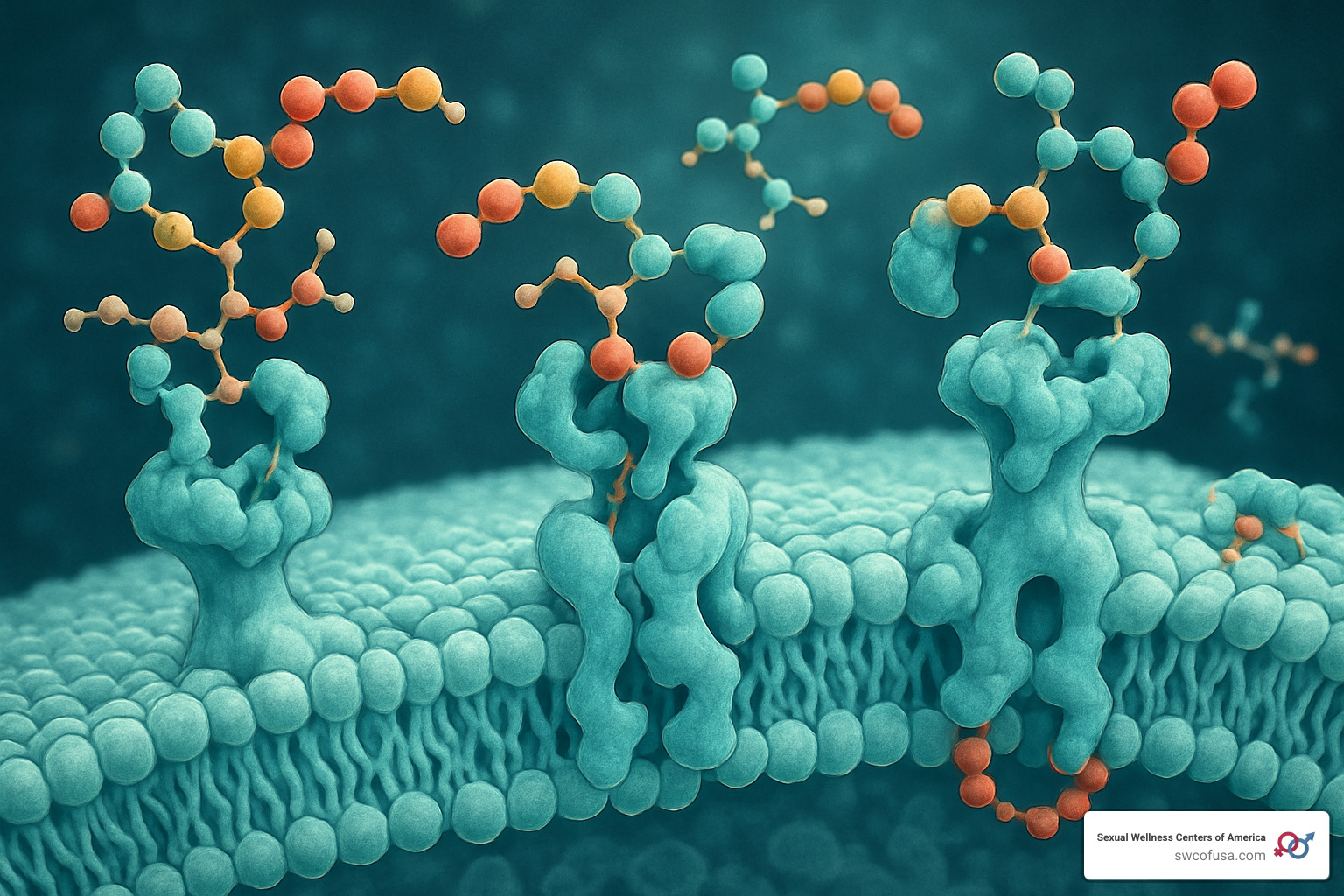
Peptides are simply short chains of amino acids (the same building blocks that make up proteins). While proteins might contain hundreds or thousands of amino acids linked together, peptides are the compact cousins—typically just 2 to 50 amino acids long. This smaller size is their superpower, allowing them to travel easily through your body and connect with specific receptors on your cells.
When we talk about mental health, certain peptides called neuropeptides take center stage. These specialized messengers influence how your brain cells communicate and directly affect how you experience emotions—including anxiety.
Your body’s main stress response system, the hypothalamic-pituitary-adrenal (HPA) axis, relies heavily on peptides to function properly. When working well, this system helps you respond appropriately to stressful situations and then return to a calm state. But in anxiety disorders, this system often gets stuck in “high alert” mode—and this is where peptide therapy for anxiety can help restore balance.
Just as important is the connection between your gut and brain. Surprising as it might seem, many peptides actually originate in your digestive system. The emerging science around the gut-brain axis shows that gut health dramatically influences mental health, with gut-derived peptides sending messages to your brain that can either soothe anxiety or trigger it.
Some peptides also boost levels of brain-derived neurotrophic factor (BDNF)—think of it as fertilizer for your brain cells. BDNF supports the growth and maintenance of neurons, especially in areas responsible for managing emotions. Higher BDNF levels have been linked to greater resilience against both anxiety and depression.
What Are Peptides and How Do They Function?
When it comes to anxiety treatment, there are two main types of peptides:
-
Endogenous peptides are the ones your body makes naturally. These include oxytocin (often called the “bonding hormone”) and various other neuropeptides that help regulate your mood.
-
Synthetic or bioidentical peptides are created in labs to either mimic your body’s natural peptides or improve upon them. These form the foundation of peptide therapy for anxiety.
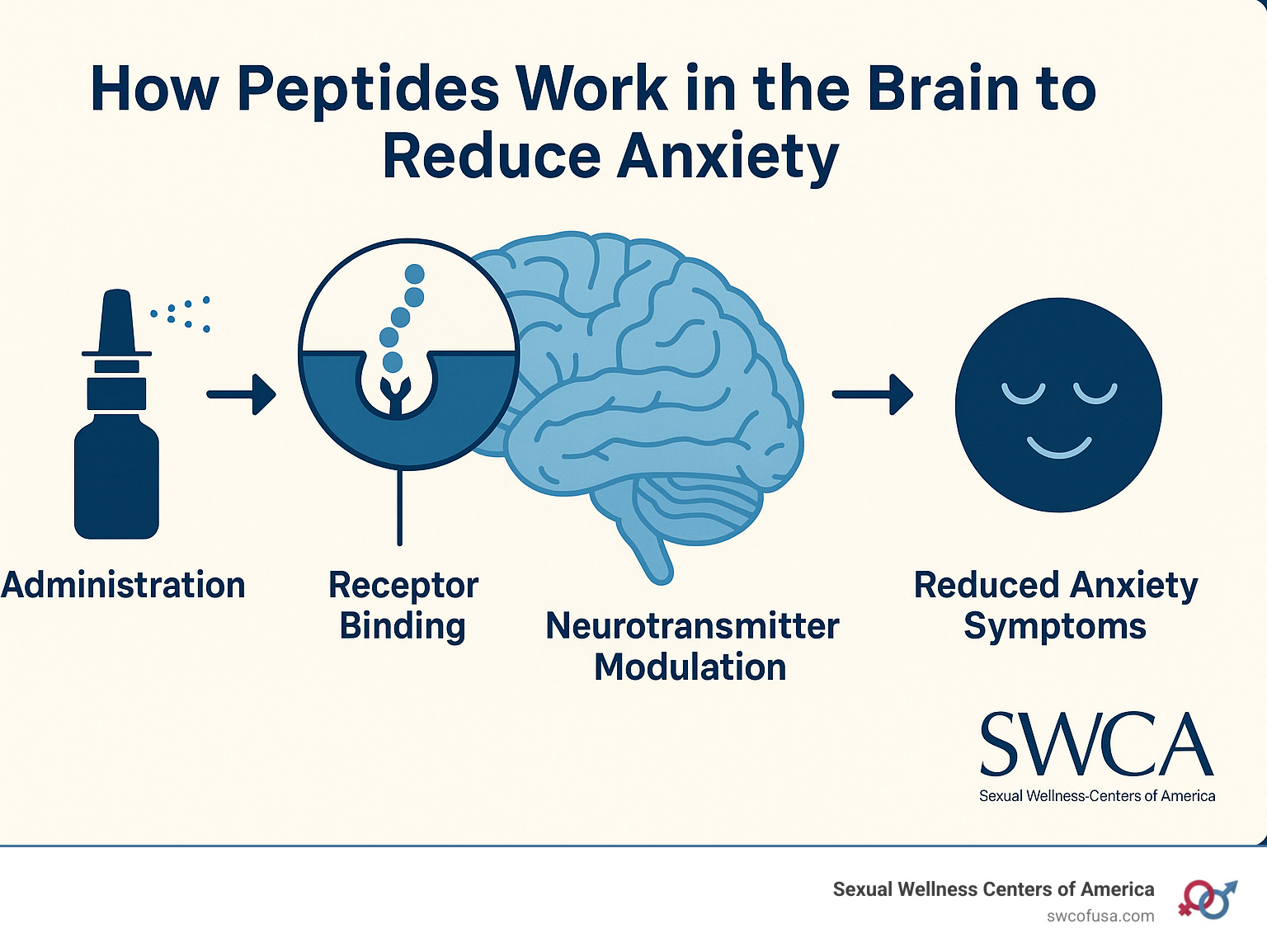
The real magic happens when a peptide finds its matching receptor on a cell’s surface—like a key finding its lock. This connection triggers a cascade of reactions inside the cell, which can turn various cellular functions on or off. This process influences everything from neurotransmitter release to which genes get expressed.
For treating anxiety, peptides target specific receptors involved in stress response, fear processing, and emotional regulation. Their precision is what makes them special—they can often achieve therapeutic effects with fewer unwanted side effects than conventional medications that affect broader systems.
Key Systems Peptides Influence
When it comes to calming anxiety, peptides work their magic by influencing several key brain communication systems:
Serotonin System: Often nicknamed the “happy chemical,” serotonin helps regulate your mood, sleep, and sense of well-being. Certain peptides can improve serotonin signaling without the sexual side effects or weight gain often associated with SSRI medications.
GABA System: GABA acts as your brain’s natural brake pedal, slowing down excessive neural activity. Peptides like Selank can improve GABA’s calming effects, helping you feel more relaxed without feeling drugged or sleepy.
Dopamine System: This neurotransmitter drives motivation, pleasure, and reward. Balanced dopamine signaling helps reduce anxiety by promoting positive feelings that counteract stress. Some peptides help fine-tune this delicate system.
Cortisol Regulation: While cortisol (often called the “stress hormone”) is essential for normal functioning, too much for too long creates problems. Several therapeutic peptides help normalize cortisol levels, reducing physical symptoms of anxiety like racing heart, tight chest, and muscle tension.
By working with these interconnected systems, peptide therapy for anxiety offers a comprehensive approach that addresses anxiety’s complex nature. Rather than using a sledgehammer approach, peptides offer more of a gentle tuning of your body’s natural anxiety-management systems.
At Sexual Wellness Centers of America, we understand how anxiety can impact not just your mental health but also your relationships and sexual wellness. That’s why peptide therapy has become an important tool in our personalized treatment approaches.
How Peptide Therapy for Anxiety Works
Peptide therapy for anxiety takes a precision approach to mental wellness that’s quite different from traditional medications. Instead of broadly affecting your entire brain chemistry, peptides work through specific pathways to restore balance where you need it most.

You might be wondering how these tiny molecules actually get into your system. We use several methods depending on what works best for you:
Most of our patients prefer intranasal delivery – simple nasal sprays that allow peptides like Selank and Semax to bypass the blood-brain barrier and go straight to work in your brain. It’s quick, painless, and fits easily into your daily routine.
For other peptides, we use subcutaneous injections – tiny, virtually painless injections just under the skin of your abdomen. Don’t worry if you’re needle-shy! Most patients are surprised by how easy and comfortable these small injections are.
Some people do better with oral lozenges that dissolve under your tongue, delivering peptides directly into your bloodstream without having to steer your digestive system.
Your treatment journey typically starts with a “loading phase” – daily doses for several weeks to build up therapeutic levels in your system. Once we’ve established the right foundation, we’ll shift to a maintenance schedule that’s less frequent but keeps your anxiety relief steady. This approach helps prevent your body from developing tolerance to the peptides.
Here at Sexual Wellness Centers of America, we pride ourselves on making treatment convenient for you. Our concierge medicine approach means personalized care that fits your lifestyle. Can’t make it to our Colleyville, TX location? No problem – we offer telehealth consultations to guide you through your peptide therapy journey from the comfort of home.
The science behind peptides for anxiety continues to grow stronger. Scientific research on peptides shows they can match the effectiveness of traditional anxiety medications while causing fewer side effects – something our patients definitely appreciate!
Mechanisms Behind Anxiolytic Effects
So how exactly do these peptides calm your anxious mind? The magic happens through several sophisticated pathways:
When peptides enter your system, they can actually influence which genes get activated in your neurons. This means they can turn up the volume on genes that help you handle stress while turning down those that make you more sensitive to anxiety triggers.
They’re also remarkable brain healers. By boosting levels of BDNF (think of it as fertilizer for your brain cells), peptides help your brain form new connections and strengthen existing ones, especially in areas involved in processing fear and regulating emotions. This neuroplasticity is crucial for long-lasting anxiety relief, not just temporary symptom masking.
Inflammation in the brain isn’t just for physical injuries – it’s a major contributor to anxiety disorders. Many of our therapeutic peptides have powerful anti-inflammatory properties that help restore normal brain function.
“Fight or flight” response that gets stuck in the “on” position when you have anxiety? Peptides help normalize your HPA axis – the body’s stress control center – when it becomes hyperactive.
Your gut and brain are constant conversation partners, and when that communication goes awry, anxiety often follows. Certain peptides help restore healthy gut-brain dialogue, reducing anxiety that stems from digestive imbalances.
Perhaps most importantly, peptides like Selank improve the effects of GABA, your brain’s natural calming neurotransmitter. Unlike benzodiazepines, they do this without causing sedation or dependence – giving you calm without the brain fog.
Personalized Peptide Therapy for Anxiety Plans
At Sexual Wellness Centers of America, we know that your anxiety is as unique as you are. That’s why we never offer one-size-fits-all solutions. Our approach to peptide therapy for anxiety starts with comprehensive testing to identify exactly what’s happening in your body.
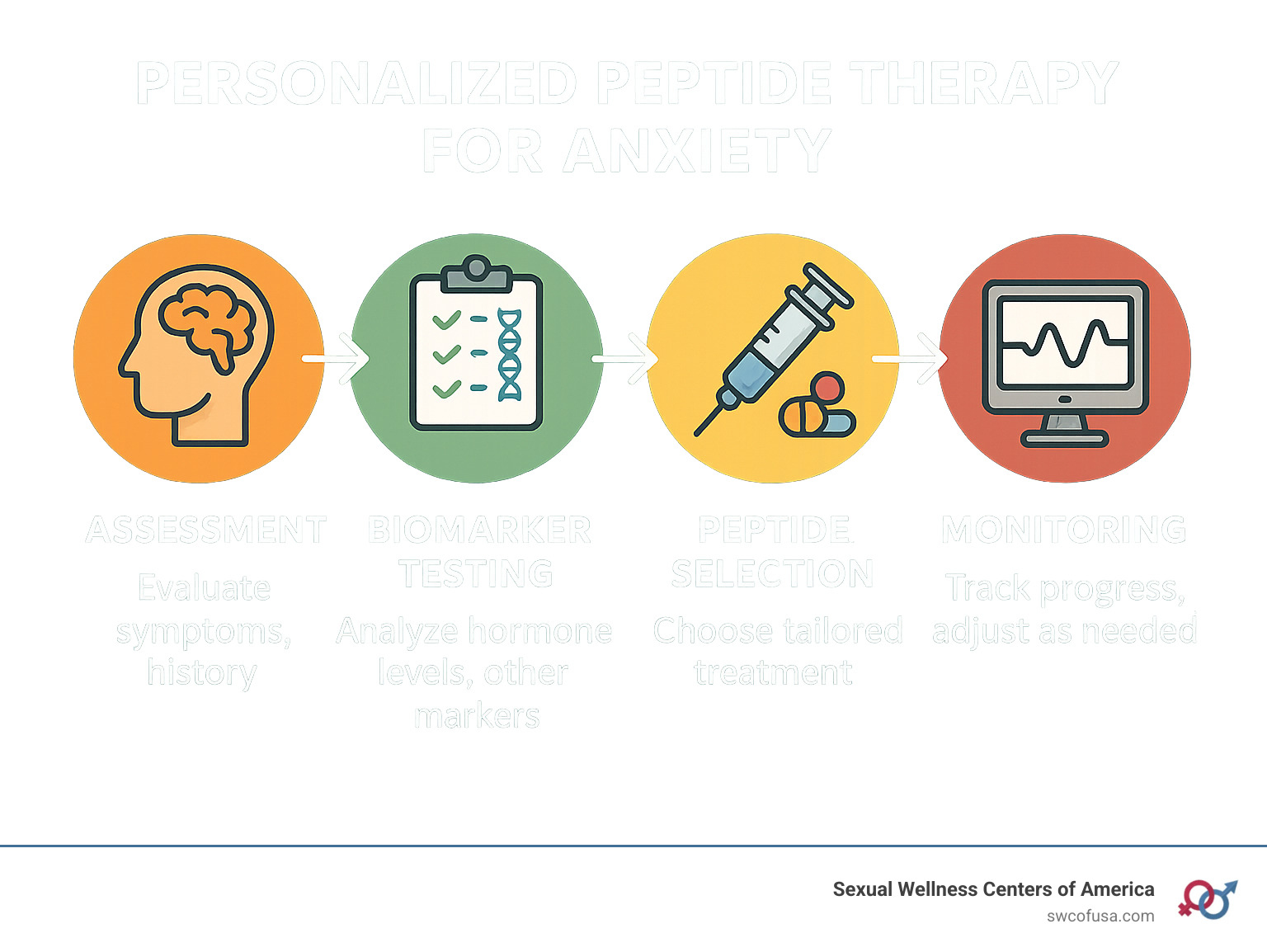
We’ll analyze your hormone panels to check levels of stress hormones like cortisol, as well as sex hormones that significantly impact mood and anxiety. This is particularly important because hormonal imbalances often underlie anxiety symptoms, especially in cases where sexual wellness concerns and anxiety overlap.
Your personalized plan doesn’t exist in isolation from the rest of your life. We carefully integrate your peptide protocol with recommendations for diet, exercise, sleep, and other lifestyle factors that can either amplify or diminish your results.
As your body responds to treatment, we’ll fine-tune your dosages through careful titration protocols. This ensures you get optimal results with minimal side effects – the sweet spot for anxiety relief.
Our patients tell us they appreciate this root-cause approach rather than just masking symptoms. They feel truly seen and understood, often for the first time in their anxiety treatment journey.
For more information about our customized programs that combine peptide therapy with comprehensive wellness approaches, visit our peptide programs page or reach out to our caring team at our Colleyville, TX office.
Spotlight on Top Anxiety-Targeting Peptides
Let’s take a closer look at the peptides making the biggest impact in anxiety treatment. Think of these as the “all-stars” of peptide therapy for anxiety – each with its own unique approach to helping calm your nervous system.
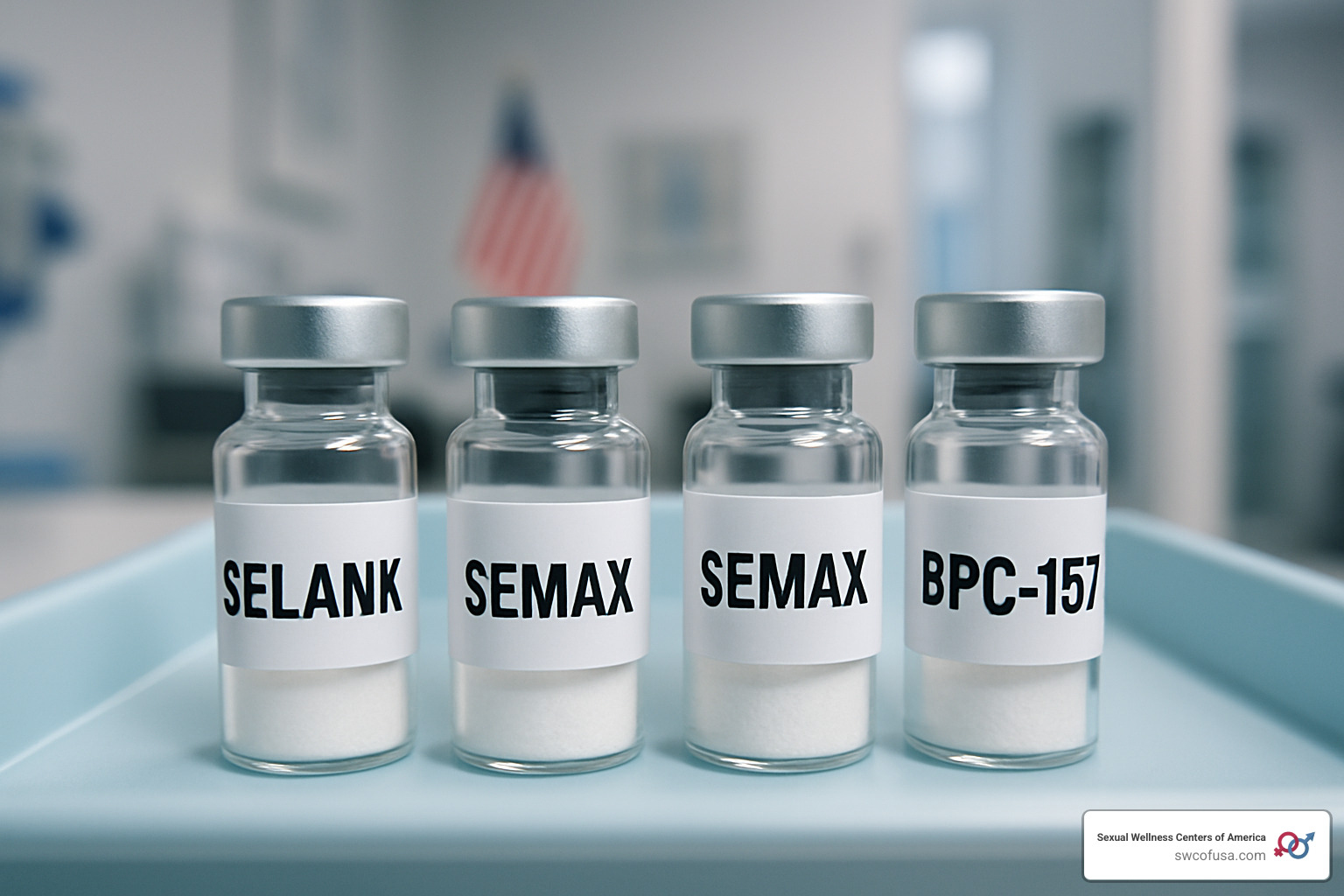
Selank: The “Peptide Benzodiazepine”
Selank has earned quite the nickname in anxiety treatment circles. We often call it the “peptide benzodiazepine” – though I should clarify that it works very differently from conventional medications like Xanax or Valium.
Developed by Russian scientists (who have studied it extensively), Selank offers something remarkable: the calming effects of anti-anxiety medications without the downsides. Most patients report feeling a sense of calm washing over them within just 5-15 minutes after using it.
What makes Selank special is how it works with your GABA system – your brain’s natural calming mechanism – without creating dependence or tolerance. Even better, while traditional benzodiazepines often leave you feeling foggy, Selank actually tends to improve mental clarity for many users.
At our Sexual Wellness Centers of America, we’ve seen Selank work wonders for patients whose anxiety affects their intimate relationships. It reduces those anxious feelings without the sexual side effects that often come with traditional anxiety medications like SSRIs.
Semax: Mood & Memory Booster
If you’re looking for something that tackles both anxiety and brain fog, Semax might be your answer. This unique peptide doesn’t just calm your nerves – it actually helps sharpen your thinking too.
The magic happens when Semax triggers a surge in BDNF (brain-derived neurotrophic factor), which essentially helps your brain build new connections. It’s like giving your brain the tools it needs to adapt and heal. Semax also helps quiet what we call the “default mode network” – that part of your brain that kicks into overdrive when you’re worrying or ruminating.
I’ve seen Semax work particularly well for professionals dealing with high-pressure work environments who need to stay sharp while managing stress. It’s that rare combination of calming without dulling your mental edge.
Oxytocin & Social Calm
You might know oxytocin as the “love hormone” – and for good reason. This remarkable peptide is naturally released during positive social interactions, especially hugging, bonding, and sex.
When used as an intranasal therapy, oxytocin can work wonders for social anxiety. It helps take the edge off that uncomfortable feeling of being judged in social situations and makes connecting with others feel more natural and less threatening.
Interestingly, research from the Cleveland Clinic on oxytocin shows it affects men and women somewhat differently. The peptide seems to calm the amygdala – your brain’s fear center – during social interactions, making those situations feel less threatening.
At our center in Colleyville, we’ve found oxytocin particularly helpful for couples therapy. When both partners receive treatment, it often creates a beautiful synergy that reduces performance anxiety while strengthening their emotional bond.
Emerging Candidates (LCGA-17, Phoenixin, MC4R analogs)
The future of peptide therapy for anxiety looks brighter than ever with several promising newcomers in development.
LCGA-17 is showing excellent results in early trials – calming anxiety without making patients feel sedated (a common complaint with traditional medications). Phoenixin, a recently finded neuropeptide, appears to not only reduce anxiety but also improve your resilience to stress over time.
Then there are the MC4R analogs, which target melanocortin receptors involved in regulating anxiety responses. While still in development, these could offer even more precisely targeted options for anxiety relief.
The peptide innovation pipeline is robust, and at Sexual Wellness Centers of America, we stay at the forefront of these developments. We’re particularly excited about how these emerging peptides might help our patients who struggle with anxiety that affects their sexual wellness and relationships.
Comparing Peptide Therapy to Traditional Anxiety Treatments
When exploring your options for anxiety relief, you might wonder how peptide therapy for anxiety stacks up against treatments you’ve tried before. I’ve found that patients appreciate understanding these differences to make choices that feel right for their unique situation.
Think of anxiety treatments like different tools in a toolbox – each has its purpose, strengths, and limitations. Let’s break down how peptide therapy compares to the familiar options:
| Treatment Aspect | Peptide Therapy | SSRIs | Benzodiazepines | CBT |
|---|---|---|---|---|
| Onset of Action | Often rapid (days) | Delayed (2-6 weeks) | Immediate | Gradual (weeks to months) |
| Dependency Risk | Minimal | Low | High | None |
| Cognitive Effects | Often positive | Can be negative | Impairment | Improvement |
| Sexual Side Effects | Minimal | Common | Possible | None |
| Personalization | Highly individualized | Limited | Limited | Moderately high |
| Cost | Higher upfront | Often covered by insurance | Often covered by insurance | Variable coverage |
Advantages & Limitations
When patients visit us at Sexual Wellness Centers of America, they often share frustrations with traditional anxiety treatments. Many appreciate that peptide therapy for anxiety offers several distinct advantages.
For starters, most anxiety-targeting peptides work without making you feel like a zombie. Unlike benzodiazepines that can leave you feeling groggy all day, peptides typically don’t cause that heavy sedation that interferes with daily life. This means you can feel calmer while still being present and functional.
What’s particularly exciting is the neuroprotective quality of many peptides. Rather than potentially harming brain cells with long-term use (as some conventional medications might), peptides often support brain health and function. It’s like getting anxiety relief while actually nurturing your brain.
The precision targeting of peptides is another big plus. Instead of broadly affecting multiple systems in your body (hello, side effects!), peptides can address specific aspects of anxiety with more precision. Think of it as using tweezers instead of a sledgehammer.
Many of our patients at our Colleyville clinic also appreciate that peptides often play well with other treatments. You don’t necessarily have to choose between peptide therapy and talk therapy, for example – they can complement each other beautifully.
Of course, peptide therapy isn’t without limitations. Accessibility remains a challenge since it’s not yet as widely available as popping by your local pharmacy for a prescription. The upfront costs can be higher, and insurance coverage varies widely – something we’re transparent about with our patients.
It’s also worth noting that while the research is promising and growing rapidly, peptide therapy for anxiety is still an emerging field compared to treatments that have been around for decades. This means we’re learning more every day, but the body of evidence isn’t as extensive yet.
Some patients also find the administration requirements – like injections or nasal sprays – less convenient than simply swallowing a pill. Though many quickly adapt to these methods, it’s something to consider when weighing your options.
At Sexual Wellness Centers of America, we’ve found that integrating peptide therapy into a comprehensive approach often yields the best results. This might include lifestyle changes, nutritional support, and sometimes adjusted doses of conventional treatments. Our goal isn’t to replace everything you’re doing, but to find the optimal combination that helps you feel your best – both in your daily life and in intimate moments where anxiety can particularly interfere.
Benefits, Risks & Ideal Candidates
When considering peptide therapy for anxiety, it’s natural to wonder about the balance between potential benefits and risks. At Sexual Wellness Centers of America, we’ve seen how this innovative approach has helped many patients find relief when traditional options fell short.

Most of our patients appreciate that peptides can calm their anxiety without making them feel like zombies. Unlike traditional anti-anxiety medications that often leave you feeling foggy or disconnected, many people tell us they feel both calmer and mentally sharper with peptide therapy. There’s something remarkable about being able to think clearly while no longer feeling overwhelmed by anxiety.
Beyond just symptom relief, many anxiety-targeting peptides actually support your brain’s natural ability to form healthier neural pathways – what scientists call neuroplasticity. This means peptides may help your brain “learn” new, less anxious response patterns rather than just temporarily masking symptoms.
We’ve also noticed that many of our patients experience improved immune function while on peptide therapy. This makes sense when you consider how closely connected mental and physical health really are – when your stress hormones normalize, your immune system often functions better too.
Of course, no treatment is completely without potential downsides. Some patients experience mild side effects like temporary nasal irritation with intranasal formulations or slight redness at injection sites. Occasional headaches or digestive discomfort can occur as your body adjusts to the peptides, but these typically resolve quickly.
We’re particularly careful with certain groups, including pregnant or breastfeeding women, since research data is limited for these populations. Similarly, most peptide research has focused on adults rather than children or adolescents, so we generally recommend other approaches for younger patients.
Who Is a Good Fit for Peptide Therapy for Anxiety?
Not everyone with anxiety needs peptide therapy for anxiety, but certain people tend to benefit most from this approach.
If you’ve tried conventional anxiety treatments without success – or couldn’t tolerate their side effects – peptides might offer the relief you’ve been seeking. Many of our patients come to us after years of frustration with traditional medications that either didn’t work well or caused unacceptable side effects.
We also see many professionals who simply can’t afford the mental fog that comes with traditional anti-anxiety medications. Executives, entrepreneurs, healthcare providers, and others in demanding careers often tell us that peptide therapy helps them stay sharp while keeping anxiety at bay.
The “biohacking” community has acceptd peptides enthusiastically, and with good reason. If you’re someone who takes an active role in optimizing your mental and physical performance, the dual benefits of anxiety reduction and cognitive improvement that many peptides offer can be particularly appealing.
At Sexual Wellness Centers of America, we’ve found peptide therapy for anxiety particularly valuable for patients whose anxiety affects their sexual function. Unlike many antidepressants that commonly cause sexual side effects like decreased libido or difficulty with arousal, most peptides don’t interfere with sexual health – and some may actually improve it.
Potential Side Effects & Monitoring
While generally well-tolerated, being aware of potential side effects helps you know what to expect. The most common issues we see include temporary nasal irritation with intranasal peptides – some patients experience congestion or sneezing that typically subsides quickly. For those using injectable peptides, mild redness or itching at the injection site sometimes occurs but rarely lasts more than a day.
As your brain chemistry adjusts, you might notice some mood fluctuations during the first week or two. This is perfectly normal and usually settles down as your body adapts to the therapy. Some patients report mild headaches when first starting treatment, which typically resolve as they continue with the protocol.
At Sexual Wellness Centers of America, we don’t just prescribe peptides and send you on your way. We implement a comprehensive monitoring approach that begins with thorough baseline assessments before treatment starts. During the initial weeks, we check in regularly to see how you’re responding and address any concerns promptly.
We also conduct follow-up laboratory testing to track relevant biomarkers, adjusting your protocol based on both objective data and your subjective experience. This careful, personalized approach helps ensure you get the maximum benefit with minimal side effects.
Our patients often tell us they appreciate this attentive monitoring – it provides reassurance and helps them feel confident that their peptide therapy for anxiety is being managed with the highest standard of care.
Access, Regulation & Future Outlook
Navigating the landscape of peptide therapy for anxiety can feel a bit like exploring uncharted territory. Let’s break down what you need to know about getting treatment, how these therapies are regulated, and what exciting developments are on the horizon.
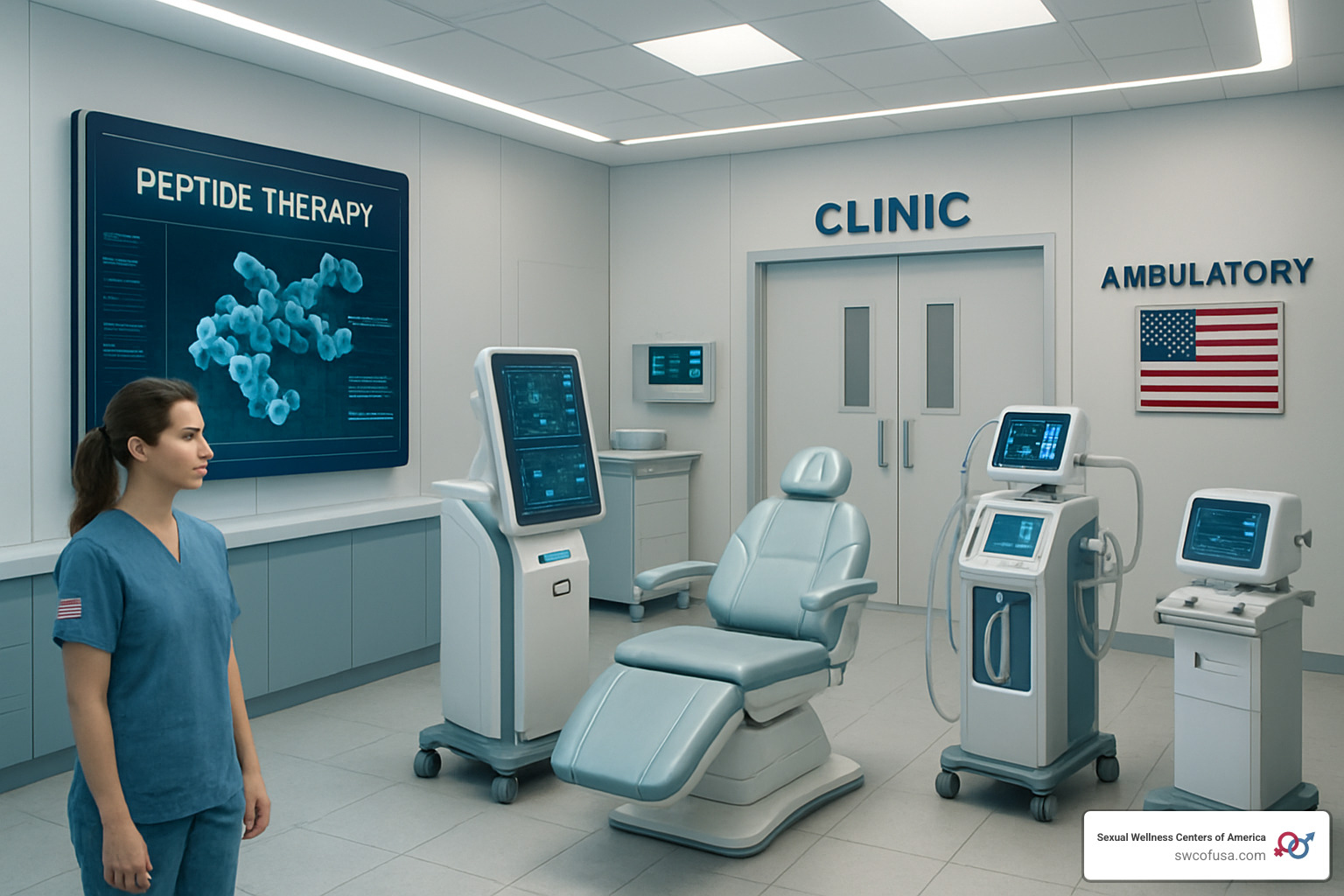
The regulatory landscape for peptides isn’t always straightforward. Some peptides have earned FDA approval for specific medical conditions, though their use for anxiety is often considered “off-label” – perfectly legal but not the originally approved purpose. Many of the anxiety-targeting peptides we use come through trusted compounding pharmacies with a prescription from one of our knowledgeable providers. Others remain classified as research compounds, though this status continues to evolve as more clinical evidence supports their benefits.
“Many patients tell me they tried for months to find someone knowledgeable about peptide therapy before finding us,” says our clinical director. “The field is growing, but specialized expertise is still concentrated in forward-thinking clinics.”
If you’re wondering how to access peptide therapy for anxiety, you have several options. Specialized clinics like ours at Sexual Wellness Centers of America in Colleyville, TX offer comprehensive programs with personalized guidance. Can’t make it to Texas? No problem – we also provide telemedicine consultations for those unable to visit in person. Some patients even benefit from our concierge house call services, where we bring peptide administration and monitoring directly to your home.
Cost is naturally a consideration for many people exploring peptide therapy. The investment varies depending on which specific peptides your treatment plan includes, how long you’ll need treatment, and your provider’s fee structure. While generally more expensive upfront than generic antidepressants, many of our patients find the improved quality of life and reduced side effects more than justify the cost difference.
“I spent years trying medications that either didn’t work or left me feeling like a zombie,” shares one of our patients. “The peptide therapy costs more per month, but I’m actually living my life again instead of just getting through the day.”
Insurance coverage for peptide therapy remains limited for now, though we’re seeing gradual improvements as research continues to demonstrate efficacy. Our staff is always happy to discuss financing options and ways to make treatment more affordable.
Looking toward the future, the outlook for peptide therapy for anxiety is genuinely exciting. We’re closely following developments in AI-driven personalization of peptide formulations based on individual biomarkers – essentially creating custom anxiety solutions for your unique biology. Researchers are also developing improved delivery systems that promise greater convenience and effectiveness.
We expect to see expanded insurance coverage as evidence continues to accumulate, making these innovative treatments accessible to more people struggling with anxiety. Perhaps most exciting is the development of new, even more precisely targeted peptides designed for specific anxiety subtypes.
At Sexual Wellness Centers of America, we stay at the forefront of these innovations, incorporating new advances into our treatment protocols as they become available. The future of anxiety treatment looks brighter than ever, with peptide therapy leading the way toward more personalized, effective solutions with fewer side effects.
More info about anxiety solutions is available on our website, or you can contact us directly to discuss whether peptide therapy might be right for your anxiety concerns.
Frequently Asked Questions about Peptide Therapy for Anxiety
Is peptide therapy safe for long-term use?
When patients ask me about long-term safety, I’m happy to share some good news. Unlike benzodiazepines that can lead to dependence, most peptide therapy for anxiety options have shown promising safety profiles even with extended use. Many of our patients at Sexual Wellness Centers of America have benefited from these treatments for years without developing tolerance issues.
That said, we’re still gathering more comprehensive long-term data. This is why we implement what I like to call “strategic cycling” with certain peptides – giving your body short breaks to prevent potential tolerance and maintain effectiveness. Think of it like rotating your workouts to keep seeing results. We design these protocols thoughtfully to provide lasting relief while keeping an eye on your long-term wellness.
How quickly will I feel anxiety relief?
This is probably the question I hear most often, and the answer really depends on which peptide we’re using in your treatment plan:
Selank tends to be our “quick responder,” often providing noticeable calm within minutes to hours after administration. Many patients describe it as a gentle wave of relief washing over them.
Semax typically needs a bit more time, with most people noticing improvements within 1-3 days of consistent use.
Oxytocin is our “social butterfly” peptide, with effects that can be felt almost immediately – especially in situations that would normally trigger social anxiety.
Other peptides in our arsenal might take 1-2 weeks to fully integrate into your system and provide their full benefits.
Your personal biochemistry plays a big role too. I always tell patients to expect some improvement within the first week of consistent use, with effects continuing to build over about a month. The journey isn’t always linear – some days might feel better than others as your body adjusts – but the overall trajectory tends to move toward greater calm and resilience.
Can peptides be combined with my current medications?
Good news – in most cases, peptide therapy for anxiety works well alongside conventional medications. We regularly create integrated protocols that include peptides alongside antidepressants, mood stabilizers, and even low-dose benzodiazepines when appropriate.
Before we begin any peptide protocol at Sexual Wellness Centers of America, we conduct a thorough medication review. This isn’t just checking boxes – we’re looking at how everything might interact and complement each other. What often happens is quite remarkable: as the peptides begin working, we can gradually adjust conventional medications, sometimes reducing dosages while maintaining or even improving your anxiety control.
I always emphasize the importance of full disclosure – please tell us about every medication, supplement, vitamin, and herbal remedy you’re taking, even if it seems unrelated. This helps us ensure your peptide therapy journey is both safe and effective.
Many patients appreciate this integrative approach because it offers the best of both worlds – conventional treatments that may already be providing some relief combined with innovative peptides that can address aspects of anxiety through different pathways. It’s like having multiple tools in your anxiety management toolbox rather than relying on just one approach.
Conclusion
Peptide therapy for anxiety isn’t just another treatment option—it represents a fundamental shift in how we approach mental wellness. Unlike conventional medications that often take a sledgehammer approach, peptides work more like skilled craftspeople, precisely tuning your body’s natural signaling systems to restore balance and calm.
At Sexual Wellness Centers of America in Colleyville, TX, we’ve seen truly remarkable changes in our patients. The executive who finally conquered the performance anxiety that was holding back her career. The husband whose relationship anxiety melted away, allowing genuine intimacy to flourish again. The mother whose constant worry finally quieted enough to let her enjoy her family.
The most effective approach to managing anxiety rarely relies on a single solution. We find that peptide therapy for anxiety works best as part of an integrated wellness strategy. Think of peptides as the foundation that makes other approaches more effective—like nutritional support, regular movement, quality sleep, and mindfulness practices. When combined with hormone balancing when needed, this comprehensive approach addresses anxiety at multiple levels simultaneously.
If you’ve been frustrated by conventional anxiety treatments that either don’t work well enough or come with side effects you can’t tolerate, peptide therapy offers a refreshing alternative. Many of our patients describe it as feeling “normal” again—calm but not sedated, present but not hyper-vigilant.
Our team at Sexual Wellness Centers of America specializes in developing highly personalized peptide protocols based on your unique biochemistry and specific anxiety symptoms. We apply the same precision approach that’s earned us our impressive 97.2% success rate in treating erectile dysfunction (which, not surprisingly, is often anxiety-related).
Living with anxiety shouldn’t mean choosing between emotional suffering or medication side effects that create different kinds of suffering. Peptide therapy for anxiety offers a third path—one that works with your body’s natural systems rather than overriding them.
The journey toward calm can start today. For more information about our anxiety solutions and how peptide therapy might complement your wellness plan, reach out to us at Sexual Wellness Centers of America. We’re ready to help you refind what life feels like without the weight of constant anxiety.