
Peptide therapy treatment isn't new medicine dressed up as wellness. Insulin, the first commercial peptide drug, was synthesized in 1921 and became commercially available in 1923, making peptide medicine more than a century old (peer-reviewed review). What's new is the way approved metabolic medicines now sit beside clinic-supervised protocols and online compounds marketed for recovery, anti-aging, sexual performance, and longevity.
That distinction matters. A peptide can be an established prescription medicine with a defined indication, or it can be an investigational substance with limited human evidence and uncertain manufacturing quality. The same word, “peptide,” can describe products governed by very different safety and evidence standards.
Table of Contents
- What Peptide Therapy Treatment Actually Means in 2026
- A Century of Peptide Medicine and Why the Market Just Surged
- How Peptide Classes Work and What They Target
- Approved Peptide Drugs Versus Unregulated Wellness Peptides
- Where Peptide Therapy Fits in a Regenerative and Sexual Wellness Plan
- What Outcomes and Timelines to Expect From a Supervised Protocol
- Safety, Contraindications, and Lab Monitoring You Should Know About
- How to Decide if Peptide Therapy Treatment Is Right for You
What Peptide Therapy Treatment Actually Means in 2026
A peptide is a short chain of amino acids, shorter than a protein, that can act as a signaling molecule in the body. It works more like a biological text message than a building material. The peptide reaches a receptor, the receptor receives the signal, and a particular cell response may follow. Insulin belongs to this same broad molecular category.
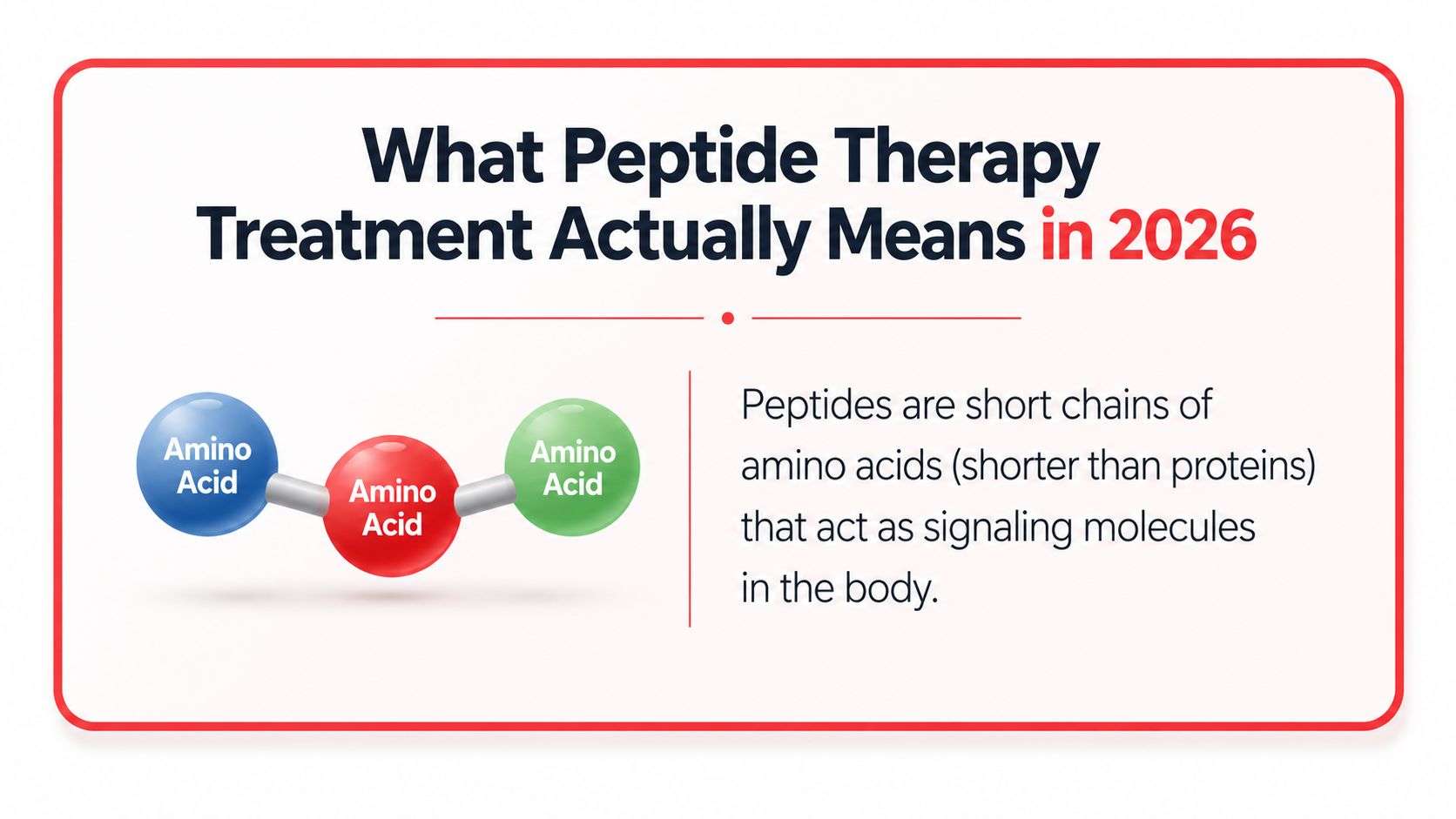
The phrase peptide therapy treatment can therefore mean several things:
- Approved therapeutic use: A clinician prescribes an approved peptide drug for a labeled medical condition, with known pharmacology, dosing guidance, and clinical evidence.
- Supervised clinic use: A clinician evaluates a patient and may prescribe a compounded or off-label peptide when appropriate, while explaining that the evidence may be narrower.
- Consumer wellness use: A person buys an online injectable, topical product, or blended formula promoted for anti-aging or performance without the same level of clinical accountability.
A medical plan should start with the patient's goal, not the product's advertising. Someone seeking glycemic control, weight management, sexual wellness, tissue recovery, or hormone evaluation may need entirely different testing and treatment. A plain-language overview of the concept is available in this guide to what peptide therapy involves, but the practical question remains: what evidence supports the specific compound for the specific goal?
This guide follows that question through peptide history, major functional classes, evidence tiers, regenerative and sexual wellness applications, expected timelines, safety monitoring, and consultation decisions. The organizing principle is simple: sort peptides by regulatory status and human evidence, not by how confidently a clinic markets them.
A Century of Peptide Medicine and Why the Market Just Surged
Peptide medicine began with a problem that demanded a practical solution. Insulin was first synthesized in 1921 and became the first commercial peptide drug in 1923, anchoring the field in diabetes care rather than cosmetic wellness (peer-reviewed history of peptide therapeutics). Later milestones expanded peptide medicine into endocrinology, reproductive health, immune-related treatment, and metabolic disease.
The field now includes more than 80 approved peptide drugs worldwide, while recent regulatory-focused literature cites roughly 100 peptide-based approvals, depending on how approvals are counted (review of peptide therapeutics). A separate review describes more than 80 therapeutic peptides on the global market and more than 170 in active clinical development (Nature review on peptide therapeutics). These figures describe a mature drug-development category, although they don't mean every peptide sold in a wellness clinic has comparable evidence.
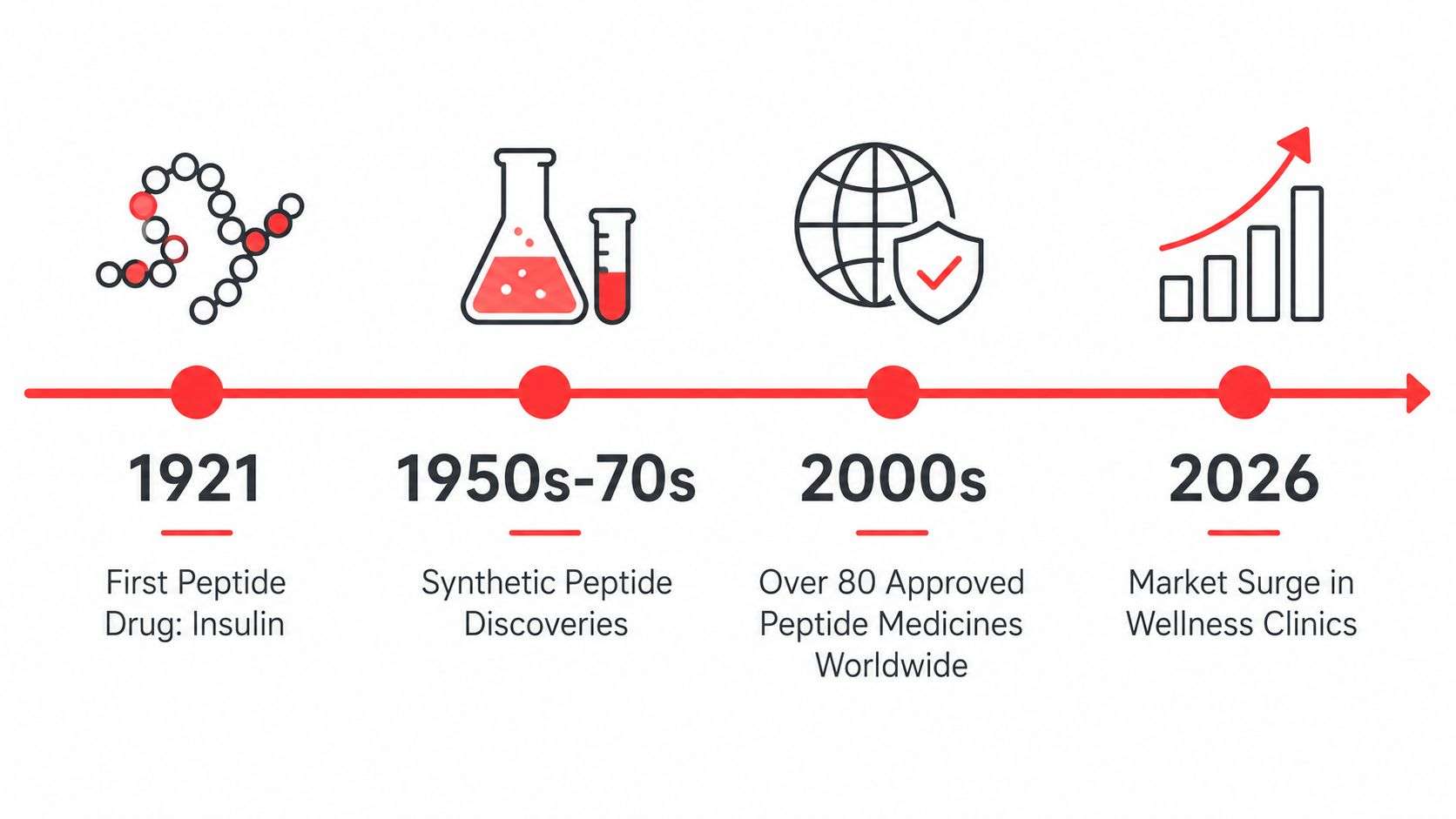
Several technical advances helped peptide medicines move from laboratory discovery into routine care. Researchers have improved synthesis methods, modified molecules for greater stability, and developed practical delivery routes. Those advances make peptide drugs easier to manufacture and administer, but they don't automatically validate an unapproved sequence.
Why patients see peptides everywhere
The recent surge combines genuine clinical expansion with aggressive wellness marketing. Approved metabolic peptides have increased public awareness of receptor-targeted treatment, while telehealth has made medical consultations and prescriptions easier to access. At the same time, online sellers and some clinics promote research-stage compounds for goals that haven't been established through strong human trials.
The commercial market reflects that momentum. Estimates place the global peptide therapeutics market at about USD 140.9 billion in 2025, USD 164.0 billion in 2026, and a projected USD 294.6 billion by 2033, with an estimated 8.7% CAGR from 2026 to 2033 (market analysis and projections). Those market figures show commercial scale, not proof that every advertised benefit works.
How Peptide Classes Work and What They Target
Peptides can be grouped by the biological system they influence and the signal they send. Some stimulate receptor activity, some imitate a natural hormone, and others affect the release of another messenger. The clinical effect depends on the target tissue, dose, delivery route, and the patient's health. A plausible mechanism explains what a compound might do. It does not, by itself, establish that a treatment works.
Four functional classes
Growth hormone secretagogues include sermorelin, ipamorelin, and CJC-1295. They are discussed in relation to sleep, recovery, and body composition because they may influence growth hormone signaling. Sermorelin is generally described as acting through a growth hormone releasing hormone pathway, while ipamorelin is described as a ghrelin-mimetic secretagogue. CJC-1295 also appears in discussions of growth hormone release. These compounds encourage signaling rather than directly replacing growth hormone, and evidence for unapproved recovery protocols is less established than promotional material often suggests.
Regenerative compounds include BPC-157 and thymosin beta-4, also called TB-500 in some protocols. Research has examined pathways associated with tissue repair, blood-vessel formation, and inflammation. Much of the support remains preclinical or limited in human studies. An animal finding therefore cannot be treated as a ready-made treatment plan.
Metabolic peptides include semaglutide and tirzepatide. They act on incretin-related receptors. Semaglutide targets GLP-1 signaling, while tirzepatide acts on GLP-1 and GIP pathways. These signals can affect appetite, glucose regulation, and broader metabolic control. Readers comparing metabolic options may find this overview of GLP-1 weight loss medication useful, but choosing a medication still requires an individualized medical evaluation.
Hormone analogs include PT-141, known as bremelanotide in its approved form, and investigational reproductive-signaling compounds such as kisspeptin. These pathways involve central nervous system and hypothalamic signaling linked to sexual desire or reproductive hormone release. A signal in one pathway does not correct every cause of erectile dysfunction, low libido, or sexual pain.
| Peptide Class | Example Compounds | Primary Mechanism | Patient Goal |
|---|---|---|---|
| Growth hormone secretagogues | Sermorelin, ipamorelin, CJC-1295 | Encourage growth hormone signaling | Recovery, sleep, body composition |
| Regenerative compounds | BPC-157, thymosin beta-4 | Investigational tissue-repair and inflammatory pathways | Soft-tissue recovery |
| Metabolic peptides | Semaglutide, tirzepatide | GLP-1 and GIP receptor signaling | Weight and glycemic control |
| Hormone analogs | PT-141, kisspeptin | Central or hypothalamic reproductive signaling | Sexual desire or reproductive support |
The class identifies the system a peptide may influence. The evidence tier determines how confidently that mechanism can be translated into a supervised treatment plan.
Approved Peptide Drugs Versus Unregulated Wellness Peptides
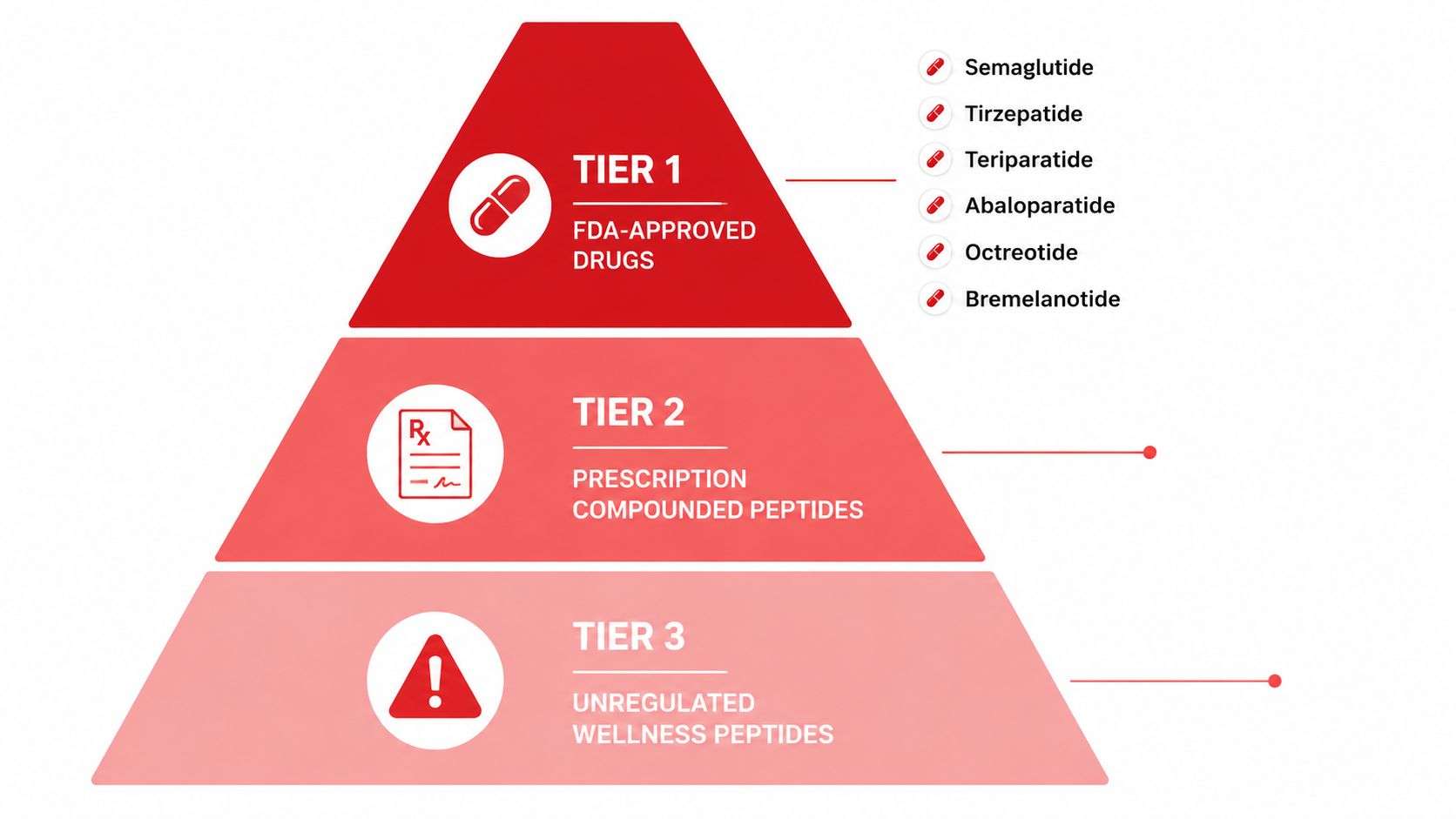
The safest way to read a peptide advertisement is to imagine a three-level evidence pyramid. At the top are approved prescription drugs. In the middle are clinician-supervised compounded or off-label protocols. At the base are products sold as wellness tools without reliable evidence or consistent medical oversight.
Tier one and labeled medicines
Approved peptide drugs such as semaglutide, tirzepatide, teriparatide, abaloparatide, octreotide, and bremelanotide have defined indications and a formal evidence base. Their approved status doesn't mean they're risk-free. It means regulators have evaluated a specific product for specific uses, and clinicians can consult established prescribing and safety information.
Tier two and supervised protocols
Compounded or off-label peptides may be considered in selected situations, but the prescriber must explain the difference between plausible biology and proven benefit. Compounds such as BPC-157, thymosin-alpha-1, and some forms of PT-141 may appear in clinic protocols, yet their evidence, legal status, manufacturing pathway, and appropriate use can differ substantially. Readers trying to understand clinical versus research peptides should ask whether a product is intended for human treatment, how it was compounded, and what follow-up the prescriber provides.
Tier three and wellness marketing
The lowest tier includes products such as GHK-Cu serums, oral collagen peptides, and unverified longevity blends sold without prescription. A topical serum or oral supplement shouldn't be judged by the same standard as an injectable medicine, and neither should be assumed to produce the same biological effect.
| Question | Higher-evidence pathway | Lower-evidence pathway |
|---|---|---|
| Regulatory status | Approved for a defined indication | Unapproved or unclear |
| Manufacturing | Pharmaceutical or documented compounding process | Source and sterility may be uncertain |
| Prescriber accountability | Named clinician and follow-up | Often absent |
| Evidence | Human trials and established pharmacology | Mechanistic, animal, or anecdotal claims |
| Safety reporting | Formal systems and known risks | Limited visibility |
Practical rule: A compelling mechanism is a reason to study a peptide, not a reason to inject it.
Where Peptide Therapy Fits in a Regenerative and Sexual Wellness Plan
Peptides should usually be treated as one layer of a broader plan, not as a universal repair switch. Sexual function, for example, can be affected by vascular health, diabetes, hormones, medication effects, sleep, pelvic conditions, relationship factors, and nerve function. A peptide may address one pathway while leaving the main driver untouched.
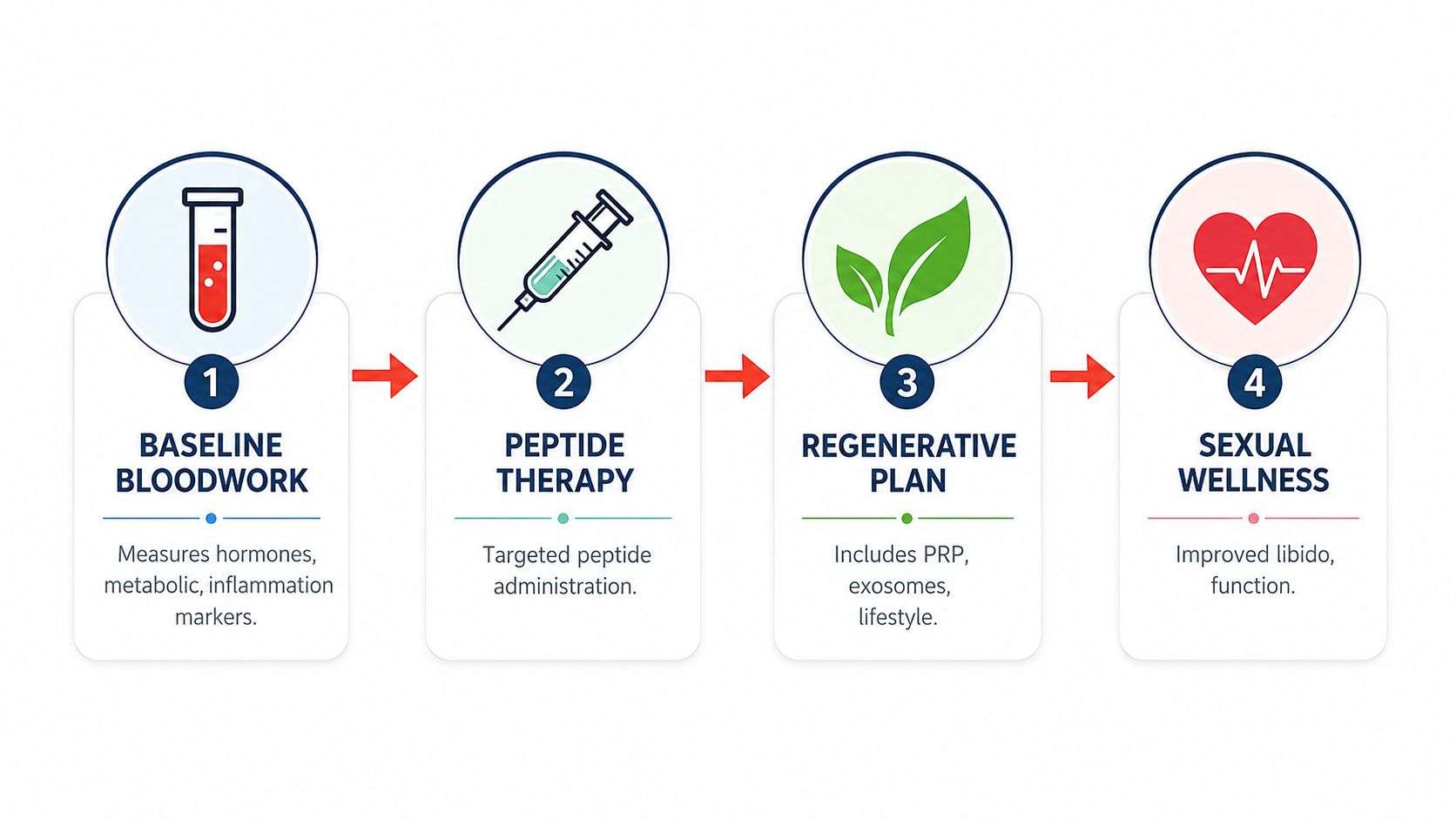
A responsible clinic process often begins with a detailed history and baseline testing. Depending on the goal, the clinician may review hormone levels, metabolic markers, kidney and liver function, thyroid status, medications, and relevant symptoms. The results help determine whether the patient needs a peptide at all, whether an approved treatment is more appropriate, or whether another condition needs attention first.
Matching the tool to the goal
A patient focused on body composition may need metabolic treatment, nutrition support, resistance training, and monitoring for glucose-related effects. Someone focused on recovery may need sleep evaluation, physical therapy, load management, and a careful discussion of whether a regenerative peptide has enough human evidence to justify use.
Sexual wellness plans require the same discipline. A melanocortin agonist may influence sexual desire, while hormone replacement addresses a documented hormone deficiency and acoustic, laser, or injection-based regenerative services target different tissues or physiological processes. Combining modalities doesn't make each one more effective, and stacking several interventions at once makes it harder to identify side effects or determine what helped.
Sequence before stacking
A practical sequence may look like this:
- Define one primary outcome. Examples include improved libido, better glycemic control, recovery from a documented injury, or weight management.
- Establish a baseline. Record symptoms, relevant examination findings, medications, and laboratory results.
- Choose the most defensible intervention. Start with an approved option when it fits the condition.
- Add supportive services selectively. Hormone replacement, IV or IM support, platelet-rich plasma, acoustic therapy, or other regenerative services may have distinct roles, but each needs its own rationale.
- Reassess before expanding. Symptoms, adverse effects, and lab results should guide the next decision.
Patients exploring a clinic-based model can review the regenerative wellness center approach, then compare its evaluation and follow-up process with other qualified practices. The important feature isn't the number of treatments offered. It's whether the clinician can explain what each treatment is intended to do and how success or failure will be judged.
What Outcomes and Timelines to Expect From a Supervised Protocol
A peptide's expected timeline depends on its class and its goal. Metabolic treatment, sexual desire treatment, growth hormone signaling, and investigational tissue-repair compounds shouldn't be placed on one universal schedule.
For approved metabolic peptides such as semaglutide, appetite and weight-related changes may become noticeable over four to twelve weeks, although response varies and the clinician may adjust treatment gradually. Growth hormone secretagogues are often discussed in relation to sleep and recovery over two to six weeks, while body-composition changes, if they occur, may take three to six months. These timelines are practical expectations, not guarantees, and they shouldn't be used to justify unapproved treatment.
| Peptide Class | Primary Goal | Earliest Benefit | Full Effect Window |
|---|---|---|---|
| Metabolic peptides | Appetite, weight, glycemic control | Four to twelve weeks | Longer-term treatment with ongoing assessment |
| Growth hormone secretagogues | Sleep and recovery | Two to six weeks | Three to six months for body-composition changes |
| Sexual wellness peptides | Sexual desire | Potentially within hours for some agents | Variable, with response and tolerability guiding use |
| Regenerative compounds | Tissue recovery or skin-related goals | Gradual and difficult to isolate | Weeks to months, with evidence limitations |
PT-141 or bremelanotide can have a relatively rapid effect on sexual desire in appropriate patients, but the response is highly individual. A clinician may need to evaluate tolerability and dosing rather than promise a predictable result.
Regenerative compounds such as BPC-157 and GHK-Cu are harder to assess. People may report changes in comfort, recovery, or skin quality over weeks or months, but reports aren't a substitute for rigorous human trials. Sleep, nutrition, training, baseline hormones, adherence, and the underlying diagnosis can influence the result more than a marketing page suggests.
Follow-up should combine symptom review with appropriate testing. A clinician may reassess around six to twelve weeks when the treatment and risk profile call for it, then continue, adjust, or stop the protocol based on the findings.
Safety, Contraindications, and Lab Monitoring You Should Know About
The most dangerous assumption in peptide therapy is that “natural signaling” means harmless. Peptides can affect appetite, glucose regulation, growth hormone pathways, immune activity, blood pressure, or sexual response. Unapproved injectables also create separate risks involving sterility, concentration, labeling, storage, and contamination. Harvard's patient guidance warns that unregulated peptides may be contaminated and may trigger allergic or inflammatory reactions (Harvard-linked medical guidance).
A clinician should screen carefully before prescribing. People with active cancer, pregnancy or breastfeeding, significant endocrine disease, kidney or liver disease, thyroid conditions, or a history of pituitary tumors may require avoidance, specialist input, or a different treatment strategy. Autoimmune disease also deserves individualized review, particularly when an immune-active compound is being considered.
Risk depends on the pathway
Growth hormone secretagogues can influence IGF-1 and glucose handling, so they aren't casual recovery supplements. Metabolic peptides can produce gastrointestinal effects and may affect glucose levels, which matters especially when a patient also uses insulin or other glucose-lowering treatment. Hormone replacement and thyroid medication can create additional interaction and interpretation issues.
A sensible monitoring plan may include:
- Metabolic testing: Glucose-related markers, fasting insulin when clinically appropriate, and a metabolic panel.
- Growth and endocrine markers: IGF-1, thyroid markers, and sex hormones when the protocol targets those systems.
- General safety testing: CBC and organ-function review where indicated.
- Condition-specific testing: Tumor markers or specialist evaluation when the patient's history makes them relevant.
Patients can use an advanced peptide blood work panel as a starting point for questions, but a commercial panel doesn't replace a clinician's interpretation. A broader explanation of hormone panel testing can also help patients understand why one laboratory result rarely tells the whole story.
Compounding deserves direct questions. A patient should know whether the product comes from a traditional patient-specific compounding setting or a larger outsourcing facility, whether the prescription is for human use, how the vial is labeled, and who handles adverse-event follow-up. Anyone selling injectable peptides without baseline assessment and repeat monitoring should be treated as a serious warning sign.
How to Decide if Peptide Therapy Treatment Is Right for You
Use this checklist before agreeing to a protocol.
Do you have a defined clinical goal?
A green flag is a measurable target, such as addressing documented metabolic disease or a specific sexual-health concern. A red flag is a promise to improve everything at once.Have approved options been considered first?
A clinician should explain established treatments and why a peptide is, or isn't, appropriate. If the conversation jumps straight to an unapproved compound, pause.Will a qualified clinician supervise the plan?
Look for a medical history, examination when appropriate, baseline labs, dosing instructions, and planned follow-up. “No monitoring needed” isn't reassuring.Can the source be verified?
Ask whether the product is approved, compounded for human use, correctly labeled, and dispensed through a legitimate pharmacy pathway. Avoid products sold as research chemicals for self-injection.Can you manage the ongoing commitment?
Consider medication cost, laboratory testing, follow-up visits, storage, injection training, and what happens if the treatment causes side effects or doesn't help.
Pregnant patients and people with active cancer shouldn't pursue peptide treatment without direct guidance from their treating specialists. Patients with endocrine, kidney, liver, thyroid, or autoimmune conditions also need individualized screening.
Bring your medication list, prior laboratory results, diagnoses, treatment goals, and questions about evidence and sourcing to the consultation. Peptide therapy can be useful in selected cases, but it works best as one tool inside a broader regenerative and sexual-wellness plan, not as a standalone fix.
Sexual Wellness Centers of America evaluates peptide therapy alongside hormone and health assessments, with clinic-based options for sexual wellness and regenerative care. Visit Sexual Wellness Centers of America to discuss your goals, review whether peptide therapy is appropriate, and build a monitored plan based on your medical history.