
Why BPC 157 Nerve Regeneration Is Getting Serious Scientific Attention
BPC 157 nerve regeneration is backed by a growing body of animal research showing this peptide can accelerate axonal regrowth, improve myelin sheath thickness, restore motor function, and even reverse paralysis in spinal cord injury models.
Here’s what the research shows it can do for nerve repair:
| Benefit | What the Research Found |
|---|---|
| Axonal regrowth | Faster regeneration with denser, larger nerve fibers |
| Myelin sheath | Increased thickness and diameter of myelinated fibers |
| Motor function | Higher motor action potentials on EMG testing |
| Functional recovery | Improved Sciatic Functional Index (SFI) scores |
| Pain behavior | Complete absence of autotomy in treated animals |
| Spinal cord injury | Full functional recovery in compression models, sustained up to 1 year |
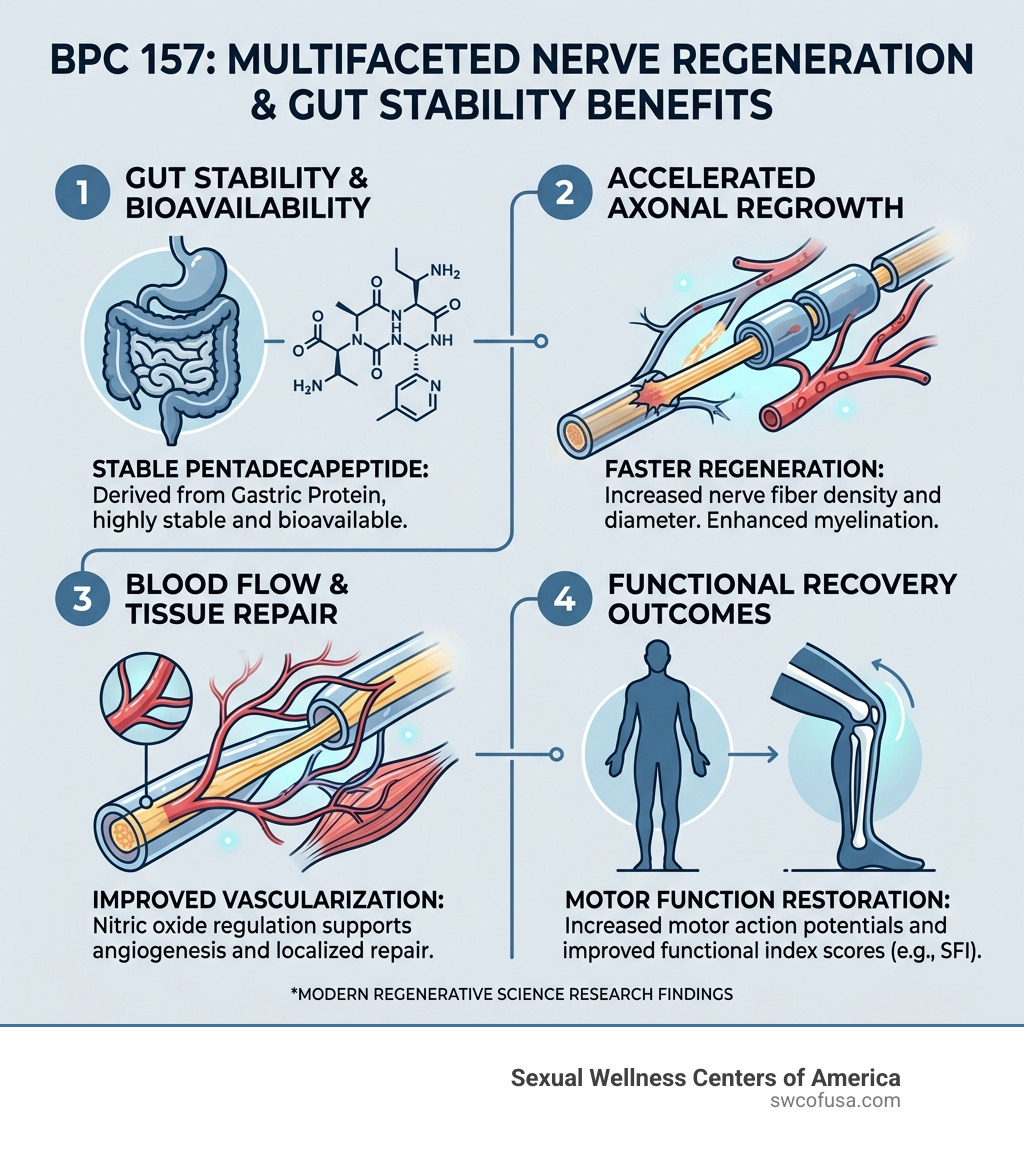
BPC-157 is a stable 15-amino-acid peptide originally derived from a protective protein found in human gastric juice. Unlike most peptides, it doesn’t need a carrier to stay stable — and it works through multiple pathways at once, including blood vessel formation, nitric oxide regulation, and direct nerve fiber support.
For someone like Alex — dealing with age-related tissue changes, reduced circulation, and nerve sensitivity — understanding how this compound works can open the door to real, science-backed recovery options.
I’m Jeff Nuziard, CEO of Sexual Wellness Centers of America, where I’ve spent years helping patients explore cutting-edge regenerative therapies — including peptide protocols centered on BPC 157 nerve regeneration — to restore performance and vitality. In this guide, I’ll walk you through exactly what the science says and how it applies to your health.
Quick bpc 157 nerve regeneration definitions:
What is BPC-157? Discovery and Molecular Stability
To understand why bpc 157 nerve regeneration is such a breakthrough, we first have to look at what this molecule actually is. Known formally as Body Protection Compound-157, this pentadecapeptide is a sequence of 15 amino acids. What makes it special is its origin: it was discovered as a protective protein naturally occurring in human gastric juice.
Most peptides are incredibly fragile. If you try to take them orally, your stomach acid destroys them before they can reach the rest of your body. However, BPC-157 is “stomach-stable.” It has a molecular weight of 1419 and possesses a unique molecular structure that allows it to remain active in human gastric juice for more than 24 hours. This inherent stability means it has excellent oral bioavailability and doesn’t require complex chemical “carriers” to do its job.
Historically, BPC-157 was researched for its role in “Robert’s cytoprotection,” a scientific term for the body’s ability to protect the lining of the stomach from harsh irritants like alcohol or NSAIDs. As of April 2026, researchers have expanded this scope significantly. We now know that the same mechanisms that protect the gut also facilitate BPC 157 benefits across the entire body, including the skin, muscles, bones, and most importantly, the nervous system.
Mechanisms of BPC 157 Nerve Regeneration
How does a stomach peptide actually fix a nerve? It isn’t magic; it’s a sophisticated biological process involving blood flow and cellular signaling.
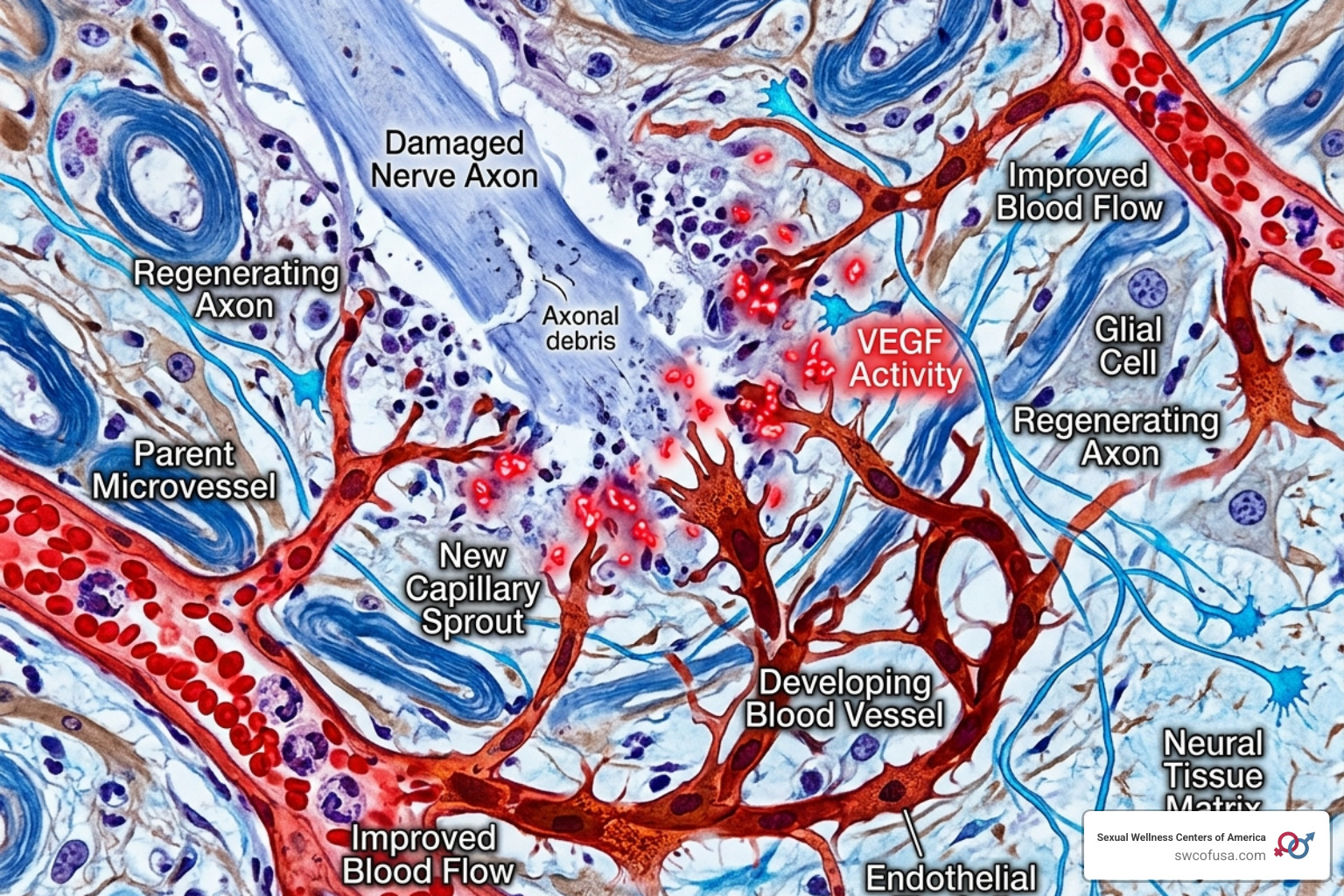
One of the primary ways bpc 157 nerve regeneration occurs is through angiogenesis—the formation of new blood vessels. Nerves are notoriously difficult to heal because they have a limited blood supply. BPC-157 upregulates the expression of Vascular Endothelial Growth Factor (VEGF) and activates VEGFR2 signaling pathways. By building a better “irrigation system” of blood vessels around damaged nerves, the peptide ensures that the nutrients and oxygen required for repair actually reach the site of injury.
Furthermore, BPC-157 acts as a master regulator of the nitric oxide (NO) system. It upregulates Nos3 (the “good” NO that helps vessels dilate) while suppressing Nos2 (which is often associated with harmful inflammation). This creates a “goldilocks” environment for healing: enough blood flow to fuel repair, but not so much inflammation that it causes further damage. This is why BPC-157 is often discussed alongside Peptide Therapy For Inflammation, as it helps calm the “cytokine storm” that often follows a traumatic injury.
Accelerating Axonal Growth with BPC 157 Nerve Regeneration
When a nerve is severed or crushed, the “axons”—the long cables that carry electrical signals—die off. For recovery to happen, these axons must regrow from the site of the injury back to the muscle or organ they control.
Research published in scientific research on BPC 157 in traumatic nerve injury demonstrates that BPC-157 triggers the ERK1/2 signaling pathway, which is like hitting the “fast-forward” button on axonal regrowth. In studies, treated nerves didn’t just grow back faster; they grew back better. The regenerating fibers were denser and larger, and the neural fascicles (bundles of nerve fibers) were more organized compared to untreated controls.
Perhaps most importantly, BPC-157 improves the myelin sheath. Think of myelin as the rubber insulation on an electrical wire. Without it, the signal leaks out and the nerve doesn’t work. BPC-157 has been shown to increase the thickness and diameter of this myelin layer, ensuring that once the nerve regrows, it can actually send signals efficiently.
Neuroprotective Effects and Mitochondrial Integrity
Beyond just building new tissue, BPC-157 protects what is already there. It contains four carboxylic groups that allow it to act as an antioxidant, scavenging reactive oxygen species (ROS) that would otherwise poison healing cells.
By maintaining mitochondrial integrity, BPC-157 ensures that nerve cells have the “battery power” they need to survive the stress of an injury. This makes it one of the most versatile Peptides For Healing available today, as it addresses both the structural and the energetic needs of the nervous system.
Research Outcomes in Traumatic Nerve and Spinal Injuries
The most compelling evidence for bpc 157 nerve regeneration comes from rigorous animal models, specifically using Wistar rats. These studies aren’t just looking at whether the rats “feel better”—they use histomorphometric analysis (microscopic measurements) and electrophysiology (measuring electrical currents) to prove the healing is real.

According to Neural Regeneration Research on BPC 157, the peptide has shown remarkable efficacy in both peripheral nerve injuries (like the sciatic nerve) and central nervous system damage (like the spinal cord).
BPC 157 Nerve Regeneration in Spinal Cord Injury Models
Spinal cord injuries are often considered permanent because of the secondary wave of damage—axonal necrosis, demyelination, and the formation of fluid-filled cysts—that follows the initial impact.
In models where the sacrocaudal spinal cord (S2–Co1) was compressed for 60 seconds (causing immediate tail paralysis), a single dose of BPC-157 led to stunning results. Not only was the paralysis reversed, but the rats showed a complete resolution of spasticity by day 15. Microscopic examination showed that the peptide counteracted the formation of vacuoles and preserved the motoneurons in the gray matter. Remarkably, these functional recoveries were sustained for up to one year after the initial injury.
Sciatic Nerve Recovery and Functional Index
The sciatic nerve is the longest nerve in the body, making it the perfect “testing ground” for regeneration. Researchers have tested BPC-157 on two types of sciatic injuries:
- Transection with Anastomosis: The nerve is cut and then sewn back together.
- Nerve Gap: A 7mm segment of the nerve is completely removed, and the ends are bridged with a silicone tube.
In the 7mm gap model—an injury that usually results in permanent disability—BPC-157 applied directly into the tubing resulted in significantly higher motor action potentials on EMG testing.
| Metric | BPC-157 Group | Control Group |
|---|---|---|
| Autotomy (Self-Mutilation) | 0% (Completely Absent) | High (Digits amputated) |
| SFI (Walking Recovery) | Rapid, weekly improvement | Poor, stagnant recovery |
| Myelinated Fiber Density | High, uniform orientation | Low, disorganized |
| Blood Vessels | Increased presentation | Minimal |
One of the most interesting findings was the prevention of autotomy. When rats have severe nerve pain or numbness, they often chew on their own paws (self-mutilation). In the BPC-157 groups, this behavior was completely absent, suggesting that the peptide either reduced neuropathic pain or restored sensation so effectively that the rats didn’t feel the need to bite themselves.
Administration, Dosage, and Safety Profile
One of the most frequent questions we get at Sexual Wellness Centers of America is how BPC-157 should be administered for nerve issues. In the research, several routes have proven effective:
- Intraperitoneal (IP): Injections into the abdominal cavity.
- Intragastric (IG): Oral administration.
- Local Application: Applying the peptide directly to the nerve during surgery or into a repair tube.
- Nasal Delivery: Emerging research suggests this may be the most potent route for reaching the brain and central nervous system.
The dosages used in most successful rat studies were either 10µg/kg or a much lower “nano-dose” of 10ng/kg. Even at these varying levels, the results remained consistent.
As of April 2026, BPC-157 maintains a stellar safety profile. In toxicology studies, researchers have been unable to reach an “LD1” (the dose at which even 1% of subjects show a lethal effect), meaning the compound is extremely non-toxic. While the FDA has issued various statements regarding the compounding of peptides, BPC-157 continues to be widely used in research and clinical settings under professional supervision.
Frequently Asked Questions about BPC-157
How quickly does BPC-157 promote nerve healing?
While soft tissue like muscle might show improvement in days, nerves grow slowly—roughly 1mm per day. In research models, significant functional changes like improved walking and resolved spasticity were typically measured between 15 and 30 days, with full recovery taking 1 to 2 months depending on the severity of the gap.
Can BPC-157 help with central nervous system damage?
Yes. As noted in the spinal cord and stroke models, BPC-157 can cross the blood-brain barrier or influence the brain via the gut-brain axis. It has shown the ability to resolve hippocampal ischemia (stroke damage) and promote recovery in spinal cord compression models.
Are there side effects to BPC-157 in nerve research?
In the peer-reviewed literature, there are no reported significant side effects in the animal models used for nerve regeneration. Because it is derived from a natural body protein, it is generally well-tolerated. However, human use should always be guided by a hormone and vitamin panel to ensure the body’s environment is optimized for healing.
Conclusion
The science of bpc 157 nerve regeneration represents a massive shift in how we approach “permanent” injuries. By combining blood vessel growth, inflammation control, and direct axonal support, this peptide offers a multi-pronged solution that standard medicine often misses.
At Sexual Wellness Centers of America in Colleyville, TX, we believe that healing the body requires more than just a “wait and see” approach. We provide advanced regenerative solutions, including HEshot®™, SHEshot®™, and REGENmax® technology, to help our patients optimize their recovery and performance. Our personalized plans are built on comprehensive hormone panels, and we are proud to maintain a 97.2% efficacy rate in our wellness protocols.
If you are struggling with nerve-related issues or simply want to optimize your physical performance, it may be time to look into the power of peptides. You can find more info about peptide therapy services at our Colleyville location. Let’s get you back to your best self.